

Lift Every Voice and Sing: SATB Choral Octavo
Words by James Weldon Johnson, music by J. Rosamond Johnson / arr. Greg Gilpin
Item: 00-PO-0005555
$1.90
Minimum order quantity: 20 copies
Pickup currently not available
Related Items
Lift Every Voice and Sing: SoundTrax Digital Audio Download |
$27.99
|
View | |
Lift Every Voice and Sing: SAB Choral Octavo |
$2.05
|
View | |
Lift Every Voice and Sing: SSA Choral Octavo |
$1.90
|
View | |
Lift Every Voice and Sing: TTB Choral Octavo |
$1.90
|
View | |
Lift Every Voice and Sing: 2-Part Choral Octavo |
$1.90
|
View | |
Lift Every Voice and Sing: Choral SoundPax |
$15.00
|
View | |
Lift Every Voice and Sing: SATB Choral Octavo |
$1.90
|
View | |
Lift Every Voice and Sing: SAB Choral Octavo |
$2.05
|
View | |
Lift Every Voice and Sing: SSA Choral Octavo |
$1.90
|
View | |
Lift Every Voice and Sing: TTB Choral Octavo |
$1.90
|
View | |
Lift Every Voice and Sing: 2-Part Choral Octavo |
$1.90
|
View | |
Lift Every Voice and Sing: SoundTrax CD |
$27.99
|
View | |
Lift Every Voice and Sing: Choral SoundPax |
$15.00
|
View |
Description
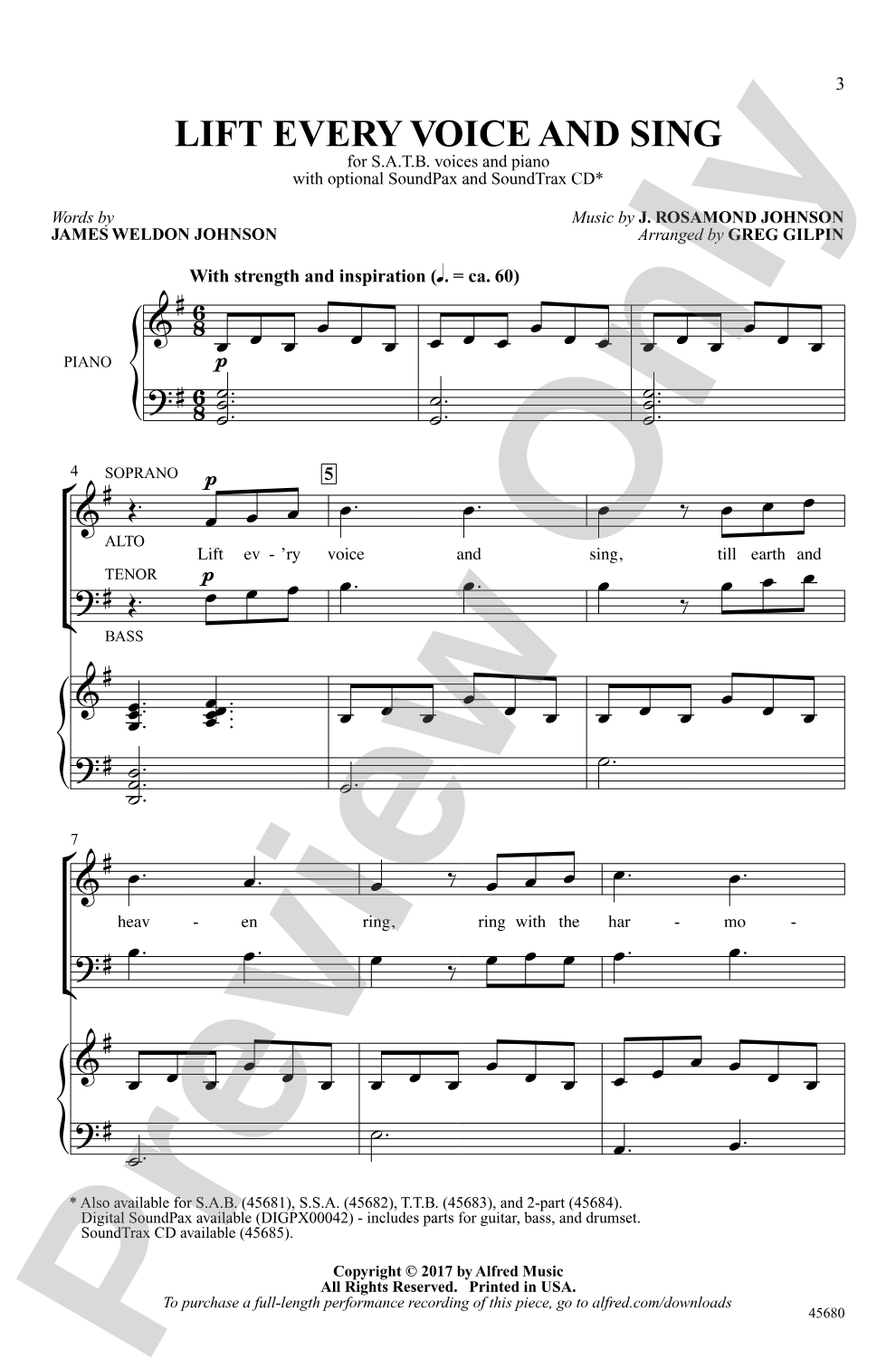
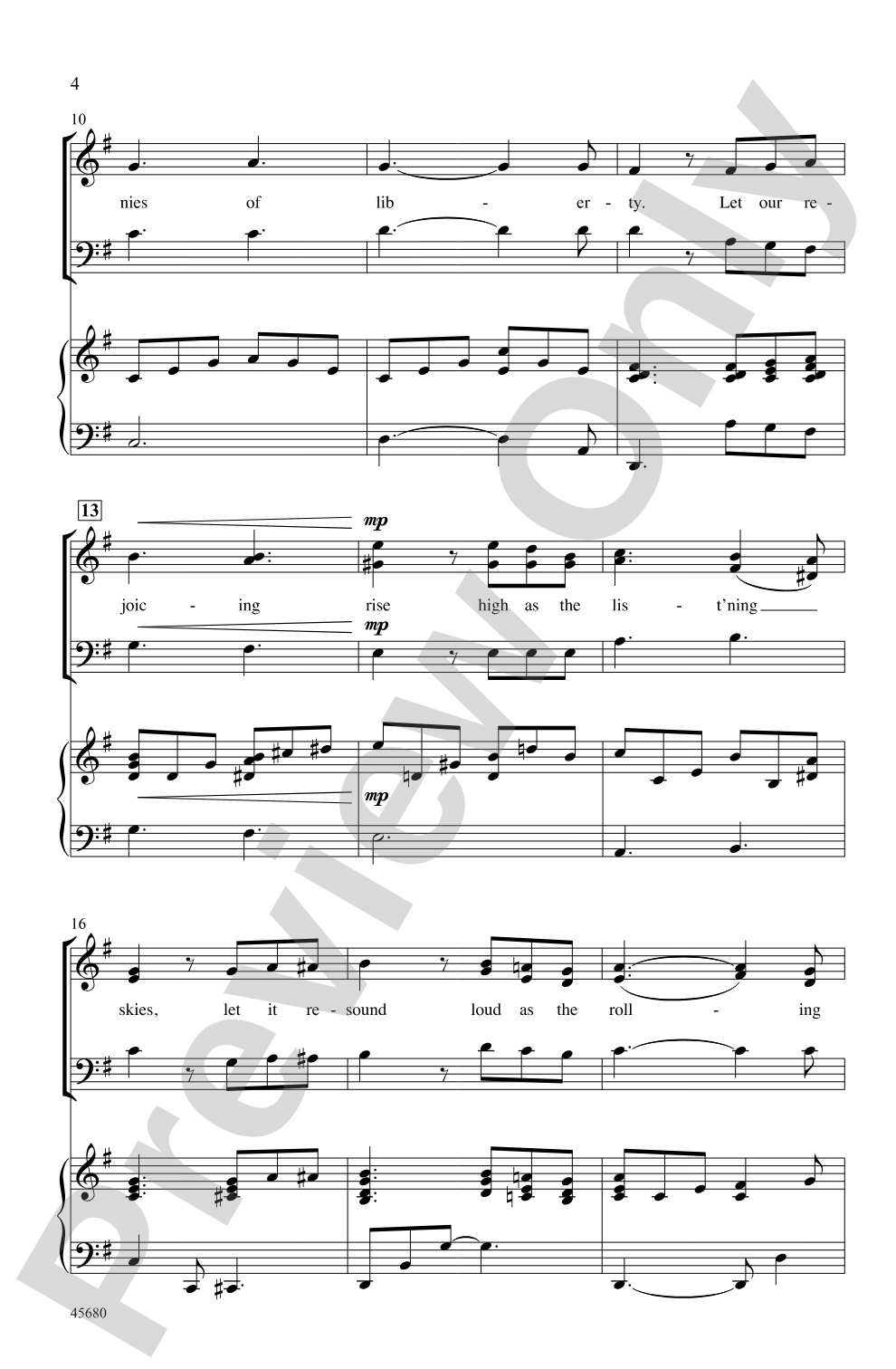
This contemporary spiritual boasts a rich history as a song of liberation and has been dubbed the "Black American National Anthem." Greg's tour-de-force arrangement opens with a powerful unison before developing into thick gospel harmonies. Perform with the SoundTrax CD or the SoundPax parts for guitar, bass, and drumset. Both words and music will resonate long after the final glorious chord!


Lift Every Voice and Sing: SATB Choral Octavo isn't in MakeMusic Cloud just yet...but it could be. Let us know you'd like to see it, and you'll help shape what comes next. In the meantime, start a free trial and dive into thousands of interactive titles your students can play along with today.
Request This Title
Tell us you want it.
Start Your Free Trial
Explore everything that's ready to play right now.
Sample Audio
1
Audio File
--:--
0:00
0:00
Sample Video
Additional Details
Series:
Alfred Choral Designs
Publisher:
Alfred Music
Page Count:
12
SKU:
00-PO-0005555
More about this title
About the Composer: J. Rosamond Johnson
J. Rosamond Johnson (1873-1954) was a composer, lyricist, and performer who shaped American musical theater and concert music in the late nineteenth and early twentieth centuries. Working alongside his brother James Weldon Johnson, he created some of the most enduring songs in the American repertoire, including this spiritual that has become a cornerstone of choral literature and a powerful statement of cultural identity.
Why we love this
Greg Gilpin's arrangement respects the song's monumental legacy while infusing it with contemporary harmonic energy and gospel textures that resonate with modern singers. The unison opening gives every voice a moment of individual strength before the parts blossom into rich, satisfying harmonies that reward careful voicing and breath control. Programming this piece signals intentional curation and demonstrates your choir's commitment to repertoire that matters historically and spiritually.
What to expect
The opening unison feels grounded and declarative, a voice speaking truth. As harmonies enter, warmth and resilience bloom; the gospel textures create a sense of community and shared uplift that moves singers and listeners alike. The final chord resonates with both personal conviction and collective hope.
Who it's for
This octavo belongs in any SATB choir with rehearsal time to develop gospel voicing and the maturity to honor the piece's cultural and historical significance. It works equally well in concert choirs, educational settings, and festival competitions where meaningful programming is valued over purely technical showpieces.
How to get the most out of it
- Balance the unison opening with confidence and clarity; this moment sets the emotional foundation for everything that follows, so commit fully to the unified sound.
- Let the gospel harmonies breathe by not rushing into thick chords. Take time to shape each harmonic layer so the audience hears the depth rather than density.
- Shape dynamic arcs across entire sections rather than diving to forte immediately. The piece gains power through strategic building, not relentless volume.
- Use the recorded accompaniment or instrumental parts to establish groove and pocket. Gospel idiom demands rhythmic precision that a pianist alone may not provide.
How to use it
This is powerful as a concert closer or centerpiece that frames your program's values. It also pairs beautifully with other spirituals or works that engage themes of resilience and brotherhood, creating a thematic arc that audiences remember. Festival programmers often respond strongly to programming that combines musical craft with cultural significance.
Skills your students will build
- Gospel harmony voicing and voice leading in contemporary spiritual arranging
- Unison singing with blend and projection before transitioning to divisi parts
- Rhythmic pocket and groove in non-classical idioms
- Text expression and emotional conviction in songs of social significance
- Balance and transparency in thick four-part harmony