

Lift Every Voice and Sing: SAB Choral Octavo
Words by James Weldon Johnson, music by J. Rosamond Johnson / arr. Greg Gilpin
Item: 00-PO-0005556
$2.05
Minimum order quantity: 20 copies
Pickup currently not available
Related Items
Lift Every Voice and Sing: SoundTrax Digital Audio Download |
$27.99
|
View | |
Lift Every Voice and Sing: SATB Choral Octavo |
$1.90
|
View | |
Lift Every Voice and Sing: SSA Choral Octavo |
$1.90
|
View | |
Lift Every Voice and Sing: TTB Choral Octavo |
$1.90
|
View | |
Lift Every Voice and Sing: 2-Part Choral Octavo |
$1.90
|
View | |
Lift Every Voice and Sing: Choral SoundPax |
$15.00
|
View | |
Lift Every Voice and Sing: SATB Choral Octavo |
$1.90
|
View | |
Lift Every Voice and Sing: SAB Choral Octavo |
$2.05
|
View | |
Lift Every Voice and Sing: SSA Choral Octavo |
$1.90
|
View | |
Lift Every Voice and Sing: TTB Choral Octavo |
$1.90
|
View | |
Lift Every Voice and Sing: 2-Part Choral Octavo |
$1.90
|
View | |
Lift Every Voice and Sing: SoundTrax CD |
$27.99
|
View | |
Lift Every Voice and Sing: Choral SoundPax |
$15.00
|
View |
Description
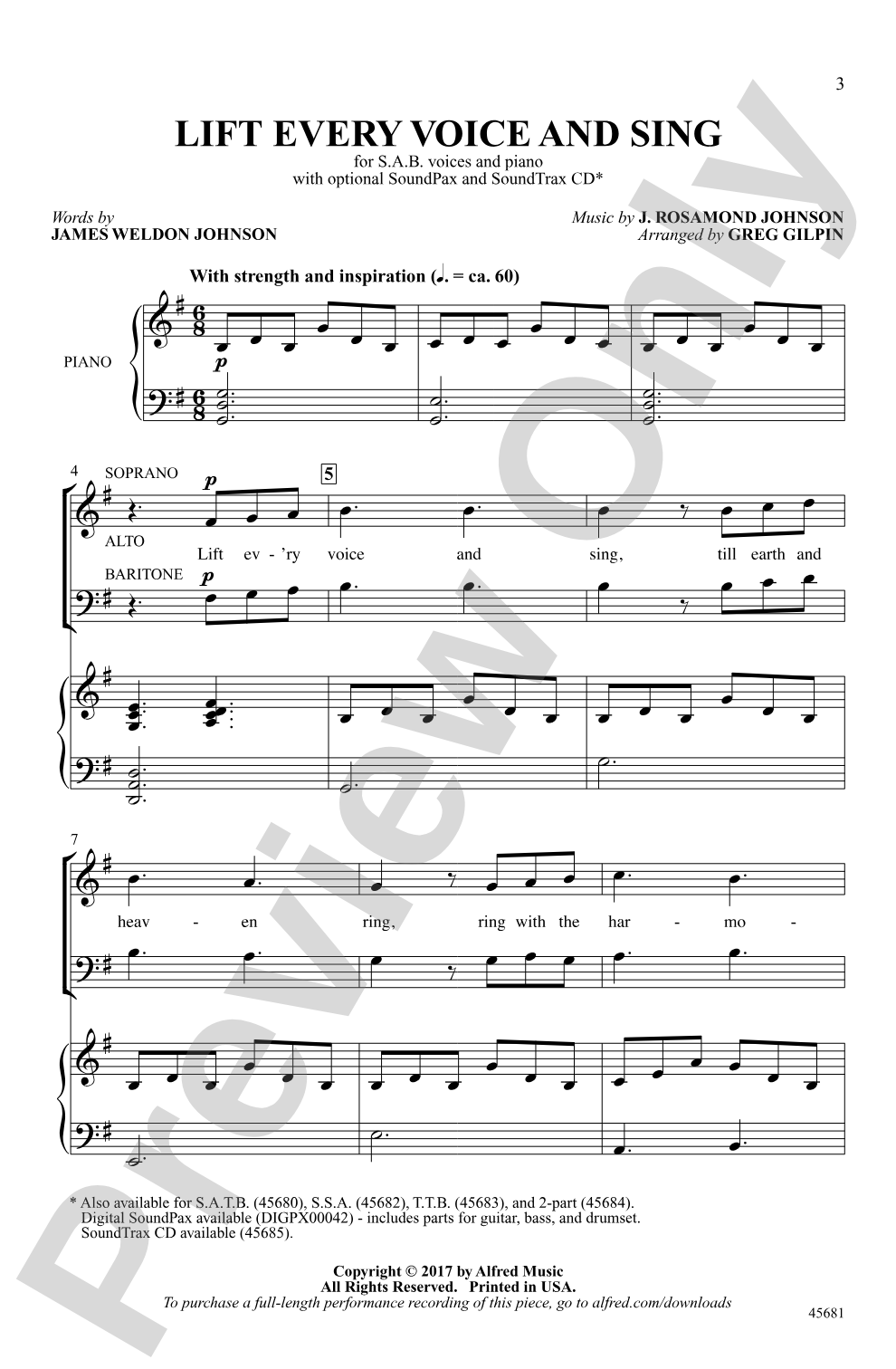
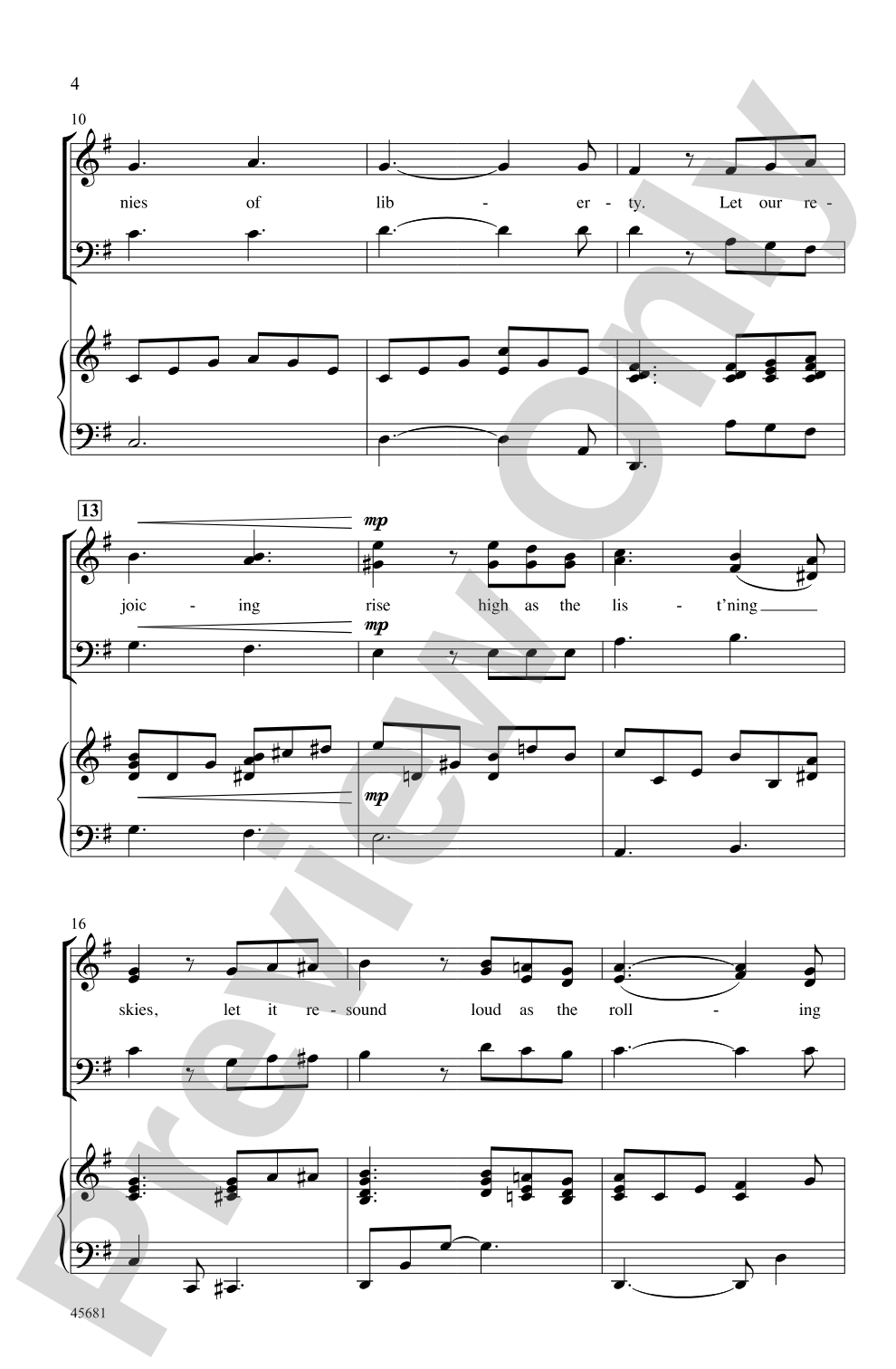
This contemporary spiritual boasts a rich history as a song of liberation and has been dubbed the "Black American National Anthem." Greg's tour-de-force arrangement opens with a powerful unison before developing into thick gospel harmonies. Perform with the SoundTrax CD or the SoundPax parts for guitar, bass, and drumset. Both words and music will resonate long after the final glorious chord!


Lift Every Voice and Sing: SAB Choral Octavo isn't in MakeMusic Cloud just yet...but it could be. Let us know you'd like to see it, and you'll help shape what comes next. In the meantime, start a free trial and dive into thousands of interactive titles your students can play along with today.
Request This Title
Tell us you want it.
Start Your Free Trial
Explore everything that's ready to play right now.
Sample Audio
1
Audio File
--:--
0:00
0:00
Sample Video
No sample videos found.
Additional Details
Series:
Alfred Choral Designs
Publisher:
Alfred Music
Page Count:
12
SKU:
00-PO-0005556
More about this title
About the Composer: J. Rosamond Johnson
J. Rosamond Johnson (1873, 1954) was a composer, lyricist, and performer who shaped African American musical expression across multiple genres. Brother to poet James Weldon Johnson, he created music for theater, film, and concert hall while remaining deeply connected to the spiritual traditions of Black America. His compositional voice blended classical training with authentic vernacular idioms, giving his works both artistic substance and cultural weight.
Why we love this
Greg Gilpin's arrangement captures the anthem's dual nature: it honors the spiritual's contemplative roots while unleashing the prophetic power that made this song a rallying cry for justice. The opening unison passage demands conviction from your singers, and the gospel harmonies that follow give even emerging choirs a visceral experience of how voice parts can amplify emotional impact. This is repertoire that teaches and moves simultaneously.
What to expect
The piece radiates quiet dignity in its opening moments before swelling into rich, layered harmonies that feel rooted in lived experience. Singing these words and music creates a tangible sense of collective voice and purpose; the gospel harmonies are warm and generous, inviting singers to feel supported by the ensemble even as they're asked to sing with individual clarity.
Who it's for
This arrangement works for choirs with solid fundamentals and singers ready to engage repertoire with historical significance. It suits high school ensembles, adult community choirs, and college groups seeking to diversify their concert programming with music that educates and inspires.
How to get the most out of it
- Treat the unison opening as a declaration. Your singers need to understand the historical weight they're carrying; clarity and commitment matter more than perfection.
- Balance the lower voices in the gospel harmonies so the alto and bass lines don't disappear. SAB voicing can obscure inner lines if everyone sings at the same dynamic level.
- If using the recorded accompaniment, rehearse without it first so your singers own the harmonic language before layering in accompaniment.
- Let the final cadence breathe. Resist the urge to rush the resolution; the "glorious chord" earns its power through deliberate placement.
How to use it
Open a concert that addresses themes of hope, unity, or social justice. Its cultural resonance and musical power make it an ideal anchor for a thematic program, or place it alongside spirituals and gospel arrangements to create a cohesive set that traces African American musical traditions.
Skills your students will build
- Gospel harmony voicing and voice leading in three-part mixed textures
- Balancing multiple melodic lines without sacrificing harmonic blend
- Sustaining unison passages with tonal unity and interpretive conviction
- Responding to historical and cultural context within performance choices