

Life Has Loveliness: SSA Choral Octavo
Words by Sara Teasdale, music by Greg Gilpin
Item: 00-PO-0007045
$2.05
Minimum order quantity: 20 copies
Pickup currently not available
Related Items
Life Has Loveliness: PianoTrax Digital Audio Download |
$9.99
|
View | |
Life Has Loveliness: SATB Choral Octavo |
$2.05
|
View | |
Life Has Loveliness: 3-Part Mixed Choral Octavo |
$2.05
|
View | |
Life Has Loveliness: SATB Choral Octavo |
$2.05
|
View | |
Life Has Loveliness: 3-Part Mixed Choral Octavo |
$2.05
|
View | |
Life Has Loveliness: SSA Choral Octavo |
$2.05
|
View |
Description
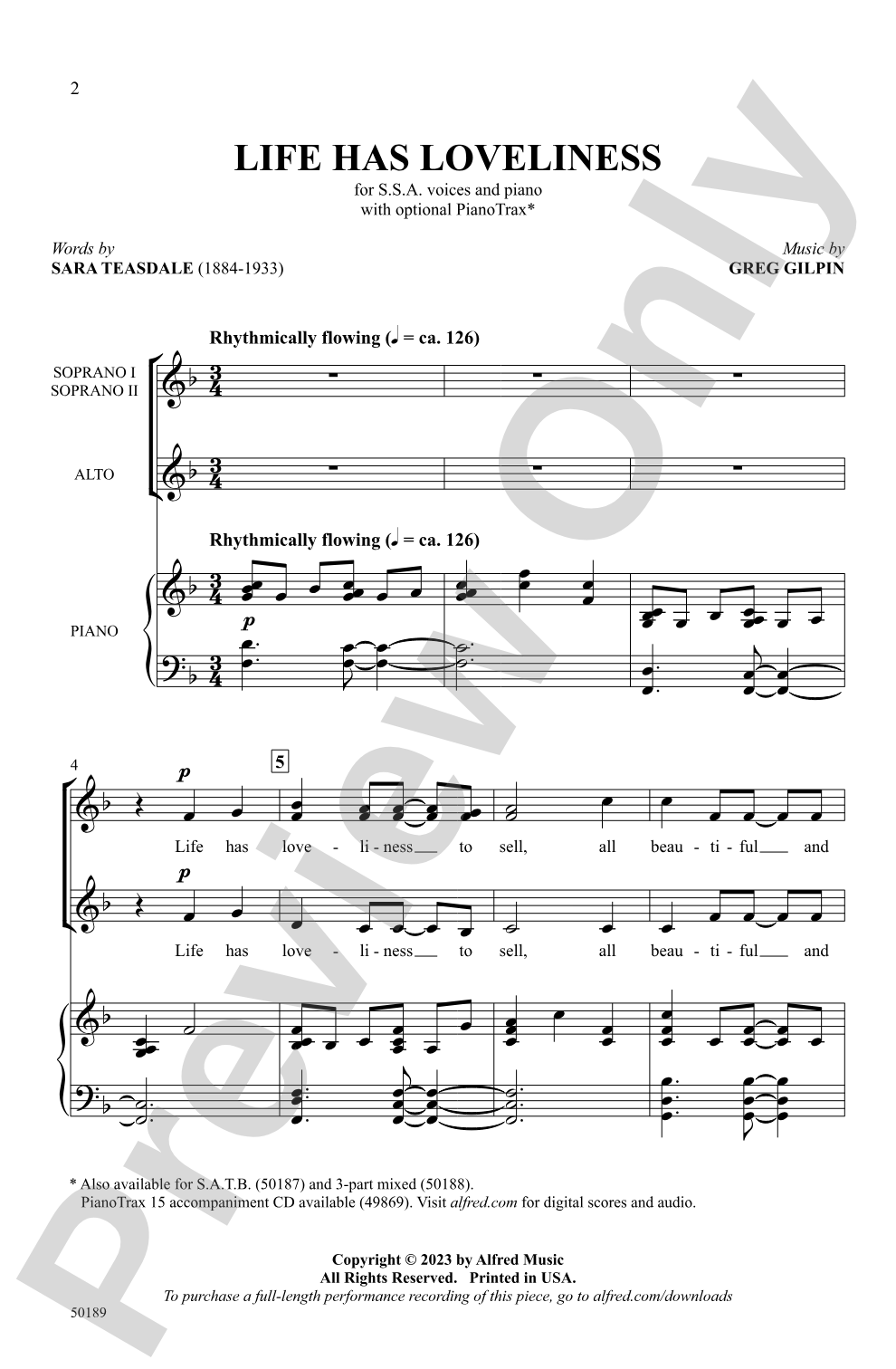
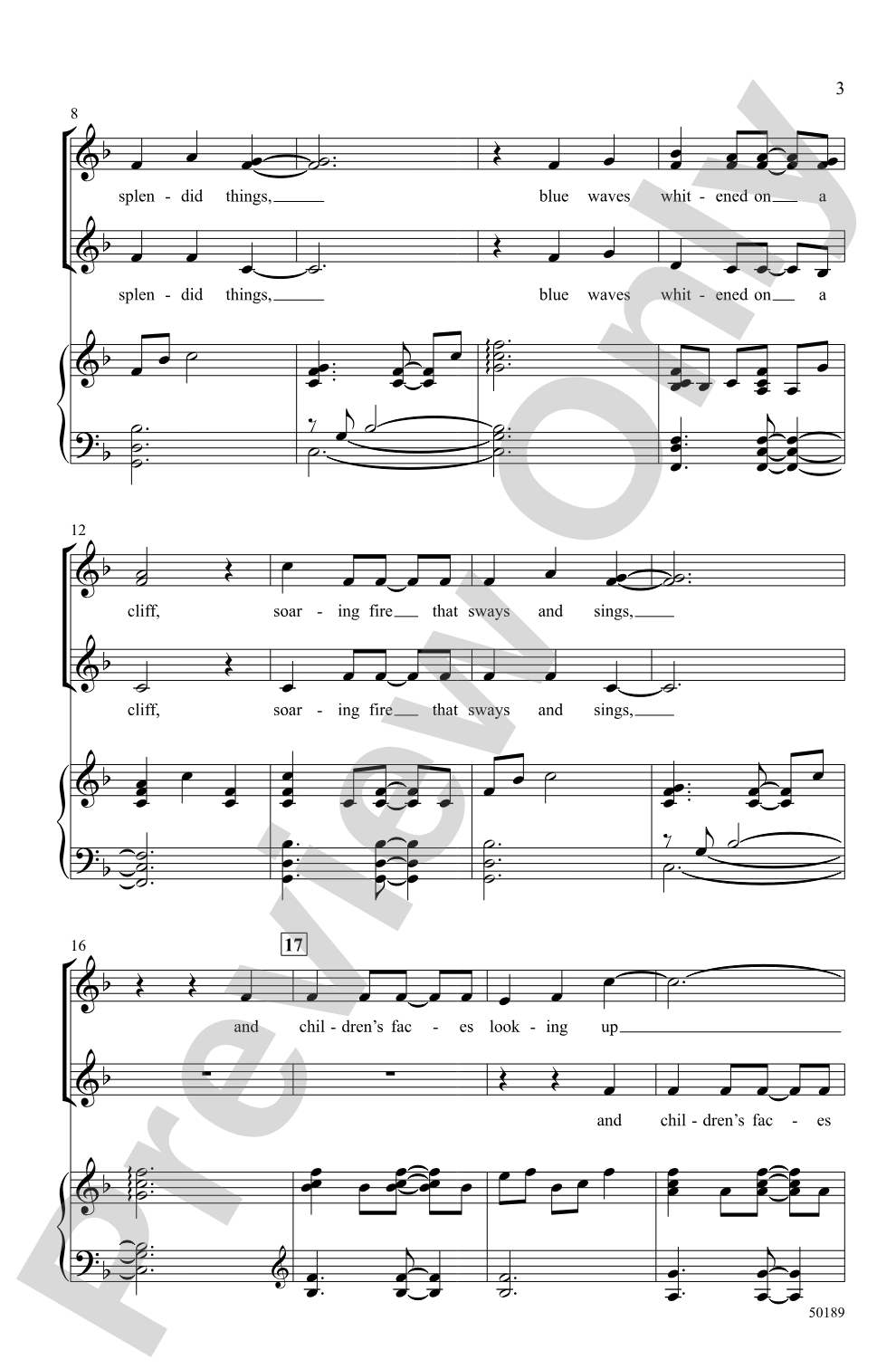
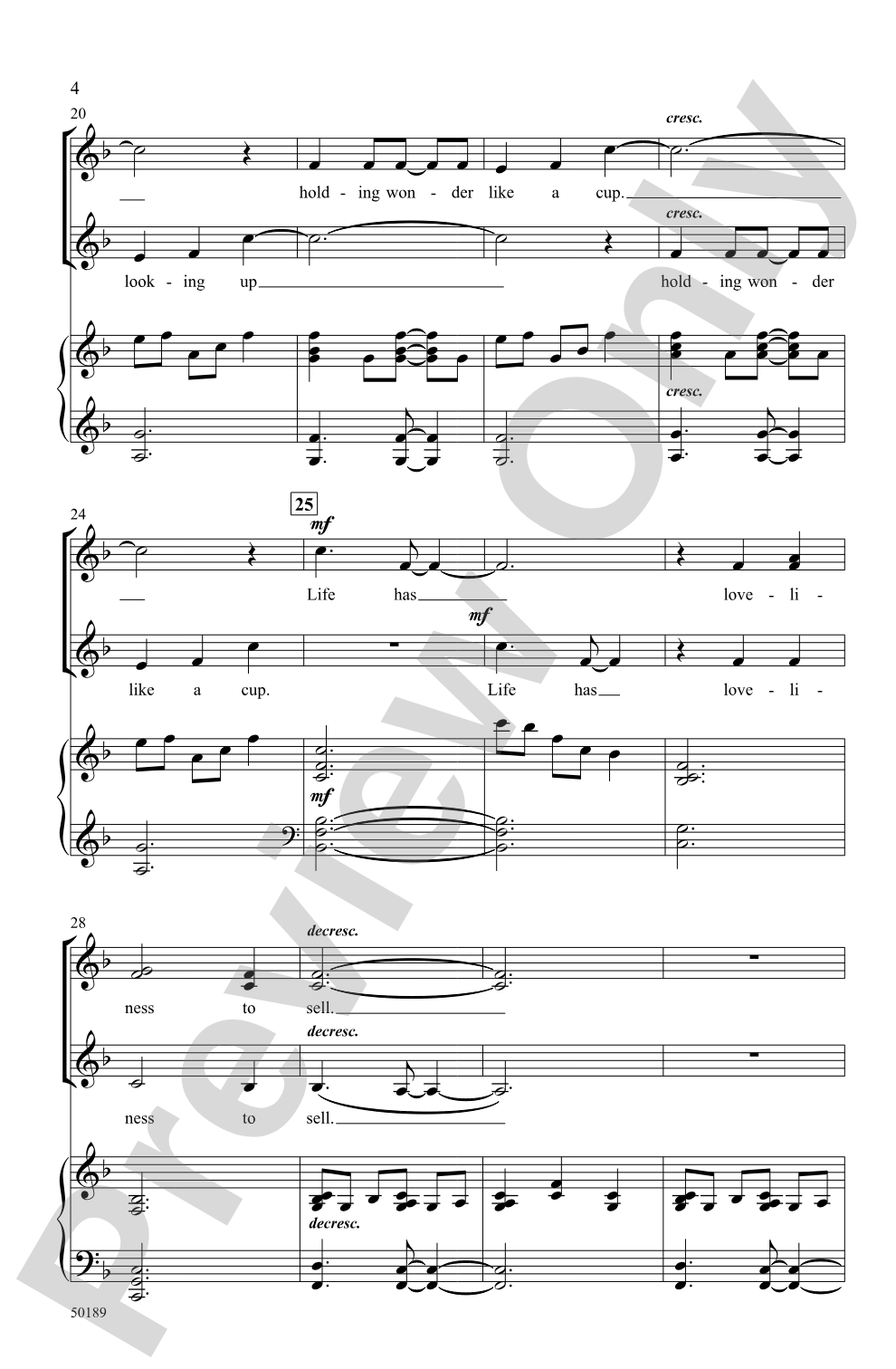
Acknowledge life's many gifts with this splendid setting of Sara Teasdale's poem that reminds us to "spend all you have for loveliness." A lilting rhythmic flow and some refreshing mixed meter moments create a buoyant effect. Greg's tuneful lines and sensible part writing are satisfying to sing and pave the way to success. Absolutely delightful!


Life Has Loveliness: SSA Choral Octavo isn't in MakeMusic Cloud just yet...but it could be. Let us know you'd like to see it, and you'll help shape what comes next. In the meantime, start a free trial and dive into thousands of interactive titles your students can play along with today.
Request This Title
Tell us you want it.
Start Your Free Trial
Explore everything that's ready to play right now.
Sample Audio
1
Audio File
--:--
0:00
0:00
Sample Video
Additional Details
Series:
Alfred Choral Designs
Publisher:
Alfred Music
Page Count:
12
SKU:
00-PO-0007045
More about this title
About the Composer: Greg Gilpin

Greg Gilpin has established himself as one of America's leading choral composers, earning ASCAP recognition for his contributions to the field. His work has been performed at prestigious venues across North America and internationally, from Carnegie Hall and Lincoln Center to the Sydney Opera House and Royal Festival Hall in London. As Director of Educational Choral Publications for Shawnee Press, he shapes the landscape of choral literature available to singers and directors everywhere.
Beyond composition and conducting, Gilpin has pursued diverse creative and professional endeavors. He scored the award-winning short film "Rosie's Rescue" and collaborated with opera singer Angela Brown on a world premiere arrangement of "What Child is This?" He holds memberships in ACDA, NAfME, SAG-AFTRA, and serves as a Life Loyal Member of Phi Mu Alpha Sinfonia, reflecting his deep commitment to music education and the profession.
Why we love this
Gilpin's setting captures the essence of Teasdale's poem through music that feels immediately singable yet thoughtfully crafted. The mixed meter touches and rhythmic fluidity give the piece contemporary energy without sacrificing the accessibility your singers need to find success in rehearsal and performance. This is the kind of piece that rewards both careful preparation and spontaneous joy.
What to expect
There's a sense of buoyancy that lifts throughout this piece, carried by lilting rhythms that feel naturally conversational. The mixed meter moments create subtle surprises that keep the setting fresh and engaging, while the overall harmonic language remains warm and accessible, never demanding more than your singers can give.
Who it's for
This piece suits intermediate to advanced SSA choirs seeking repertoire that sounds sophisticated without becoming a technical burden. It works beautifully for graduation services, spring concerts, and festivals where the text's message about finding and celebrating loveliness resonates with your audience.
How to get the most out of it
- Shape the dynamic contours throughout to honor the lyrical quality of the text; resist the temptation to stay in one volume just because the piece feels buoyant.
- Pay attention to the mixed meter passages as rhythmic opportunities rather than obstacles. Isolate these sections in rehearsal with a steady internal pulse so singers internalize the shifts naturally.
- Balance the parts so that the melodic line in whichever voice carries it remains clear and singing, even when other voices provide harmonic support.
- Use the recorded accompaniment to lock in confident entries and refine ensemble blend during the middle rehearsal stages, then pull away from it as the piece solidifies.
How to use it
Program this alongside other secular works that celebrate gratitude or joy; it pairs well with selections on themes of reflection and appreciation. It also serves double duty as both a concert piece and a festival selection, making it a strategic choice when you're preparing repertoire for multiple performance contexts in the same season. Consider it for a springtime program or any occasion calling for an affirming, memorable finale.
Skills your students will build
- Reading mixed meters (transitions between simple and compound time signatures)
- Phrasing lyrical, text-driven melodic lines
- Maintaining ensemble cohesion across rhythmic shifts
- Interpreting poetic text through musical expression