
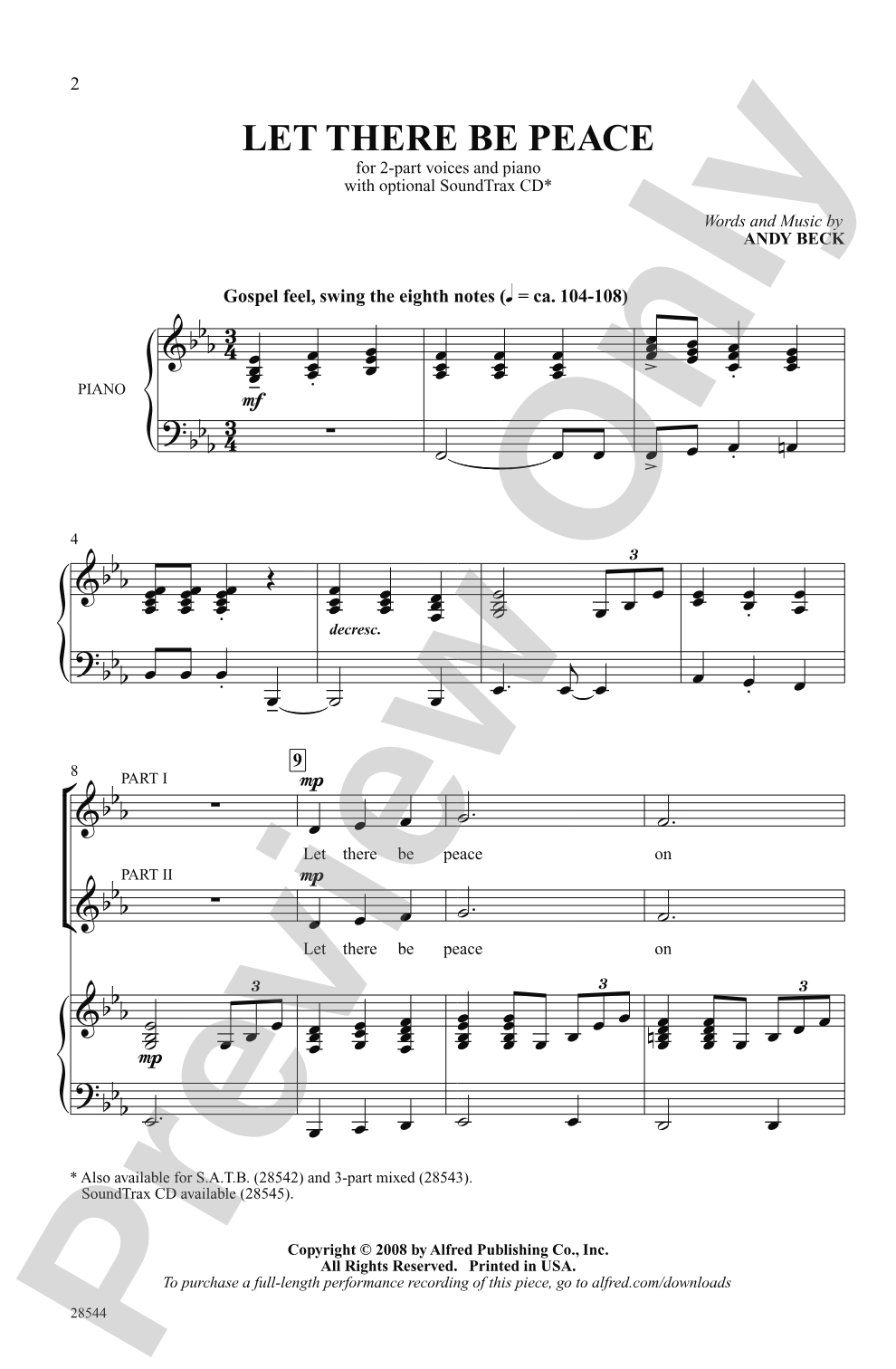
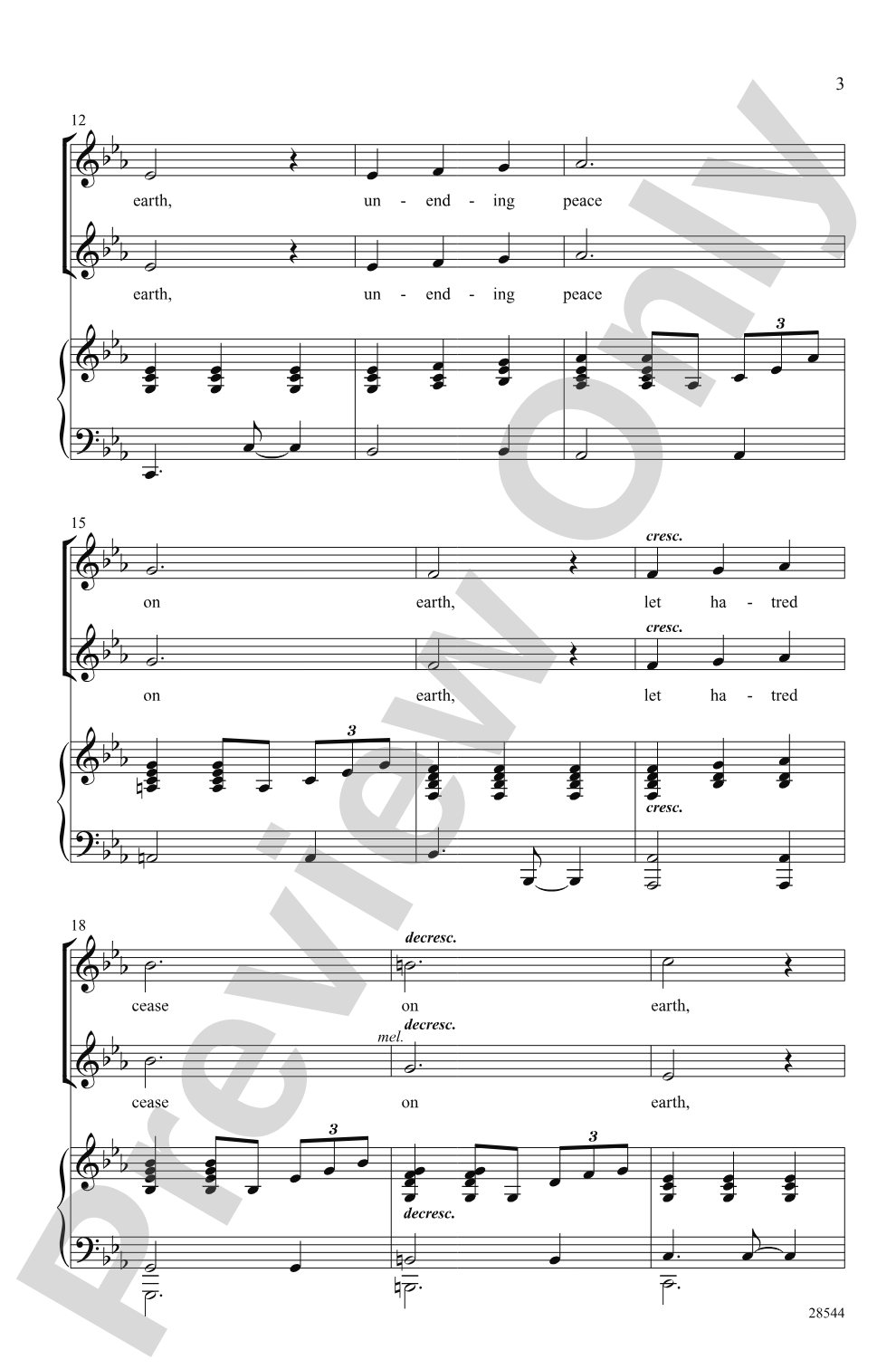

Let There Be Peace: 2-Part Choral Octavo
Words and music by Andy Beck
Item: 00-PO-0000480
$2.05
Minimum order quantity: 20 copies
Pickup currently not available
Related Items
Let There Be Peace: SoundTrax Digital Audio Download |
$27.99
|
View | |
Let There Be Peace: SATB Choral Octavo |
$2.05
|
View | |
Let There Be Peace: 3-Part Mixed Choral Octavo |
$2.05
|
View | |
Let There Be Peace: SATB Choral Octavo |
$2.05
|
View | |
Let There Be Peace: 3-Part Mixed Choral Octavo |
$2.05
|
View | |
Let There Be Peace: 2-Part Choral Octavo |
$2.05
|
View | |
Let There Be Peace: Choral Octavo SoundTrax CD |
$27.99
|
View |
Description
This powerful gospel original longs for world peace with a deliberate 3/4 groove that explodes into a revival-style tag. Two brief solos are not difficult to sing, but enhance the gospel style. Add the sign language choreography featured on the Hooray for Hollywood! choral movement DVD.


Let There Be Peace: 2-Part Choral Octavo isn't in MakeMusic Cloud just yet...but it could be. Let us know you'd like to see it, and you'll help shape what comes next. In the meantime, start a free trial and dive into thousands of interactive titles your students can play along with today.
Request This Title
Tell us you want it.
Start Your Free Trial
Explore everything that's ready to play right now.
Sample Audio
1
Audio File
--:--
0:00
0:00
Sample Video
No sample videos found.
Additional Details
Series:
Alfred Choral Designs
Publisher:
Alfred Music
Page Count:
12
SKU:
00-PO-0000480
More about this title
About the Composer: Andy Beck

Andy Beck leads the choral publications division at Alfred Music, where he shapes the company's vocal catalog with both original compositions and thoughtfully crafted arrangements. His output spans well over 450 published works across choral music, vocal resources, and children's musicals, all designed with classroom and performance needs in mind. Beyond the page, Beck remains active as a guest conductor, choreographer, and clinician working with honor choirs and all-state ensembles across the country.
Educationally grounded in both music education pedagogy and performance practice, Beck earned degrees from Ithaca College and Northwest Missouri State University. He has authored respected resources for sight-singing and vocal technique, including Sing at First Sight and Vocalize! His work as a tenor soloist, conductor of the North Carolina Master Chorale Chamber Choir, and a studio singer with Alfred since 1992 ensures that his compositions reflect the practical demands of singers at all levels. His commissions and guest conducting engagements with youth, collegiate, and adult ensembles have established him as a trusted voice in American choral music.
Why we love this
Beck writes gospel with genuine stylistic authority. The 3/4 groove propels the piece with unusual forward momentum for the idiom, and the shift into revival-style energy in the final tag gives you a moment that will energize any audience. The solo opportunities are modest enough that you can cast them with confidence even in younger or developing programs, yet they deliver authentic gospel character.
What to expect
The opening establishes a meditative, hopeful quality in the 3/4 groove, with singers moving through phrases that feel both grounded and searching. As the piece builds toward the tag, the energy shifts dramatically into a celebratory, revival-driven sound that feels earned rather than sudden, capturing both the longing for peace and the joy of communal singing.
Who it's for
This piece serves 2-part choirs at the middle school through early high school level, as well as developing high school programs where treble voices need strong material with contemporary style and flexible voicing. It works equally well in educational settings and community or church choirs seeking authentic gospel writing with manageable technical demands.
How to get the most out of it
- Find the pocket of the 3/4 groove by isolating the rhythm section (if using the recorded accompaniment) and letting singers feel how the beat sits just slightly behind the pulse.
- Treat the two solo passages as genuine solos; even though the writing is accessible, singers will need microphone technique and focused breath support to maintain the intimate gospel tone against the accompaniment.
- Shape the dynamic arc toward the revival-style tag rather than hitting it at the same energy level as the opening. Build tension through dynamics and ensemble precision in the bars leading up to that shift.
- If staging the choreography from the Hooray for Hollywood! choral movement DVD, rehearse movement cues separately from music until both are secure, then layer them together in the final week before performance.
How to use it
Program this as a centerpiece for a concert celebrating social themes or brotherhood, where it can stand alone or bookend a thematic set of spiritually rooted works. The accessible voicing and movement choreography also make it a strong anchor piece for a spring concert focused on contemporary choral expression, particularly when you want to showcase your ensemble's ability to swing a groove and commit to stylistic authenticity.
Skills your students will build
- Singing in compound time (3/4) with gospel-influenced rhythmic phrasing
- Ensemble groove and rhythmic precision against a steady accompaniment
- Gospel stylistic interpretation (vocal inflection, articulation, dynamic shaping)
- Solo performance technique and microphone presence
- Coordination of movement and singing for staged performances