Let There Be Music Cover Image

Let There Be Music: SATB Choral Octavo

$1.75 USD
Sale price  $1.75 USD Regular price 
Skip to product information
Let There Be Music Cover Image

Let There Be Music: SATB Choral Octavo

Music by Sally K. Albrecht

Item: 00-21651

$1.75
Shipped

One moment…

Description
Fill your concert hall with the majestic fanfare of Sally Albrecht's Let There Be Music. Your choir has never sounded stronger than they will as the opening fanfare bursts into the energetic and powerful English/Latin theme of this joyous festival work. "Let there be music, harmony, voices united as one" echoes through the choir with straightforward choral writing and traditional harmonies. The optional SoundPax and SoundTrax CD feature full brass and percussion parts. A dramatic celebration of music.

Let There Be Music: SATB Choral Octavo isn't in MakeMusic Cloud just yet...but it could be. Let us know you'd like to see it, and you'll help shape what comes next. In the meantime, start a free trial and dive into thousands of interactive titles your students can play along with today.

Sample Pages

Sample Audio
0:00
0:00
Sample Video
Additional Details
Series: Alfred Choral Designs
Publisher: Alfred Music
Page Count: 12
UPC: 038081210452
SKU: 00-21651

More about this title

About the Composer: Sally K. Albrecht
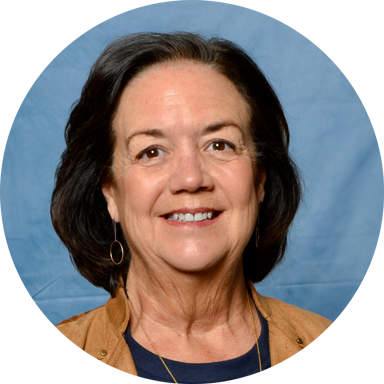
Sally K. Albrecht

Sally K. Albrecht has shaped choral music education for over forty years as a composer, conductor, and clinician whose work centers on choral movement and accessible repertoire. Since 1987, she has received annual ASCAP Special Music Awards and maintains more than 600 published choral works in active use, alongside 75 larger musicals and songbooks. She has conducted honor choirs at major venues including Lincoln Center, Carnegie Hall, and The Kennedy Center, and served as Director of School Choral, Vocal, and Elementary Publications at Alfred Music for three decades.

Albrecht holds degrees from Rollins College (B.A. in Music and Theater, 1976), the University of Miami (M.A. in Drama, 1977; M.M. in Accompanying, 1979), and has taught at Oakland University, Jersey City State College, and Meredith College. She received the Distinguished Alumna Award from both the University of Miami Frost School of Music and Rollins College in 2021, and previously served as Chair of the Board of Trustees for the Omicron Delta Kappa National Leadership Honor Society. She lives in Wake Forest, North Carolina, with her husband, composer and arranger Jay Althouse.

Why we love this

This piece balances immediate impact with musicality. The opening fanfare grabs the audience at once, but the English/Latin text sets up a moment of genuine reflection before the energy returns, giving your singers meaningful dynamic and emotional range within a single work. Albrecht's straightforward harmonies mean rehearsal time goes toward interpretation and vocal blend rather than untangling chromatic complexities, freeing you to shape something polished and confident.

What to expect

A celebration bursts open with ceremonial brightness, then settles into something more meditative and unified before rising again with renewed purpose. The mixture of English and Latin text creates an intellectual and spiritual resonance, while the straightforward harmonies give the work an almost hymn-like accessibility that builds collective power.

Who it's for

Choirs at the intermediate to advanced level who want a showstopper that doesn't demand specialized vocal technique or complex part-writing. This works equally well for high school ensembles building concert programming or community choirs seeking a joyous, energizing centerpiece.

How to get the most out of it

  • Balance the opening brass fanfare (optional instrumental parts) so the choir's entrance cuts through clearly; rehearse the choir's entrance with just the piano first to lock in timing and confidence.
  • Shape the text painting around "voices united as one." This phrase deserves slight broadening and fuller dynamics to reflect its meaning, creating a genuine moment of ensemble cohesion.
  • If using the optional SoundPax or SoundTrax accompaniment, begin rehearsals without it to establish your choir's internal rhythmic control, then layer in the recording to build independence and presence.

How to use it

Program this as an opener or a first-half closer to establish momentum and set an uplifting tone for your concert. It pairs naturally with smaller introspective choral works, letting the festival-like energy frame more delicate repertoire, or stand alone in a program celebrating music itself.

Skills your students will build

  • Balanced blend and balance across four voice parts in traditional SATB voicing
  • Clear articulation and rhythmic precision in the fanfare sections
  • Text declamation in both English and Latin languages
  • Dynamic contrast and emotional shaping from celebratory to reflective passages
  • Ensemble unity and collective intonation in homophonic writing

You May Also Like