
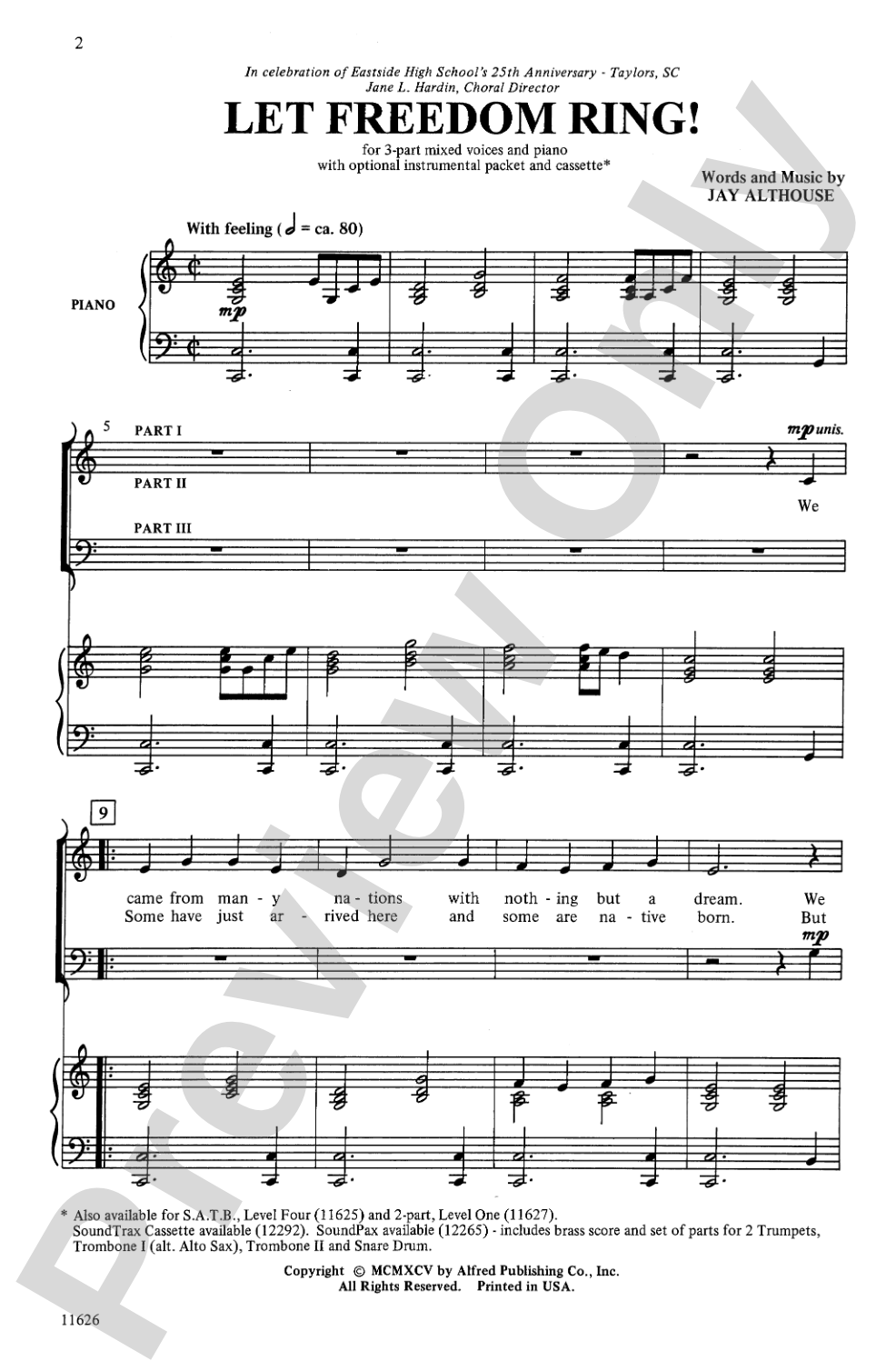

Let Freedom Ring!: 3-Part Mixed Choral Octavo
Music by Jay Althouse
Item: 00-PO-0003888
$2.25
Minimum order quantity: 20 copies
Pickup currently not available
Description
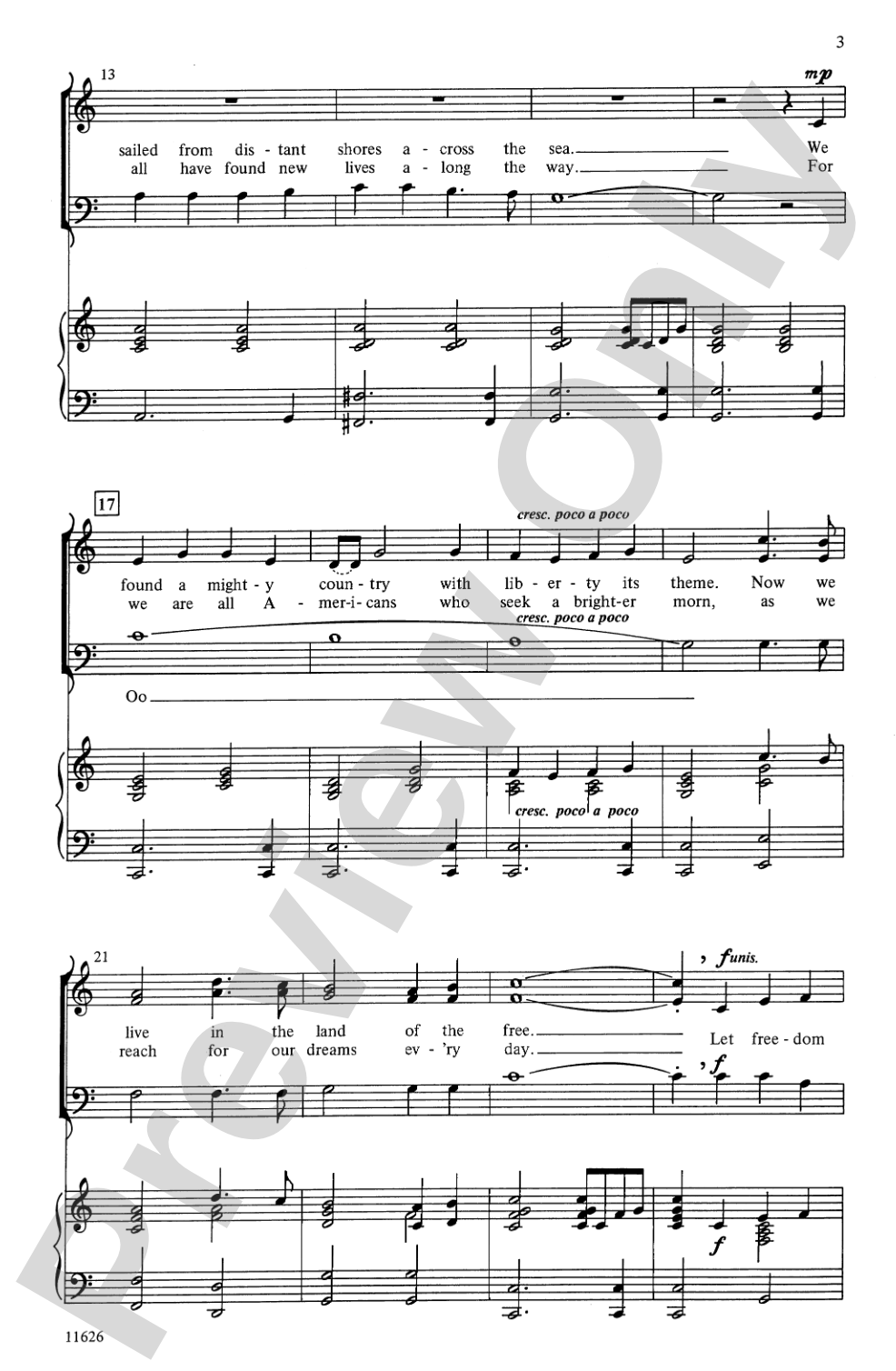
A moving patriotic work by Jay Althouse with an especially timely text: "We came from many nations with nothing but a dream." The final statement of the melody incorporates a descant singing "America The Beautiful." Brass parts are so effective and easy to add. With the Olympics just around the corner, consider it for Spring concerts.


Let Freedom Ring!: 3-Part Mixed Choral Octavo isn't in MakeMusic Cloud just yet...but it could be. Let us know you'd like to see it, and you'll help shape what comes next. In the meantime, start a free trial and dive into thousands of interactive titles your students can play along with today.
Request This Title
Tell us you want it.
Start Your Free Trial
Explore everything that's ready to play right now.
Sample Audio
1
Audio File
--:--
0:00
0:00
Sample Video
No sample videos found.
Additional Details
Series:
Alfred Archive Edition: Alfred Choral Designs
Publisher:
Alfred Music
Page Count:
8
SKU:
00-PO-0003888
More about this title
About the Composer: Jay Althouse

Jay Althouse holds degrees in Music Education and Music from Indiana University of Pennsylvania, where he was later honored with the Distinguished Alumni award. His eight-year tenure as a rights and licenses administrator at a major educational music publisher gave him deep insight into what choirs actually need; during that time, he also served on the Executive Board of the Music Publishers Association of America.
Why we love this
Althouse captures something genuine here: the tension between patriotism and inclusion, grounded in a text that reflects actual American experience rather than empty flag-waving. The descant over "America The Beautiful" in the final section lifts the piece beyond a standard patriotic number into something that rewards singers emotionally, and the optional brass parts are genuinely idiomatic and manageable for most ensembles.
What to expect
Hopeful and inclusive rather than triumphalist. The opening text grounds the music in the real stories of people arriving with nothing but aspiration, and Althouse's harmonic language supports that emotional honesty without resorting to bombast. The final moment, when the descant enters over the main melodic line, creates a sense of layered voices and shared purpose that can move audiences.
Who it's for
SAB choirs with developing soloists capable of handling the descant line in the final section. The piece works equally well for mixed ensembles at the intermediate to advanced amateur level, community choirs building concert programs around patriotic themes, and school choirs performing for summer events or Fourth of July celebrations.
How to get the most out of it
- Balance the three parts carefully in rehearsal; the SAB voicing means your sopranos carry the melody but your altos and basses need clear diction to anchor the harmony, especially where they support the text about "many nations."
- The recorded accompaniment (available separately) works best as a reference tool during early learning rather than for performance; consider building instrumental support gradually as your singers gain confidence with the part-writing.
- If you use the optional brass parts, rehearse them independently first, then layer them in only after the choir owns the music; brass timbre can overwhelm a developing SAB sound if it arrives too early in the learning process.
- Shape the final descant moment as a genuine climax, not a vocal stunt; the sopranos singing "America The Beautiful" over the main melody works only if both lines feel equally present and purposeful.
How to use it
Program this for spring or early summer concerts alongside other American repertoire, or feature it as the centerpiece of a patriotic-themed program timed to Independence Day. The eight-page length and accessible voicing make it manageable for programs that need a substantial choral work without excessive rehearsal demands; consider pairing it with a shorter, contrasting secular piece to frame a meaningful first half of your concert.
Skills your students will build
- Reading three-part mixed voicing with independent harmonic lines
- Blending descant lines with main melody and maintaining vocal independence
- Text interpretation and projection in patriotic repertoire
- Ensemble coordination with optional brass accompaniment
- Sustaining legit tone across wide range in SAB arrangements