

Let Freedom Ring!: Choral SoundPax
Music by Jay Althouse
Item: 00-PK-0000073

$15.00
Pickup currently not available
Buy Extra Parts (Digital PDF Download)
Parts Added to Cart!
Description
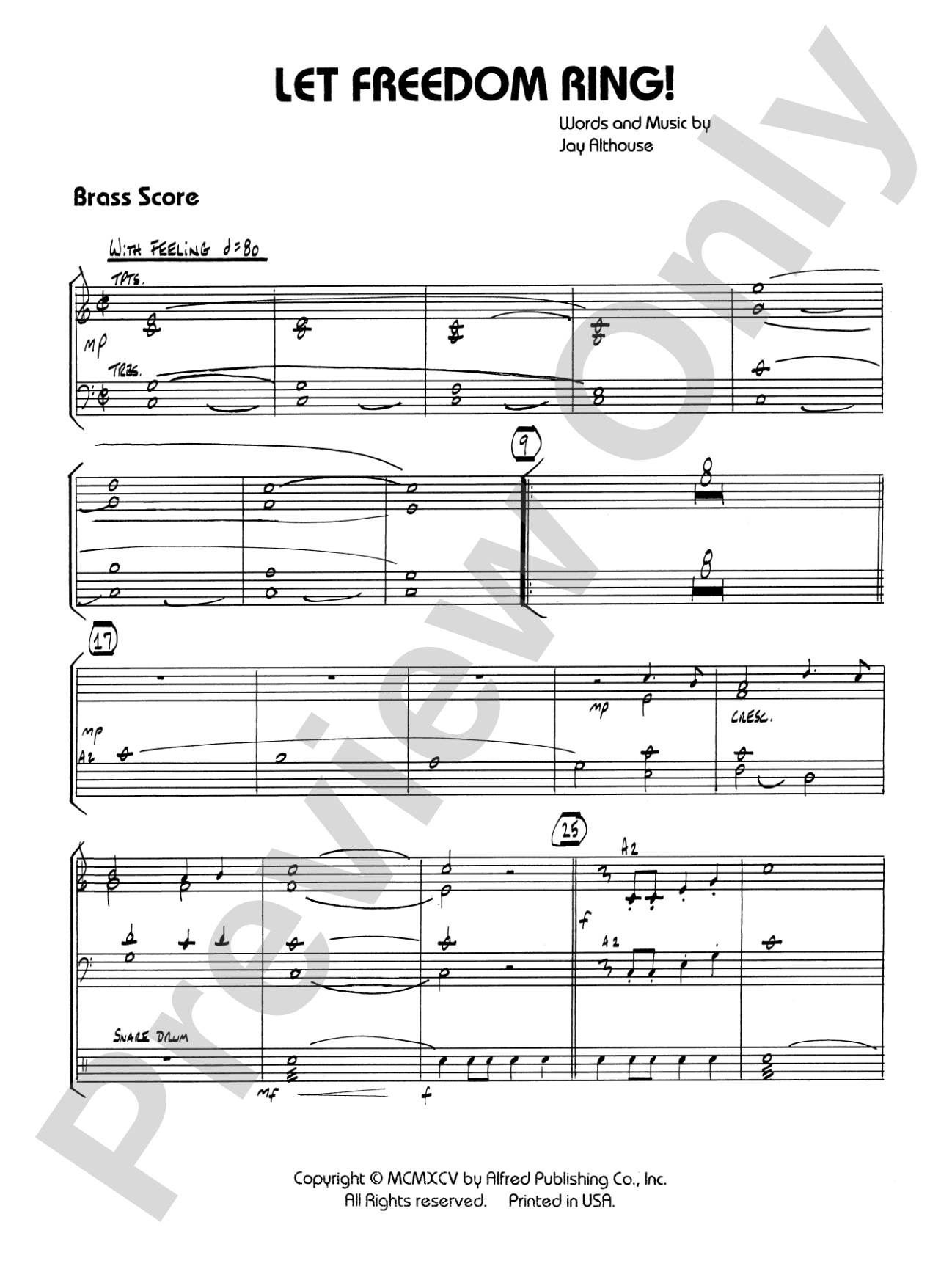
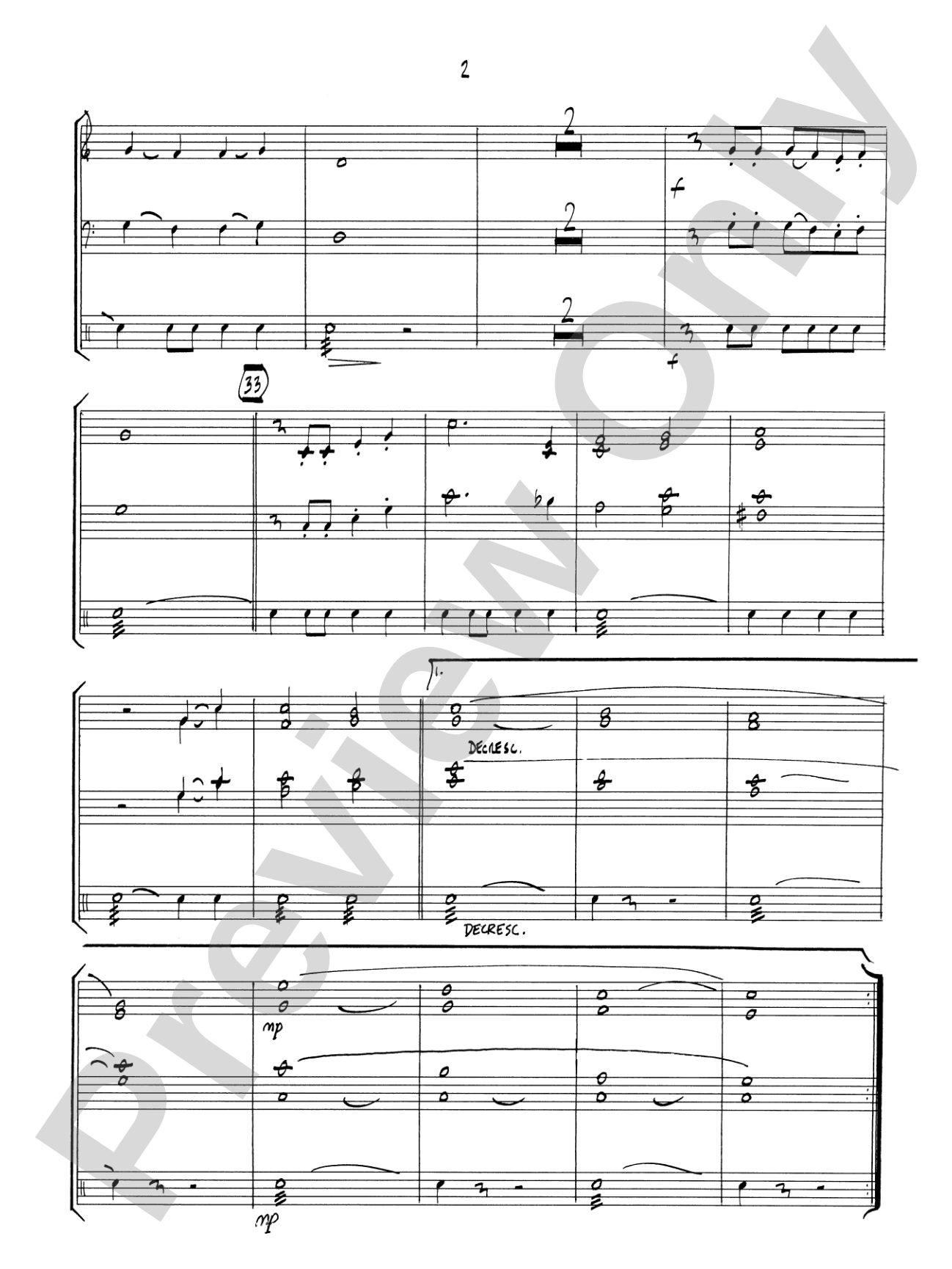
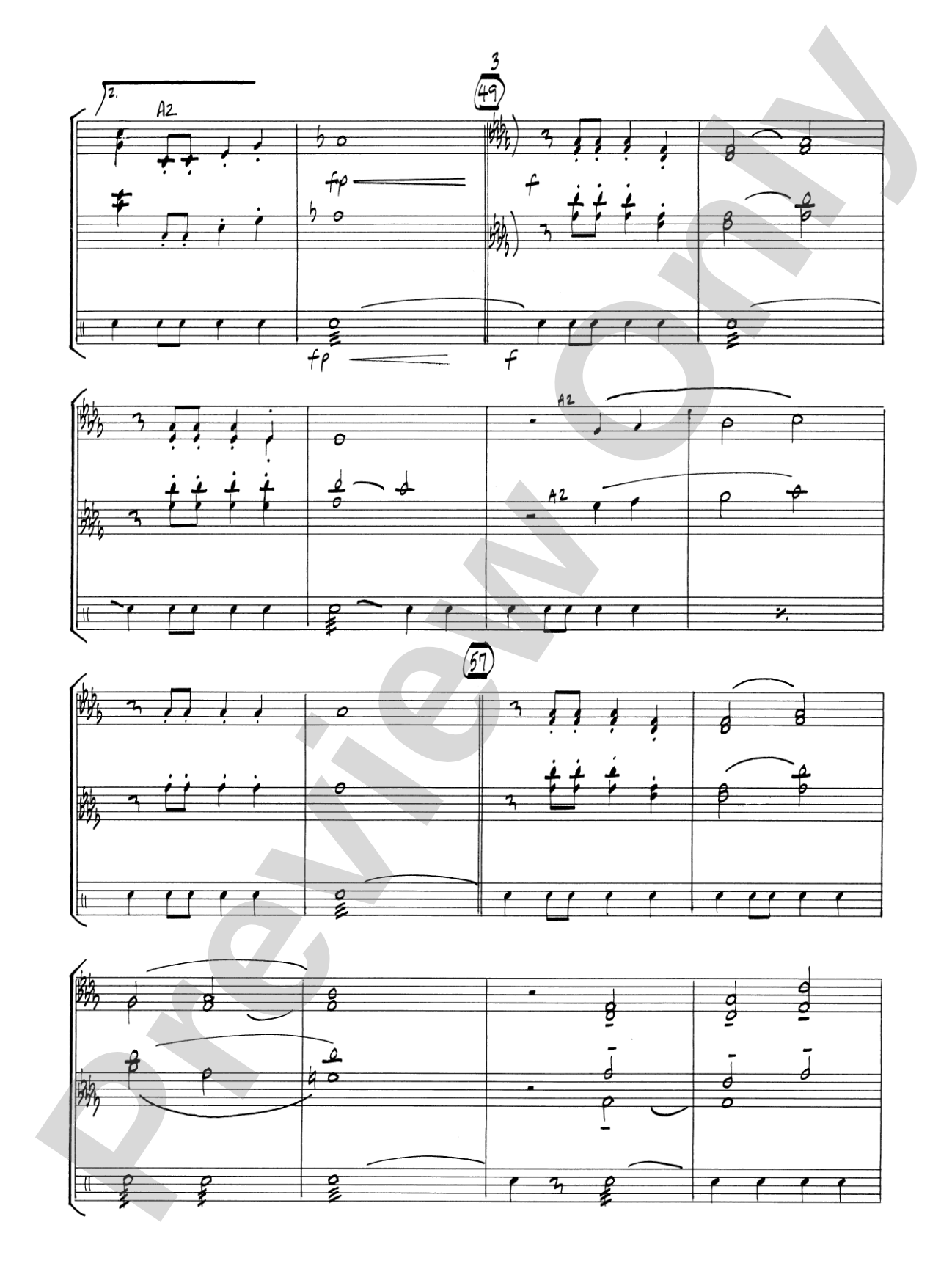
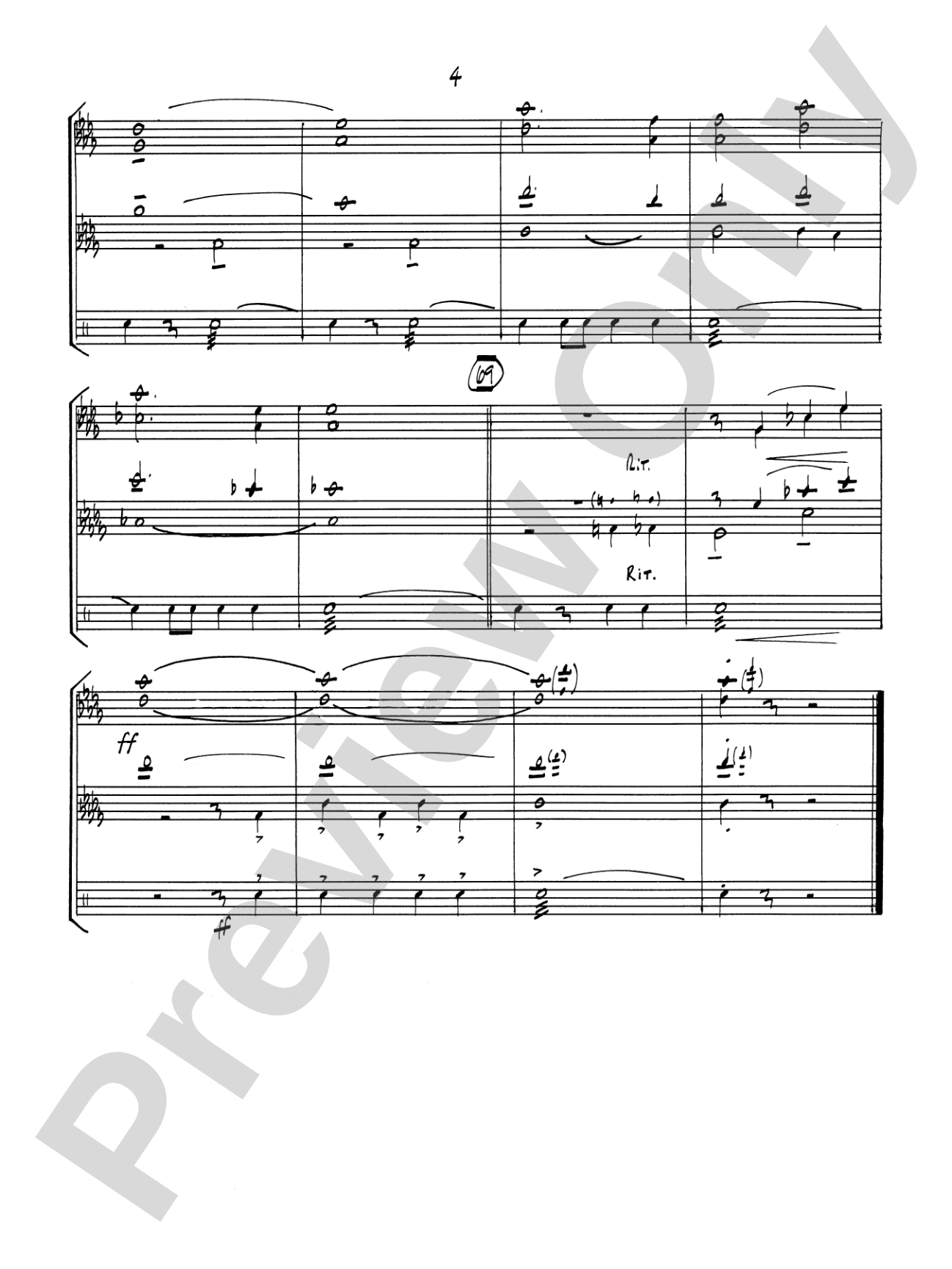
A moving patriotic work by Jay Althouse with an especially timely text: "We came from many nations with nothing but a dream." The final statement of the melody incorporates a descant singing "America The Beautiful." Brass parts are so effective and easy to add. With the Olympics just around the corner, consider it for Spring concerts. InstruPax includes: director's score, 2 trumpets, trombone I [opt. alto sax], trombone II, snare drum.


Don't just read it, hear it, play along with it, and watch your students grow with it. In MakeMusic Cloud, Let Freedom Ring!: Choral SoundPax comes alive with professional accompaniment, adjustable tempo, and built-in practice tools that turn solo practice into real progress.
Open in the Player
Jump straight in and assign it today.
Start Your Free Trial
Open this title and explore the full library in minutes.
Sample Audio
1
Audio File
--:--
0:00
0:00
Sample Video
No sample videos found.
Additional Details
Series:
Alfred Choral Designs
Publisher:
Alfred Music
Page Count:
24
SKU:
00-PK-0000073
Instrumentation:
2 trumpets, trombone I [opt. alto sax], trombone II, snare drum, score
More about this title
About the Composer: Jay Althouse

Jay Althouse holds degrees in Music Education and Music from Indiana University of Pennsylvania, where he was later recognized as a Distinguished Alumni. His background in music publishing, where he spent eight years managing rights and licenses and served on the Executive Board of the Music Publishers Association of America, informed his deep understanding of what works in educational settings. As a composer, he has created more than 800 choral works performed across the English-speaking world and holds membership in ASCAP, where he is a regular recipient of the Special Award.
Beyond composition, Althouse has co-written children's musicals with his wife Sally K. Albrecht, edited acclaimed vocal solo collections including Folk Songs for Solo Singers, and authored practical resources for music classrooms such as Ready to Read Music and One-Page Composer Bios. His collaborative work I Hear America Singing was performed by the San Francisco Girls and Boys Choirs at President Barack Obama's Inauguration in 2009. He resides in North Carolina and has been active in the North Carolina Master Chorale and the Folk Art Society of America.
Why we love this
Althouse's text choices ground this piece in real emotional weight. The opening line 'We came from many nations with nothing but a dream' gives singers substantive material to sing with conviction rather than generic patriotic sentiment. The final descant incorporating 'America The Beautiful' creates a stunning textural moment that feels earned rather than gimmicky, and the brass writing remains accessible enough that directors can add it without extensive rehearsal time.
What to expect
Hopeful and inclusive, with a deliberate pulse that feels like movement forward. The music swells from intimate choral harmony into a brass-reinforced statement, creating the sense of individual voices joining into something larger and more powerful.
Who it's for
Directors programming spring concerts who need a work that speaks to current events without sacrificing musical substance. High school and adult choirs will connect with the immigration narrative and find the vocal writing both singable and emotionally resonant.
How to get the most out of it
- Balance the descant against the main vocal line in the final statement; the descant should emerge clearly without drowning the primary melody.
- Shape the text 'We came from many nations' with rhythmic precision to anchor the opening and establish the message before the music expands.
- Use the recorded accompaniment to lock in harmonic progressions, especially where the brass enters; this allows singers to focus on blend with the instruments.
- Bring out the snare drum part in the final section to drive momentum toward the descant climax.
How to use it
Consider pairing it with other Americana or world music repertoire to create a concert theme about cultural unity. The piece's 24 pages and moderate length make it ideal for a spring concert closer, especially one timed near Independence Day or other civic celebrations. The inclusion of movement and staging options also positions it as a centerpiece for a more theatrical presentation.
Skills your students will build
- Singing text-driven repertoire with clear dramatic intent and emotional authenticity
- Balancing a descant line within a choral texture
- Coordinating vocal and instrumental parts in a mixed ensemble setting
- Phrasing patriotic material with dignity and avoiding cliché interpretations