
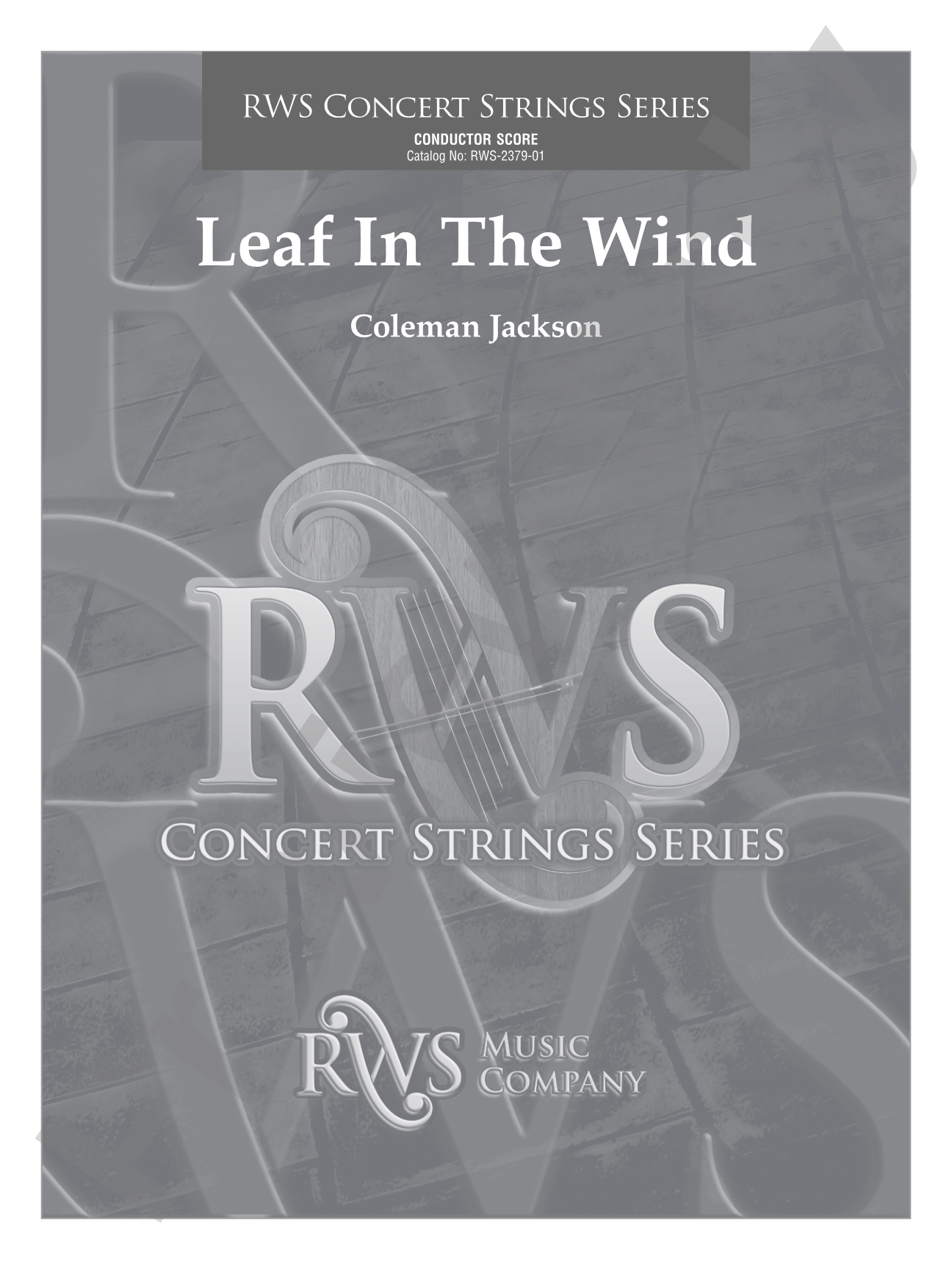


Leaf in the Wind: String Orchestra Conductor Score & Parts
By Coleman Jackson
Grade: 3
Item: 98-PK-RWS2379
$75.00
Pickup currently not available
Buy Extra Parts (Digital PDF Download)
| Product | Price | Quantity |
|---|---|---|
| Leaf in the Wind: Score | $10.00 | |
| Leaf in the Wind: 1st Violin | $5.99 | |
| Leaf in the Wind: 2nd Violin | $5.99 | |
| Leaf in the Wind: Viola | $5.99 | |
| Leaf in the Wind: Cello | $5.99 | |
| Leaf in the Wind: String Bass | $5.99 | |
| Leaf in the Wind: Piano | $5.99 |
Parts Added to Cart!
Description
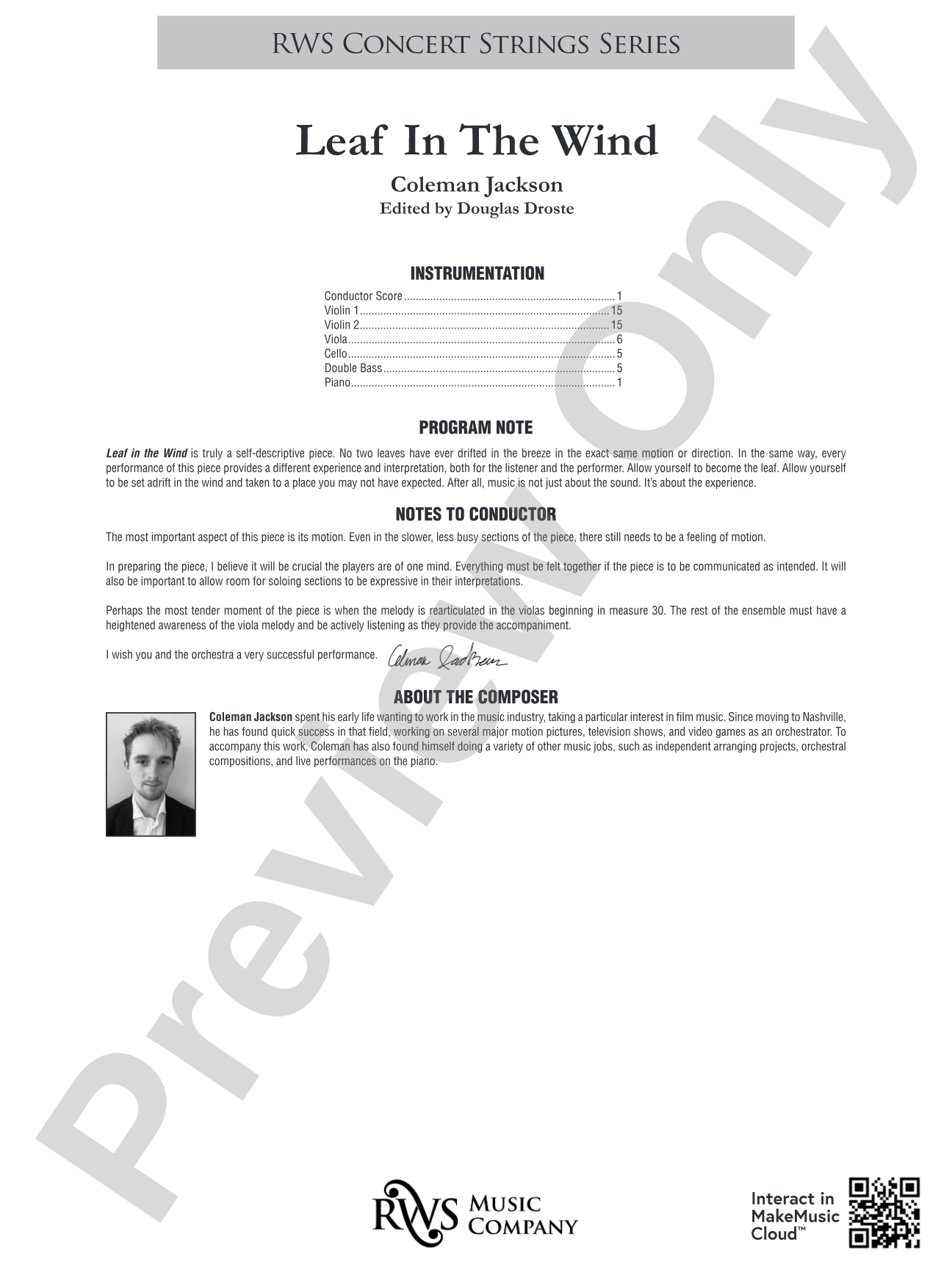
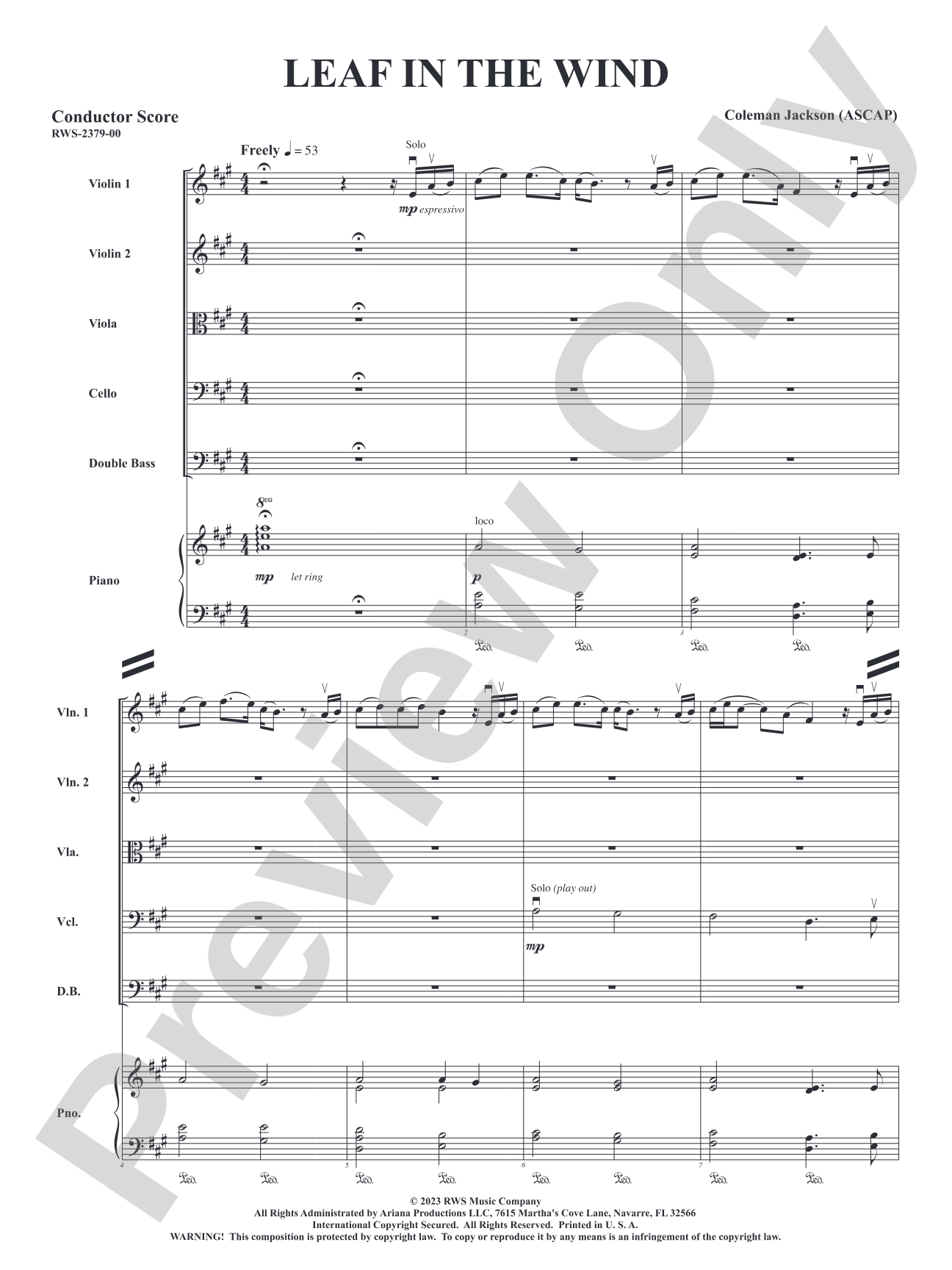
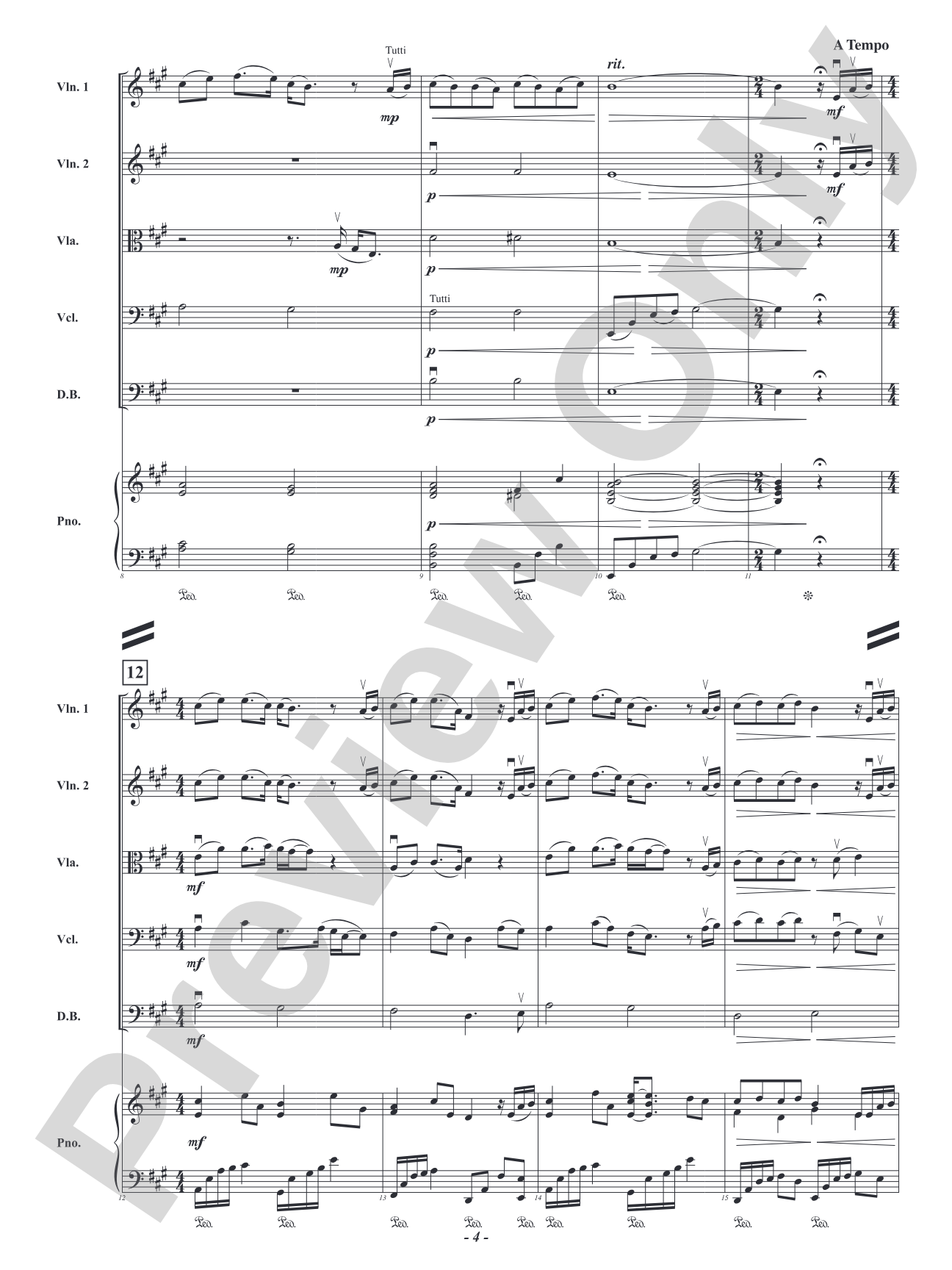
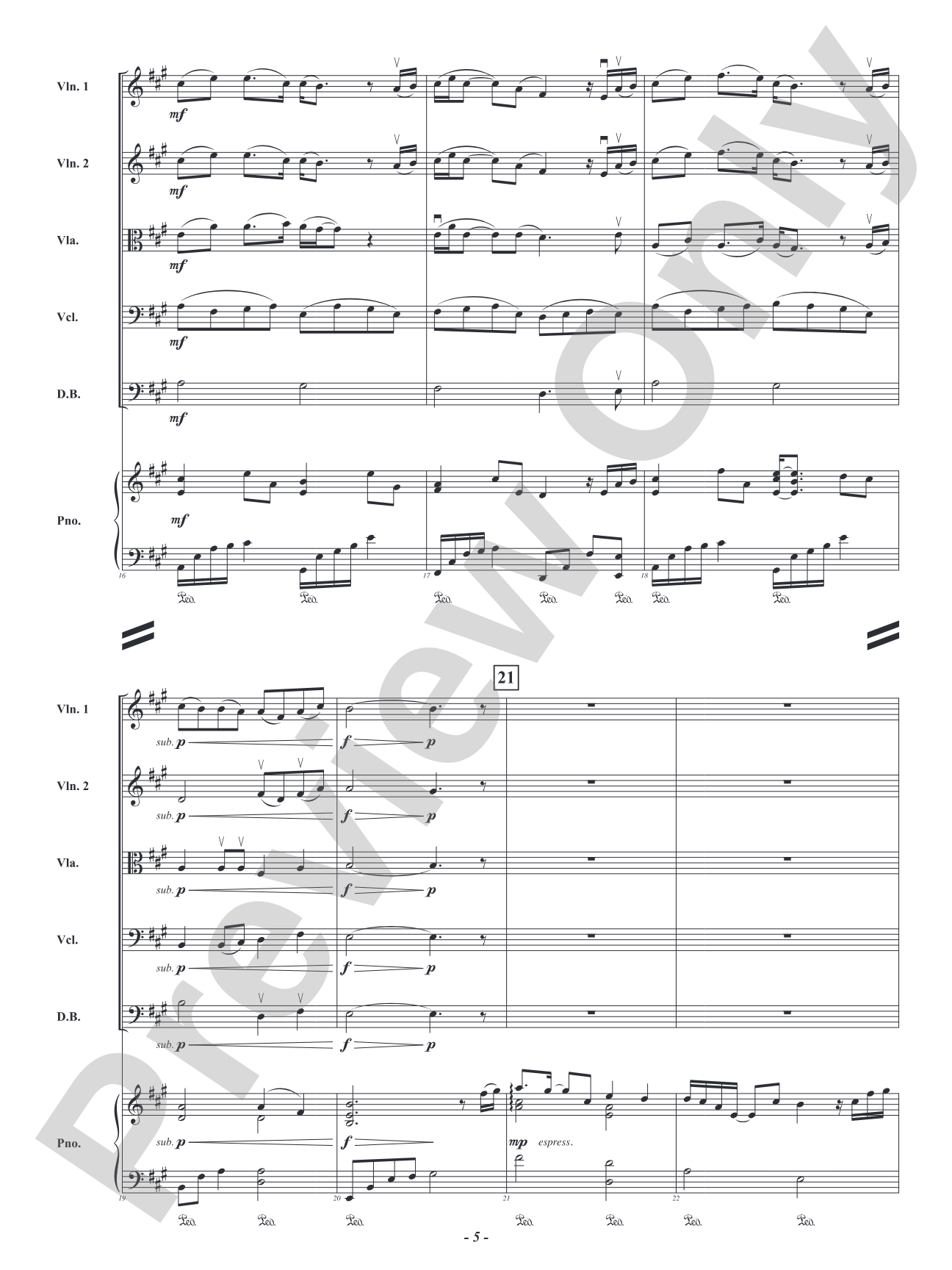
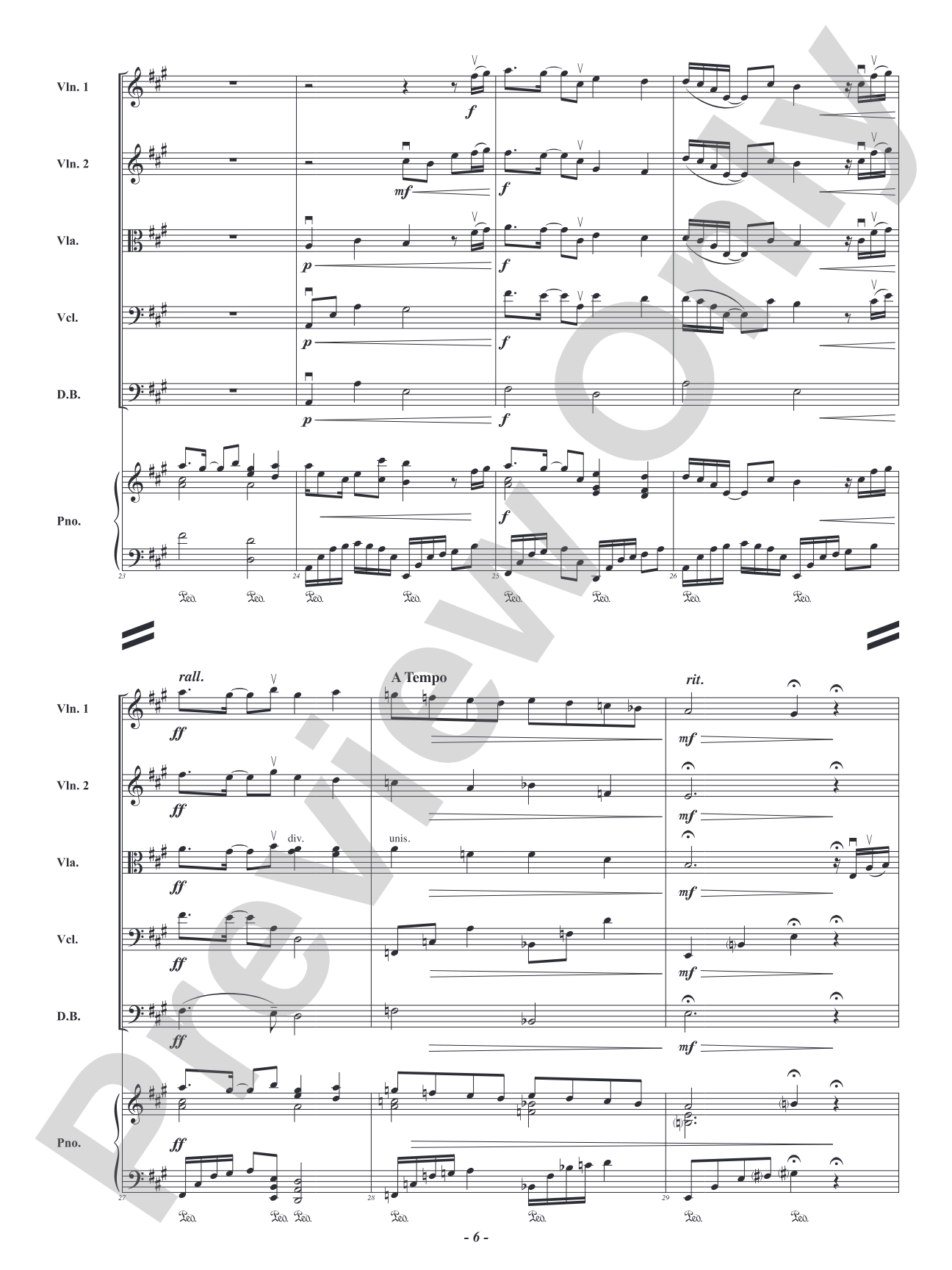
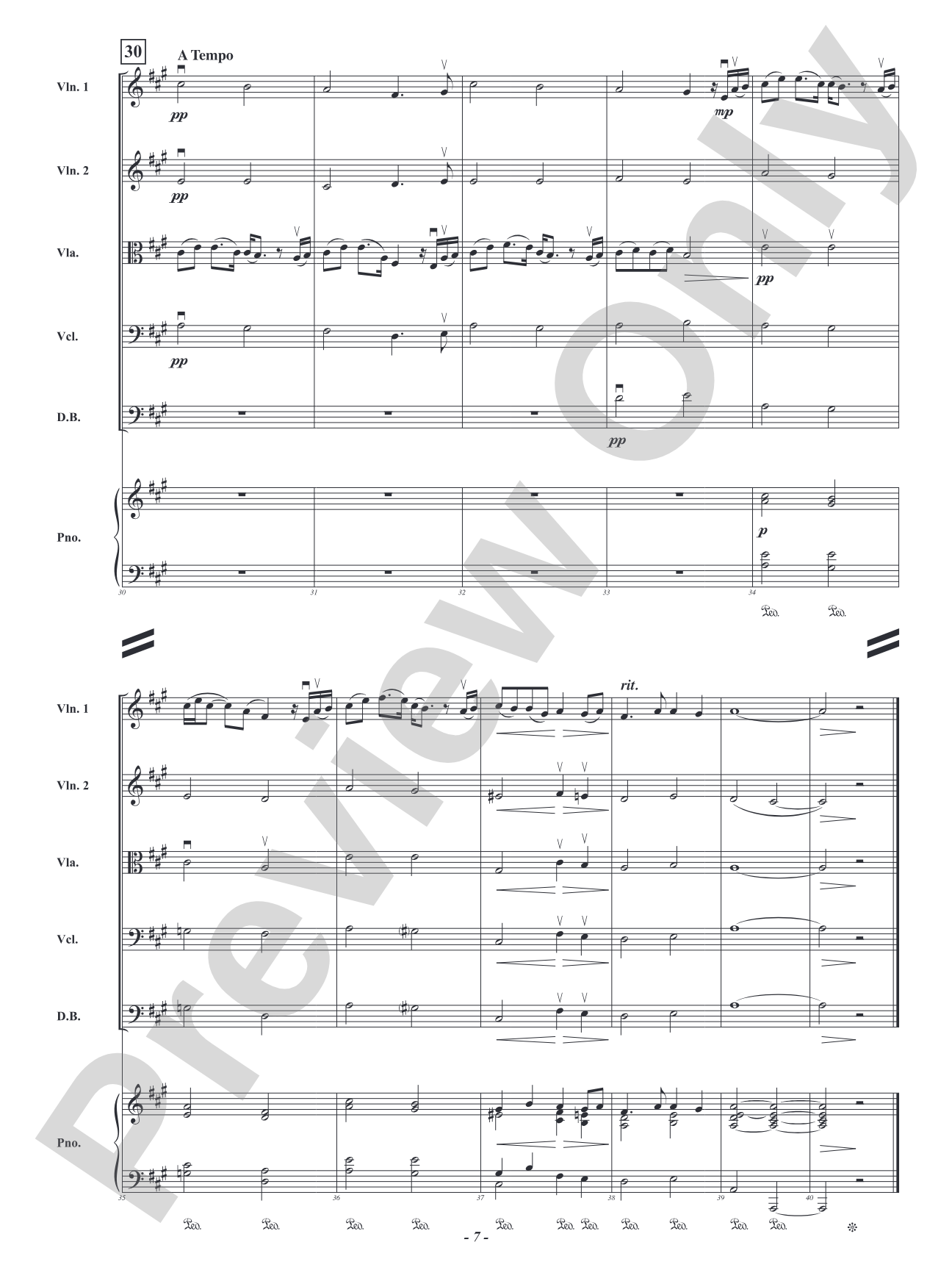
This expressive lyrical work reminds us of the beautiful moments in life as we react and interact with forces of nature and our fellow humankind. Featuring several solo opportunities, the composer gives us a beautiful and memorable melody that is passed throughout the ensemble. An excellent opportunity to teach both ensemble skills and musicality. Highly recommended.
Original Item#: RWS-2379-00


Original Item#: RWS-2379-00
Leaf in the Wind: String Orchestra Conductor Score & Parts isn't in MakeMusic Cloud just yet...but it could be. Let us know you'd like to see it, and you'll help shape what comes next. In the meantime, start a free trial and dive into thousands of interactive titles your students can play along with today.
Request This Title
Tell us you want it.
Start Your Free Trial
Explore everything that's ready to play right now.
Sample Audio
1
Audio File
--:--
0:00
0:00
Sample Video
No sample videos found.
Additional Details
Series:
RWS - Concert Strings
Publisher:
RWS Music Company
SKU:
98-PK-RWS2379
More about this title
Why we love this
Jackson constructs a score that moves naturally between ensemble textures and spotlit solos, giving every player a moment to shine while maintaining the integrity of the musical line. The writing sits comfortably under the fingers at Grade 3, which means your students can focus on phrasing and responding to the conductor rather than battling technical demands. It's the kind of piece that teaches genuine musicality because the music itself invites it.
What to expect
Delicate yet unhurried. The piece carries a lyrical warmth that emerges gradually, inviting listeners into quiet reflection before building toward moments of fuller texture. There's a sense of movement without urgency, as though watching something drift gently through space.
Who it's for
String orchestras at the Grade 3 level, including middle school programs and flexible high school ensembles that value expressive playing alongside technical growth. Directors seeking music that develops both individual musicianship and collective ensemble sound will find real substance here.
How to get the most out of it
- Shape the primary melody across the ensemble by staggering the dynamic arrivals slightly among sections; this prevents a monolithic sound and lets the line breathe naturally from one instrument group to the next.
- Balance the solo passages carefully in rehearsal. Have soloists play their full dynamic only after confirming they're neither buried nor overshadowing the harmonic foundation beneath them.
- Conduct the musical phrases, not the measures. Work with your ensemble to hear where each section of the melody wants to land, then allow breath and release before the next phrase begins.
How to use it
This works beautifully in a concert slot following an energetic opening piece, offering your audience a chance to settle and listen closely. It also pairs well on a program mixing soloistic works with ensemble standards, since the rotating solo passages naturally highlight your strongest players while keeping the ensemble engaged throughout.
Skills your students will build
- Sustaining expressive phrasing across eight or more measures
- Responding to solo passages with responsive, adaptive accompaniment
- Balancing melody against harmonic foundation
- Shaping a lyrical line without dragging or rushing
- Listening for ensemble blend across divided sections