

La Musica (The Music): SAB Choral Octavo
(The Music)
Music by Jay Althouse
Item: 00-PO-0002209
$2.25
Minimum order quantity: 20 copies
Pickup currently not available
Related Items
La Musica (The Music): SATB Choral Octavo |
$2.25
|
View | |
La Musica (The Music): 2-Part Choral Octavo |
$2.25
|
View | |
La Musica (The Music): Choral SoundPax |
$25.00
|
View | |
La Musica: SATB Choral Octavo |
$2.25
|
View | |
La Musica: SAB Choral Octavo |
$2.25
|
View | |
La Musica: 2-Part Choral Octavo |
$2.25
|
View | |
La Musica: Choral Octavo SoundTrax CD |
$27.99
|
View | |
La Musica: Choral SoundPax |
$25.00
|
View |
Description
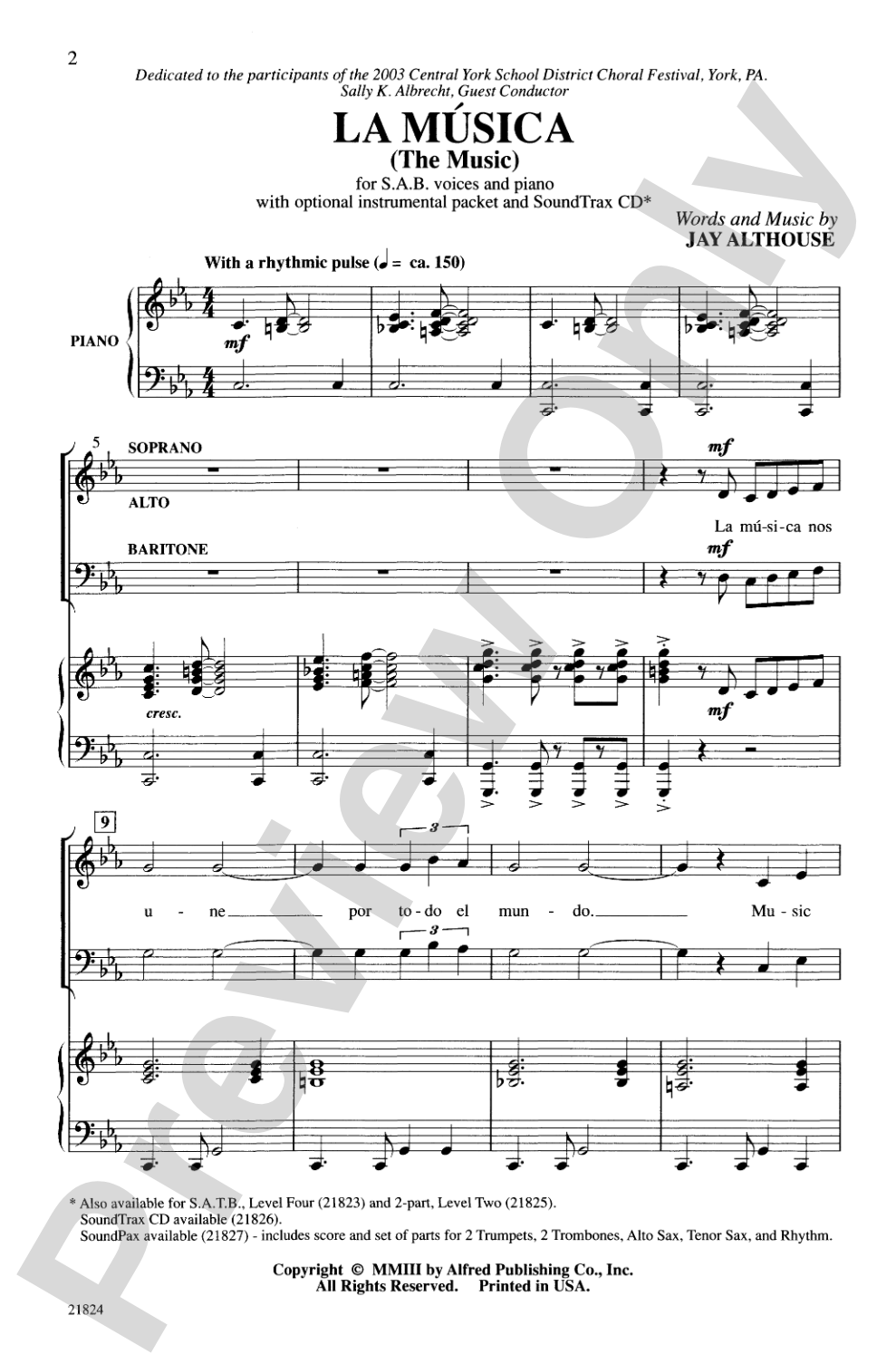
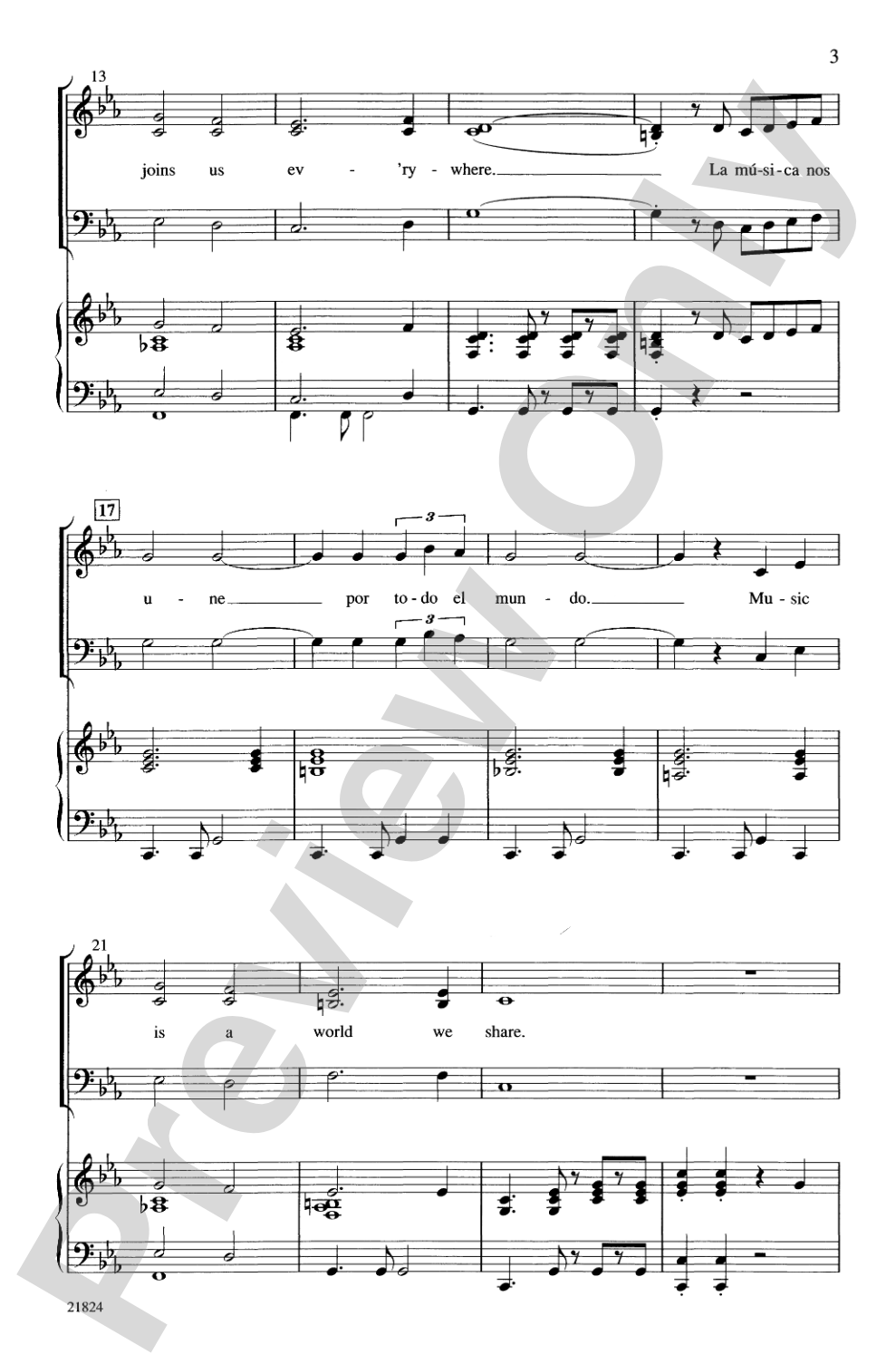
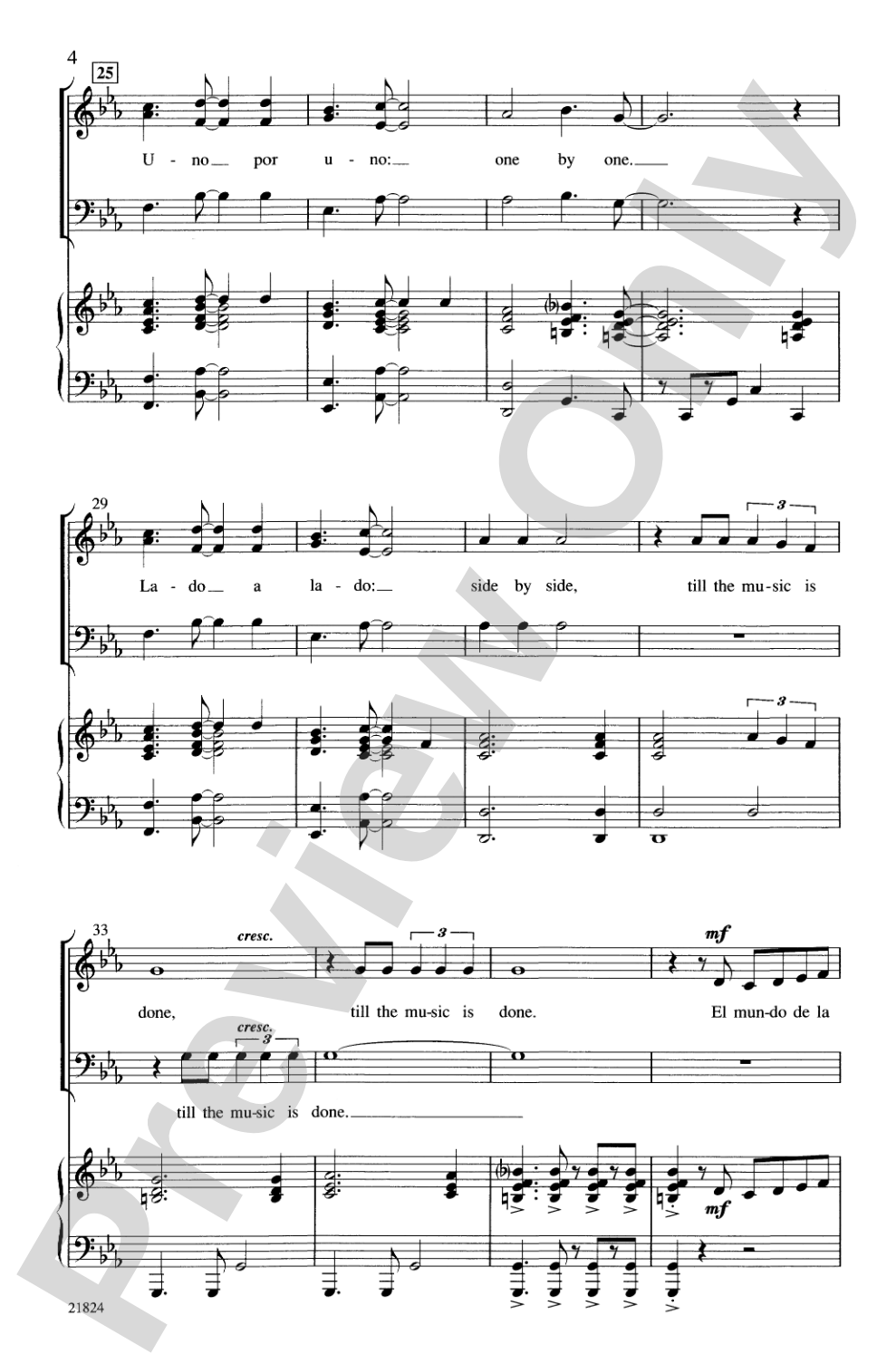
With all the scintillating energy of Cuba in the 1960's, La Música is a hot, hot, hot number from contemporary composer Jay Althouse. Built upon a hypnotic rhythmic pulse, smooth Latin harmonies, and a haunting melody, this cross-cultural number combines English text with a few Spanish phrases to remind us that music is "a world we share." If you liked Jay's ¡Cantar! and Oye la Música, you don't want to miss this exciting sequel. Perform with the authentic sounding SoundTrax or create your own Latin combo with the optional SoundPax. Featured on "On with the Show!" video, #21799.


La Musica (The Music): SAB Choral Octavo isn't in MakeMusic Cloud just yet...but it could be. Let us know you'd like to see it, and you'll help shape what comes next. In the meantime, start a free trial and dive into thousands of interactive titles your students can play along with today.
Request This Title
Tell us you want it.
Start Your Free Trial
Explore everything that's ready to play right now.
Sample Audio
1
Audio File
--:--
0:00
0:00
Sample Video
No sample videos found.
Additional Details
Series:
Alfred Archive Edition: Alfred Choral Designs
Publisher:
Alfred Music
Page Count:
12
SKU:
00-PO-0002209
More about this title
About the Composer: Jay Althouse

Jay Althouse holds degrees in Music Education and Music from Indiana University of Pennsylvania, where he was later recognized with the Distinguished Alumni award. Early in his career, he spent eight years managing rights and licenses for a major educational music publisher and served on the Executive Board of the Music Publishers Association of America. Since then, he has established himself as a prolific composer with over 800 choral works in print, performed regularly across the English-speaking world.
Beyond composing, Althouse has contributed substantially to music education through collaborations with his wife Sally K. Albrecht on children's musicals and instructional resources including The Complete Choral Warm-up Book, Accent on Composers, and Ready to Read Music. A writer member of ASCAP, he has received the ASCAP Special Award multiple times for his compositions. He has also curated vocal solo collections and served on the board of the North Carolina Master Chorale; he currently serves on the National Advisory Board of the Folk Art Society of America.
Why we love this
Althouse captures genuine Cuban rhythmic energy while keeping the writing accessible for three-part choirs. The English-Spanish text fusion feels natural rather than forced, and the hypnotic Latin pulse gives even SAB ensembles an opportunity to sound sophisticated and confident.
What to expect
The piece pulses with the vitality of 1960s Cuba, building energy through its relentless rhythmic backbone while the melody hovers above it with a dreamy, almost hypnotic quality. The combination of English and Spanish text creates a celebratory, inclusive atmosphere that reminds listeners music transcends language.
Who it's for
Choral directors looking for a contemporary piece with accessible three-part writing and genuine cultural authenticity. This works equally well for middle school singers ready to explore Latin rhythms and high school choirs seeking program variety without extreme technical demands.
How to get the most out of it
- Lock the rhythmic foundation in rehearsal by isolating the syncopated patterns in isolation before layering harmonies. The pulse drives everything here.
- Use the recorded accompaniment to establish the groove, then have singers internalize the Latin feel by singing parts without accompaniment to build independence.
- Balance the haunting melody by keeping upper voices warm and slightly forward; SAB voicing works best when treble lines emerge clearly over the harmonic foundation.
- Pronounce Spanish phrases with authentic vowels and consonant clarity. Even brief Spanish text deserves the same care you'd give a Spanish-language choral work.
How to use it
Pair this with other world music selections to build a themed concert on cultural exchange, or feature it as an energetic contrast to ballads and classical works. The authentic Latin sound makes it an excellent choice for spring or end-of-year concerts where you want to leave audiences with uplifting momentum.
Skills your students will build
- Latin rhythmic patterns and syncopation
- Singing with authentic pronunciation in Spanish
- Balancing melody with harmonic foundation in three-part voicing
- Intonation across parallel harmonies
- Cultural awareness through repertoire