
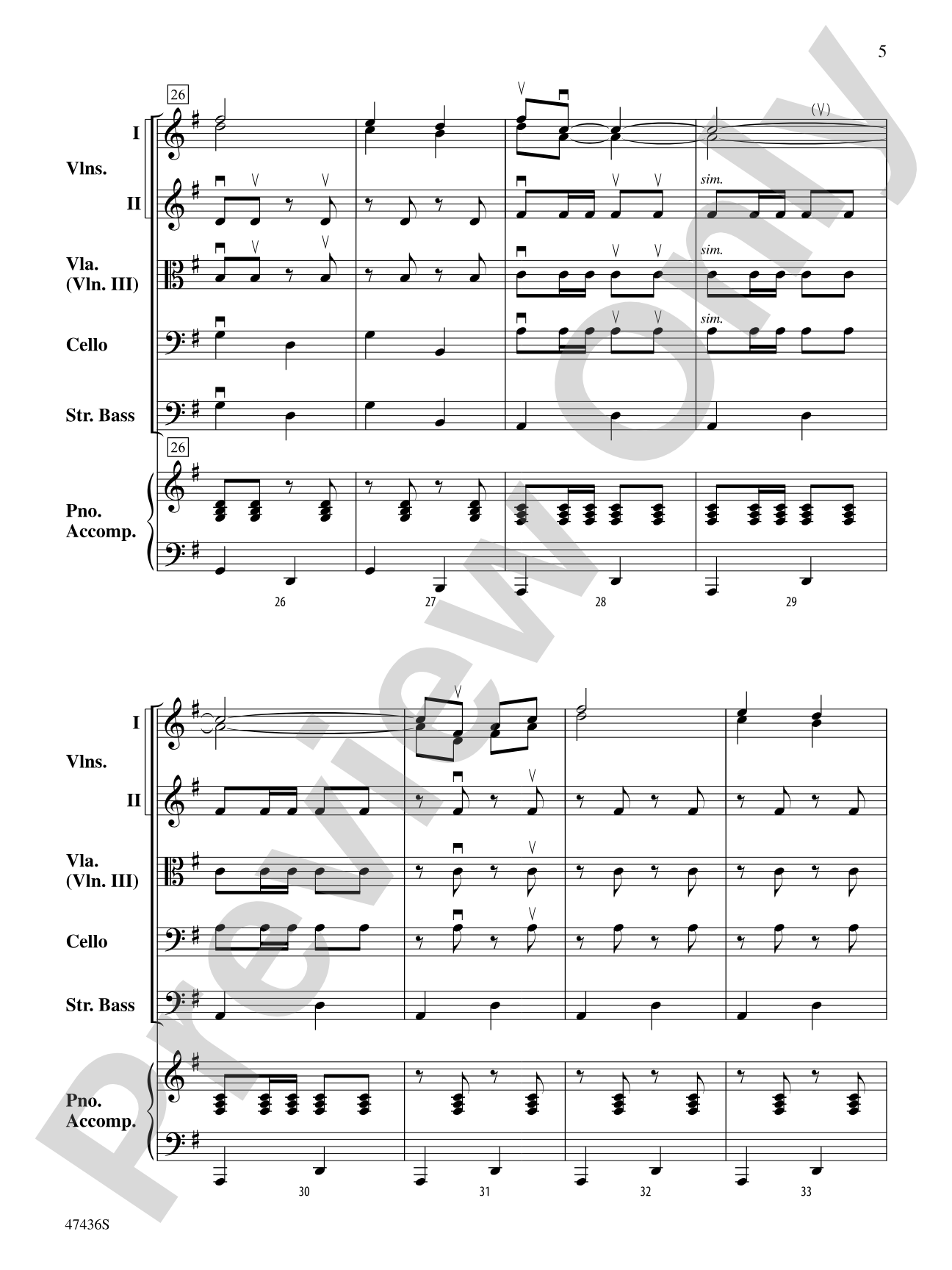
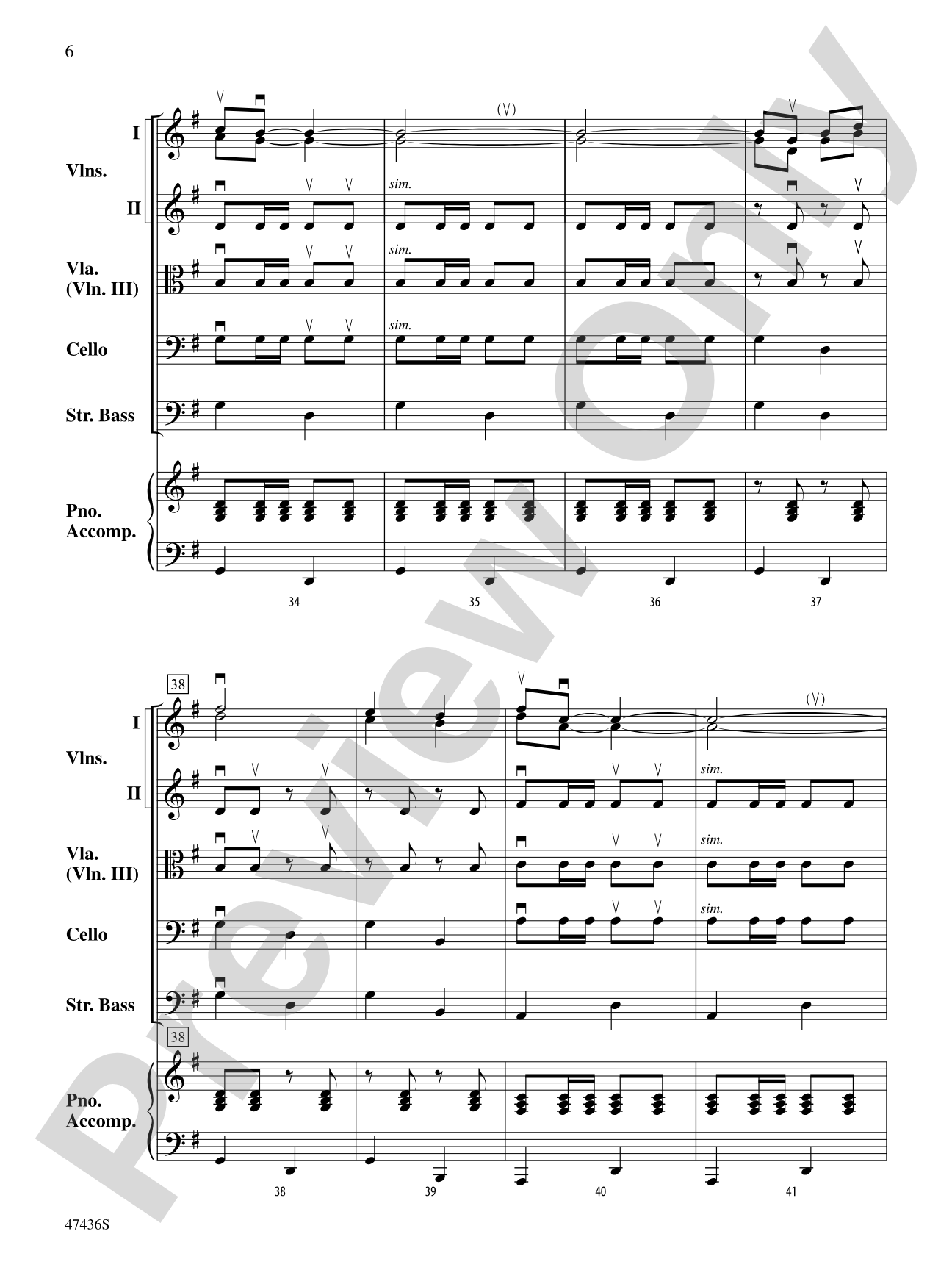
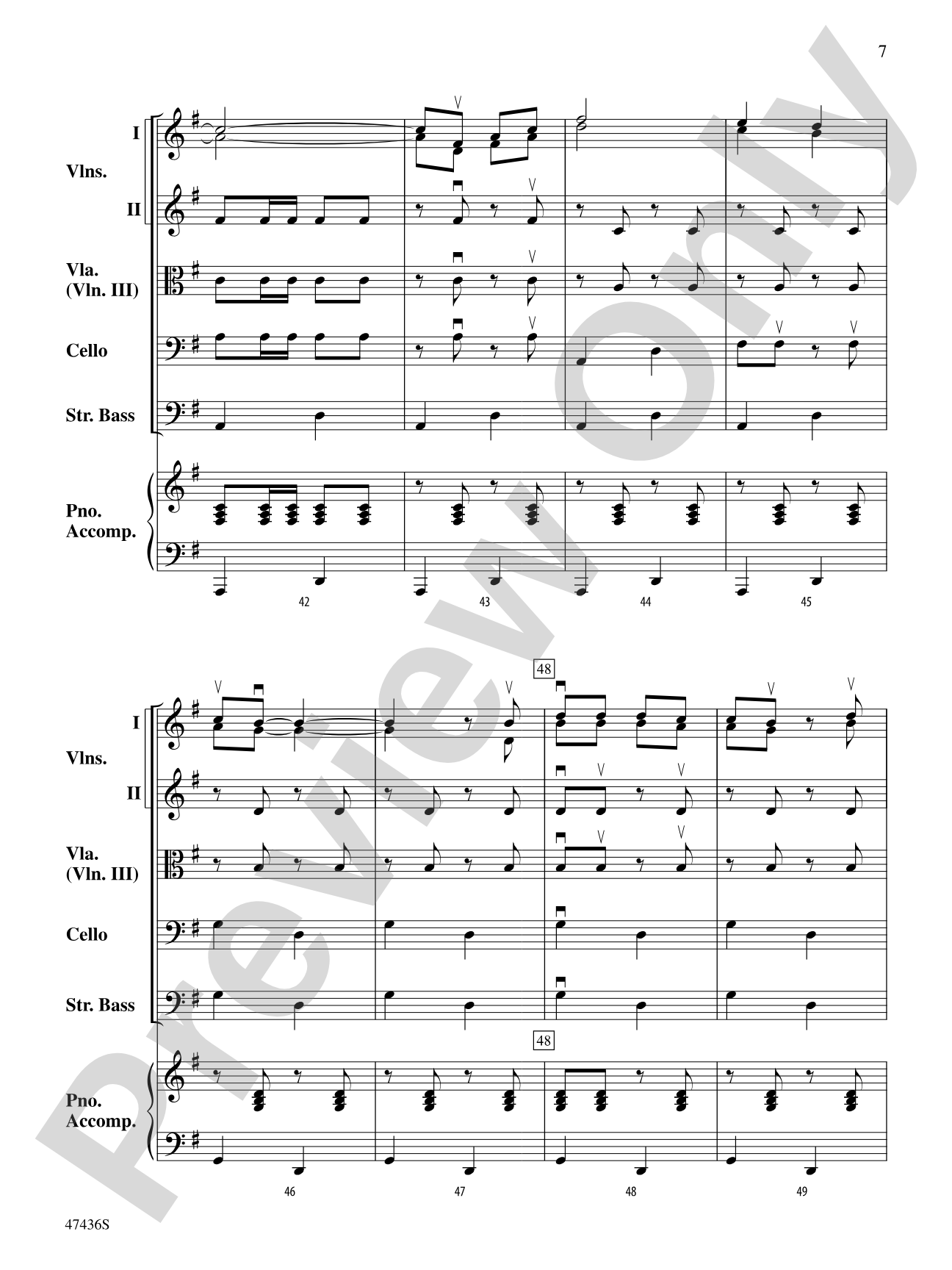
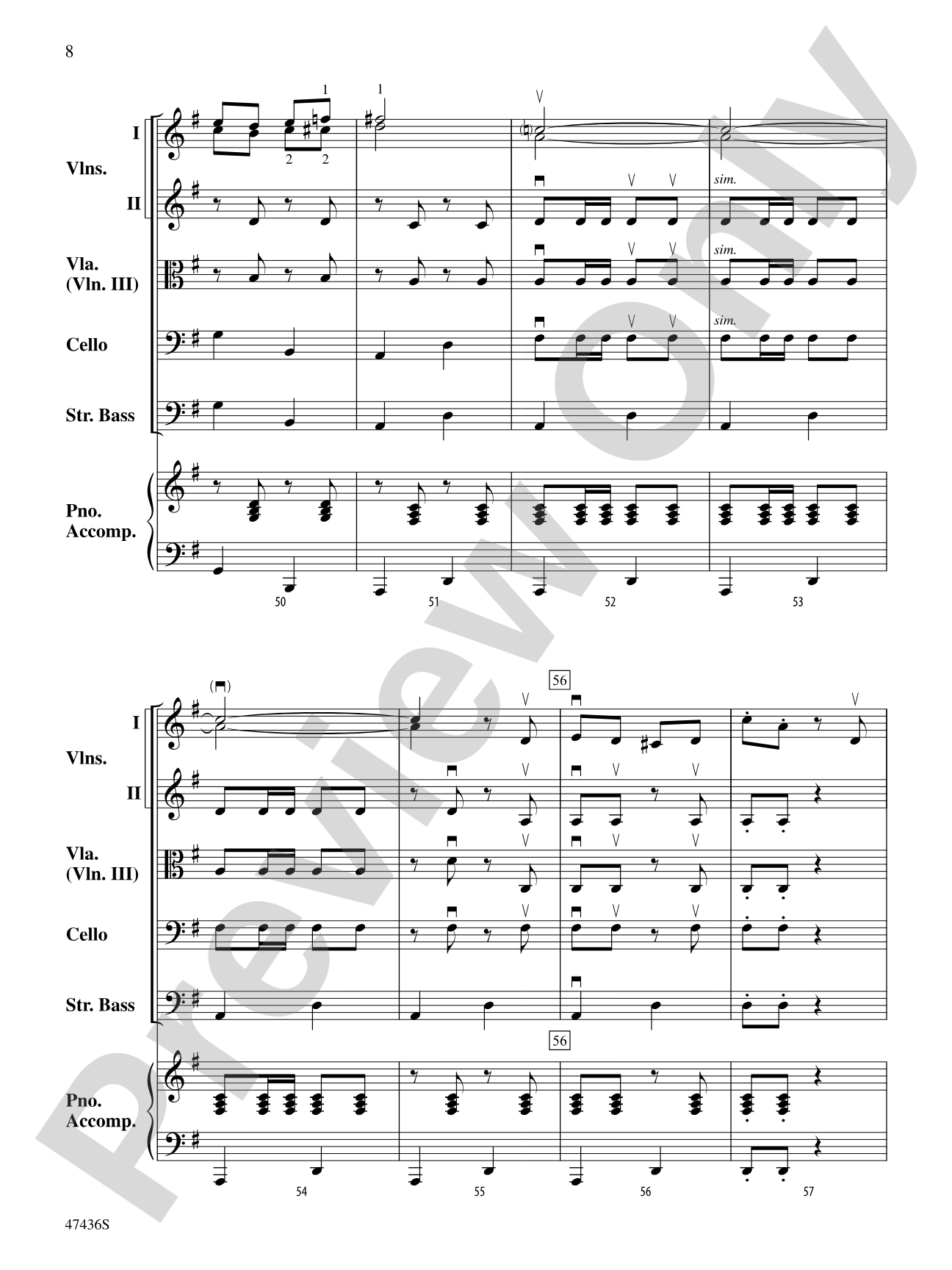
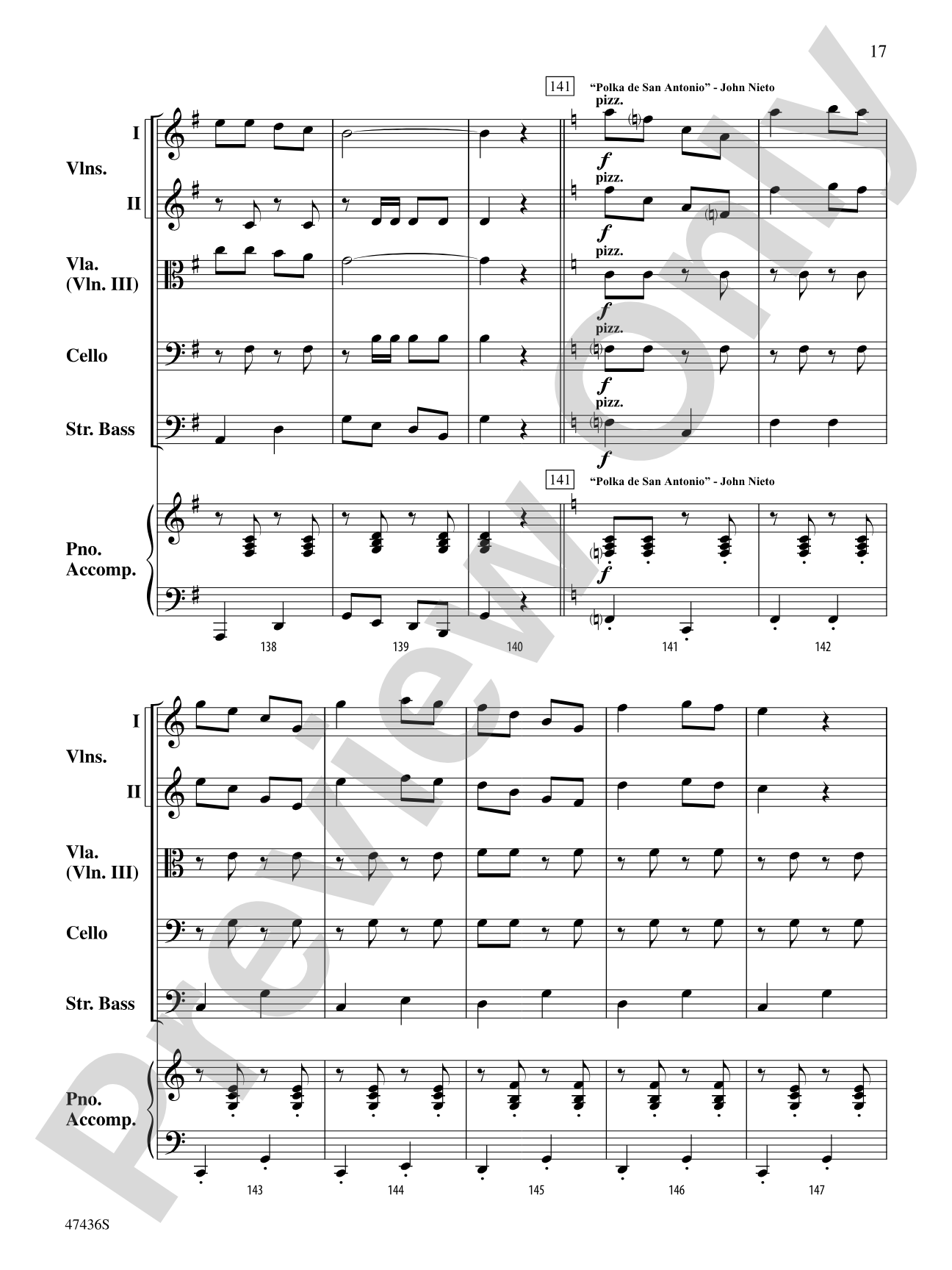
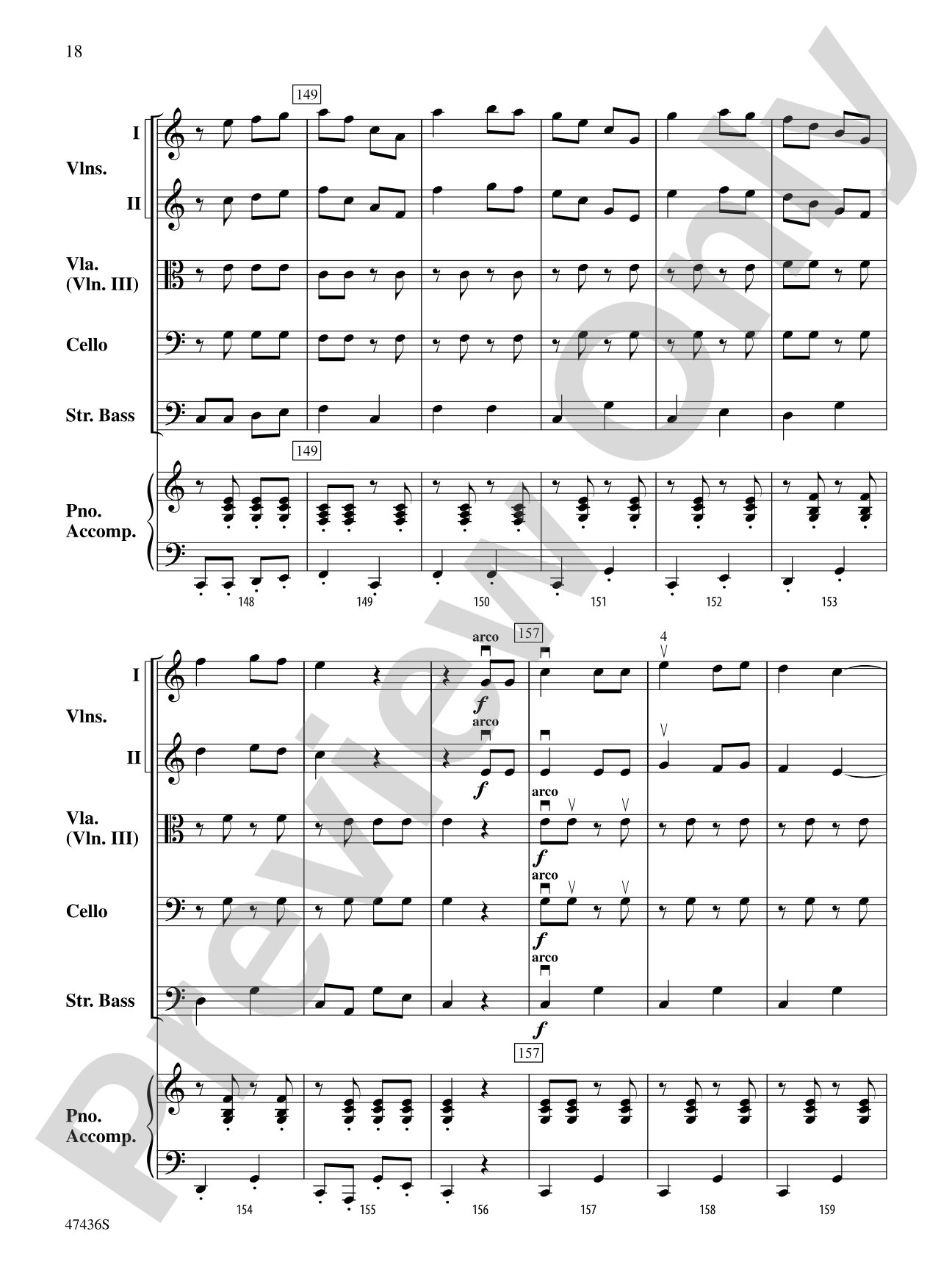
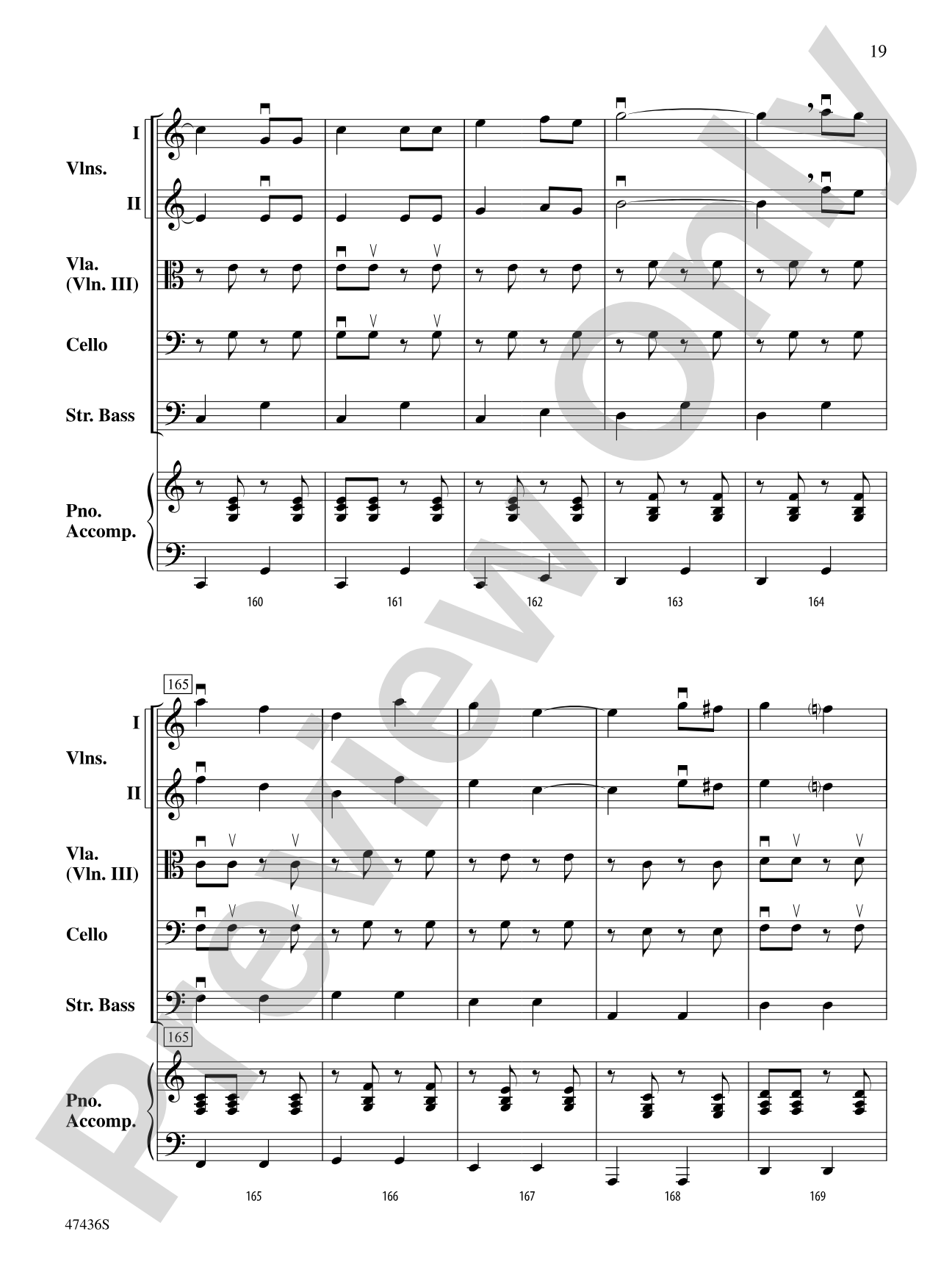
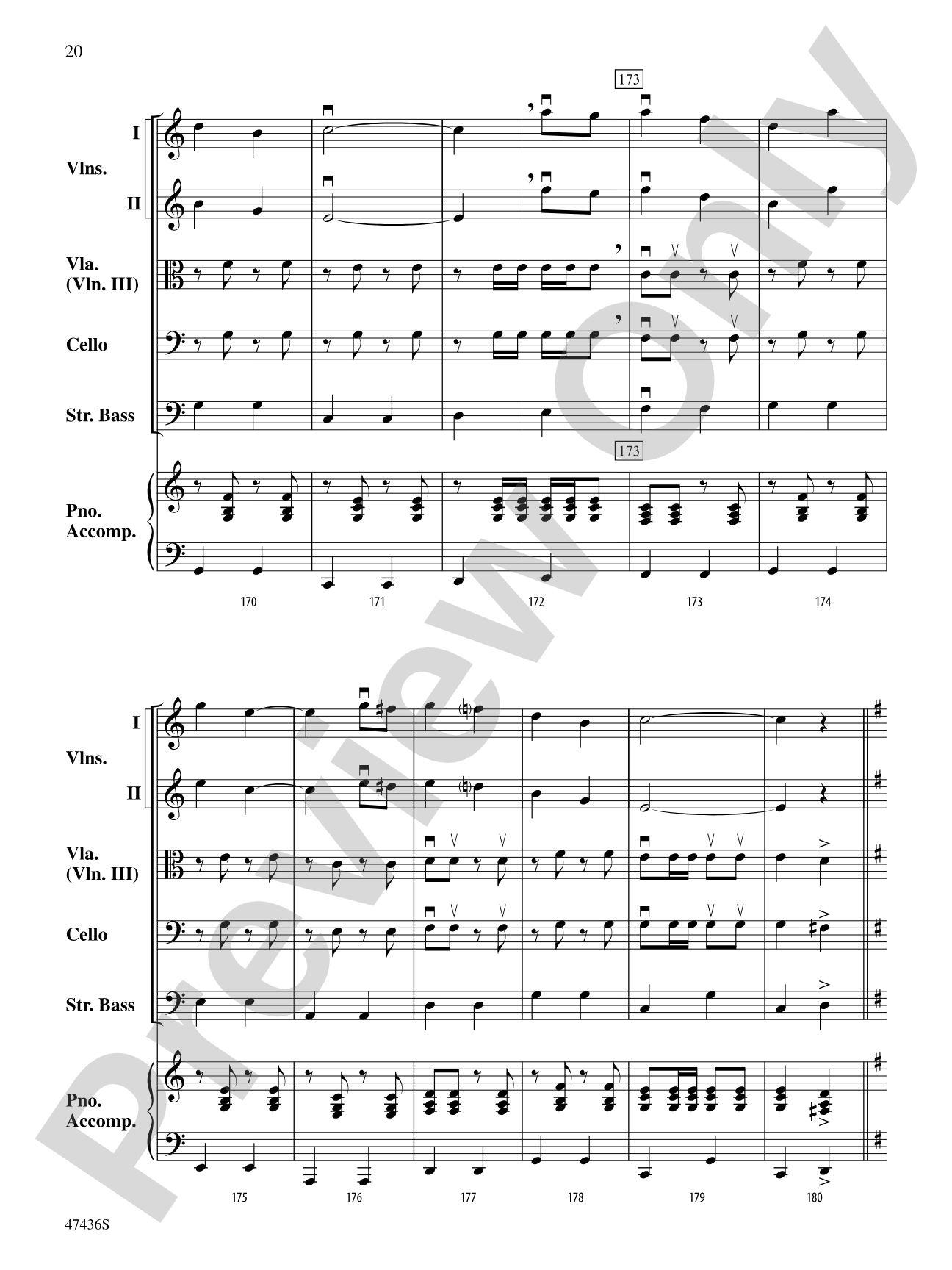

La Fiesta de Cuerdas: String Orchestra Conductor Score & Parts
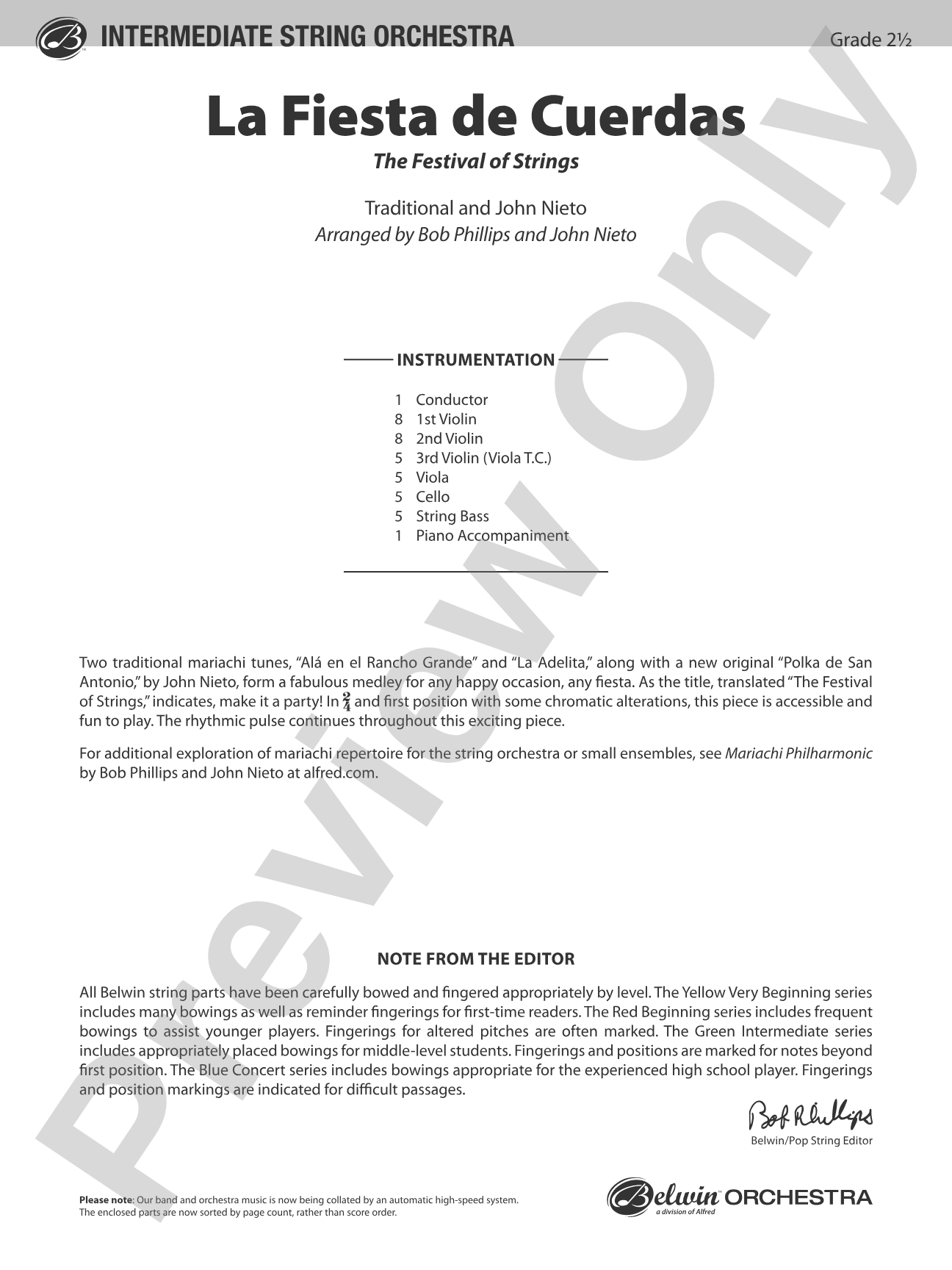
(The Festival of Strings)
Traditional and John Nieto / arr. Bob Phillips and John Nieto
Grade: 2.5
Item: 00-PK-0007674

$56.00
Pickup currently not available
Buy Extra Parts (Digital PDF Download)
| Product | Price | Quantity |
|---|---|---|
| La Fiesta de Cuerdas: Score | $10.00 | |
| La Fiesta de Cuerdas: 1st Violin | $5.99 | |
| La Fiesta de Cuerdas: 2nd Violin | $5.99 | |
| La Fiesta de Cuerdas: 3rd Violin (Viola [TC]) | $5.99 | |
| La Fiesta de Cuerdas: Viola | $5.99 | |
| La Fiesta de Cuerdas: Cello | $5.99 | |
| La Fiesta de Cuerdas: String Bass | $5.99 | |
| La Fiesta de Cuerdas: Piano Accompaniment | $5.99 |
Parts Added to Cart!
Description
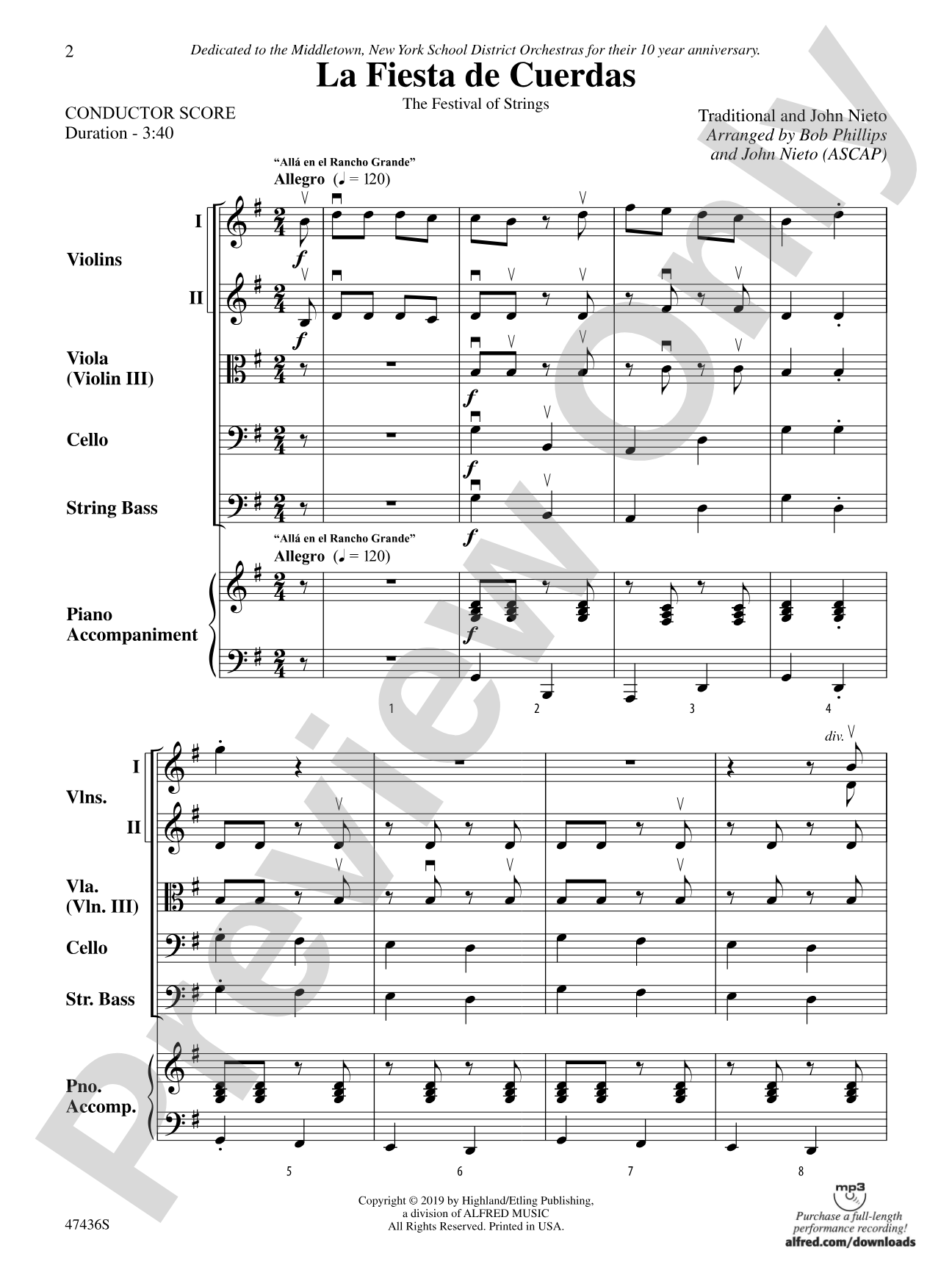
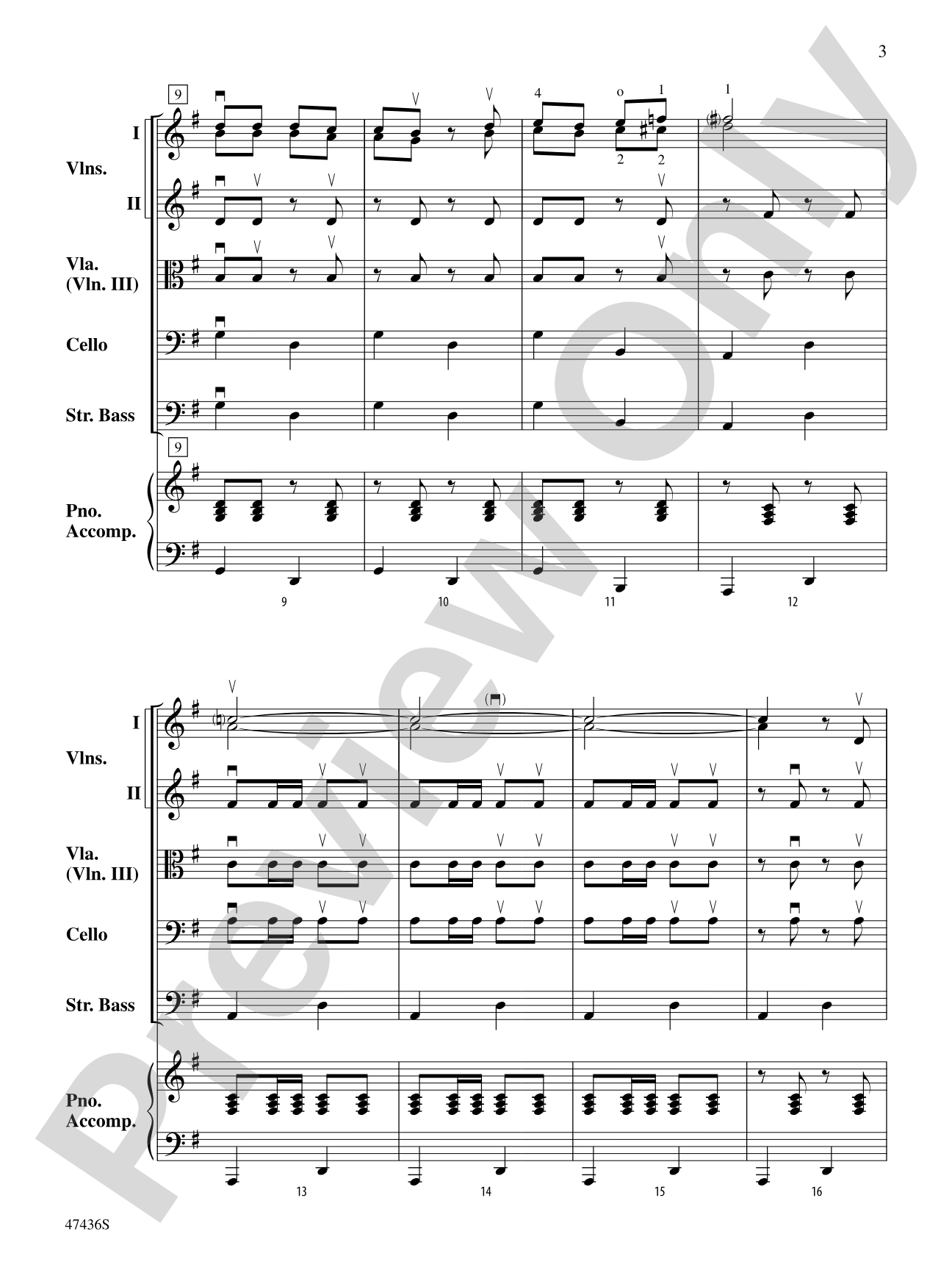
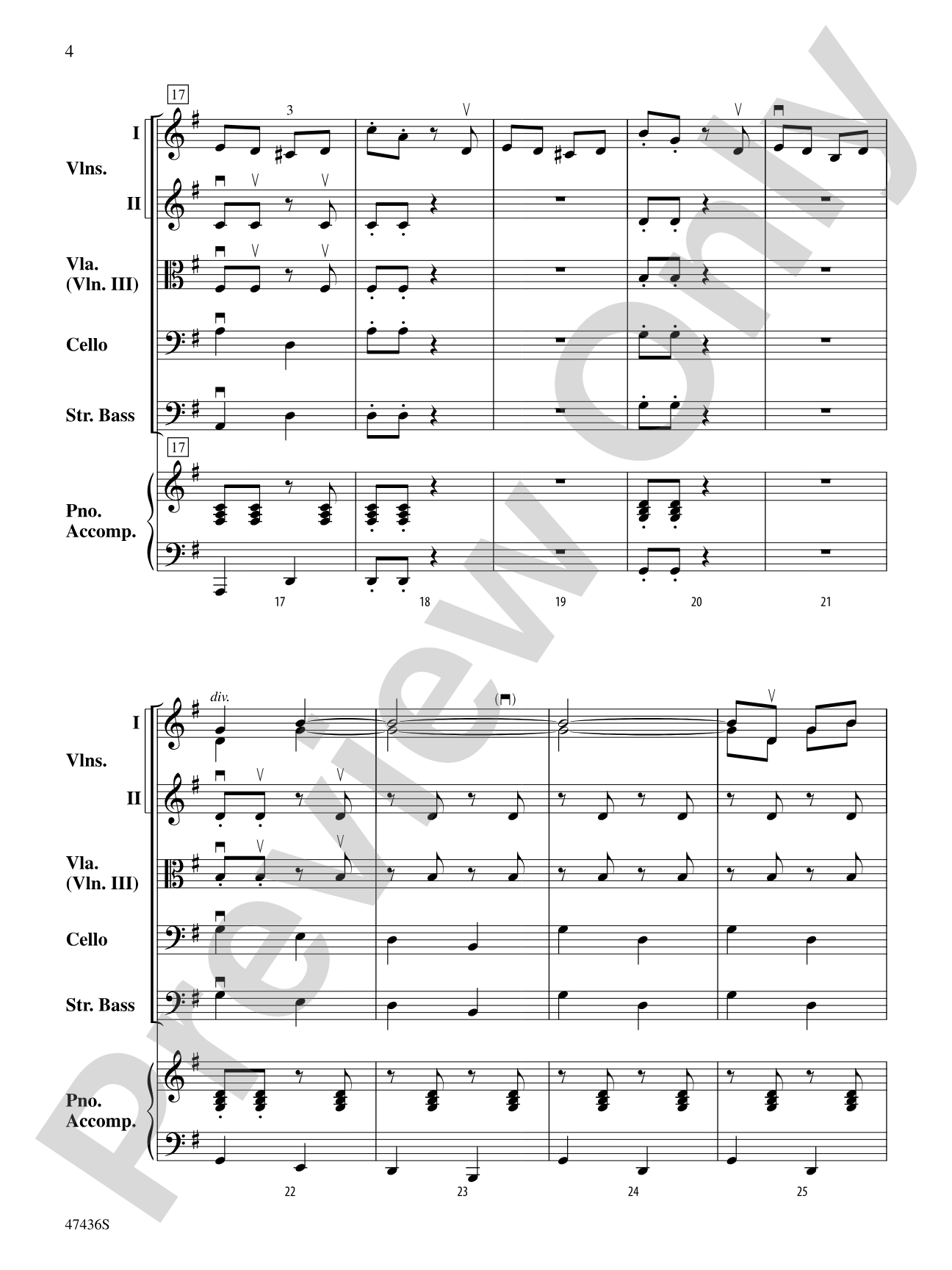
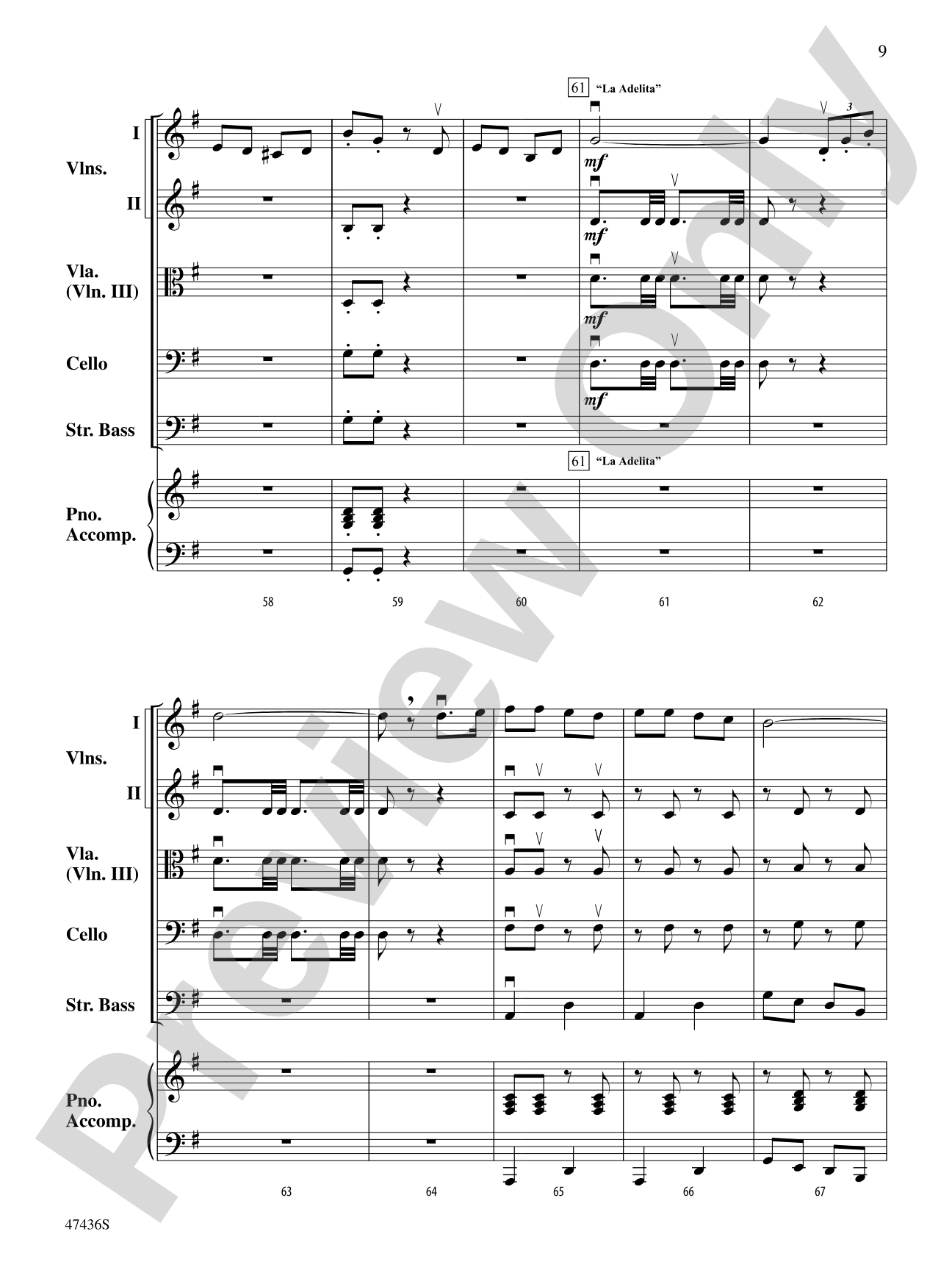
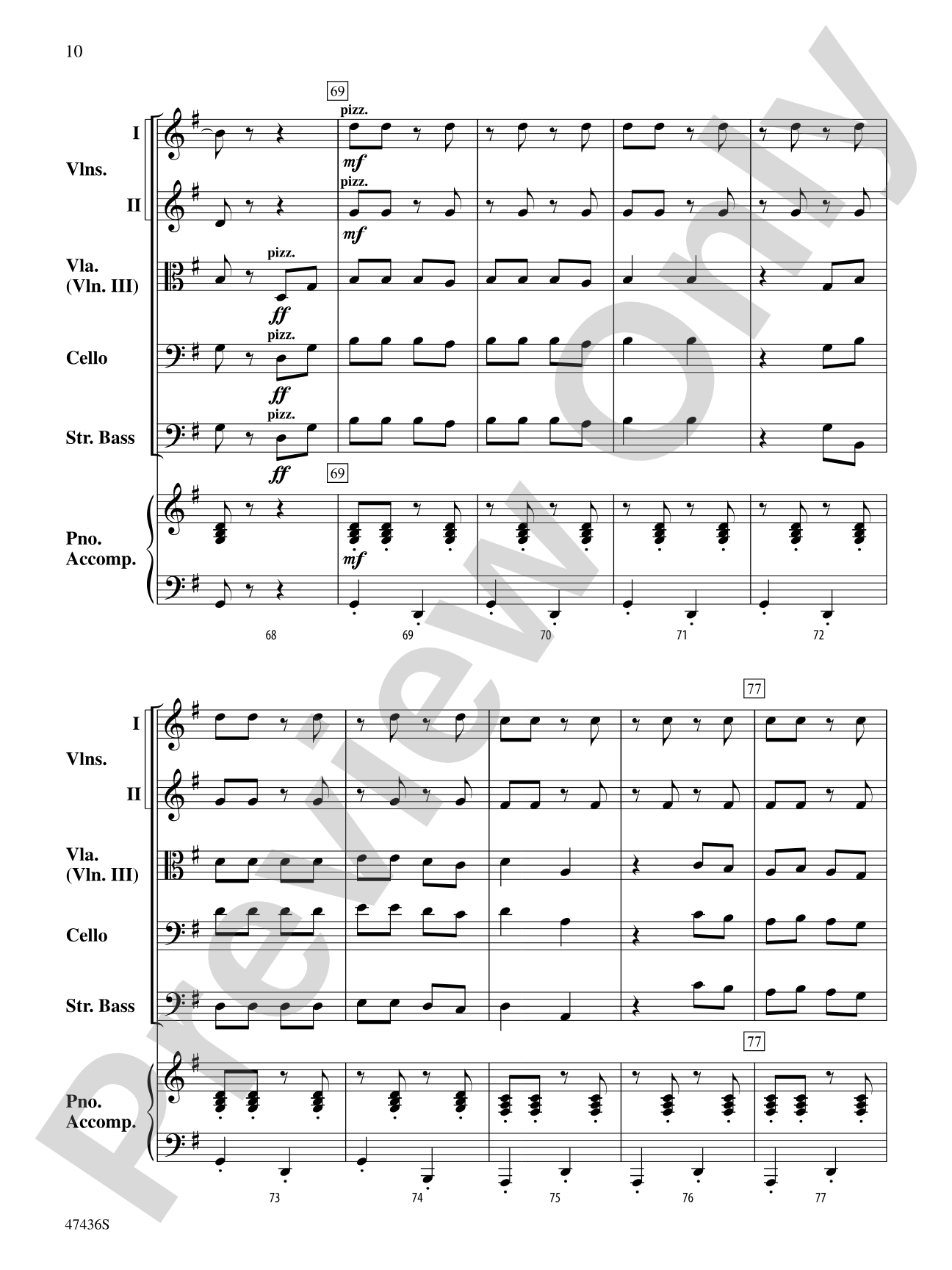
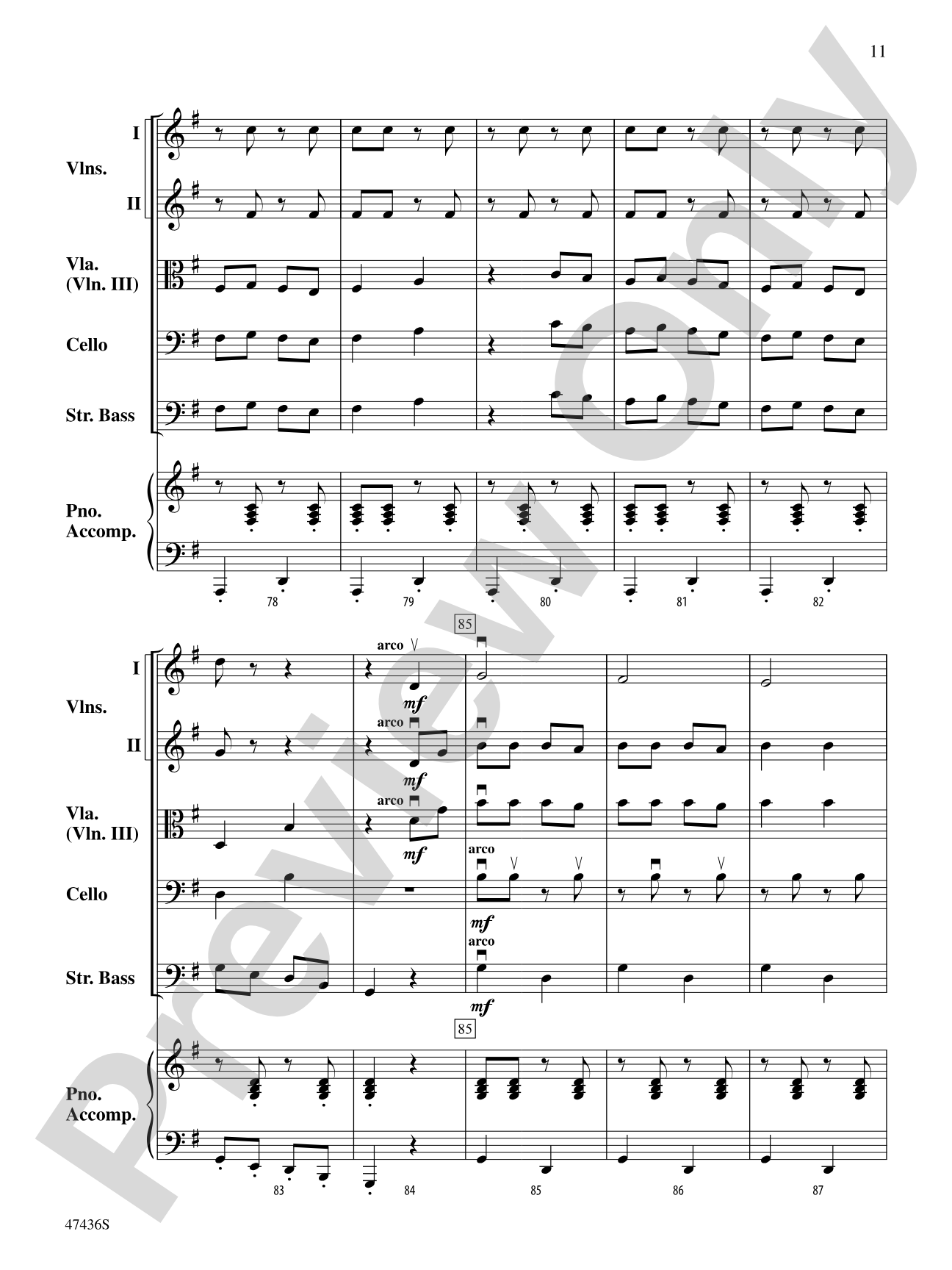
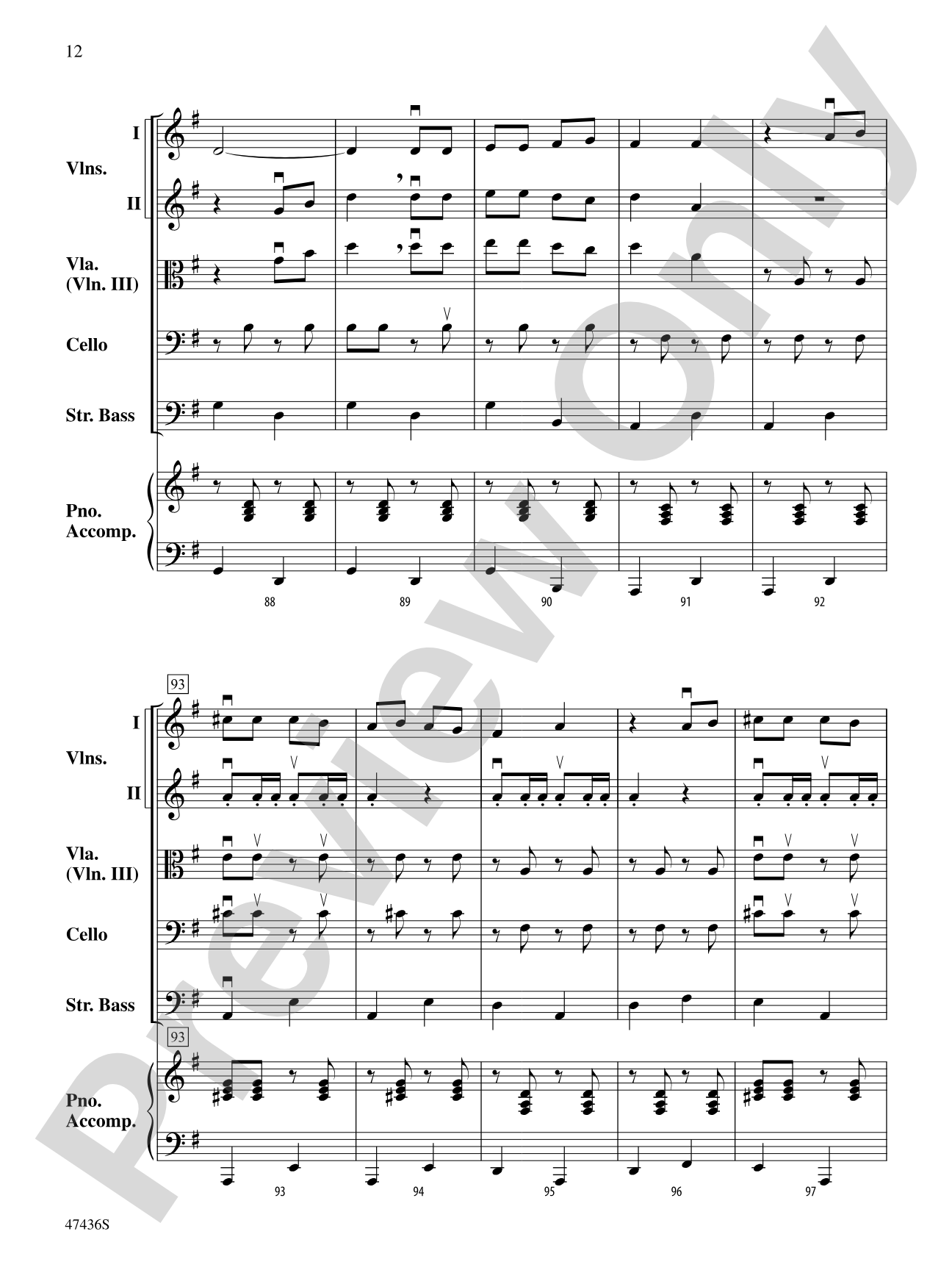
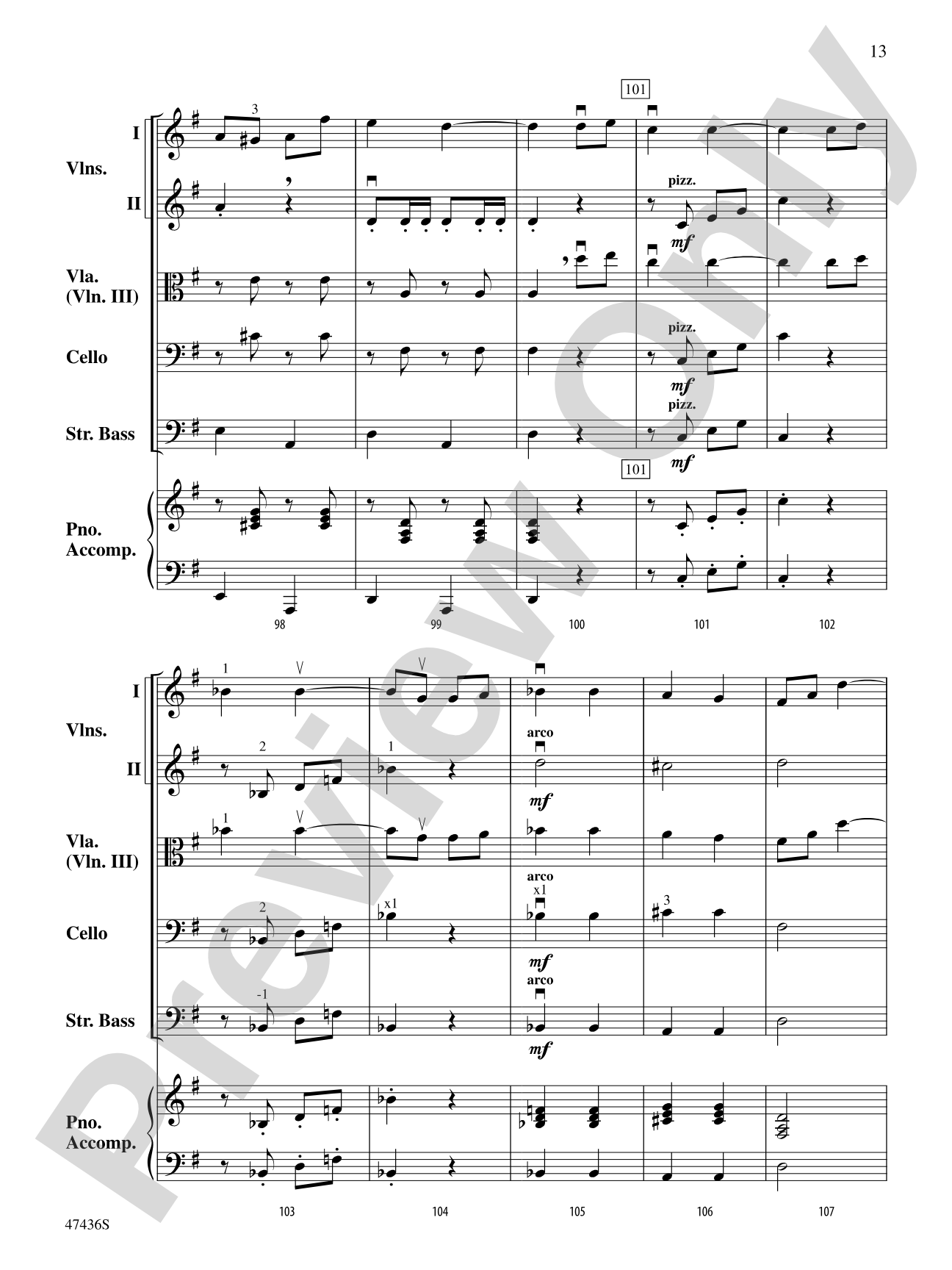
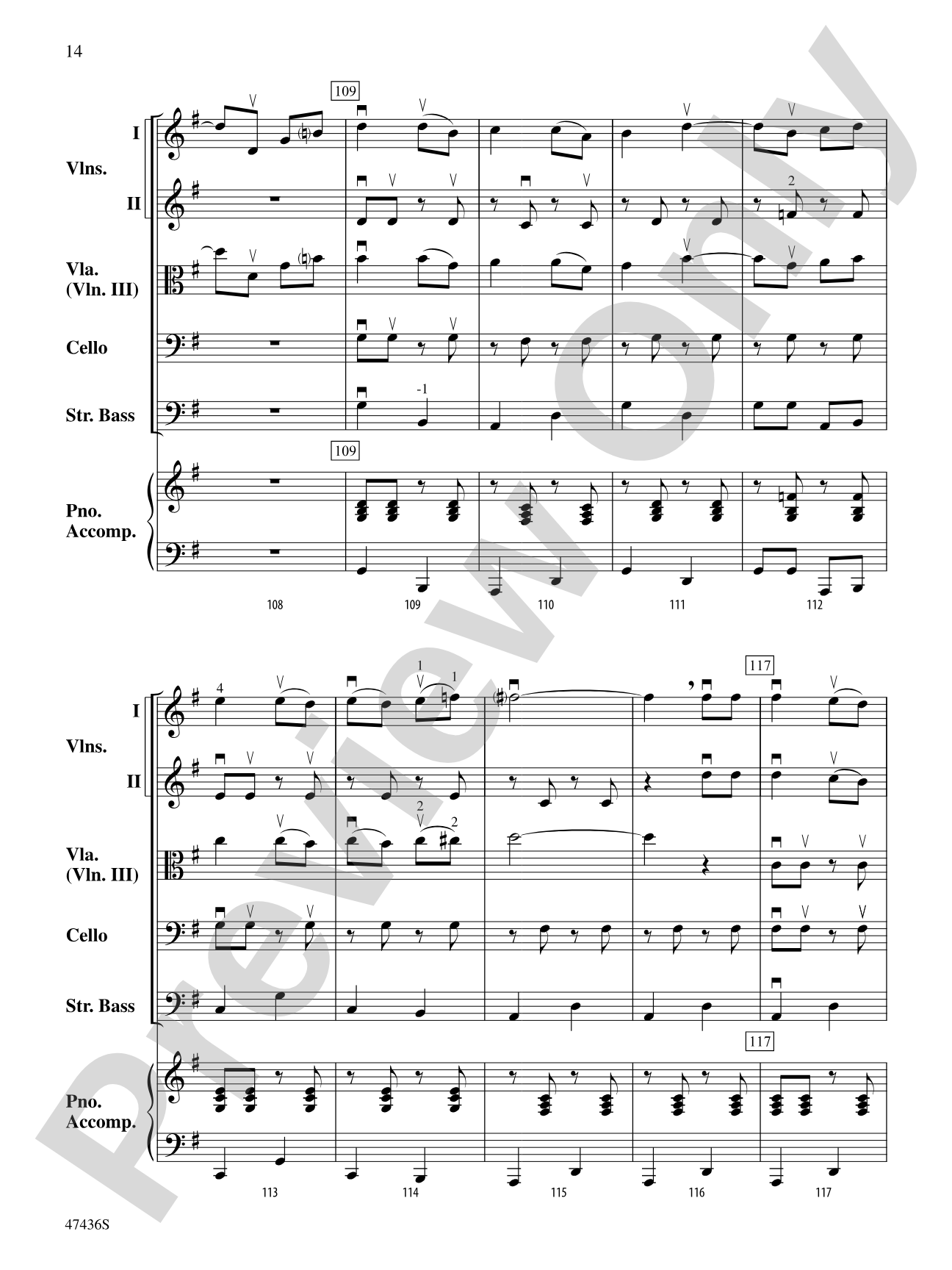
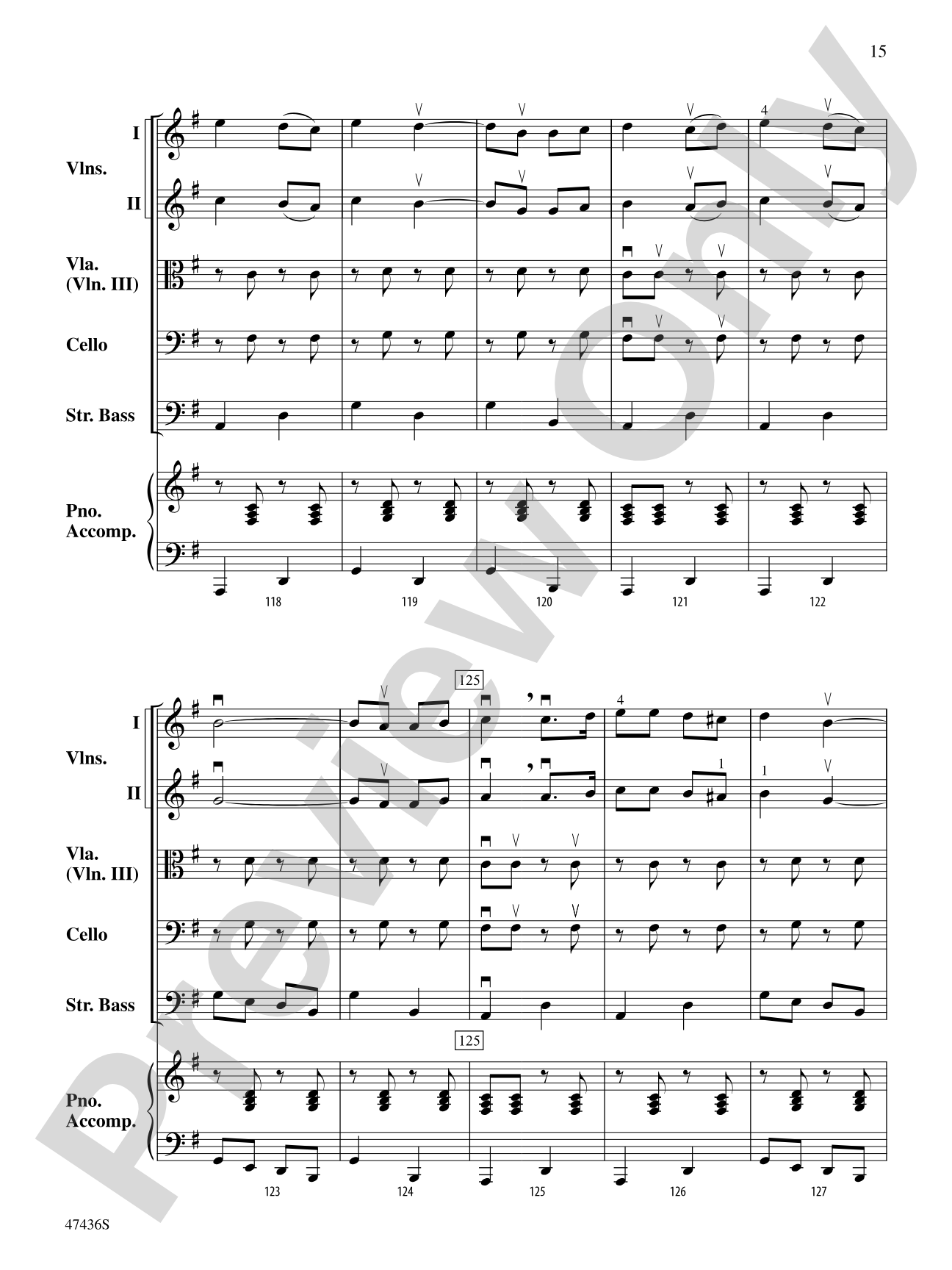
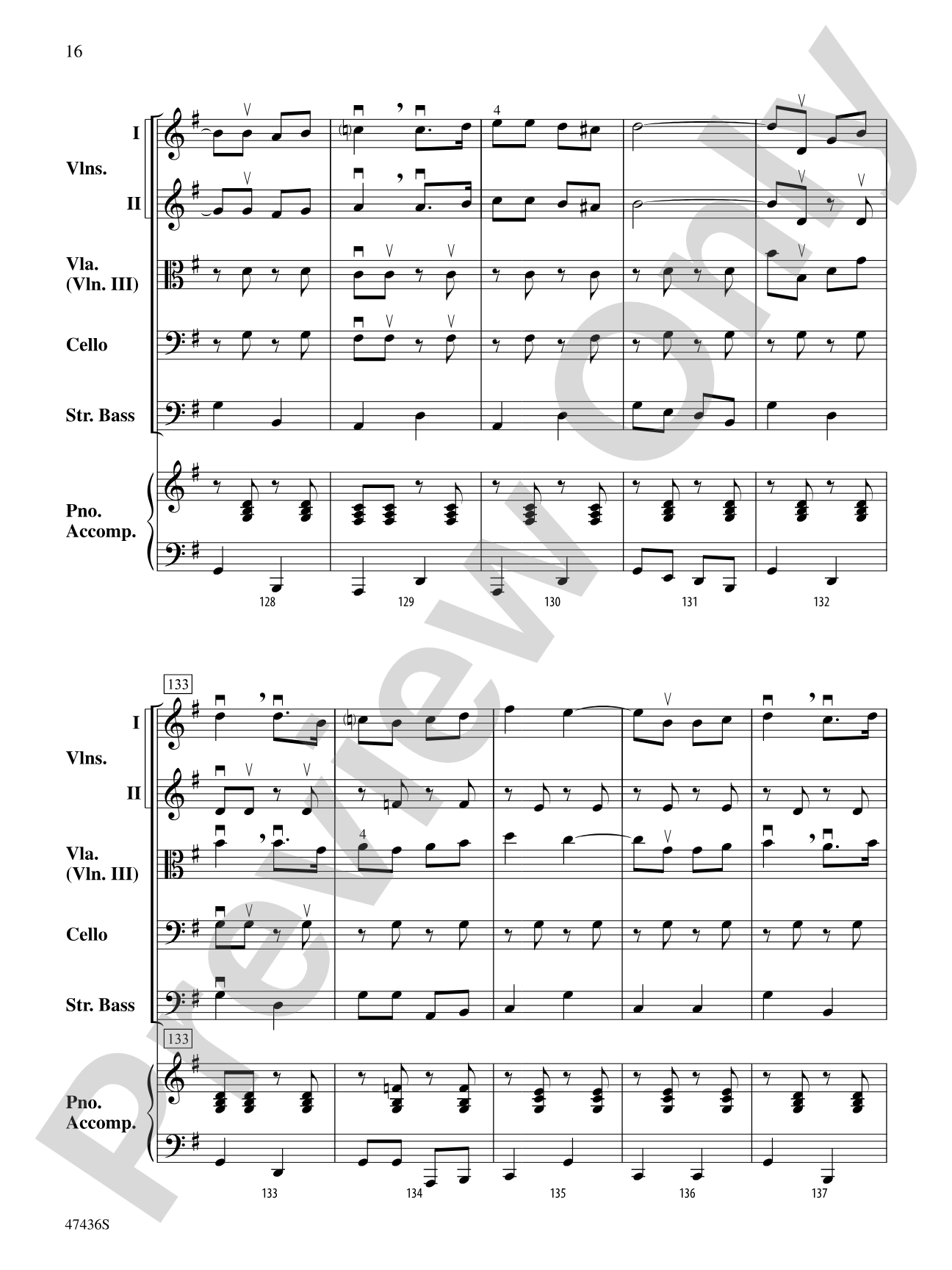
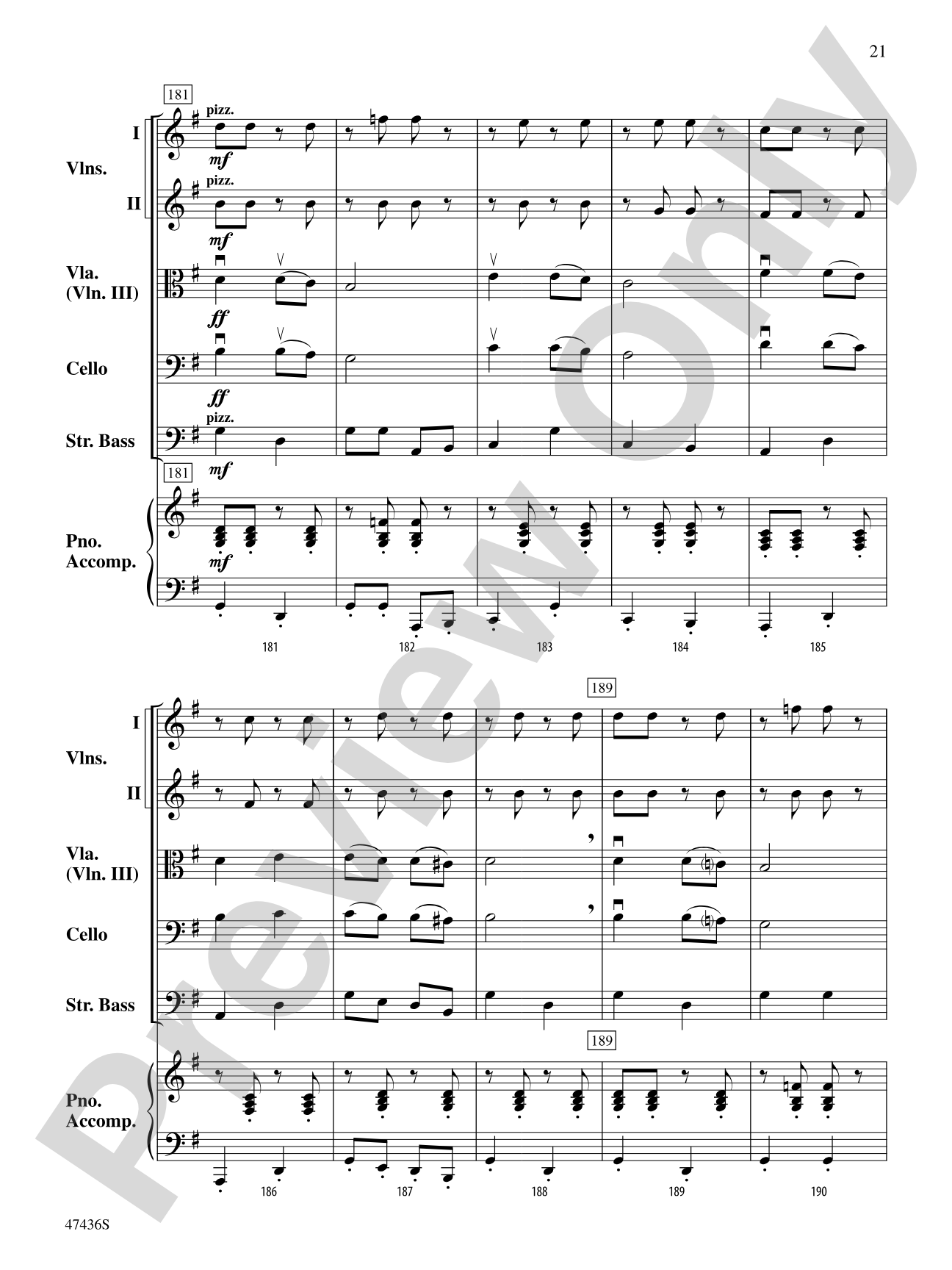
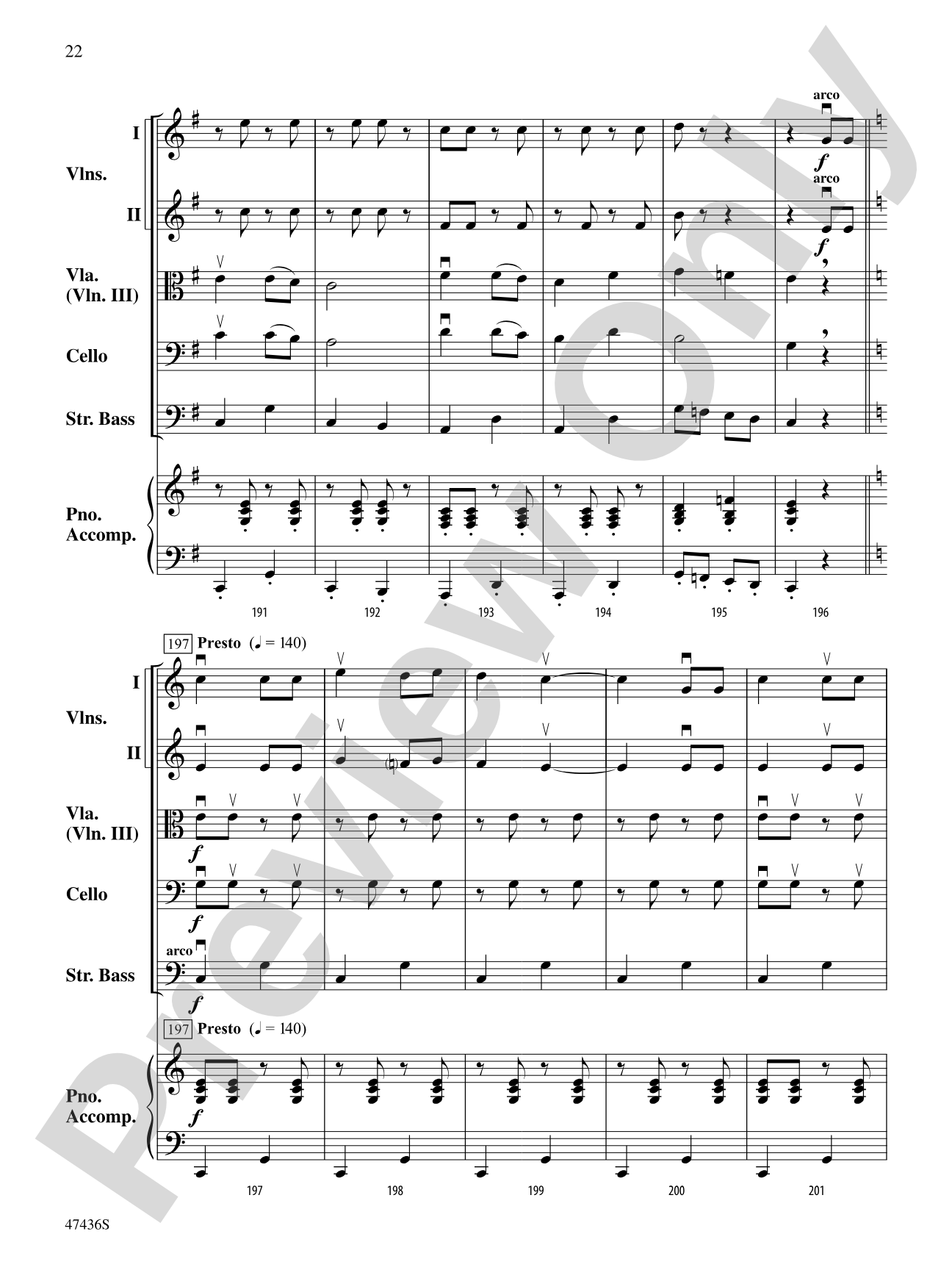
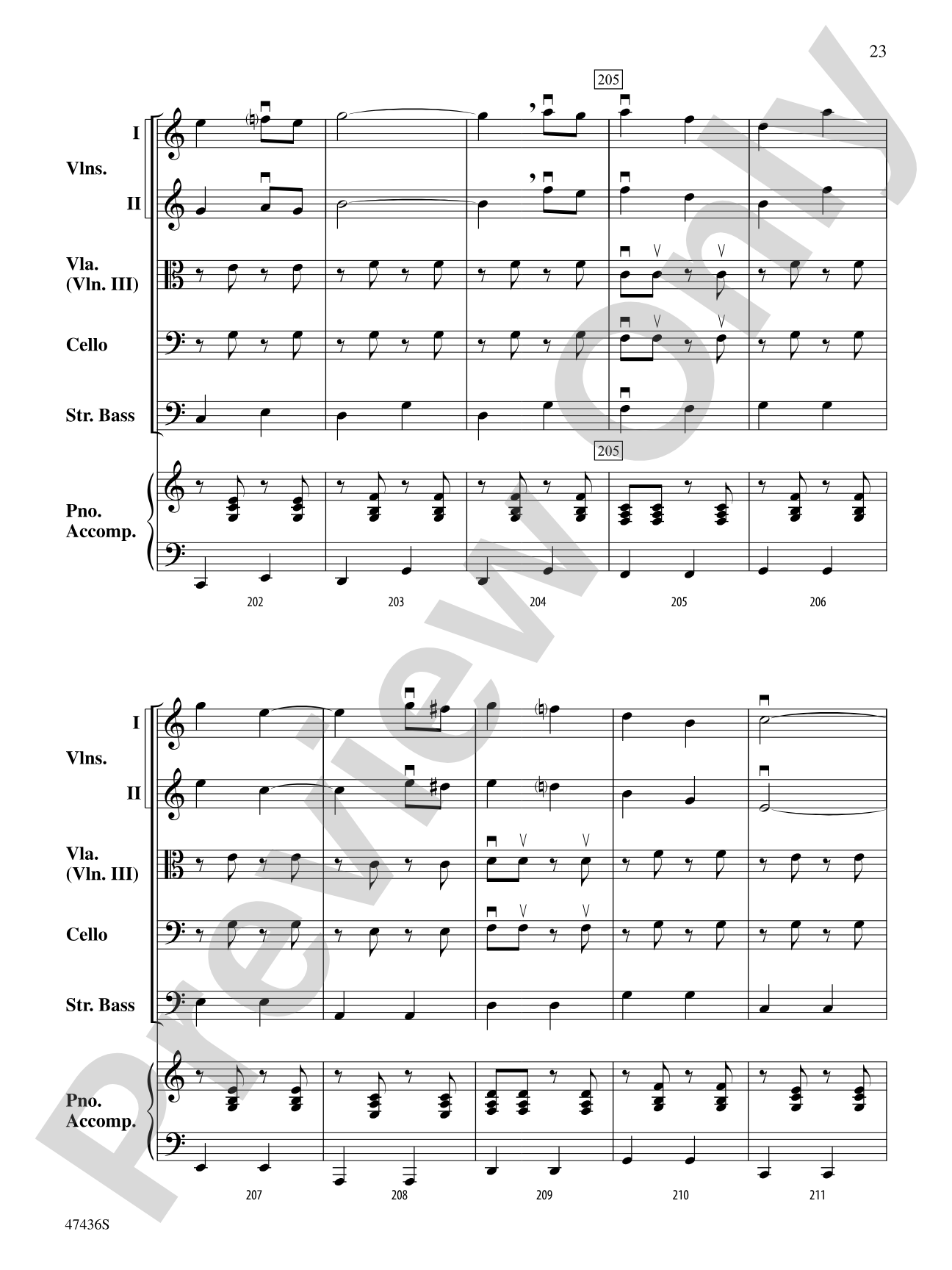
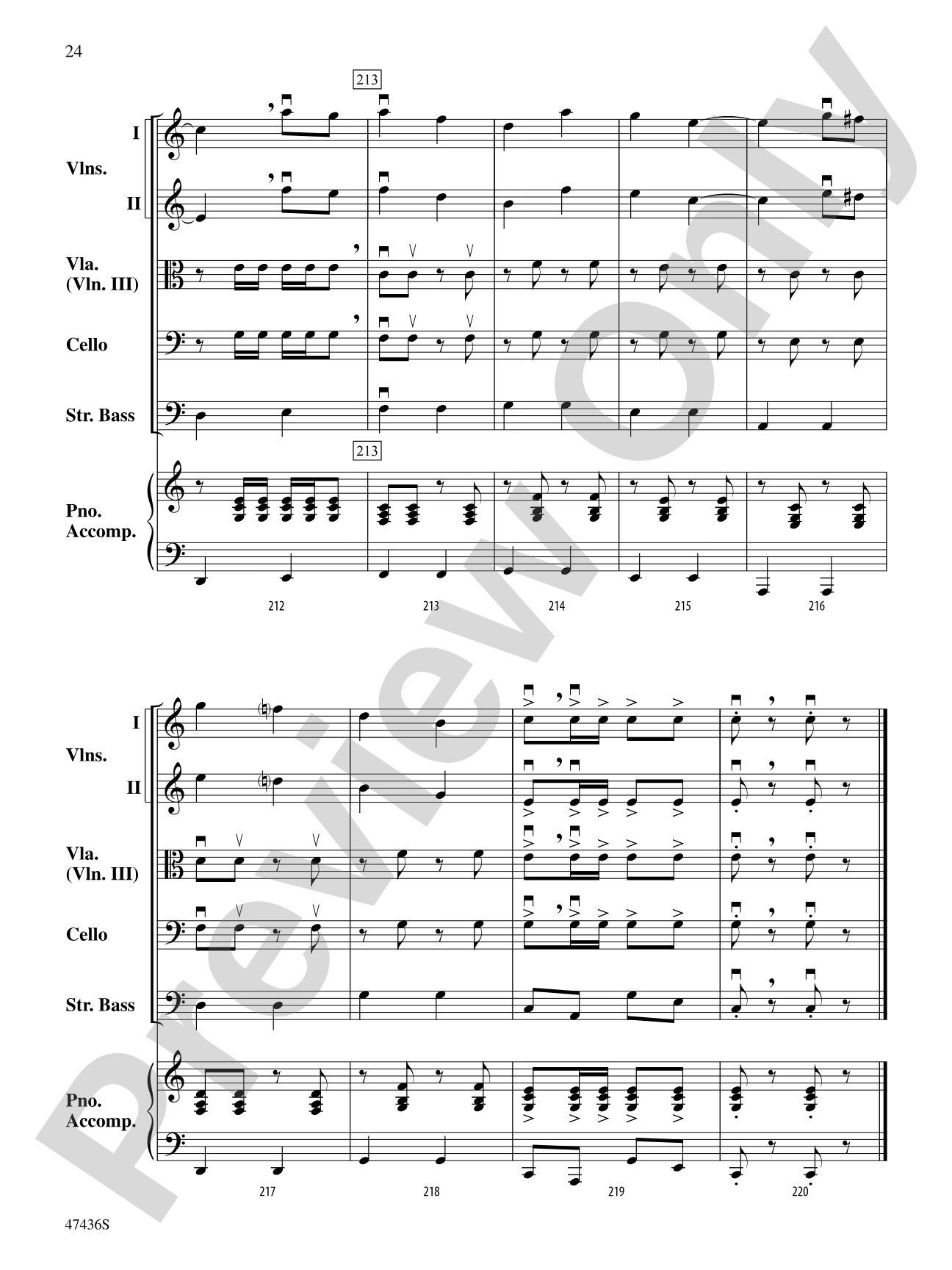
Two traditional mariachi tunes, "Alá en el Rancho Grande" and "La Adelita," along with a new original, "Polka de San Antonio" by John Nieto, form a fabulous medley for any happy occasion---any fiesta. As the title (translated "The Festival of Strings") indicates, make it a party! In 2/4 and first position with some chromatic alterations, this piece is accessible and fun to play. The rhythmic pulse continues throughout this exciting piece.
For additional exploration of mariachi repertoire for the string orchestra or small ensembles, see Mariachi Philharmonic by Bob Phillips and John Nieto at alfred.com.


For additional exploration of mariachi repertoire for the string orchestra or small ensembles, see Mariachi Philharmonic by Bob Phillips and John Nieto at alfred.com.
Don't just read it, hear it, play along with it, and watch your students grow with it. In MakeMusic Cloud, La Fiesta de Cuerdas: String Orchestra Conductor Score & Parts comes alive with professional accompaniment, adjustable tempo, and built-in practice tools that turn solo practice into real progress.
Open in the Player
Jump straight in and assign it today.
Start Your Free Trial
Open this title and explore the full library in minutes.
Sample Audio
1
Audio File
--:--
0:00
0:00
Sample Video
Additional Details
Series:
Belwin Intermediate String Orchestra
Publisher:
Alfred Music
Page Count:
148
SKU:
00-PK-0007674
More about this title
About the Composer: John Nieto
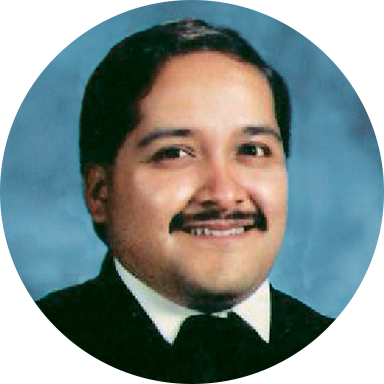
John Nieto leads the mariachi program at Brackenridge High School in San Antonio and directs the San Antonio ISD All District Mariachi ensemble. Beyond his classroom work, he teaches transcription and arranging at major mariachi conferences in Albuquerque and Tucson, and performs professionally with ensembles throughout Texas. His students have earned recognition at the Ford Lincoln-Mercury Mariachi Extravaganza and Albuquerque Mariachi Spectacular, and have represented San Antonio as cultural ambassadors internationally.
Nieto's own journey into mariachi began at Our Lady of Guadalupe church, where his parents insisted he attend rehearsals. Three decades later, he credits that early exposure (however reluctant) with shaping his career and deep commitment to passing the tradition forward to the next generation.
Why we love this
This medley strikes a perfect balance between accessibility and cultural authenticity. Nieto and Phillips have crafted an arrangement that respects the mariachi tradition while remaining playable at the Grade 2.5 level, giving students a genuine connection to repertoire that matters rather than a watered-down approximation. The combination of two well-known traditional tunes with an original polka gives you programming flexibility and ensures your audience hears something both familiar and fresh.
What to expect
Bright, celebratory, and infectious. The mariachi character comes through in every phrase, even at this accessible level. Your students will feel the infectious rhythmic drive of the polka sections and the lyrical warmth of the traditional melodies, creating an energy that's both fun to play and genuinely engaging for any audience.
Who it's for
String orchestras at the intermediate level, including middle and early high school programs looking to expand their cultural repertoire. This works equally well as a concert opener or contest selection, and it's accessible enough that developing ensembles can sound polished quickly.
How to get the most out of it
- Keep the rhythmic pulse steady and driving throughout; the piece thrives on consistent energy rather than rubato, even during transitions between tunes.
- Balance the melody line across your first violins so the traditional themes shine clearly, especially during the opening statement of each section.
- Work chromatic passages slowly at first to ensure accurate intonation, then gradually bring the tempo up to match the celebratory character.
- Use dynamics to delineate each tune within the medley; subtle shifts between sections help the audience follow the three distinct melodies without losing the feeling of one continuous fiesta.
How to use it
Program this as a concert opener or closing number when you want to set an uplifting, celebratory tone. It pairs naturally with other folk or multicultural literature in a thematic concert, or stands alone as the perfect selection for spring festivals, pops concerts, or competitions where variety and audience appeal matter. The piece works equally well as a contest entry or community performance.
Skills your students will build
- Reading 2/4 meter and maintaining rhythmic accuracy across changing figures
- Playing in first position with secure intonation
- Navigating chromatic alterations and sharps/flats with accuracy
- Balancing melody and accompaniment within the ensemble
- Sustaining energy and groove through repetitive rhythmic patterns
- Interpreting style: understanding mariachi character and its distinctive rhythmic feel