
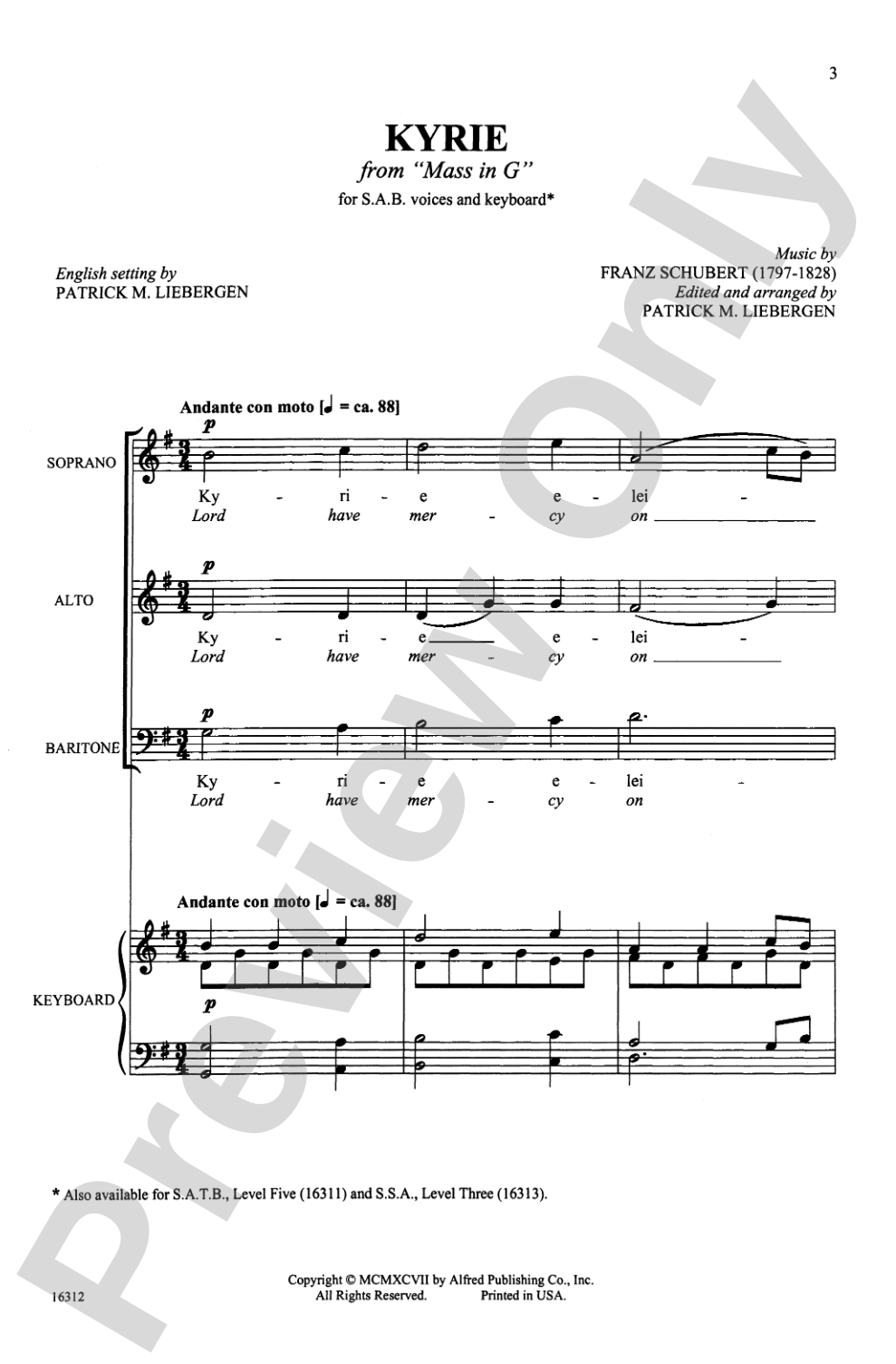

Kyrie (from Mass in G): SAB Choral Octavo
From the Mass in G
Music by Franz Schubert / ed. Patrick M. Liebergen
Item: 00-PO-0002092
$2.95
Minimum order quantity: 20 copies
Pickup currently not available
Description
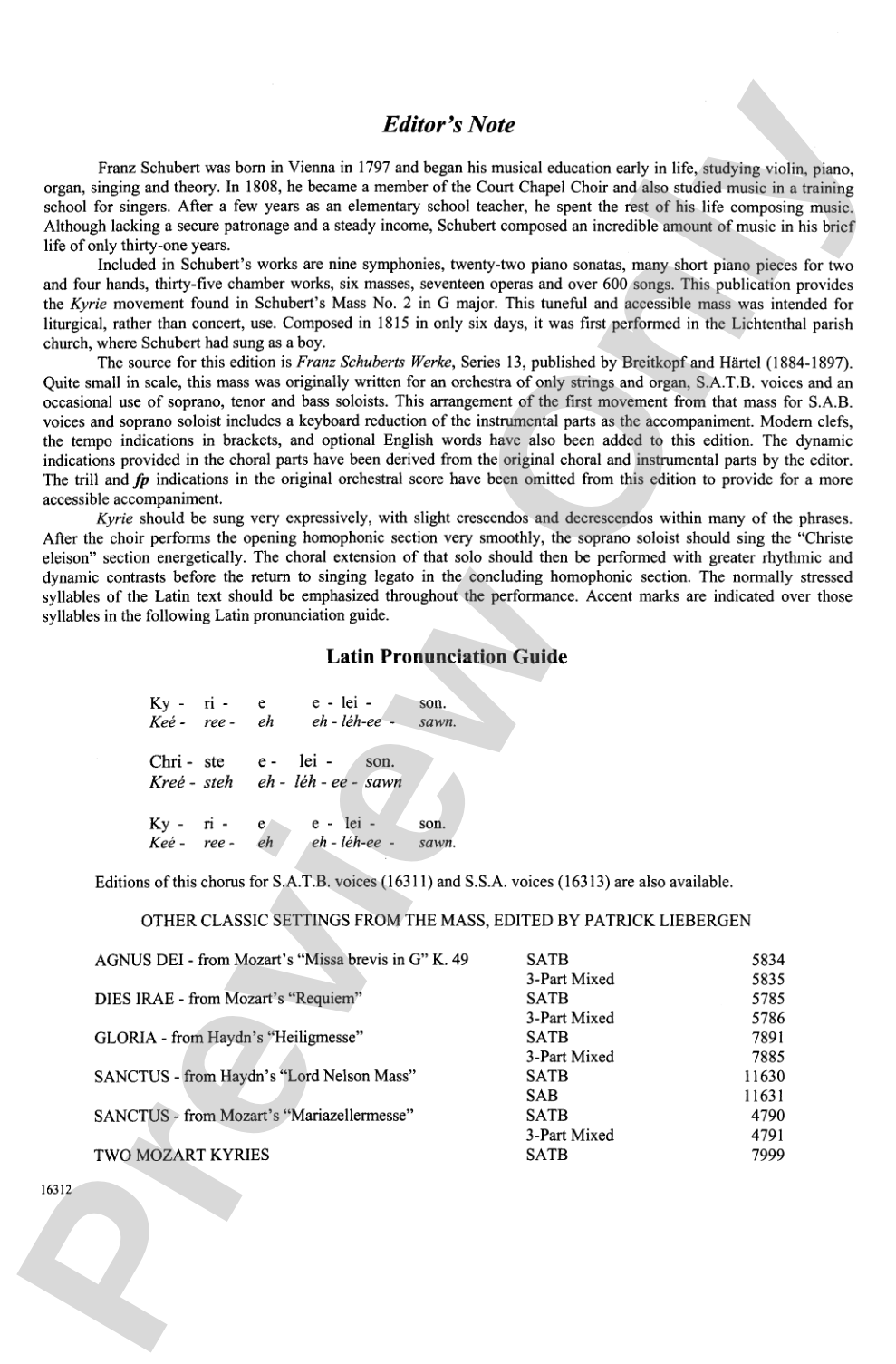
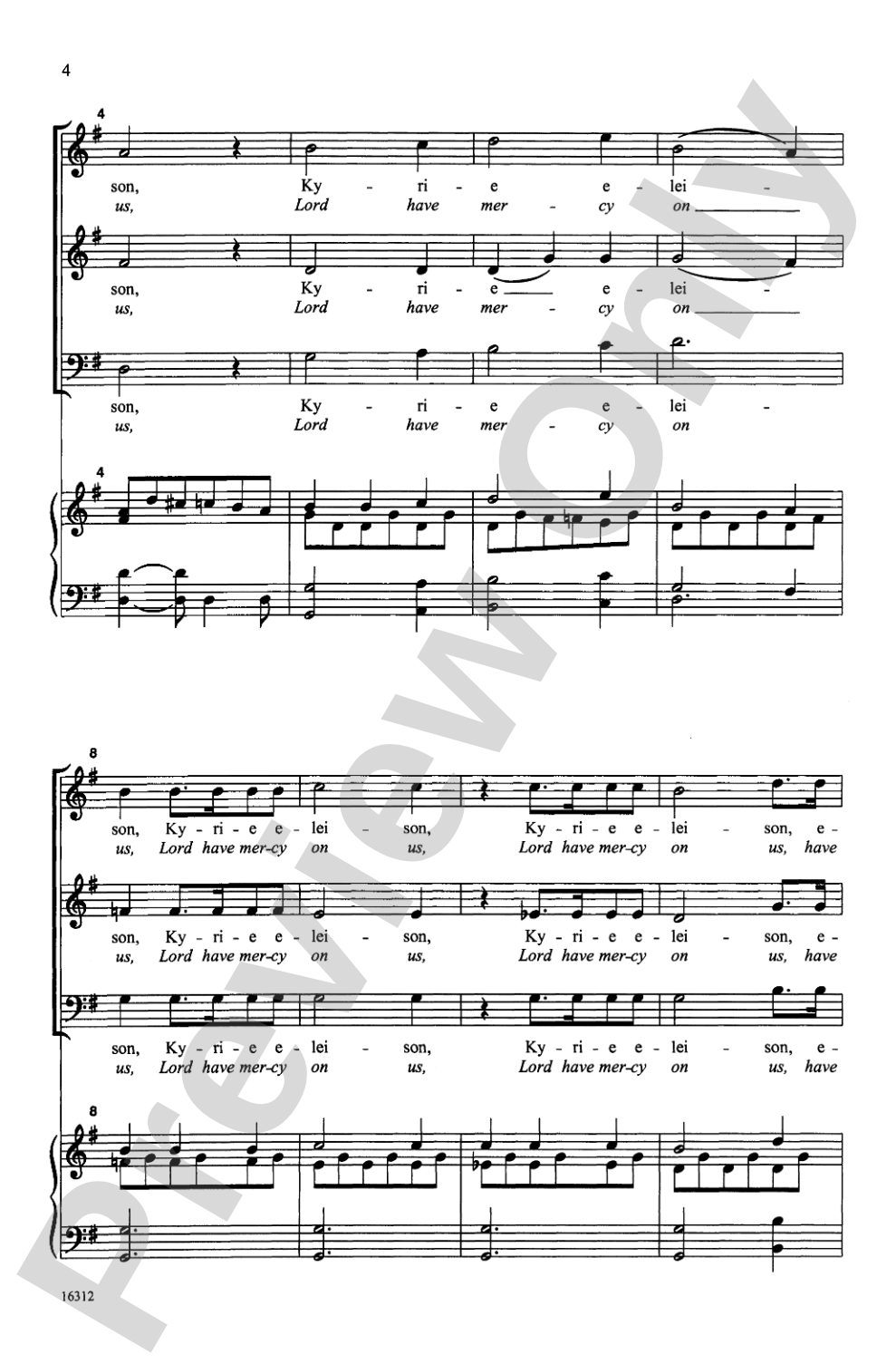
Superb edition for today's choir of a work from Schubert's famous "Mass in G" (1815). This largely homophonic work remains at a constant tempo throughout and includes only one simple, brief contrapuntal passage. Includes historical and biographical information (excellent for program notes) and a Latin pronunciation guide.


Kyrie (from Mass in G): SAB Choral Octavo isn't in MakeMusic Cloud just yet...but it could be. Let us know you'd like to see it, and you'll help shape what comes next. In the meantime, start a free trial and dive into thousands of interactive titles your students can play along with today.
Request This Title
Tell us you want it.
Start Your Free Trial
Explore everything that's ready to play right now.
Sample Audio
No sample audio found.
Sample Video
No sample videos found.
Additional Details
Series:
Alfred Archive Edition: Alfred Choral Designs
Publisher:
Alfred Music
Page Count:
16
SKU:
00-PO-0002092
More about this title
About the Composer: Franz Schubert
Franz Schubert (1797-1828) composed the Mass in G early in his career, establishing himself as a major voice in sacred choral music during the Classical-Romantic transition. Though he lived only 31 years, Schubert's output was staggering: nine symphonies, countless chamber works, and a substantial body of sacred music that blended Classical restraint with Romantic lyricism. His masses reveal a composer deeply engaged with both tradition and innovation, honoring the liturgical form while infusing it with warmth and accessibility that made his sacred works performed in parishes and concert halls alike.
Schubert's approach to the mass differed markedly from his predecessors. Rather than elaborate fugal writing or extended virtuosic passages, he favored direct expression and choral clarity. This philosophy makes the Mass in G, and the Kyrie in particular, ideal for modern choirs seeking to perform substantial masterworks without overwhelming technical demands.
Why we love this
This octavo captures what makes Schubert's sacred music so teachable: genuine musical substance without unnecessary complexity. The homophonic writing and steady tempo create a contemplative mood that feels both intimate and grand, and the single contrapuntal passage offers just enough textural variety to keep singers engaged without derailing rehearsal time. Choirs consistently respond to the tunefulness and emotional directness here, and audiences hear a complete, authoritative work rather than an excerpt or simplification.
What to expect
Contemplative and luminous. Schubert's spare, homophonic texture creates an almost transparent quality, as though light is passing through colored glass. The piece unfolds at a steady, measured pace with moments of harmonic richness that catch you by surprise, yet nothing feels rushed or urgent. There is a profound calm here, undercut by subtle emotional depth.
Who it's for
Three-part mixed choirs with solid fundamental skills and comfort reading in parts. Soloists are not required, and the piece sits well for choirs without high-note specialists. This edition serves directors building a choral repertoire that spans the masterwork canon without demanding advanced techniques.
How to get the most out of it
- Treat the pronunciation guide seriously during sectionals. Proper Latin diction transforms how the choir sounds collectively and how the text lands for listeners unfamiliar with the language.
- Lock the harmonic progression in your mind before rehearsing the melody. Schubert's voice-leading is logical but not obvious; secure chords first, then shape the line.
- Let the brief contrapuntal section breathe with independence between parts. This moment is brief enough that it should feel like a window opening, not a labored exercise.
- Keep dynamics understated. This piece works through pure harmony and balance, not dramatic contrast. Resist the urge to swell.
How to use it
Program this as an anchor for a sacred music concert or ecumenical service where substantial musical substance matters. It pairs naturally with other Classical-era sacred works or as a bridge between Renaissance motets and modern sacred compositions. Its moderate length and moderate difficulty make it feasible for spring concert slots without displacing other repertoire.
Skills your students will build
- Reading SAB voicing with independence between parts
- Singing Latin text with historically informed pronunciation
- Maintaining harmonic awareness in homophonic writing
- Balancing ensemble blend when all parts move in similar rhythmic patterns
- Executing basic counterpoint (the brief contrapuntal passage)