
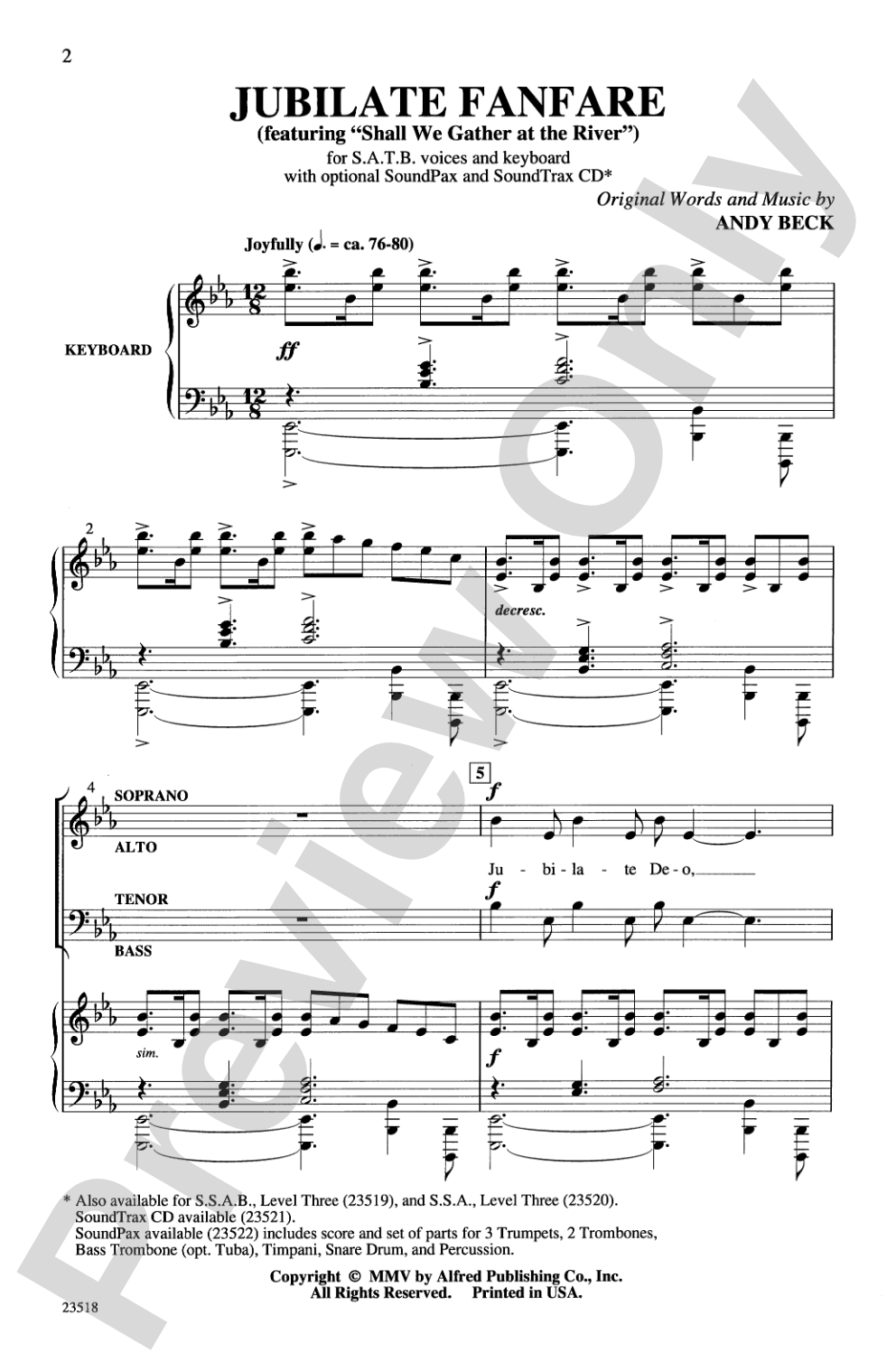
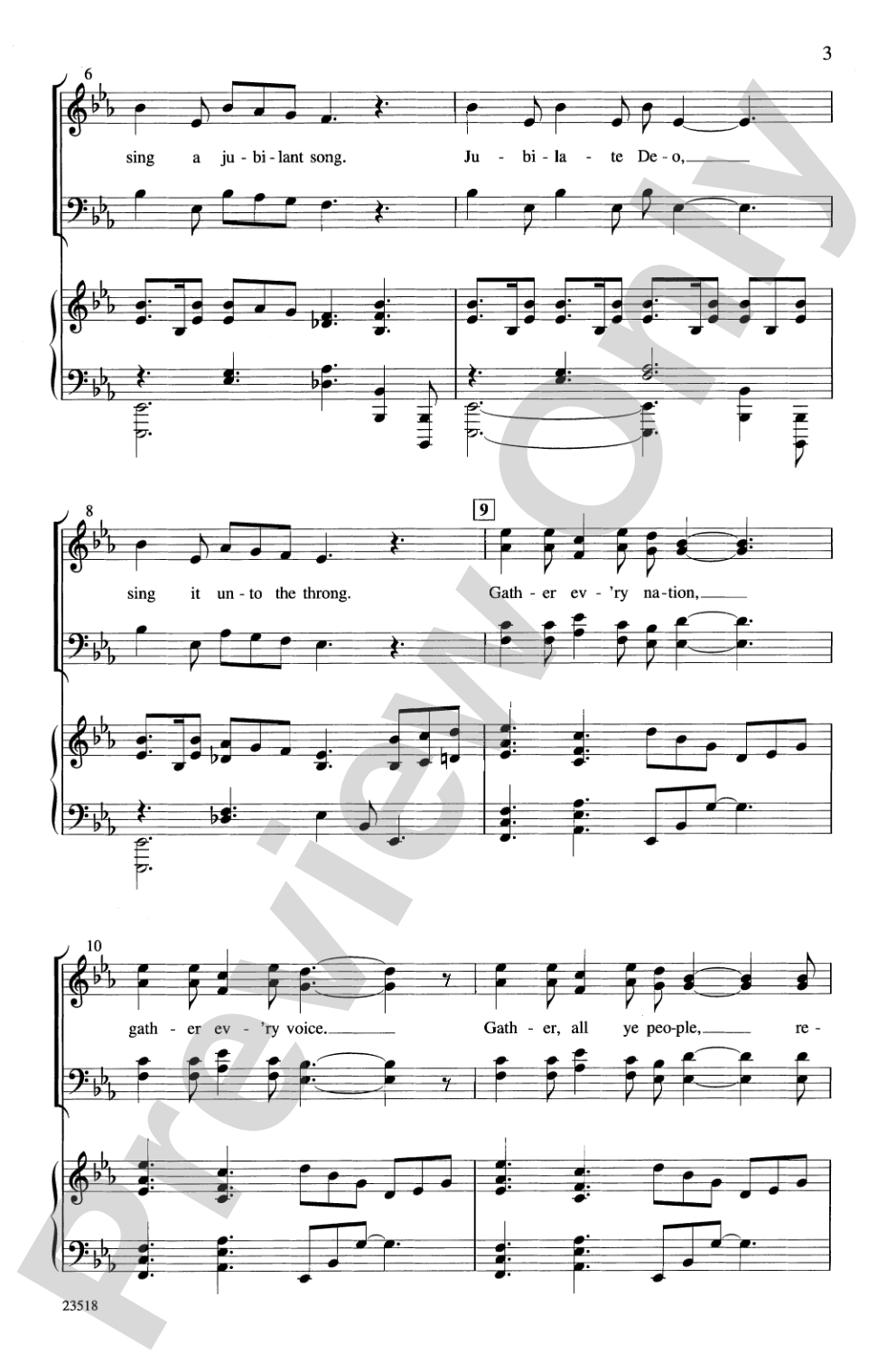

Jubilate Fanfare: SATB Choral Octavo
Featuring "Shall We Gather at the River"
Music by Andy Beck
Item: 00-PO-0008322
$1.65
Minimum order quantity: 10 copies
Please note: Under U.S. copyright law, you must purchase the exact number of copies needed for your ensemble. Printing, duplicating or sharing additional copies is strictly prohibited.
Pickup currently not available
Related Items
Jubilate Fanfare: SSA Choral Octavo |
$1.65
|
View | |
Jubilate Fanfare: SSAB Choral Octavo |
$1.65
|
View | |
Jubilate Fanfare: Choral Octavo InstruPax |
$30.00
|
View | |
Jubilate Fanfare: SATB Choral Octavo |
$1.65
|
View | |
Jubilate Fanfare: SSA Choral Octavo |
$1.65
|
View | |
Jubilate Fanfare: SSAB Choral Octavo |
$1.65
|
View | |
Jubilate Fanfare: Choral Octavo InstruTrax CD |
$22.95
|
View | |
Jubilate Fanfare: Choral Octavo InstruPax |
$30.00
|
View |
Description
Majestic. Opulent. Joyful. Glorious. A standout choral with an exalted effect! Whether sung in concert, contest, or festival, Andy Beck's Jubilate Fanfare is sure to impress with its powerful fanfare at the start and finish, and a lyrical arrangement of the "At the River" in its contrasting middle. Fine choral writing with a fulfilling piano accompaniment.


Discover MakeMusic Cloud: thousands of interactive titles your students can play along with today.
Sample Audio
1
Audio File
--:--
0:00
0:00
Sample Video
No sample videos found.
Additional Details
Series:
Alfred Choral Designs
Publisher:
Alfred Music
Page Count:
12
SKU:
00-PO-0008322
More about this title
About the Composer: Andy Beck

Andy Beck leads the choral publications division at Alfred Music, where he has cultivated a catalog of over 450 works spanning original compositions, arrangements, vocal resources, and children's musicals. His pedagogical contributions include the foundational method books Sing at First Sight, Foundations in Choral Sight Singing, and Vocalize! 45 Vocal Warm-Ups That Teach Technique, resources that have shaped choral programs across the country.
Beyond his work as a composer and arranger, Beck maintains an active presence as a guest conductor, adjudicator, and clinician for music educators and ensembles nationwide. His credentials include conducting commissions for honor choirs, all-state groups throughout the Southeast, and performances in musical theatre and chamber settings. He holds degrees in Music Education from Ithaca College (Bachelor's) and Northwest Missouri State University (Master's), grounding his prolific output in deep pedagogical understanding and commitment to choral artistry.
Why we love this
Beck's structural choice here rewards singers and audiences alike. The fanfare framing provides immediate dramatic impact while the "At the River" arrangement gives the piece emotional substance. The piano accompaniment sits comfortably within the capabilities of most music programs without sacrificing sophistication, making this accessible yet genuinely impressive.
What to expect
Jubilate Fanfare announces its purpose immediately: joy expressed through brass-like clarity and harmonic richness. The middle section softens into something more intimate and hymn-like, creating space for reflection before the exultant return.
Who it's for
This work suits intermediate to advanced SATB choirs seeking a strong concert opener or closer with liturgical flexibility. The piece works equally well in festival settings, all-state auditions, and worship services where a celebratory tone is appropriate.
How to get the most out of it
- Shape the opening fanfare with precision in articulation and ensemble rhythmic clarity. The opening gesture sets expectations for the entire performance.
- Allow the "At the River" section breathing room. This lyrical middle requires sustained tone and careful attention to blend, creating genuine contrast with the surrounding fanfare material.
- Secure the closing fanfare through sectional work on the bass and tenor lines first. These voices anchor the final gesture and deserve specific rehearsal focus.
- Consider the recorded accompaniment as a learning tool during early rehearsals, then transition to live piano to build ensemble independence and conductorial communication.
How to use it
Position this as a bookend to your concert, particularly if programming spans multiple seasons or themes. The work's liturgical associations make it natural for All Saints Day or Thanksgiving services, while its concert energy also serves smaller choral festivals and regional competitions.
Skills your students will build
- Ensemble rhythmic precision in syncopated fanfare figures
- Sustained tone production in lyrical, hymn-based passages
- Voice leading independence within four-part harmony
- Dynamic contrast and expression through textural changes
- Balance between accompanied and a cappella moment singing