
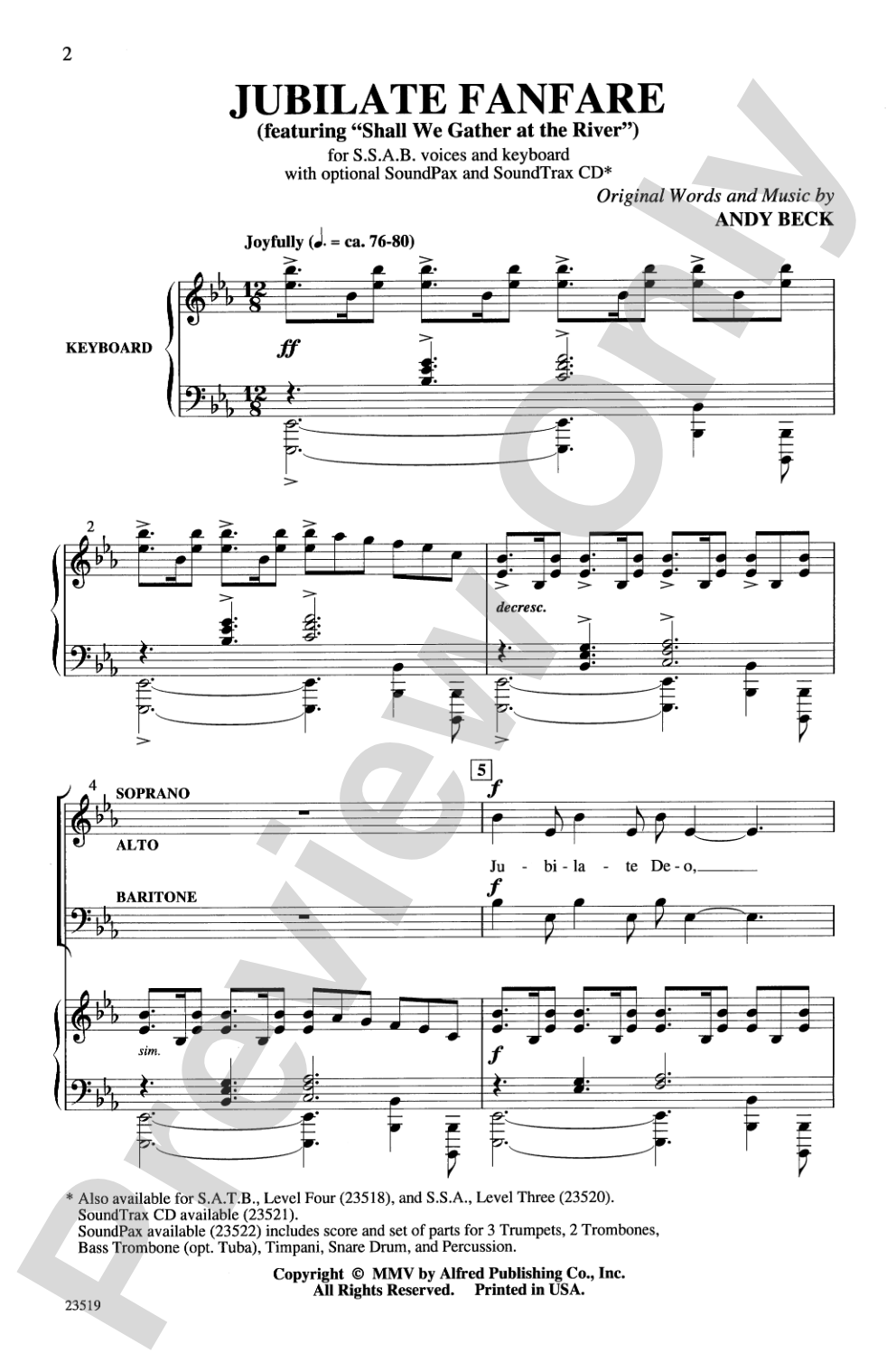

Jubilate Fanfare: SSAB Choral Octavo
Featuring "Shall We Gather at the River"
Music by Andy Beck
Item: 00-PO-0008323
$1.65
Minimum order quantity: 10 copies
Please note: Under U.S. copyright law, you must purchase the exact number of copies needed for your ensemble. Printing, duplicating or sharing additional copies is strictly prohibited.
Pickup currently not available
Related Items
Jubilate Fanfare: SATB Choral Octavo |
$1.65
|
View | |
Jubilate Fanfare: SSA Choral Octavo |
$1.65
|
View | |
Jubilate Fanfare: Choral Octavo InstruPax |
$30.00
|
View | |
Jubilate Fanfare: SATB Choral Octavo |
$1.65
|
View | |
Jubilate Fanfare: SSA Choral Octavo |
$1.65
|
View | |
Jubilate Fanfare: SSAB Choral Octavo |
$1.65
|
View | |
Jubilate Fanfare: Choral Octavo InstruTrax CD |
$22.95
|
View | |
Jubilate Fanfare: Choral Octavo InstruPax |
$30.00
|
View |
Description
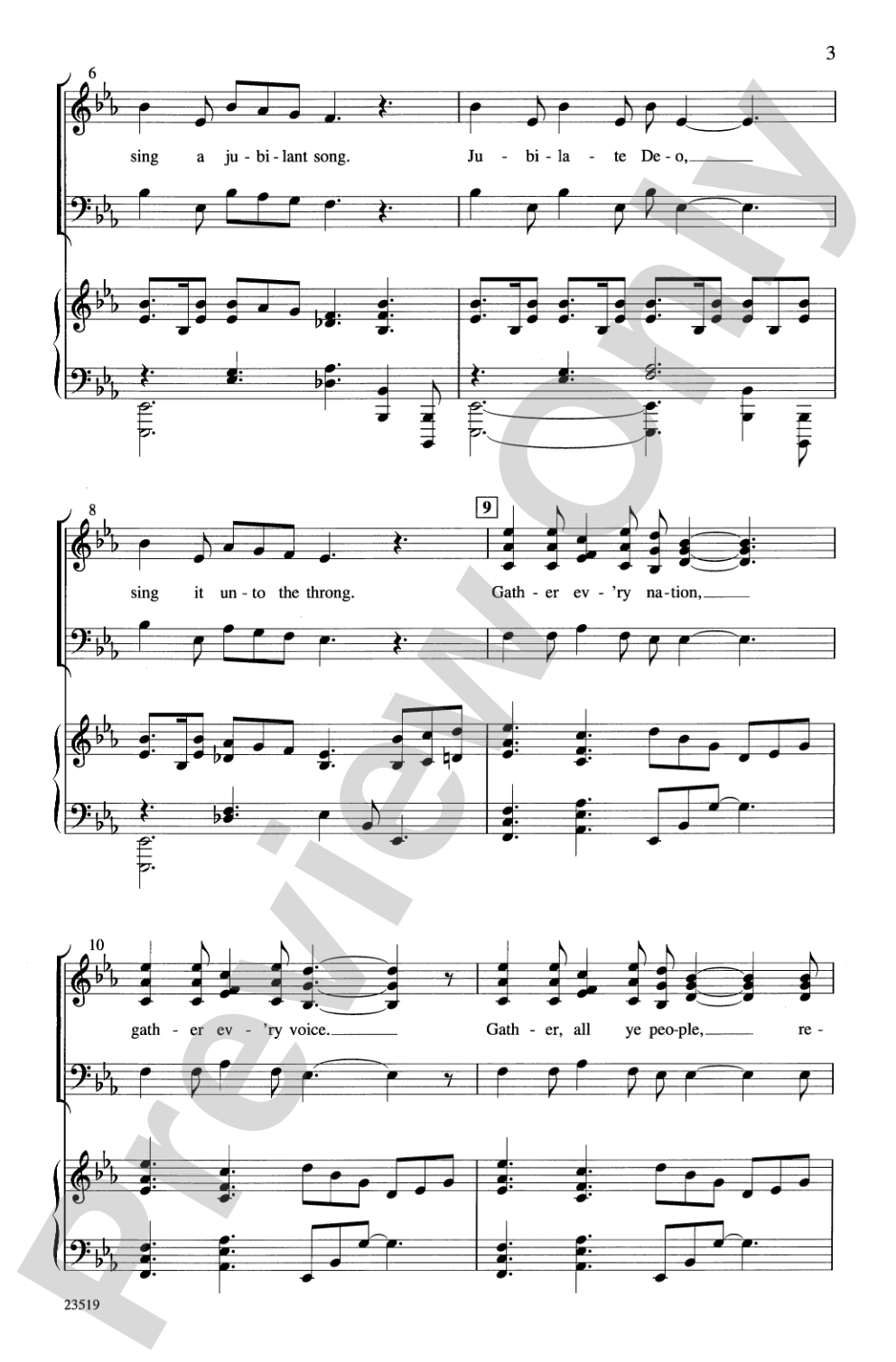
Majestic. Opulent. Joyful. Glorious. A standout choral with an exalted effect! Whether sung in concert, contest, or festival, Andy Beck's Jubilate Fanfare is sure to impress with its powerful fanfare at the start and finish, and a lyrical arrangement of the "At the River" in its contrasting middle. Fine choral writing with a fulfilling piano accompaniment.


Discover MakeMusic Cloud: thousands of interactive titles your students can play along with today.
Sample Audio
1
Audio File
--:--
0:00
0:00
Sample Video
No sample videos found.
Additional Details
Series:
Alfred Choral Designs
Publisher:
Alfred Music
Page Count:
12
SKU:
00-PO-0008323
More about this title
About the Composer: Andy Beck

Andy Beck leads the choral publications division at Alfred Music, where his influence shapes the vocal repertoire that thousands of educators teach from every year. His catalog spans over 450 pieces, vocal method books, and children's musicals; his work appears in classrooms and on concert stages across continents, evidence of writing that resonates with both teachers and singers.
Beyond the page, Beck works as a guest conductor, adjudicator, and clinician throughout the United States and internationally. He holds degrees in Music Education from both Ithaca College and Northwest Missouri State University, brings his tenor voice to the North Carolina Master Chorale Chamber Choir, and has recorded as a studio vocalist for Alfred since 1992. His commissions for state and regional honor choirs demonstrate that music educators consistently seek out his instinct for what singers of all levels need.
Why we love this
Beck writes fanfare music that doesn't feel oversimplified or hollow. The bookended brass color combined with a hymn tune arrangement creates genuine contrast without fragmenting the piece's architecture. A concert work that earns its place on a program through distinctive voice writing rather than length.
What to expect
Jubilate Fanfare opens with ceremonial brightness, its fanfare gestures immediately declaring occasion and significance. The middle yields to something more intimate; the familiar tune of 'At the River' unfolds with warmth and reflection before the opening music returns, amplified and triumphant.
Who it's for
Mixed choirs at intermediate to advanced levels seeking a concert or festival piece with sacred appeal. The piece works especially well for ensembles comfortable with part singing and wanting repertoire that showcases both ensemble precision and lyrical musicality.
How to get the most out of it
- Shape the opening fanfare with clear articulation in the piano's chordal blocks so the entrance feels ceremonial rather than merely loud.
- Let the middle hymn section breathe. The lyrical passage depends on sustained singing and phrase awareness to avoid dragging.
- Balance the voices so the 'At the River' melody sits clearly in one voice while the others provide harmonic support without muddying the texture.
- Return to the closing fanfare with the same energy as the opening, but slightly tighter rhythmically to land the final statement with impact.
How to use it
This pairs naturally on a sacred concert, either opening a program with celebratory energy or anchoring the second half alongside more contemplative repertoire. Its orchestral piano part and optional instrumental accompaniment also make it valuable for services marking major liturgical seasons like Ascension or Thanksgiving when you want something that feels both accessible and substantial.
Skills your students will build
- Singing sustained phrases while maintaining line independence in three-part mixed voicing
- Distinguishing between rhythmic precision (fanfare sections) and legato phrasing (hymn arrangement)
- Balancing volume and tone across divisi passages without losing clarity
- Interpreting harmonic context to support a featured melodic line
- Responding to dynamic contrast between contrasting sections within a single piece