
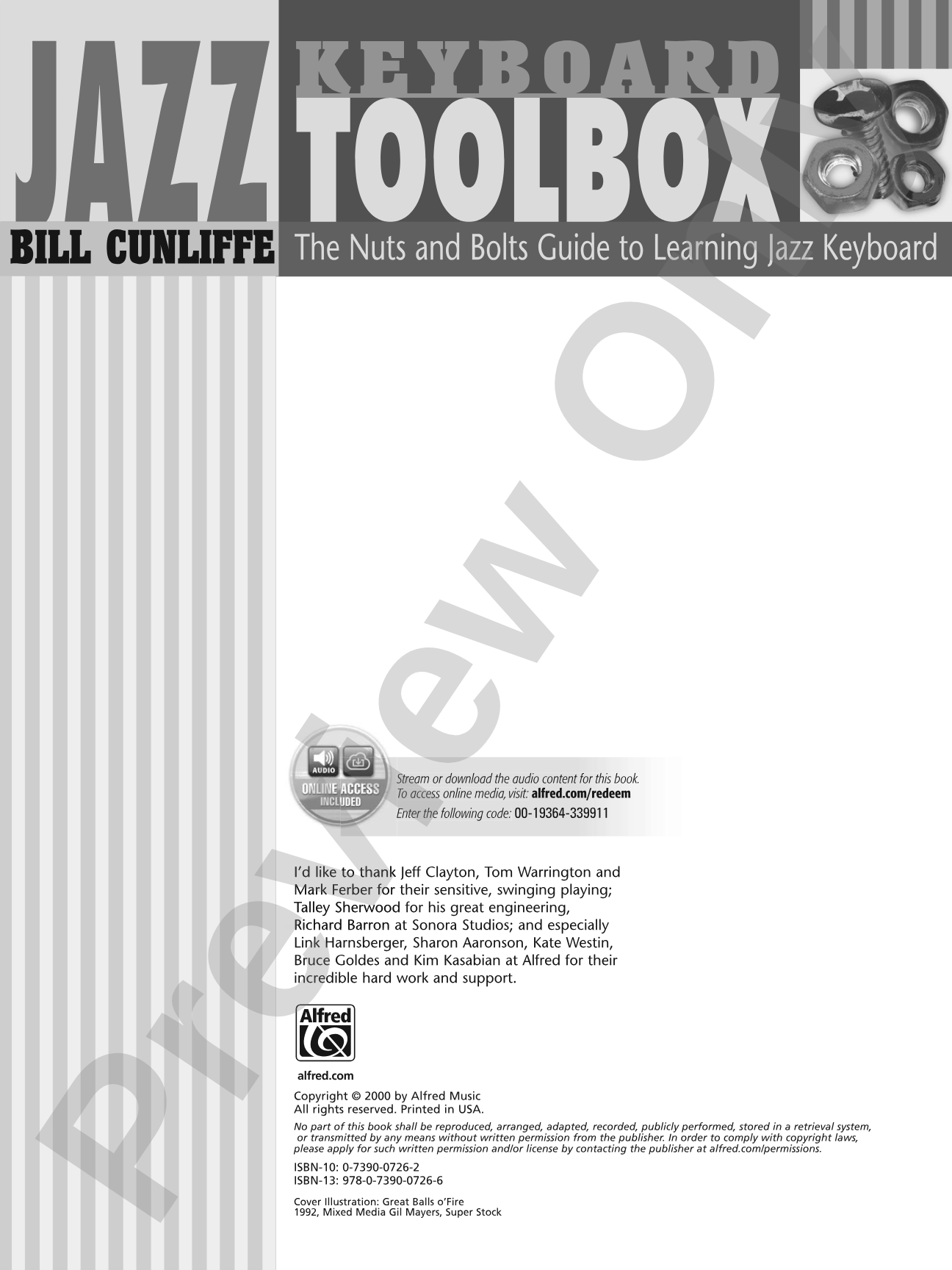

Jazz Keyboard Toolbox: The Nuts and Bolts Guide to Learning Jazz Keyboard: Piano
The Nuts and Bolts Guide to Learning Jazz Keyboard
By Bill Cunliffe
Level: Intermediate / Late Intermediate
Item: 00-PB-0002190
$14.99
Pickup currently not available
Description
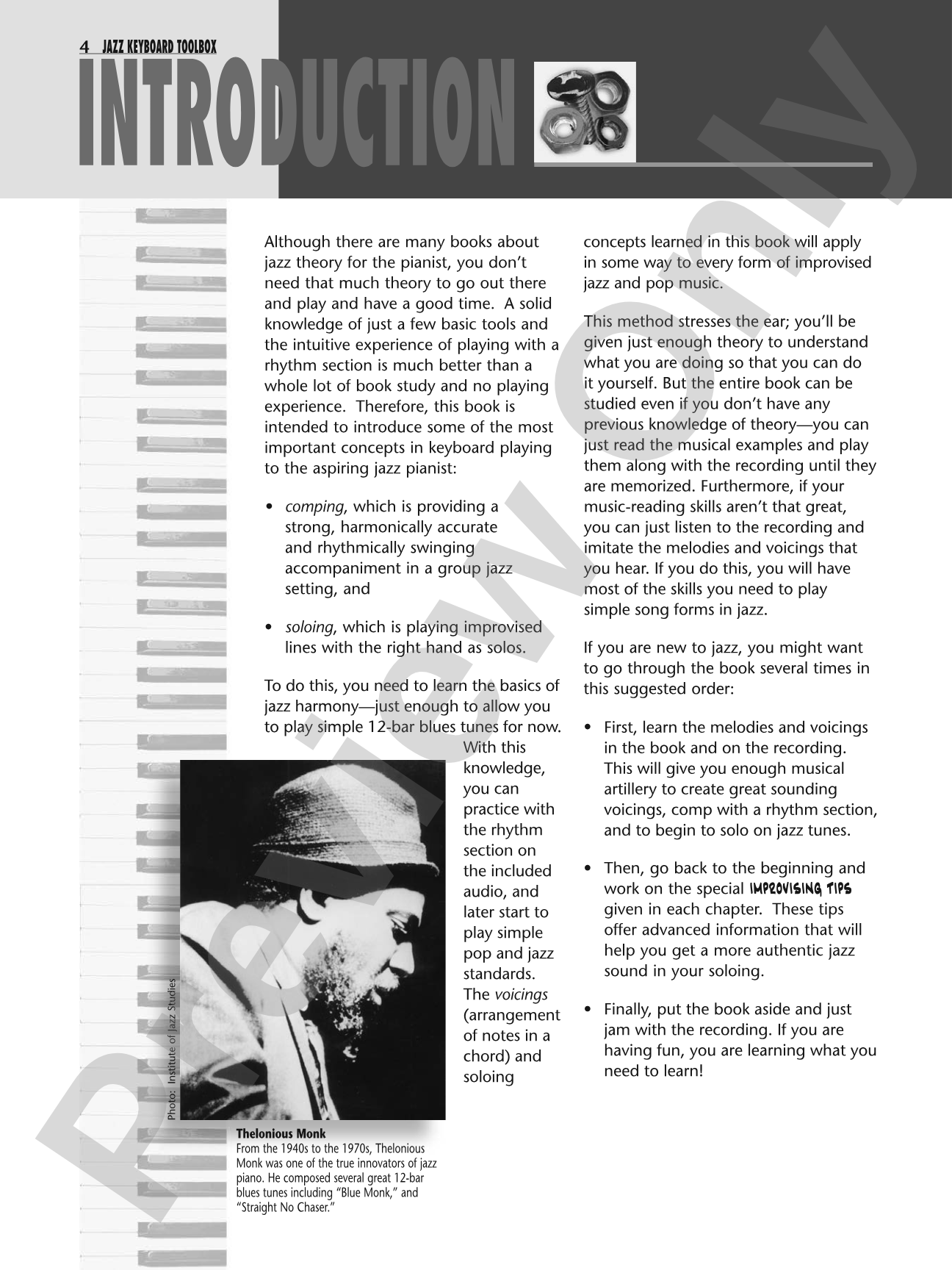
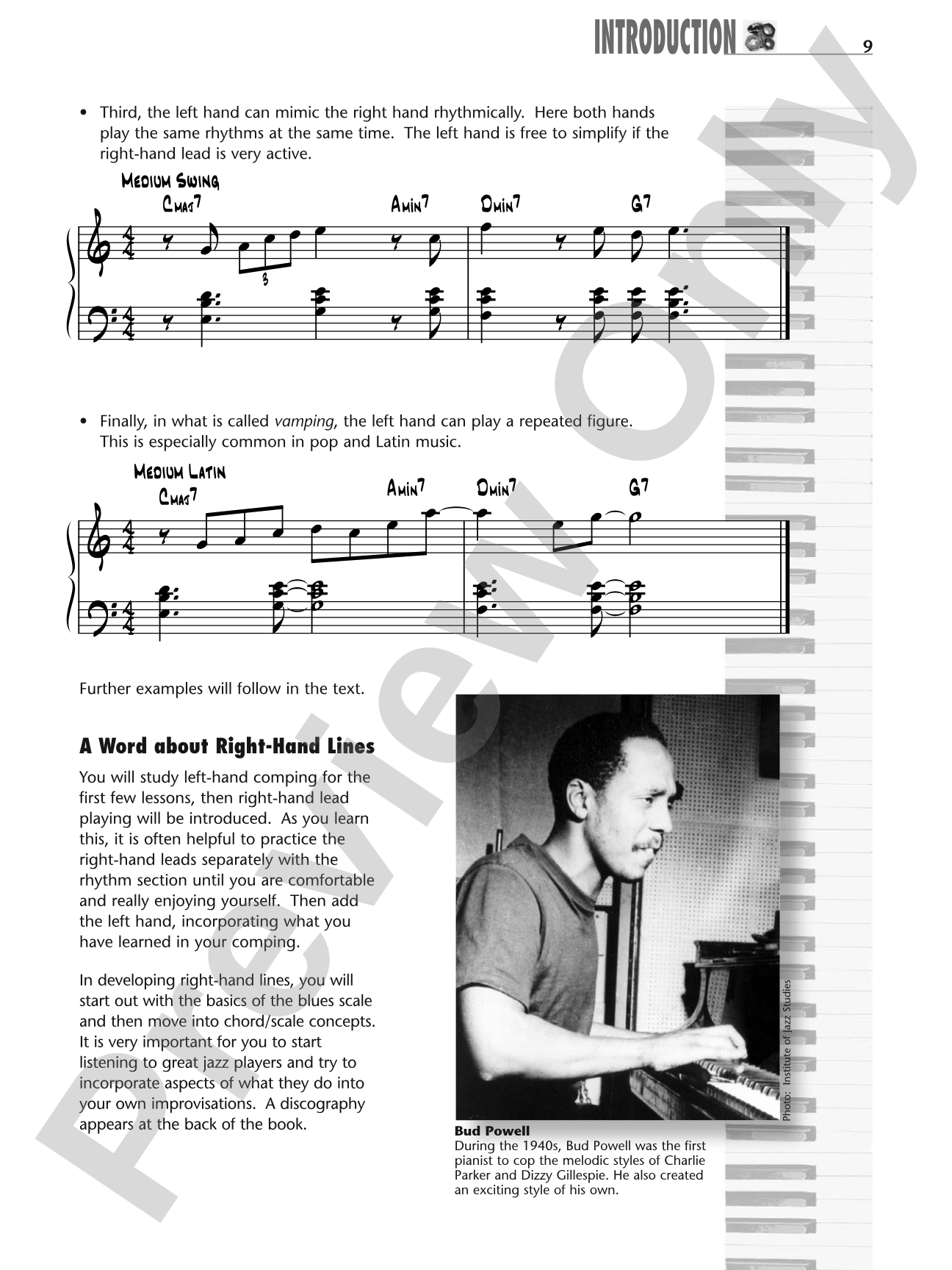
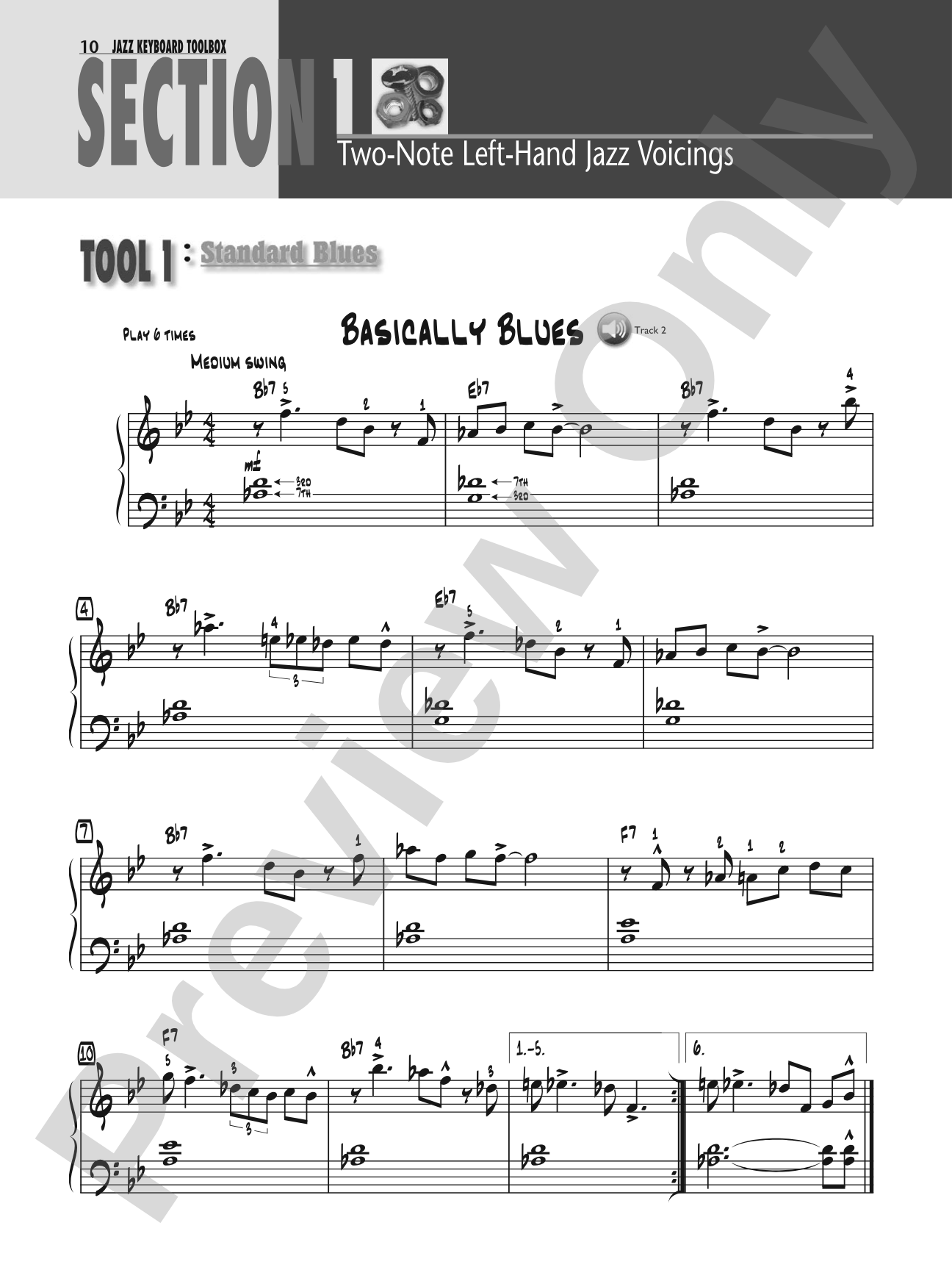
Now you can learn to play jazz keyboard without knowing a lot of complicated music theory. This step-by-step method uses listening and play-along techniques that make learning to play jazz fun and easy, with just enough theory to understand the concepts. You will gain a solid knowledge of the basic tools needed for accompanying and soloing in any jazz setting. A recording is included, so you can play the examples and tunes along with a professional jazz band.


Discover MakeMusic Cloud: thousands of interactive titles your students can play along with today.
Sample Audio
1
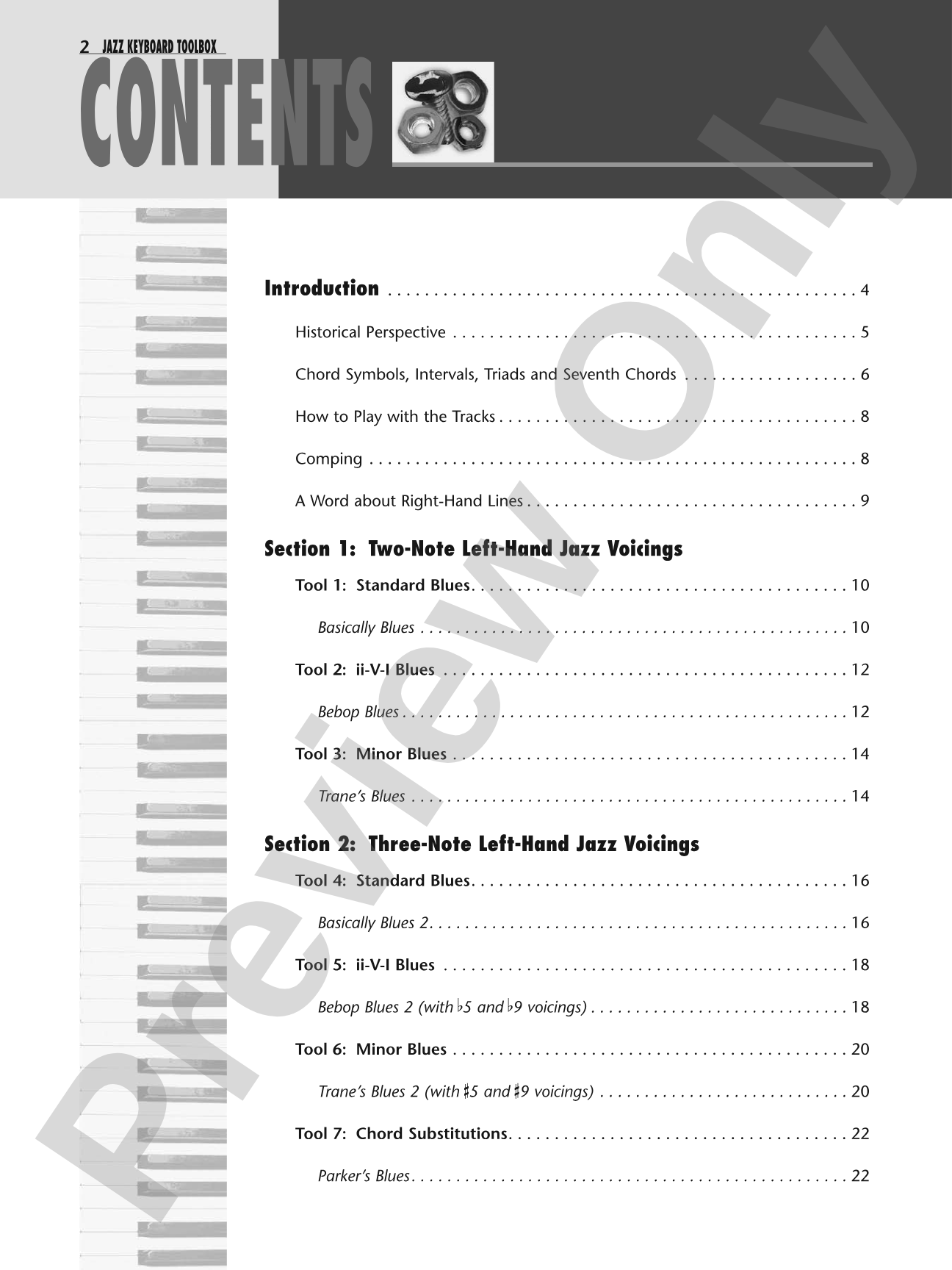
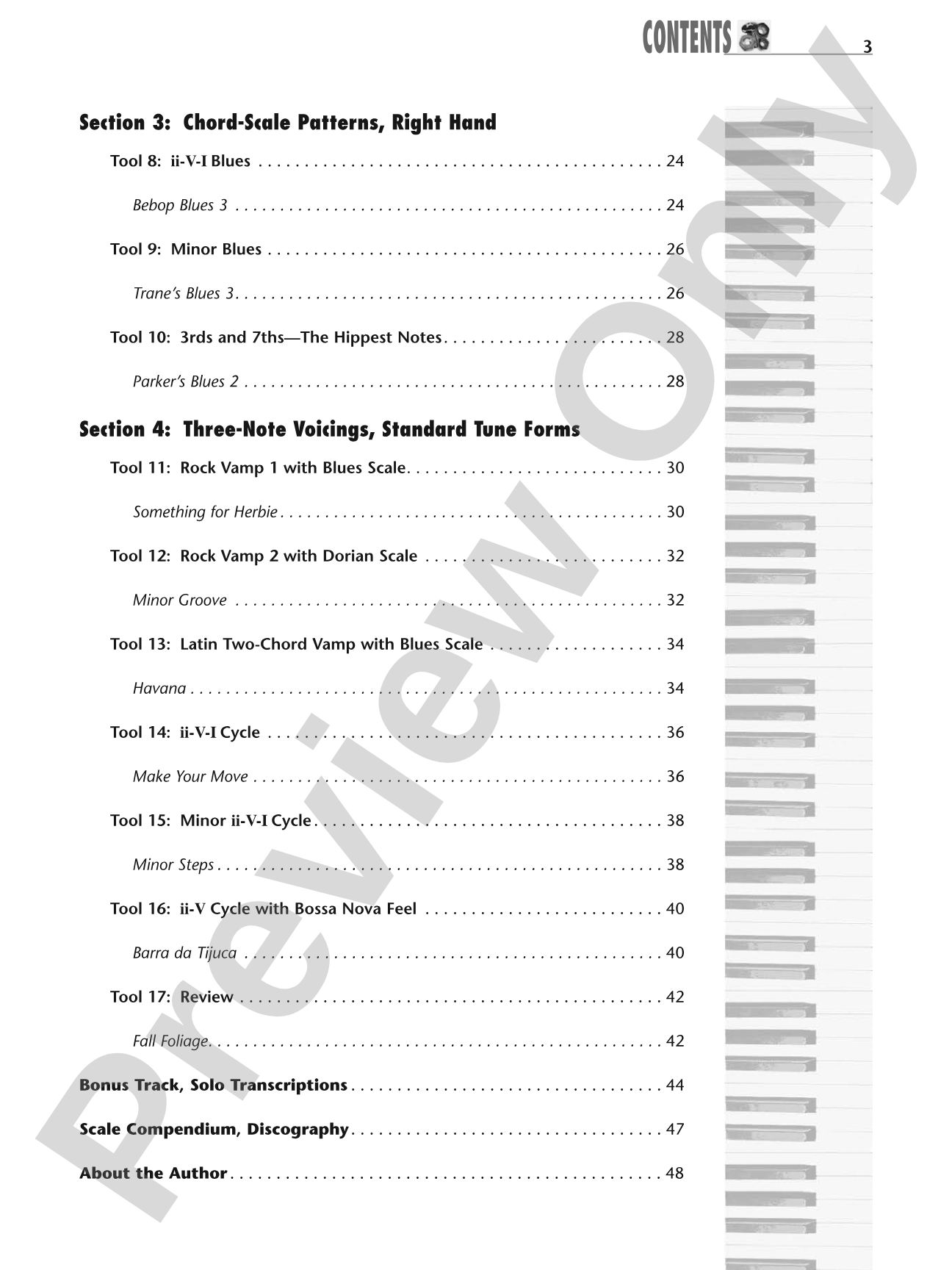
Bebop Blues
--:--
2
Havana
--:--
3
Something For Herbie
--:--
Bebop Blues
0:00
0:00
Sample Video
No sample videos found.
Additional Details
Series:
Jazz Startup Series
Publisher:
Alfred Music
Page Count:
48
SKU:
00-PB-0002190
More about this title
About the Composer: Bill Cunliffe

Bill Cunliffe's credentials as a jazz educator are rooted in decades of professional work at the highest level. A Thelonious Monk International Jazz Piano Award winner and multiple Grammy and Emmy nominee, he has performed and recorded alongside Ray Brown, Joe Henderson, Freddie Hubbard, and other jazz luminaries. His work has appeared on concert stages from the Illinois Philharmonic to the New Zealand School of Music Symphony Orchestra, and he was featured on Marian McPartland's legendary Piano Jazz radio program.
Beyond his performing career, Cunliffe has established himself as a compositional voice in jazz and classical contexts, with his work published through Alfred Music, Kendor, and university presses. His pedagogical approach across his keyboard method books reflects someone who understands both the theoretical underpinnings of jazz and the practical reality of learning it without drowning in abstraction.
Why we love this
Cunliffe cuts through the usual theory textbook approach by building jazz vocabulary through listening and playing from the start. The included professional rhythm section recordings let students experience the feel of real jazz comping and soloing contexts immediately, rather than working through disconnected exercises first. What distinguishes this toolbox is its laser focus on the specific tools you actually need to function in a jazz ensemble, without the overwhelming baggage of advanced harmonic analysis.
What to expect
The experience of learning jazz through doing rather than analyzing. You're building vocabulary by listening and imitating professional players, then gradually recognizing the patterns and principles underneath. The recorded band creates an immediate, visceral sense of belonging to a real ensemble rather than working in isolation.
Who it's for
Late intermediate pianists and keyboardists ready to work in jazz contexts but without formal jazz theory training. Self-teaching musicians will find the step-by-step progression and recorded tracks essential, while directors can use this to get ensemble musicians up to speed on jazz voicings and comping fundamentals quickly.
How to get the most out of it
- Listen to the recorded accompaniment multiple times before attempting to play along. Absorb the groove, phrasing, and band feel as a listener first.
- Lock into the bass line during comping sections. Let the walking bass define the harmonic space rather than overthinking chord substitutions.
- Start slow with the provided play-alongs and gradually increase tempo as the patterns become muscle memory.
- Isolate individual comping patterns or soloing concepts from the examples before applying them to full tunes.
How to use it
Assign this to keyboard and piano students who need to comp or solo at jazz festivals or ensemble concerts within a few weeks. It also serves as a bridge resource for classical pianists transitioning to jazz electives, offering just enough theoretical grounding to make sense of jazz language without requiring a semester-long course. The 48-page format means students can progress through concrete concepts and recorded examples in a few weeks of focused practice.
Skills your students will build
- Jazz comping patterns and voicings for ii-V-I progressions
- Blues and jazz soloing over standard harmonic changes
- Reading jazz notation and chord charts
- Listening and imitation techniques for jazz phrasing
- Practical application of jazz theory in ensemble settings
- Rhythmic independence and groove awareness