
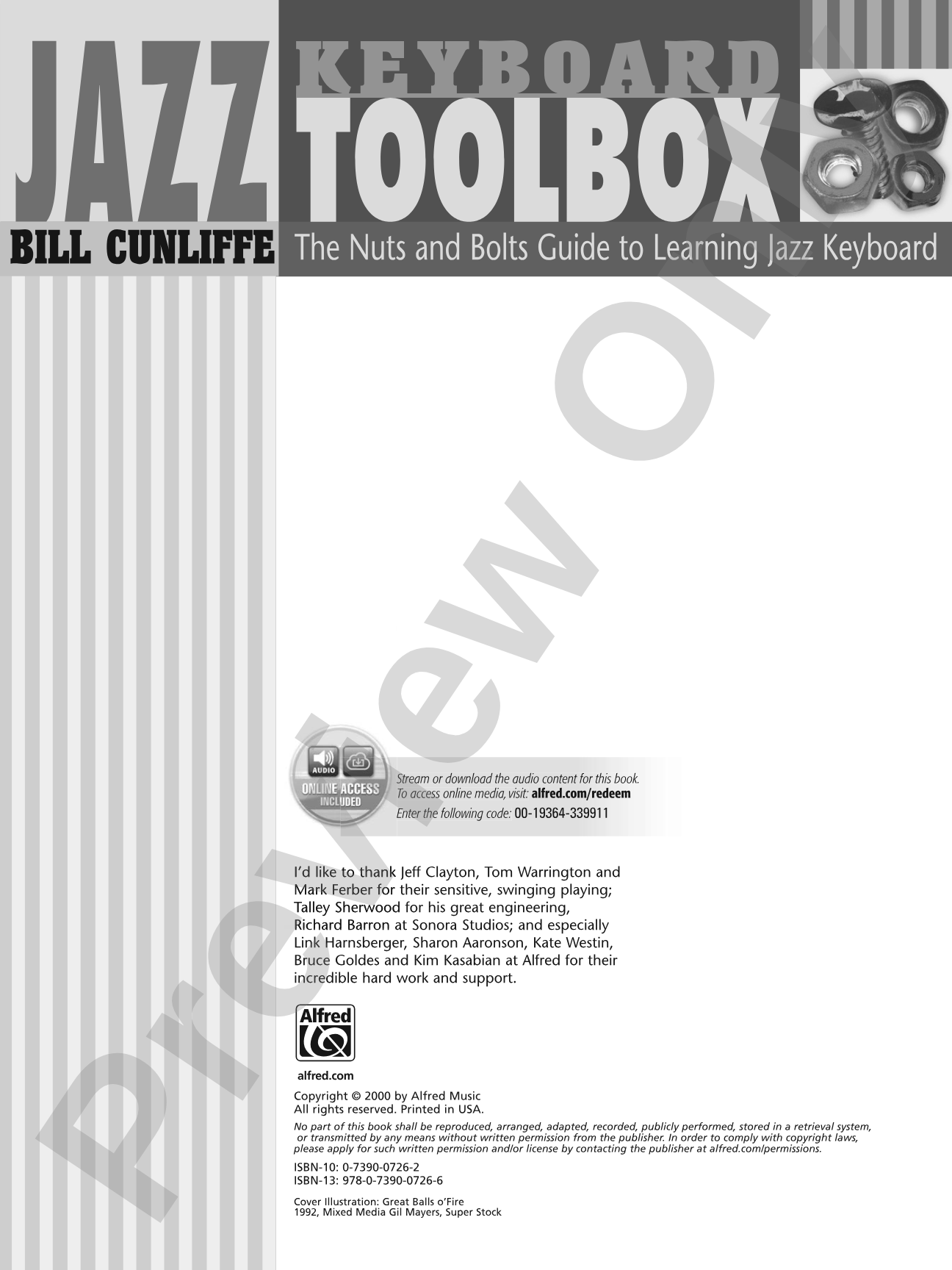
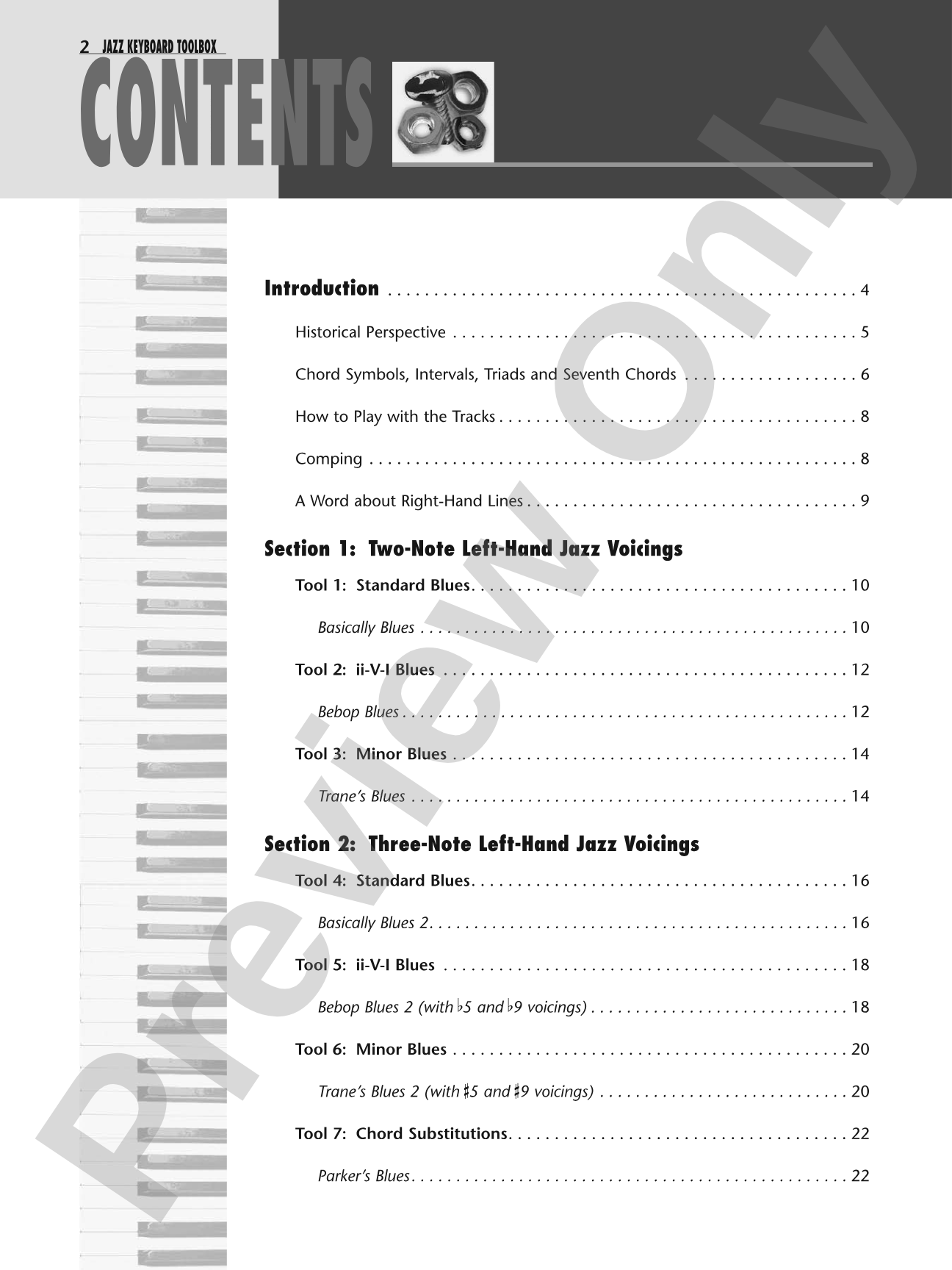
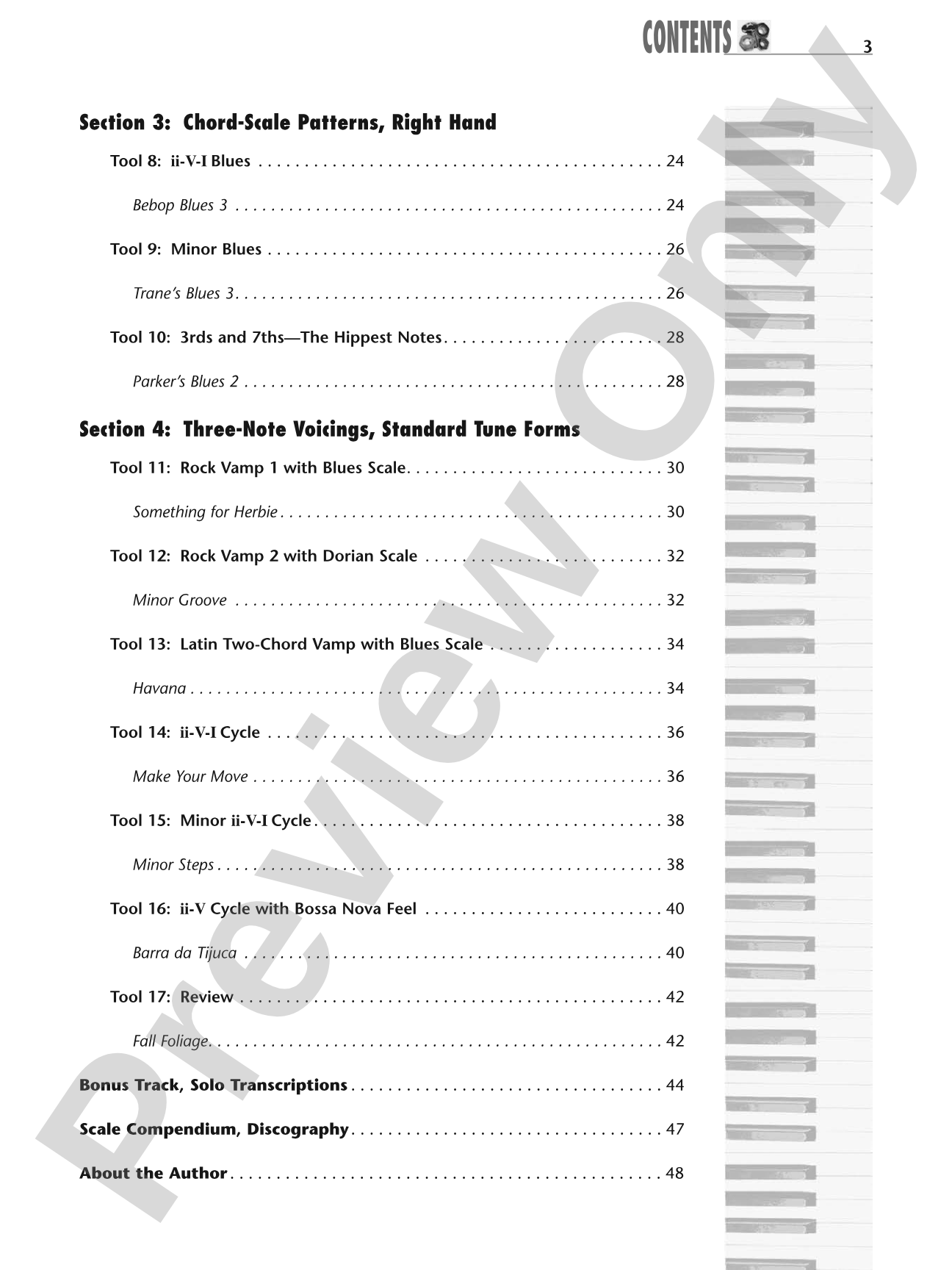
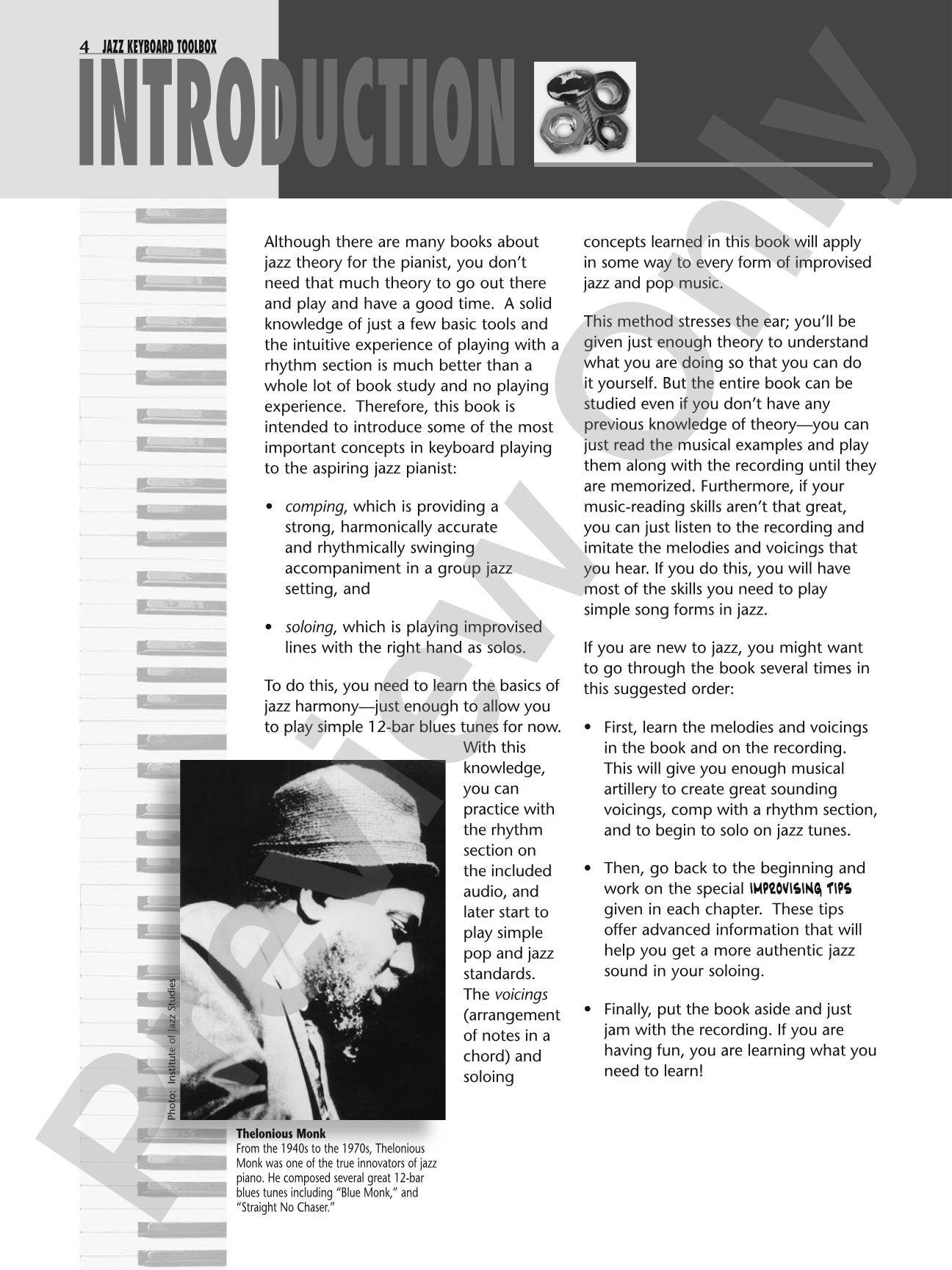

Jazz Keyboard Toolbox: The Nuts and Bolts Guide to Learning Jazz Keyboard: Piano
The Nuts and Bolts Guide to Learning Jazz Keyboard
By Bill Cunliffe
Level: Intermediate / Late Intermediate
Item: 00-PB-0002130
$14.99
Pickup currently not available
Description
Now you can learn to play jazz keyboard without knowing a lot of complicated music theory. This step-by-step method uses listening and play-along techniques that make learning to play jazz fun and easy, with just enough theory to understand the concepts. You will gain a solid knowledge of the basic tools needed for accompanying and soloing in any jazz setting. A recording is included, so you can play the examples and tunes along with a professional jazz band.


Jazz Keyboard Toolbox: The Nuts and Bolts Guide to Learning Jazz Keyboard: Piano isn't in MakeMusic Cloud just yet...but it could be. Let us know you'd like to see it, and you'll help shape what comes next. In the meantime, start a free trial and dive into thousands of interactive titles your students can play along with today.
Request This Title
Tell us you want it.
Start Your Free Trial
Explore everything that's ready to play right now.
Sample Audio
1
Bebop Blues
--:--
2
Havana
--:--
3
Something For Herbie
--:--
Bebop Blues
0:00
0:00
Sample Video
No sample videos found.
Additional Details
Series:
Jazz Startup Series
Publisher:
Alfred Music
Page Count:
48
SKU:
00-PB-0002130
More about this title
About the Composer: Bill Cunliffe

Bill Cunliffe's credentials span both the jazz performance circuit and the concert hall. A Thelonious Monk International Jazz Piano Competition winner and Down Beat Award recipient from his Eastman years, he has performed as pianist and arranger alongside Buddy Rich, Ray Brown, Joe Henderson, Freddie Hubbard, and James Moody. His work has earned Emmy and Grammy nominations; his arrangement "Do It Again" received a Grammy nomination in 2006.
Cunliffe's output as a composer and arranger reaches across genres and ensembles. His works have been performed by the Illinois Philharmonic, San Diego Symphony, and the Manhattan School of Music Jazz Philharmonic, among others. He has released a dozen jazz albums as a leader and served as a guest on Marian McPartland's legendary Piano Jazz radio program. His instructional books for Alfred Music, including this Toolbox series, distill decades of professional experience into pedagogically sound methods.
Why we love this
Cunliffe strips away the intimidation factor that often surrounds jazz study by pairing listening and play-along work with only the theory necessary to make sense of what students hear. The recorded accompaniment transforms isolated exercises into genuine musical interaction, giving pianists the experience of playing within a real jazz rhythm section from the first pages. For intermediate players ready to move beyond classical piano, this book offers a direct path into the language and vocabulary of jazz improvisation.
What to expect
The energy here is practical and encouraging. Each chapter unfolds logically, building confidence through play-along opportunities that immediately anchor theory to sound. You move quickly from observing how jazz pianists think to making those same choices yourself, with a professional band providing the musical context that makes every exercise feel purposeful rather than abstract.
Who it's for
Intermediate to late intermediate pianists who have strong classical or contemporary training but lack jazz vocabulary and improvisation experience. This book serves students ready to engage with jazz as a distinct language rather than an exotic variation of skills they already possess. It also works well for jazz educators seeking a structured, listening-based curriculum that doesn't require advanced harmonic theory as a prerequisite.
How to get the most out of it
- Work through the listening examples first without the instrument. Internalize the sound of each concept before your fingers attempt to recreate it.
- Sing the melodic lines aloud before playing them. Your voice will guide your hands toward the phrasing and articulation that defines jazz style.
- Play the recorded accompaniment multiple times with the same example or tune. Each pass should feel more conversational, less mechanical.
- Focus on one concept per practice session rather than rushing through several. Mastery of comping rhythms or melodic approaches compounds faster with concentrated repetition.
How to use it
Assign this as individual study material for pianists in your jazz ensemble or jazz combo who need remedial work in voice leading, comping patterns, or solo construction. Pair it with your ensemble's repertoire so students apply what they learn from the book directly to charts they're rehearsing. The recorded accompaniments also serve as practice resources throughout the school year, offering a consistent ensemble sound for students working independently at home.
Skills your students will build
- Comping voicings and rhythm patterns in jazz contexts
- Basic chord substitution and reharmonization
- Constructing single-note solos over jazz changes
- Listening discrimination between jazz piano styles and approaches
- Transposition and modal interchangeability
- Reading jazz notation and lead sheet symbols