
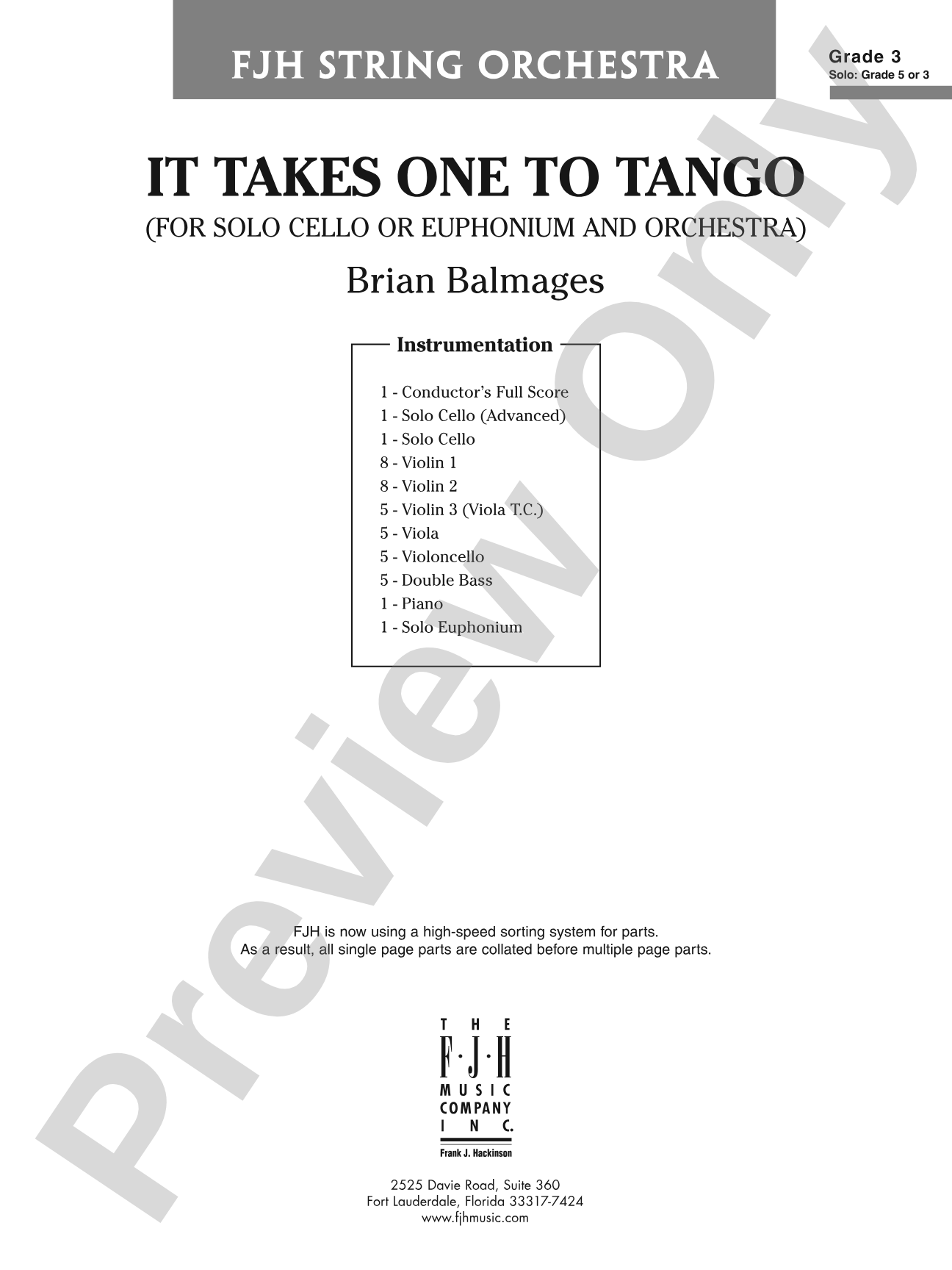
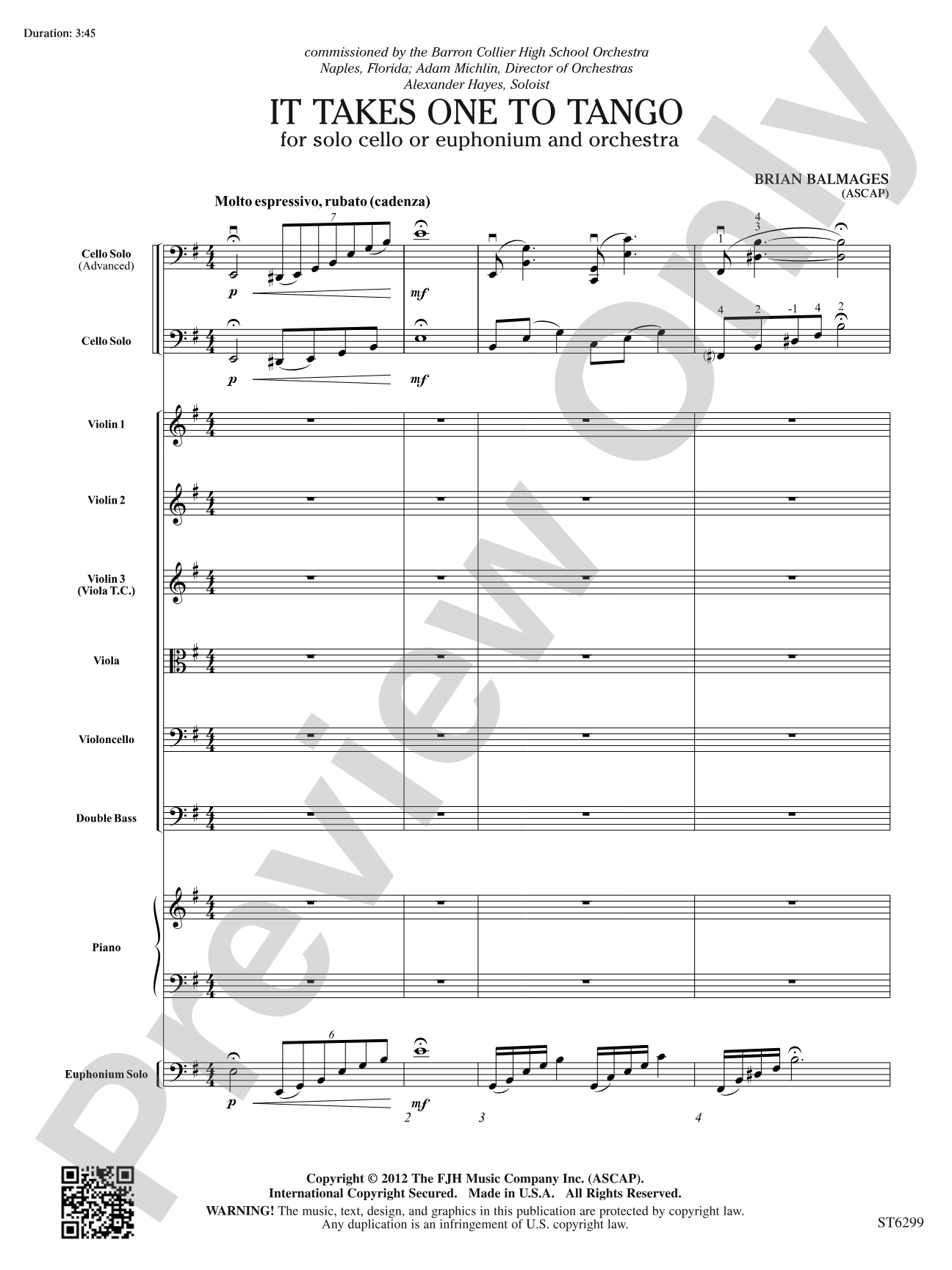
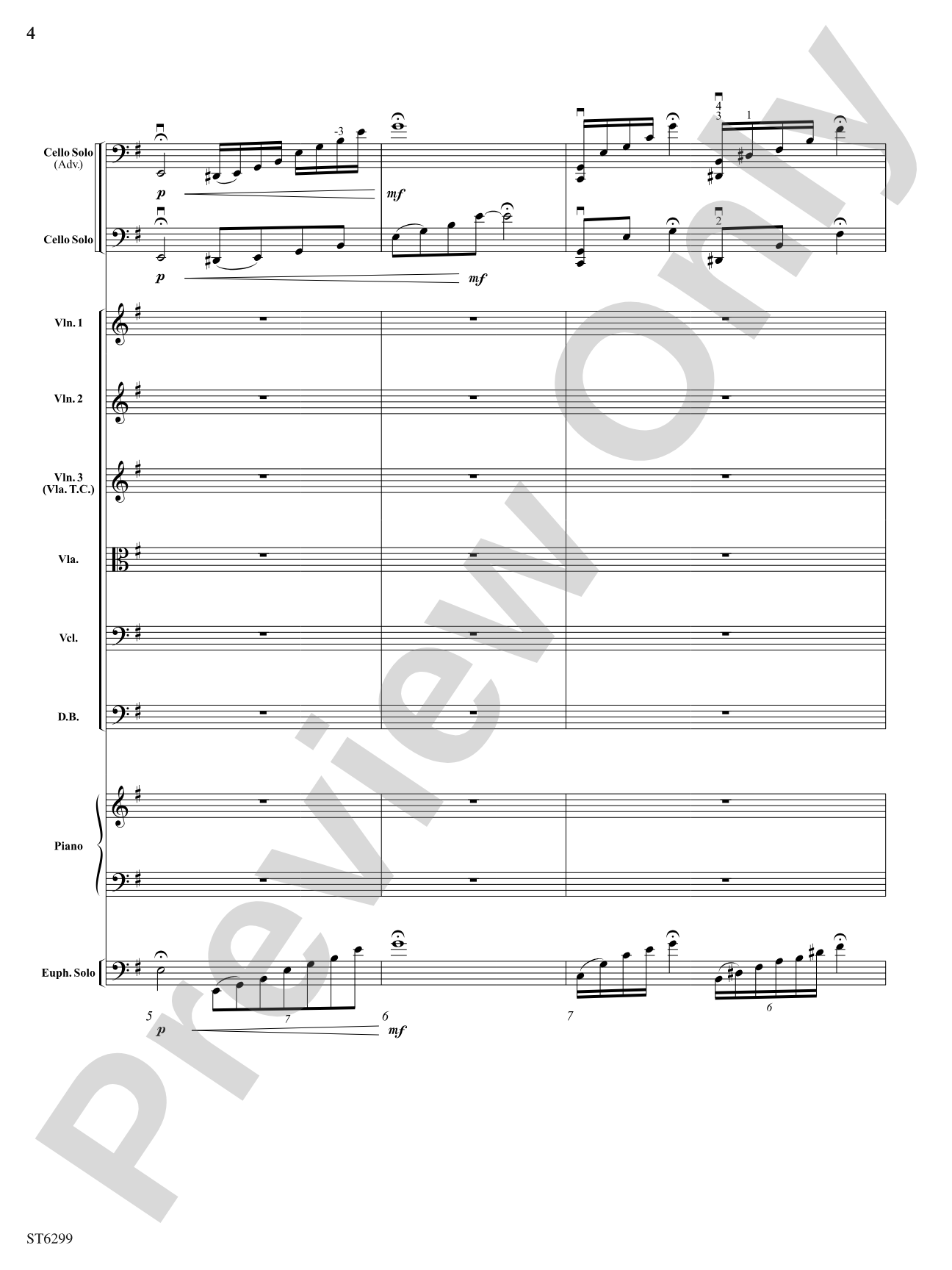
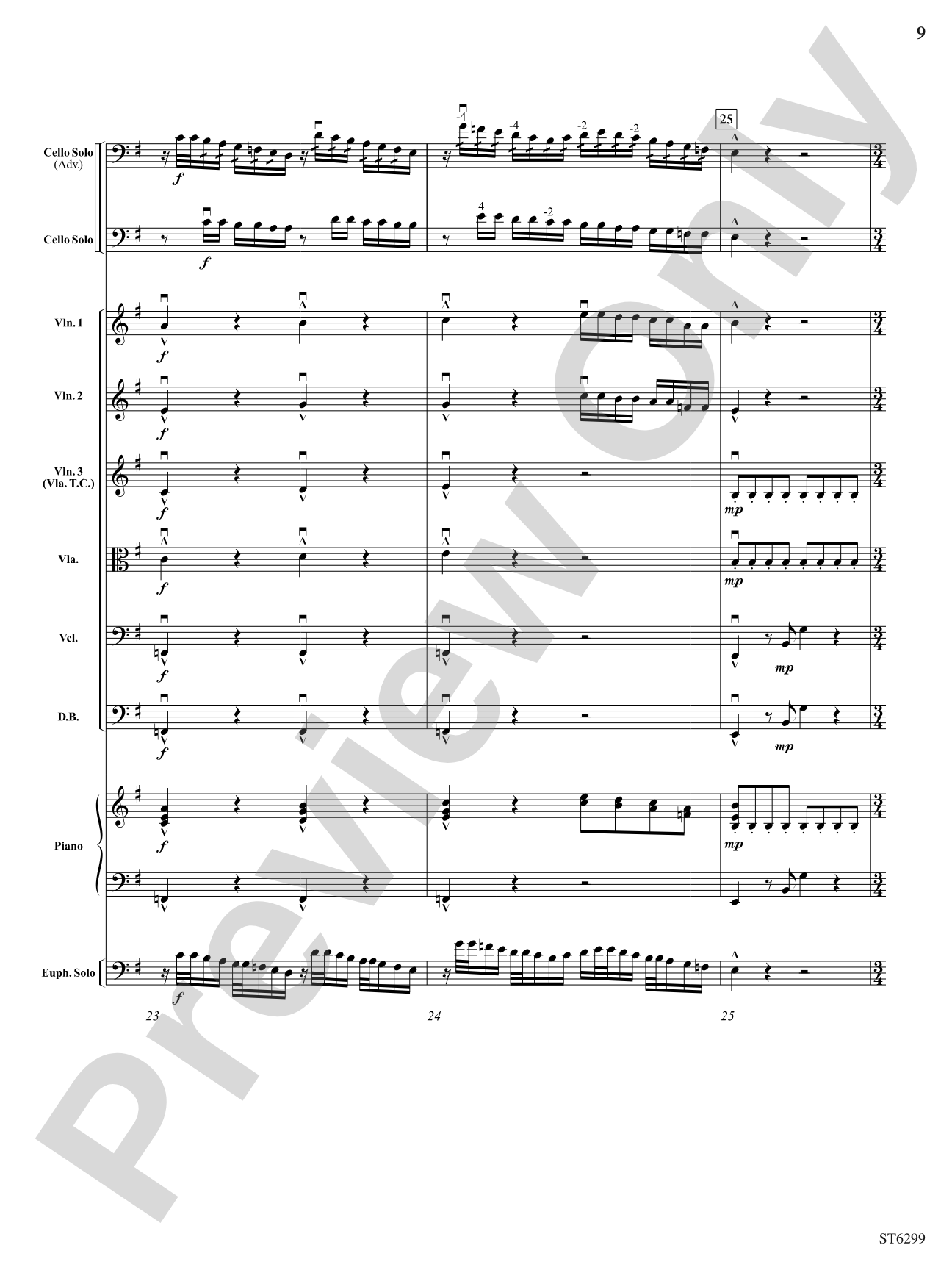
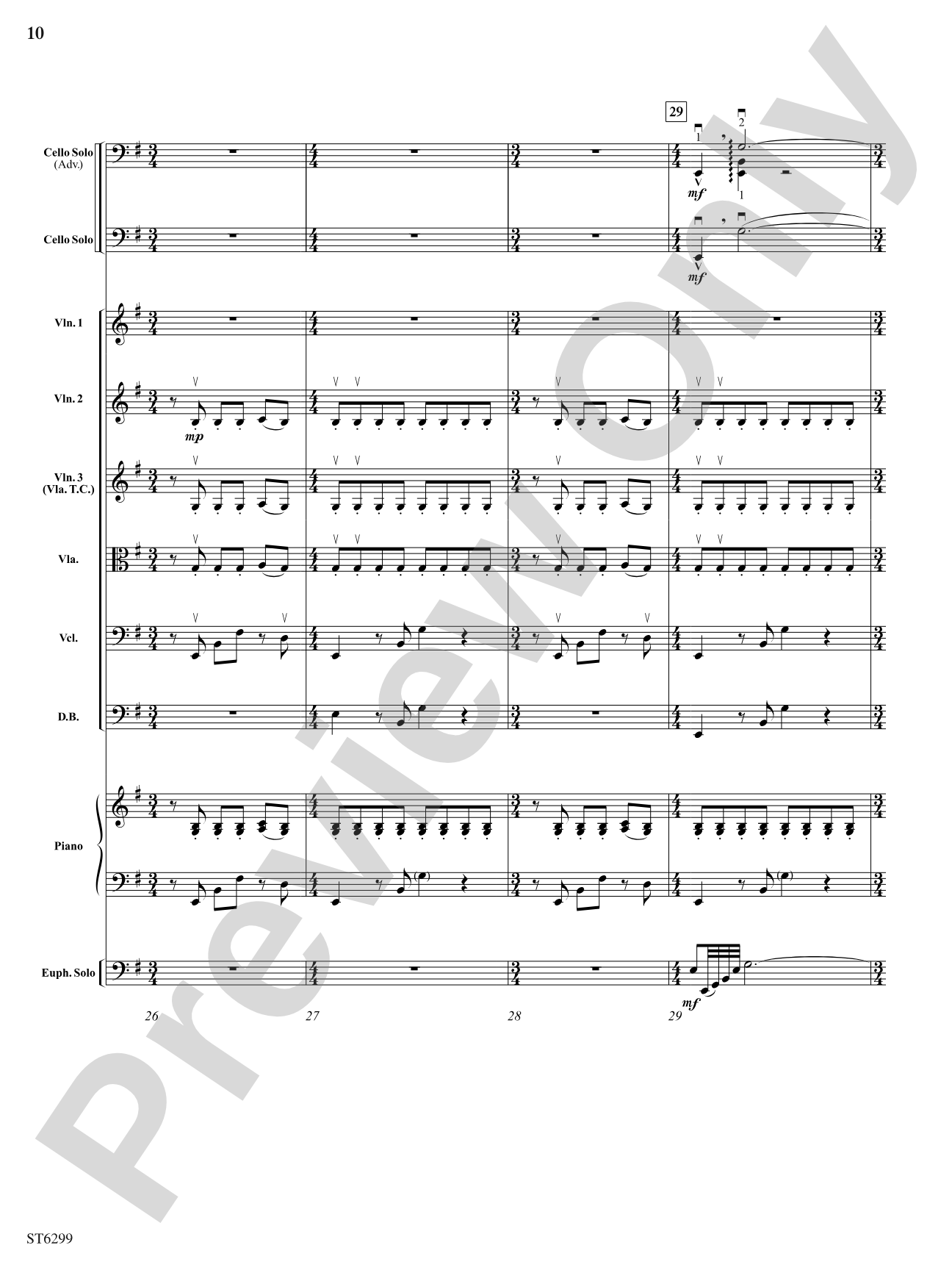
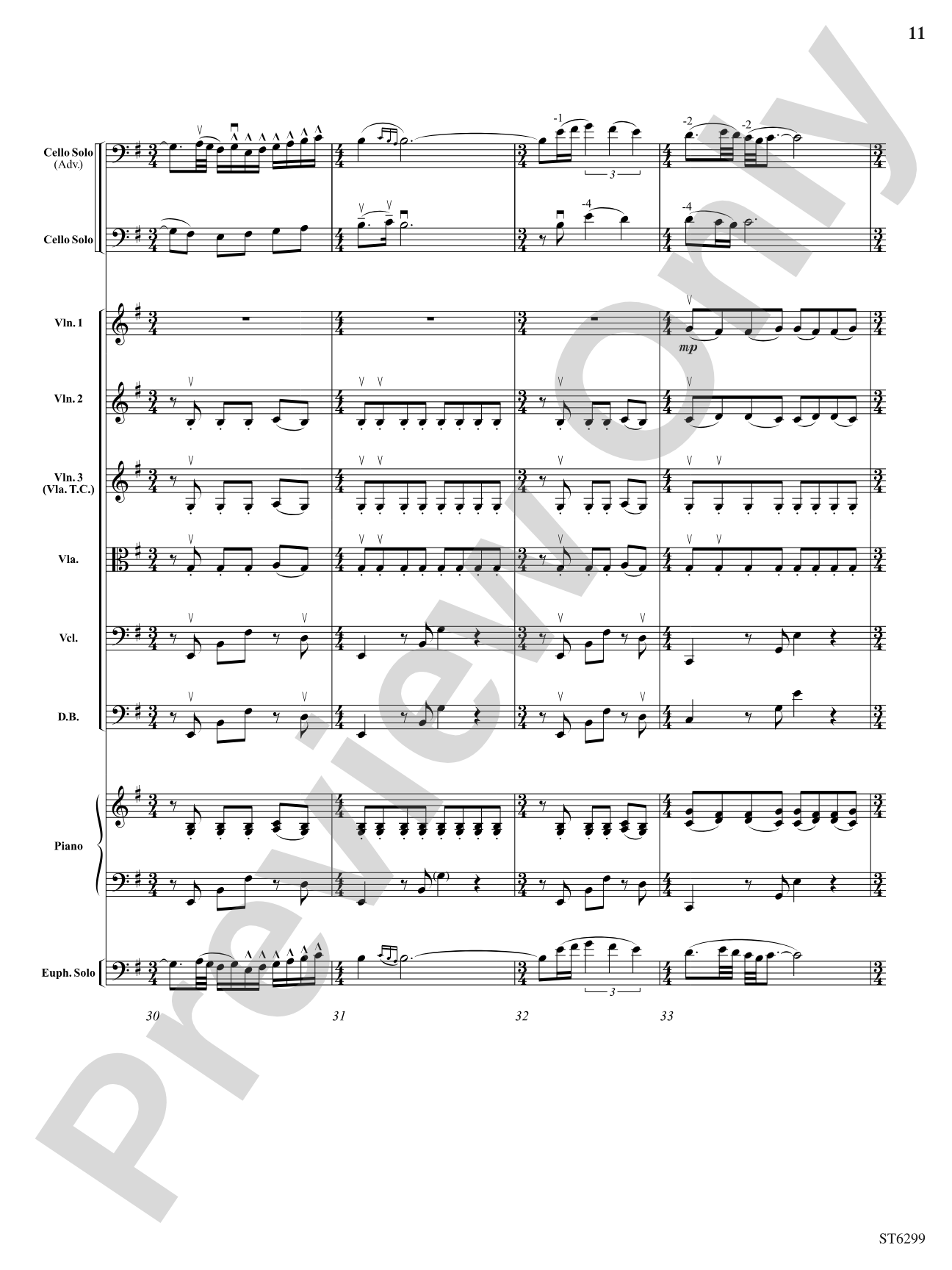
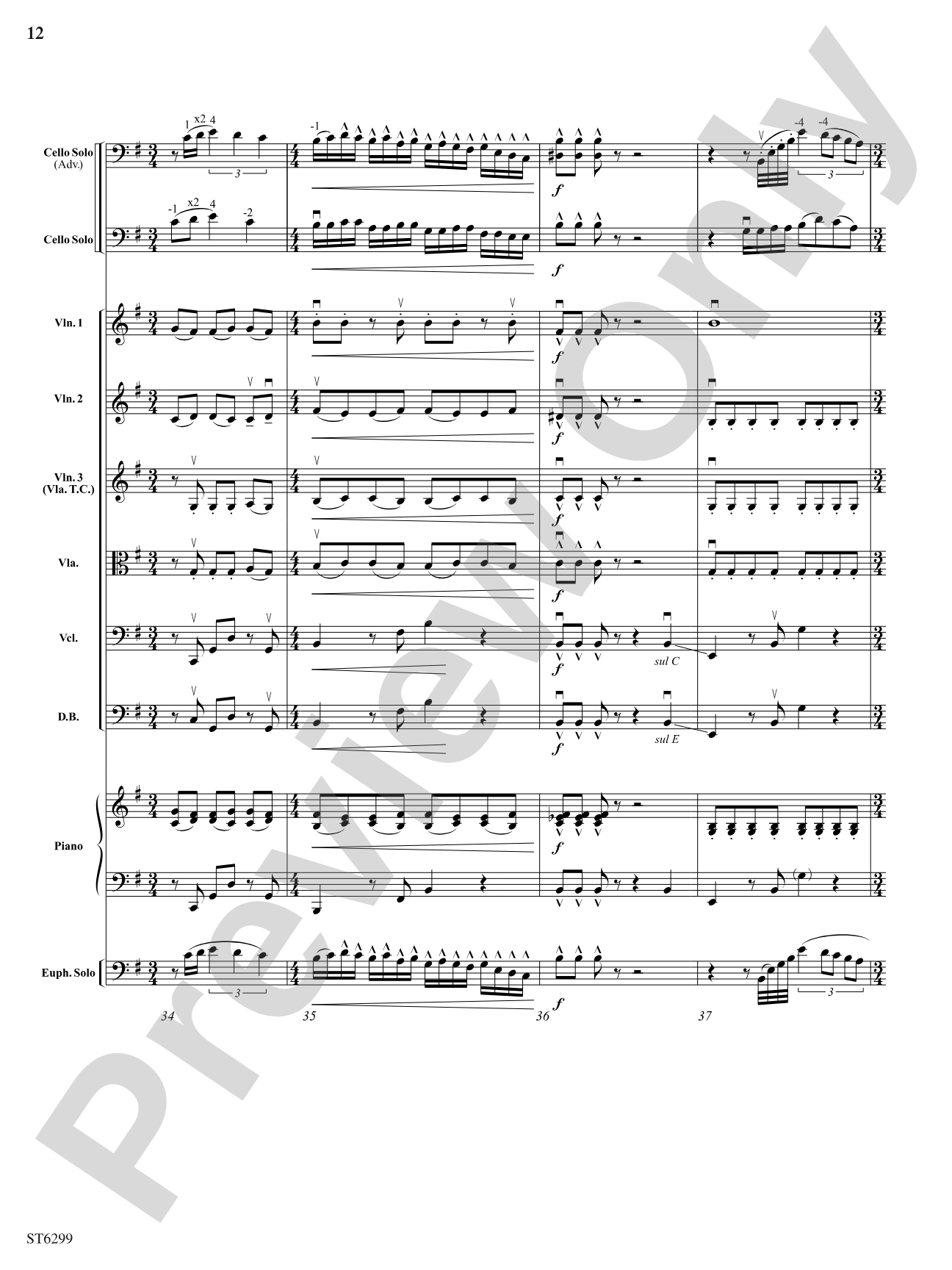
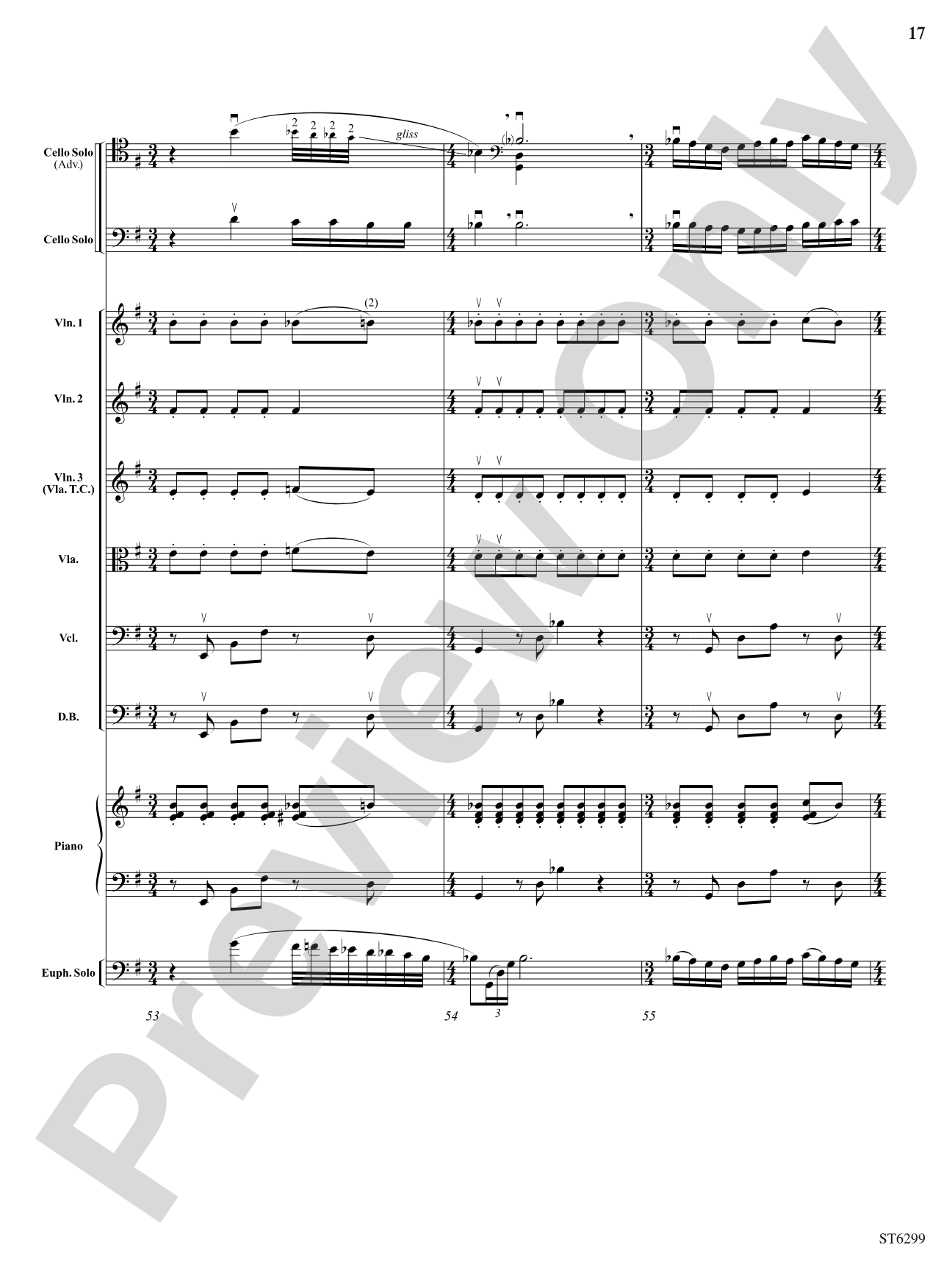
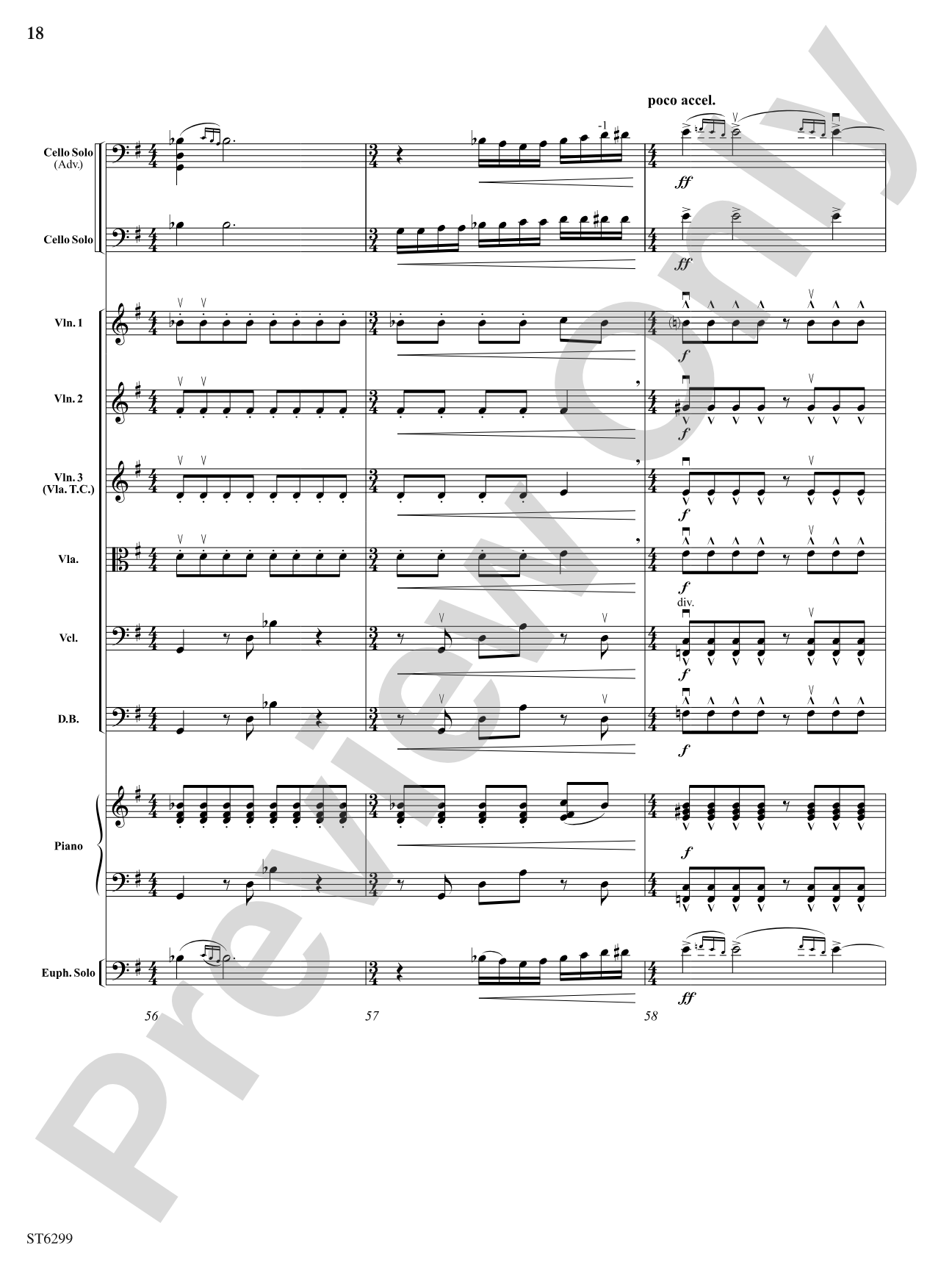
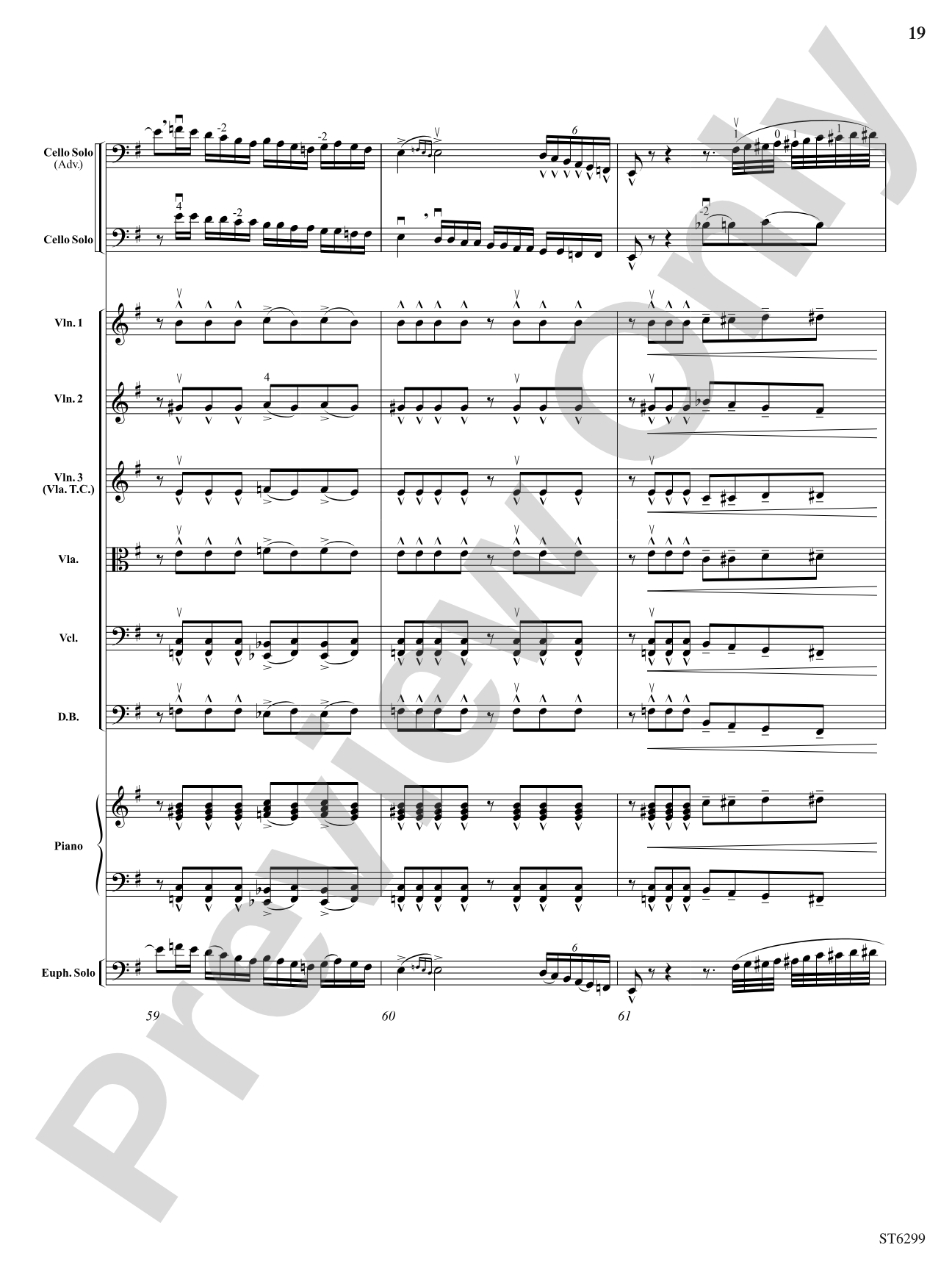
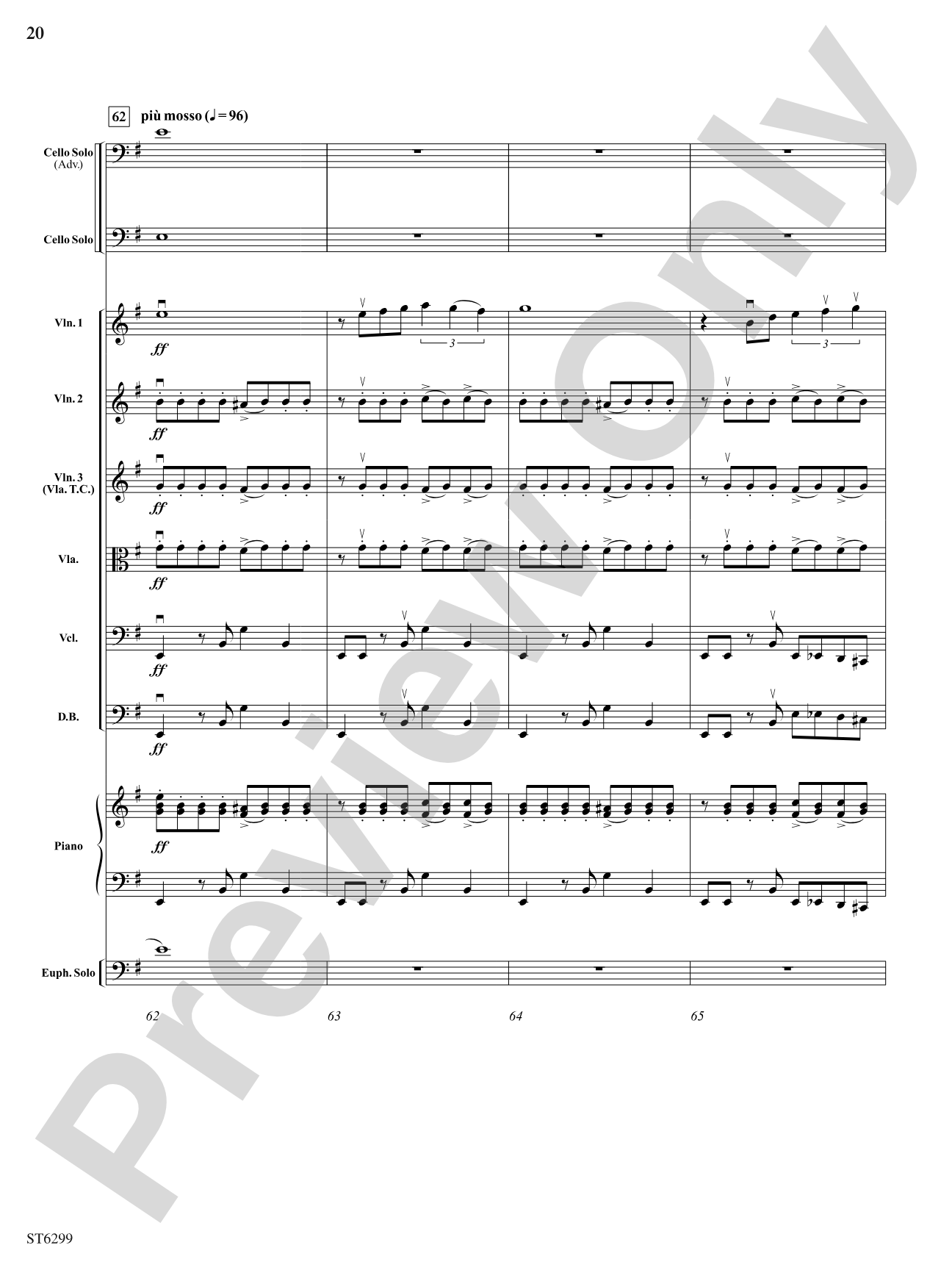
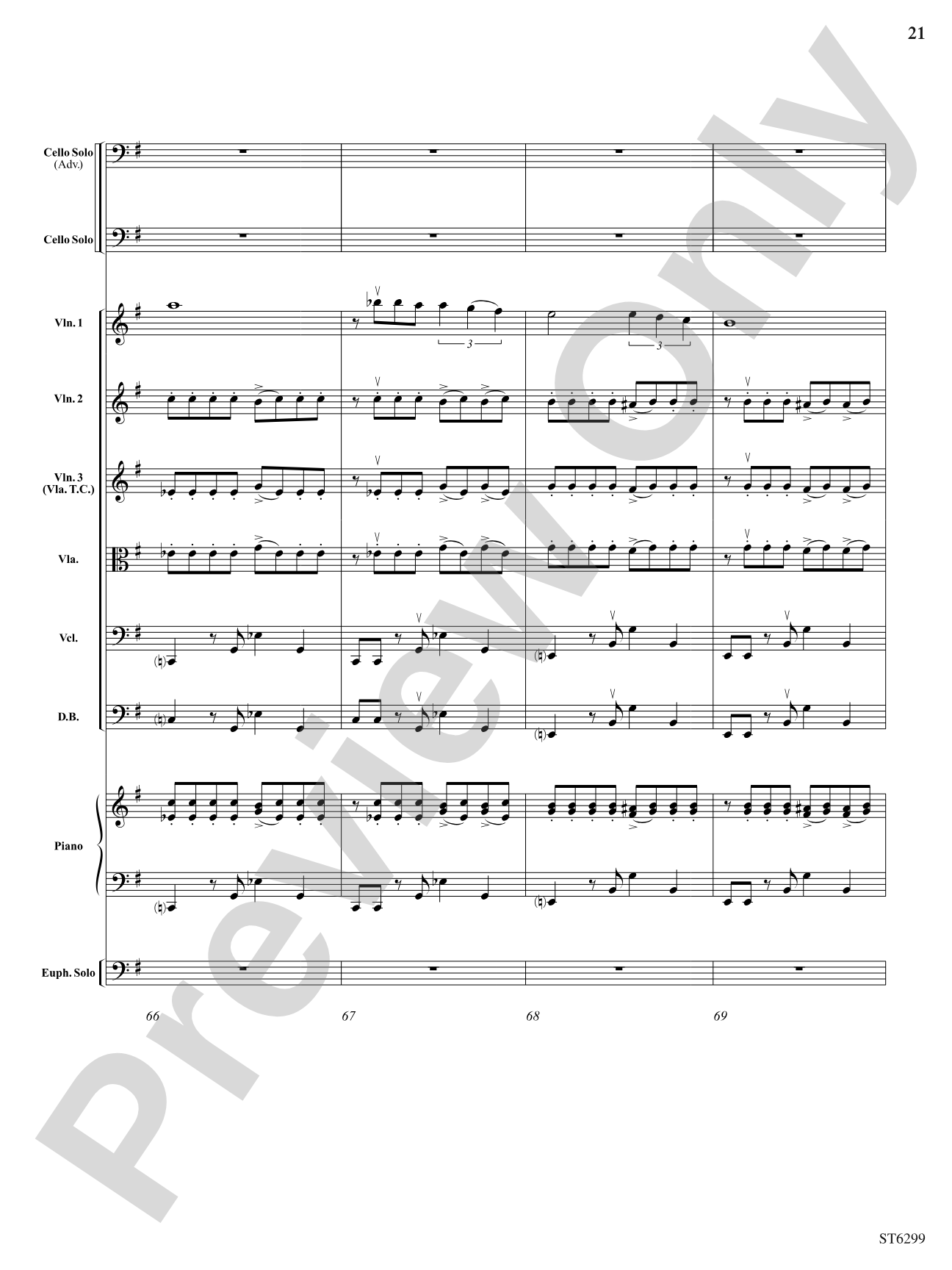
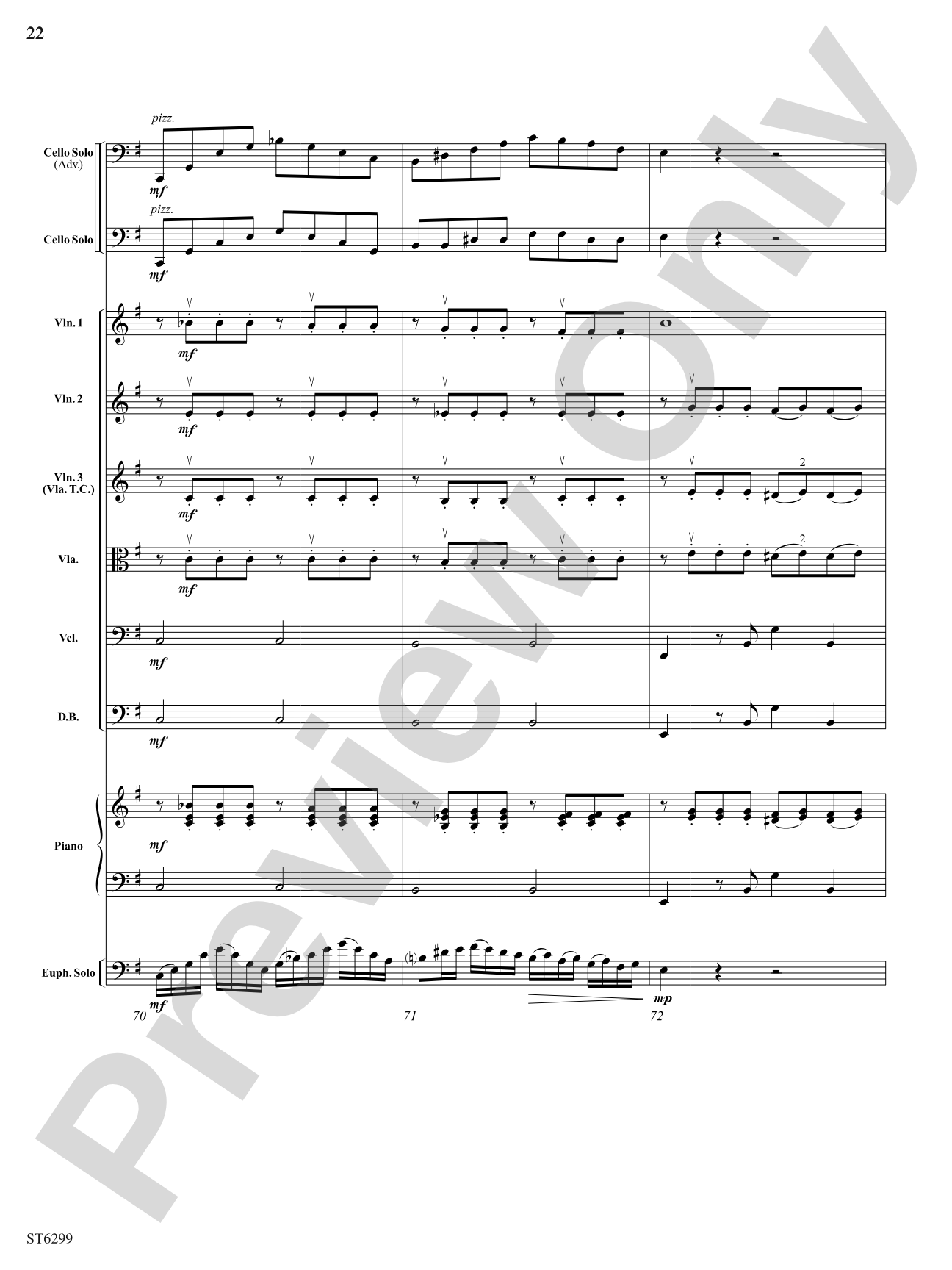
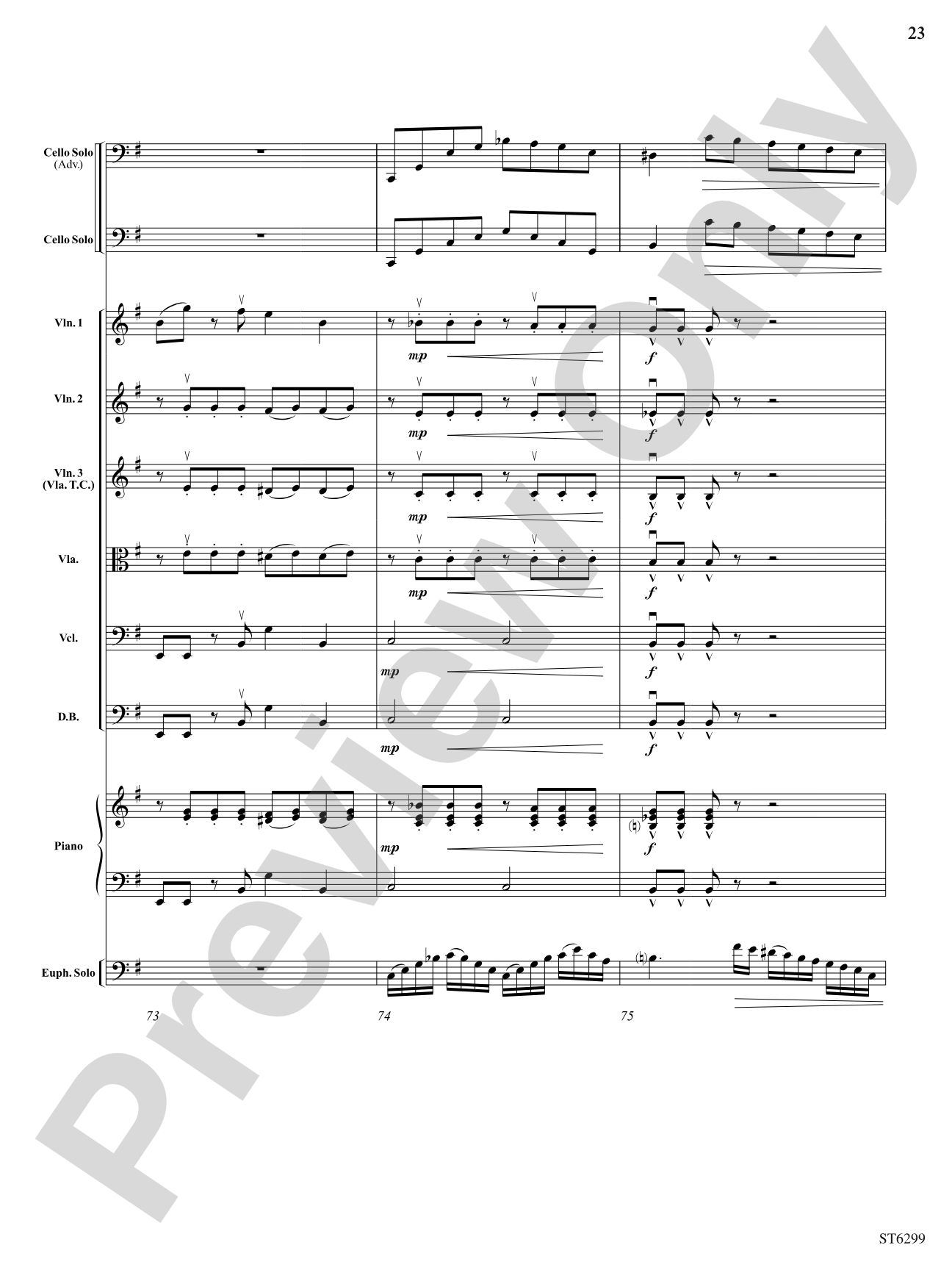
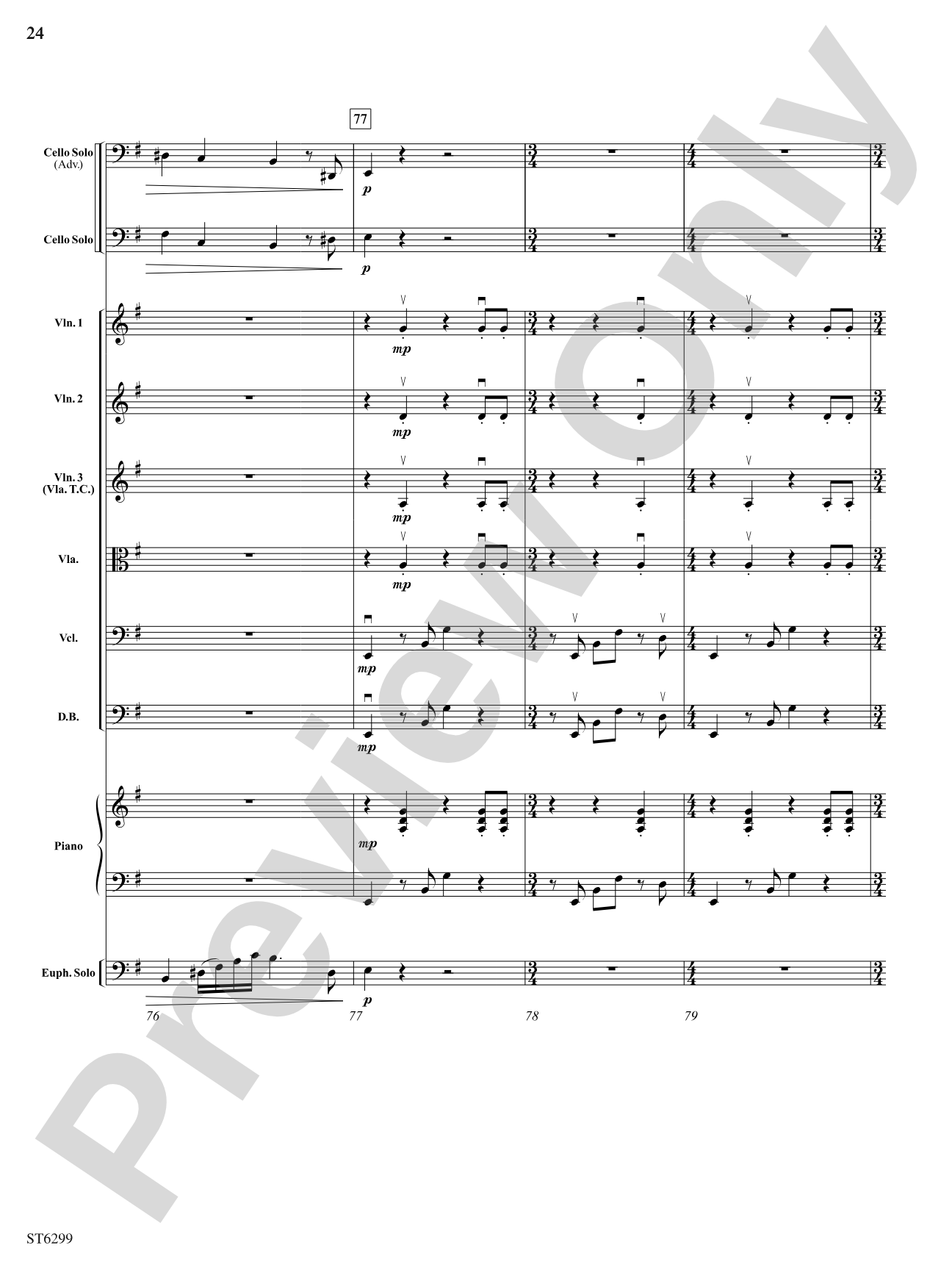
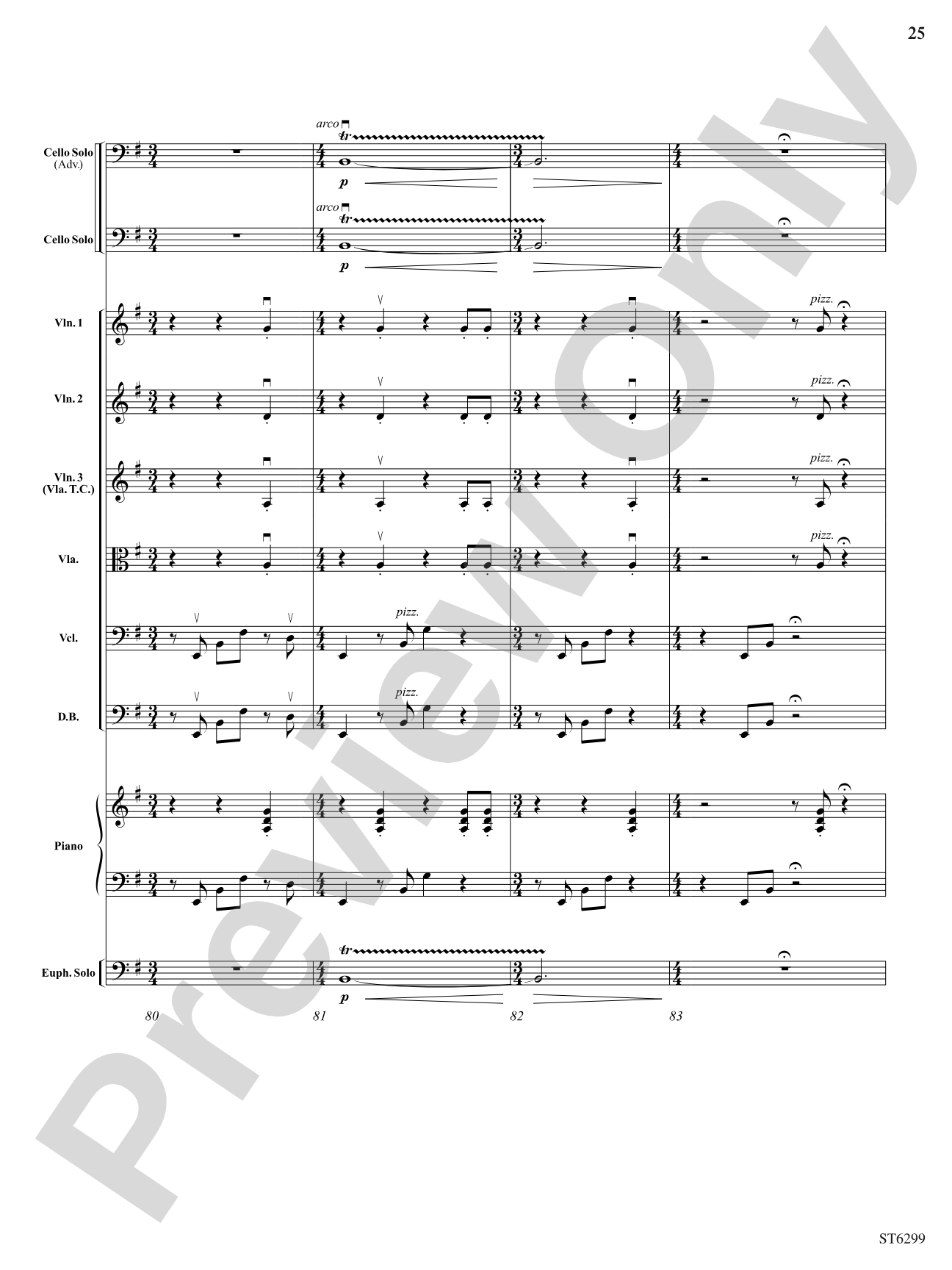
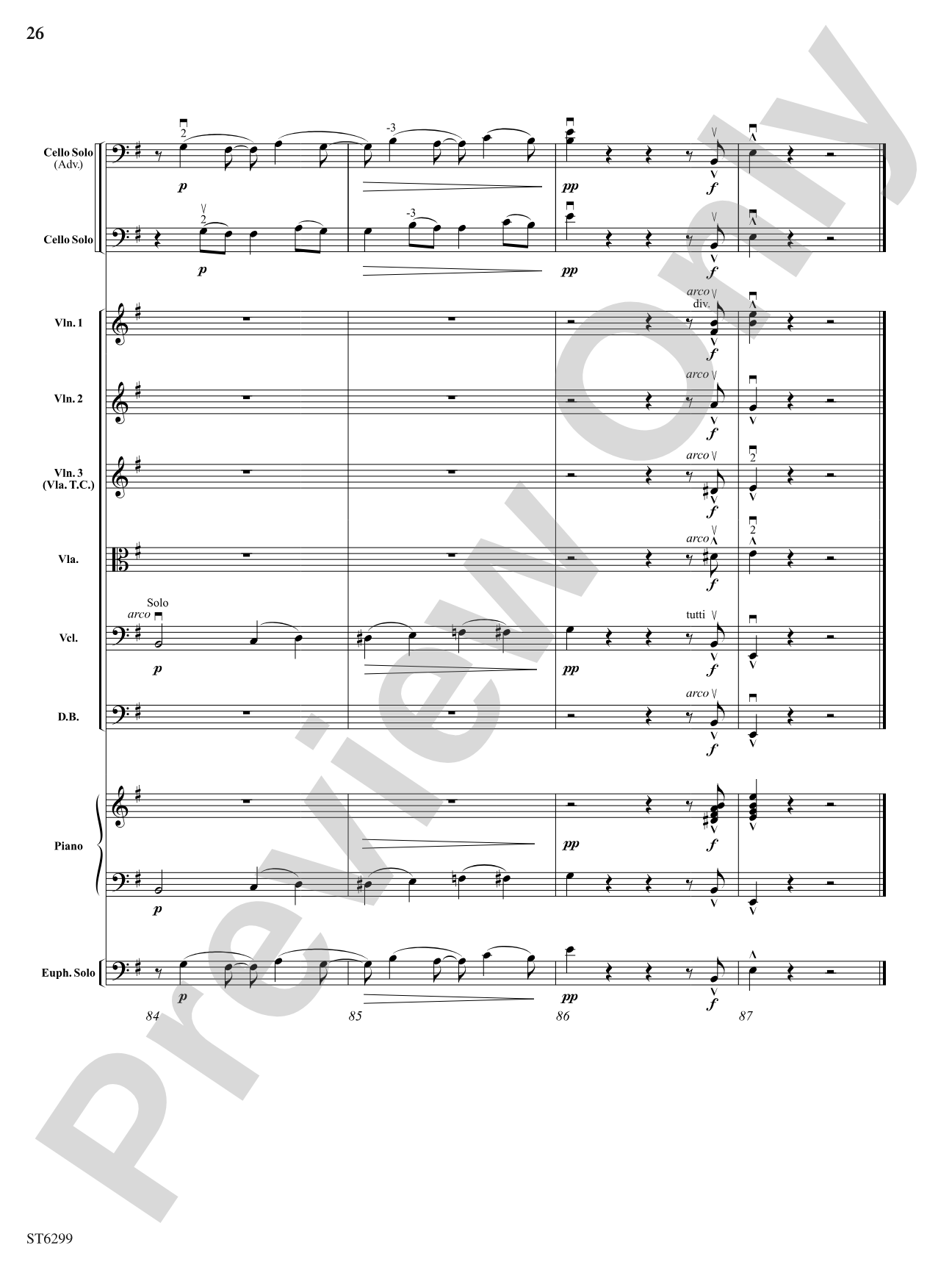

It Takes One to Tango: String Orchestra Conductor Score & Parts
By Brian Balmages
Grade: 3
Item: 98-DST6299
$60.00
Pickup currently not available
Buy Extra Parts (Digital PDF Download)
| Product | Price | Quantity |
|---|---|---|
| It Takes One to Tango: Score | $8.00 | |
| It Takes One to Tango: Solo Cello (Advanced) | $7.00 | |
| It Takes One to Tango: Solo Cello | $7.00 | |
| It Takes One to Tango: Violin 1 | $7.00 | |
| It Takes One to Tango: Violin 2 | $7.00 | |
| It Takes One to Tango: Violin 3 (Viola T.C.) | $7.00 | |
| It Takes One to Tango: Viola | $7.00 | |
| It Takes One to Tango: Violoncello | $7.00 | |
| It Takes One to Tango: Double Bass | $7.00 | |
| It Takes One to Tango: Piano | $7.00 | |
| It Takes One to Tango: Solo Euphonium | $7.00 |
Parts Added to Cart!
Description
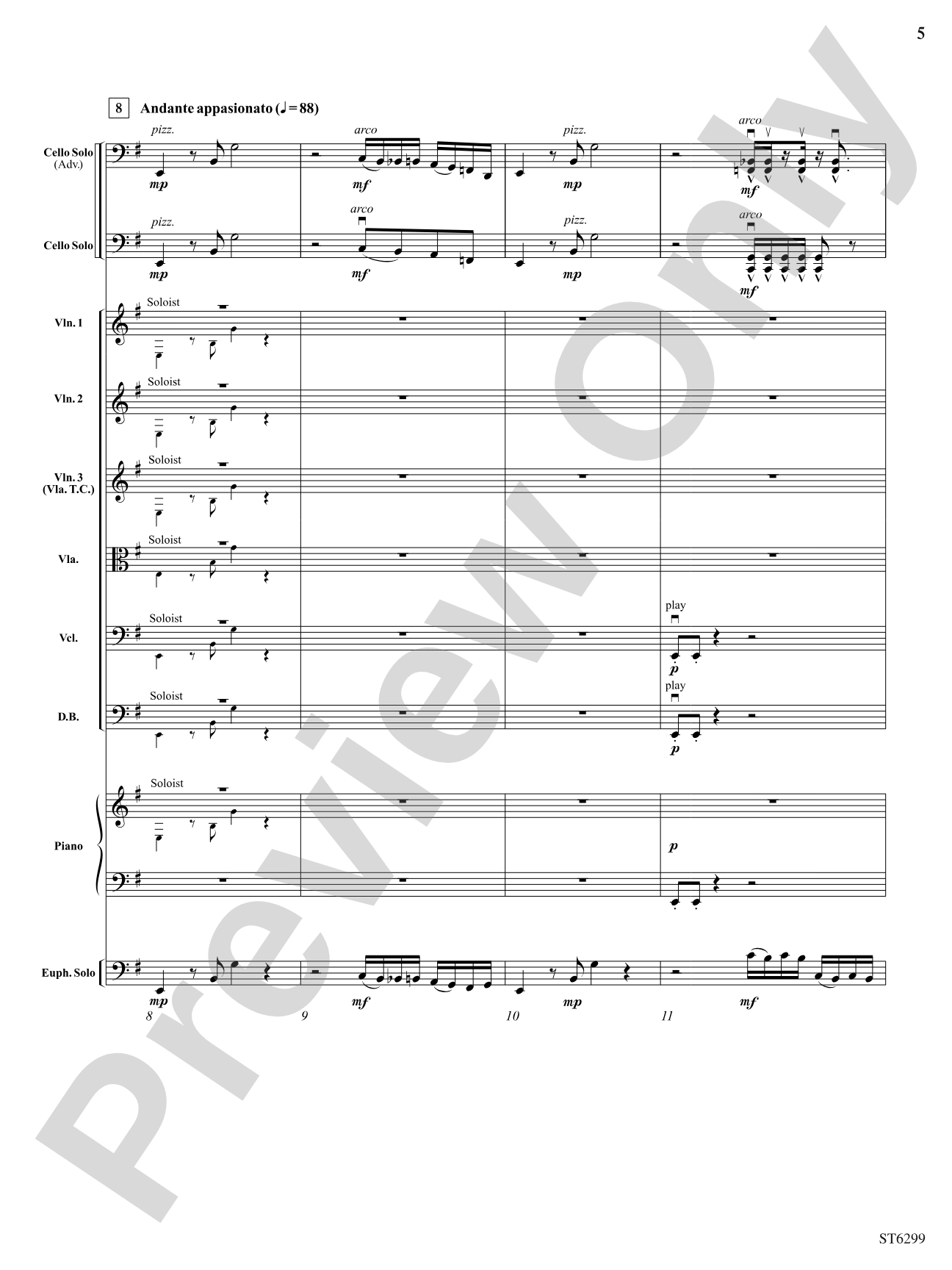
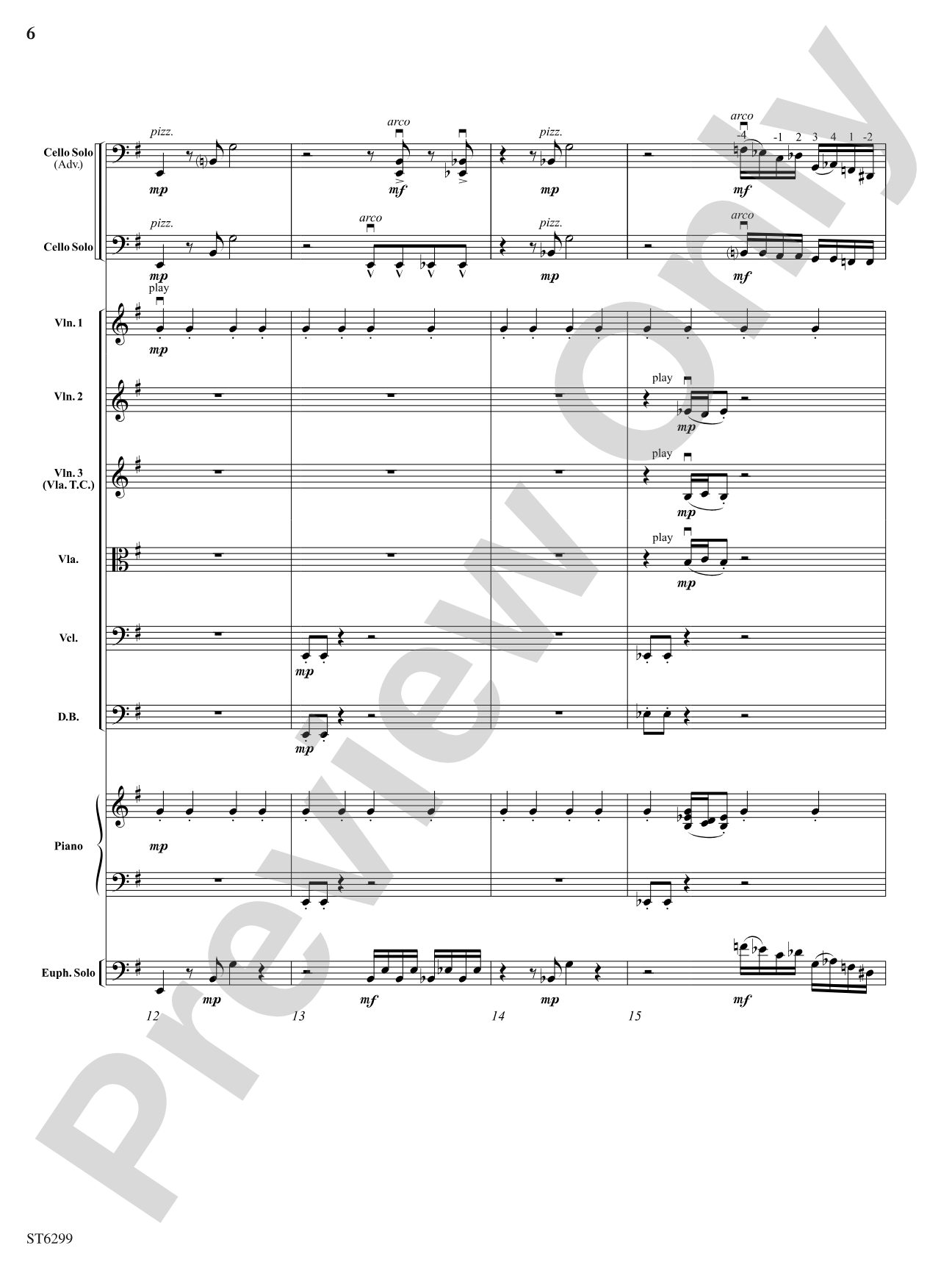
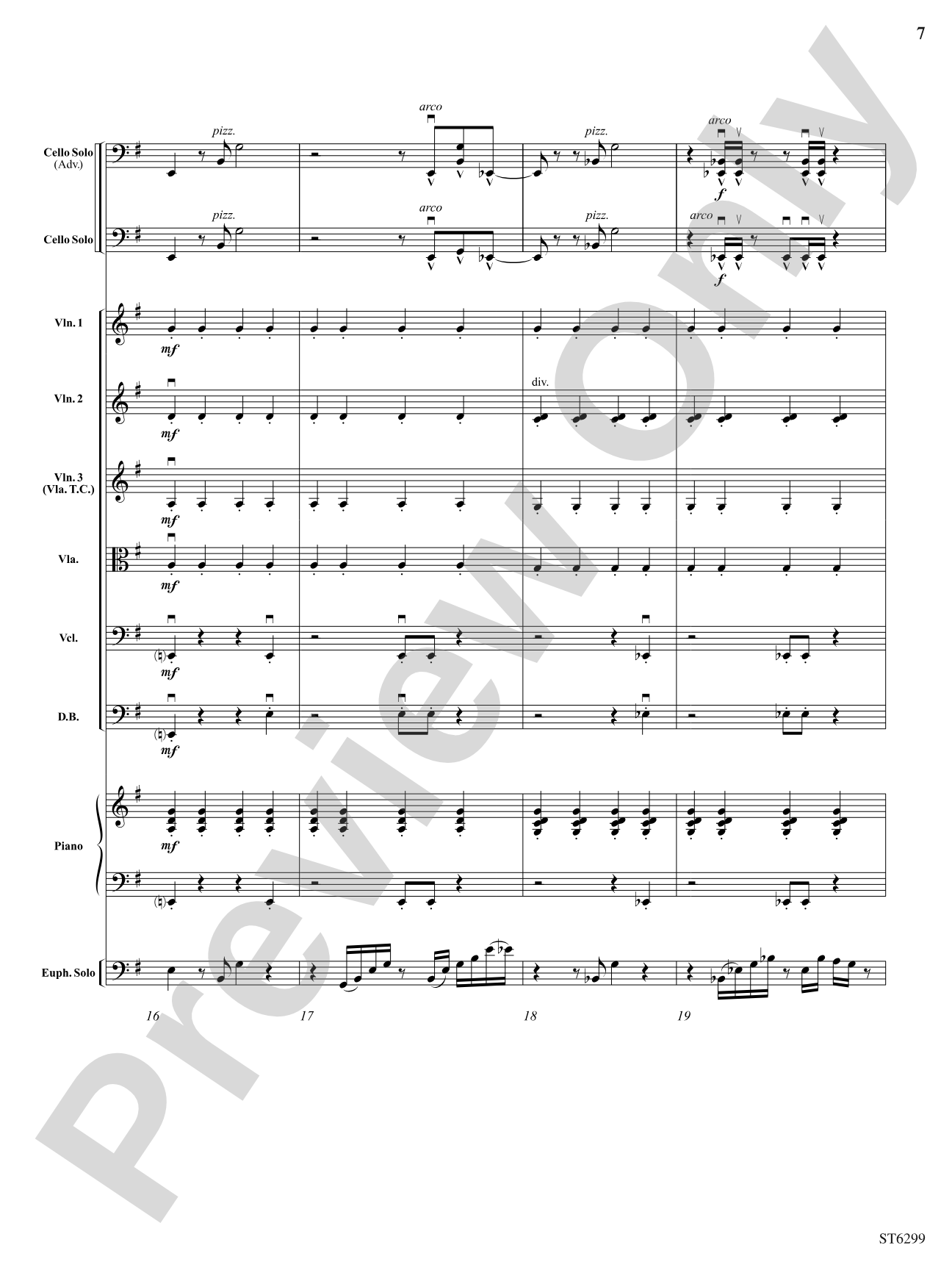
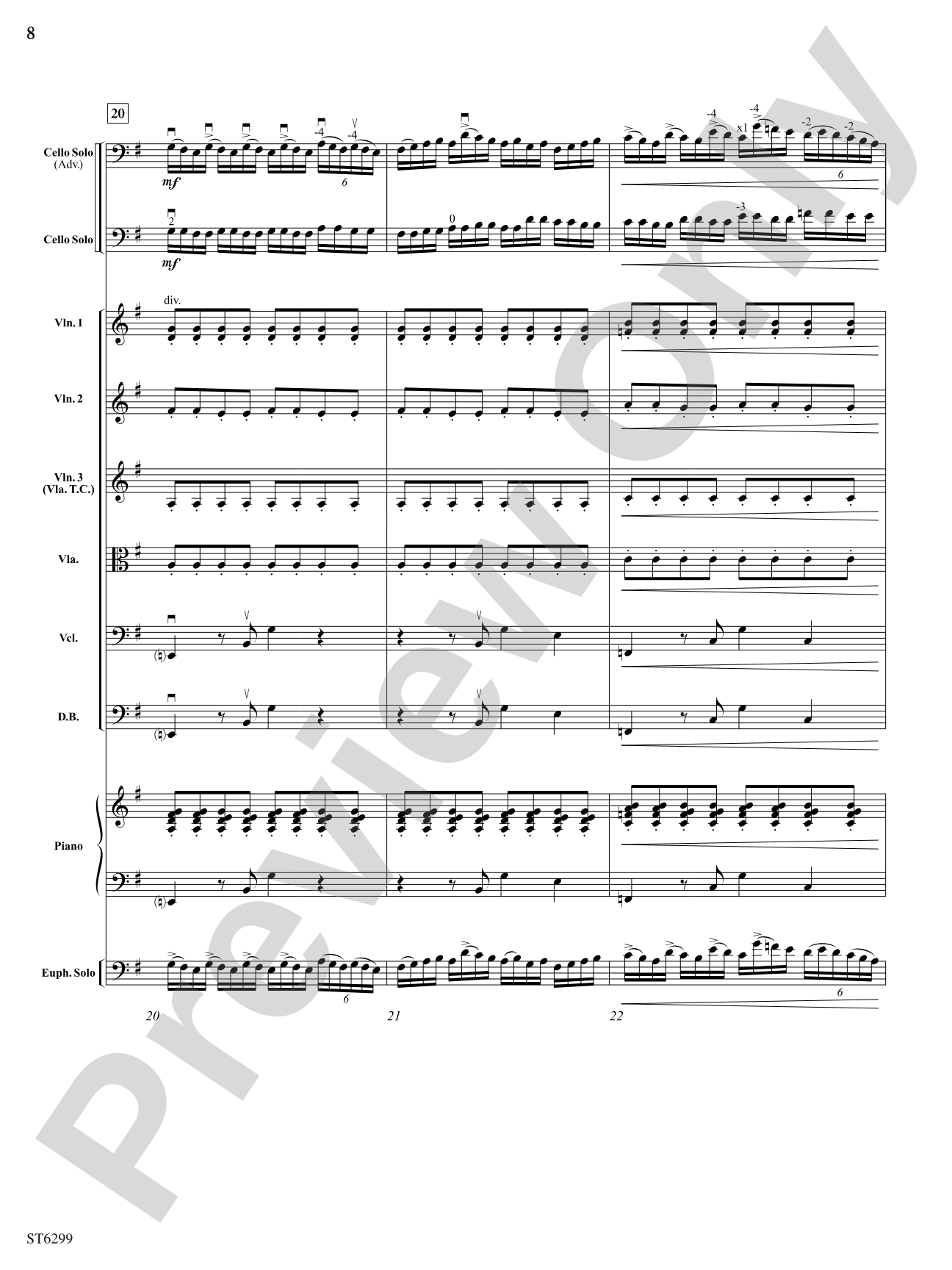
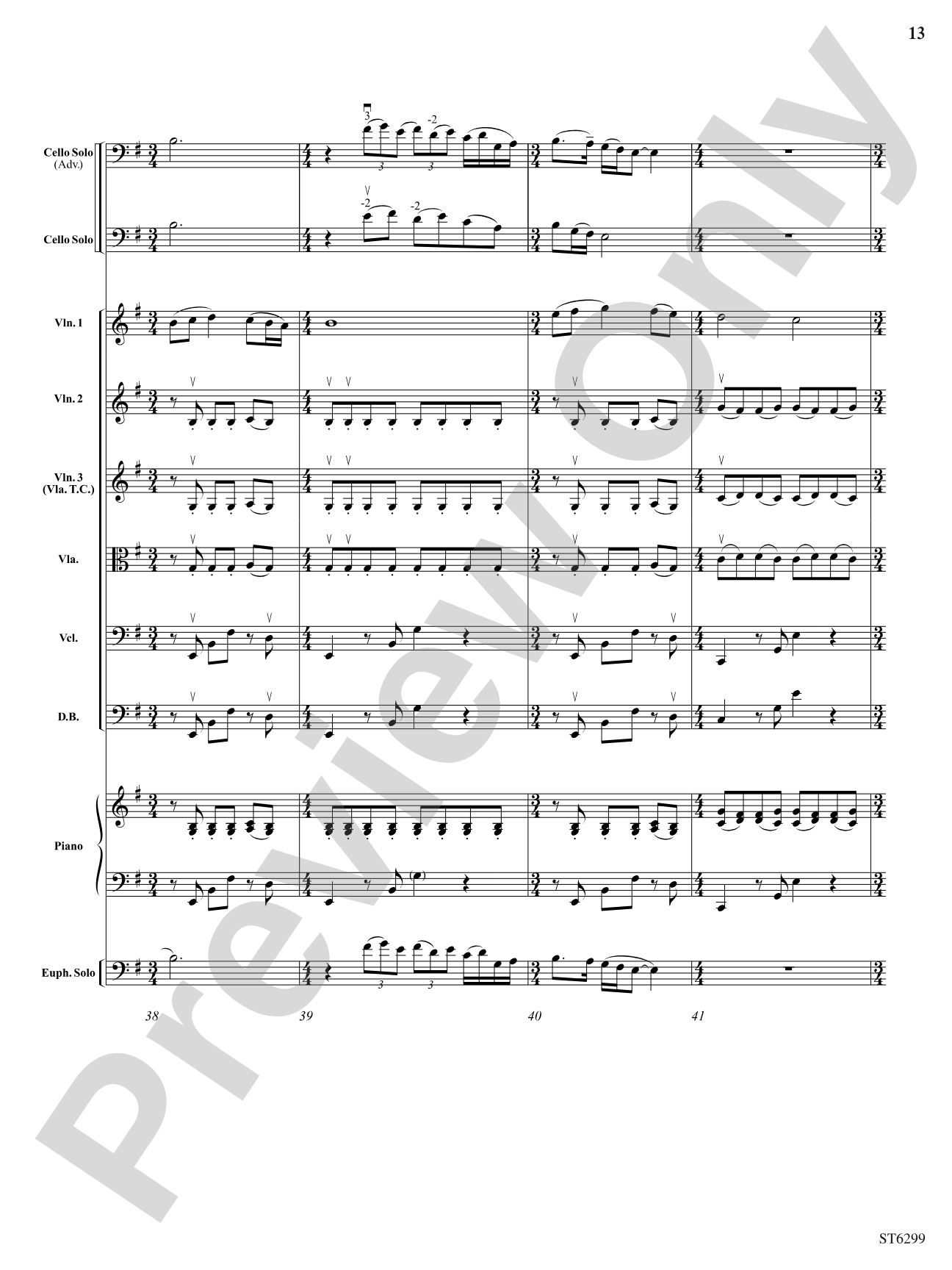
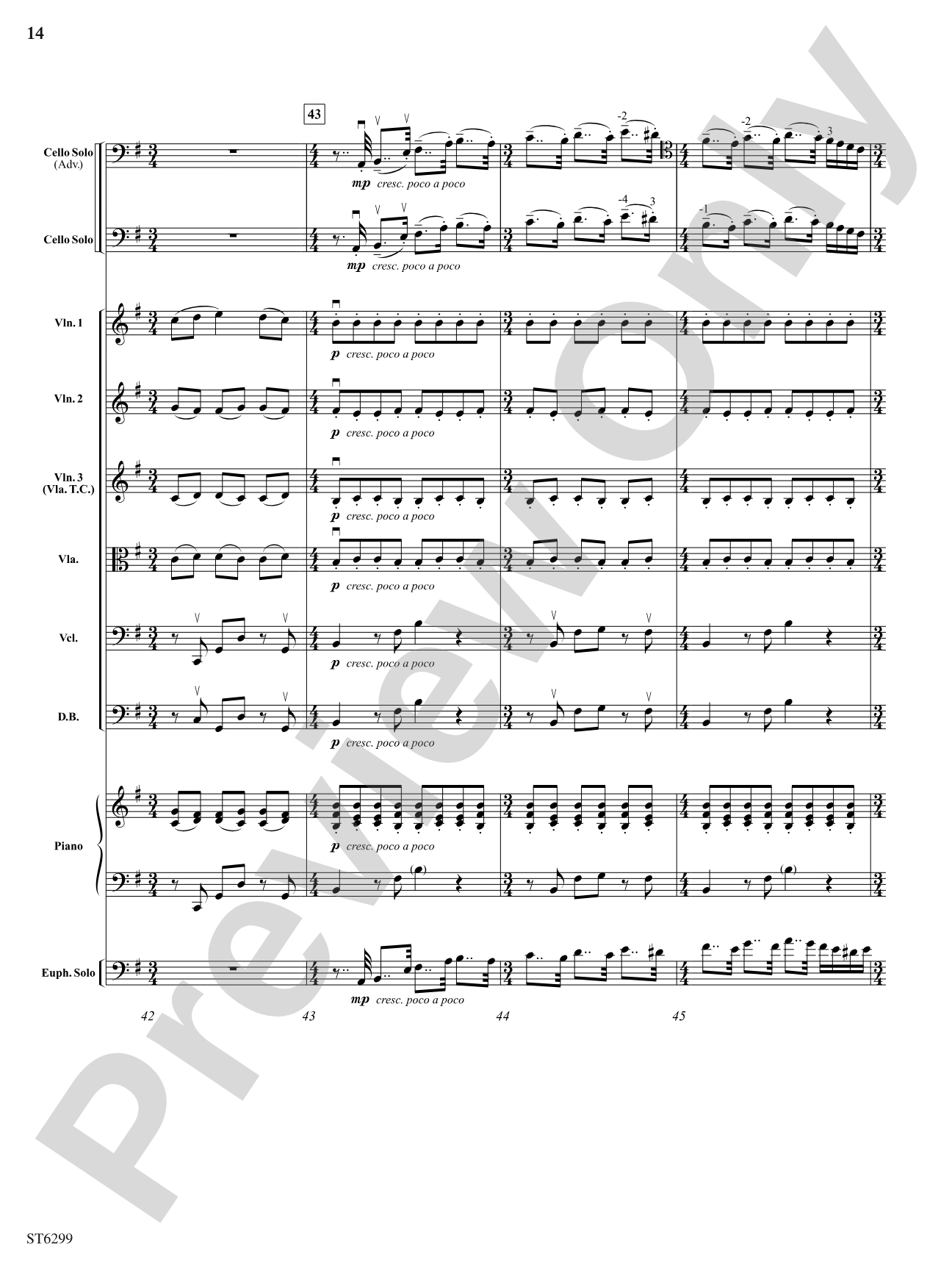
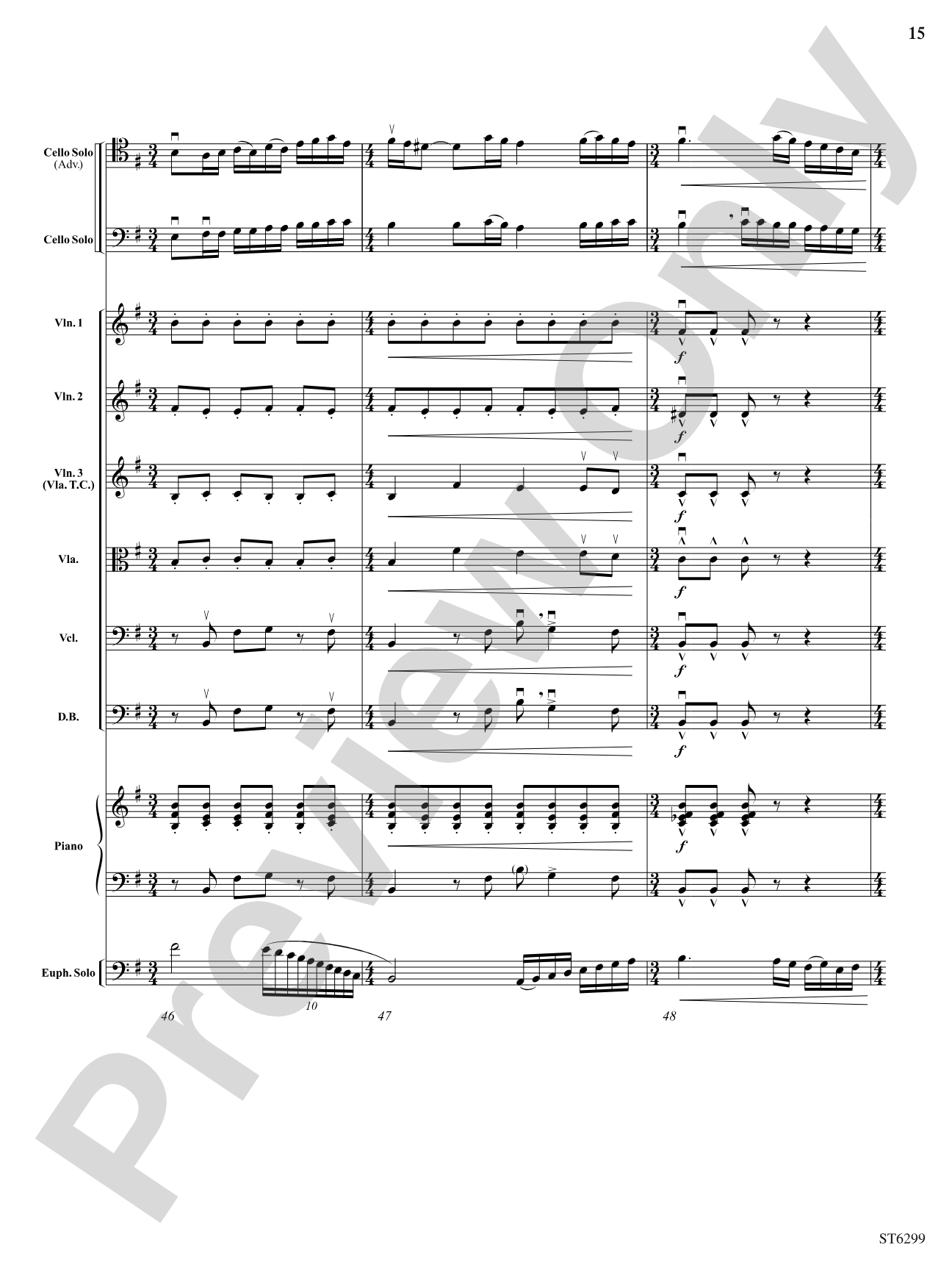
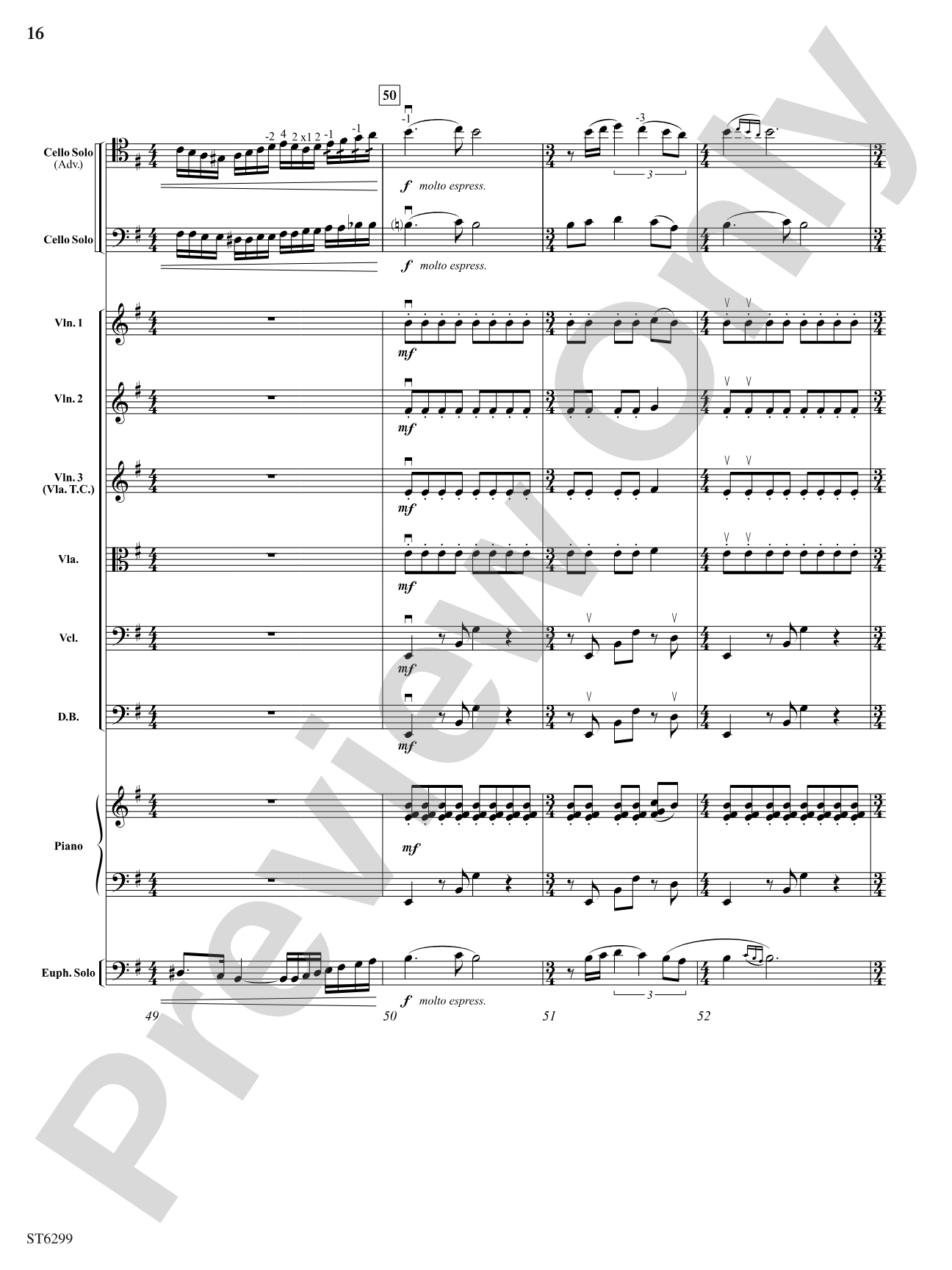
Feature an advanced cello or euphonium soloist without worrying about the difficulty of the orchestral accompaniment. Easy and advanced parts are included for cello soloist so you can perform the work multiple times - once with your own soloist and once with an outstanding guest artist. Based on a rhythmic variation of a typical tango, the music combines dramatic lyrical lines with virtuosic technical passages that will take your breath away. Outstanding!


It Takes One to Tango: String Orchestra Conductor Score & Parts isn't in MakeMusic Cloud just yet...but it could be. Let us know you'd like to see it, and you'll help shape what comes next. In the meantime, start a free trial and dive into thousands of interactive titles your students can play along with today.
Request This Title
Tell us you want it.
Start Your Free Trial
Explore everything that's ready to play right now.
Sample Audio
1
Audio File
--:--
0:00
0:00
Sample Video
No sample videos found.
Additional Details
Series:
FJH String Orchestra
Publisher:
The FJH Music Company, Inc.
SKU:
98-DST6299
More about this title
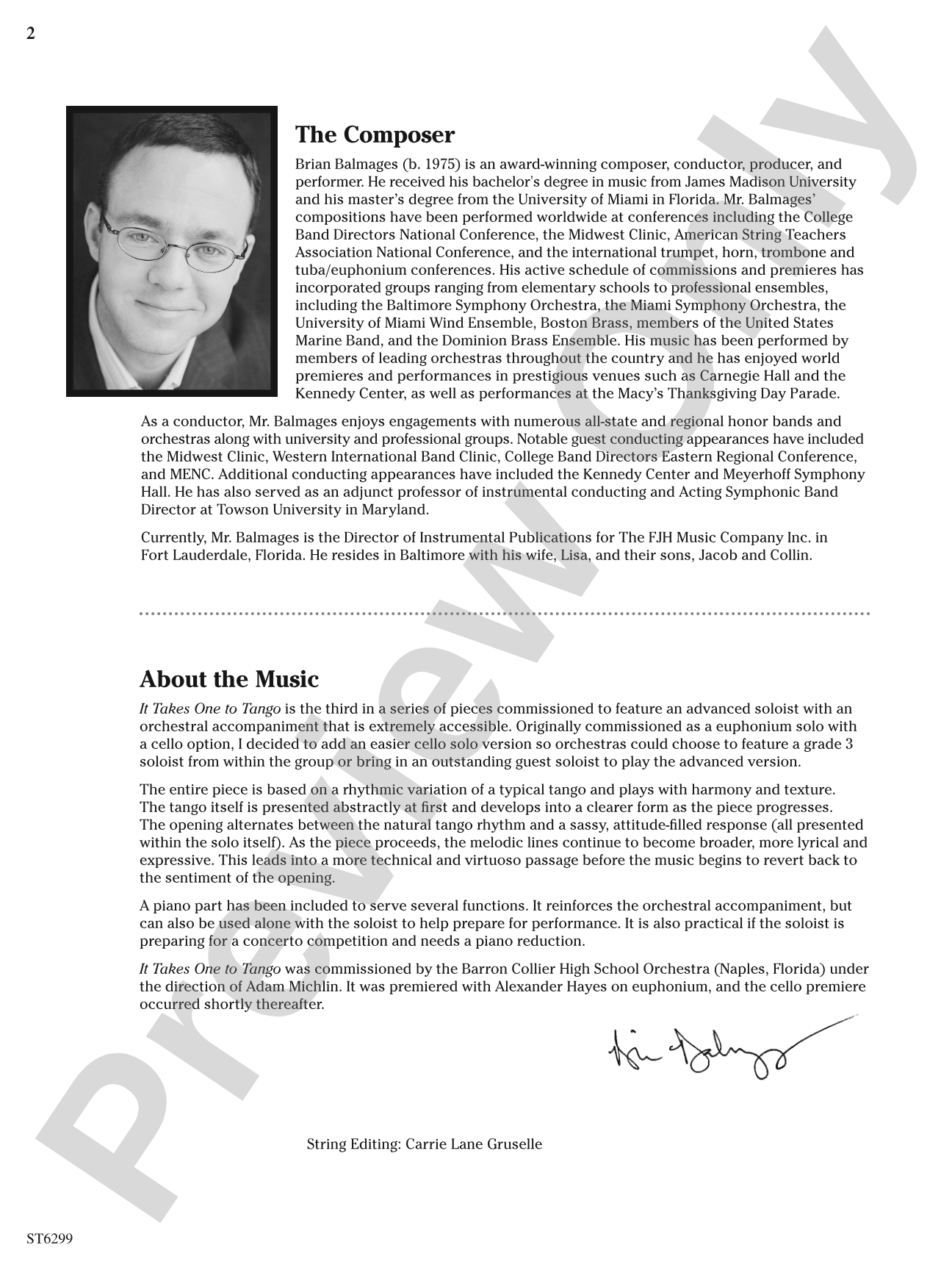
About the Composer: Brian Balmages
Brian Balmages has built a compositional career that moves seamlessly across orchestral, band, and chamber repertoires, earning him recognition on stages from Carnegie Hall to the Sydney Opera House. His honors include the A. Austin Harding Award from the American School Band Directors Association, the 2020 NBA William D. Revelli Composition Contest, and membership in the American Bandmasters Association. He received the inaugural James Madison University Distinguished Alumni Award and was later commissioned by the University of Miami to compose for the inauguration of the institution's president.
As both composer and conductor, Balmages maintains an active schedule conducting all-state, regional, university, and professional ensembles worldwide. His music was performed at the 2013 Presidential Inaugural Prayer Service and has been heard from elementary schools to major orchestras. He currently serves as Director of MakeMusic Publications and Digital Education for Alfred and MakeMusic.
Why we love this
The dual difficulty levels for the cello solo solve a genuine scheduling challenge: you can program this once with a student soloist and again with a guest artist without rewriting or transposing anything. Balmages captures the rhythmic drive and lyrical elegance of tango style while keeping the string accompaniment manageable at Grade 3, so your orchestra supports the soloist rather than competing with them.
What to expect
Tango rhythms give the piece an immediate sense of forward motion and sophistication, while the soloist weaves between dramatic, singing lines and fleet passage work that sparkles. The combination of Latin flavor with the warmth of string tone creates music that feels both refined and energetic, keeping audiences and performers engaged throughout.
Who it's for
String orchestra directors who want to feature a strong cellist (or euphonium, if adapting instrumentation) without scaling back the ensemble's difficulty. This works equally well for schools with multiple advanced soloists or those who occasionally host guest artists, since you have two solo versions built in.
How to get the most out of it
- Establish the tango rhythm as a conductor first; lock the pulse with your violins and violas before the soloist enters, so the accompaniment provides a steady rhythmic foundation rather than rushing into the syncopated passages.
- Balance the soloist's technical runs against the string section by rehearsing the accompaniment independently, then adding the solo part last so players hear where they sit in the texture.
- Shape the lyrical passages with dynamic continuity; resist the urge to drop the accompaniment when the soloist is featured, as sustained string tone under virtuosic passages creates dramatic contrast.
- Prepare your cello section for the moments when they double or answer the soloist; these responses need clarity and confidence to enhance rather than echo the solo line.
How to use it
Position this as a feature piece on a concert where you want to showcase a soloist without programming an entire solo concerto. It pairs well with full orchestra selections at the same or slightly lower level, and the tango idiom makes for refreshing contrast on programs dominated by Baroque or classical repertoire.
Skills your students will build
- Reading and maintaining rhythmic precision in syncopated tango figures
- Supporting a solo line with musical accompaniment rather than playing mechanically
- Responding to a soloist's phrasing and tempo in real time
- Blending string articulation across the ensemble in lyrical passages
- Executing clean, fast string technique in runs and technical passages