
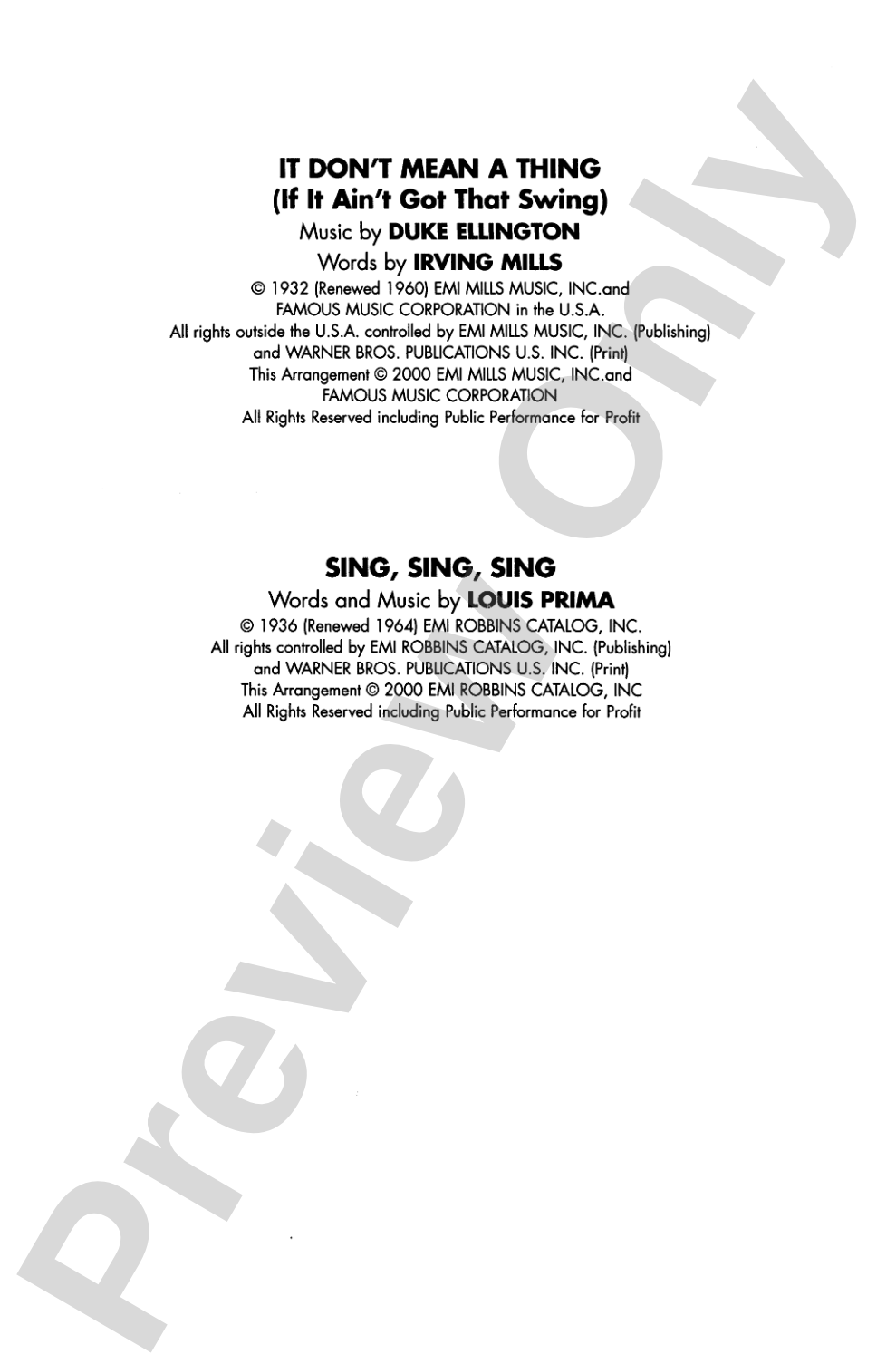
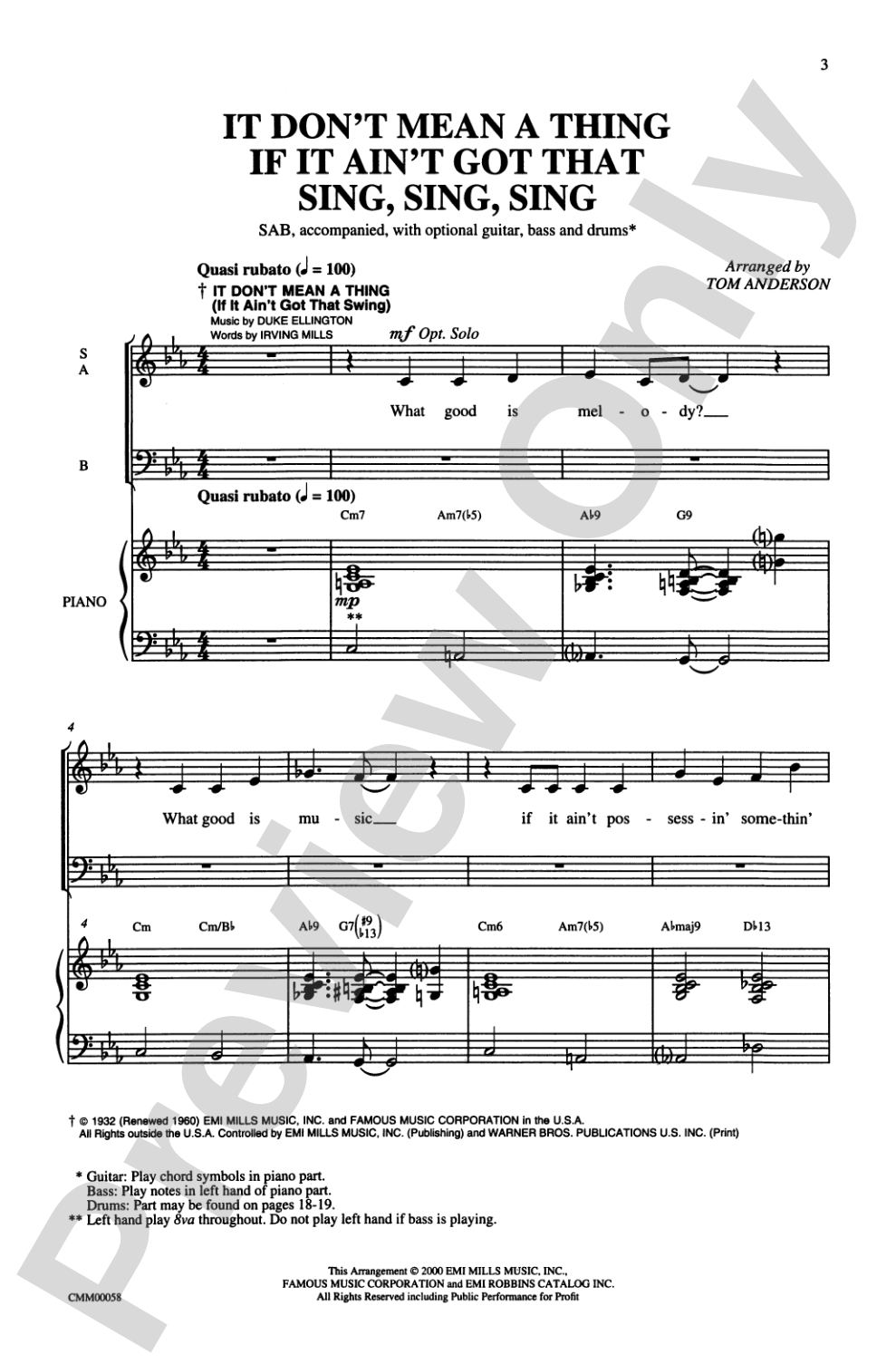
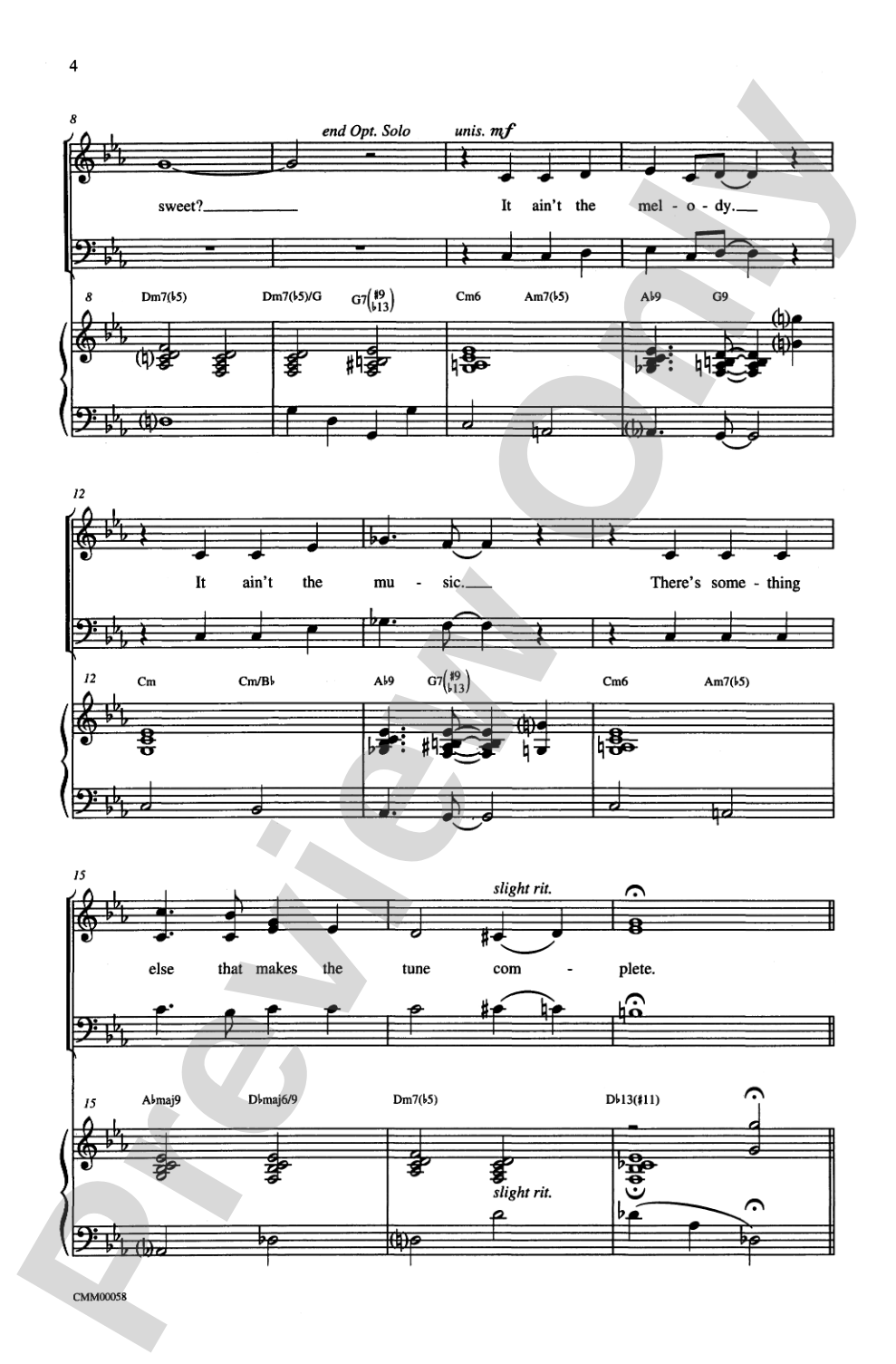
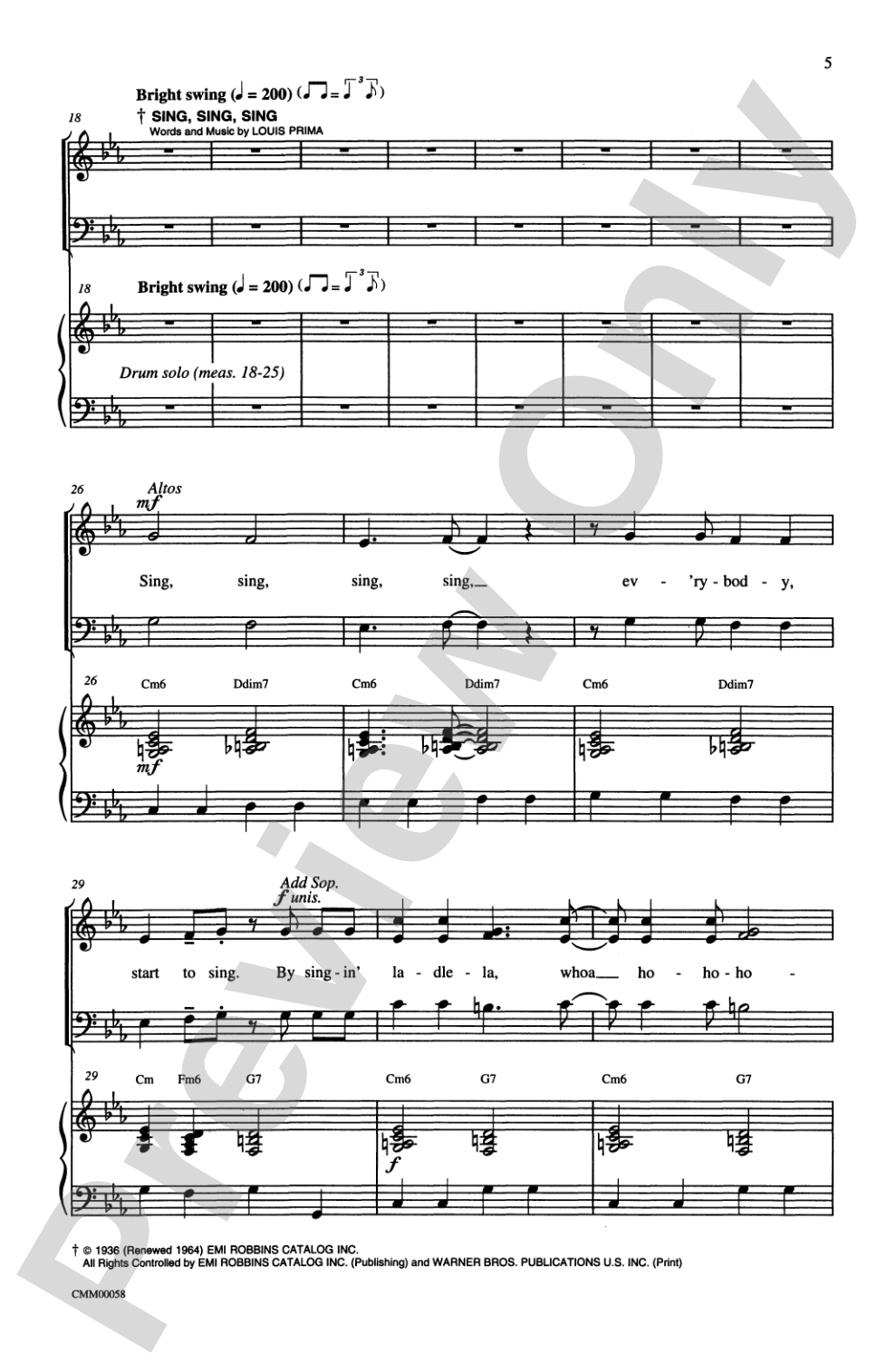

It Don't Mean a Thing If It Ain't Got That Sing, Sing, Sing: SAB Choral Octavo
Music by Duke Ellington, lyrics by Irving Mills / arr. Tom Anderson
Item: 00-PO-0002975
$3.50
Minimum order quantity: 20 copies
One moment…
Related Items
It Don't Mean a Thing If It Ain't Got That Sing, Sing, Sing: SATB Choral Octavo |
$3.50
|
View | |
It Don't Mean a Thing If It Ain't Got That Sing, Sing, Sing: SA Choral Octavo |
$3.50
|
View | |
It Don't Mean a Thing If It Ain't Got That Sing, Sing, Sing: Choral Instrumental Parts |
$15.00
|
View | |
It Don't Mean a Thing If It Ain't Got That Sing, Sing, Sing: SATB Choral Octavo |
$3.50
|
View | |
It Don't Mean a Thing If It Ain't Got That Sing, Sing, Sing: SAB Choral Octavo |
$3.50
|
View | |
It Don't Mean a Thing If It Ain't Got That Sing, Sing, Sing: Choral Instrumental Parts |
$15.00
|
View | |
It Don't Mean a Thing If It Ain't Got That Sing, Sing, Sing: Choral Octavo SoundTrax CD |
$27.99
|
View |
Description
Put together these two titles in a unique arrangement, and you have a hit! Tom Anderson has created a winning combination of great titles, swinging style, and arranging creativity in this piece. This challenging work will motivate your choir, rather than discourage them. A wonderful opportunity to share a little of the history of swing music with your choir!


It Don't Mean a Thing If It Ain't Got That Sing, Sing, Sing: SAB Choral Octavo isn't in MakeMusic Cloud just yet...but it could be. Let us know you'd like to see it, and you'll help shape what comes next. In the meantime, start a free trial and dive into thousands of interactive titles your students can play along with today.
Request This Title
Tell us you want it.
Start Your Free Trial
Explore everything that's ready to play right now.
Sample Audio
No sample audio found.
Sample Video
No sample videos found.
Additional Details
Series:
Alfred Archive Edition: Alfred Pop Choral Series
Publisher:
Alfred Music
Page Count:
20
SKU:
00-PO-0002975
More about this title
About the Composer: Duke Ellington
Duke Ellington (1899-1974) stands as one of the most consequential composers in American music. His innovations in orchestration, harmonic language, and form fundamentally expanded what jazz could express, while his prolific output spanning five decades created a catalog that influenced classical and popular music alike. For music educators, Ellington's work offers a bridge between vernacular and concert music traditions, showing students that great composition knows no genre boundaries.
Ellington's approach to melody and harmony remains remarkably sophisticated. His compositions reward close listening and careful arrangement, making them ideal for choral programs seeking to deepen students' understanding of American musical heritage and the structural possibilities within swing idiom.
Why we love this
Tom Anderson's pairing of these two Ellington standards in a single arrangement gives you the swinging energy of both without needing two separate rehearsal pieces. The SAB voicing sits comfortably across mixed ensembles while the arranging craft keeps singers engaged with interesting parts rather than padding them with filler.
What to expect
Infectious and sophisticated at once. The familiar Ellington melodies arrive with unexpected harmonic twists and layered arranging that keeps the piece moving forward, while the swing rhythms make singers want to move and audiences want to listen. There's joy in the writing, but also real musical substance.
Who it's for
Directors building a jazz or American standards program who need literature that challenges intermediate-level mixed choirs without overwhelming them. This works equally well for concert programming or educational units on swing era music and composition.
How to get the most out of it
- Establish the swing feel early in rehearsal by having singers listen to classic recordings and tap along before sightreading. The rhythmic precision and legit jazz inflection are essential to making this work sing.
- Balance blend carefully during the overlapping phrase sections. With 20 pages of material, singers need to hear their own line clearly while listening for harmonic blend across the SAB texture.
- Use the recorded accompaniment to anchor tempo and style during the learning process, then gradually shift rehearsals toward a cappella sections to build independence and confidence.
- Shape the dynamics with intentionality rather than letting the swing style flatten everything into one volume level. The contrast between sections will keep both the singers and audience invested.
How to use it
Feature this as a centerpiece on a concert celebrating American songwriting or the legacy of jazz composition. It works particularly well sandwiched between classical or contemporary pieces to show the continuity of craft across genres, or paired with instrumental jazz ensemble pieces if your school has them.
Skills your students will build
- Singing with jazz articulation and swing rhythmic feel
- Reading SAB voicing with independent part security
- Balancing blend and intonation in tertial harmony
- Understanding the historical context of swing era standards
- Interpreting and executing arranger's stylistic and dynamic markings