
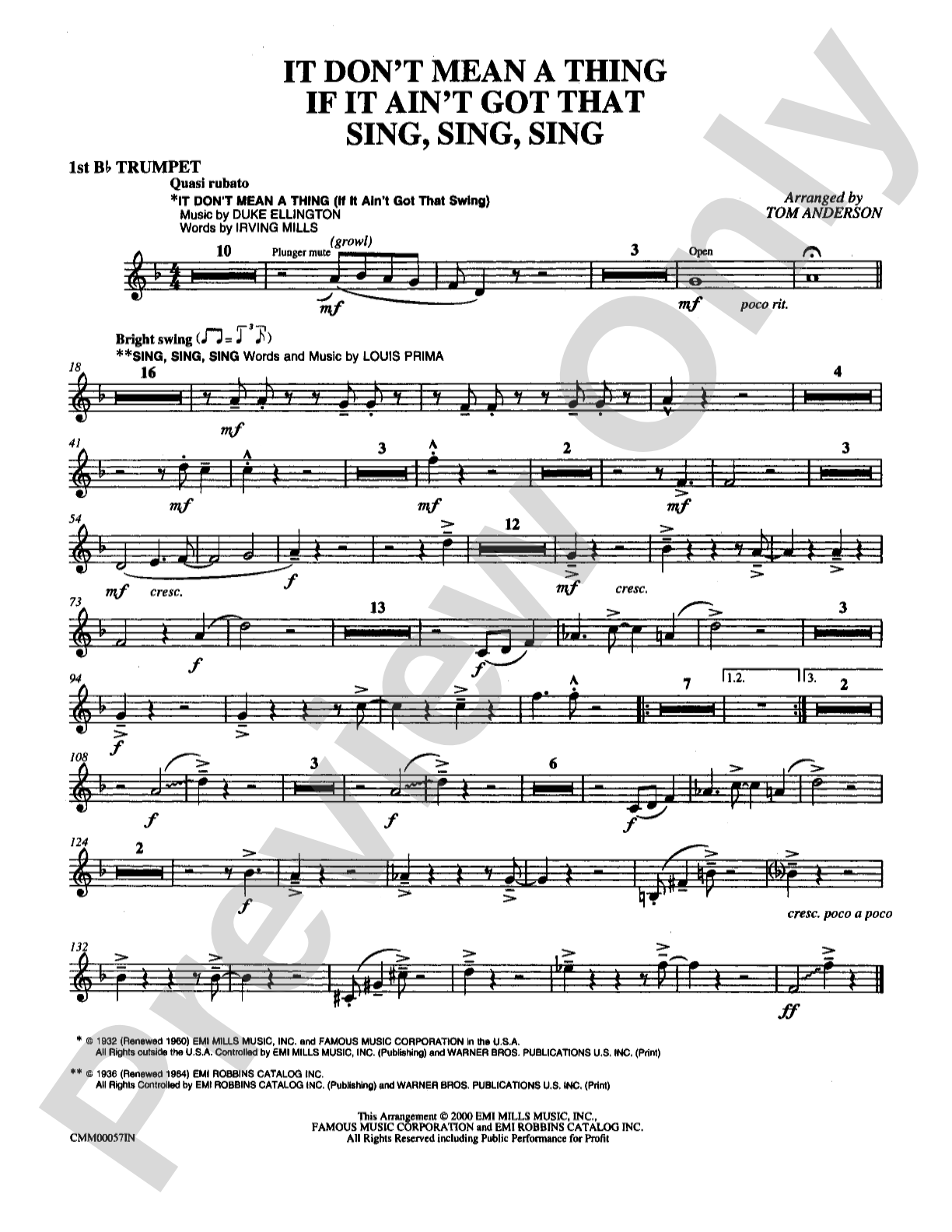

It Don't Mean a Thing If It Ain't Got That Sing, Sing, Sing: Choral Instrumental Parts
Music by Duke Ellington, lyrics by Irving Mills / arr. Tom Anderson
Item: 00-PK-0005842

$15.00
Pickup currently not available
Buy Extra Parts (Digital PDF Download)
Parts Added to Cart!
Related Items
It Don't Mean a Thing If It Ain't Got That Sing, Sing, Sing: SATB Choral Octavo |
$3.50
|
View | |
It Don't Mean a Thing If It Ain't Got That Sing, Sing, Sing: SAB Choral Octavo |
$3.50
|
View | |
It Don't Mean a Thing If It Ain't Got That Sing, Sing, Sing: SA Choral Octavo |
$3.50
|
View | |
It Don't Mean a Thing If It Ain't Got That Sing, Sing, Sing: SATB Choral Octavo |
$3.50
|
View | |
It Don't Mean a Thing If It Ain't Got That Sing, Sing, Sing: SAB Choral Octavo |
$3.50
|
View | |
It Don't Mean a Thing If It Ain't Got That Sing, Sing, Sing: Choral Instrumental Parts |
$15.00
|
View | |
It Don't Mean a Thing If It Ain't Got That Sing, Sing, Sing: Choral Octavo SoundTrax CD |
$27.99
|
View |
Description
Put together these two titles in a unique arrangement, and you have a hit! Tom Anderson has created a winning combination of great titles, swinging style, and arranging creativity in this piece. This challenging work will motivate your choir, rather than discourage them. A wonderful opportunity to share a little of the history of swing music with your choir!


Don't just read it, hear it, play along with it, and watch your students grow with it. In MakeMusic Cloud, It Don't Mean a Thing If It Ain't Got That Sing, Sing, Sing: Choral Instrumental Parts comes alive with professional accompaniment, adjustable tempo, and built-in practice tools that turn solo practice into real progress.
Open in the Player
Jump straight in and assign it today.
Start Your Free Trial
Open this title and explore the full library in minutes.
Sample Audio
No sample audio found.
Sample Video
No sample videos found.
Additional Details
Series:
Alfred Pop Choral Series
Publisher:
Alfred Music
Page Count:
20
SKU:
00-PK-0005842
More about this title
About the Composer: Duke Ellington
Duke Ellington (1899-1974) stands as one of the most prolific and influential composers in American music history. His output spanned jazz standards, extended concert works, and countless pieces that defined the sound of swing and big band era. Ellington's harmonic sophistication and orchestral imagination transformed jazz from dance music into an art form worthy of concert halls, while his pieces remain essential to any musician's repertoire.
Why we love this
Tom Anderson's pairing of two Ellington classics into one arrangement gives you a sophisticated jazz program piece that respects both the historical significance and contemporary appeal of swing music. The arrangement pitches the challenge level just right: singers get rewarding complexity without drowning in difficulty, and the instrumental parts create a full, energetic sound that makes the choir feel like they're performing with a real jazz ensemble. This is the kind of piece that teaches music history through lived performance rather than lecture.
What to expect
This arrangement swings with the brightness and infectious energy of the swing era, built on two instantly recognizable melodies that carry real historical weight. The instrumental parts give the piece a full, sophisticated sound that lifts the choir's voices and creates the feeling of performing alongside a jazz ensemble rather than in isolation.
Who it's for
Choirs with solid sight-reading skills and some jazz experience will get the most from this piece, though singers new to swing style will find the melodies accessible and the arrangement supportive. Directors looking to program a high-energy contemporary jazz piece that also honors classic American music will find this particularly rewarding.
How to get the most out of it
- Lock in the rhythm section early and often. The swing groove depends on tight ensemble understanding between the singers and the instrumental parts, so rehearse sections with the rhythm instruments before adding melody layers.
- Approach the articulation and phrasing with the lightness of a jazz vocalist. Straight classical attacks will drain the swing from the piece; let syllables land on beat and bounce off slightly.
- Balance the recorded accompaniment carefully so the choir sits just in front of it. If singers feel they're chasing the track, confidence drops immediately.
- Use the instrumental parts to model phrasing and style for your singers. Ask instrumentalists to demonstrate how a particular passage should breathe and swing.
How to use it
Program this as a concert highlight or pops concert centerpiece where you want to demonstrate your choir's versatility and modern sensibility. It pairs well with traditional sacred music if you're building a diverse concert, or with other contemporary jazz arrangements if you're programming a full jazz or American standards theme.
Skills your students will build
- Swing style and articulation (eighth-note feel, rhythm and phrasing conventions)
- Reading and performing with recorded accompaniments
- Ensemble balance and blend across voice parts with instrumental parts
- Jazz chord changes and harmonic movement
- Historical context and cultural significance of swing era composition