
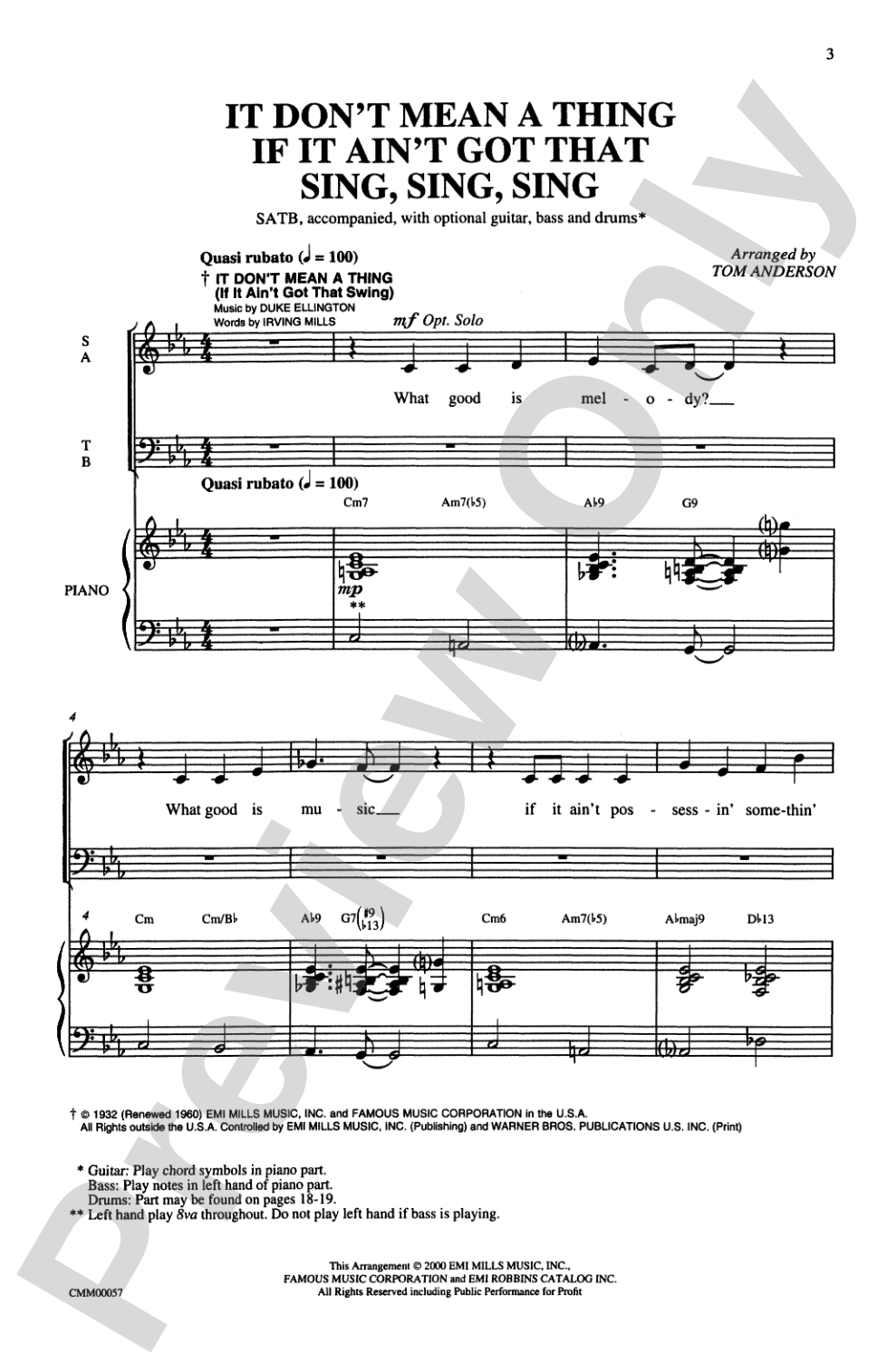

It Don't Mean a Thing If It Ain't Got That Sing, Sing, Sing: SATB Choral Octavo
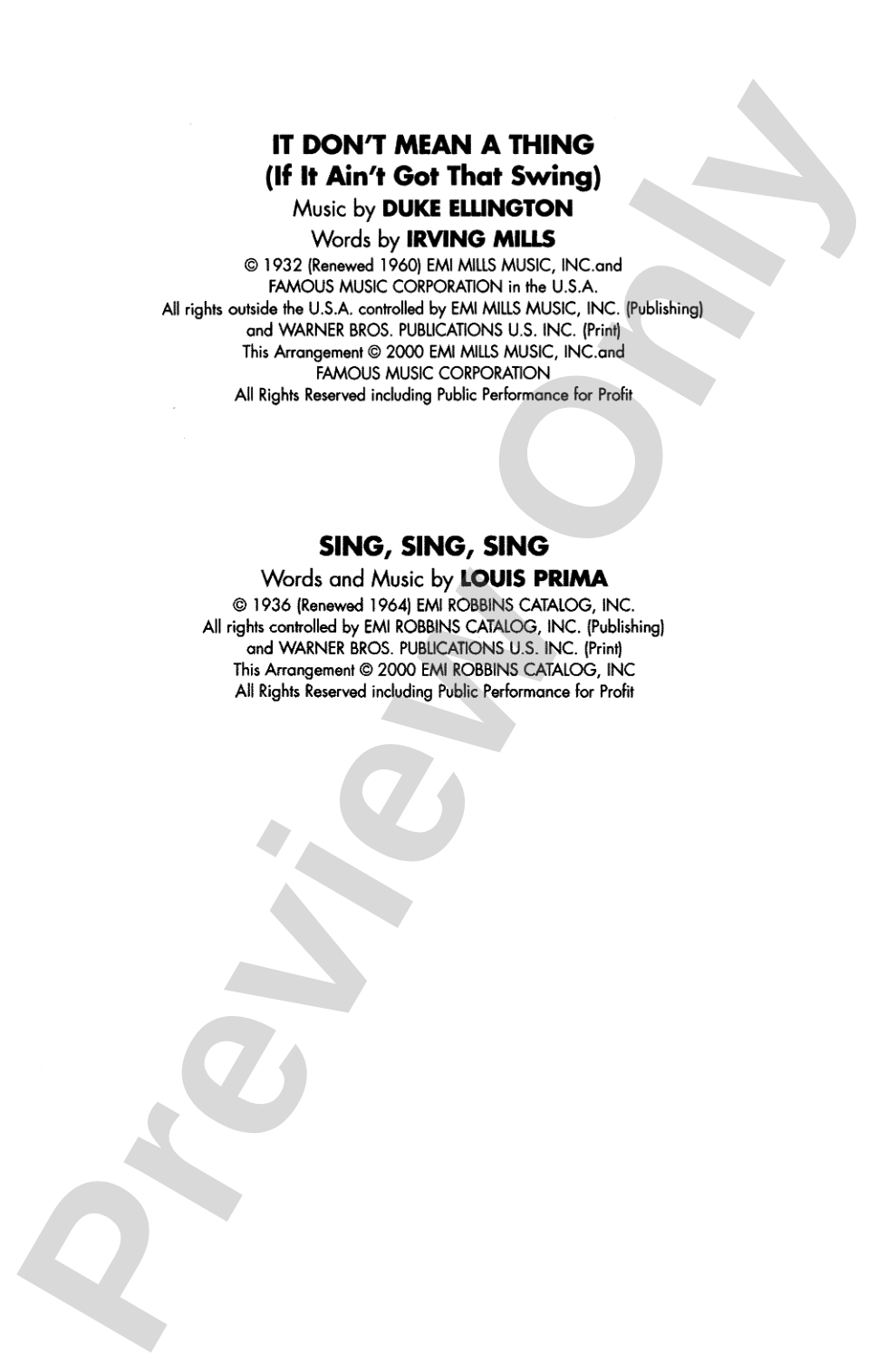
Music by Duke Ellington, lyrics by Irving Mills / arr. Tom Anderson
Item: 00-PO-0002974

$3.50
Minimum order quantity: 20 copies
One moment…
Related Items
It Don't Mean a Thing If It Ain't Got That Sing, Sing, Sing: SAB Choral Octavo |
$3.50
|
View | |
It Don't Mean a Thing If It Ain't Got That Sing, Sing, Sing: SA Choral Octavo |
$3.50
|
View | |
It Don't Mean a Thing If It Ain't Got That Sing, Sing, Sing: Choral Instrumental Parts |
$15.00
|
View | |
It Don't Mean a Thing If It Ain't Got That Sing, Sing, Sing: SATB Choral Octavo |
$3.50
|
View | |
It Don't Mean a Thing If It Ain't Got That Sing, Sing, Sing: SAB Choral Octavo |
$3.50
|
View | |
It Don't Mean a Thing If It Ain't Got That Sing, Sing, Sing: Choral Instrumental Parts |
$15.00
|
View | |
It Don't Mean a Thing If It Ain't Got That Sing, Sing, Sing: Choral Octavo SoundTrax CD |
$27.99
|
View |
Description
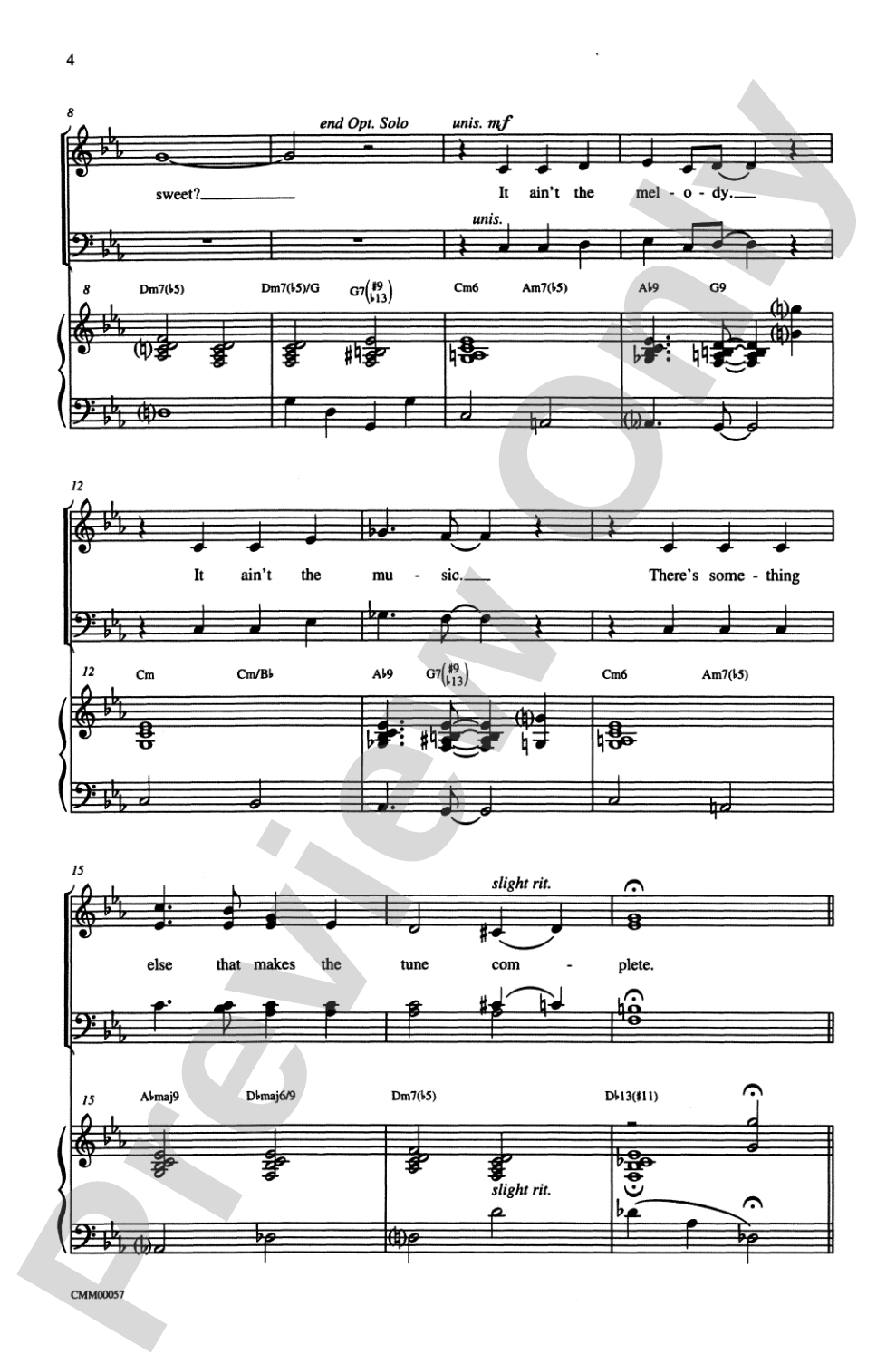
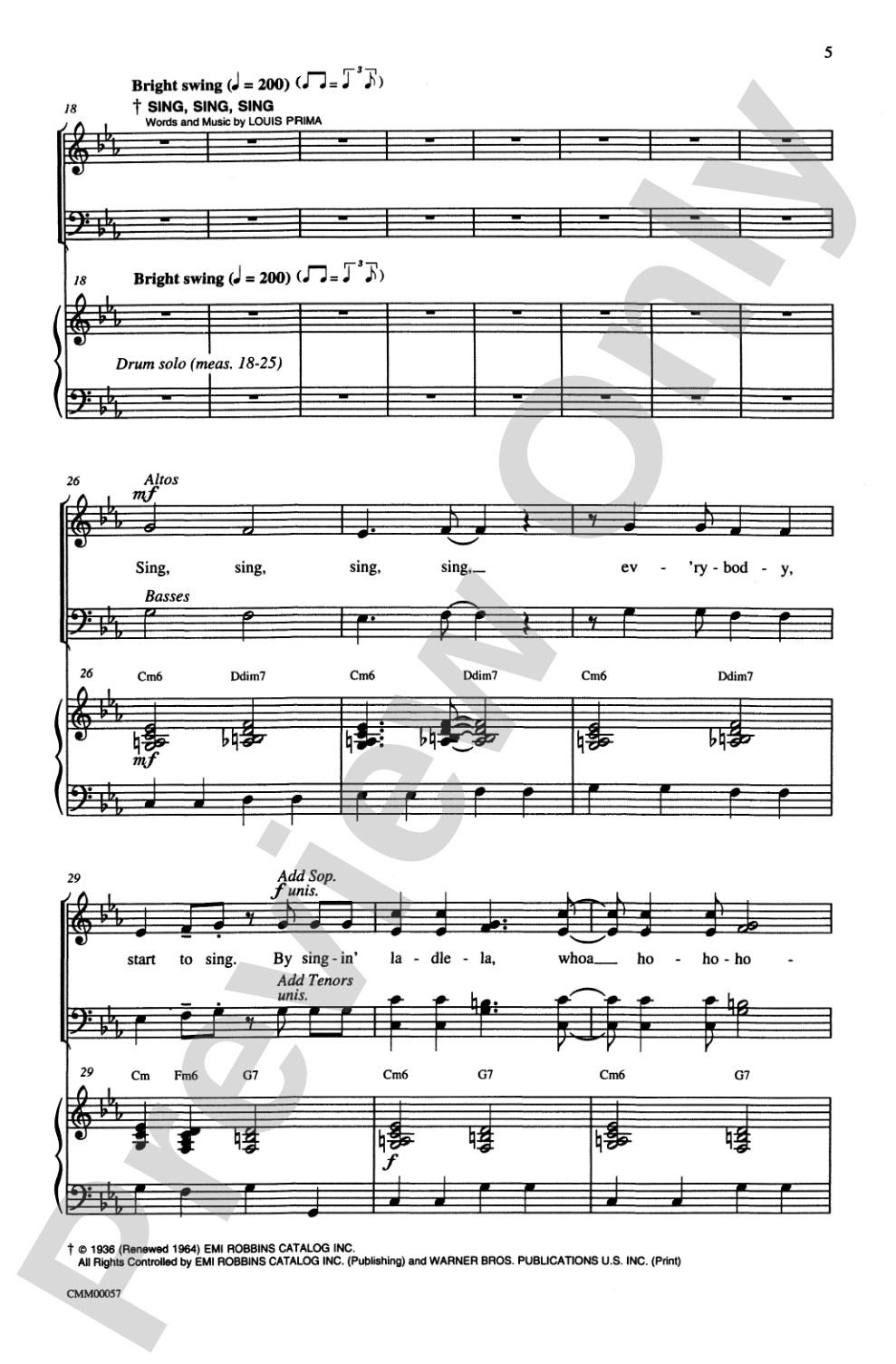
Put together these two titles in a unique arrangement, and you have a hit! Tom Anderson has created a winning combination of great titles, swinging style, and arranging creativity in this piece. This challenging work will motivate your choir, rather than discourage them. A wonderful opportunity to share a little of the history of swing music with your choir!


Don't just read it, hear it, play along with it, and watch your students grow with it. In MakeMusic Cloud, It Don't Mean a Thing If It Ain't Got That Sing, Sing, Sing: SATB Choral Octavo comes alive with professional accompaniment, adjustable tempo, and built-in practice tools that turn solo practice into real progress.
Open in the Player
Jump straight in and assign it today.
Start Your Free Trial
Open this title and explore the full library in minutes.
Sample Audio
No sample audio found.
Sample Video
No sample videos found.
Additional Details
Series:
Alfred Archive Edition: Alfred Pop Choral Series
Publisher:
Alfred Music
Page Count:
20
SKU:
00-PO-0002974
More about this title
About the Composer: Duke Ellington
Duke Ellington stands as one of the most prolific and influential composers in American music history. His career spanned seven decades, during which he wrote thousands of compositions that ranged from three-minute standards to extended concert works, all while leading his orchestra and defining the sound of jazz itself. Ellington's harmonic sophistication, melodic invention, and ability to write idiomatically for every instrument in the jazz ensemble set him apart as a composer of genuine classical stature, yet his work remains rooted in the swing and blues traditions that defined his era.
Why we love this
Tom Anderson's pairing of two Ellington standards into a single arrangement gives your choir permission to have genuine fun with swing music while tackling real musical challenges. The creative orchestration and rhythmic demands will keep your singers engaged without overwhelming them, and you'll have a legitimate teaching moment about one of jazz's greatest voices built right into rehearsal.
What to expect
Bright, energetic, and swinging. The piece captures the buoyant spirit of 1930s swing while staying accessible enough that singers can focus on locking into the groove rather than struggling with the notes. There's a real joy in the arrangement that invites your choir to smile and move with the music.
Who it's for
SATB choirs with some experience reading jazz articulations and handling syncopated rhythms. This is an excellent choice for choirs that have moved beyond simple pop arrangements but aren't yet tackling concert jazz of high complexity; it rewards serious musicianship without demanding virtuosic precision.
How to get the most out of it
- Nail the rhythmic precision before worrying about polish. Swing articulation depends on absolute clarity in how you're subdividing the beat; get that locked in first, then add the style and phrasing.
- Study a recorded version of Ellington's original arrangement to hear how these melodies breathe and where the natural spaces occur. Your singers will internalize the idiom much faster with that reference point.
- Balance your rhythm section parts (if using the available instrumental accompaniment) so they pocket underneath the voices without drowning them out. The accompaniment should support, not compete.
- Work the syncopated moments measure by measure if your choir struggles with the jazz rhythms. Isolate those tricky spots, get them secure, then sing through larger sections to maintain the momentum.
How to use it
This works beautifully as a centerpiece for a jazz-themed concert or as a high-energy opener that immediately signals to your audience that they're in for something fun. It also serves well in a mixed program where you want a secular moment that showcases your choir's versatility and rhythmic sophistication without requiring an entire concert built around a single genre.
Skills your students will build
- Reading swing articulation and jazz rhythmic notation
- Singing syncopated rhythms with precision and musicality
- Understanding jazz harmony and voice leading in a choral context
- Blending and balancing voices while maintaining rhythmic independence