

In These Delightful Pleasant Groves: SATB, a cappella Choral Octavo
Music by Henry Purcell / arr. Russell Robinson
Item: 00-PO-0004064
$2.25
Minimum order quantity: 20 copies
Pickup currently not available
Related Items
In These Delightful Pleasant Groves: 3-Part Mixed, a cappella Choral Octavo |
$2.25
|
View | |
In These Delightful Pleasant Groves: SSA, a cappella Choral Octavo |
$2.25
|
View | |
In These Delightful Pleasant Groves: SATB, a cappella Choral Octavo |
$2.25
|
View | |
In These Delightful Pleasant Groves: 3-Part Mixed, a cappella Choral Octavo |
$2.25
|
View | |
In These Delightful Pleasant Groves: SSA, a cappella Choral Octavo |
$2.25
|
View |
Description
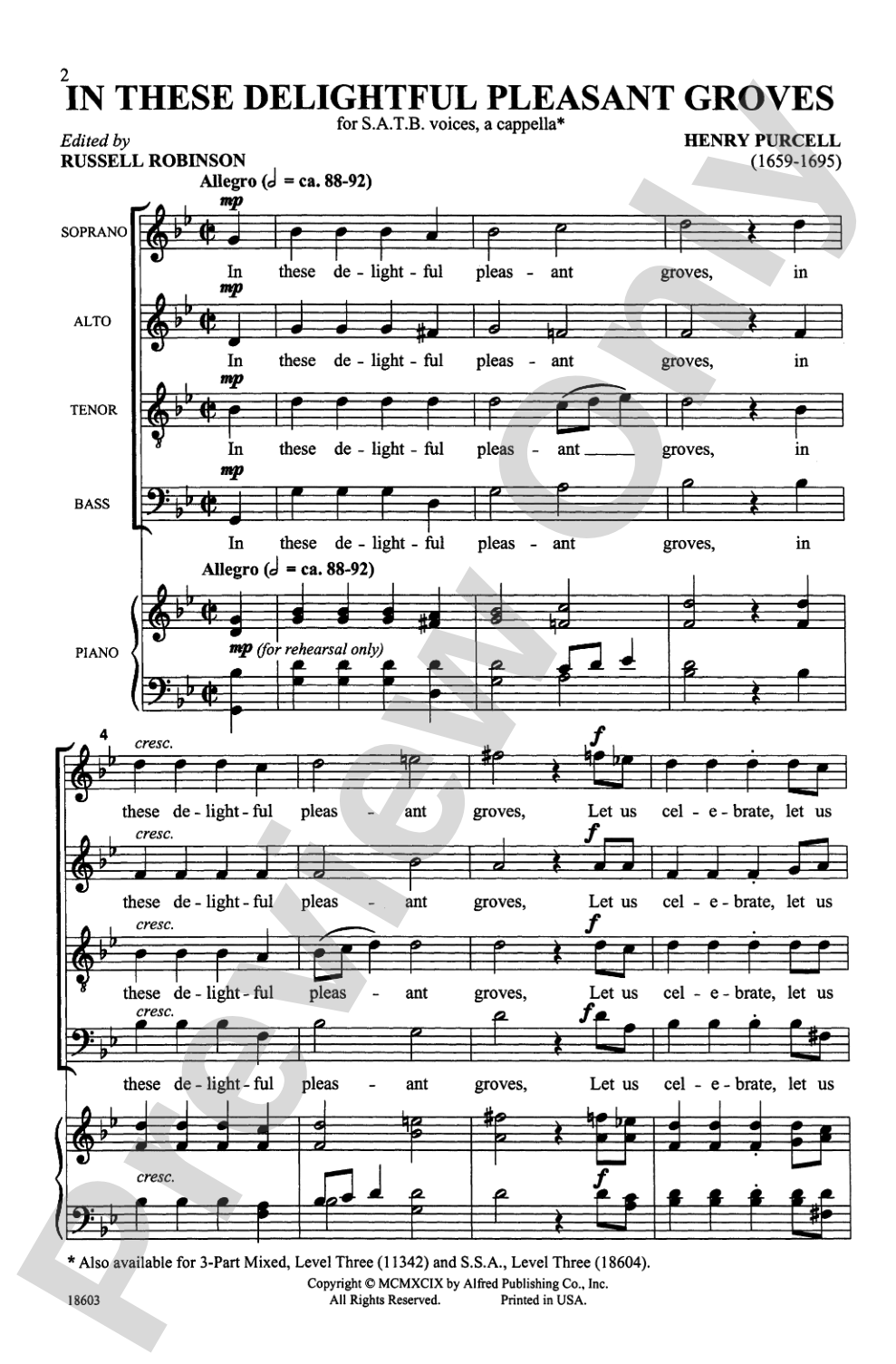
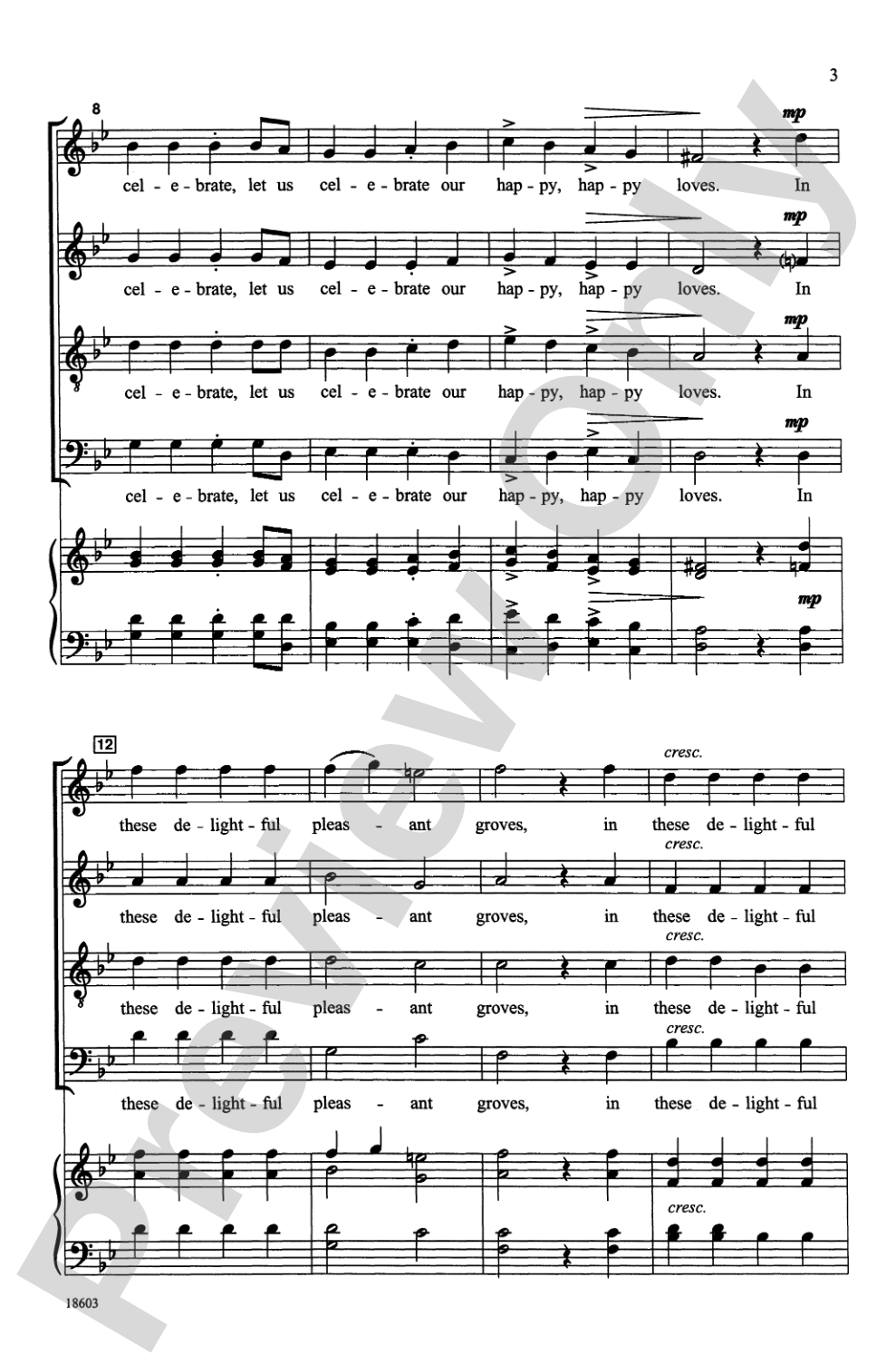
A finely crafted edition of the classic English madrigal. The editing and easy-to-read open score are right on target for today's choirs. Fluid contrapuntal sections contrast with full-sounding homophonic sections.


In These Delightful Pleasant Groves: SATB, a cappella Choral Octavo isn't in MakeMusic Cloud just yet...but it could be. Let us know you'd like to see it, and you'll help shape what comes next. In the meantime, start a free trial and dive into thousands of interactive titles your students can play along with today.
Request This Title
Tell us you want it.
Start Your Free Trial
Explore everything that's ready to play right now.
Sample Audio
1
Audio File
--:--
0:00
0:00
Sample Video
No sample videos found.
Additional Details
Series:
Alfred Archive Edition: Alfred Choral Designs
Publisher:
Alfred Music
Page Count:
8
SKU:
00-PO-0004064
More about this title
About the Composer: Henry Purcell
Henry Purcell (1659-1695) stands as England's greatest Baroque composer and a towering figure in the development of English music. Born in London and trained in the Chapel Royal, Purcell mastered multiple genres from sacred anthems to secular vocal music, setting a standard for harmonic sophistication and expressive depth that influenced generations of composers. His madrigals and part songs reveal his gift for blending Italian contrapuntal techniques with English sensibility, creating works of remarkable melodic grace and structural clarity.
Purcell's output was prodigious despite his brief life, encompassing stage works, instrumental music, and countless vocal compositions that demonstrate his command of both technical mastery and emotional resonance. His influence on choral music extends from his own time through the present day, with his works remaining central to the choral repertoire for their elegant voice leading, memorable melodies, and the perfect balance he achieves between individual voices and ensemble sound.
Why we love this
Russell Robinson's edition captures why this madrigal endures: the score layout breathes on the page, making voice independence transparent without sacrificing the rich harmonic sonorities Purcell achieved. The interplay between contrapuntal passages and full homophonic moments gives singers room for both intricate text-painting and lustrous blend, making this a rewarding choice for choirs ready to dig into Renaissance polyphony without the challenge of dense historical notation.
What to expect
Sunlight and elegance. The text painting is graceful rather than heavy-handed, allowing the poetry of "delightful pleasant groves" to unfold naturally through the interweaving of voices. You'll move from moments of intimate dialogue between voice pairs to full-voiced passages that bloom with harmonic richness, all without a trace of orchestration to support you.
Who it's for
This octavo suits advanced high school choirs and college ensembles with solid musicianship and comfort reading independent lines. Directors seeking to introduce singers to Baroque madrigal literature will find this edition particularly accessible because the clear score layout removes notational barriers while preserving all the musical sophistication of Purcell's original work.
How to get the most out of it
- Balance the inner voices carefully during contrapuntal sections; alto and tenor lines are equally important to soprano and bass in establishing harmonic color and forward motion.
- Shape each homophonic section as a single gesture rather than four separate lines; the effect should be lush and unified, not blocky.
- Observe the natural phrasing of the text to guide breathing; Purcell's text underlay respects English speech patterns, so let the words guide your phrase lengths.
- Approach the a cappella texture as an opportunity for warmth and blend; without accompaniment, intonation in the upper voices will be exposed, so tune through the harmonic progression rather than to individual notes.
How to use it
Program this as a centerpiece on a concert mixing madrigals and contemporary choral works; it serves as an excellent bridge piece that demonstrates historical roots while remaining immediately engaging for audiences. It also works well in a festival or contest context where your choir's ability to balance clarity with blend will be appreciated, and the eight pages allow it to anchor a set without overwhelming rehearsal time.
Skills your students will build
- Reading open score notation and tracking individual voice lines
- Sustaining independent melodic lines while listening to three other parts
- Shifting between contrapuntal and homophonic textures within a single piece
- Intonation without instrumental support, particularly in complex harmonic progressions
- Text expression and projection in early English poetry