
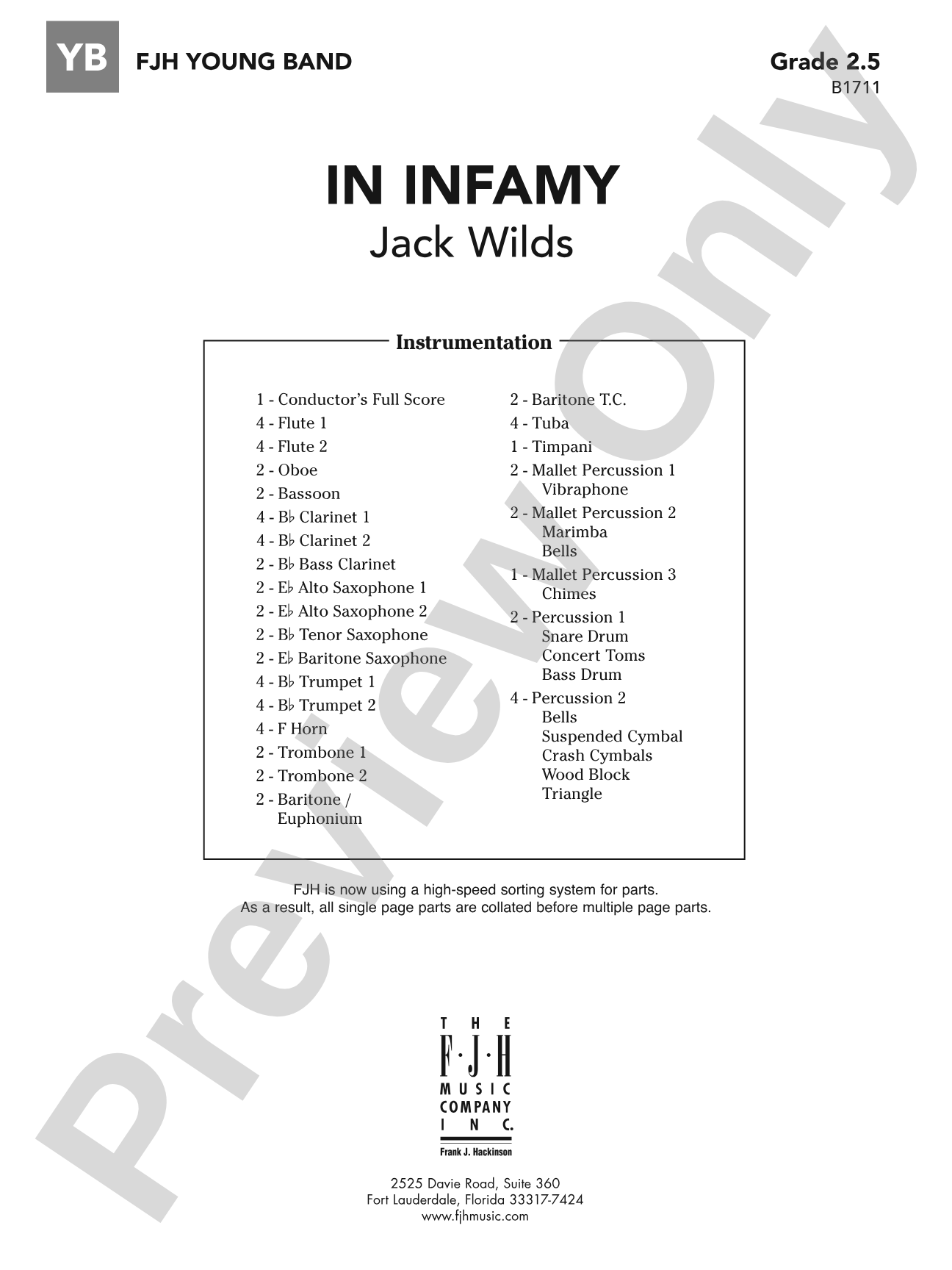
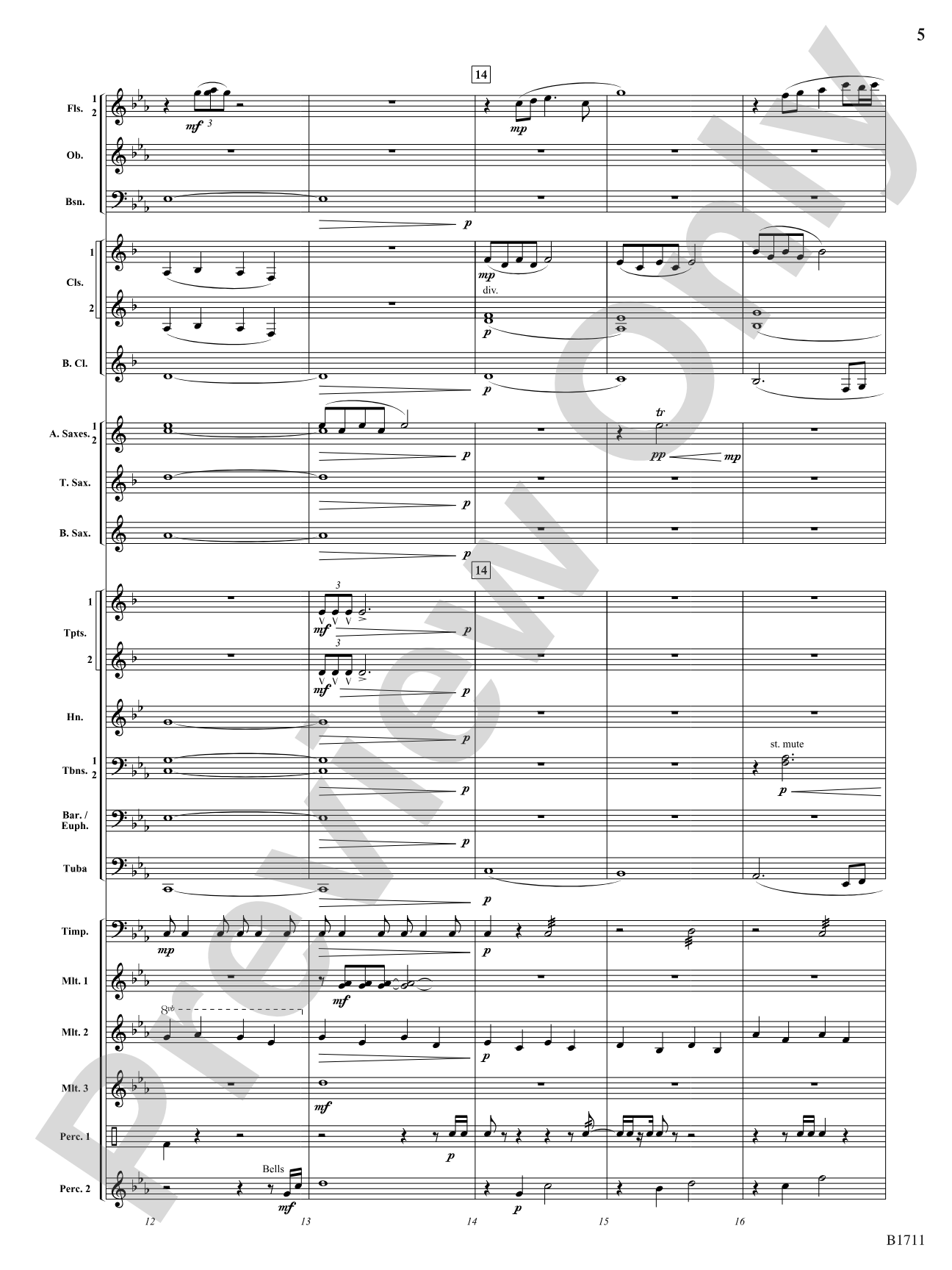
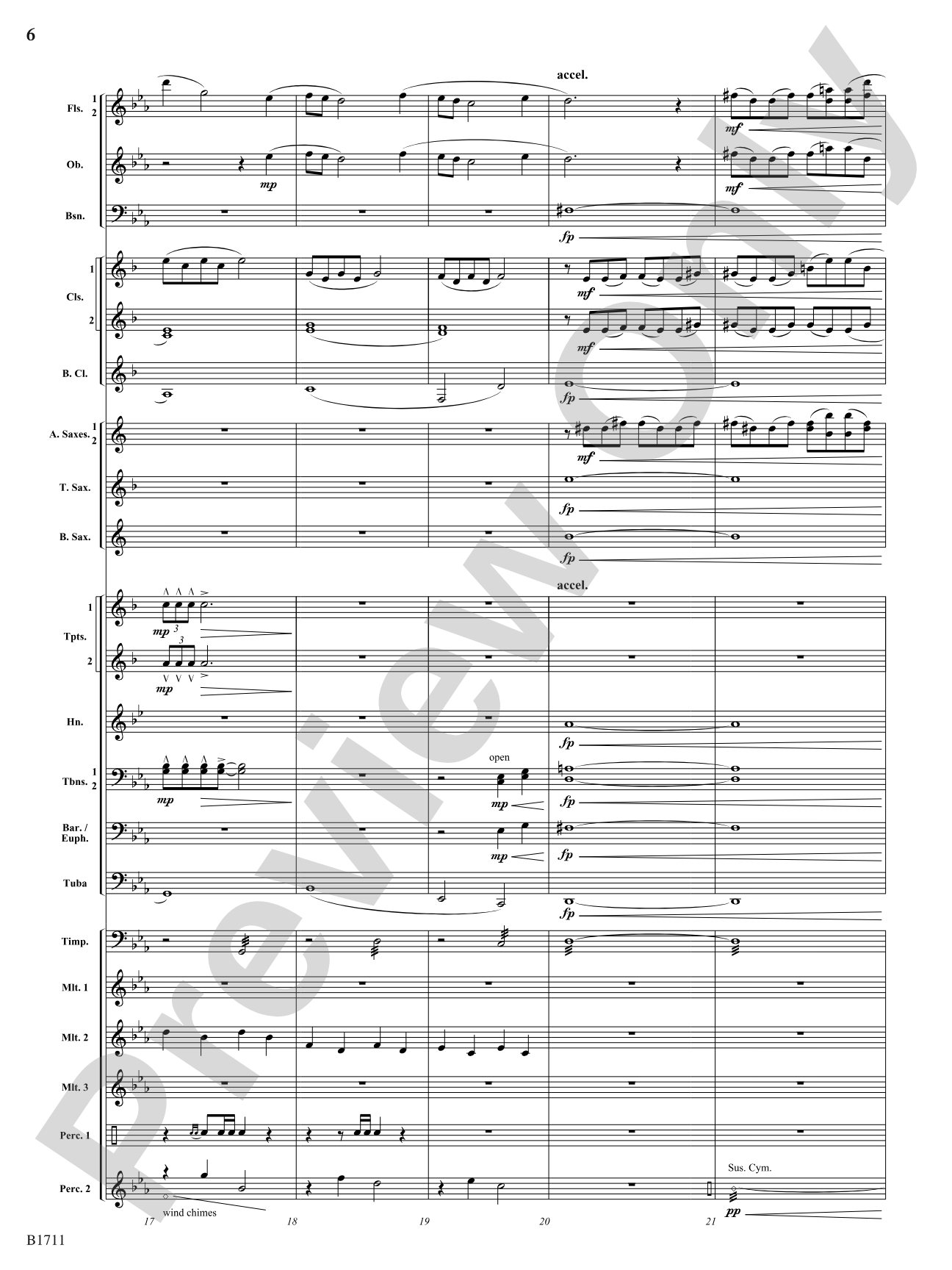
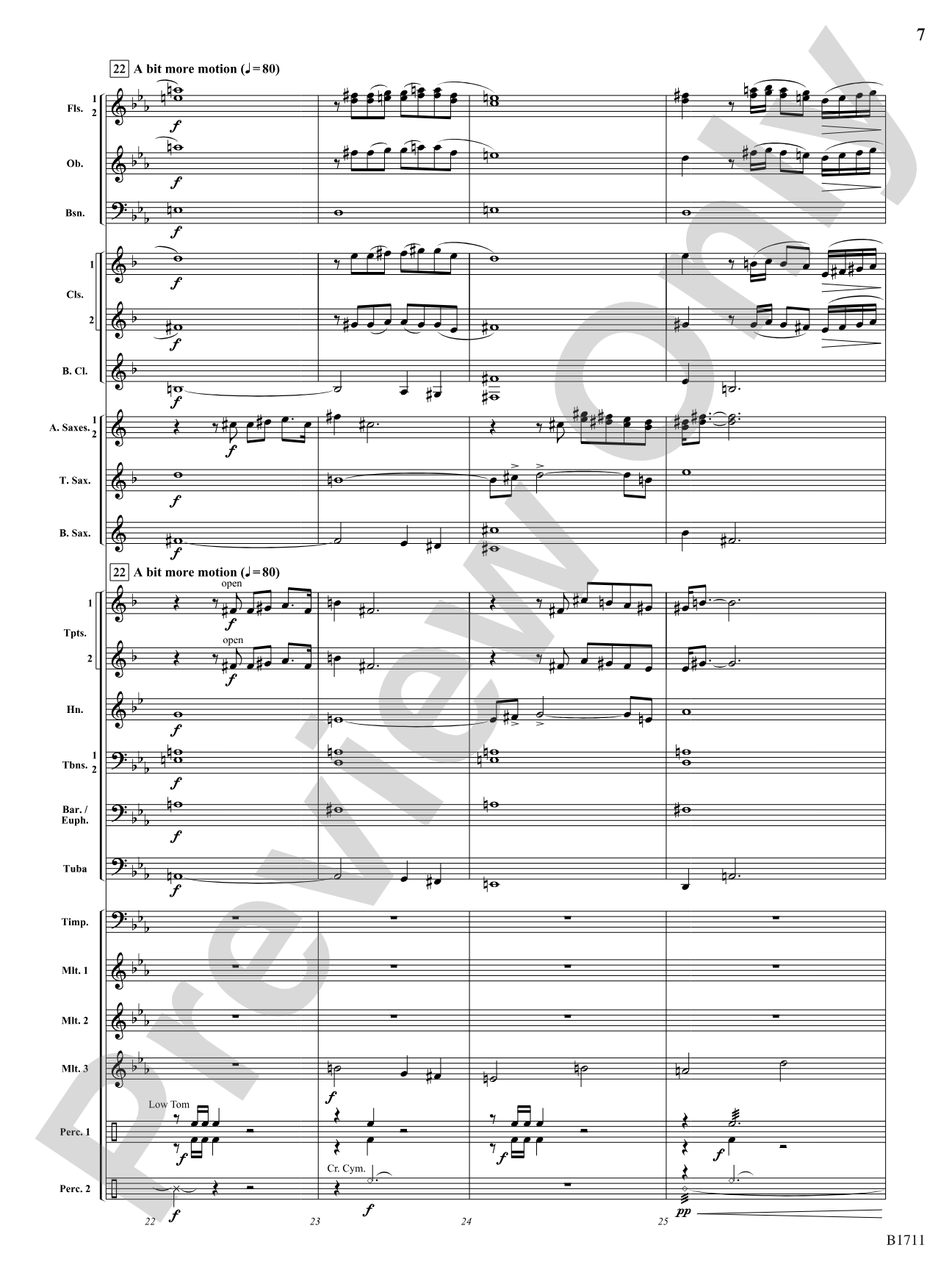
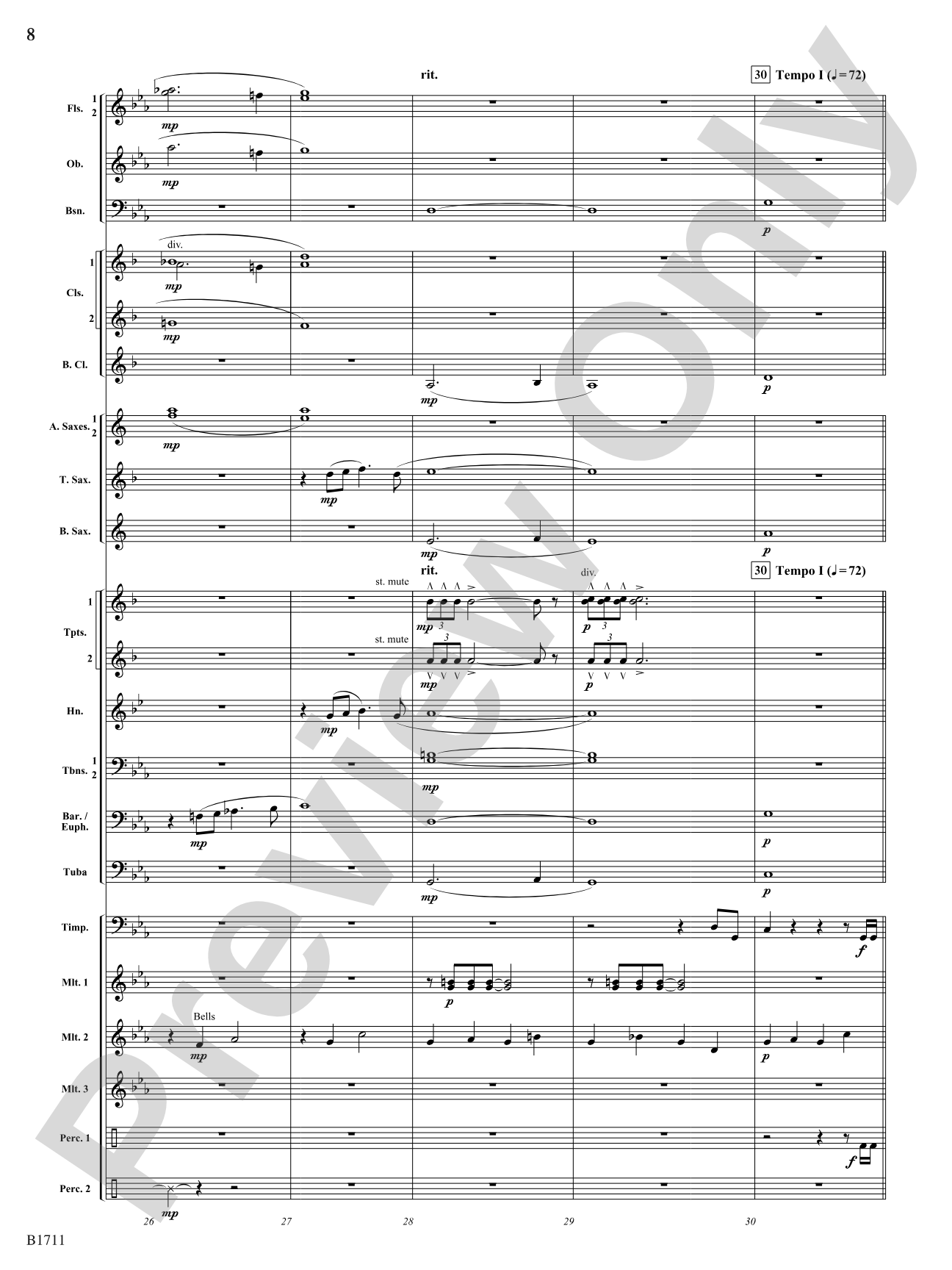
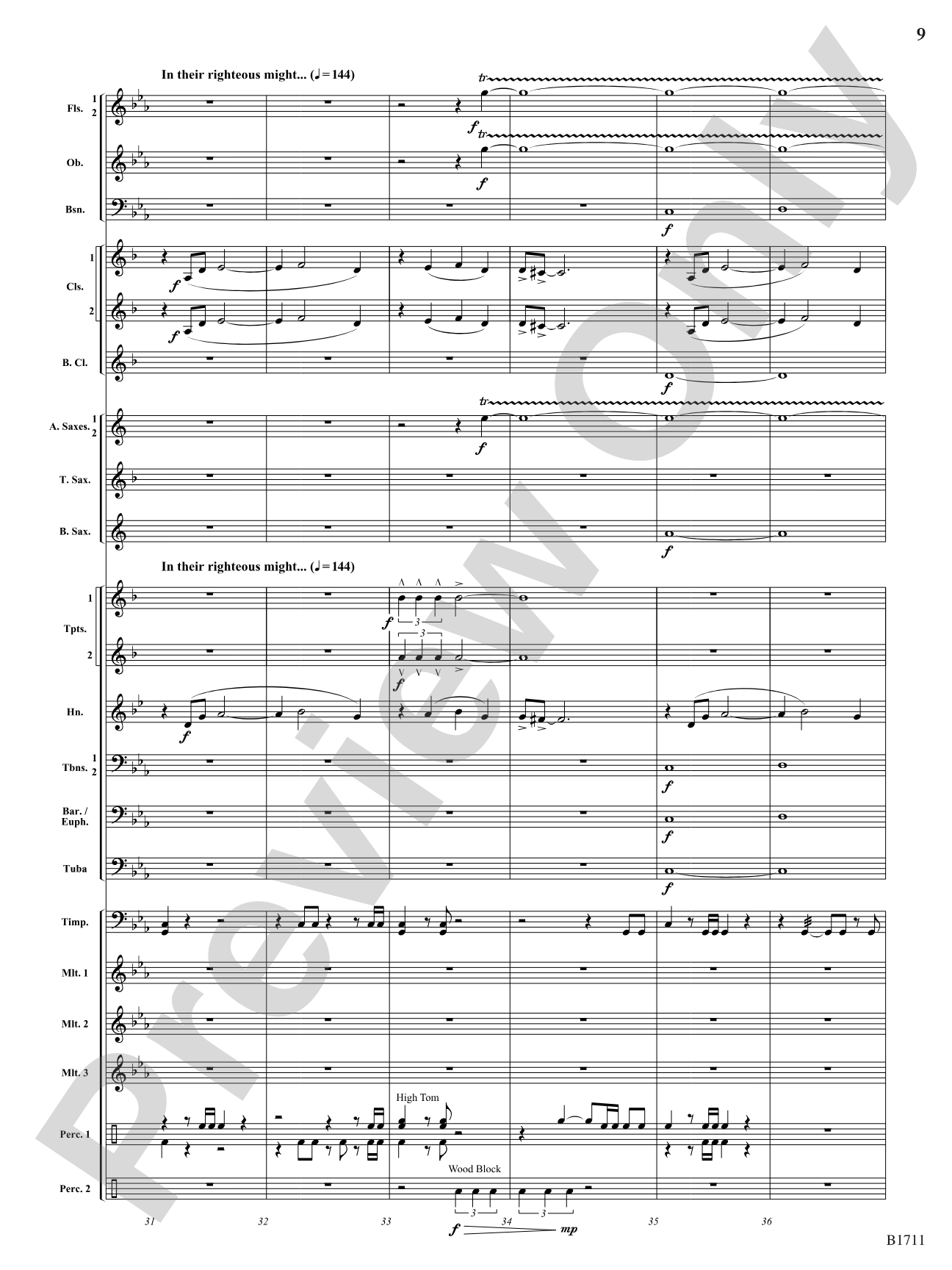
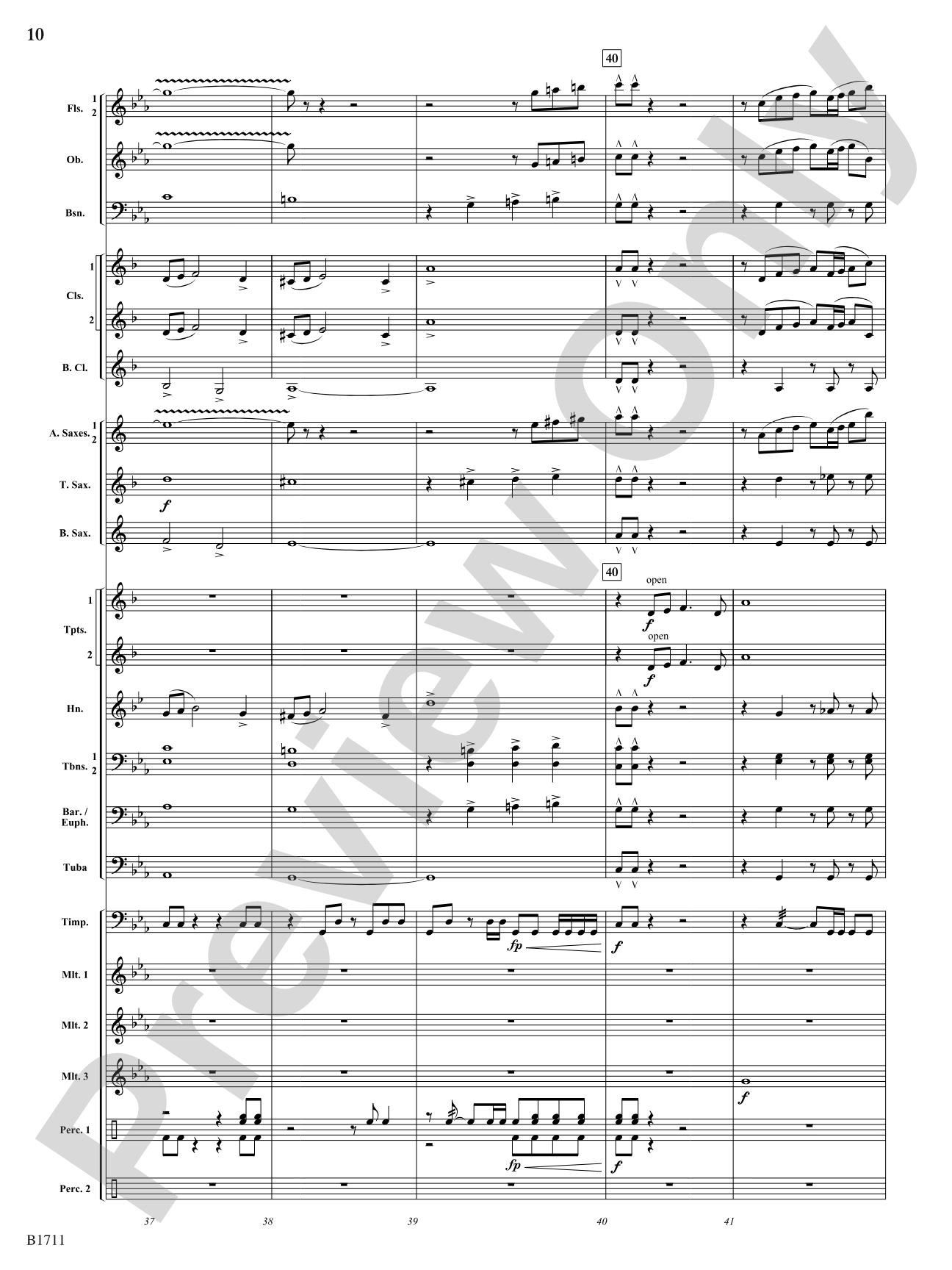
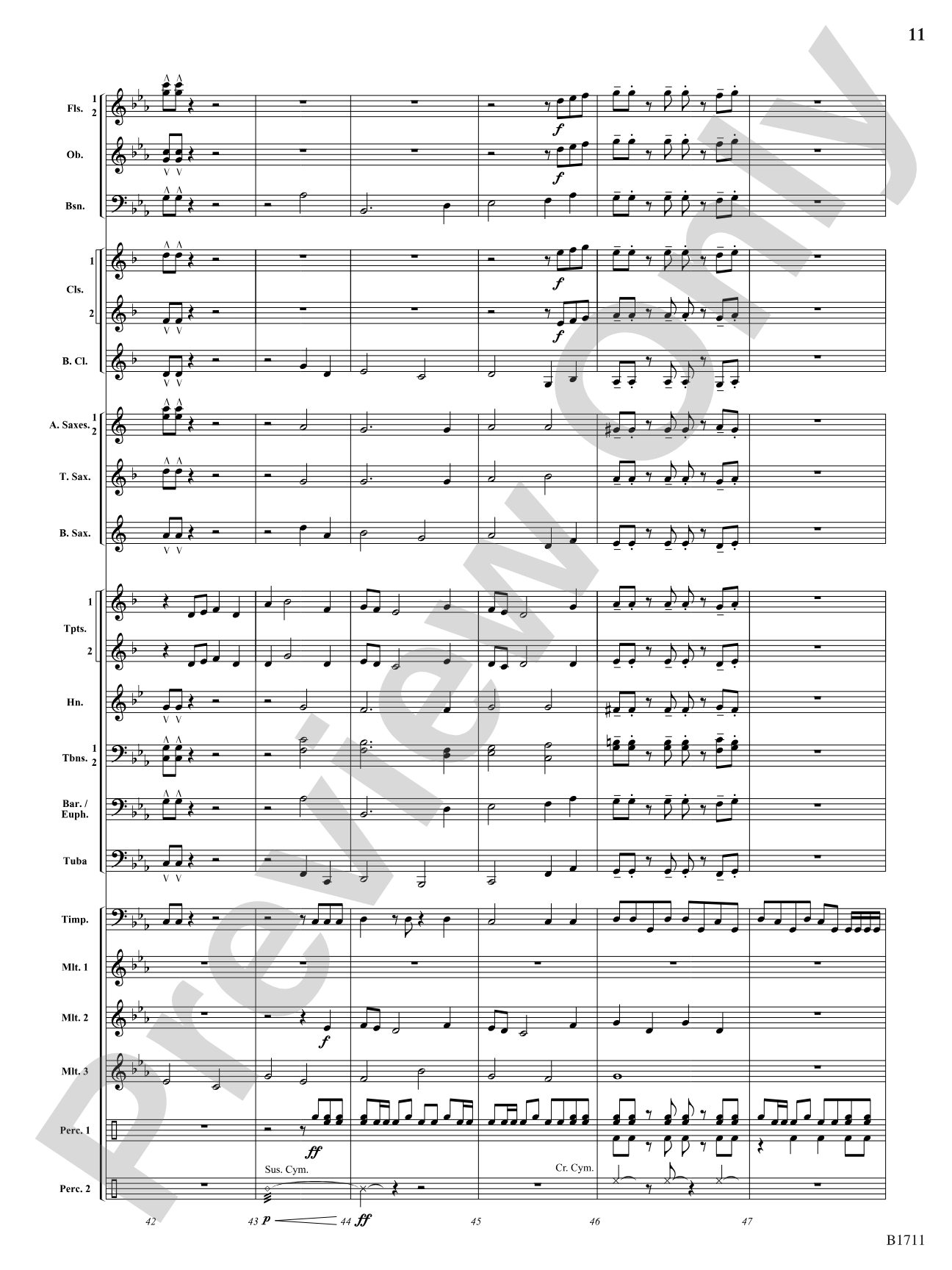
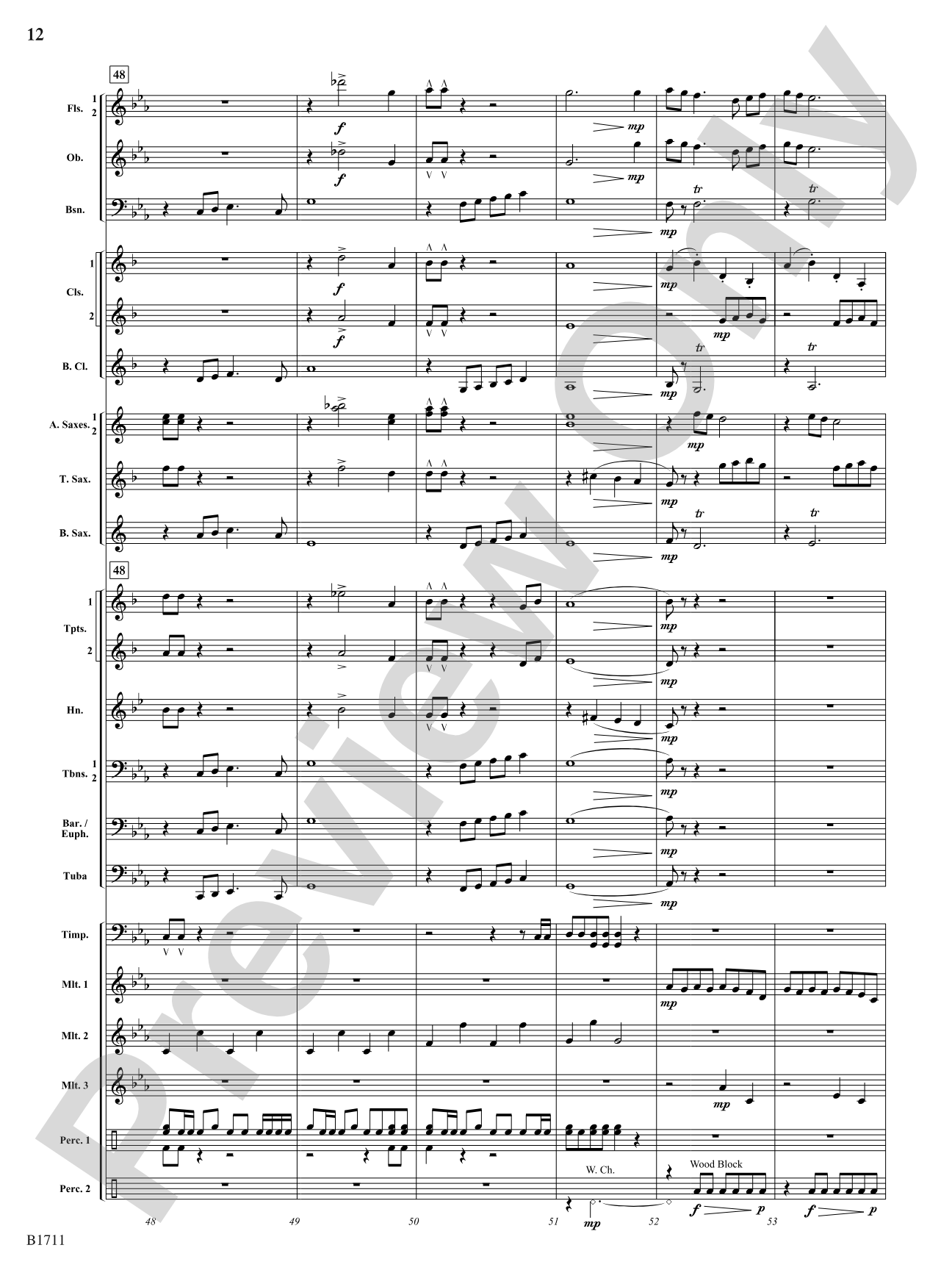
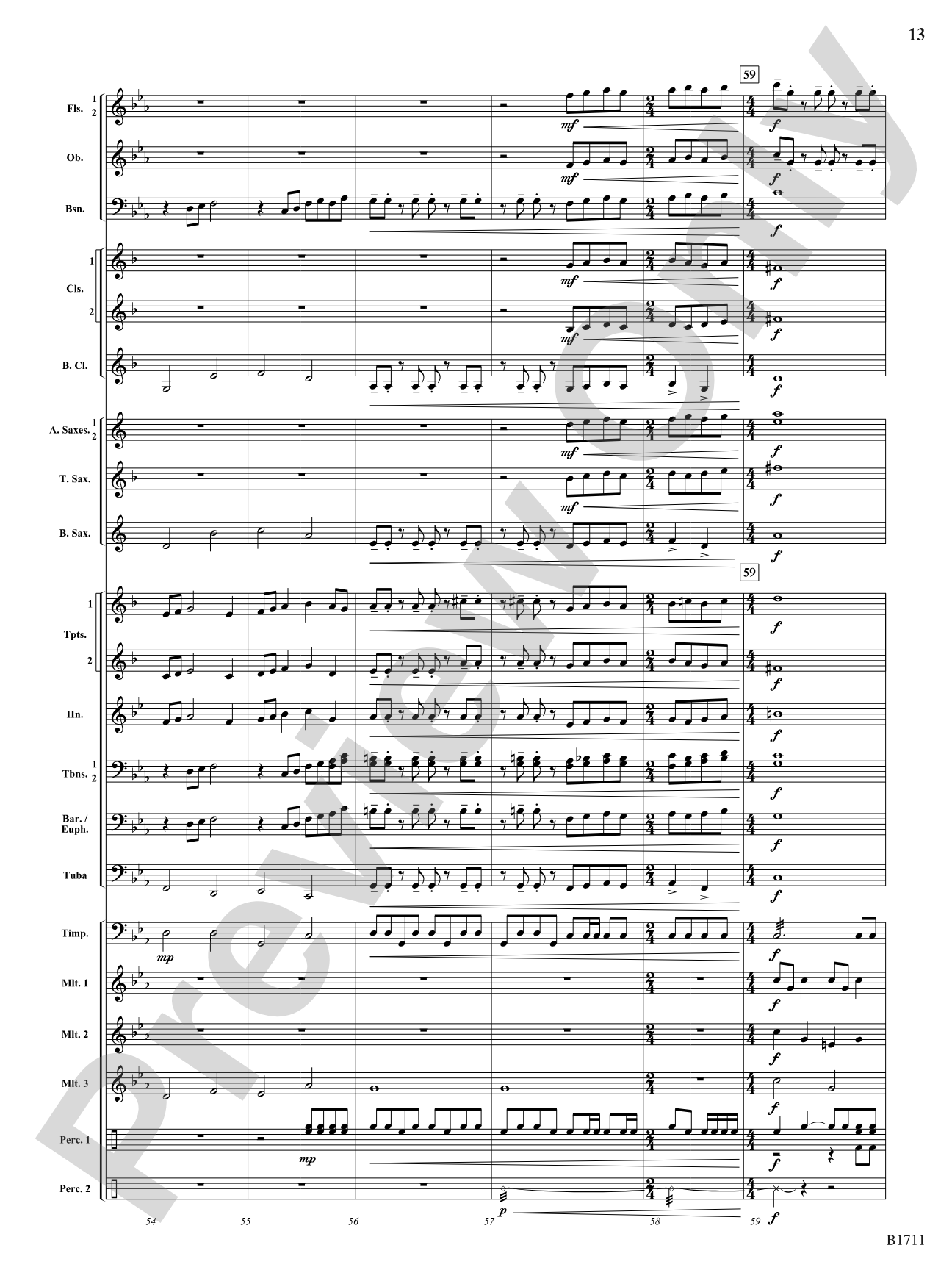
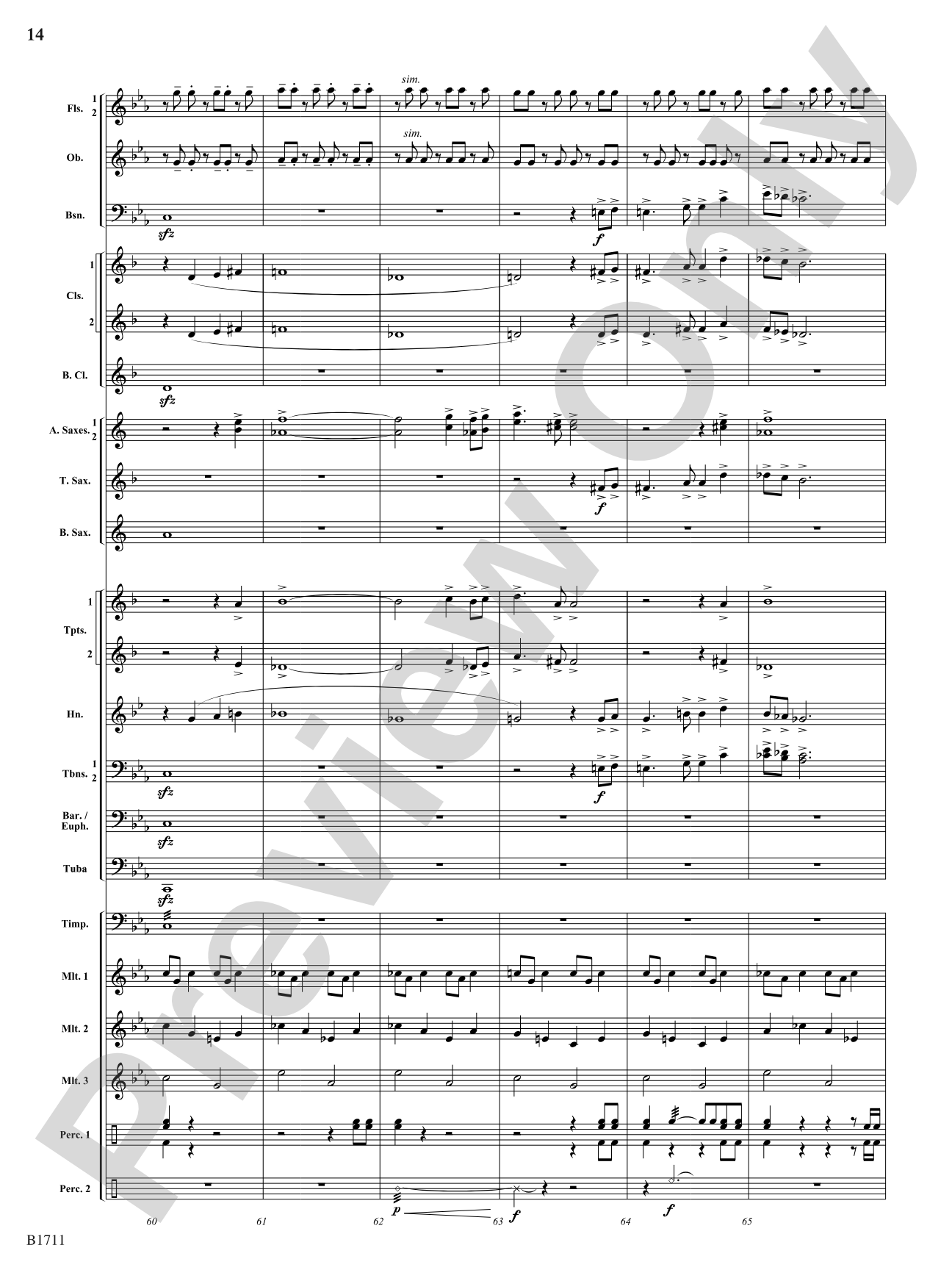
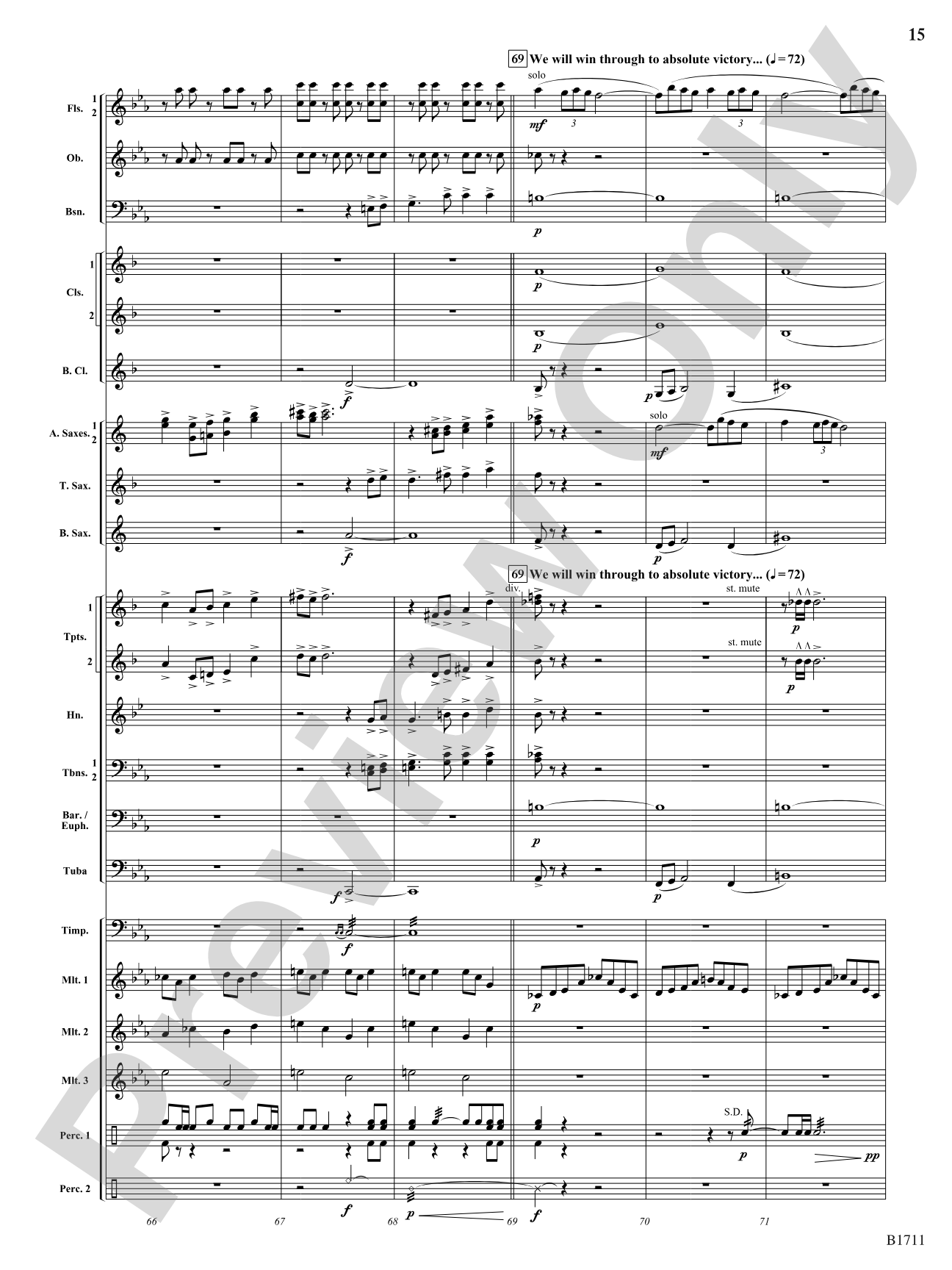
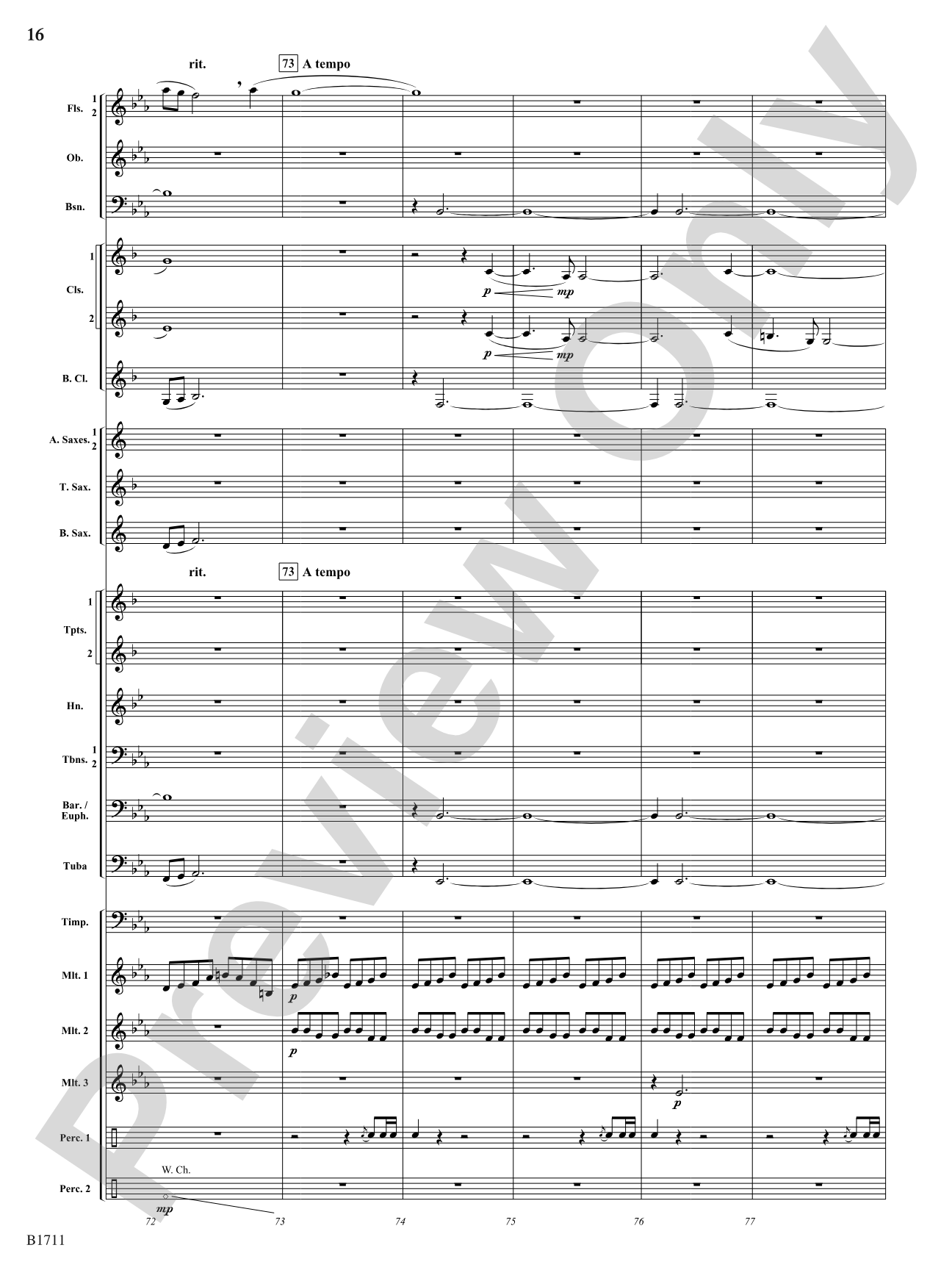
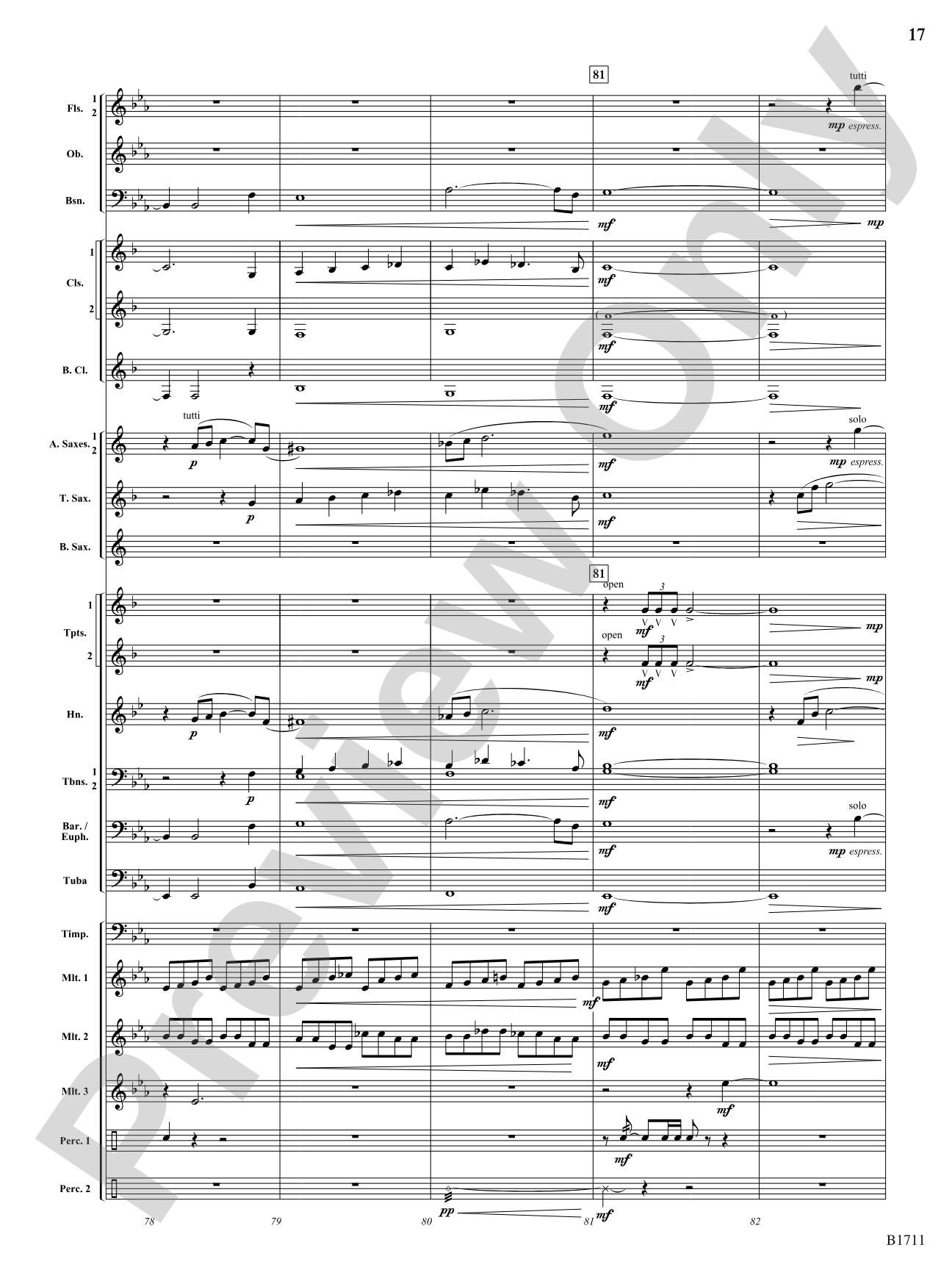
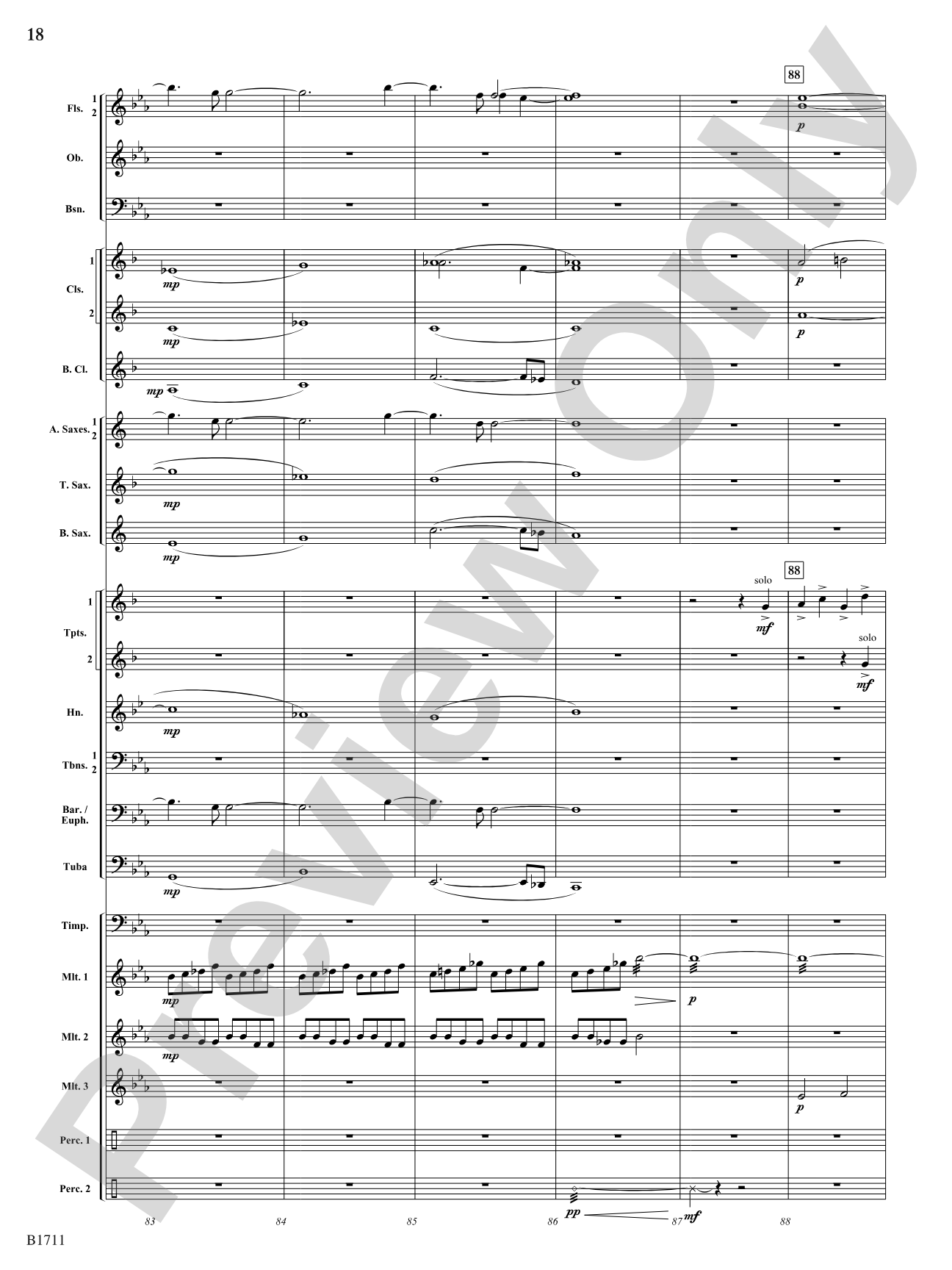
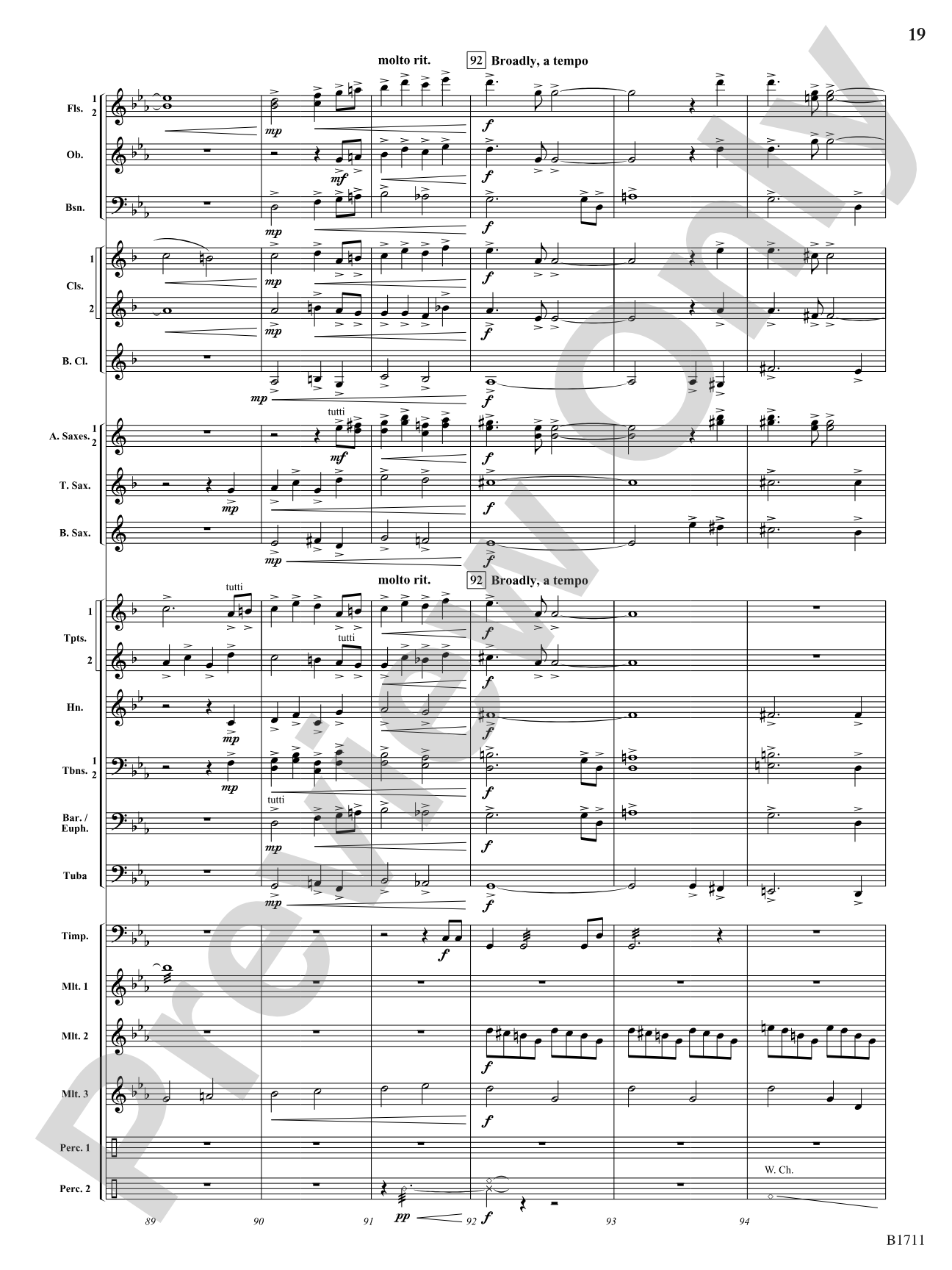
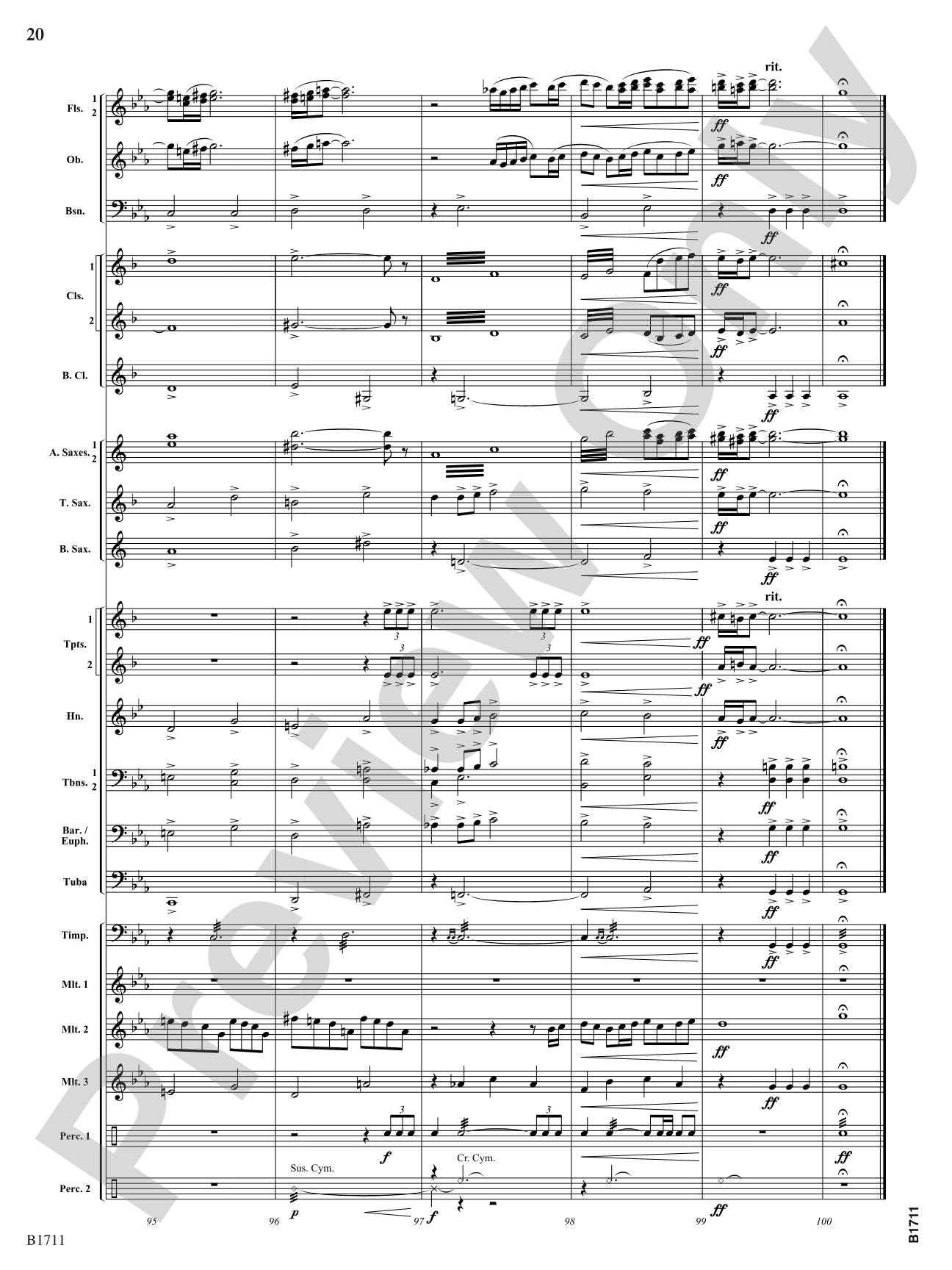

In Infamy: Concert Band Conductor Score & Parts
By Jack Wilds
Grade: 2.5
Item: 98-DB1711
$55.00
Pickup currently not available
Buy Extra Parts (Digital PDF Download)
| Product | Price | Quantity |
|---|---|---|
| In Infamy: Score | $6.00 | |
| In Infamy: Flute 1 | $7.00 | |
| In Infamy: Flute 2 | $7.00 | |
| In Infamy: Oboe | $7.00 | |
| In Infamy: Bassoon | $7.00 | |
| In Infamy: B-flat Clarinet 1 | $7.00 | |
| In Infamy: B-flat Clarinet 2 | $7.00 | |
| In Infamy: B-flat Bass Clarinet | $7.00 | |
| In Infamy: E-flat Alto Saxophone 1 | $7.00 | |
| In Infamy: E-flat Alto Saxophone 2 | $7.00 | |
| In Infamy: B-flat Tenor Saxophone | $7.00 | |
| In Infamy: E-flat Baritone Saxophone | $7.00 | |
| In Infamy: B-flat Trumpet 1 | $7.00 | |
| In Infamy: B-flat Trumpet 2 | $7.00 | |
| In Infamy: F Horn | $7.00 | |
| In Infamy: Trombone 1 | $7.00 | |
| In Infamy: Trombone 2 | $7.00 | |
| In Infamy: Baritone /Euphonium | $7.00 | |
| In Infamy: Baritone T.C. | $7.00 | |
| In Infamy: Tuba | $7.00 | |
| In Infamy: Timpani | $7.00 | |
| In Infamy: Mallet Percussion 1 | $7.00 | |
| In Infamy: Mallet Percussion 2 | $7.00 | |
| In Infamy: Mallet Percussion 3 | $7.00 | |
| In Infamy: Percussion 1 | $7.00 | |
| In Infamy: Percussion 2 | $7.00 |
Parts Added to Cart!
Description
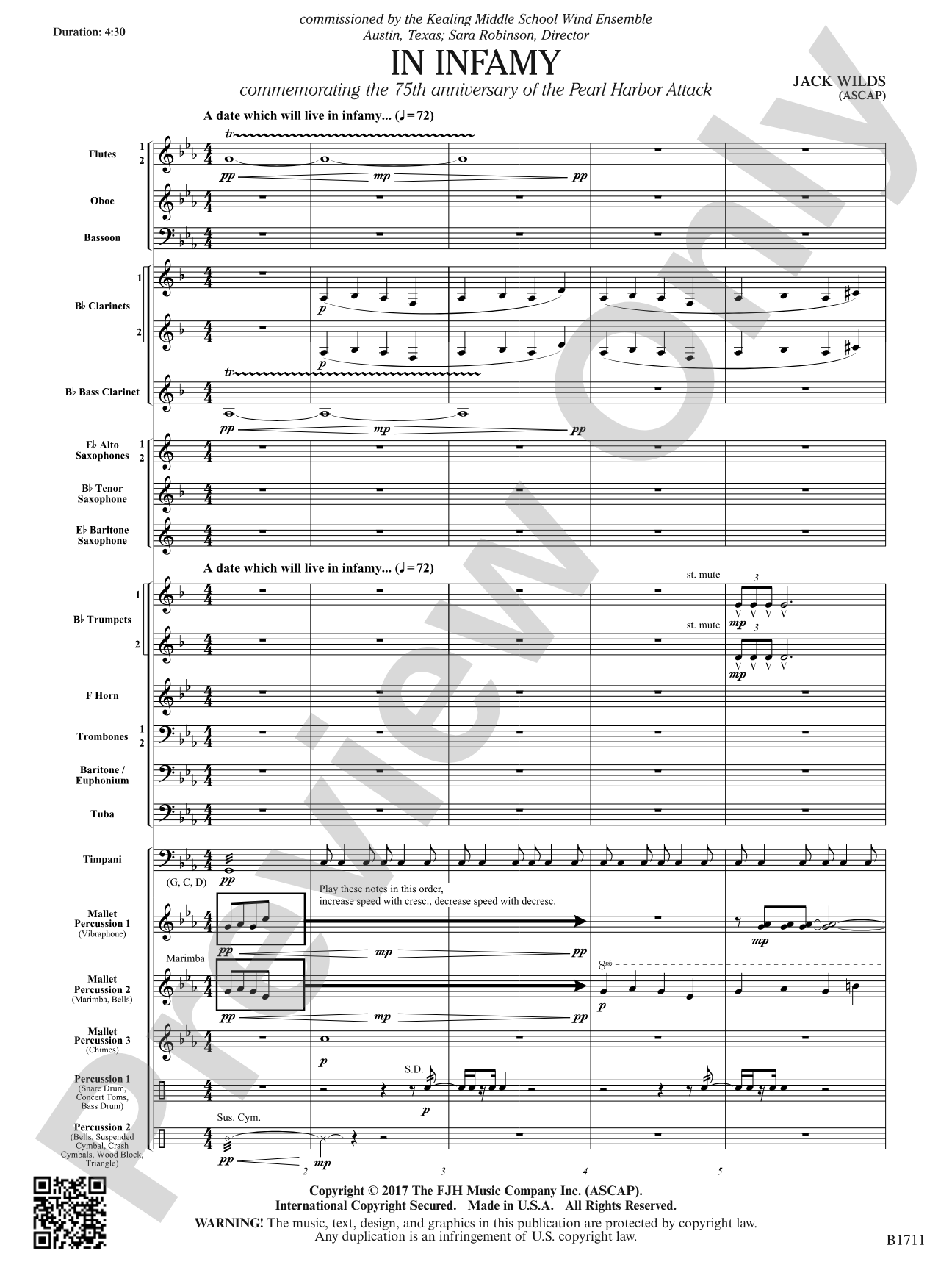
Commissioned to commemorate the 75th anniversary of Pearl Harbor, In Infamy is a reaction to the emotional arc of President Roosevelt’s Pearl Harbor address. A foreboding opening gives way to an intense call to action. A moving setting of America closes the work on a hopeful note. Perfect for patriotic programs and as a salute to a day that will forever live “in infamy.”


In Infamy: Concert Band Conductor Score & Parts isn't in MakeMusic Cloud just yet...but it could be. Let us know you'd like to see it, and you'll help shape what comes next. In the meantime, start a free trial and dive into thousands of interactive titles your students can play along with today.
Request This Title
Tell us you want it.
Start Your Free Trial
Explore everything that's ready to play right now.
Sample Audio
1
Audio File
--:--
0:00
0:00
Sample Video
Additional Details
Series:
FJH Young Band
Publisher:
The FJH Music Company, Inc.
SKU:
98-DB1711
More about this title
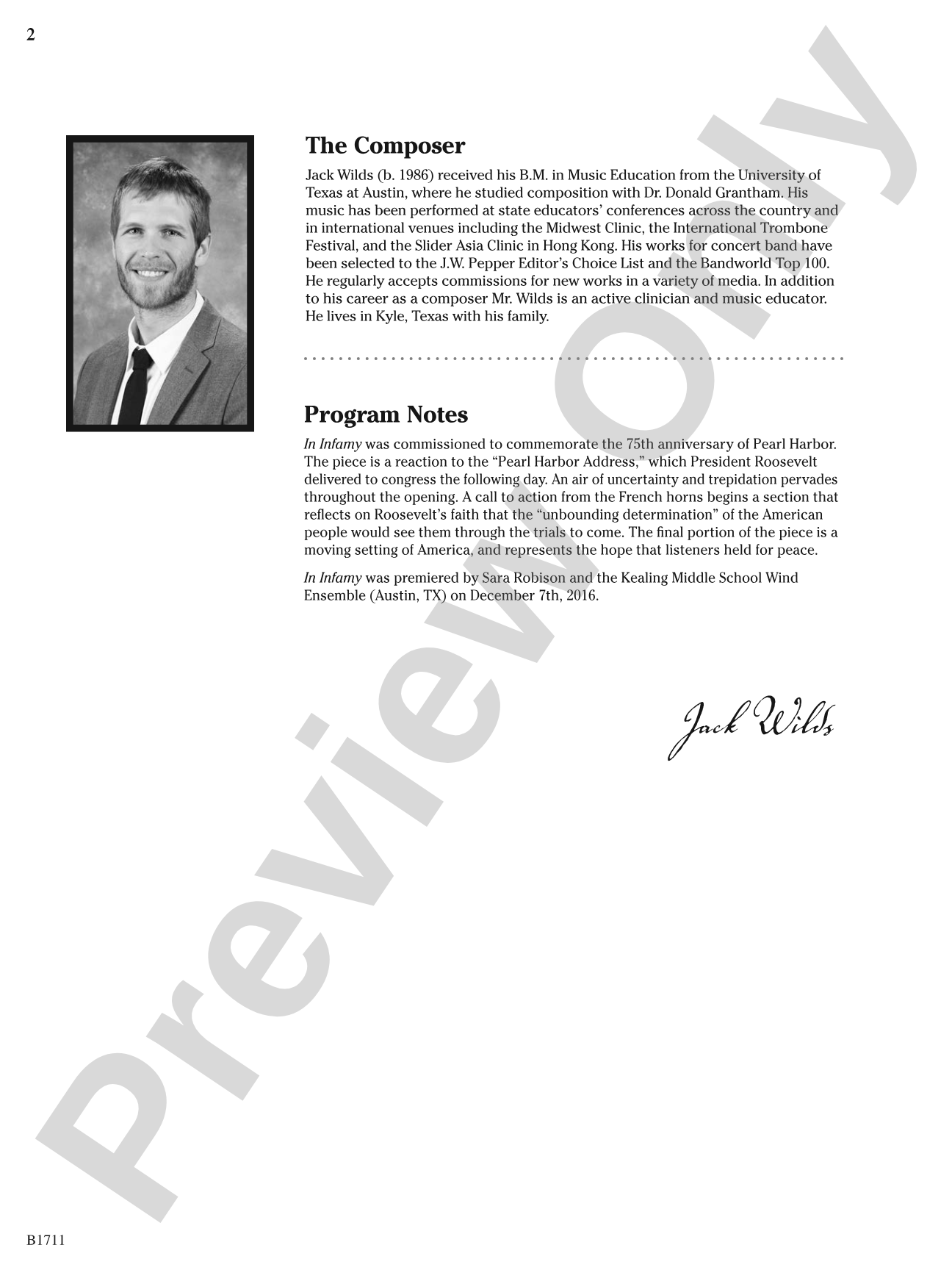
About the Composer: Jack Wilds

Jack Wilds composes across every age and skill level, from children's choirs to professional ensembles. His music has been heard at the International Trombone Festival, the Wyoming Festival, and the Midwest Clinic, and performed by groups ranging from university wind ensembles to members of the New York Philharmonic and Atlanta Symphony.
A former public school band director, Wilds brings direct classroom experience to his compositions for developing musicians. Over 40 of his works for wind ensemble and choir appear on festival required repertoire lists worldwide. He serves as a lecturer in composition, theory, and music technology at Texas State University and as Co-Director of Music at First Presbyterian Church in San Marcos, where he has worked for 13 years alongside his wife Noel.
Why we love this
Wilds captures the emotional complexity of a pivotal historical moment without resorting to heavy-handed patriotism. The arc from foreboding uncertainty through urgent action to resolved hope gives young musicians genuine dramatic material to shape, and the inclusion of "America" anchors the work in familiar harmonic territory while allowing authentic expression.
What to expect
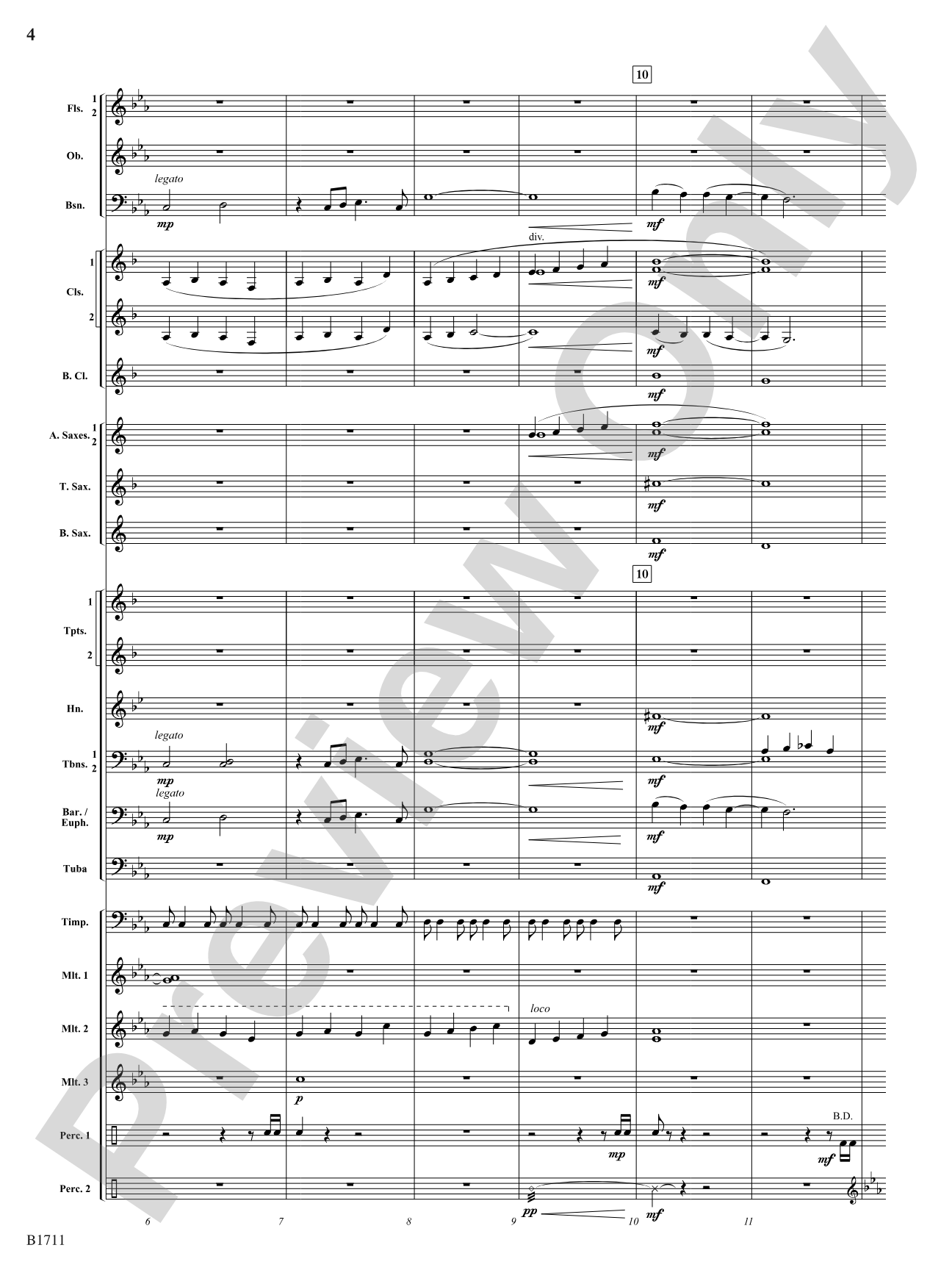
The piece inhabits the emotional world of Roosevelt's address: it begins in shadow and uncertainty, builds into a passionate call to unity and resolve, and settles into quiet, determined hope. The writing never feels didactic; instead it invites musicians into an authentic emotional journey.
Who it's for
Concert bands at Grade 2.5 who are ready for repertoire with genuine dramatic stakes and meaningful historical context. This works especially well for programs celebrating American heritage, memorial services, or ensembles seeking accessible music that respects both the musicians and the subject matter.
How to get the most out of it
- Shape the opening's foreboding character through deliberate control of tone and dynamics; avoid rushing the tension that will contrast with the call to action.
- Balance clarity and blend when the intensity peaks during the central section; younger ensembles often push dynamics but lose definition under pressure.
- Let the hymn setting of "America" breathe; the emotional payoff depends on restraint and sustained line quality rather than climactic volume.
- Consider how the piece's three distinct emotional zones connect; transitions between them deserve as much rehearsal attention as the sections themselves.
How to use it
Program this as the centerpiece of a patriotic concert, or as a meaningful closer for a program exploring American identity and resilience. The Grade 2.5 accessibility makes it feasible for many ensembles, and the historical commissioning gives it natural appeal when marking Pearl Harbor remembrance or other civic occasions.
Skills your students will build
- Reading and executing dramatic dynamic contrasts within a cohesive musical narrative
- Shaping lyrical phrases with sustained tone quality and direction
- Balancing ensemble blend and clarity during intense passages
- Interpreting historical and emotional context to inform artistic choices