
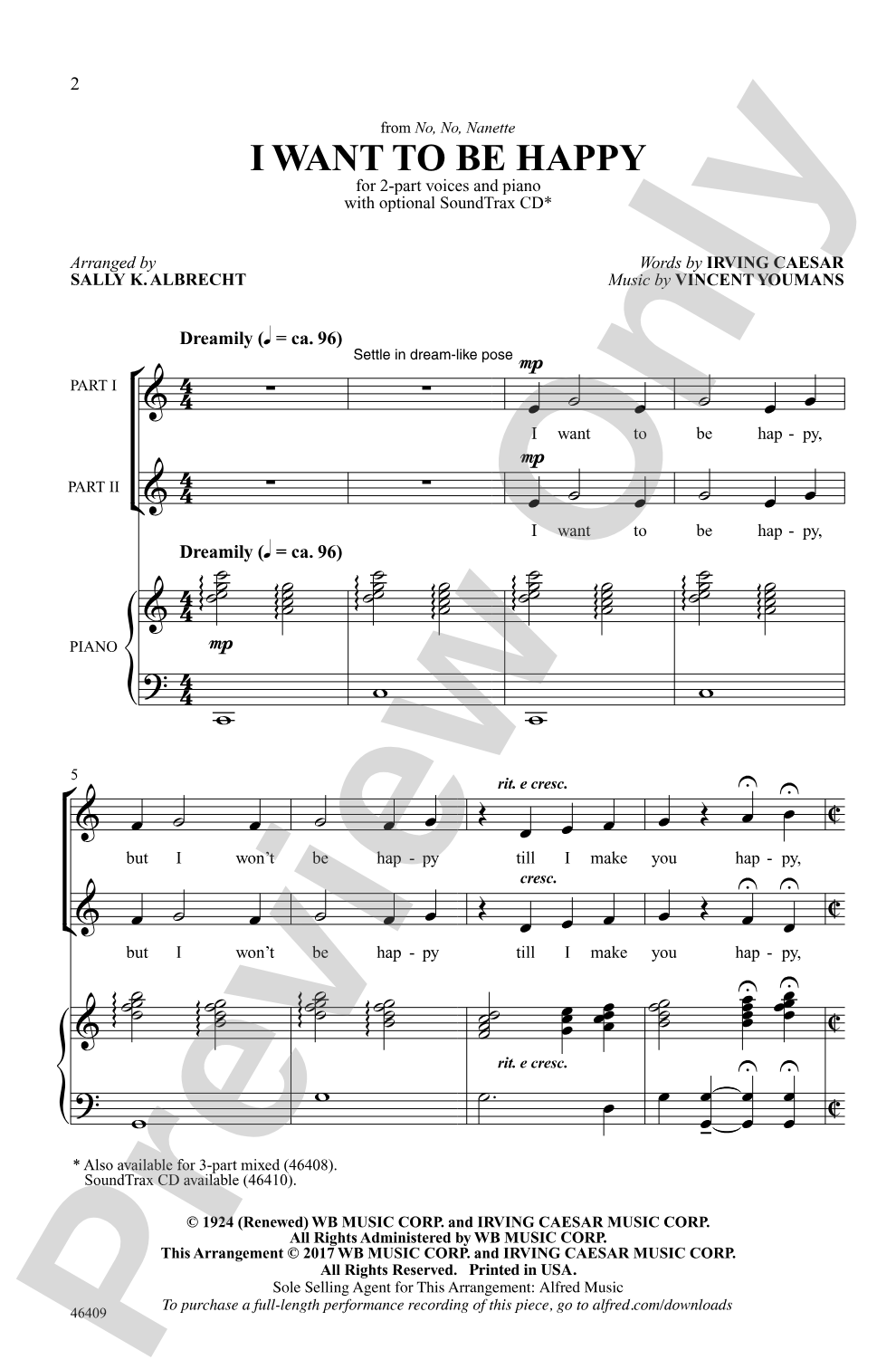

I Want to Be Happy: 2-Part Choral Octavo
Words by Irving Caesar, music by Vincent Youmans / arr. Sally K. Albrecht
Item: 00-PO-0005649
$2.00
Minimum order quantity: 20 copies
One moment…
Related Items
I Want to Be Happy: SoundTrax Digital Audio Download |
$29.99
|
View | |
I Want to Be Happy: 3-Part Mixed Choral Octavo |
$2.00
|
View | |
I Want to Be Happy: 3-Part Mixed Choral Octavo |
$2.00
|
View | |
I Want to Be Happy: 2-Part Choral Octavo |
$2.00
|
View | |
I Want to Be Happy: Choral Octavo SoundTrax CD |
$29.99
|
View |
Description
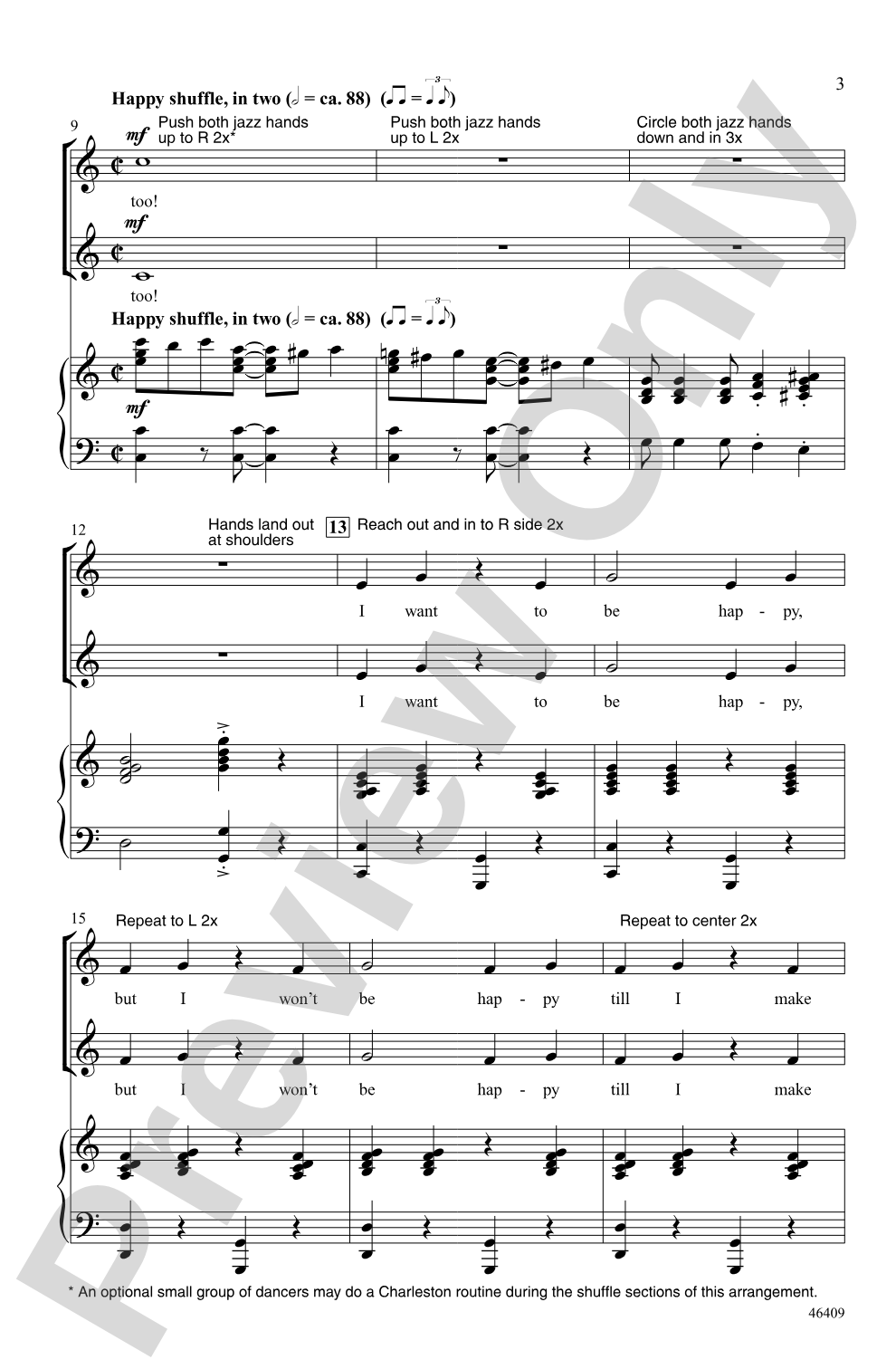
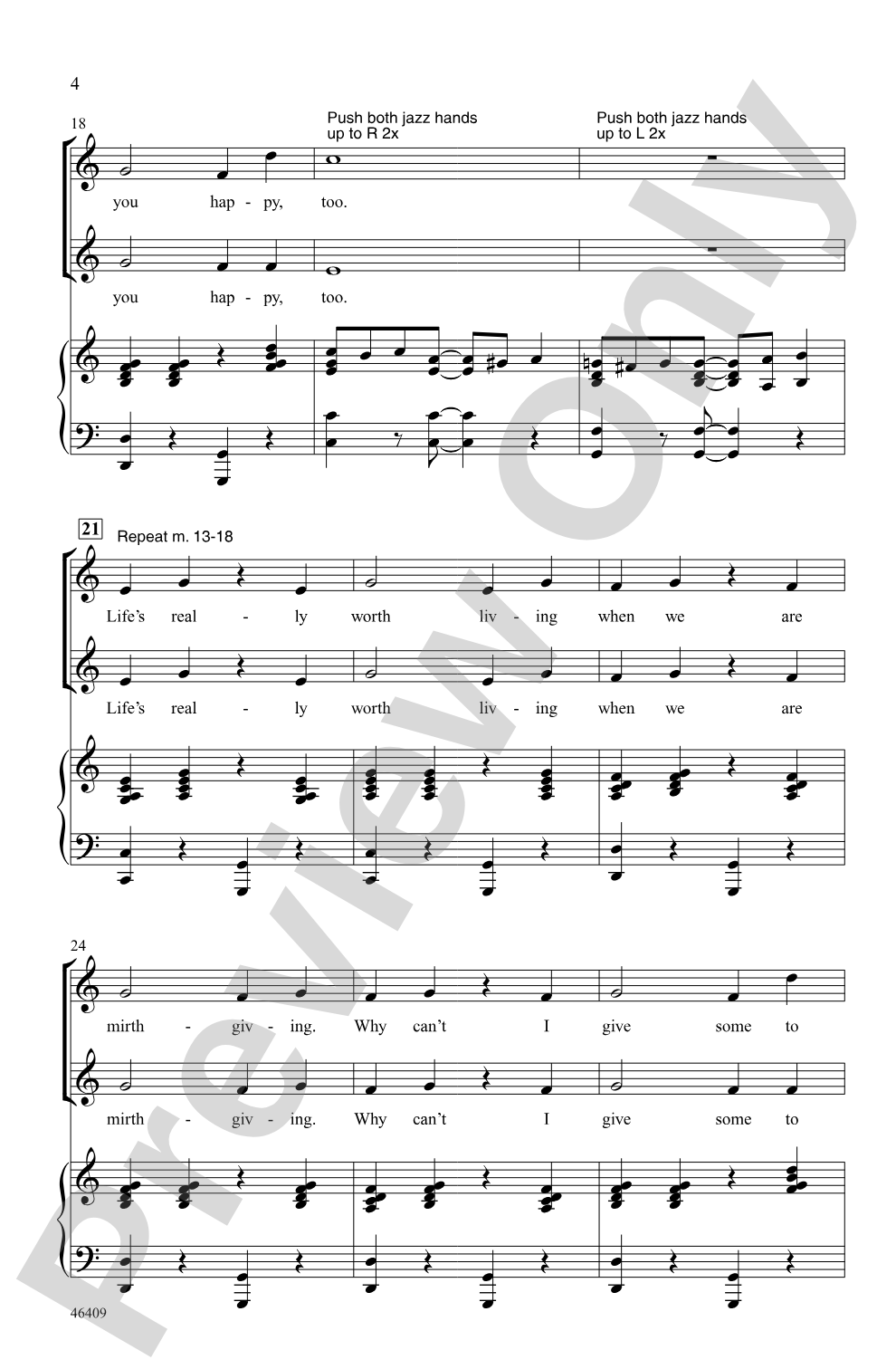
This effervescent number from the 1924 musical No, No, Nanette is a real crowd-pleaser! The melody is introduced by the entire group, then a bubbly counterline adds to the fun. A slower verse section (with optional solos) offers contrast. Choreography suggestions included!


I Want to Be Happy: 2-Part Choral Octavo isn't in MakeMusic Cloud just yet...but it could be. Let us know you'd like to see it, and you'll help shape what comes next. In the meantime, start a free trial and dive into thousands of interactive titles your students can play along with today.
Request This Title
Tell us you want it.
Start Your Free Trial
Explore everything that's ready to play right now.
Sample Audio
1
Audio File
--:--
0:00
0:00
Sample Video
Additional Details
Series:
Alfred Pop Choral Series
Publisher:
Alfred Music
Page Count:
12
SKU:
00-PO-0005649
More about this title
About the Composer: Vincent Youmans
Vincent Youmans (1898-1946) shaped American musical theater during the 1920s with melodies that combined sophisticated harmony and immediate accessibility. His gift was writing songs that felt effortless to sing yet contained genuine musical substance, making his scores enduring teaching tools across skill levels.
Youmans composed the scores for several landmark Broadway productions, including No, No, Nanette, which premiered in 1924 and became one of the decade's most successful shows. His work remains central to choral education because the melodies are memorable, the harmonies support strong voice leading, and the theatrical spirit energizes student performers.
Why we love this
This arrangement captures everything that made No, No, Nanette a Broadway phenomenon without requiring a pit orchestra or elaborate staging. Sally K. Albrecht has shaped the counterline to enhance rather than compete with the primary melody, creating a piece that builds ensemble confidence while keeping the performance fun and visually engaging with choreography cues built into the score.
What to expect
Bright, optimistic, and infectious. The opening unison melody establishes immediate warmth and charm, while the counterline brings a playful effervescence that makes singers smile while they perform. The verse offers a moment of genuine lyrical expression before the energy returns, giving the piece dynamic shape and emotional range.
Who it's for
This octavo works for middle school and high school choirs seeking material that entertains audiences while remaining musically legitimate. It also suits community groups, church choirs, and show choirs looking for Broadway standards with accessible voicing and built-in audience appeal.
How to get the most out of it
- Shape the opening unison melody with forward motion and clear articulation; the bubbly character depends on crisp consonants and a steady, bright tempo.
- Balance the counterline carefully once it enters. It should complement and lighten the main line, not overshadow it. Mark dynamic contrasts in rehearsal to establish this relationship early.
- Use the verse section's optional solo passages as a chance to build confidence in your singers who need featured moments. Even a short solo passage can transform a student's investment in the piece.
- Integrate the choreography suggestions gradually. Start with blocking the main melody section, then layer in movement for the counterline once the singing is secure.
How to use it
Program this as an opener or closer on a concert mixing classical and contemporary repertoire; its theatrical confidence lifts the mood and energizes audiences. It pairs well with other early 20th-century musical theater standards or can anchor a "Songs of Broadway" themed concert alongside other Youmans pieces or contemporary pop arrangements.
Skills your students will build
- Singing in parallel motion with a countermelody while maintaining harmonic balance
- Sustaining rhythmic integrity and ensemble precision in an up-tempo style
- Shaping a unison melody with unified articulation and phrasing
- Interpreting contrast between verse (slower, potentially solo) and refrain (full ensemble) sections
- Integrating choreography and movement into performance without disrupting vocal focus