

I Want to Be Happy: 3-Part Mixed Choral Octavo
Words by Irving Caesar, music by Vincent Youmans / arr. Sally K. Albrecht
Item: 00-PO-0005648
$2.00
Minimum order quantity: 20 copies
One moment…
Description
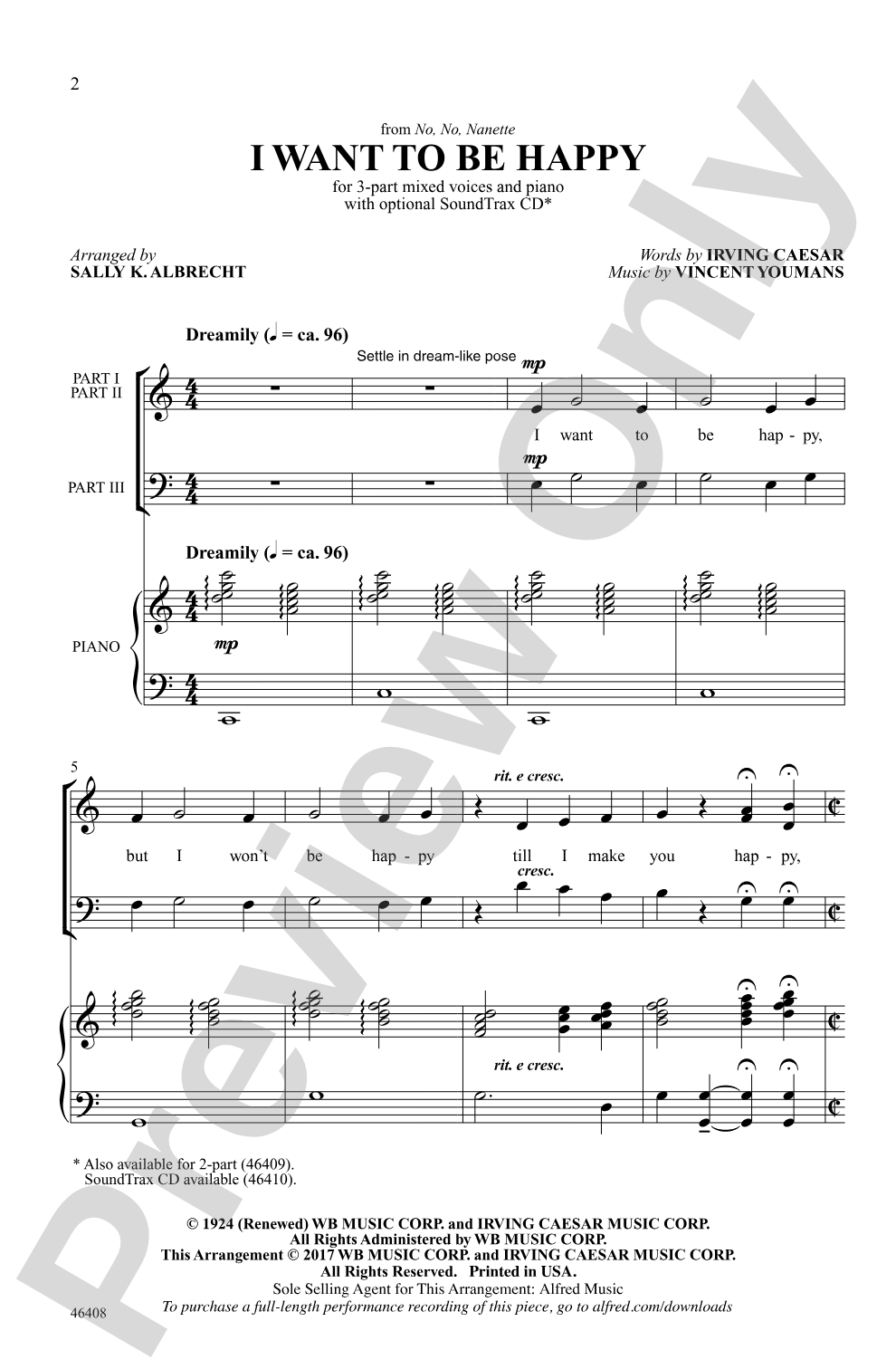
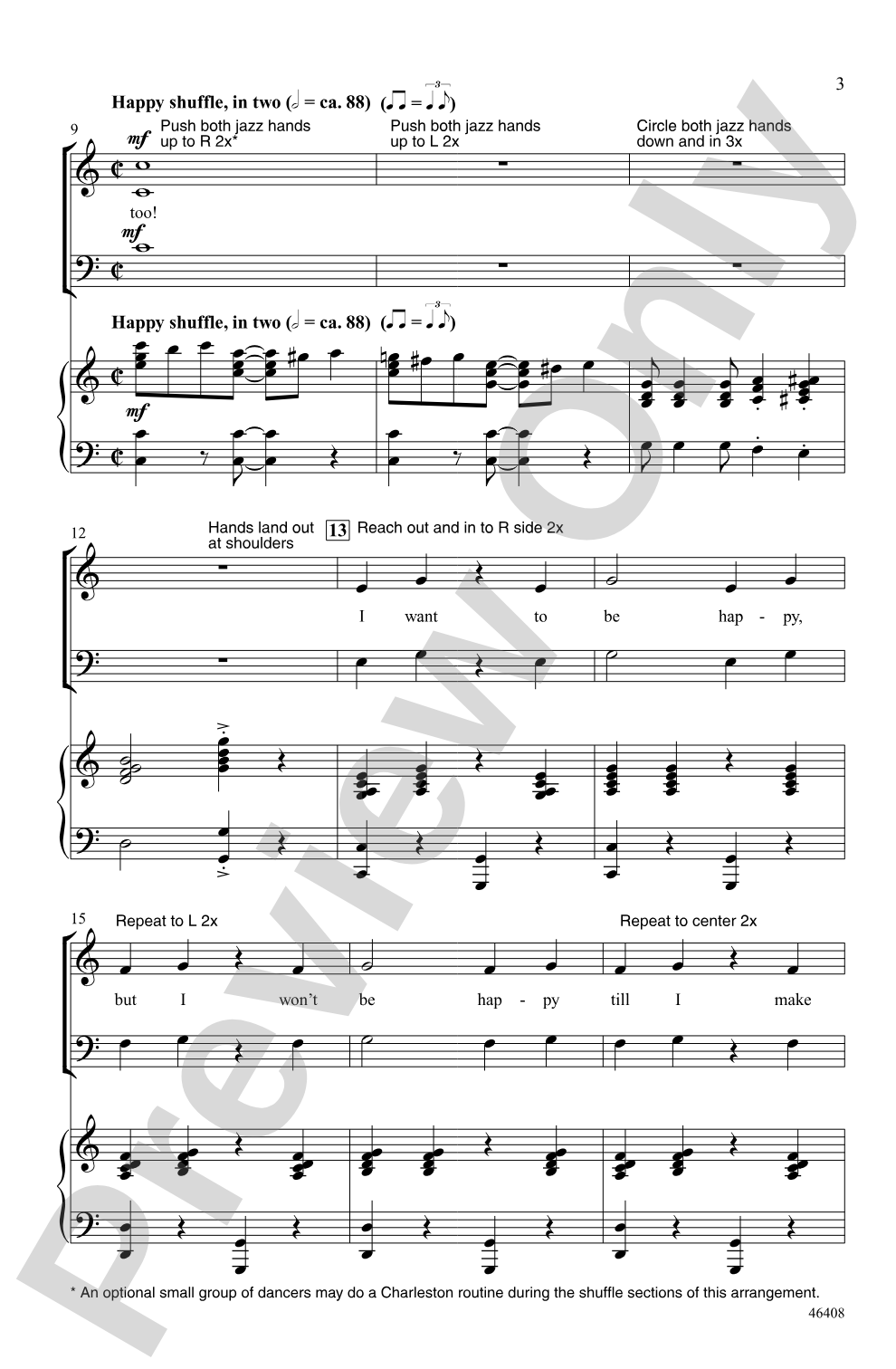
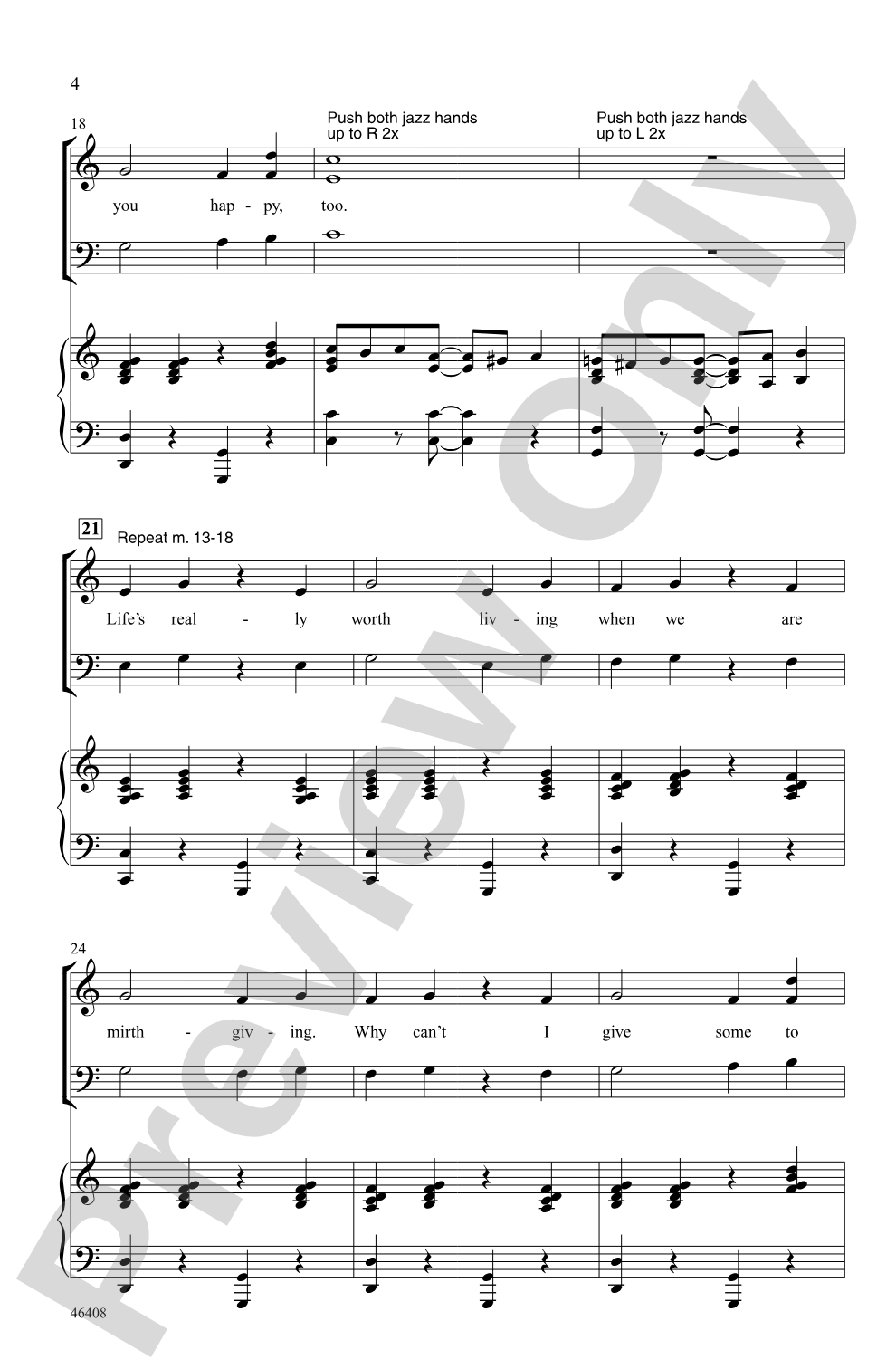
This effervescent number from the 1924 musical No, No, Nanette is a real crowd-pleaser! The melody is introduced by the entire group, then a bubbly counterline adds to the fun. A slower verse section (with optional solos) offers contrast. Choreography suggestions included!


I Want to Be Happy: 3-Part Mixed Choral Octavo isn't in MakeMusic Cloud just yet...but it could be. Let us know you'd like to see it, and you'll help shape what comes next. In the meantime, start a free trial and dive into thousands of interactive titles your students can play along with today.
Request This Title
Tell us you want it.
Start Your Free Trial
Explore everything that's ready to play right now.
Sample Audio
1
Audio File
--:--
0:00
0:00
Sample Video
No sample videos found.
Additional Details
Series:
Alfred Pop Choral Series
Publisher:
Alfred Music
Page Count:
12
SKU:
00-PO-0005648
More about this title
About the Composer: Vincent Youmans
Vincent Youmans (1898-1946) composed some of Broadway's most enduring melodies during the 1920s and early 1930s. His gift for writing instantly singable, rhythmically propulsive tunes made shows like No, No, Nanette and Hit the Deck audience favorites then and now. Youmans understood what made a song stick: clear melodic contour, harmonic freshness, and an infectious sense of fun.
For music educators, Youmans represents a goldmine of accessible yet well-crafted material. His songs teach students how to phrase through a strong melodic line, navigate syncopation naturally, and connect with an audience through pure joy and energy. His legacy reminds us that popular music and musical skill are not mutually exclusive.
Why we love this
Sally K. Albrecht's arrangement captures every ounce of buoyancy in this 1924 standard while building it thoughtfully for young mixed choirs. The interplay between the main melody and that bubbly counterline keeps everyone engaged and invested, and the optional solos in the verse create natural opportunities for your singers to shine. Choreography notes make this a natural fit for concert or pops programming where you want genuine crowd connection.
What to expect
Imagine 1924 optimism bottled into sound. The opening is pure sunshine, with a melody that practically sings itself. When the counterline enters, the texture blooms into something unexpectedly clever and modern. The slower verse offers a moment of softness, almost intimate, before the energy bounces back. It's impossible not to smile during this piece, whether you're singing or listening.
Who it's for
Mixed choirs in grades 6-12 and adult community choruses seeking a show-stopping opener or closer with musical substance. The three-part voicing keeps arrangements accessible without sacrificing the sophistication of the counterline. This works especially well for groups building confidence in rhythm and stylistic flexibility.
How to get the most out of it
- Establish the melody's rhythmic vitality in early rehearsals. This isn't a legit ballad; the bounce comes from crisp articulation and forward motion, even in slower passages.
- Shape the counterline with independence but not aggression. It should feel conversational with the main melody, not competitive. Blend it slightly lighter than the top line.
- If using optional solos in the verse, give singers time to own their moment without rushing. A little breathing room actually heightens the drama of contrast.
- The accompaniment track (when used) locks this arrangement into a specific tempo and groove. Rehearse with it early so students internalize the rhythmic pocket before performing live.
How to use it
Program this as a springboard between more serious works on a concert. Its theatrical energy and built-in choreography suggestions make it ideal for a pops concert, spring show, or end-of-year celebration. It also serves as a terrific morale-builder early in the season when you want to remind singers why they love making music together.
Skills your students will build
- Rhythmic precision in syncopated passages and jazz-influenced articulation
- Balancing independent melodic lines (countermelody) within a three-part texture
- Sustaining forward motion and stylistic character across tempo changes (verse to chorus)
- Confidence in optional solo passages with harmonic support
- Phrasing a strong melodic line through rhythmic vitality rather than legit vocal production