
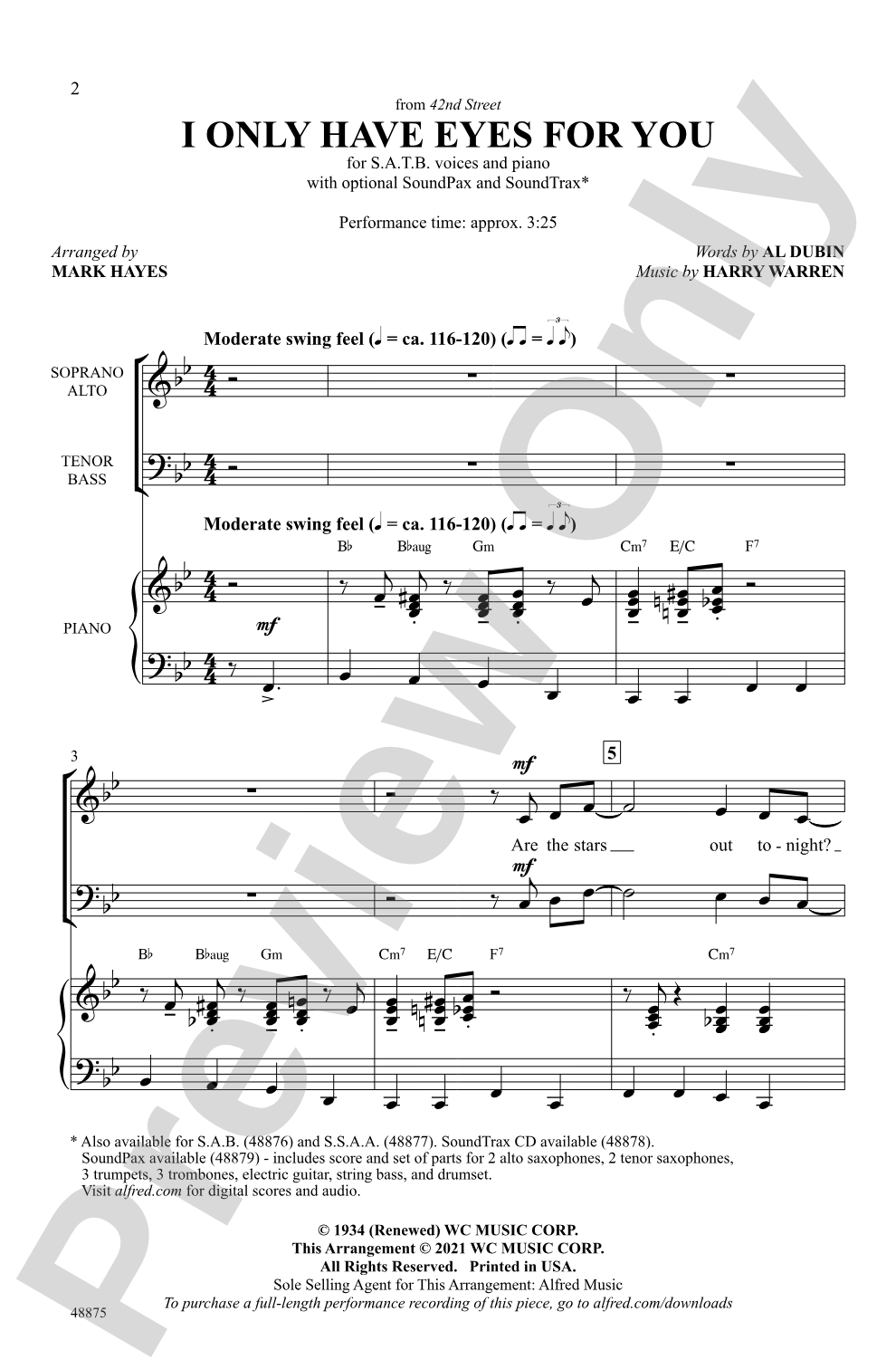
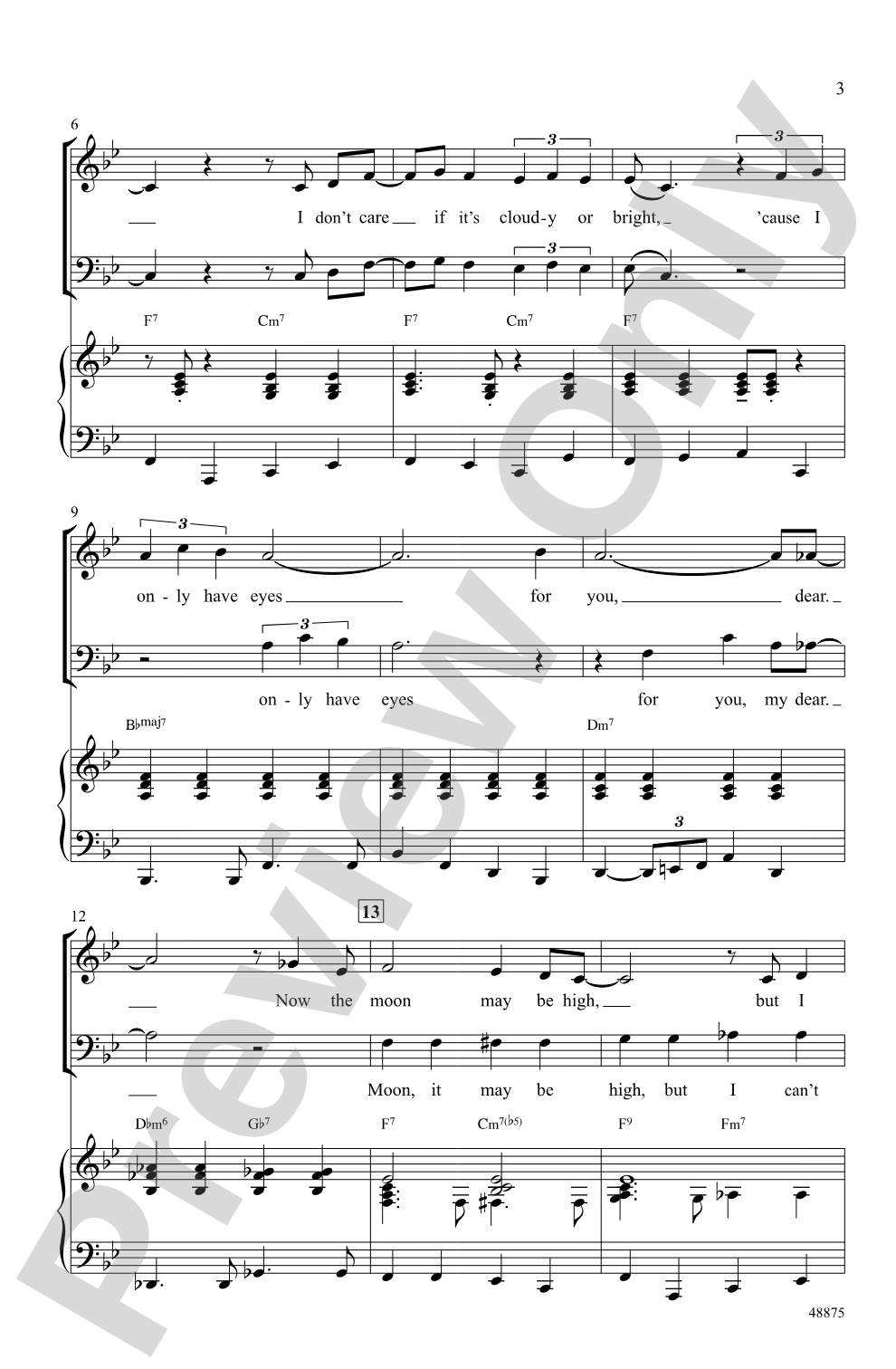
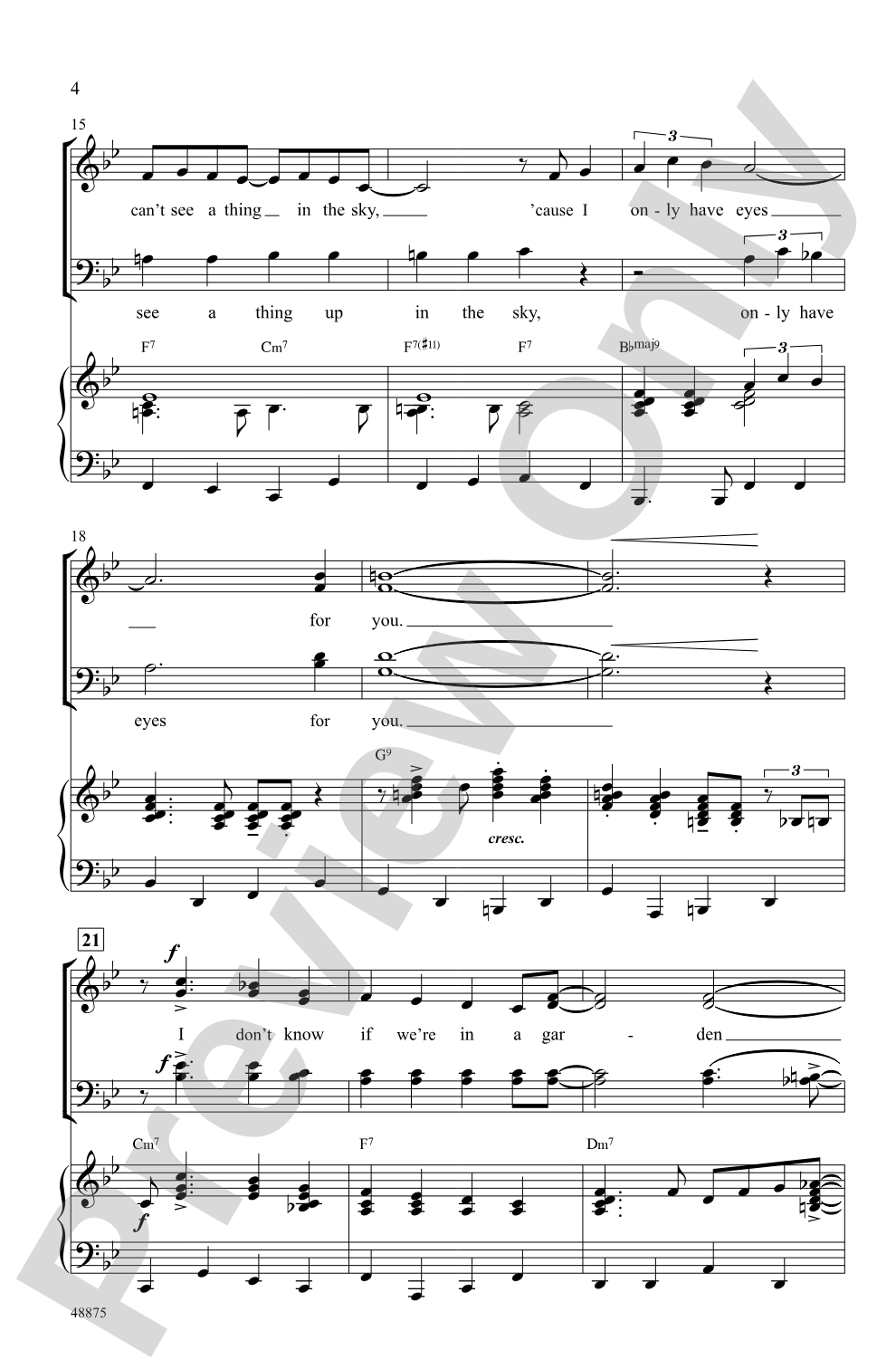

I Only Have Eyes for You: SATB Choral Octavo
Words by Al Dubin, music by Harry Warren / arr. Mark Hayes
Item: 00-PO-0006665
$2.25
Minimum order quantity: 20 copies
One moment…
Related Items
I Only Have Eyes for You: SoundTrax Digital Audio Download |
$29.99
|
View | |
I Only Have Eyes for You: SAB Choral Octavo |
$2.25
|
View | |
I Only Have Eyes for You: SSA Choral Octavo |
$2.25
|
View | |
I Only Have Eyes for You: Choral SoundPax |
$50.00
|
View | |
I Only Have Eyes for You: SATB Choral Octavo |
$2.25
|
View | |
I Only Have Eyes for You: SAB Choral Octavo |
$2.25
|
View | |
I Only Have Eyes for You: SSA Choral Octavo |
$2.25
|
View | |
I Only Have Eyes for You: Choral Octavo SoundTrax CD |
$29.99
|
View | |
I Only Have Eyes for You: Choral SoundPax |
$50.00
|
View |
Description
This swingin' standard made Rolling Stones' "500 Greatest Songs of All Time" list and has been recorded by various artists from The Flamingos and Art Garfunkel to Michael Bublé. This big-band style arrangement includes a dash of scat singing toward the end and plenty of jazzy syncopations along the way. Besides the obvious meaning of the title, a current-day twist hints at smizing over a face mask (wink, wink).


Discover MakeMusic Cloud: thousands of interactive titles your students can play along with today.
Sample Audio
1
Audio File
--:--
0:00
0:00
Sample Video
1 / 2
Additional Details
Series:
Alfred Pop Choral Series
Publisher:
Alfred Music
Page Count:
16
SKU:
00-PO-0006665
More about this title
About the Composer: Harry Warren
Harry Warren (1893-1981) composed over 800 songs during a career spanning nearly six decades, making him one of the most prolific songwriters in American popular music. His melodies for film studios and Broadway earned him three Academy Awards, and standards like "I Only Have Eyes for You," "Chattanooga Choo Choo," and "That's Amore" remain central to the American songbook. Warren's gift for crafting memorable, singable lines made his work ideal for both professional performers and amateur musicians.
Why we love this
Mark Hayes brings swagger and accessibility to this timeless standard without sacrificing harmonic sophistication. The arrangement's playful nods to current culture (the smizing reference) give singers permission to inhabit the song freshly, while the scat section and syncopated rhythms keep the energy propulsive and fun to rehearse. You get a crowd-pleaser that actually challenges your section work and tuning.
What to expect
Smooth and buoyant, with just enough spice to keep things interesting. The energy sits somewhere between a classic doo-wop warmth and contemporary jazz sophistication; singers will feel the lift of a well-swung phrase and the satisfaction of locking into tight, syncopated rhythms together.
Who it's for
Choirs comfortable with jazz vocabulary and rhythmic independence will thrive with this arrangement. It works for concert and popular music programs alike, and it's accessible enough for good high school and community choirs while offering enough harmonic and rhythmic detail to keep advanced singers engaged.
How to get the most out of it
- Anchor the swing feel by having your rhythm section (or recorded accompaniment) lock the backbeat first; once they're settled, the choir will find the pocket naturally rather than rushing or dragging.
- Bring out the scat singing moment as a playful spotlight. It works best when the section sounds spontaneous and conversational, not metronomic, so encourage singers to listen to each other and respond.
- Balance the syncopated lines so they sing through the shape of the phrase rather than hitting each rhythmic accent in isolation; this keeps the swing fluid and prevents a choppy feel.
- The title's double meaning (the face mask twist) gives you a permission structure to direct with some lightness and humor, which will loosen up your ensemble and make the jazzy articulations more natural.
How to use it
This works beautifully as a lighter moment in a mixed concert, especially if you're pairing classical or contemporary choral work with something more accessible. The recorded accompaniment option makes it practical for pops concerts or cabaret-style programs where a full band isn't available. Its presence on the Rolling Stones' all-time list gives you a natural talking point when introducing it to your singers.
Skills your students will build
- Swing rhythms and syncopated articulation
- Jazz chord changes and harmonic progression
- Blending voices in close harmony
- Scat singing and rhythmic freedom
- Phrasing and legit placement in a contemporary idiom