I'm Homeward Bound Cover Image

I'm Homeward Bound: 2-Part Choral Octavo

$2.05 USD
Sale price  $2.05 USD Regular price 
Skip to product information
I'm Homeward Bound Cover Image

I'm Homeward Bound: 2-Part Choral Octavo

Words and music by Mary Donnelly and George L. O. Strid

Item: 00-49670

makemusic Cloud badge

Need it now?

Buy Digital Version
$2.05
Shipped

One moment…

Description
There's a place for this lyrical folk-inspired original on every program. It's a gentle ballad with traditional treble harmony, readable rhythms, and a tuneful melody sung in the most comfortable range. The optional flute part (available as a download) is as legato and flowing as the tender voices and arpeggiated piano. "Winding road, western wind, golden moon, silver stars . . . take me home."

Don't just read it, hear it, play along with it, and watch your students grow with it. In MakeMusic Cloud, I'm Homeward Bound: 2-Part Choral Octavo comes alive with professional accompaniment, adjustable tempo, and built-in practice tools that turn solo practice into real progress.

Sample Pages

Sample Audio
0:00
0:00
Sample Video
Additional Details
Series: Alfred Choral Designs
Publisher: Alfred Music
Page Count: 12
UPC: 038081567570
SKU: 00-49670

More about this title

About the Composer: Mary Donnelly
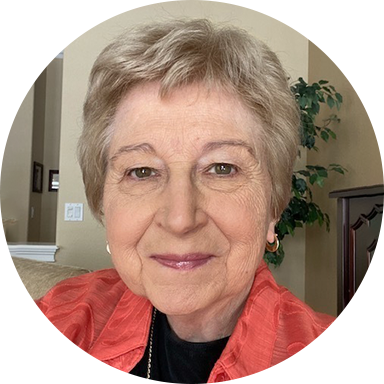
Mary Donnelly

Mary Donnelly grew up in Reno, Nevada, and studied English and French at the University of Nevada before discovering her passion for music education. During her undergraduate years, she organized children's choruses, which sparked her decision to pursue teacher certification and later earn a Master's Degree in Education from Lesley College, where she focused on arts integration across the curriculum.

For three decades, Donnelly taught general music and choir in the Washoe County School District, retiring after a career dedicated to making music accessible to young singers. In 1985, she began collaborating with George Strid when their principal challenged them to write a musical for Reading Week; that partnership has since produced over two hundred songs and twenty-five musicals. She holds memberships in ACDA, NEA, and ASCAP, and continues to live in Reno with her husband.

Why we love this

This piece embodies what makes Donnelly's writing so effective in the classroom: it trusts young singers with genuine melody and emotion without overcomplicating the technical demands. The lyrical arc and accessible range create an immediate sense of accomplishment, while the optional flute part offers a natural extension for ensembles with instrumentalists and adds shimmer without demanding precision.

What to expect

Warm and introspective, like watching a sunset at the end of a long journey. The gentle harmony and flowing melody create a sense of peaceful anticipation, with imagery that feels both personal and universal.

Who it's for

This octavo works beautifully for middle school and high school treble choirs seeking repertoire that sounds mature without overwhelming singers early in their choral experience. It's equally valuable for community or recreational choirs drawn to folk-inspired material with lyrical appeal.

How to get the most out of it

  • Sustain the arpeggiated piano accompaniment so it matches the legato character of the vocal line; avoid letting it sound rhythmic or choppy.
  • Shape phrases around the poetic imagery ("winding road," "golden moon," "silver stars") rather than resting at bar lines, creating a sense of forward motion through the journey home.
  • If including the optional flute part, balance it as an obbligato voice rather than a solo; it should flow alongside and through the choir, not float above it.
  • Encourage singers to think about the comfort of this melody as a strength; simplicity and sincerity in delivery matter far more than dramatic interpretation.

How to use it

Program this as a tender moment between more energetic selections, or as a closer that leaves audiences reflective rather than celebratory. It pairs well alongside other folk-inspired or Americana-influenced repertoire, and works equally effectively in concert and festival contexts.

Skills your students will build

  • Sustaining legato phrasing across longer melodic lines
  • Balancing inner harmony with the top line melody
  • Reading and maintaining arpeggiated accompaniment patterns
  • Interpreting poetic text through musical shape
  • Blending optional instrumental parts with voices

You May Also Like
