
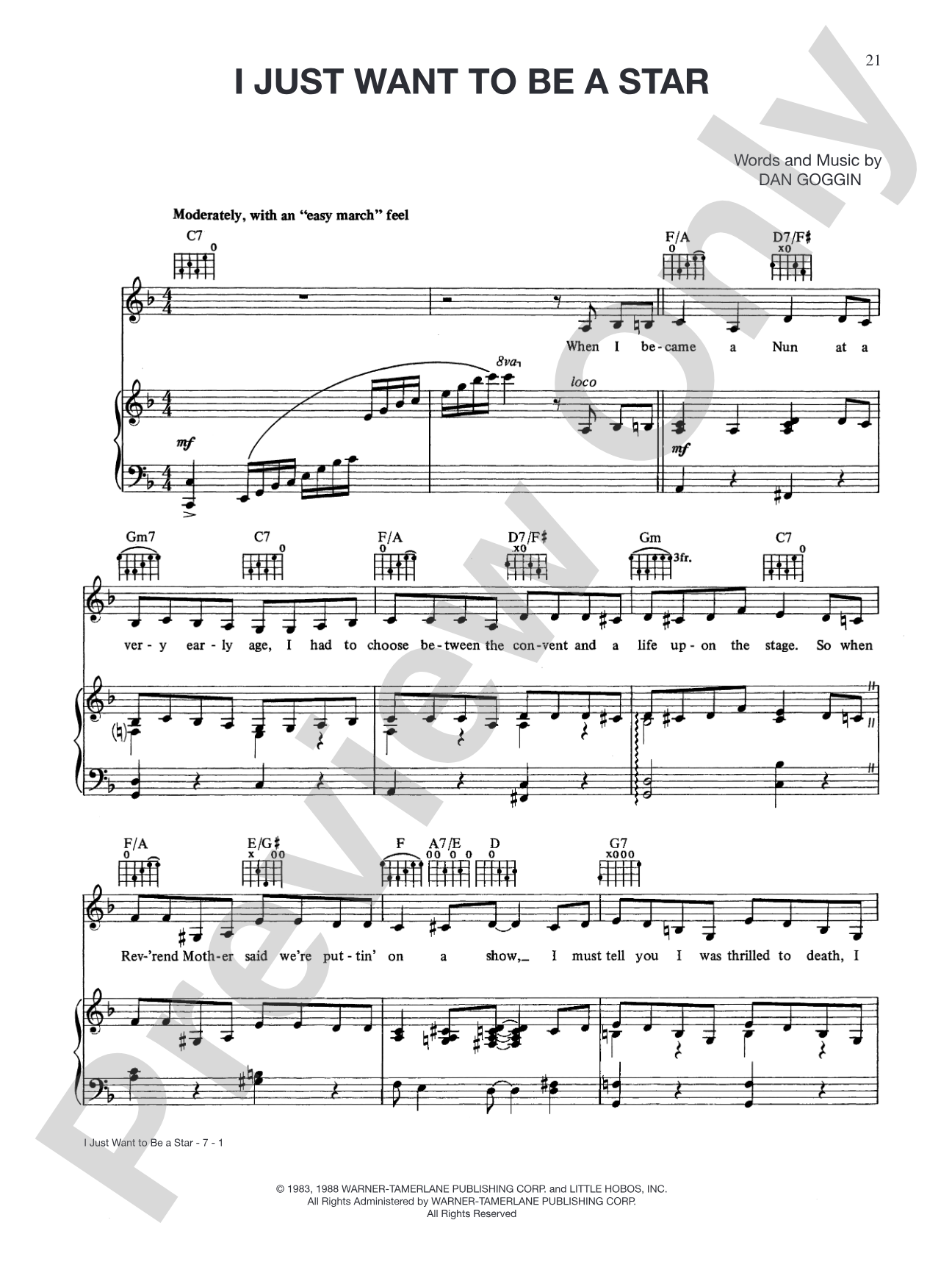
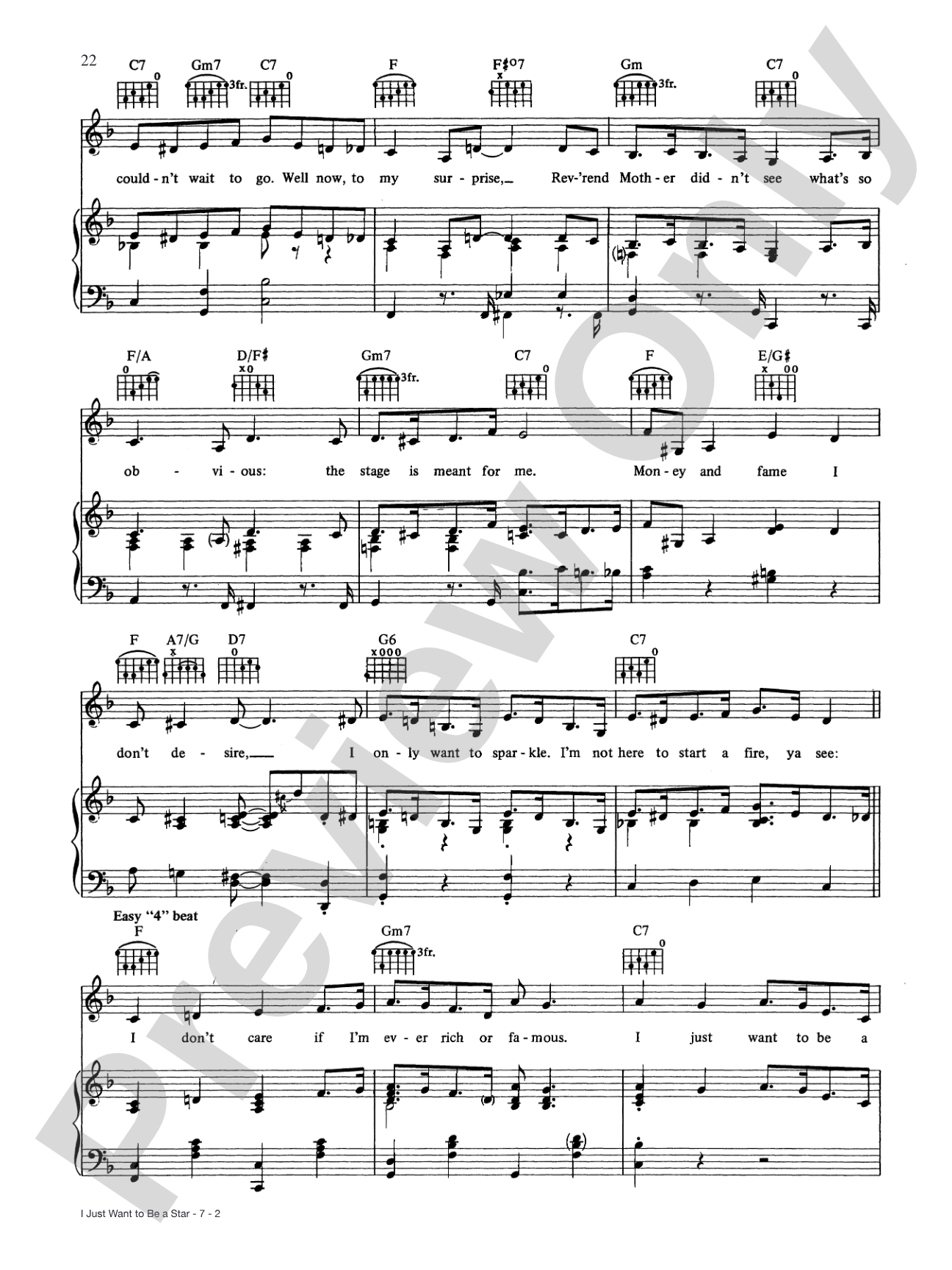

I Just Want to Be a Star (from Nunsense): Piano/Vocal/Chords
Highlights from 6 Classic Nunsense Musicals
Music and lyrics by Dan Goggin
Item: 00-PS-0016095
$5.99
One moment…
Related Items
Nunsense Is Habit-Forming (from Nunsense): Piano/Vocal/Chords |
$5.99
|
View | |
Growing Up Catholic (from Nunsense): Piano/Vocal/Chords |
$4.99
|
View | |
I Could’ve Gone to Nashville (from Nunsense): Piano/Vocal/Chords |
$5.99
|
View | |
Holier Than Thou (from Nunsense): Piano/Vocal/Chords |
$5.99
|
View | |
What Would Elvis Do? (from Nunsense II): Piano/Vocal/Chords |
$9.99
|
View | |
I Am Here to Stay (from Nunsense II): Piano/Vocal/Chords |
$5.99
|
View | |
No One Cared Like You (from Nunsense II): Piano/Vocal/Chords |
$5.99
|
View | |
Play a Country Enut (from Sister Amnesia's Country Western Nunsense Jamboree): Piano/Vocal/Chords |
$5.99
|
View | |
Every Day of the Week Is a Saturday (from Sister Amnesia's Country Western Nunsense Jamboree): Piano/Vocal/Chords |
$5.99
|
View | |
The Delta Queen (from Sister Amnesia's Country Western Nunsense Jamboree): Piano/Vocal/Chords |
$5.99
|
View | |
All I Want for Christmas (from Nuncrackers): Piano/Vocal/Chords |
$5.99
|
View | |
The Christmas Box (from Nuncrackers): Piano/Vocal/Chords |
$5.99
|
View | |
Santa Ain’t Comin’ to Our House (from Nuncrackers): Piano/Vocal/Chords |
$5.99
|
View | |
A Love Like This (from Meshuggah-Nuns): Piano/Vocal/Chords |
$5.99
|
View | |
I’ll Find a Song to Sing (from Meshuggah-Nuns): Piano/Vocal/Chords |
$5.99
|
View | |
Say It in Yiddish (from Meshuggah-Nuns): Piano/Vocal/Chords |
$5.99
|
View | |
If I Were a Catholic (from Meshuggah-Nuns): Piano/Vocal/Chords |
$4.99
|
View | |
My Fat Is My Fortune (from Meshuggah-Nuns): Piano/Vocal/Chords |
$5.99
|
View | |
Life Is a Game of Chance (from Nunsensations): Piano/Vocal/Chords |
$5.99
|
View | |
A Long, Long Way (from Nunsensations): Piano/Vocal/Chords |
$5.99
|
View | |
I Left Him There (from Nunsensations): Piano/Vocal/Chords |
$4.99
|
View | |
Double or Nothin’ (from Nunsensations): Piano/Vocal/Chords |
$4.99
|
View |
Description
Commemorate the 25th anniversary of Nunsense with Nunsense: The 25th Nunniversary Songbook, arranged for Piano/Vocal/Chords.
Titles: A Long, Long Way * A Love Like This * All I Want for Christmas * The Christmas Box * The Delta Queen * Double or Nothin' * Every Day of the Week Is a Saturday * Growing Up Catholic * Holier Than Thou * I Am Here to Stay * I Could've Gone to Nashville * I Just Want to Be a Star * I Left Him There * I'll Find a Song to Sing * If I Were a Catholic * Life Is a Game of Chance * My Fat Is My Fortune * No One Cared Like You * Nunsense Is Habit-Forming * Play a Country Enut * Santa Ain't Comin' to Our House * Say It in Yiddish * What Would Elvis Do?.


Titles: A Long, Long Way * A Love Like This * All I Want for Christmas * The Christmas Box * The Delta Queen * Double or Nothin' * Every Day of the Week Is a Saturday * Growing Up Catholic * Holier Than Thou * I Am Here to Stay * I Could've Gone to Nashville * I Just Want to Be a Star * I Left Him There * I'll Find a Song to Sing * If I Were a Catholic * Life Is a Game of Chance * My Fat Is My Fortune * No One Cared Like You * Nunsense Is Habit-Forming * Play a Country Enut * Santa Ain't Comin' to Our House * Say It in Yiddish * What Would Elvis Do?.
I Just Want to Be a Star (from Nunsense): Piano/Vocal/Chords isn't in MakeMusic Cloud just yet...but it could be. Let us know you'd like to see it, and you'll help shape what comes next. In the meantime, start a free trial and dive into thousands of interactive titles your students can play along with today.
Request This Title
Tell us you want it.
Start Your Free Trial
Explore everything that's ready to play right now.
Sample Audio
No sample audio found.
Sample Video
No sample videos found.
Additional Details
Publisher:
Alfred Music
Page Count:
168
SKU:
00-PS-0016095
More about this title
About the Composer: Dan Goggin
Dan Goggin created Nunsense in 1985, launching one of off-Broadway's longest-running comedies and establishing himself as a distinctive voice in musical theater. His work combines sharp wit with surprisingly sophisticated musical writing, drawing from cabaret traditions, pop idioms, and music theater standards to create songs that work equally well as comedy vehicles and genuine musical moments.
Why we love this
This collection captures the full comedic and musical scope of Nunsense in a single, practical volume. The songs range from tender character moments to outright comedic showstoppers, giving you genuine variety for student showcases, community theater productions, and recital programs where humor and heart matter equally.
What to expect
Expect genuine joy alongside irreverent humor. These songs capture the warmth of a community of misfits while never losing their satirical edge. The musical landscape shifts constantly: one moment you're in a tender character moment, the next you're navigating a country pastiche or a Yiddish novelty number. The writing respects both the singers and the audience.
Who it's for
Music directors staging Nunsense or building a concert featuring its songs; pianists and singers preparing audition material from this musical; drama teachers and community theater programs looking for contemporary musical theater repertoire with strong ensemble and solo options.
How to get the most out of it
- Balance the comedy with genuine vocal commitment; these songs earn their laughs through musical specificity and character clarity, not through winking at the audience.
- Use the chord symbols to stay flexible with accompaniment. You can play the full piano score as written or strip it down to essential harmonic support depending on your rehearsal space and performance context.
- Pay attention to the marked tempos and style indications. Songs tagged as country, cabaret, or novelty numbers have specific musical personalities that shape how the lyrics land.
- In ensemble numbers, anchor the rhythm section early so singers can layer their parts confidently without losing the pulse to the comedy.
How to use it
Curate a Nunsense-themed concert by pulling contrasting selections from this book, or use individual songs as scene breaks and transitions in a broader variety show. Assign songs as audition material for spring musicals or as showcase pieces for student performers preparing college applications. The full 25th anniversary collection works as a complete production score or as a cherry-picked repertoire resource.
Skills your students will build
- Singing character-driven comedy songs with musical specificity rather than mugging
- Reading and interpreting style markings across multiple genres (cabaret, country, novelty, standard theater)
- Working with accompaniment from chord charts and full piano scores interchangeably
- Ensemble awareness in group numbers while maintaining individual characterization
- Building comedic timing through musical phrasing and rhythmic clarity