
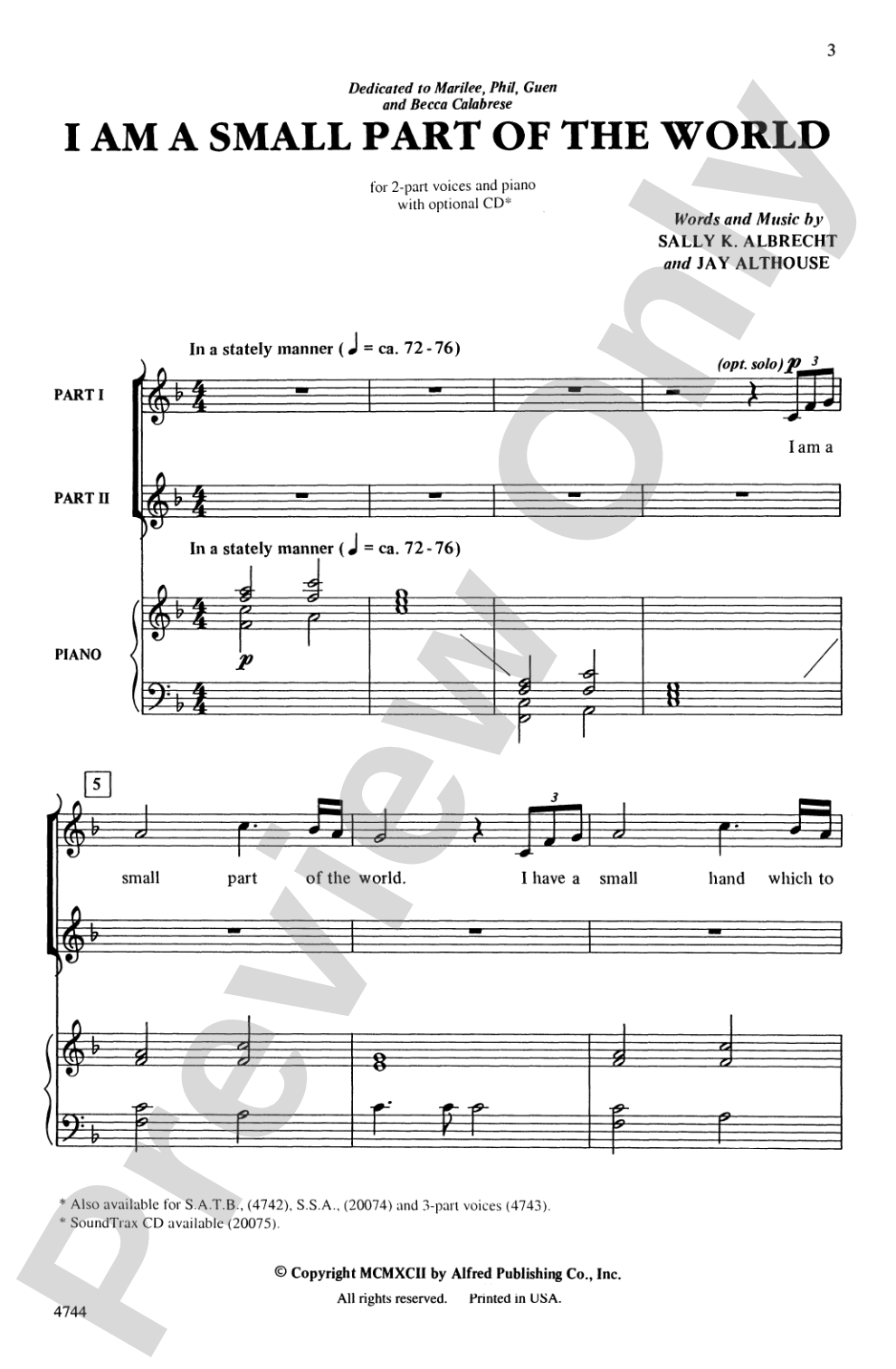
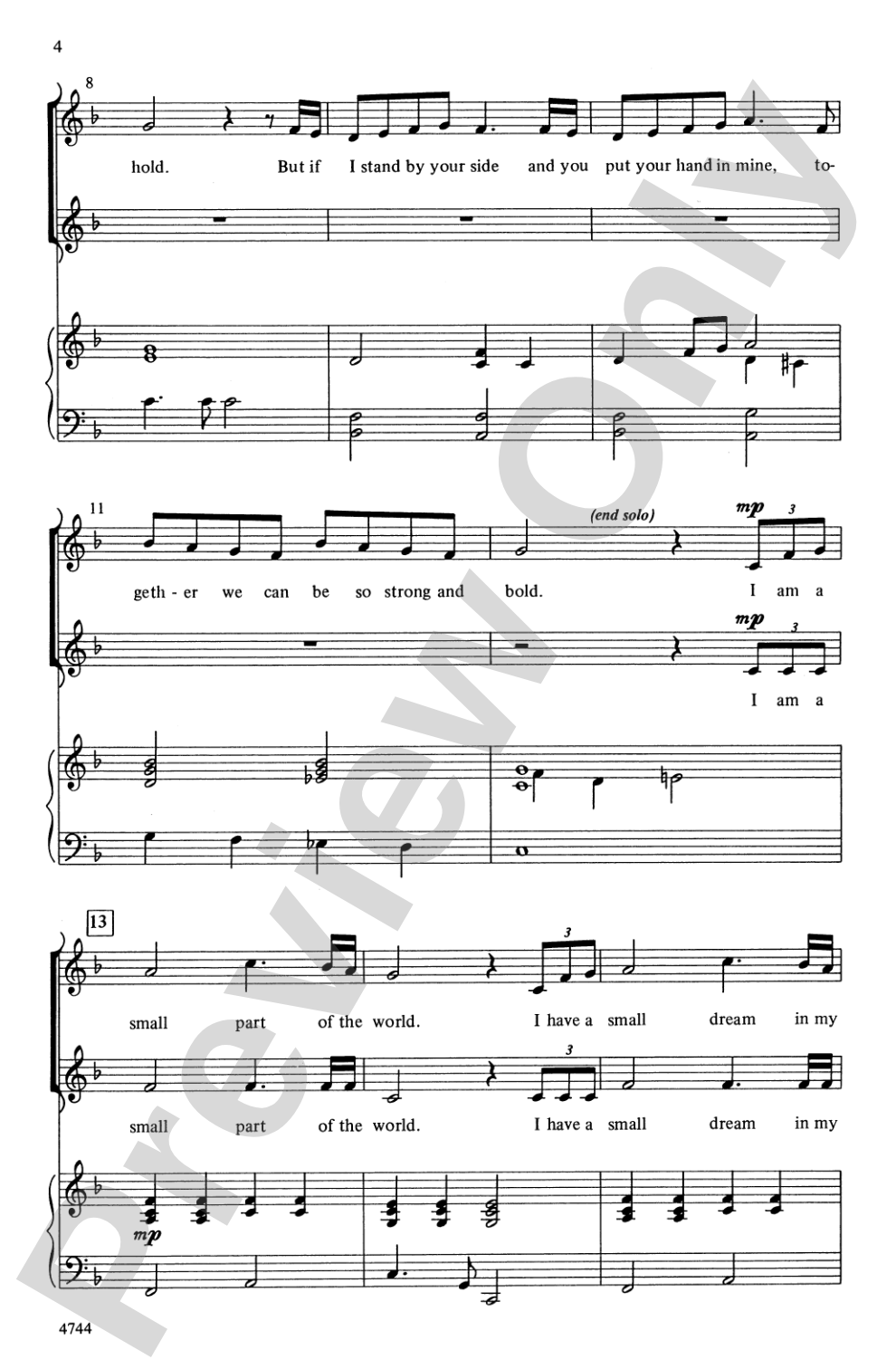

I Am a Small Part of the World: 2-Part Choral Octavo
Music by Sally K. Albrecht and Jay Althouse
Item: 00-PO-0006986
$2.05
Minimum order quantity: 20 copies
Pickup currently not available
Related Items
I Am a Small Part of the World: SATB Choral Octavo |
$2.25
|
View | |
I Am a Small Part of the World: 3-Part Mixed Choral Octavo |
$2.05
|
View | |
I Am a Small Part of the World: SSA Choral Octavo |
$2.25
|
View | |
I Am a Small Part of the World: 3-Part Mixed Choral Octavo |
$2.05
|
View | |
I Am a Small Part of the World: SSA Choral Octavo |
$2.25
|
View | |
I Am a Small Part of the World: 2-Part Choral Octavo |
$2.05
|
View | |
I Am a Small Part of the World: Choral Octavo SoundTrax CD |
$27.99
|
View |
Description
A stirring text combined with solid choral writing make this an ideal choice for concerts and festivals. Perfect for massed choirs or for any size choir. Starts small, builds, and then ends quietly: 'I am a small part of the world. Take my hand.' A dramatic choral work, full of strength, power and determination.


Discover MakeMusic Cloud: thousands of interactive titles your students can play along with today.
Sample Audio
1
Audio File
--:--
0:00
0:00
Sample Video
Additional Details
Series:
Alfred Choral Designs
Publisher:
Alfred Music
Page Count:
12
SKU:
00-PO-0006986
More about this title
About the Composer: Sally K. Albrecht
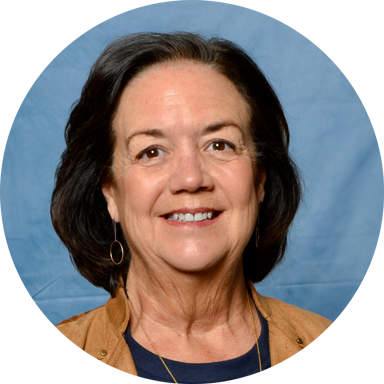
Sally K. Albrecht has shaped American choral music for over four decades as a composer, conductor, and clinician with a distinctive focus on integrating movement into choral performance. Her catalog exceeds 600 published choral works and 75 full-length musicals, earning her continuous recognition through ASCAP Special Music Awards since 1987. She directed choral publications for major educational publishers, including a long tenure at Alfred Music, and has led honor choirs at Lincoln Center, Carnegie Hall, and The Kennedy Center.
Albrecht holds degrees from Rollins College (B.A. in Music and Theater, 1976) and the University of Miami (M.A. in Drama, 1977; M.M. in Accompanying, 1979). She has taught at Oakland University, Jersey City State College, and Meredith College. In 2021, she received the Distinguished Alumna Award from both the University of Miami Frost School of Music and Rollins College, where she serves on the Board of Trustees. She resides in Wake Forest, North Carolina, with her husband, composer and arranger Jay Althouse.
Why we love this
Albrecht and Althouse craft this piece with the architectural intelligence their reputation demands: the opening restraint makes the gradual swell feel earned rather than imposed, and the quiet ending leaves singers and audience in a reflective space that lingers long after the final chord. The text about interconnection lands without sentimentality, and the 2-part voicing keeps it accessible while still offering genuine harmonic depth. This is writing that respects both your singers' abilities and your audience's intelligence.
What to expect
The piece opens with quiet, humble strength before building into something undeniably powerful without losing its intimate core. You sense vulnerability and determination existing together: a small voice becoming part of something larger, yet never losing its individuality. The journey from whispered opening to climactic assertion to gentle close mirrors the emotional arc of finding your place in the world.
Who it's for
Any 2-part choir, whether a smaller ensemble building confidence in part singing or a large massed group at a festival or district event. The piece works equally well in middle school, high school, or adult community choral settings. Its graduation and Earth Day themes make it especially relevant for spring concerts and peace-focused programming.
How to get the most out of it
- Shape the dynamic arc deliberately. The piece gains power through measured growth, not sudden jumps; each phrase should feel like a deliberate step forward rather than a reset.
- Explore the movement and staging options provided. Albrecht's expertise in choreographic integration means the physical component isn't decorative—it amplifies the message of connection and collective voice.
- Balance clarity in the lower part against the upper melodic line. Even in unison or near-unison sections, secondary voices need presence without overwhelming the primary text.
- Use the recorded accompaniment to establish tempo and harmonic weight, especially valuable if your accompanist is less experienced or if you're preparing for a massed choir event.
How to use it
Open a spring concert with this piece to set an introspective, purposeful tone before lighter fare. At festivals or massed choir events, it anchors a set around themes of unity and social awareness. For a graduation program, its message about individual worth within community provides both celebration and gravitas. The movement component makes it memorable for audiences, particularly in situations where visual interest strengthens the performance experience.
Skills your students will build
- Controlling dynamics across an extended phrase and recognizing how sustained crescendo creates narrative impact
- Maintaining part independence in 2-part writing while blending with ensemble intention
- Integrating choreographed movement with sung text without sacrificing intonation or rhythmic precision
- Interpreting a secular text for emotional resonance and understanding how choral arrangement shapes meaning