
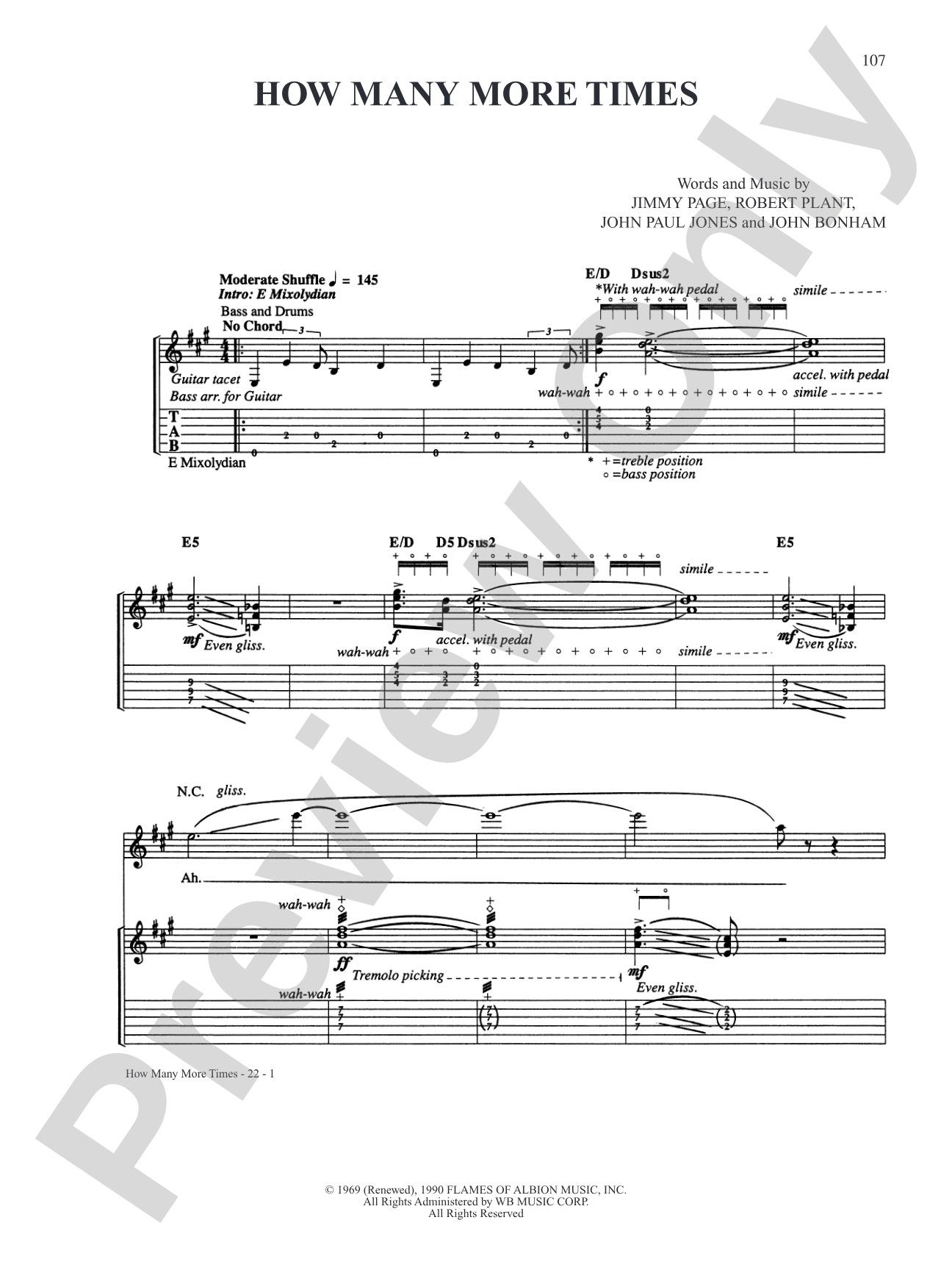
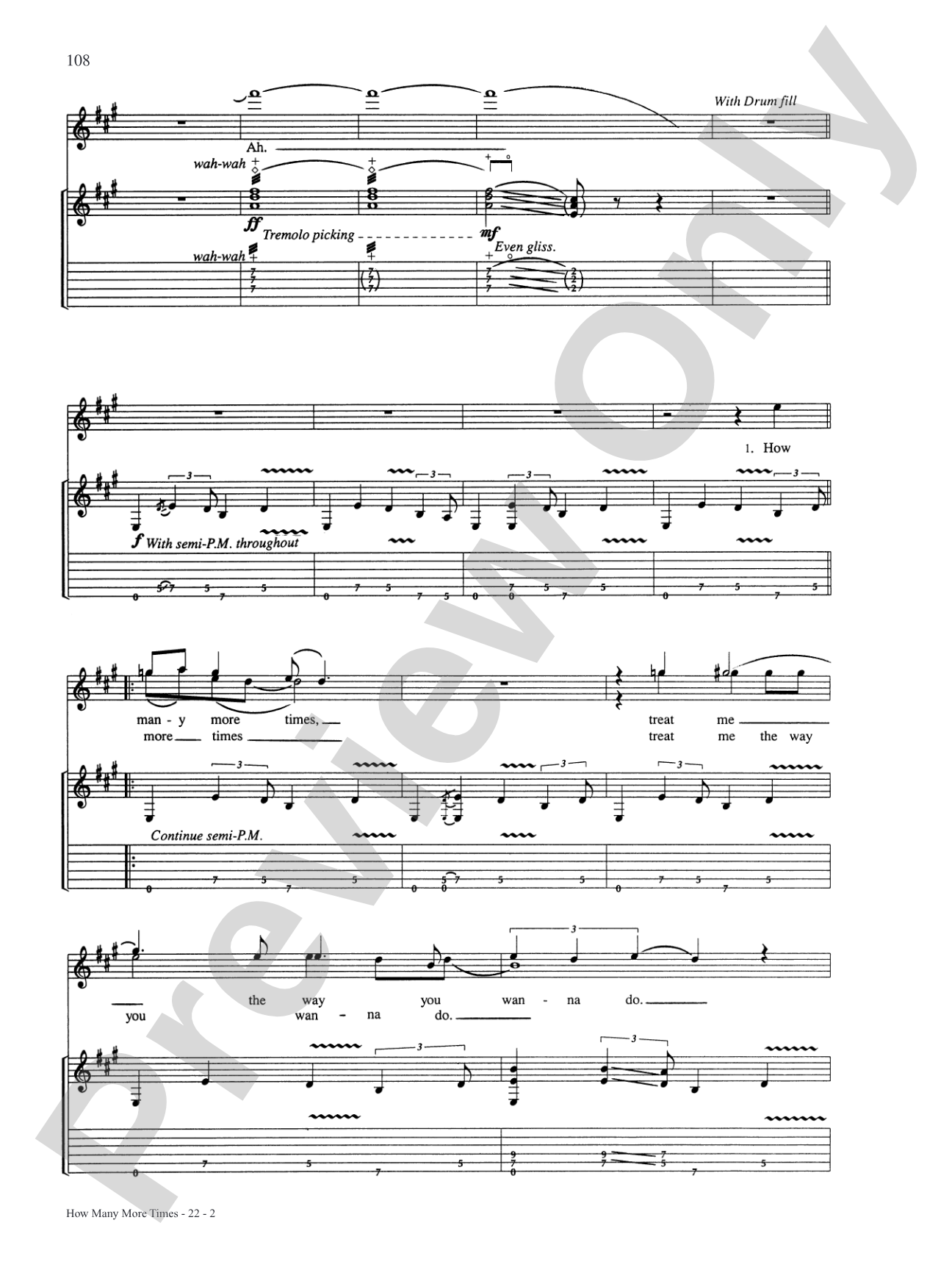
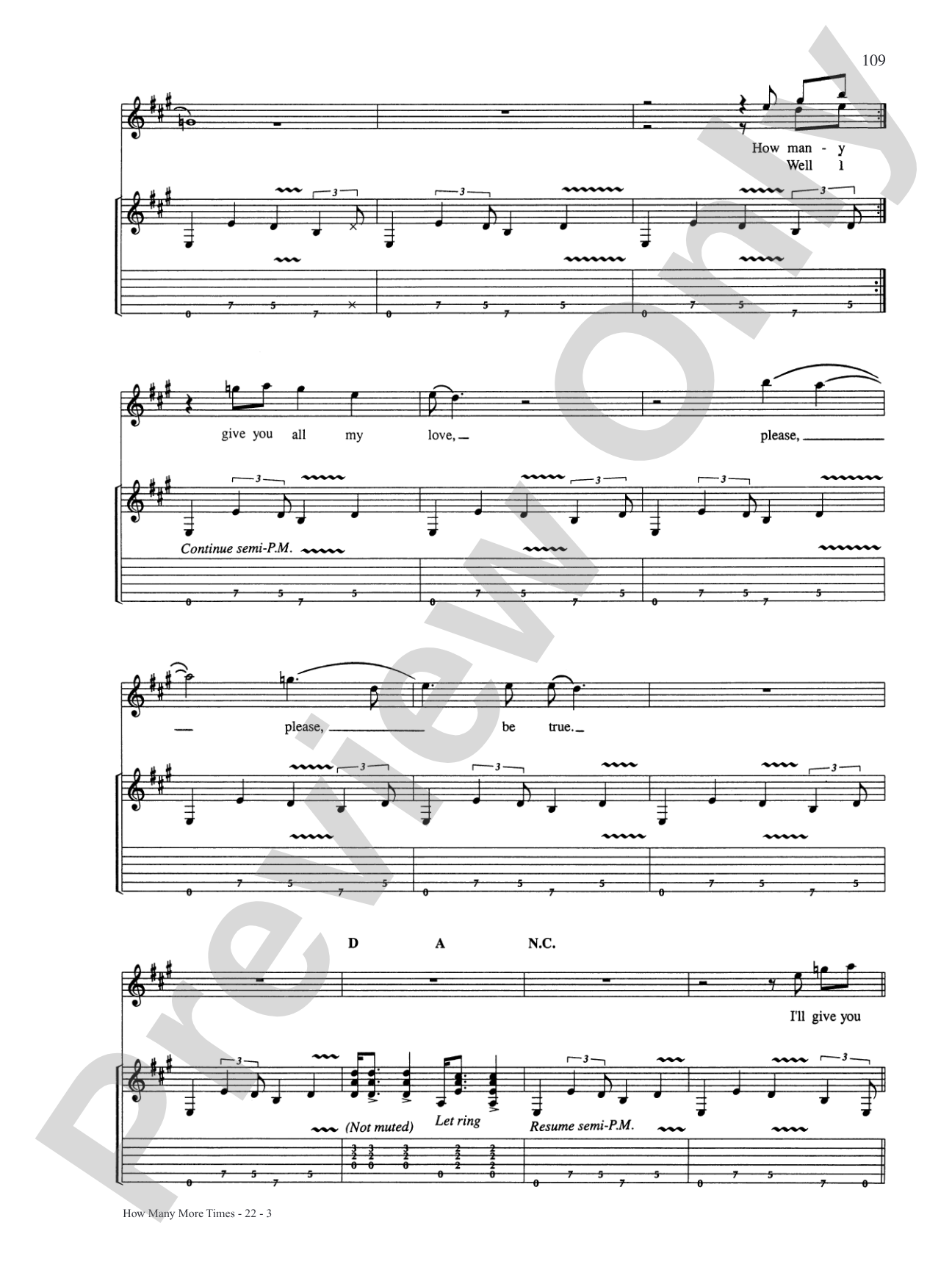
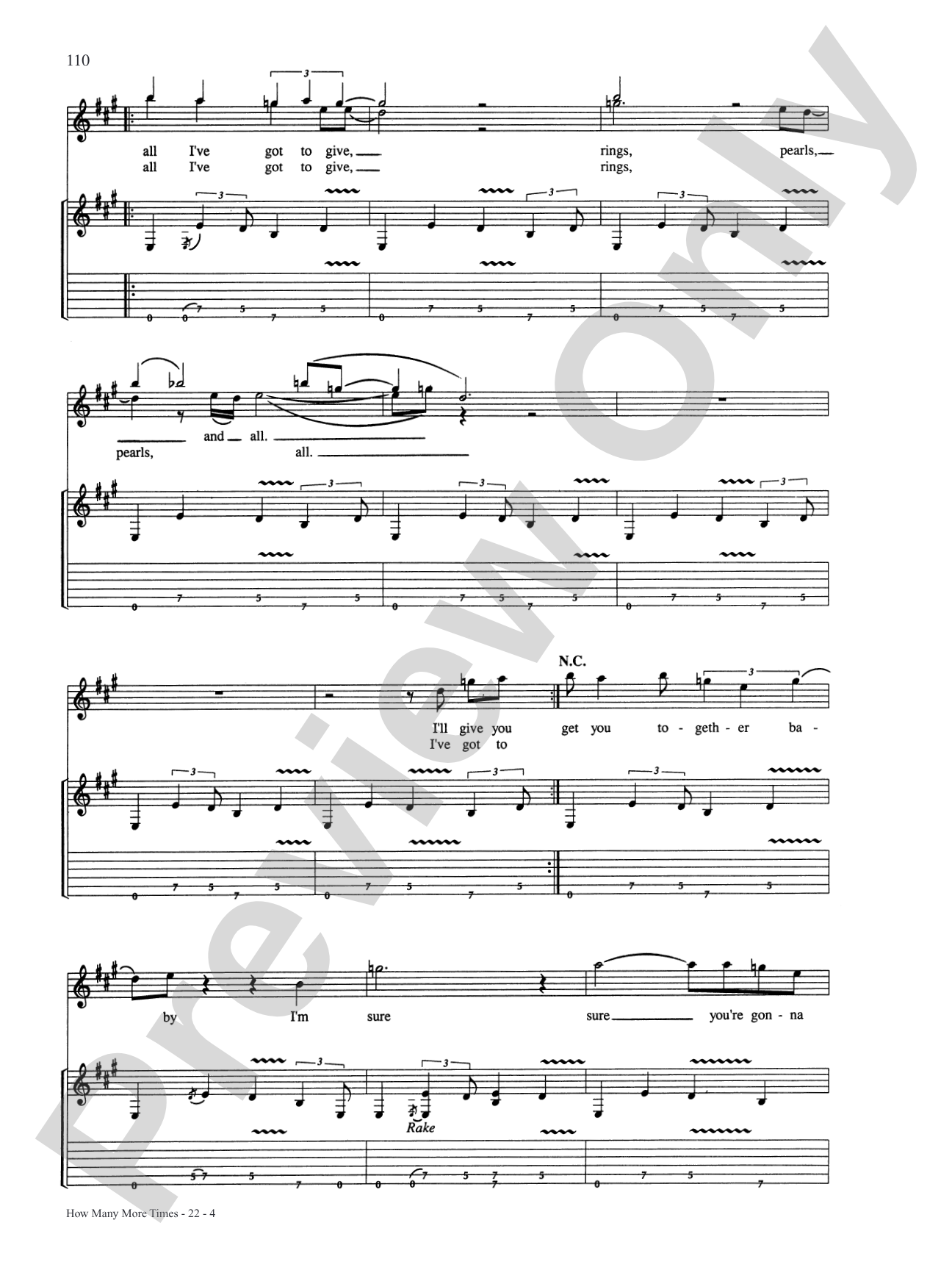

How Many More Times: Authentic Guitar TAB
Led Zeppelin
Item: 00-PSG-000117
$9.99
Pickup currently not available
Related Items
Babe I'm Gonna Leave You: Authentic Guitar TAB |
$9.99
|
View | |
Communication Breakdown: Authentic Guitar TAB |
$5.99
|
View | |
Good Times, Bad Times: Authentic Guitar TAB |
$5.99
|
View | |
Black Mountain Side: Authentic Guitar TAB |
$4.99
|
View | |
Your Time Is Gonna Come: Authentic Guitar TAB |
$5.99
|
View | |
Dazed And Confused: Authentic Guitar TAB |
$9.99
|
View | |
Communication Breakdown: Piano/Vocal/Chords |
$4.99
|
View | |
Your Time is Gonna Come: Piano/Vocal/Chords |
$5.99
|
View | |
Led Zeppelin: I Platinum Album Edition: Authentic Guitar TAB Book |
$24.99
|
View | |
Led Zeppelin: I Platinum Album Edition: Drum Transcriptions Book |
$19.99
|
View | |
Led Zeppelin: I Platinum Album Edition: Piano/Vocal/Chords Book |
$19.99
|
View | |
Led Zeppelin: I Platinum Album Edition: Authentic Bass TAB Book |
$16.99
|
View |
Description
Alfred Music, in association with Led Zeppelin, is proud to present new Platinum Album Edition songbooks for each of the band's classic studio recordings. Drawn from more than 30 years of documentation, interviews, and recorded footage, these all-new transcriptions deliver unprecedented accuracy and insight into the guitar style of Jimmy Page. With vintage Zeppelin photographs and a historical foreword by Guitar World magazine's editor-in-chief, Brad Tolinski, each volume is a true collectible every fan must own. Titles: Good Times Bad Times * Babe I'm Gonna Leave You * You Shook Me * Dazed and Confused * Your Time Is Gonna Come * Black Mountain Side * Communication Breakdown * I Can't Quit You Baby * How Many More Times.


How Many More Times: Authentic Guitar TAB isn't in MakeMusic Cloud just yet...but it could be. Let us know you'd like to see it, and you'll help shape what comes next. In the meantime, start a free trial and dive into thousands of interactive titles your students can play along with today.
Request This Title
Tell us you want it.
Start Your Free Trial
Explore everything that's ready to play right now.
Sample Audio
No sample audio found.
Sample Video
No sample videos found.
Additional Details
Series:
Alfred's Platinum Album Editions
Publisher:
Alfred Music
Page Count:
92
SKU:
00-PSG-000117
More about this title
About the Composer: Jimmy Page
Jimmy Page shaped modern rock guitar through his work as Led Zeppelin's primary composer and guitarist from 1968 onward. His approach to the instrument—combining blues fundamentals with Eastern influences, studio experimentation, and dynamic arrangement—established techniques and tones that became foundational to hard rock and heavy metal. Page's compositional voice prioritizes texture and dynamics over conventional song structure, creating spaces for instrumental storytelling that have influenced generations of musicians.
Why we love this
These transcriptions capture Page's guitar voice with rare precision, drawn from extensive documentation and interviews rather than guesswork. For serious students of rock guitar, having accurate TAB of 'How Many More Times' and the other early Zeppelin material means understanding how Page translated acoustic and electric techniques into arrangements that became touchstones of the genre.
What to expect
Raw, exploratory energy tempered by blues tradition and unconventional tuning. These early Zeppelin pieces balance primitive power with surprising delicacy, moving from sparse fingerpicked sections into dense, distorted walls of sound. There's an almost archaeological quality to the guitar work, as if Page is excavating sound from the instrument itself.
Who it's for
Intermediate to advanced electric and acoustic guitarists who want to understand Led Zeppelin's early sound from the inside out. This is essential material for anyone serious about rock guitar history and technique, whether you're preparing performance pieces, studying Page's compositional approach, or deepening your command of alternate tunings and fingerstyle arrangement.
How to get the most out of it
- Study the dynamic shifts between sections; Page's arrangements hinge on sudden changes in texture and volume that create drama. The TAB notation alone won't convey these contrasts, so listen closely to the original recording and mark your own tempo and dynamic cues.
- Pay attention to tuning notation and alternate tunings. Several of these pieces use open tunings or dropped tunings that are essential to the sound; attempting them in standard tuning will flatten the character completely.
- Approach the fingerpicking passages with patience. Many of Page's open-tuning figures require hand position shifts and unusual finger combinations; rushing through them loses the resonance and sustain that make them effective.
- Use the historical photographs and foreword context to shape your interpretation. Understanding the era and Page's intent behind each piece informs phrasing, tone choices, and the overall narrative arc of your performance.
How to use it
Feature a single piece from this collection as a solo or small ensemble performance at a rock or popular music concert. The historical weight and documented accuracy make these transcriptions credible program notes; you can confidently present them as authorized versions. Alternatively, use them as a teaching resource to demonstrate how blues vocabulary and alternate tuning techniques connect to twentieth-century rock innovation.
Skills your students will build
- Reading and executing alternate tunings (open G, open D, and related variations)
- Fingerstyle technique across multiple string sets and hand positions
- Translating dynamic shifts and tonal contrasts into physical technique
- Understanding how arrangement and production shape composition on the guitar
- Recognizing blues-rooted phrases within experimental harmonic contexts