
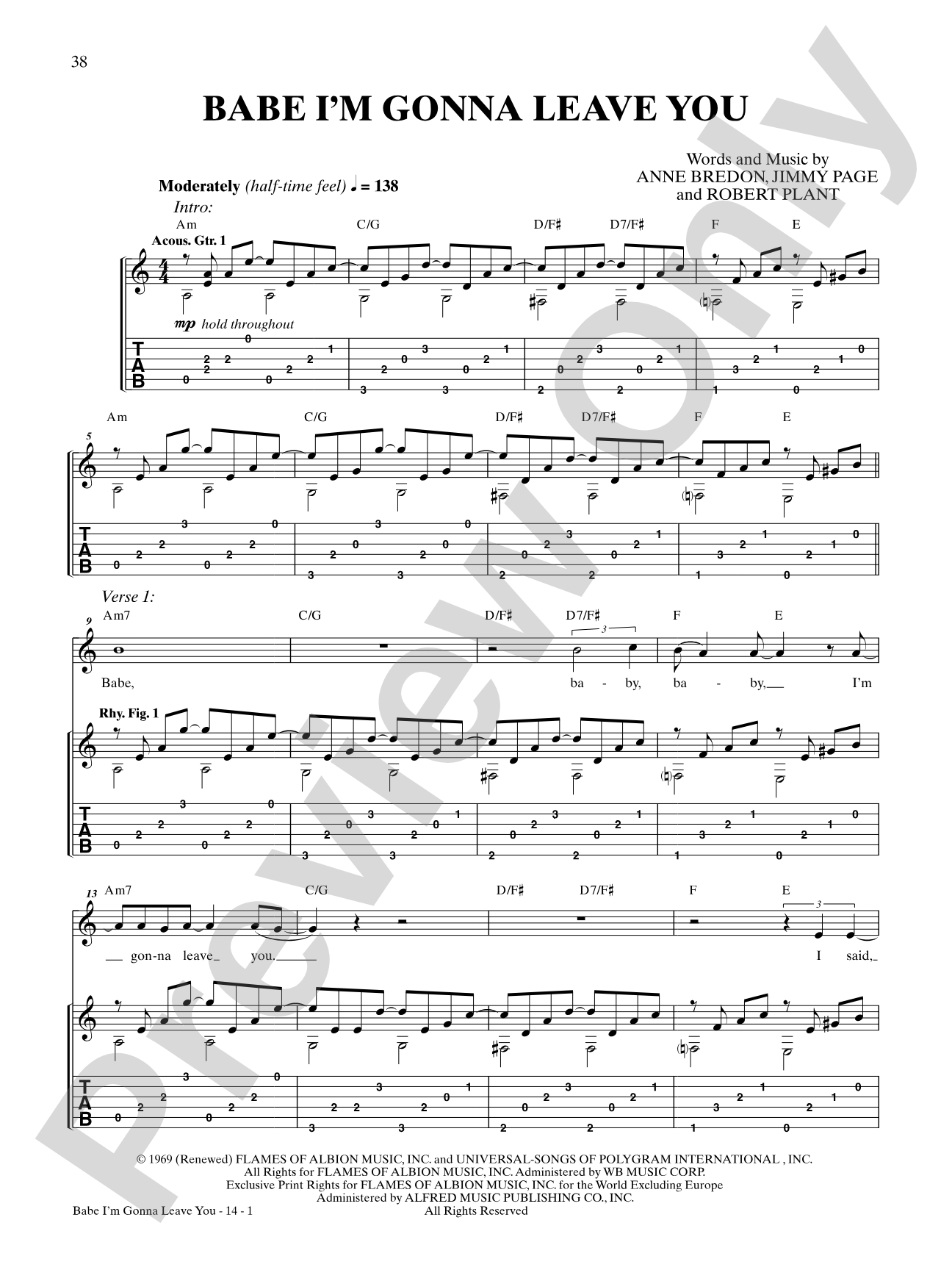
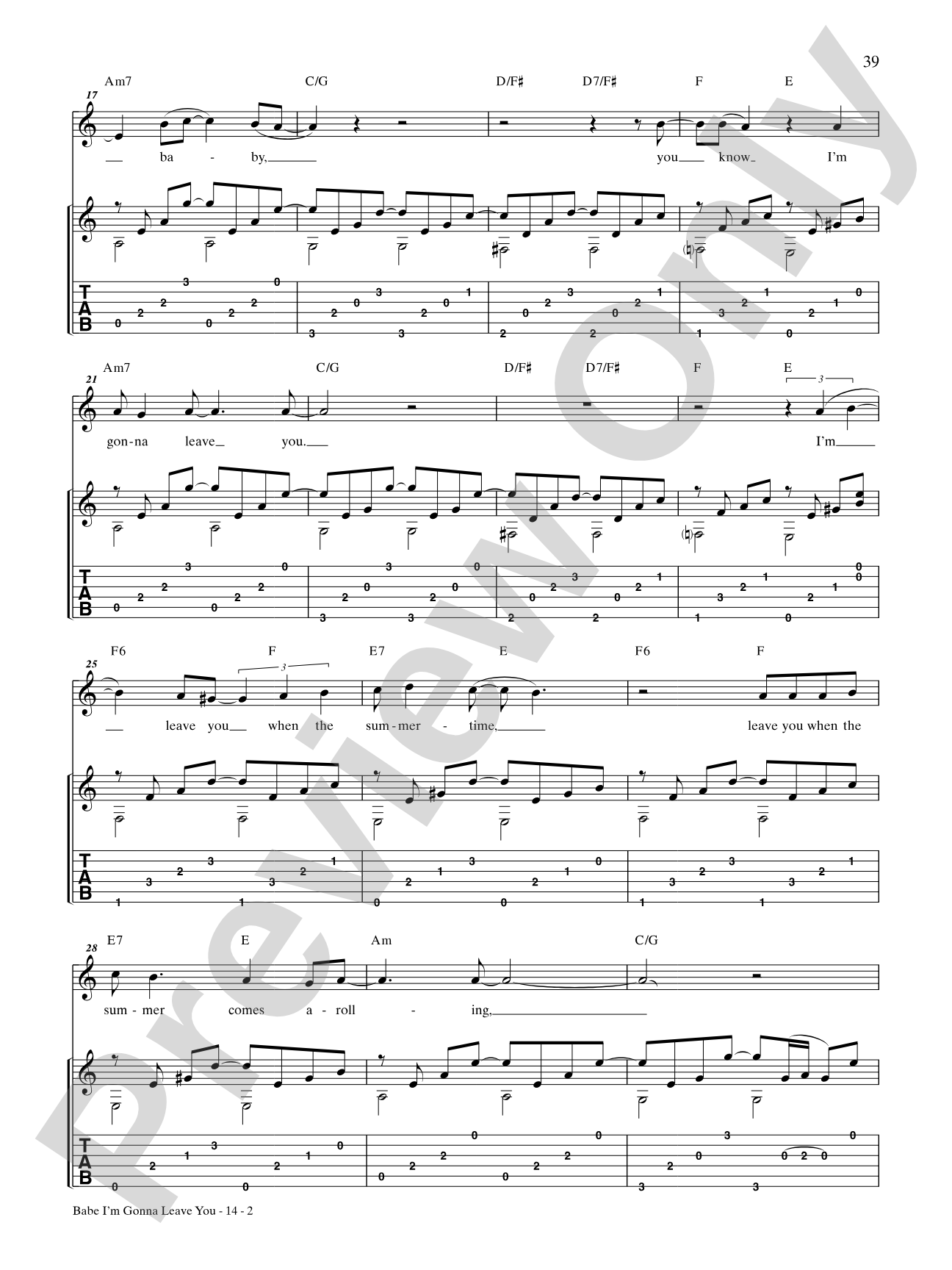
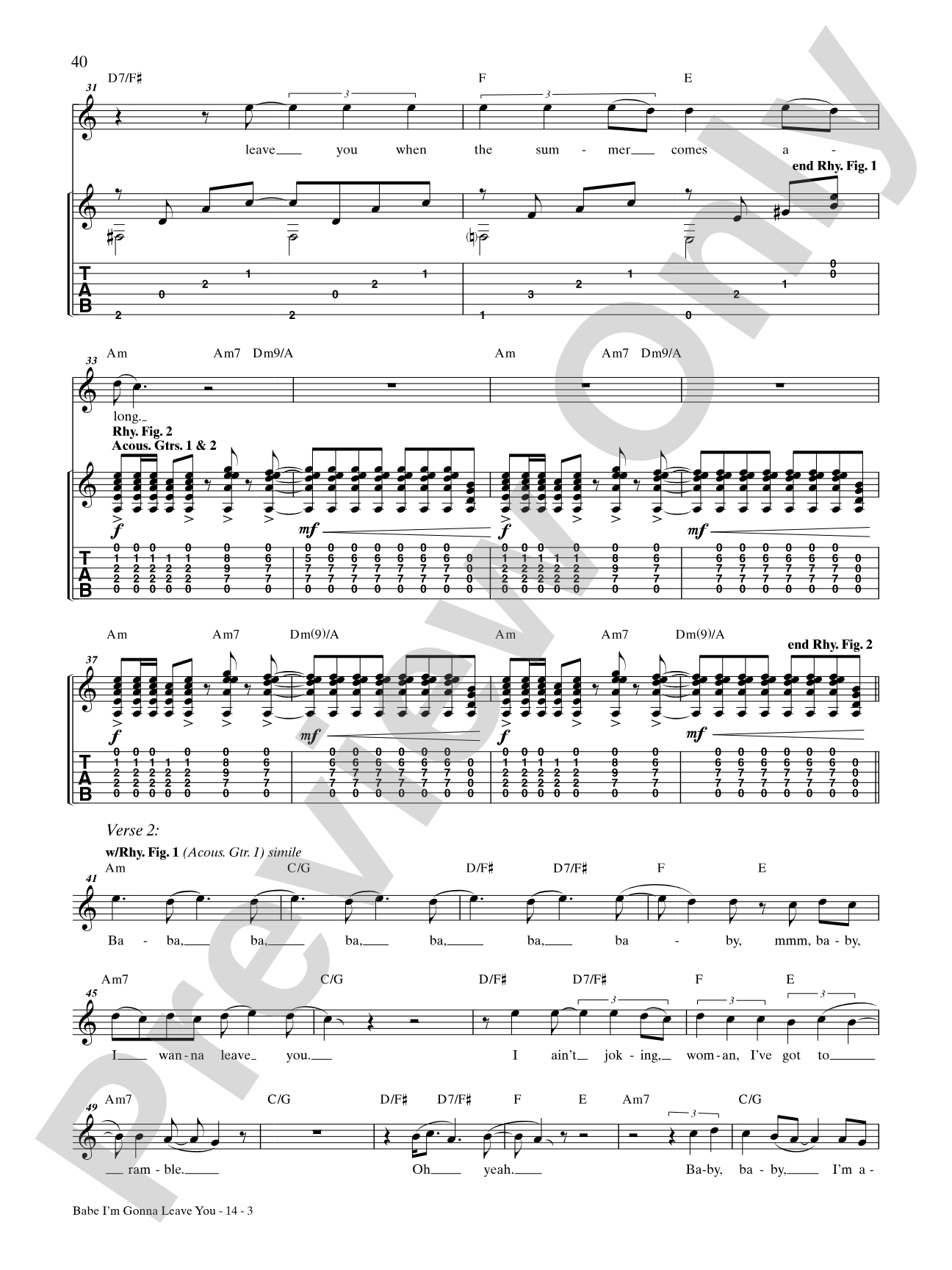

Babe I'm Gonna Leave You: Authentic Guitar TAB
Led Zeppelin
Item: 00-PSG-000112
$9.99
Pickup currently not available
Related Items
Communication Breakdown: Authentic Guitar TAB |
$5.99
|
View | |
Good Times, Bad Times: Authentic Guitar TAB |
$5.99
|
View | |
Black Mountain Side: Authentic Guitar TAB |
$4.99
|
View | |
Your Time Is Gonna Come: Authentic Guitar TAB |
$5.99
|
View | |
How Many More Times: Authentic Guitar TAB |
$9.99
|
View | |
Dazed And Confused: Authentic Guitar TAB |
$9.99
|
View | |
Communication Breakdown: Piano/Vocal/Chords |
$4.99
|
View | |
Your Time is Gonna Come: Piano/Vocal/Chords |
$5.99
|
View | |
Led Zeppelin: I Platinum Album Edition: Authentic Guitar TAB Book |
$24.99
|
View | |
Led Zeppelin: I Platinum Album Edition: Drum Transcriptions Book |
$19.99
|
View | |
Led Zeppelin: I Platinum Album Edition: Piano/Vocal/Chords Book |
$19.99
|
View | |
Led Zeppelin: I Platinum Album Edition: Authentic Bass TAB Book |
$16.99
|
View |
Description
Alfred Music, in association with Led Zeppelin, is proud to present new Platinum Album Edition songbooks for each of the band's classic studio recordings. Drawn from more than 30 years of documentation, interviews, and recorded footage, these all-new transcriptions deliver unprecedented accuracy and insight into the guitar style of Jimmy Page. With vintage Zeppelin photographs and a historical foreword by Guitar World magazine's editor-in-chief, Brad Tolinski, each volume is a true collectible every fan must own. Titles: Good Times Bad Times * Babe I'm Gonna Leave You * You Shook Me * Dazed and Confused * Your Time Is Gonna Come * Black Mountain Side * Communication Breakdown * I Can't Quit You Baby * How Many More Times.


Babe I'm Gonna Leave You: Authentic Guitar TAB isn't in MakeMusic Cloud just yet...but it could be. Let us know you'd like to see it, and you'll help shape what comes next. In the meantime, start a free trial and dive into thousands of interactive titles your students can play along with today.
Request This Title
Tell us you want it.
Start Your Free Trial
Explore everything that's ready to play right now.
Sample Audio
No sample audio found.
Sample Video
No sample videos found.
Additional Details
Series:
Alfred's Platinum Album Editions
Publisher:
Alfred Music
Page Count:
92
SKU:
00-PSG-000112
More about this title
About the Composer: John Paul Jones
John Paul Jones served as Led Zeppelin's bassist, keyboardist, and primary arranger, playing a crucial role in shaping the band's sound across their nine-year recording career. Beyond the bass lines that anchored Zeppelin's heaviest riffs, Jones contributed arrangements, orchestration, and compositional ideas that elevated the band's studio work far beyond their live performances. His classical training and studio musicianship made him instrumental in transforming raw blues and folk sources into the layered, innovative recordings that defined 1970s rock.
Why we love this
This transcription stands apart because it delivers genuine insight into Jimmy Page's playing style rather than simplified approximations. The detailed TAB, combined with the historical context and vintage photographs, lets guitarists understand not just what Page played but why each note and technique matters to the song's architecture. For players serious about classic rock vocabulary, this is essential study material grounded in meticulous documentation.
What to expect
The opening draws you in with a fingerpicked figure that feels both vulnerable and hypnotic, establishing an acoustic intimacy before the arrangement swells. The piece captures that signature Led Zeppelin transition where blues-based simplicity transforms into something architecturally complex and emotionally overwhelming. Playing through it, you experience the tension between folk tradition and hard rock innovation that defined the band's early work.
Who it's for
Intermediate to advanced guitarists who want authentic, heavily researched transcriptions of classic rock material. Players interested in understanding Jimmy Page's fingerboard approach and those building a comprehensive understanding of 1970s rock guitar vocabulary will find this indispensable. This also serves educators looking for high-quality material that connects technical study to music history and cultural significance.
How to get the most out of it
- Lock into the fingerpicking patterns early. The opening uses a precise alternating thumb-and-finger technique that defines the song's hypnotic quality; rushing or simplifying this undermines the entire intro.
- Pay attention to dynamics and touch. Page's approach relies on dynamic contrast between the opening's delicate picking and the heavier, driven sections that follow; let your fingers control volume and tone color.
- Use the historical notes and photographs to inform your interpretation. Understanding the context of how this was recorded and played helps you make intentional choices about phrasing rather than playing mechanically.
- Work through sections slowly at first, focusing on left-hand accuracy and right-hand consistency before bringing the piece up to tempo.
How to use it
Feature this in a rock history or guitar ensemble context where exploring classic rock arranging techniques and studio innovation makes pedagogical sense. It works well alongside other early Led Zeppelin material in a unit on how blues sources were transformed by British rock musicians in the 1970s. Advanced students can use this as a case study in how production, arrangement, and playing technique combine to create a cohesive artistic statement.
Skills your students will build
- Fingerpicking patterns combining thumb and multiple fingers
- Dynamic control and tone shaping through touch and hand position
- Translating TAB notation into musical interpretation
- Understanding arrangement and orchestration choices in rock recording
- Playing across different sections with contrasting textures and intensity