
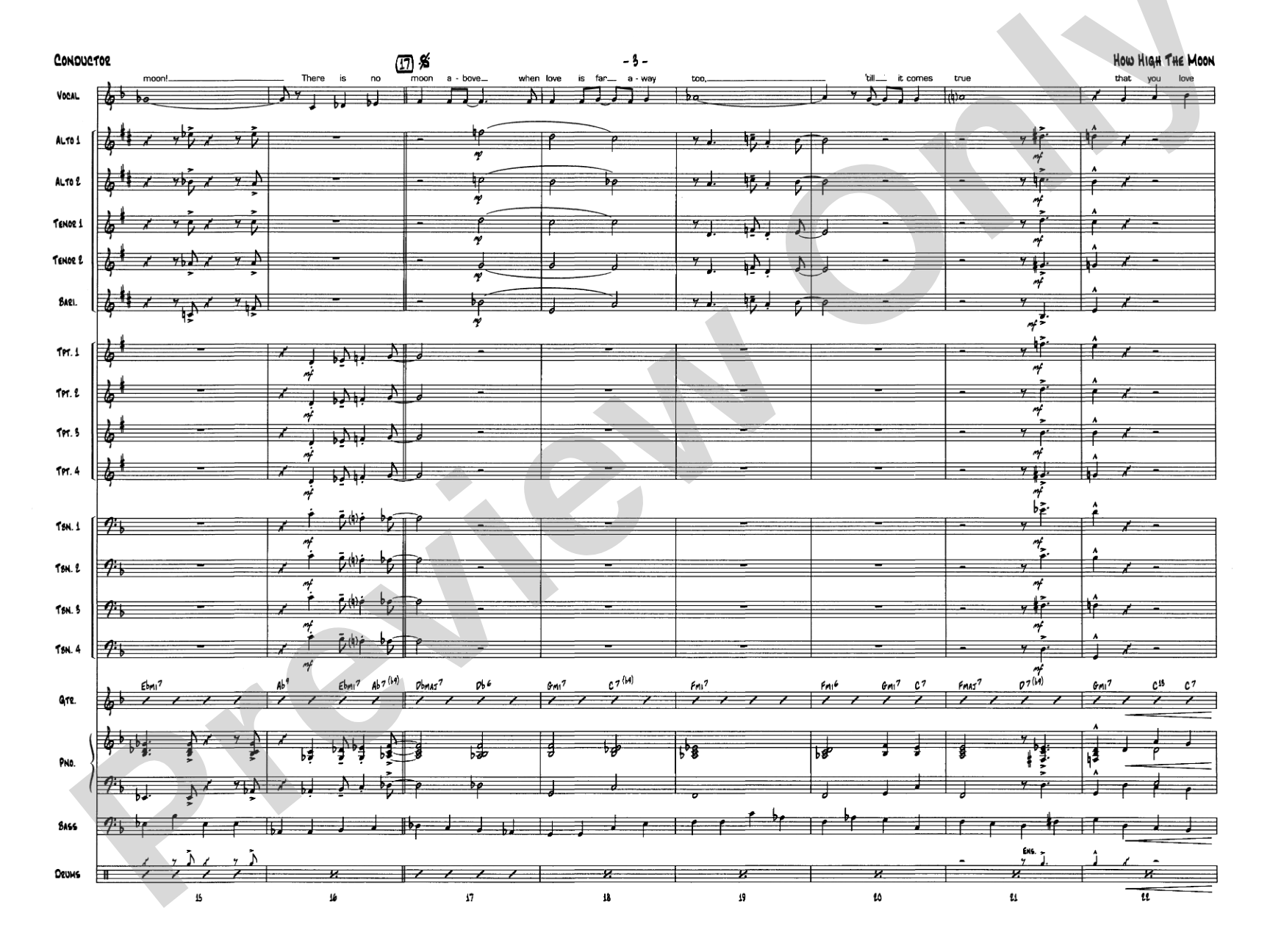
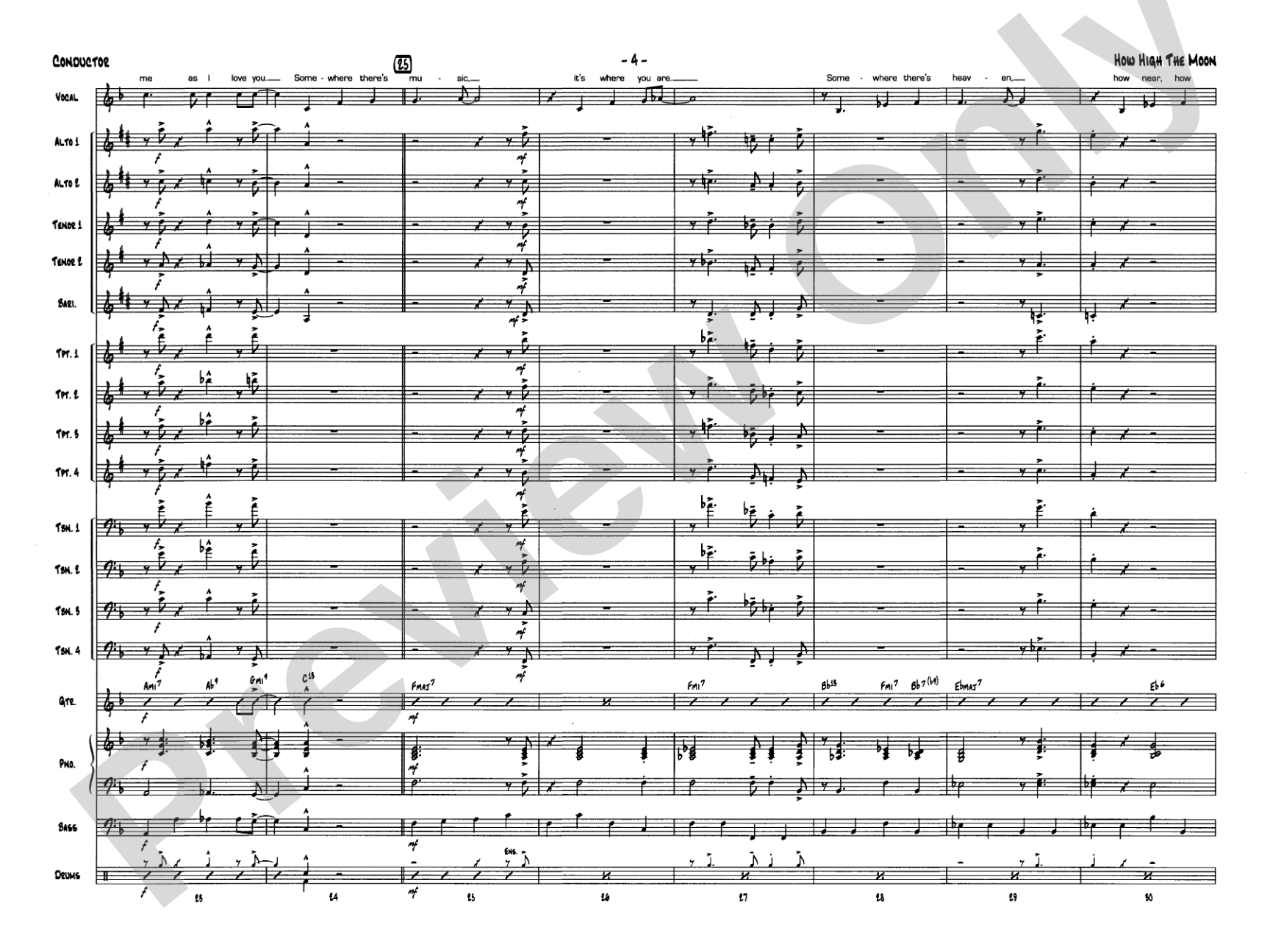
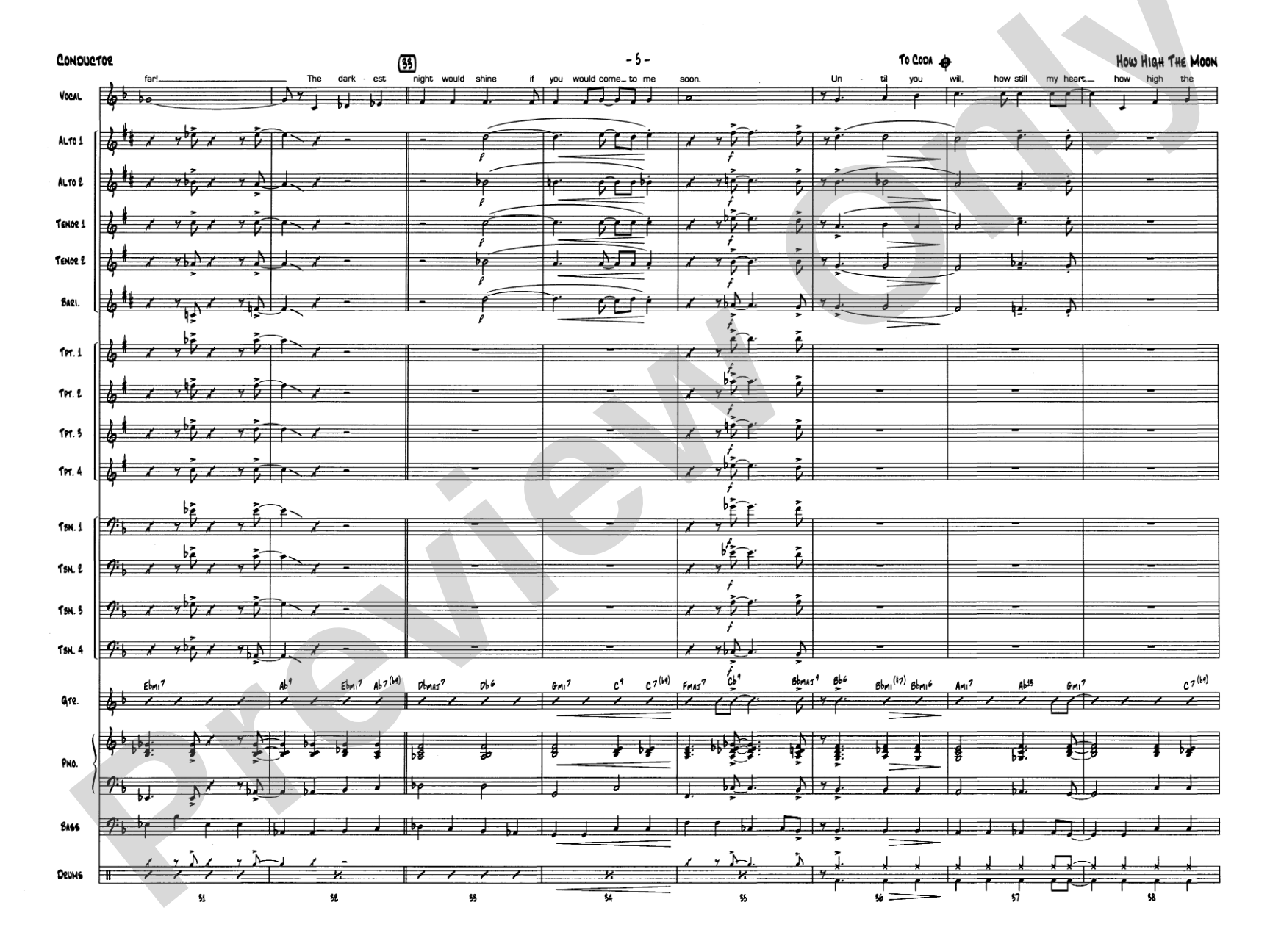
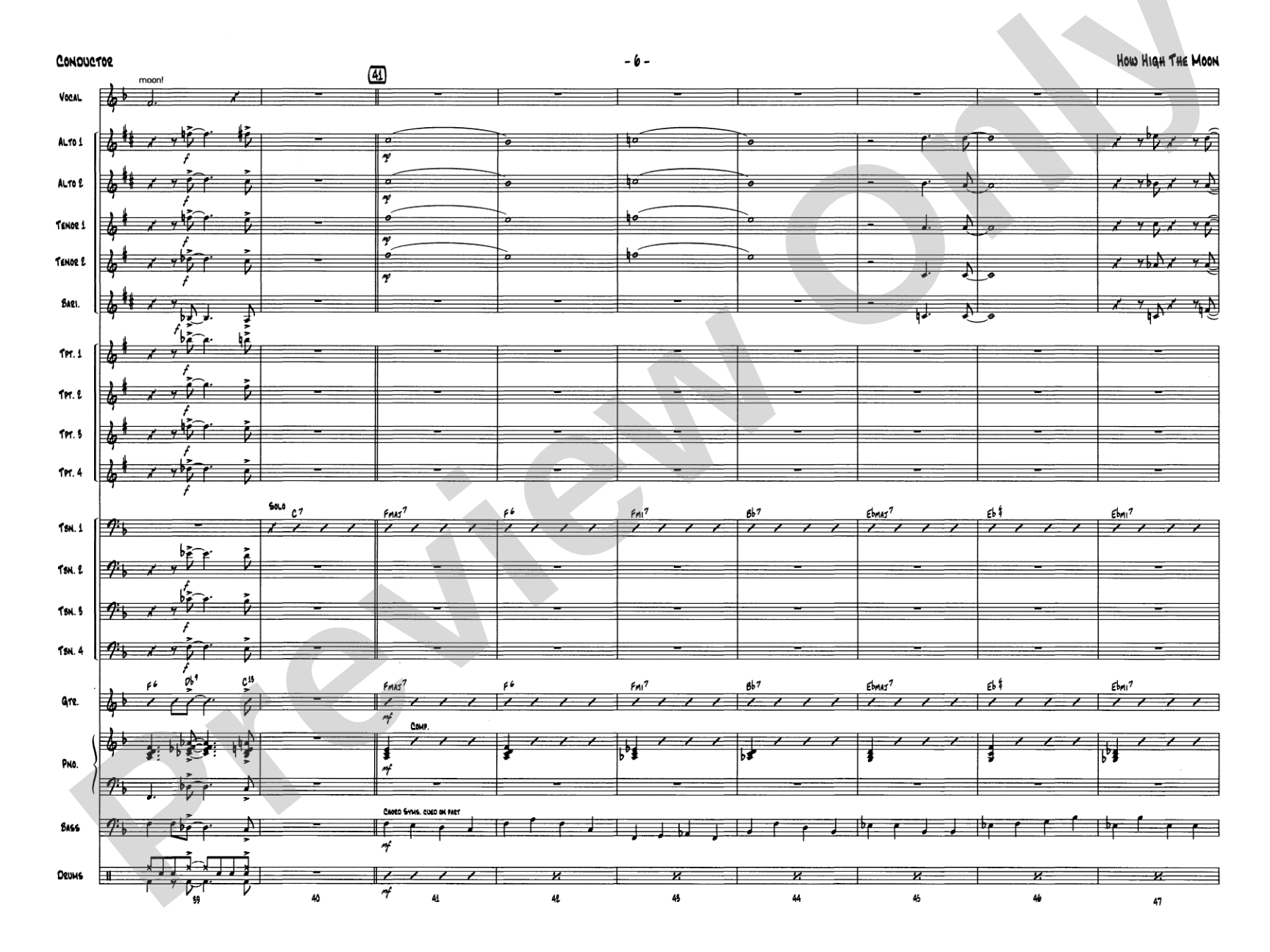
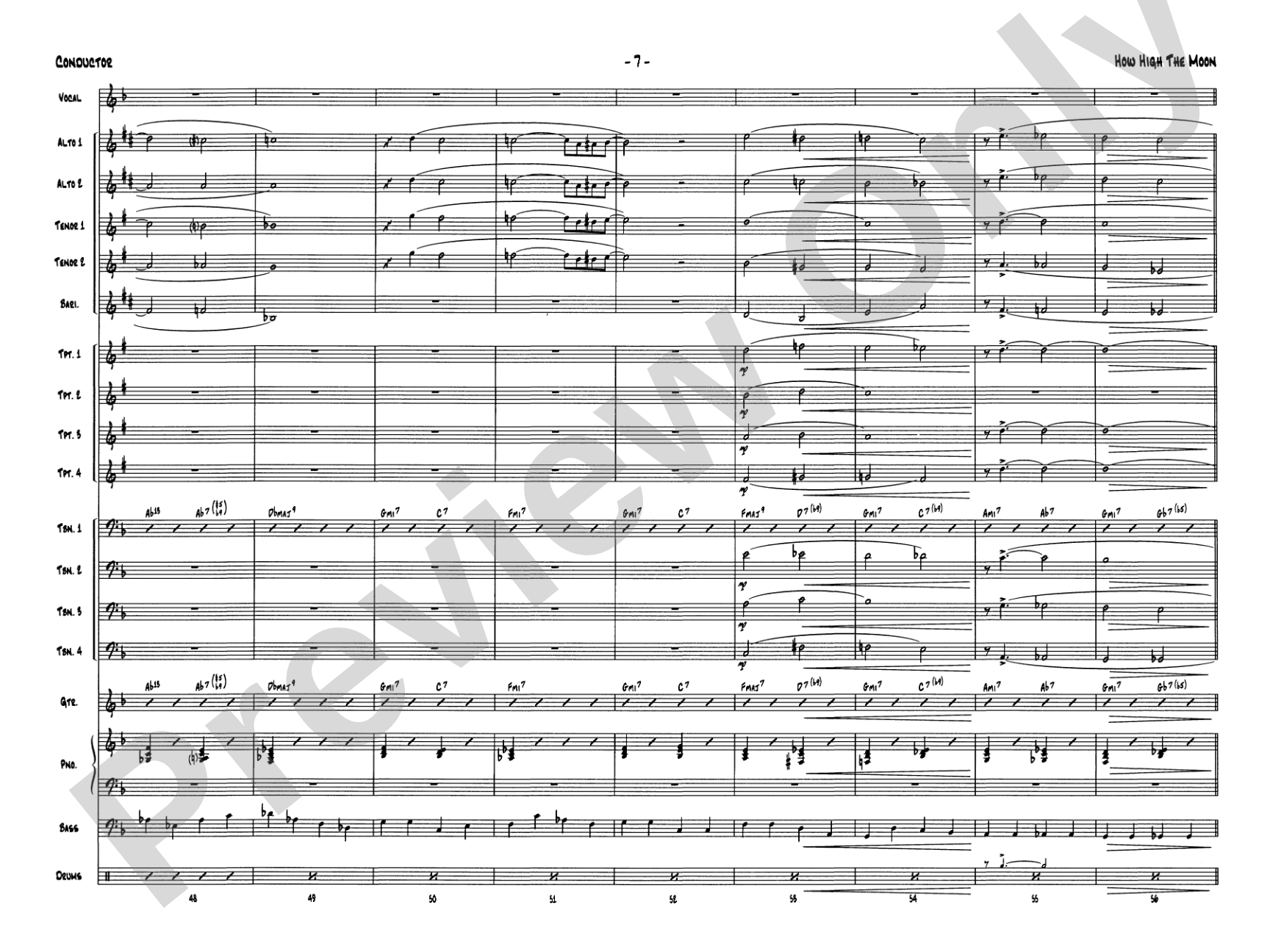
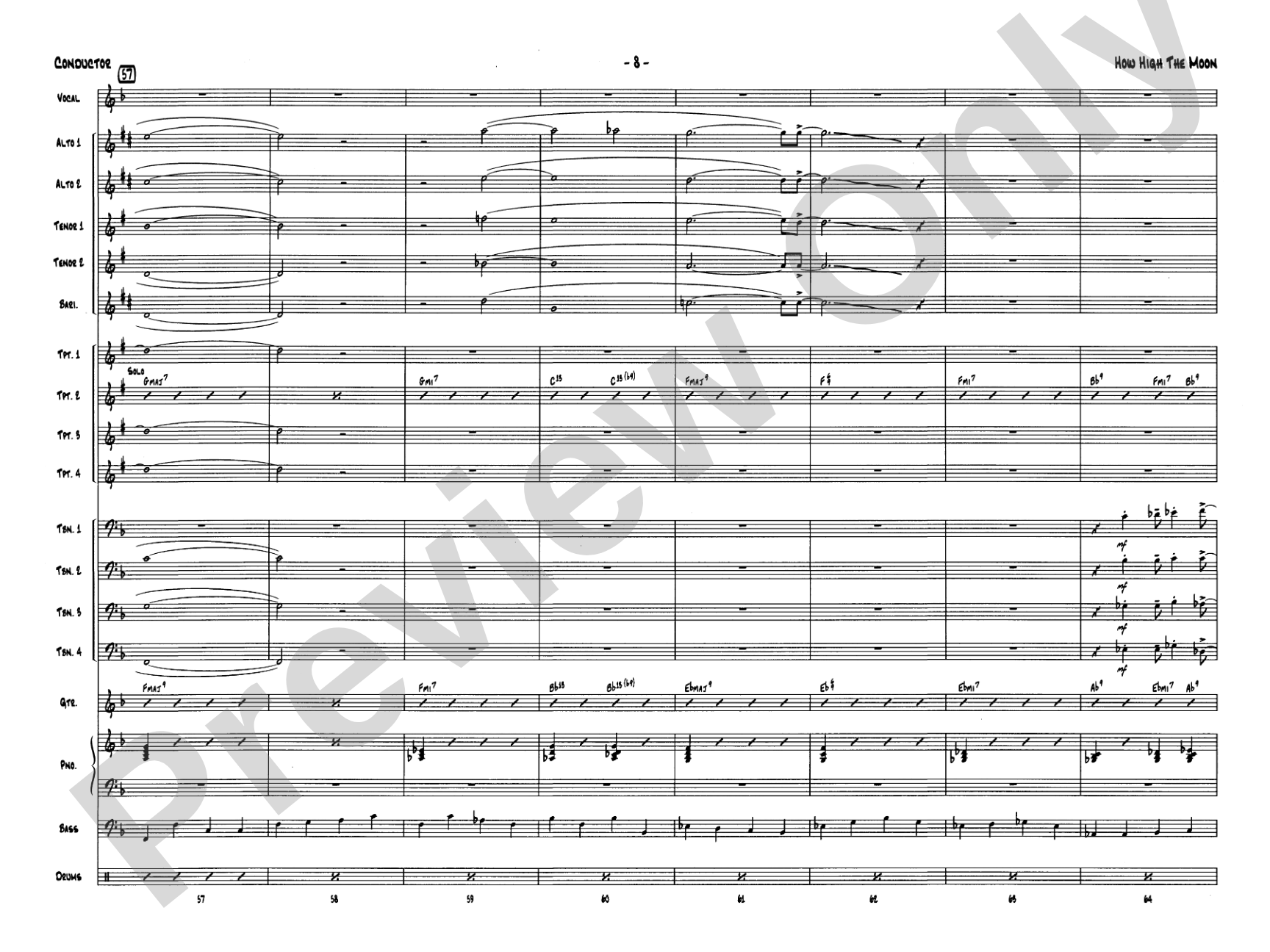
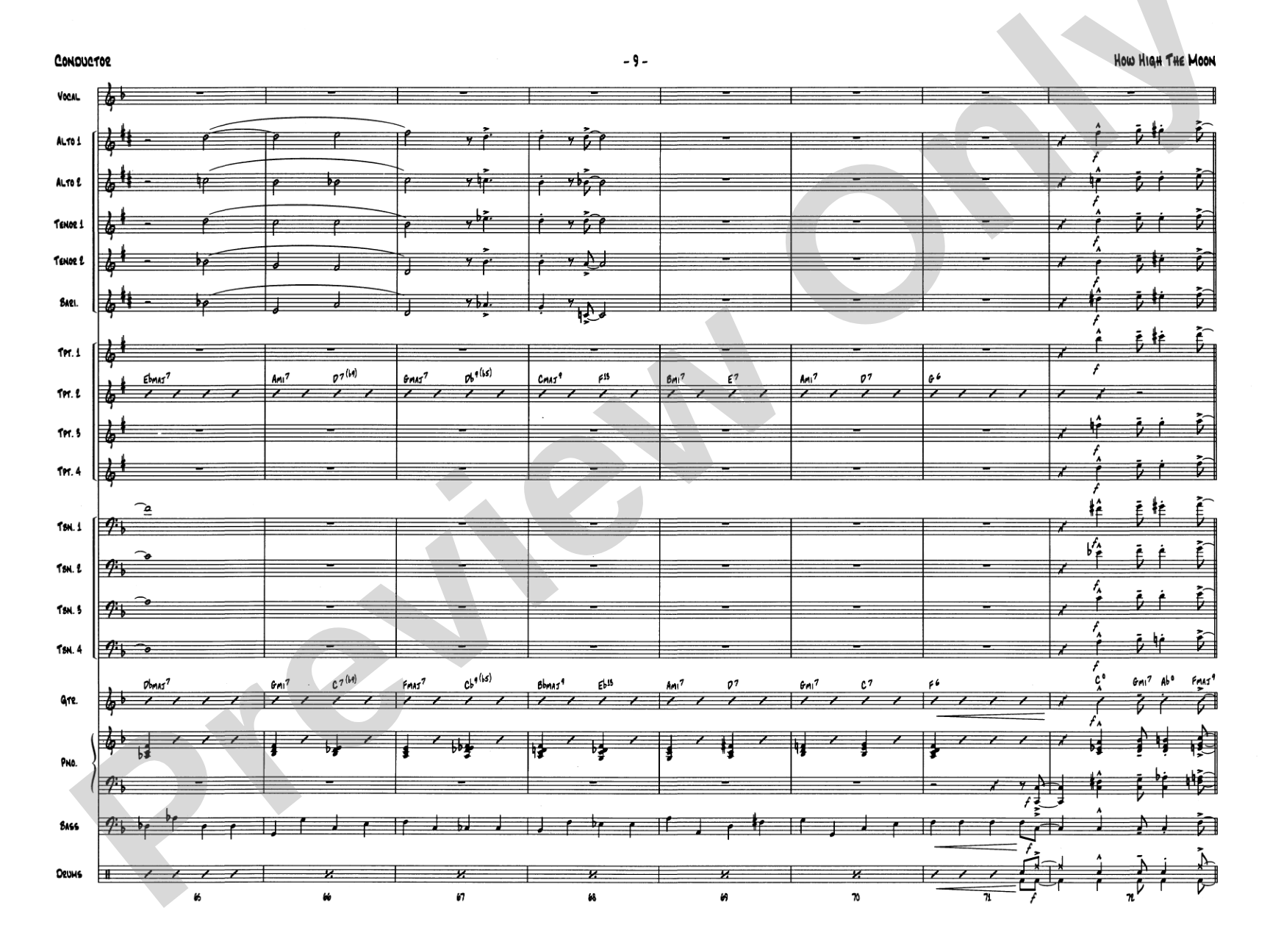
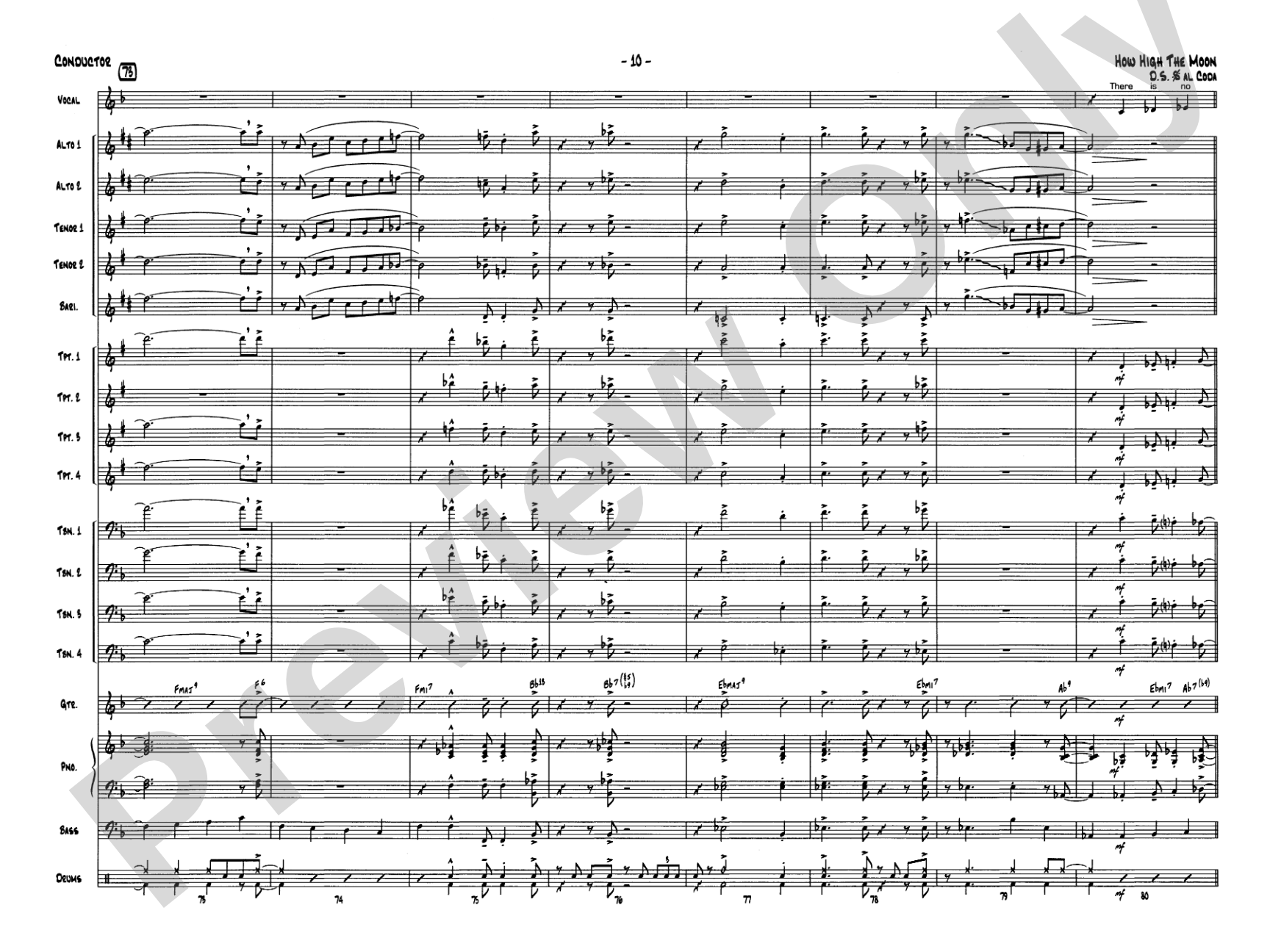
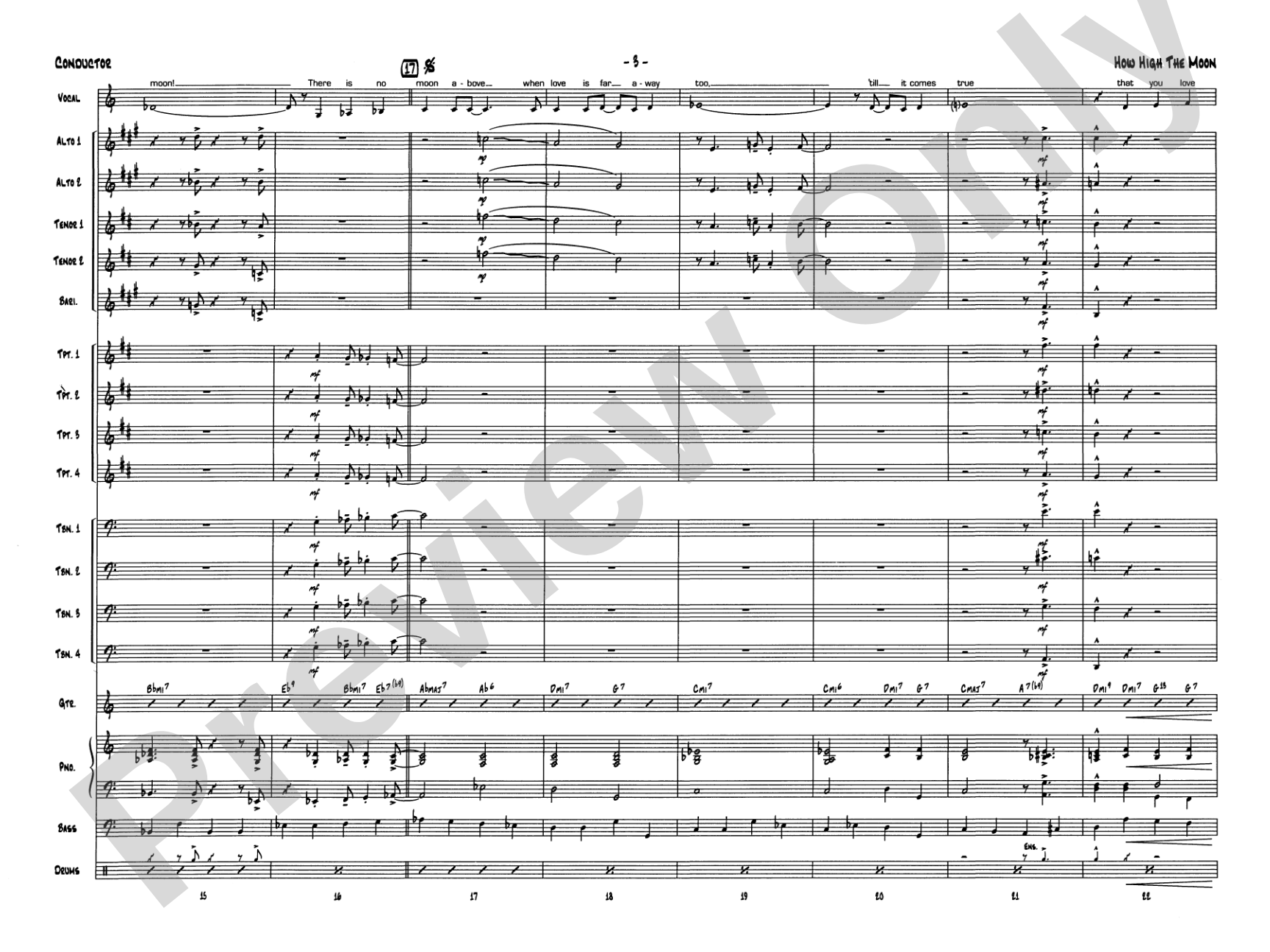
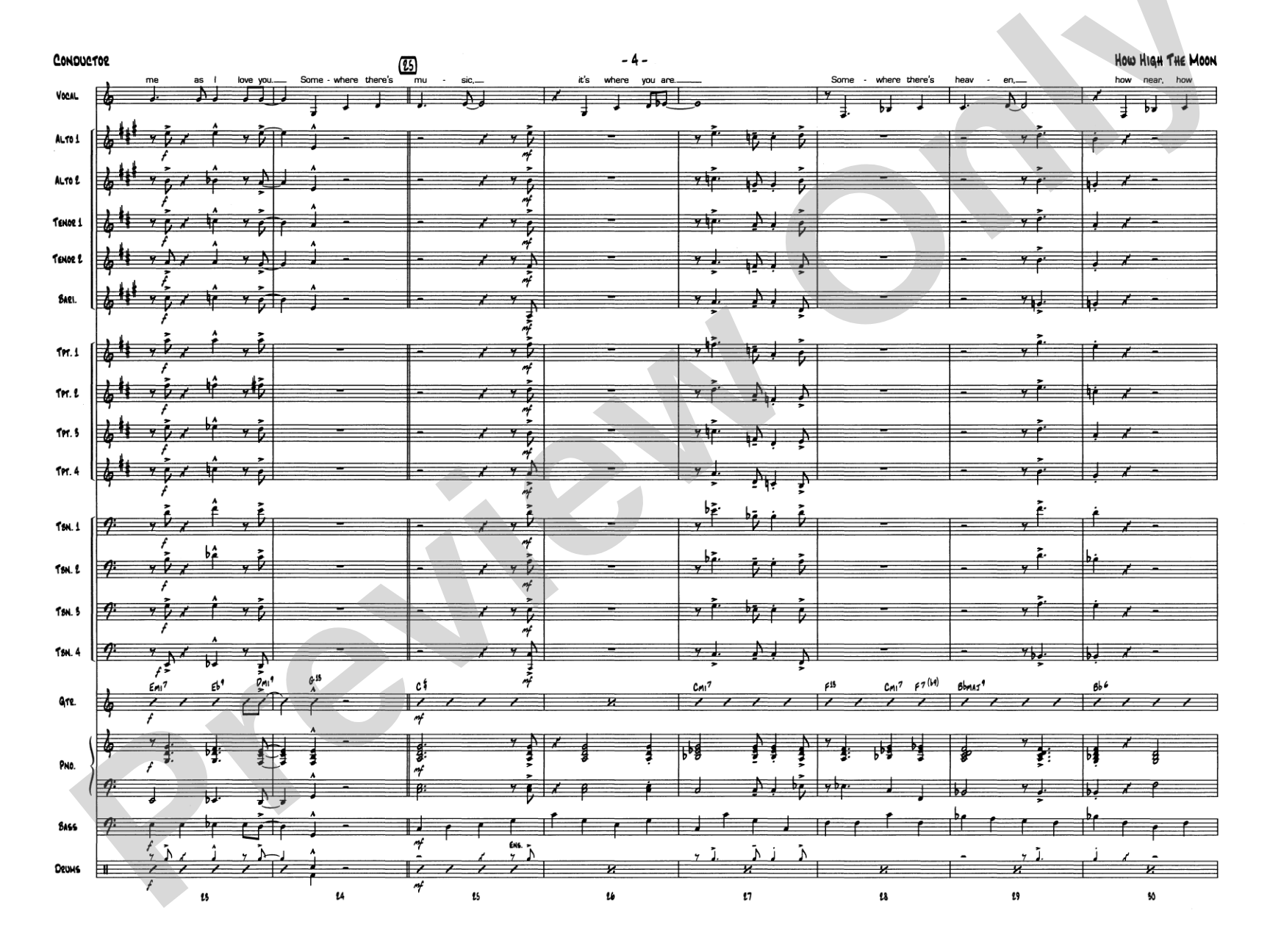
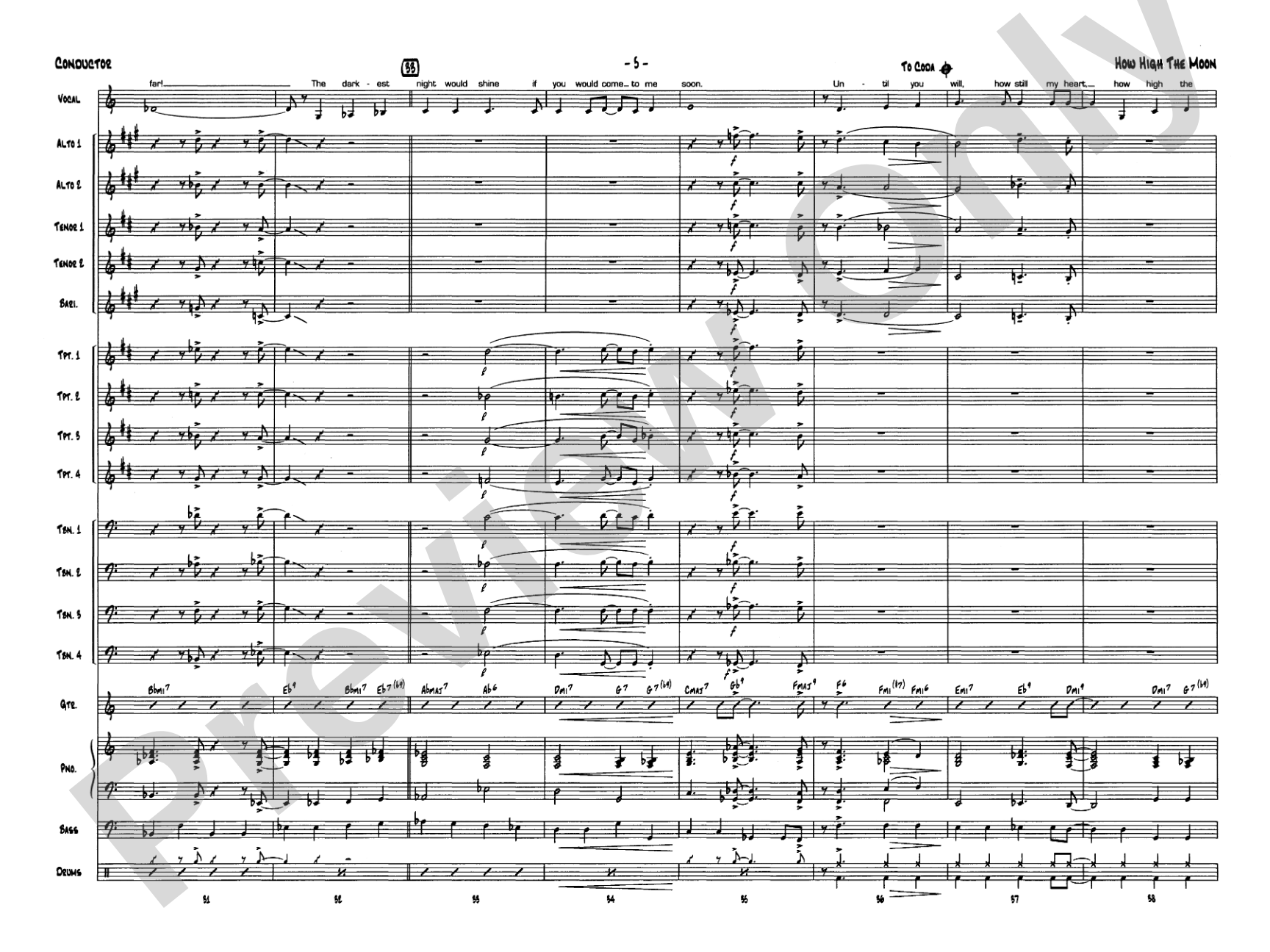
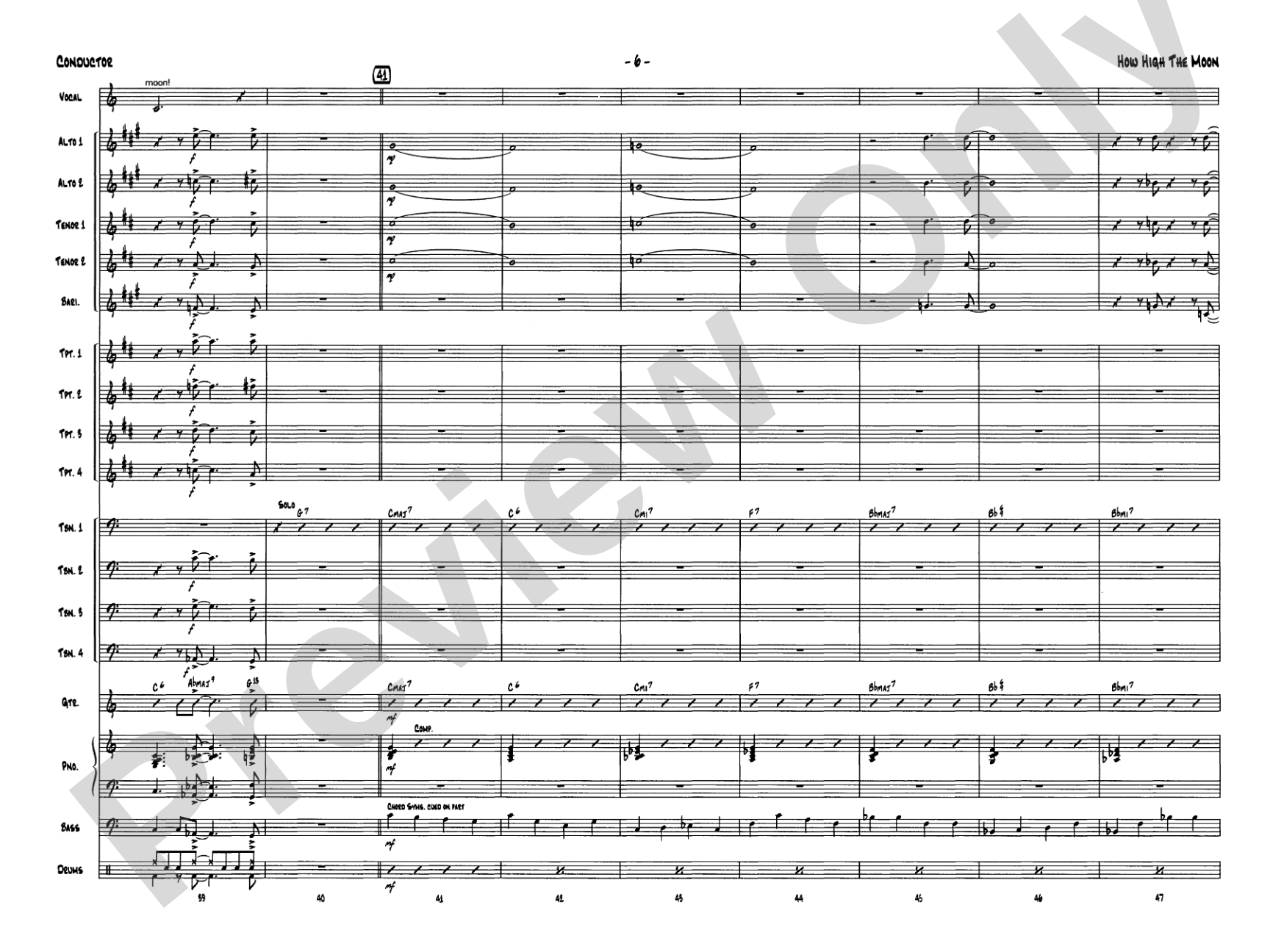
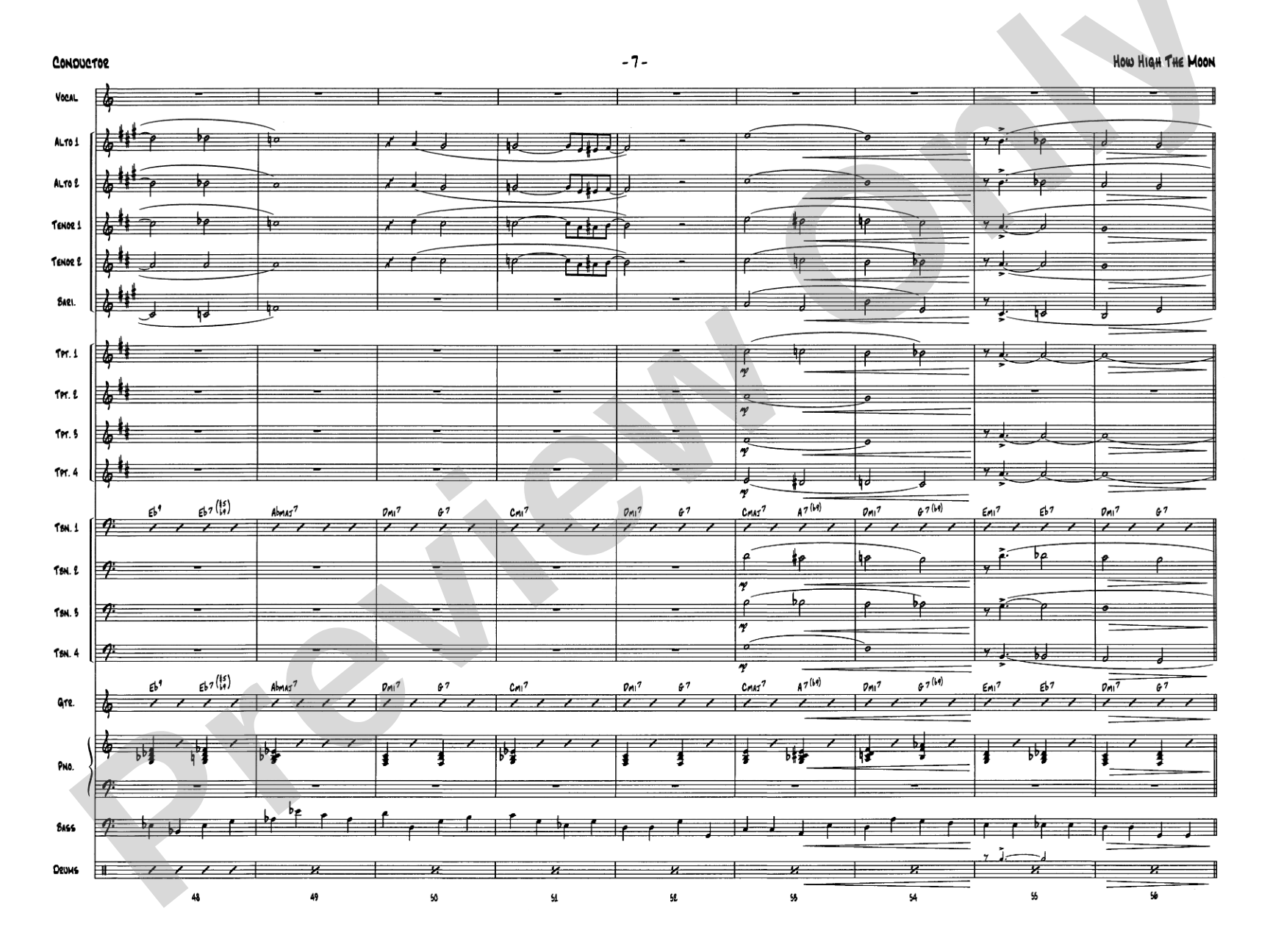
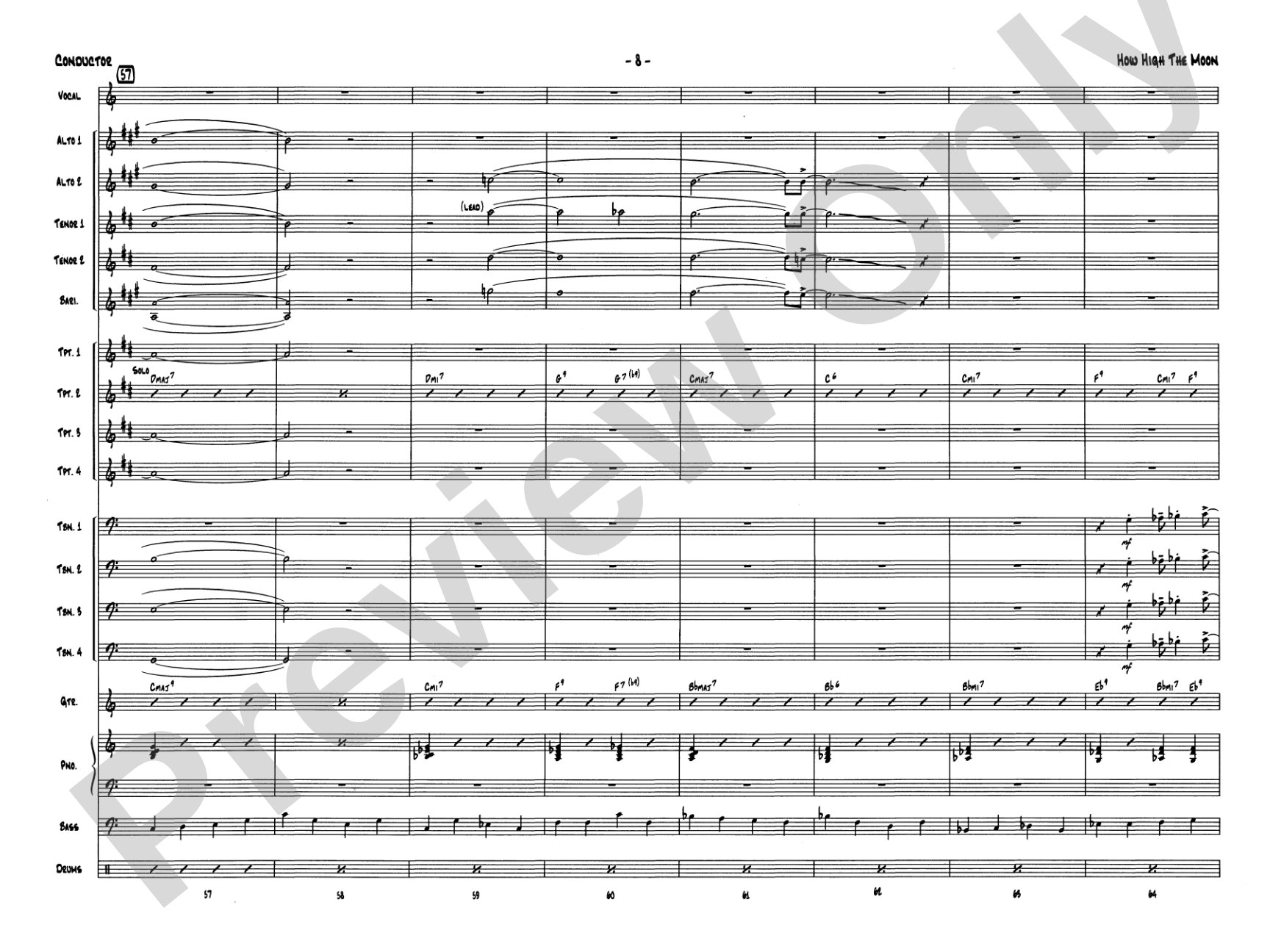
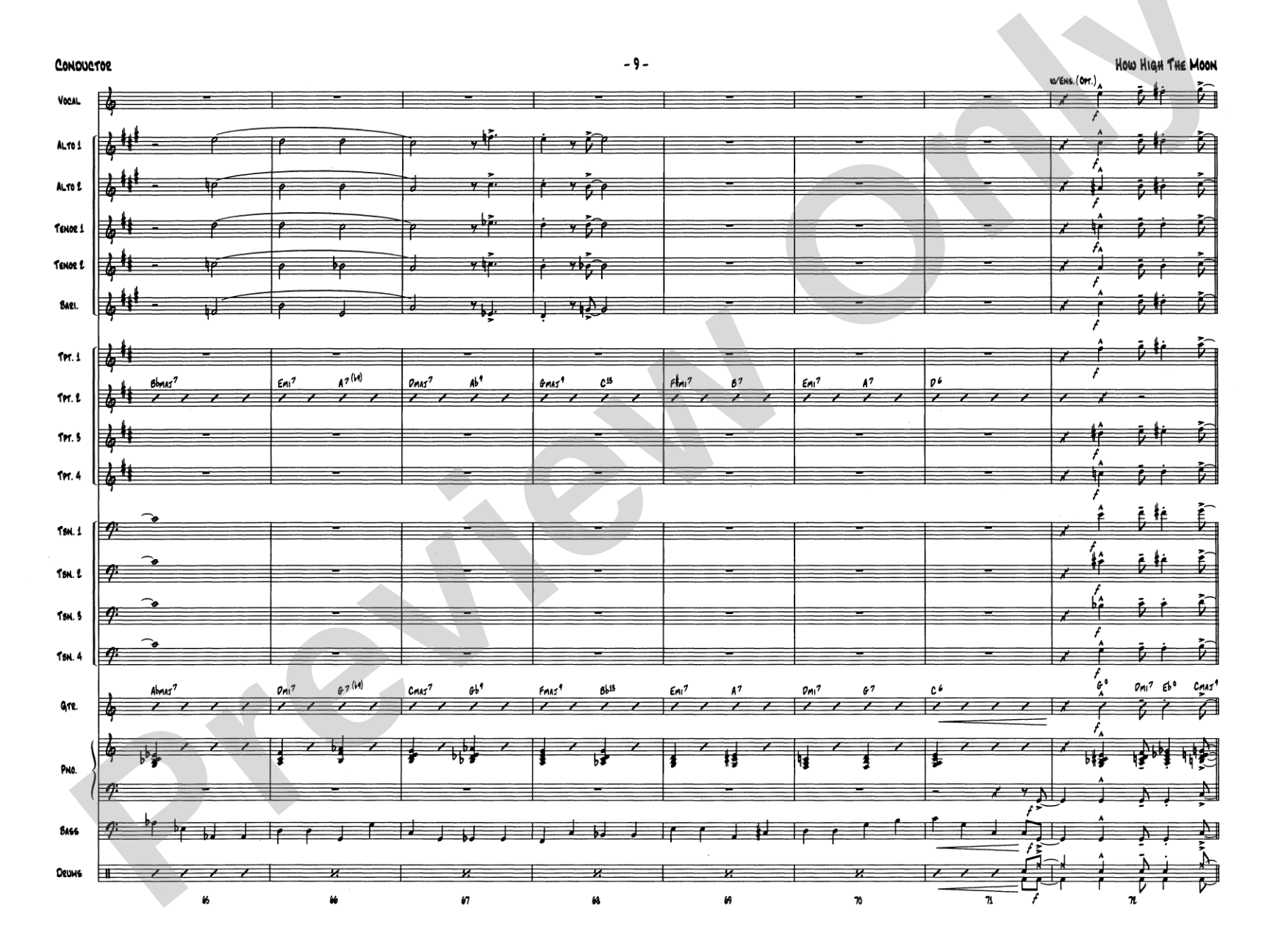
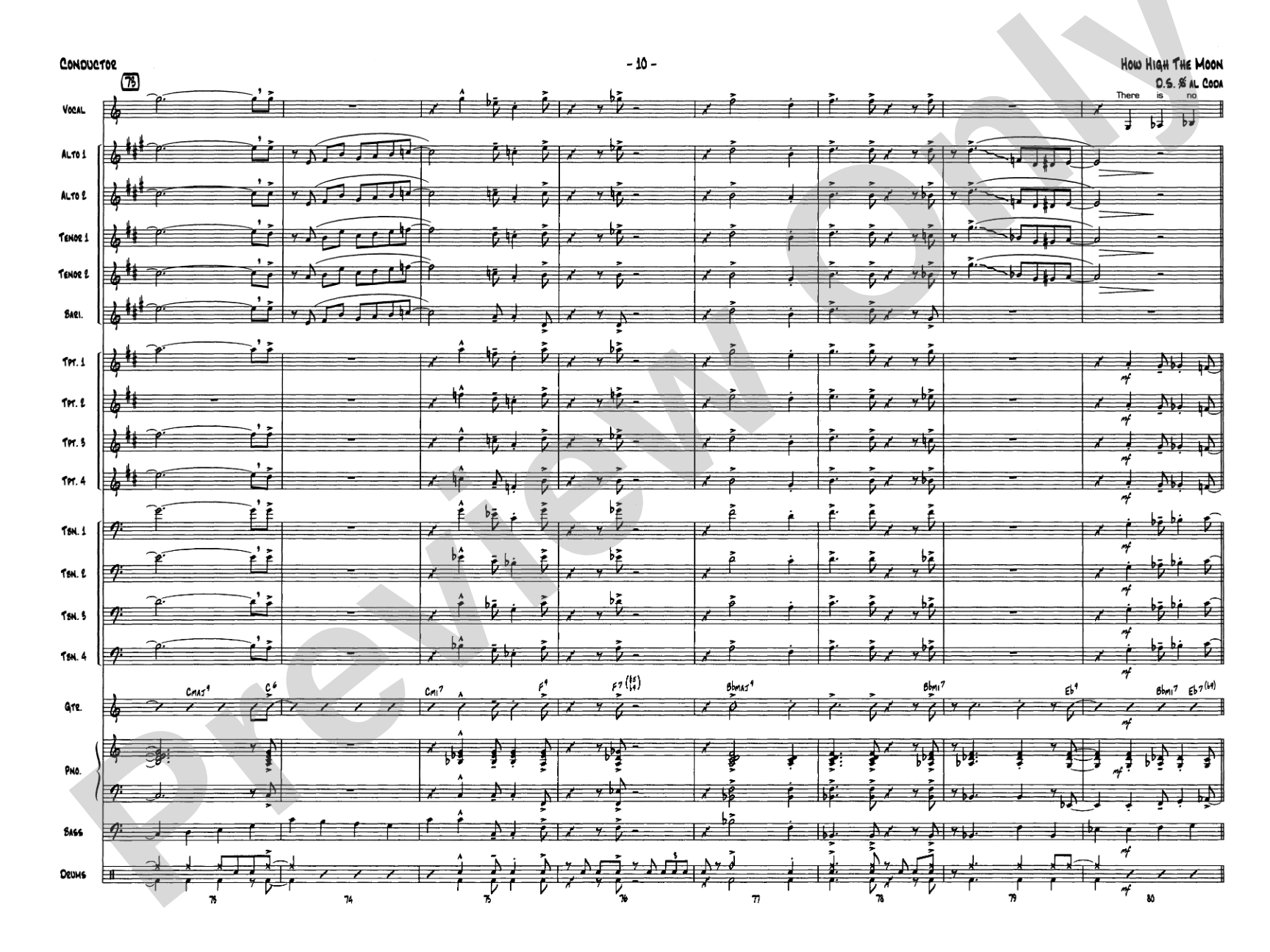
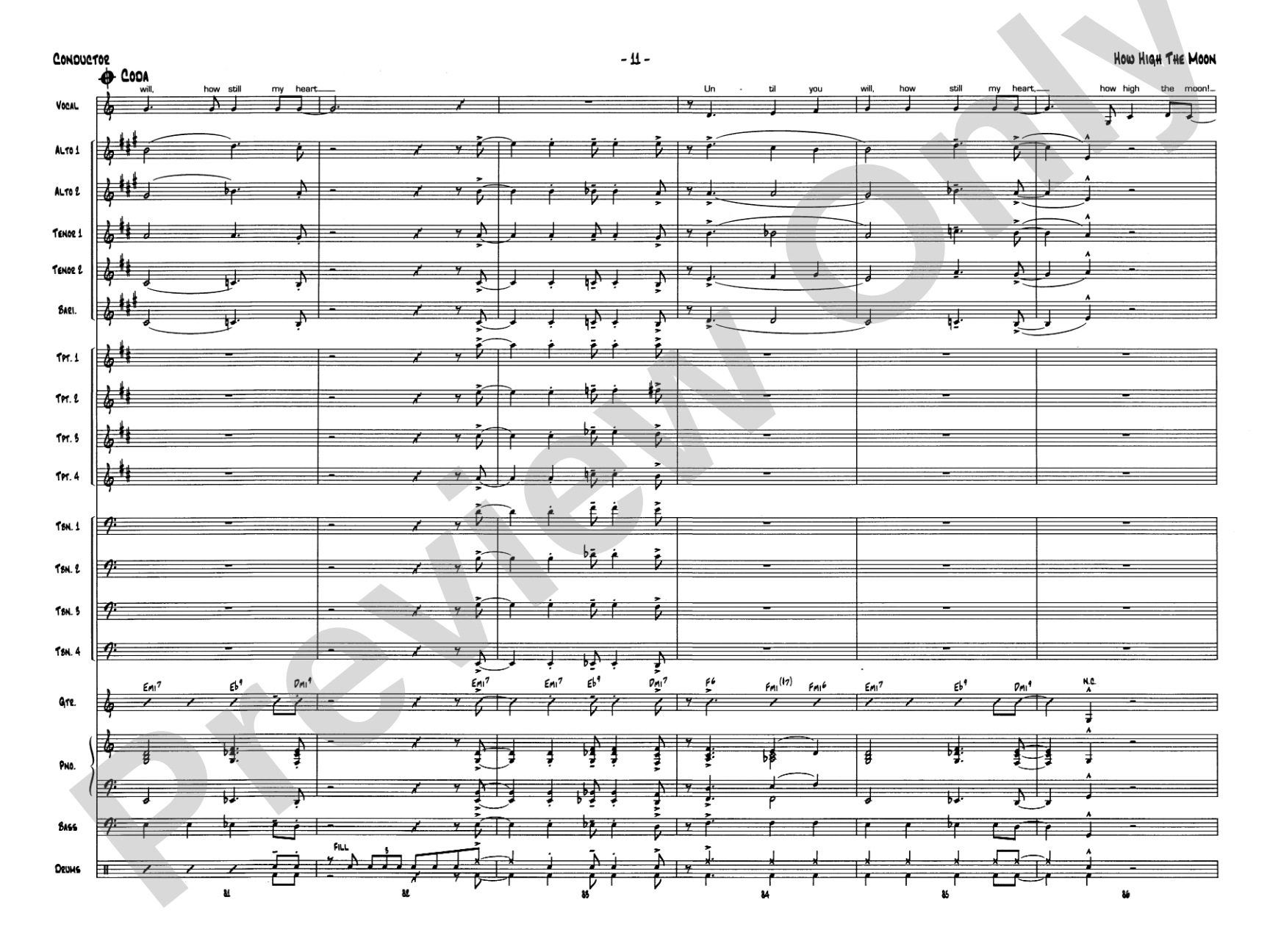
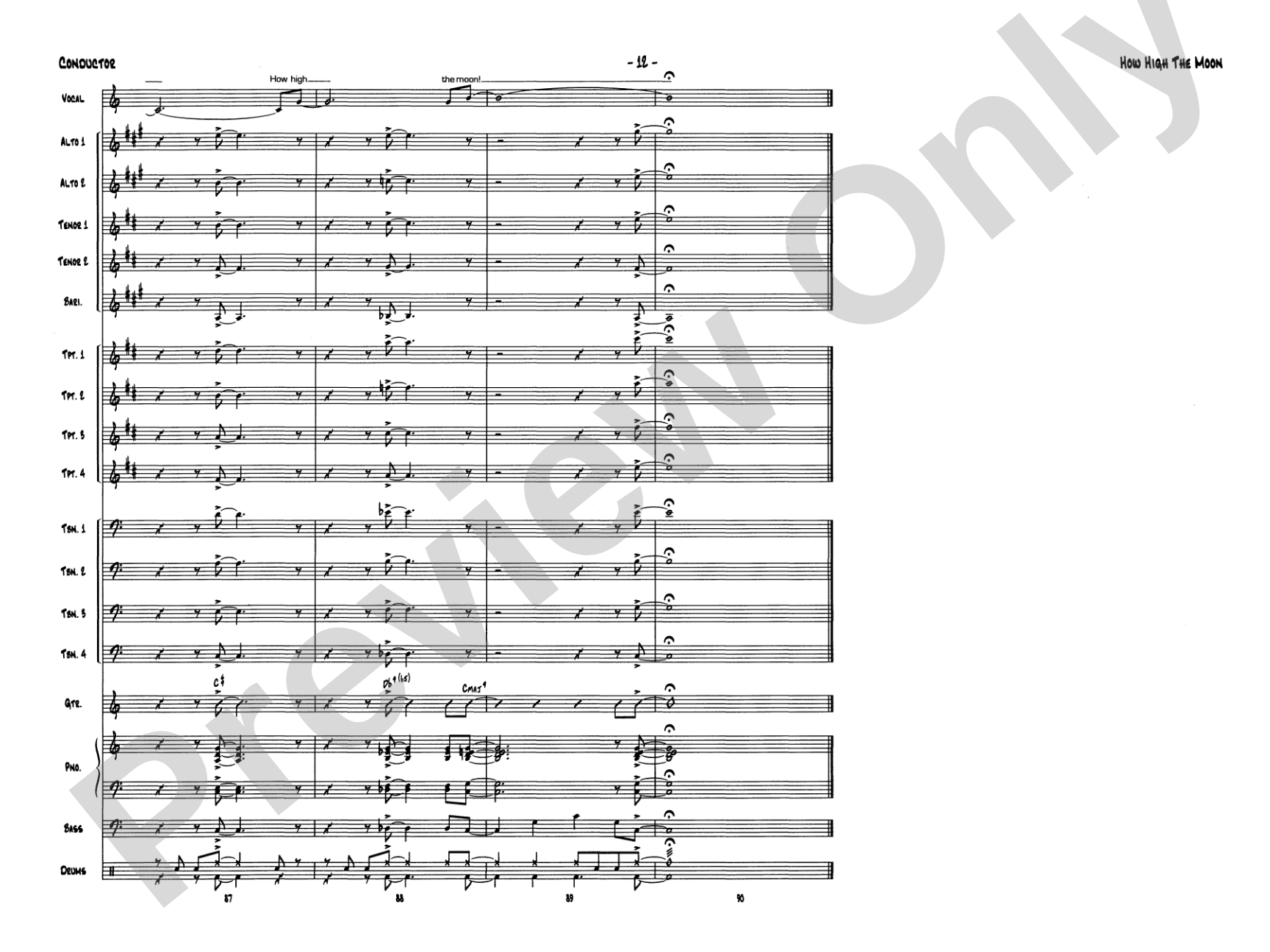



How High the Moon: Vocal Solo with Jazz Ensemble Conductor Score & Parts
Vocal Feature
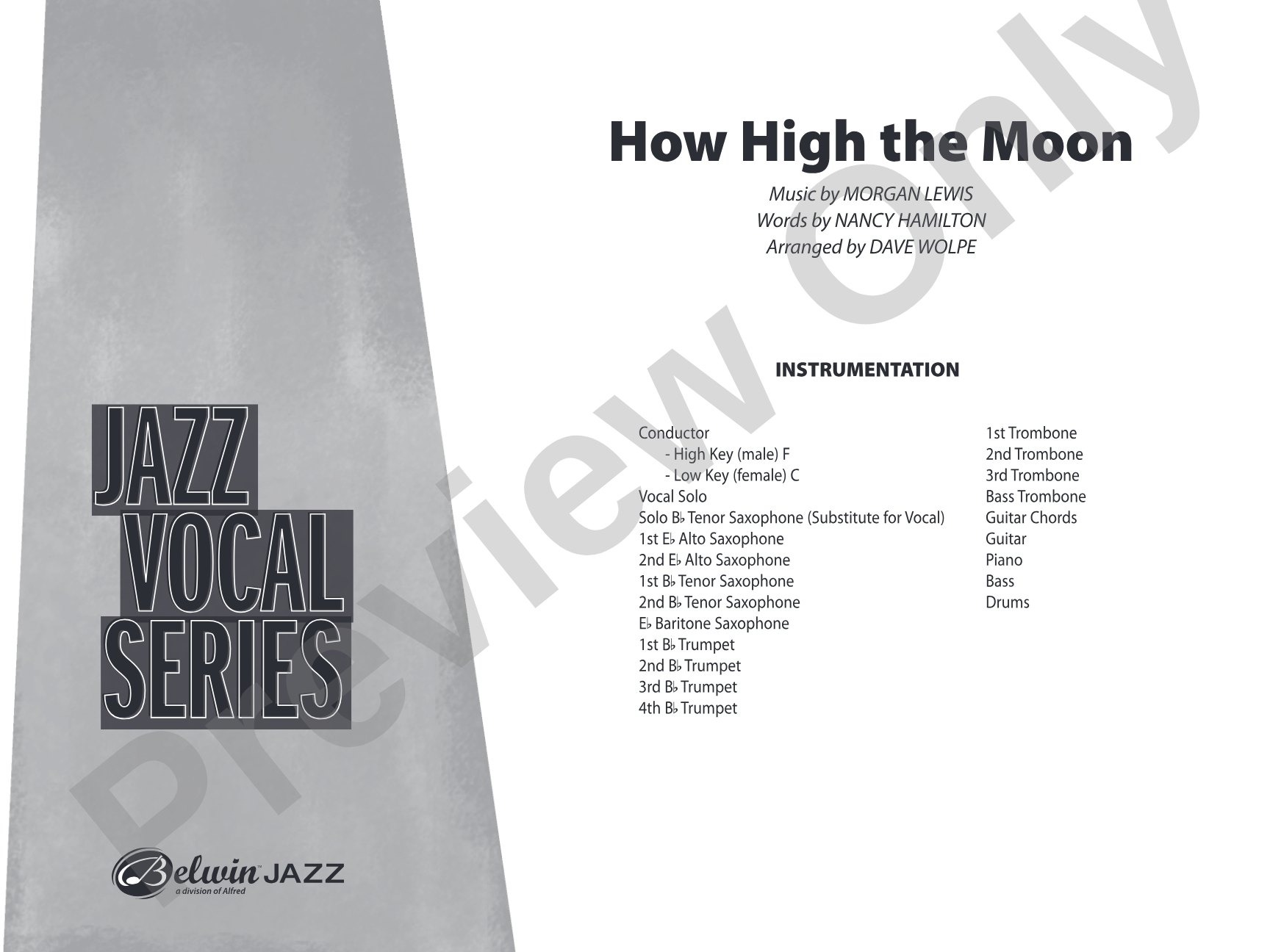
Music by Morgan Lewis, words by Nancy Hamilton / arr. Dave Wolpe
Grade: 3.5 (Medium)
Item: 00-PK-0004449

$62.00
Pickup currently not available
Buy Extra Parts (Digital PDF Download)
Parts Added to Cart!
Related Items
How High the Moon: Jazz Ensemble Conductor Score & Parts |
$52.00
|
View | |
How High the Moon: Jazz Ensemble Conductor Score & Parts |
$52.00
|
View | |
How High the Moon: Jazz Ensemble Conductor Score |
$9.00
|
View | |
How High the Moon: Vocal Solo with Jazz Ensemble Conductor Score & Parts |
$62.00
|
View | |
How High the Moon: Vocal Solo with Jazz Ensemble Conductor Score |
$10.00
|
View |
Description
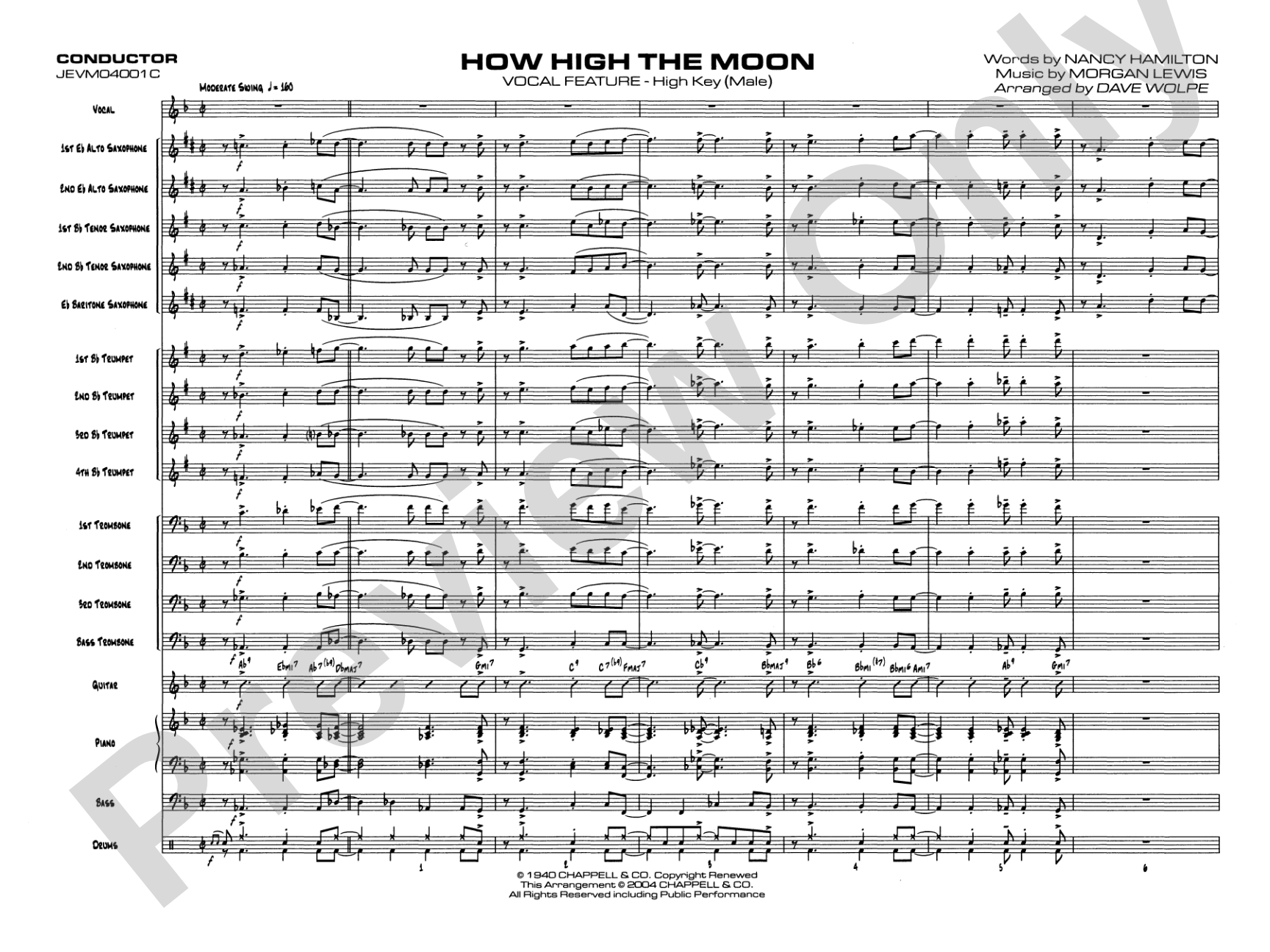
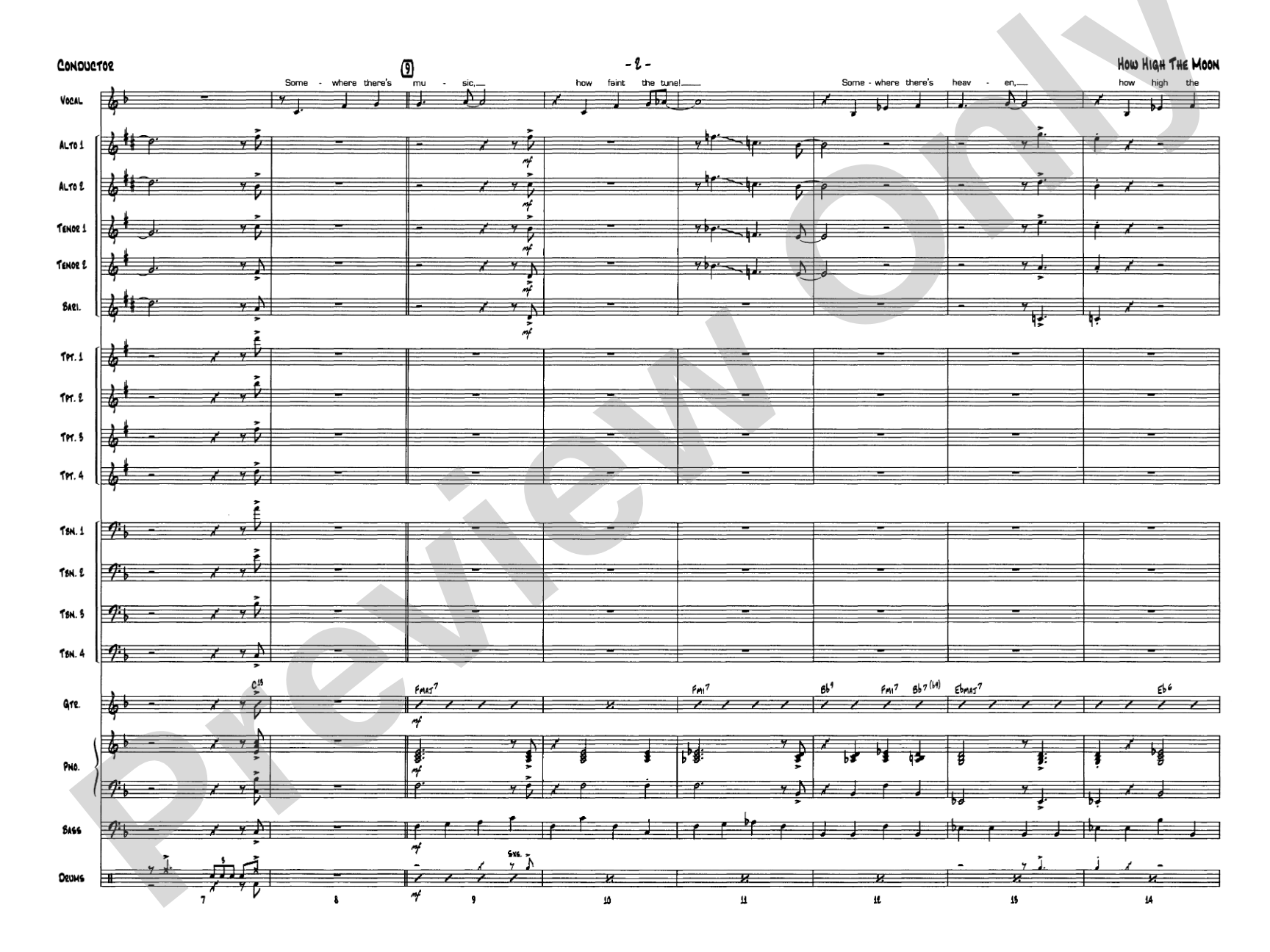
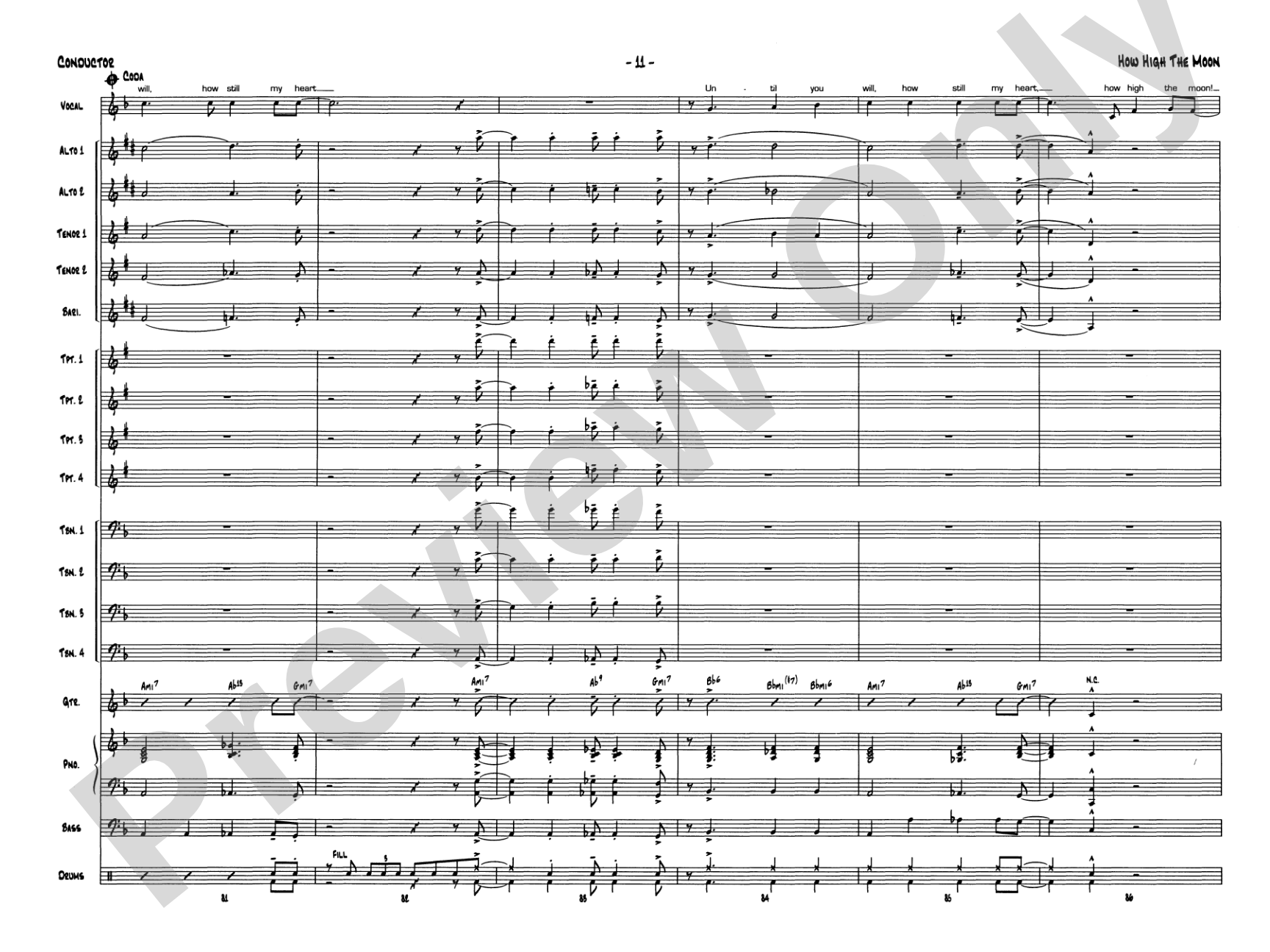
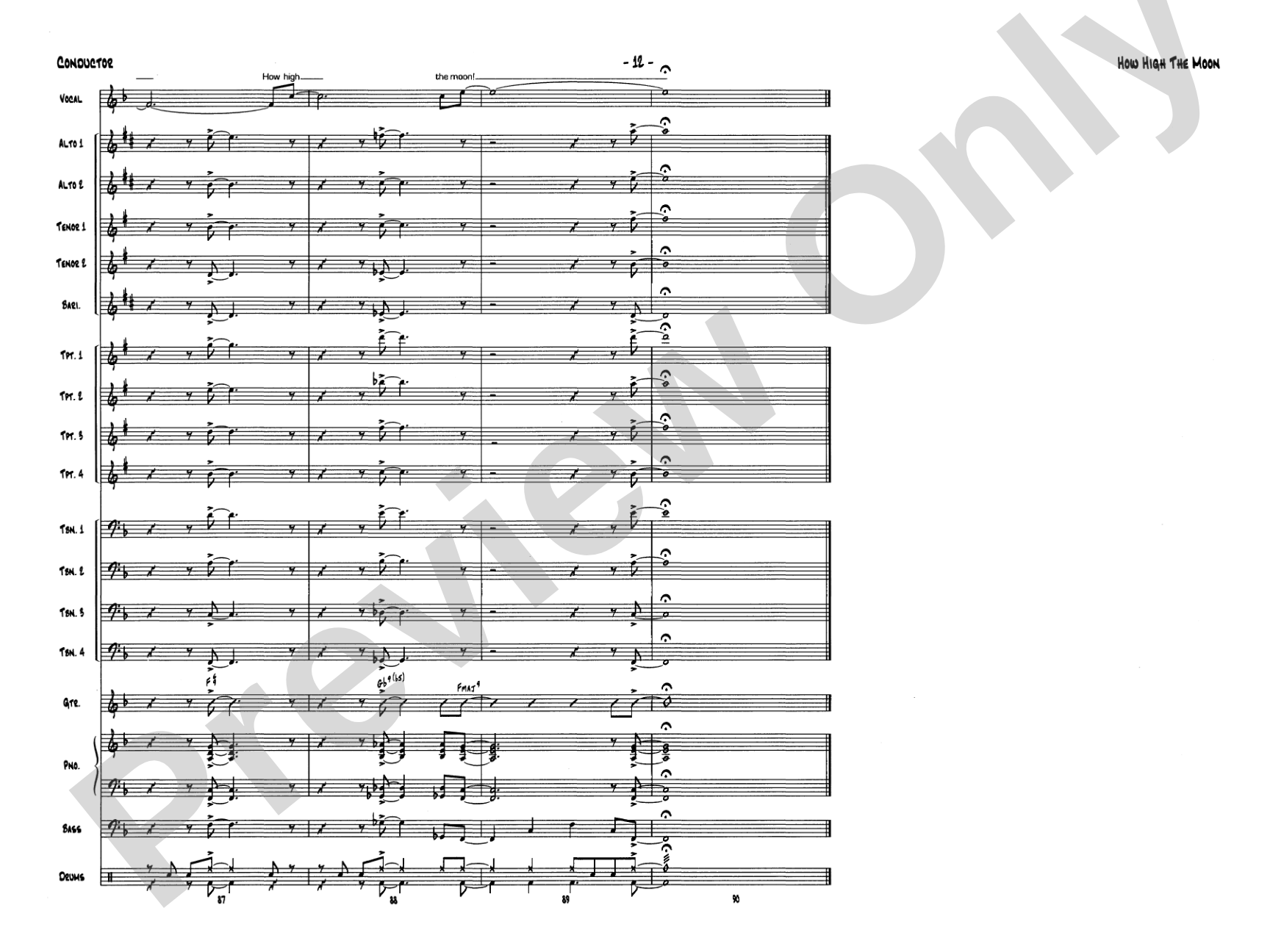
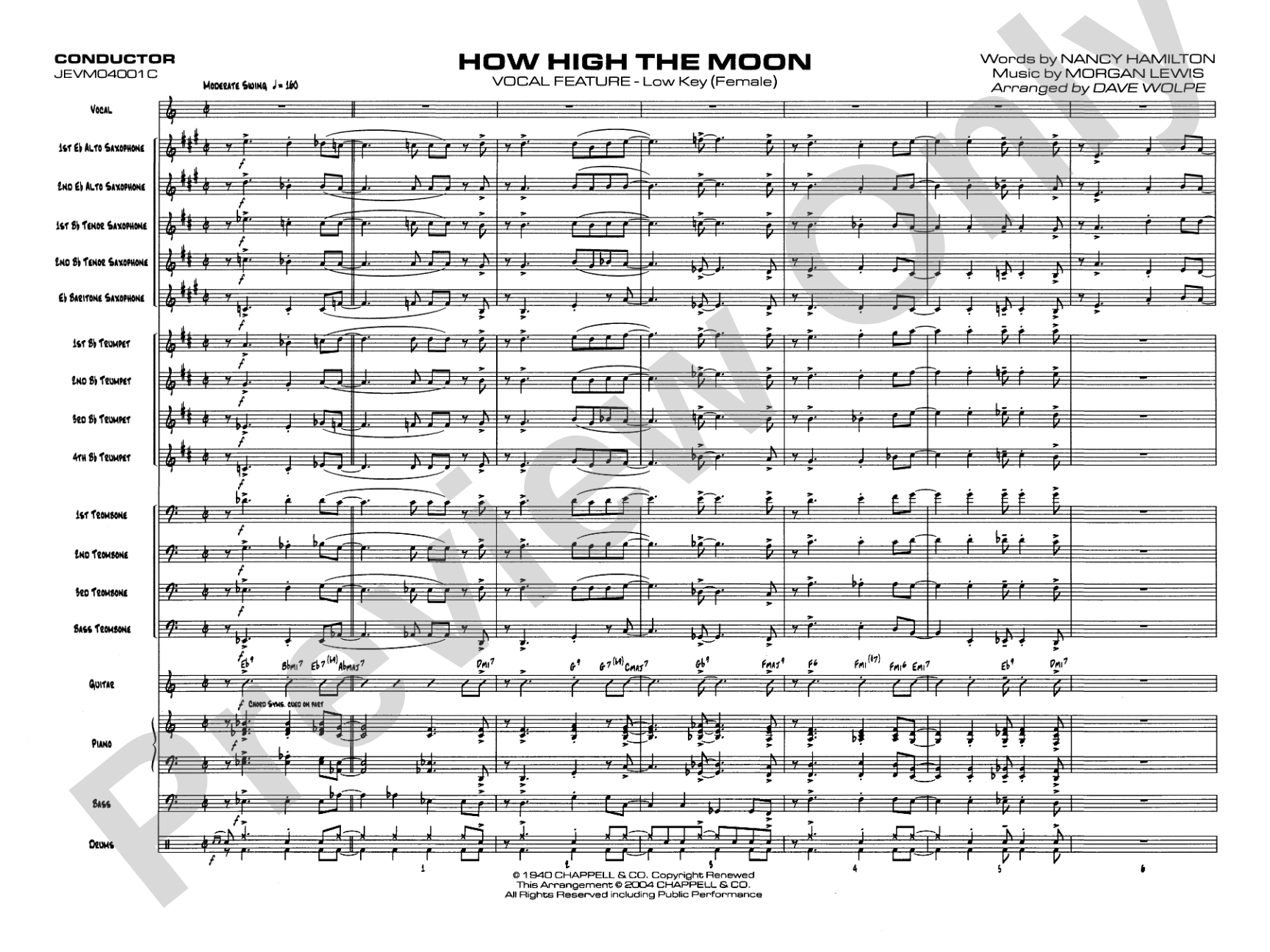
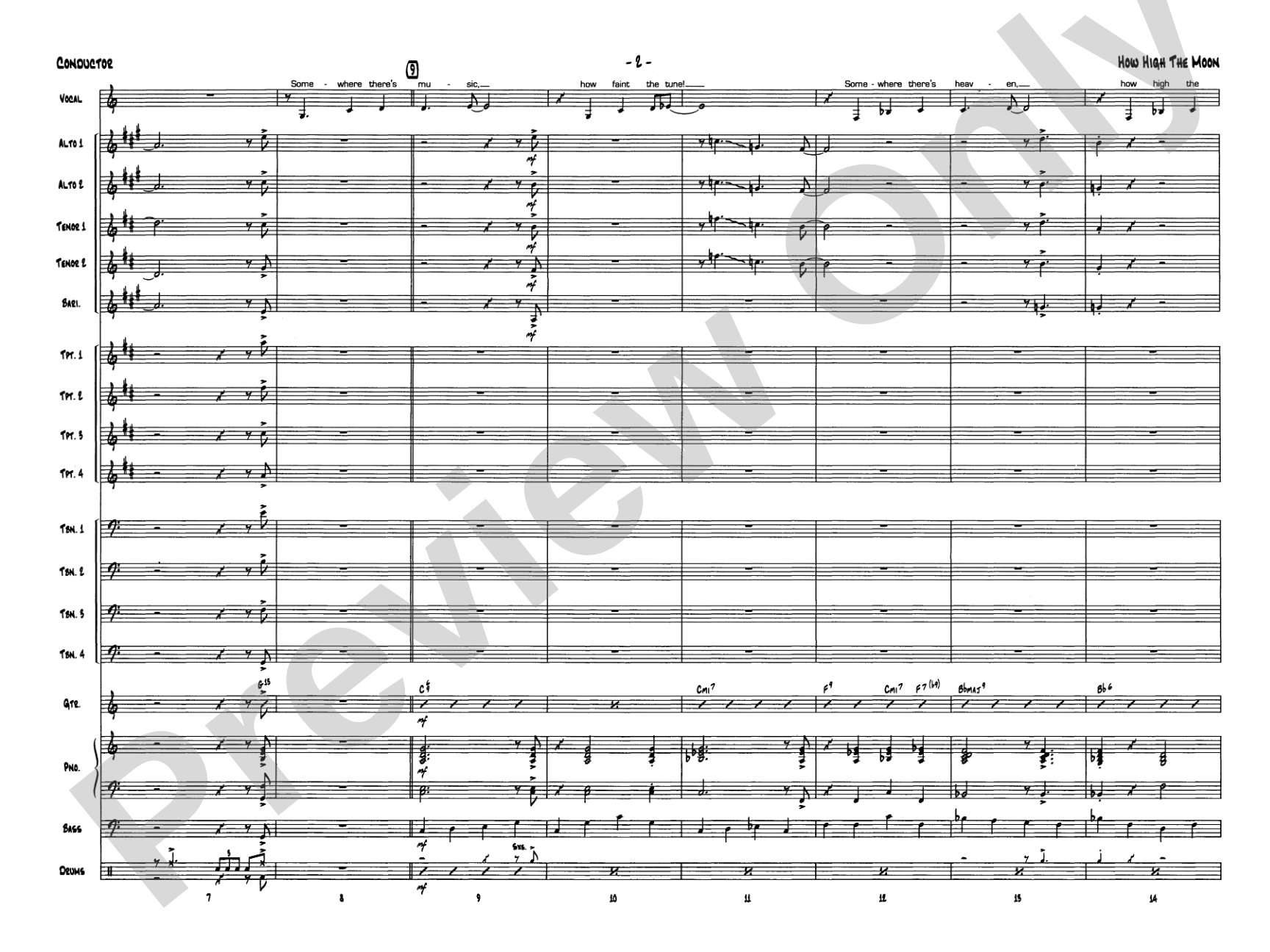
A jazz masterpiece arranged for vocal solo and jazz ensemble. This chart is written in two keys to provide maximum flexibility for the vocalist and the band. This straight-ahead swinger also has brief solos for 1st trombone and 2nd trumpet. The low key (female) is C with a range from F below middle C to third line B. The high key (male) is pitched in F with a range from B-flat below middle C to fourth space E. The low-key version also has an optional shout chorus with the ensemble. Dave Wolpe arranged this one, and that is your guarantee of an excellent chart. (2:53)


Don't just read it, hear it, play along with it, and watch your students grow with it. In MakeMusic Cloud, How High the Moon: Vocal Solo with Jazz Ensemble Conductor Score & Parts comes alive with professional accompaniment, adjustable tempo, and built-in practice tools that turn solo practice into real progress.
Open in the Player
Jump straight in and assign it today.
Start Your Free Trial
Open this title and explore the full library in minutes.
Sample Audio
1
Audio File
--:--
0:00
0:00
Sample Video
No sample videos found.
Additional Details
Series:
Jazz Vocal Series
Publisher:
Alfred Music
Page Count:
82
SKU:
00-PK-0004449
More about this title
About the Composer: Morgan Lewis
Morgan Lewis composed "How High the Moon" in 1940 as part of the Broadway musical "Two for the Show." The song became a jazz standard almost immediately, recorded by countless artists across decades and cementing itself as essential vocabulary for any serious jazz vocalist. Lewis's gift for melody and harmonic richness gave the tune the depth that keeps musicians and audiences returning to it generation after generation.
Why we love this
Dave Wolpe's arrangement respects the tune's elegance while building in genuine ensemble swing and featured solo moments that keep players engaged throughout. The dual-key format removes the usual tension between vocal range and band comfort, making this accessible for your strongest singers regardless of voice type. This is a straight-ahead swinger that sounds substantial without demanding virtuosity from anyone involved.
What to expect
Sophisticated without being fussy. "How High the Moon" swings with the confidence of a standard that has earned its place through decades of play. The melody sits comfortably in the ear, the harmonic movement is rich enough to hold musicians' attention, and the overall vibe is warm, approachable, and genuinely fun to hear and play.
Who it's for
Vocal jazz soloists with intermediate musicianship and a secondary jazz ensemble (high school, college, or adult community band). The two-key approach makes it viable for either treble or lower-voice soloists, and the moderate difficulty level means ensemble members don't need extensive jazz experience to execute the parts cleanly.
How to get the most out of it
- Balance the vocalist's tone against the ensemble throughout; the arrangement supports rather than overwhelms, so resist the urge to oversell either one.
- Lock the rhythm section pocket early in rehearsals. The straightforward swing feel depends entirely on confidence in the drums, bass, and comping instruments.
- Give the trombone and trumpet soloists space to breathe and phrase musically. These breaks are short but they carry the arrangement's personality.
- If using the optional shout chorus in the low-key version, rehearse the ensemble voicings separately so they land with precision and energy.
How to use it
Program this as a centerpiece for a jazz concert or as the anchor to a vocal-feature set alongside other standards. It works equally well as a spring showcase piece or as part of a year-end jazz review. The moderate tempo and accessible style make it an excellent choice for audiences unfamiliar with jazz vocal repertoire.
Skills your students will build
- Swinging eighth-note articulation and phrasing in a vocal context
- Trading solo space and responding to ensemble figures
- Leading a jazz ensemble as a vocalist while maintaining ensemble cohesion
- Interpreting rubato and stylistic flexibility within jazz conventions
- Reading and executing jazz ensemble voicings as supporting instrumentalists