
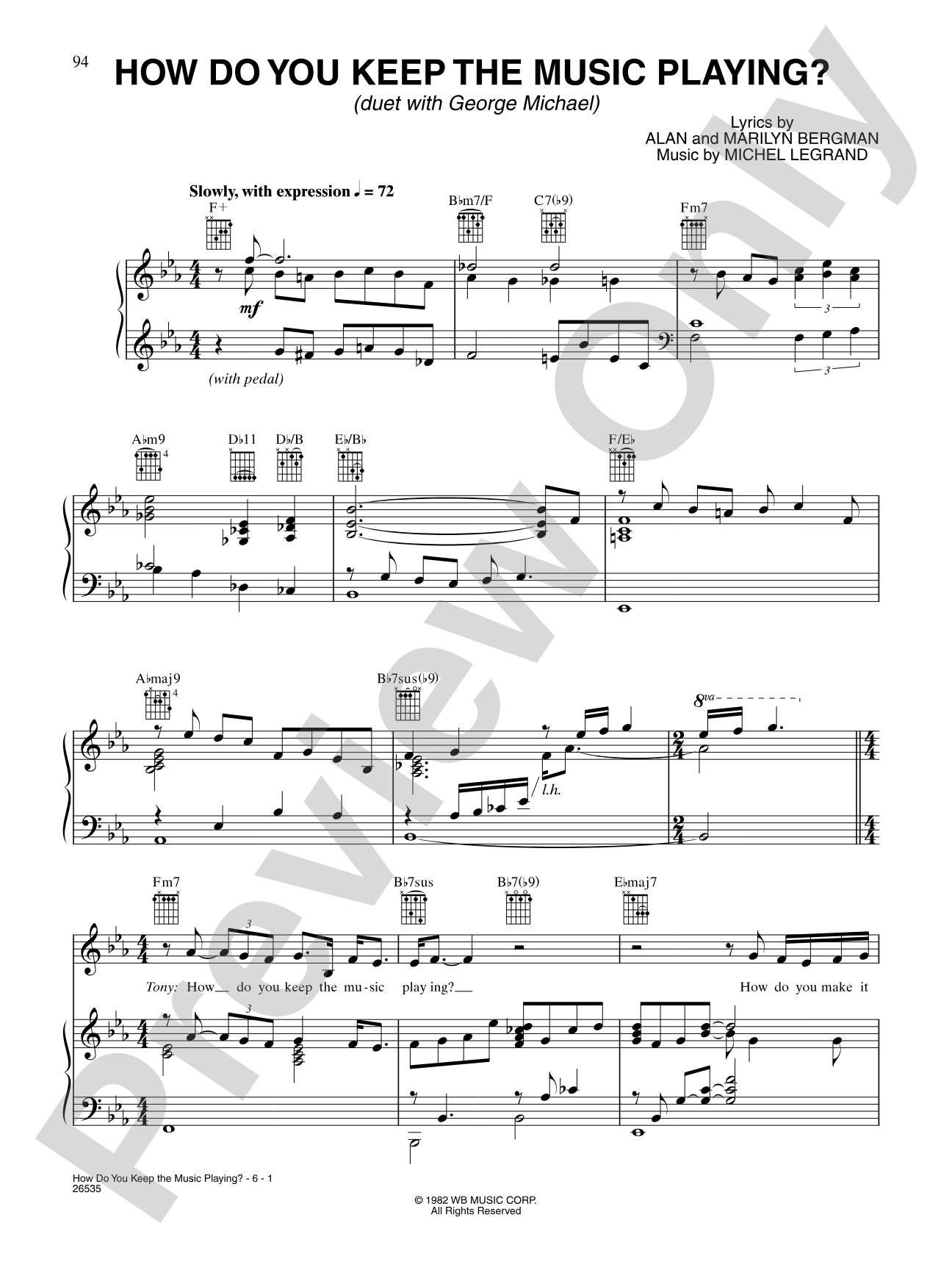
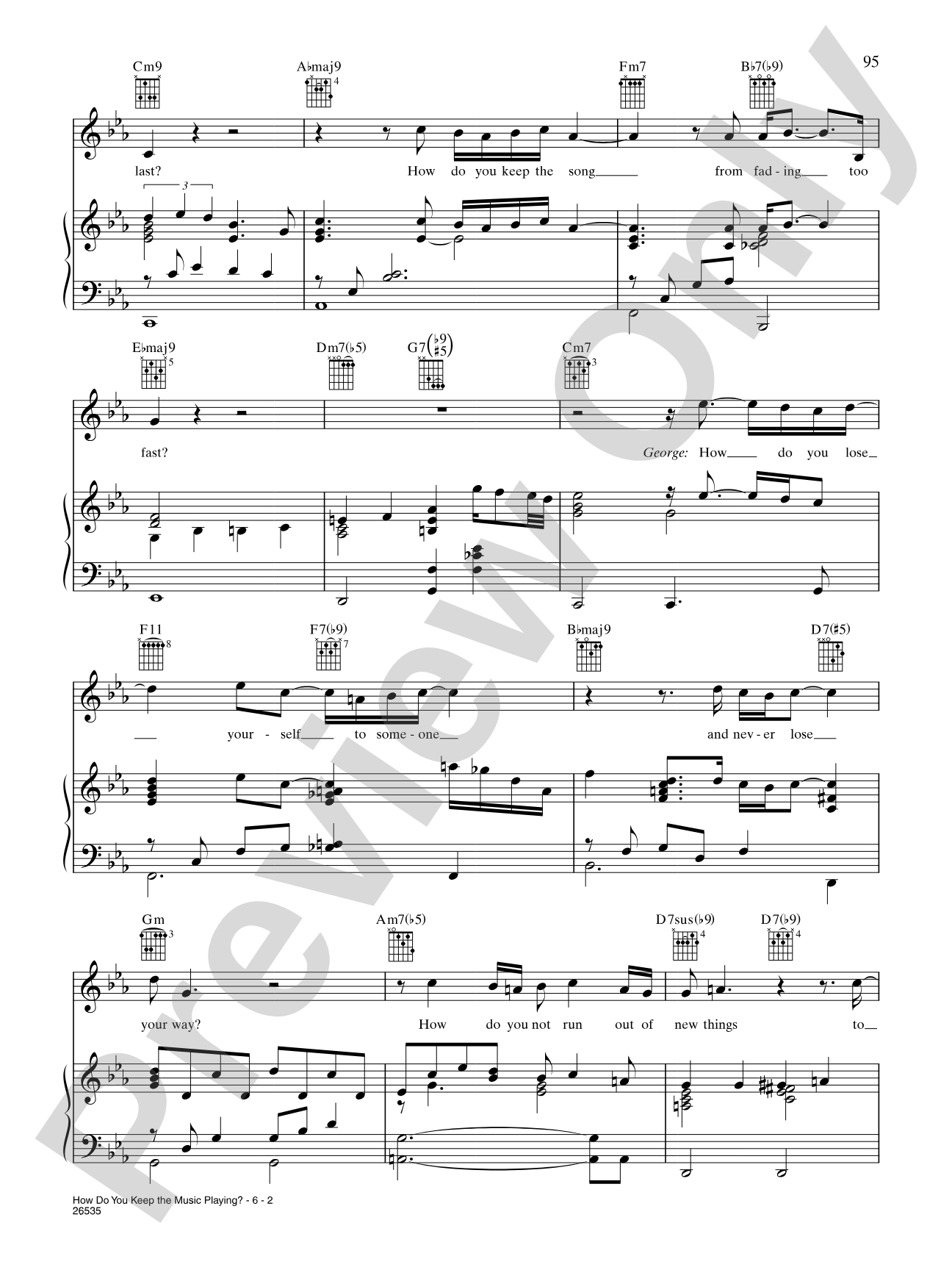

How Do You Keep The Music Playing? (from "Best Friends"): Piano/Vocal/Chords
Tony Bennett
Item: 00-PSP-000136
$5.99
Pickup currently not available
Related Items
Lullaby Of Broadway (From "Gold Diggers Of 1935"): Lead Sheet |
$4.99
|
View | |
Are You Havin' Any Fun? (from "Geoger White's Scandals"): Piano/Vocal/Chords |
$4.99
|
View | |
I Wanna Be Around: Piano/Vocal/Chords |
$4.99
|
View | |
If I Ruled The World (from "Pickwick"): Piano/Vocal/Chords |
$4.99
|
View | |
Just In Time: Piano/Vocal/Chords |
$4.99
|
View | |
Lullaby Of Broadway (from "Gold Diggers of 1935"): Piano/Vocal/Chords |
$9.99
|
View | |
Put On A Happy Face (from "Bye, Bye, Birdie"): Piano/Vocal/Chords |
$4.99
|
View | |
Rags To Riches: Piano/Vocal/Chords |
$4.99
|
View | |
The Boulevard Of Broken Dreams (from "Moulin Rouge"): Piano/Vocal/Chords |
$5.99
|
View | |
The Good Life: Piano/Vocal/Chords |
$4.99
|
View |
Description
Alfred is pleased to release the album-matching folio for Tony Bennett's Duets -- An American Classic. Duets -- An American Classic features Tony Bennett singing classic songs with some of the most famous vocalists in the world. This book provides the lyrics along with piano and chord arrangement for all the songs on the record. Titles: Lullaby of Broadway (w/the Dixie Chicks) * Smile (w/Barbara Streisand) * Put on a Happy Face (w/James Taylor) * The Very Thought of You (w/Paul McCartney) * The Shadow of Your Smile (w/Juanes) * Rags to Riches (w/Elton John) * The Good Life (w/Billy Joel) * Cold, Cold Heart (w/Tim McGraw) * The Best is Yet to Come (w/Diana Krall) * For Once in My Life (w/Stevie Wonder) * Are You Havin' Any Fun? (w/Elvis Costello) * Because of You (w/k.d. lang) * Just in Time (w/Michael Bublé) * The Boulevard of Broken Dreams (w/Sting) * I Wanna Be Around (w/Bono) * Sing, You Sinners (w/John Legend) * I Left My Heart in San Francisco * How Do You Keep the Music Playing? (w/George Michael) * If I Ruled The World (w/Celine Dion).


How Do You Keep The Music Playing? (from "Best Friends"): Piano/Vocal/Chords isn't in MakeMusic Cloud just yet...but it could be. Let us know you'd like to see it, and you'll help shape what comes next. In the meantime, start a free trial and dive into thousands of interactive titles your students can play along with today.
Request This Title
Tell us you want it.
Start Your Free Trial
Explore everything that's ready to play right now.
Sample Audio
No sample audio found.
Sample Video
No sample videos found.
Additional Details
Publisher:
Alfred Music
Page Count:
104
SKU:
00-PSP-000136
More about this title
About the Artist: Tony Bennett
Tony Bennett stands as one of the last great standards singers, with a career spanning seven decades of impeccable phrasing and emotional depth. Born Anthony Dominick Benedetto in 1926, Bennett mastered the Great American Songbook and brought jazz sensibility to popular song, earning Grammy Awards, an Emmy, and a Lifetime Achievement Award. His late-career collaborations with contemporary artists (recorded when he was in his 80s) demonstrated his enduring relevance and willingness to bridge generations through music.
Why we love this
This folio captures one of the most musically generous projects in modern popular music: duets that pair a master vocalist with artists across genre lines. The arrangements preserve the sophistication of the original recordings while remaining accessible for piano accompaniment, making these standards approachable for singers and pianists who want to learn from Bennett's interpretive choices and sing alongside the recordings.
What to expect
Elegant and conversational, these duets invite singers into intimate moments between world-class artists. Each song carries the warmth of classic songwriting paired with the freshness of unexpected vocal combinations, creating a sense that you're hearing timeless songs discovered anew.
Who it's for
Pianists and vocalists who want to expand their standards repertoire and learn from a master interpreter. This collection works for advanced intermediate and adult singers in studio settings, jazz choirs, or vocalists preparing recital material that bridges traditional and contemporary audiences.
How to get the most out of it
- Study the original recordings with Bennett and his duet partners to understand the vocal phrasing and where the piano enters or retreats in the mix. This will guide your tempo and dynamic choices.
- Use the chord symbols as a foundation, but listen for when to comp lightly versus when to play fuller voicings. Bennett's style often calls for space rather than constant keyboard texture.
- Notice how different duets feature different stylistic colors (country, R&B, pop) and adjust your tone and touch accordingly. The same hand position won't serve Sting the same way it serves James Taylor.
- Practice the vocal melodies away from the piano first. Understanding the contour and style of each song independently will prevent the accompaniment from overshadowing the performance.
How to use it
Program individual selections alongside other jazz standards or pop repertoire to demonstrate how classic songs remain vital when interpreted with care and contemporary voices. This collection works especially well for recitals that celebrate American songwriting across genres, or as material for jazz vocal students learning phrasing and accompaniment from professional recordings.
Skills your students will build
- Interpreting jazz phrasing and rubato from recorded models
- Comping with chord symbols in a singer-accompanying style
- Singing with stylistic variety (swing, country, pop, soul elements) within the standards tradition
- Reading lyrics with musical expression and dramatic intention
- Balancing melody with accompaniment texture