

High Hopes: TB Choral Octavo
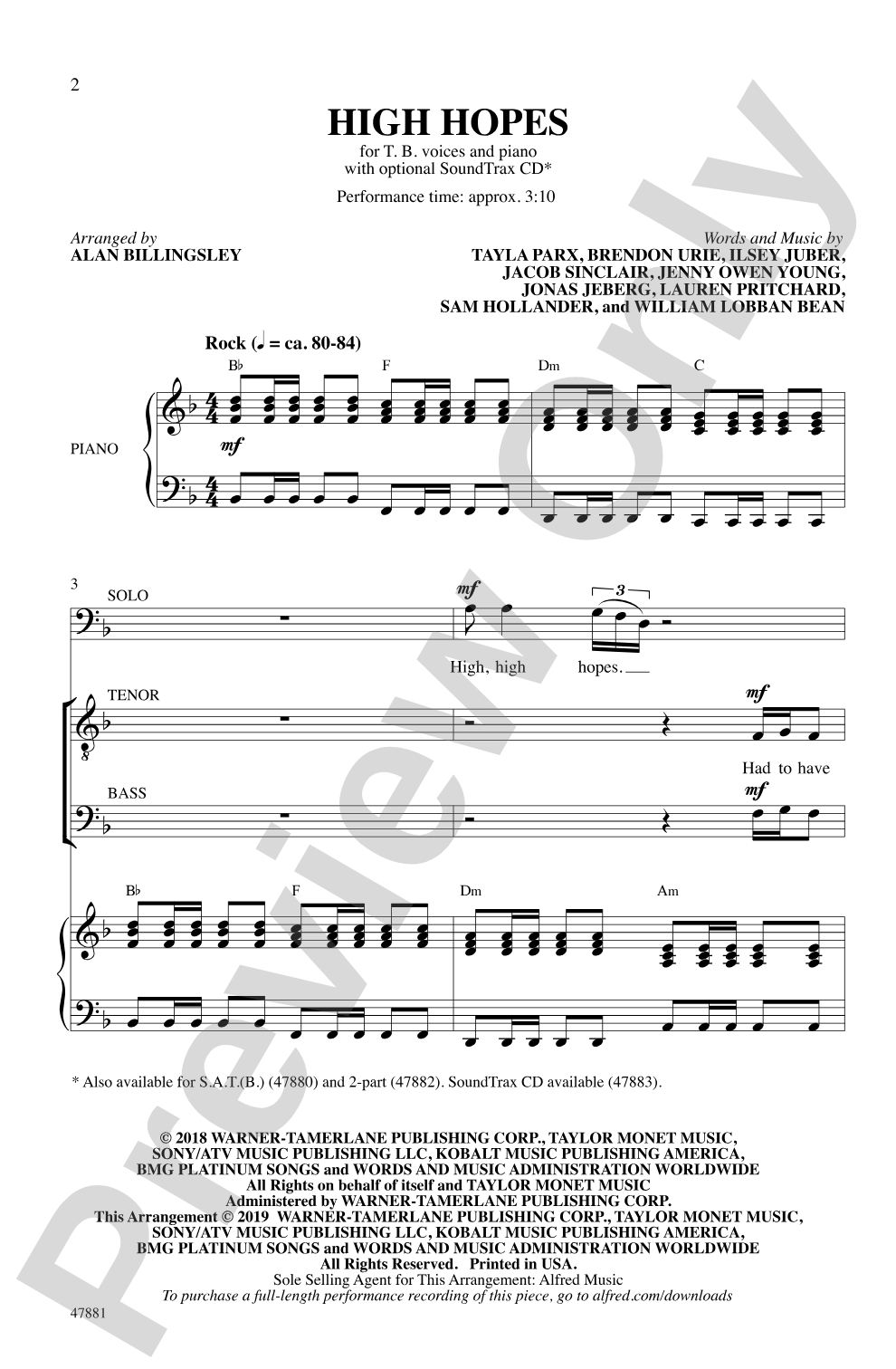
Words and music by Tayla Parx, Brendon Urie, Ilsey Juber, Jacob Sinclair, Jenny Owen Young, Jonas Jeberg, Lauren Pritchard, Sam Hollander, and William Lobban Bean / arr. Alan Billingsley
Item: 00-PO-0006120
$2.35
Minimum order quantity: 20 copies
One moment…
Related Items
High Hopes: SoundTrax Digital Audio Download |
$29.99
|
View | |
High Hopes: SAT(B) Choral Octavo |
$2.35
|
View | |
High Hopes: 2-Part Choral Octavo |
$2.35
|
View | |
High Hopes: Choral SoundTrax CD |
$29.99
|
View | |
High Hopes: SAT(B) Choral Octavo |
$2.35
|
View | |
High Hopes: TB Choral Octavo |
$2.35
|
View | |
High Hopes: 2-Part Choral Octavo |
$2.35
|
View |
Description
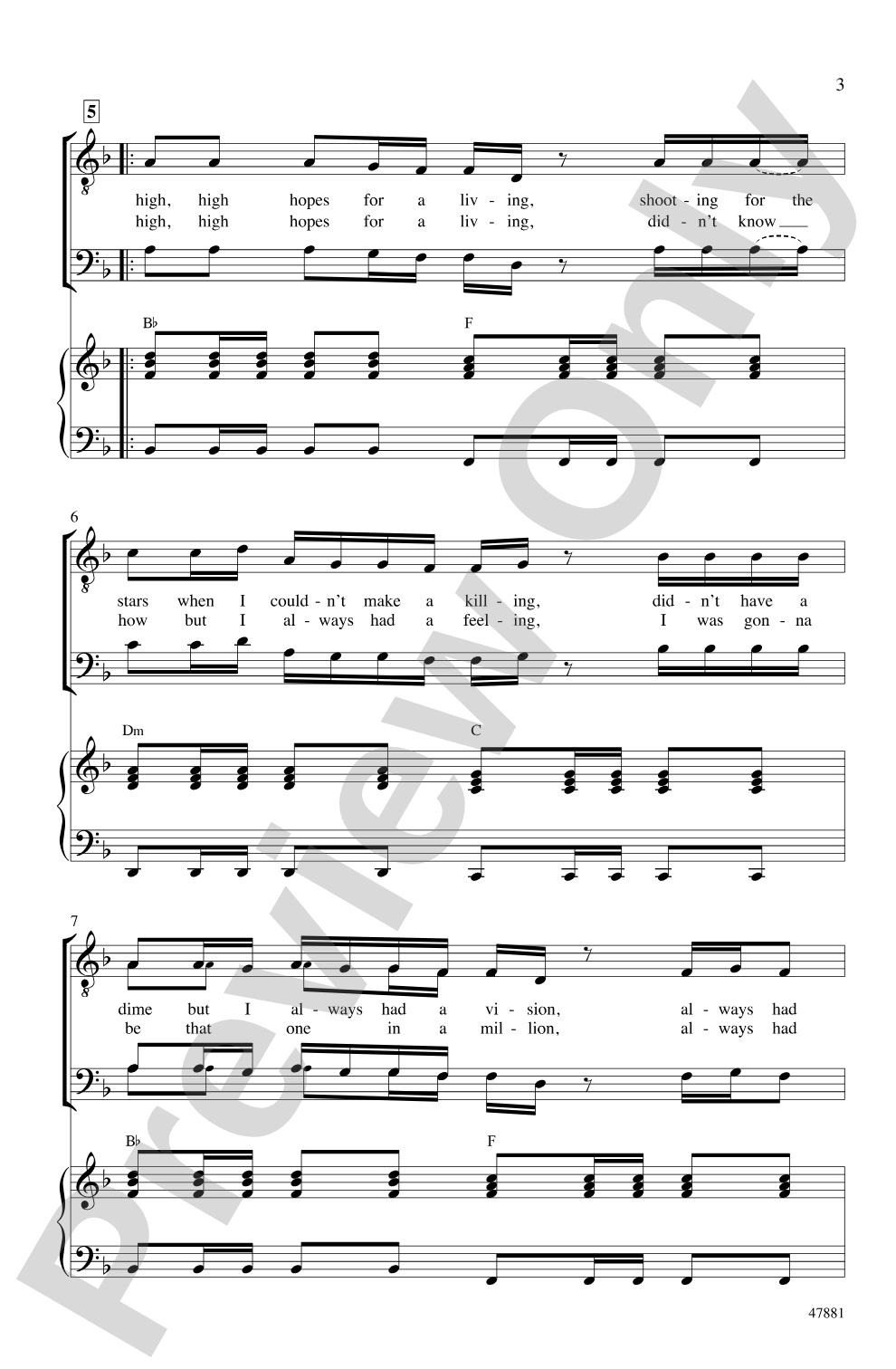
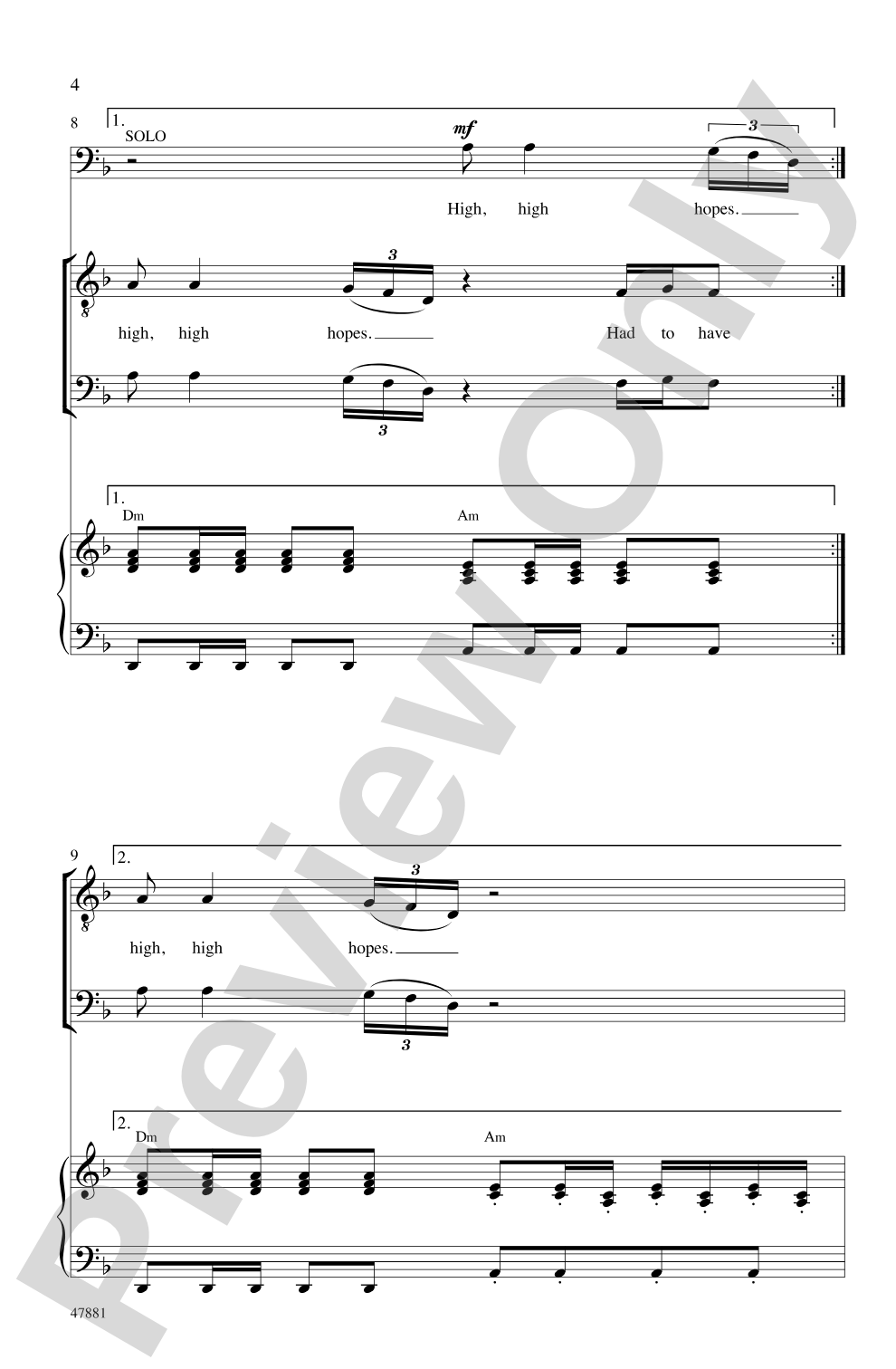
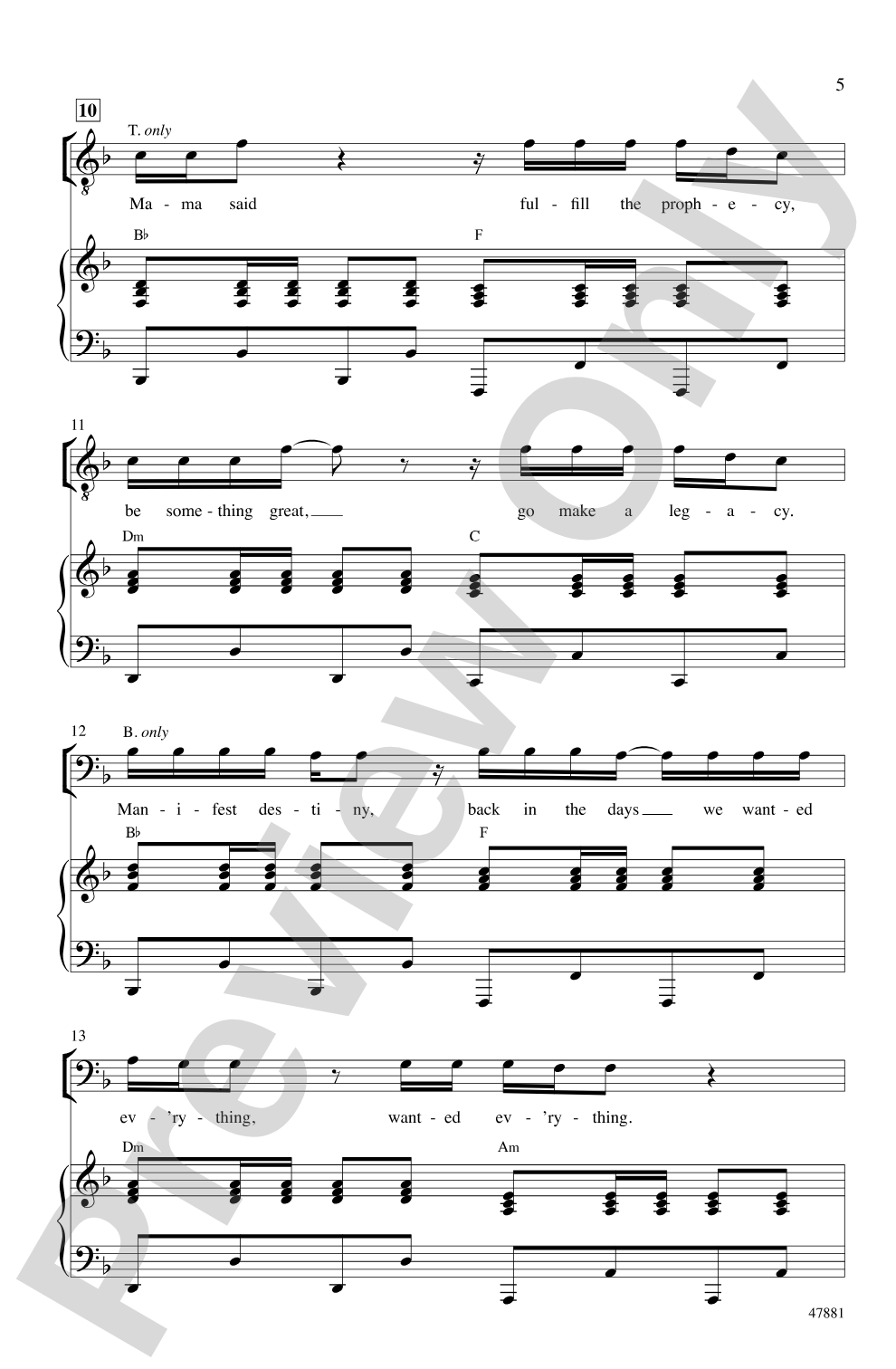
Show choirs rejoice! This rock-pop anthem is PANIC! AT THE DISCO's highest charting hit to date. Alan Billingsley's accessible arrangement is a faithful takedown of the original, equally effective in all voicings. The aspirational message is about rising to the top and a desire to “be that one in a million.” Three-part mixed choirs will enjoy the SAT(B) voicing as the baritone part is optional.


High Hopes: TB Choral Octavo isn't in MakeMusic Cloud just yet...but it could be. Let us know you'd like to see it, and you'll help shape what comes next. In the meantime, start a free trial and dive into thousands of interactive titles your students can play along with today.
Request This Title
Tell us you want it.
Start Your Free Trial
Explore everything that's ready to play right now.
Sample Audio
1
Audio File
--:--
0:00
0:00
Sample Video
No sample videos found.
Additional Details
Series:
Alfred Pop Choral Series
Publisher:
Alfred Music
Page Count:
20
SKU:
00-PO-0006120
More about this title
About the Composer: Tayla Parx
Tayla Parx is a songwriter and producer whose work spans pop, R&B, and musical theater. She co-wrote "High Hopes" with Brendon Urie, Ilsey Juber, Jacob Sinclair, and Jenny Owen Youngly, crafting one of the decade's most recognizable pop anthems. Her contributions to contemporary music have made her work a natural fit for choral arrangements that bring current hits into the rehearsal room.
Parx's songwriting emphasizes accessibility without sacrificing authenticity. Her melodies are designed to resonate broadly, which translates into choral arrangements that engage singers while remaining faithful to the original's energy and appeal.
Why we love this
Alan Billingsley's arrangement captures what made the original unstoppable: infectious forward momentum, a hook that sticks, and genuine optimism in the lyric. The optional baritone part means your TB choir doesn't feel like a compromise arrangement; it feels like the intended version. Directors who want contemporary repertoire that actually excites singers (and audiences) will find this delivers.
What to expect
This piece moves with the unstoppable confidence of its original recording. The melody soars, harmonies lock into place with radio-ready precision, and the underlying groove propels everything forward. There's an earnestness in the aspirational message that cuts through the contemporary pop sound, making singers feel like they're part of something both current and meaningful.
Who it's for
Show choirs, pop and contemporary ensembles, and directors seeking repertoire that honors student interests without talking down to them. Works equally well for three-part mixed choirs using SAT(B) voicing or four-part groups; the optional baritone part makes the arrangement flexible across different ensemble sizes.
How to get the most out of it
- Keep the tempo buoyant and slightly ahead of strict time; the energy of the original comes from rhythmic tension, not mathematical precision.
- Balance the vocal parts so that the melody cuts through even when inner voices carry rhythmic momentum. Treble voices should project without pushing into tension.
- Use the recorded accompaniment to lock the groove. This arrangement lives in the pocket, and a strong rhythmic foundation from your rhythm section or track frees singers to focus on blend and phrasing.
- Shape the aspirational lyrics with genuine warmth. The message resonates when singers believe in the sentiment; avoid a cynical or purely technical delivery.
How to use it
Program this as a concert closer or featured set piece where you want immediate audience engagement. It pairs well with other contemporary hits in a pop-focused concert, or stands alone as a high-energy contrast to classical or jazz repertoire. The 20-page score makes it manageable within a typical school year, and its recognizability means students will be eager to rehearse it.
Skills your students will build
- Rhythmic precision in contemporary pop idioms
- Blending in a context that prioritizes groove over traditional harmonic blend
- Melodic projection while singing within an ensemble texture
- Reading and performing with recorded accompaniment
- Sustained energy and dynamic control across extended phrases