

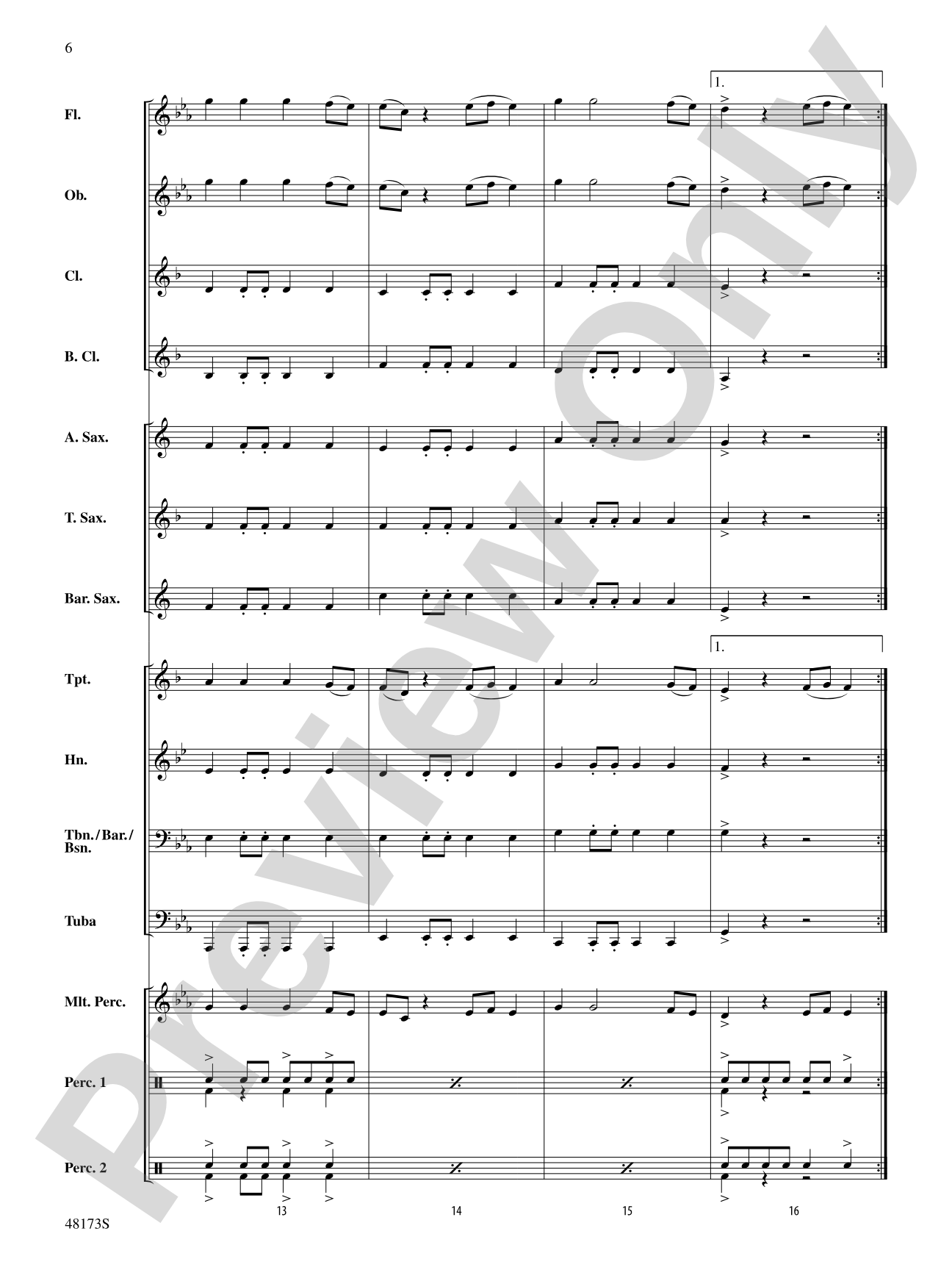
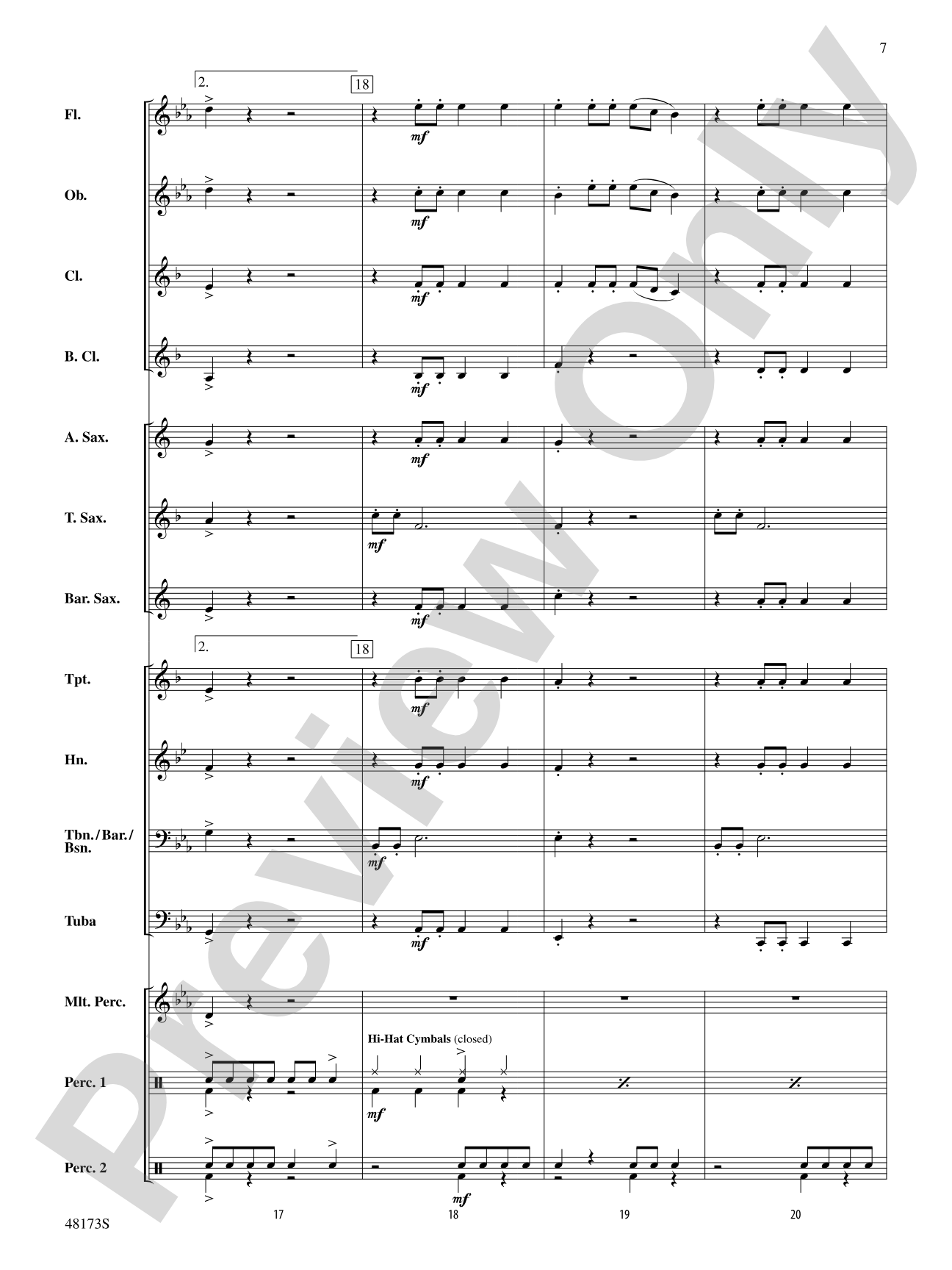
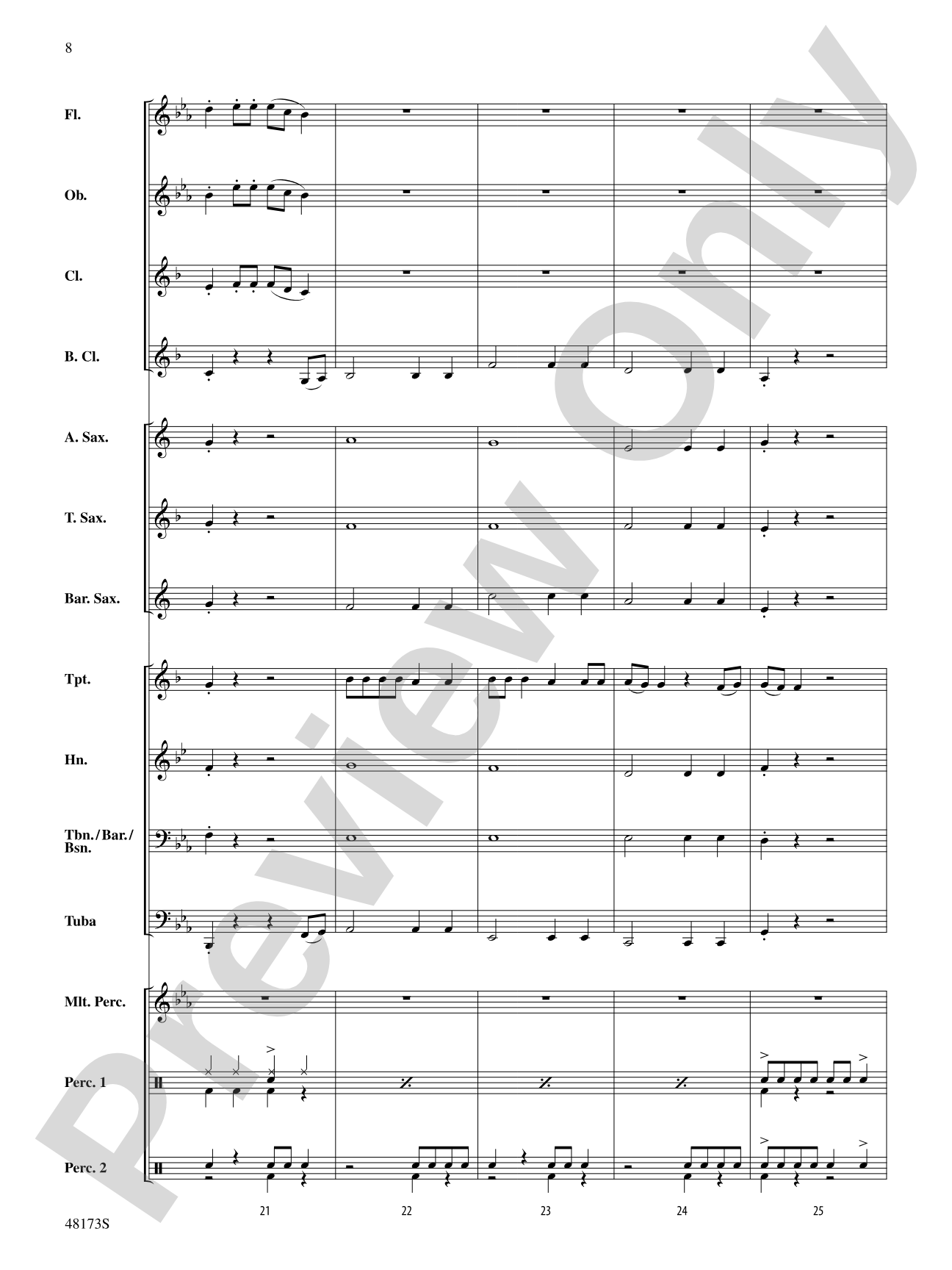
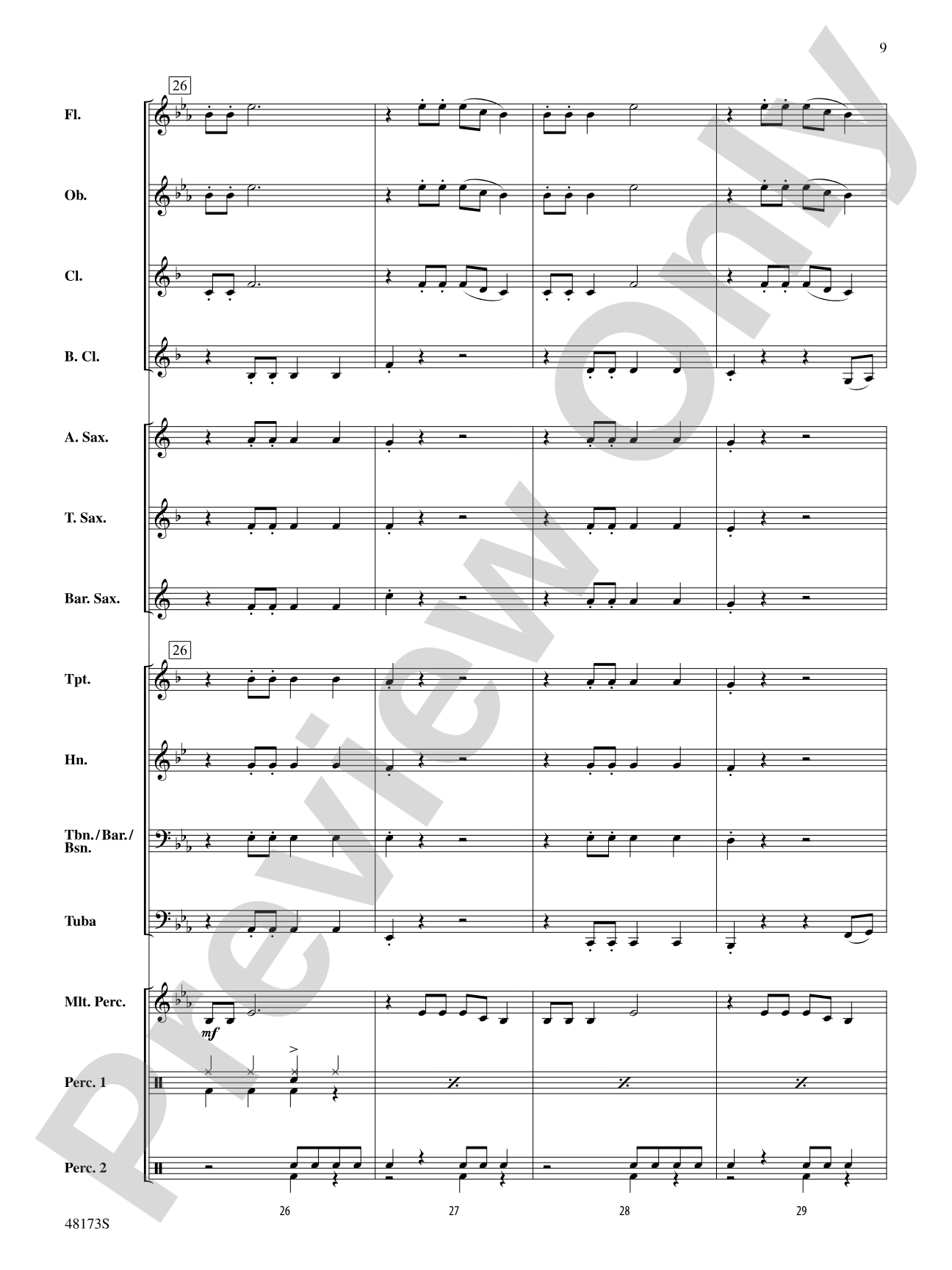
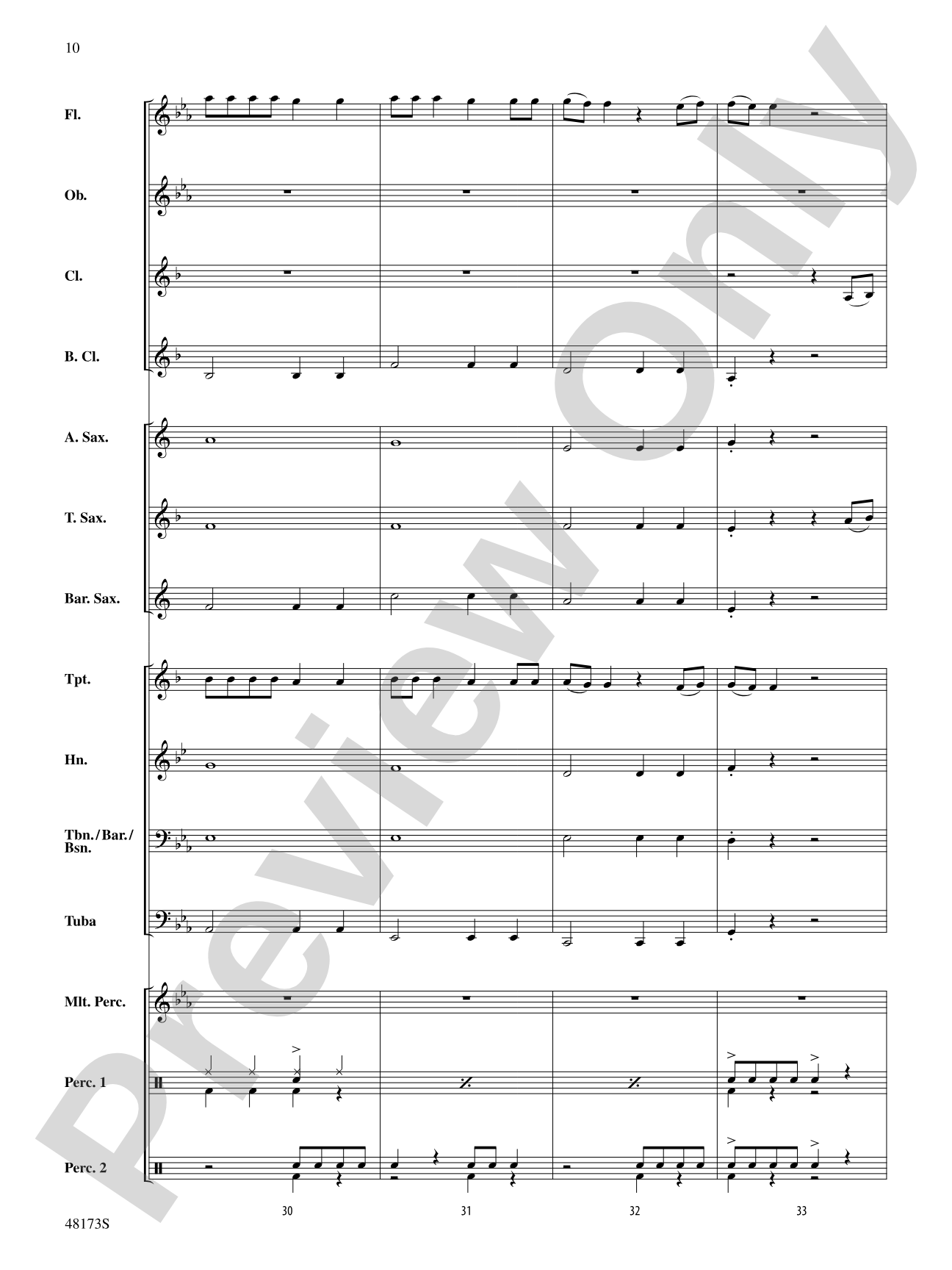
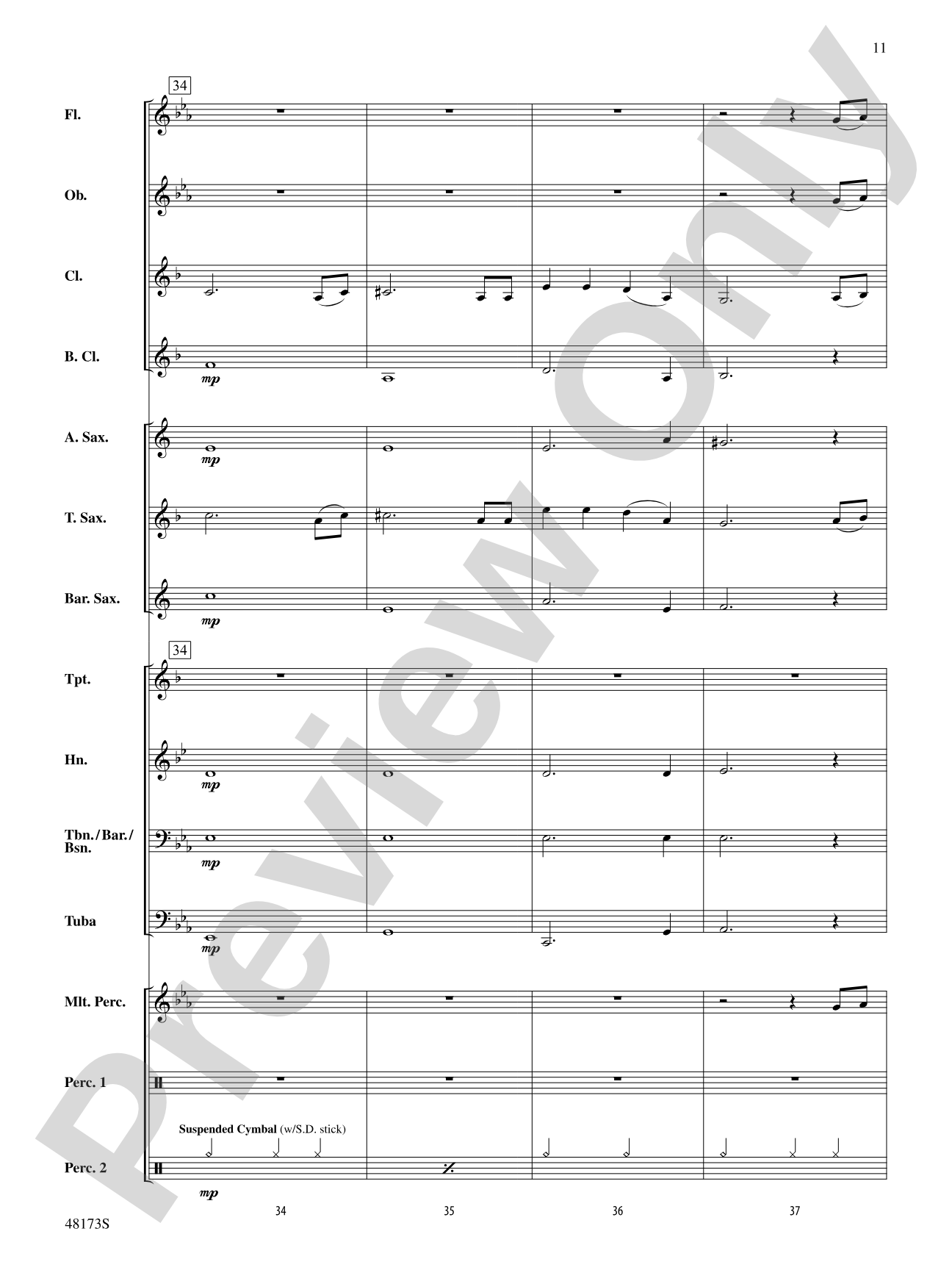
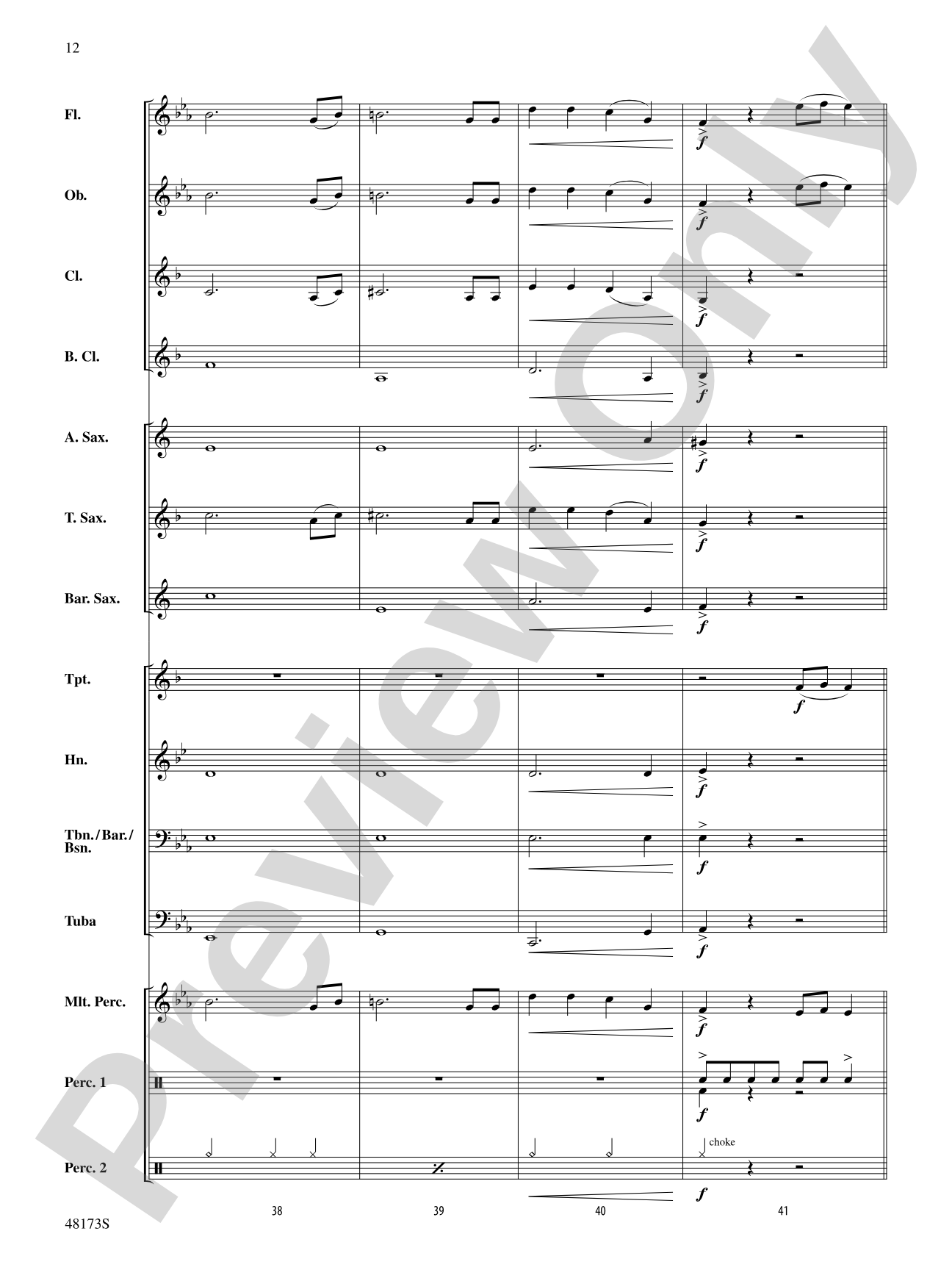
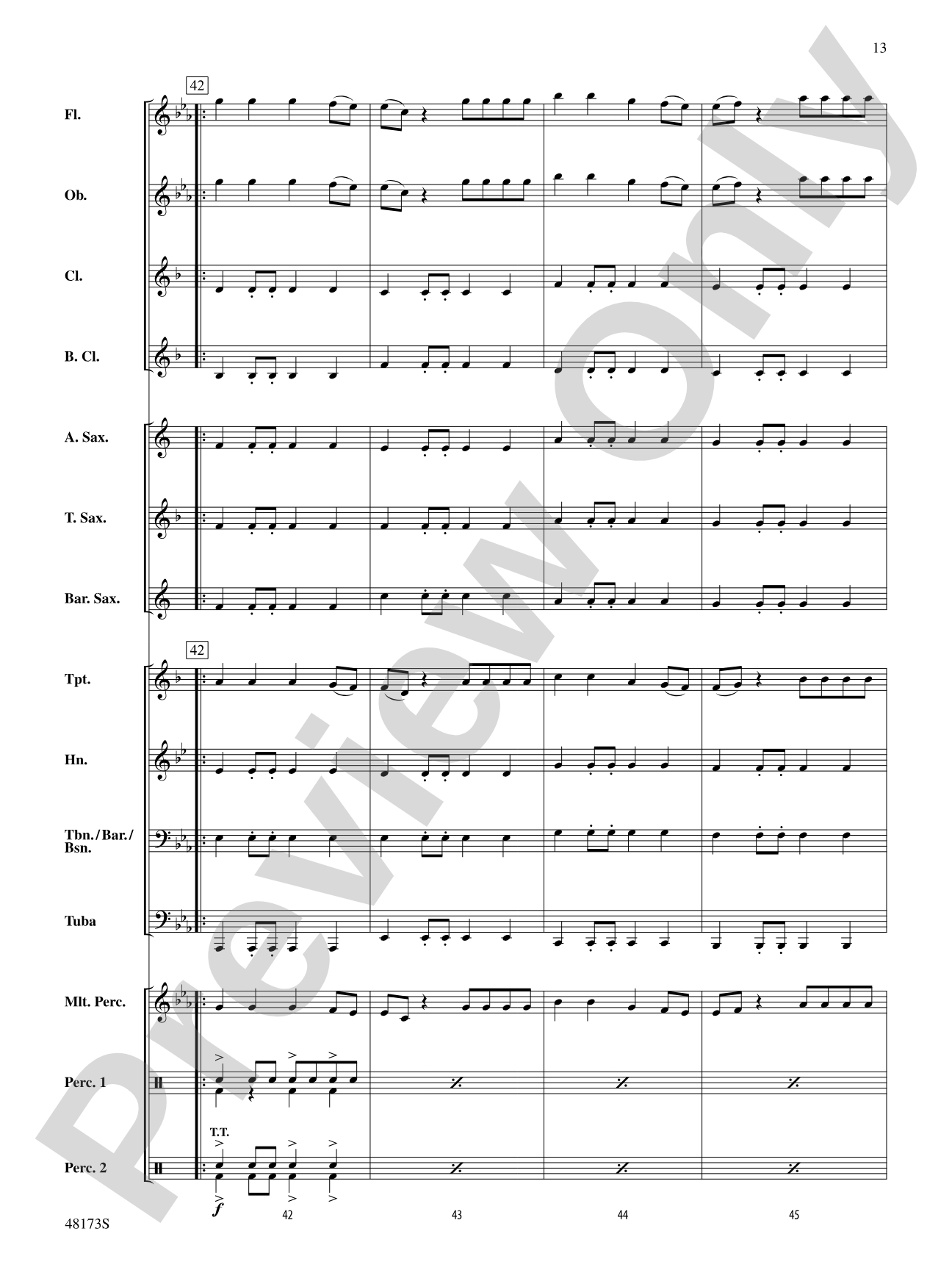
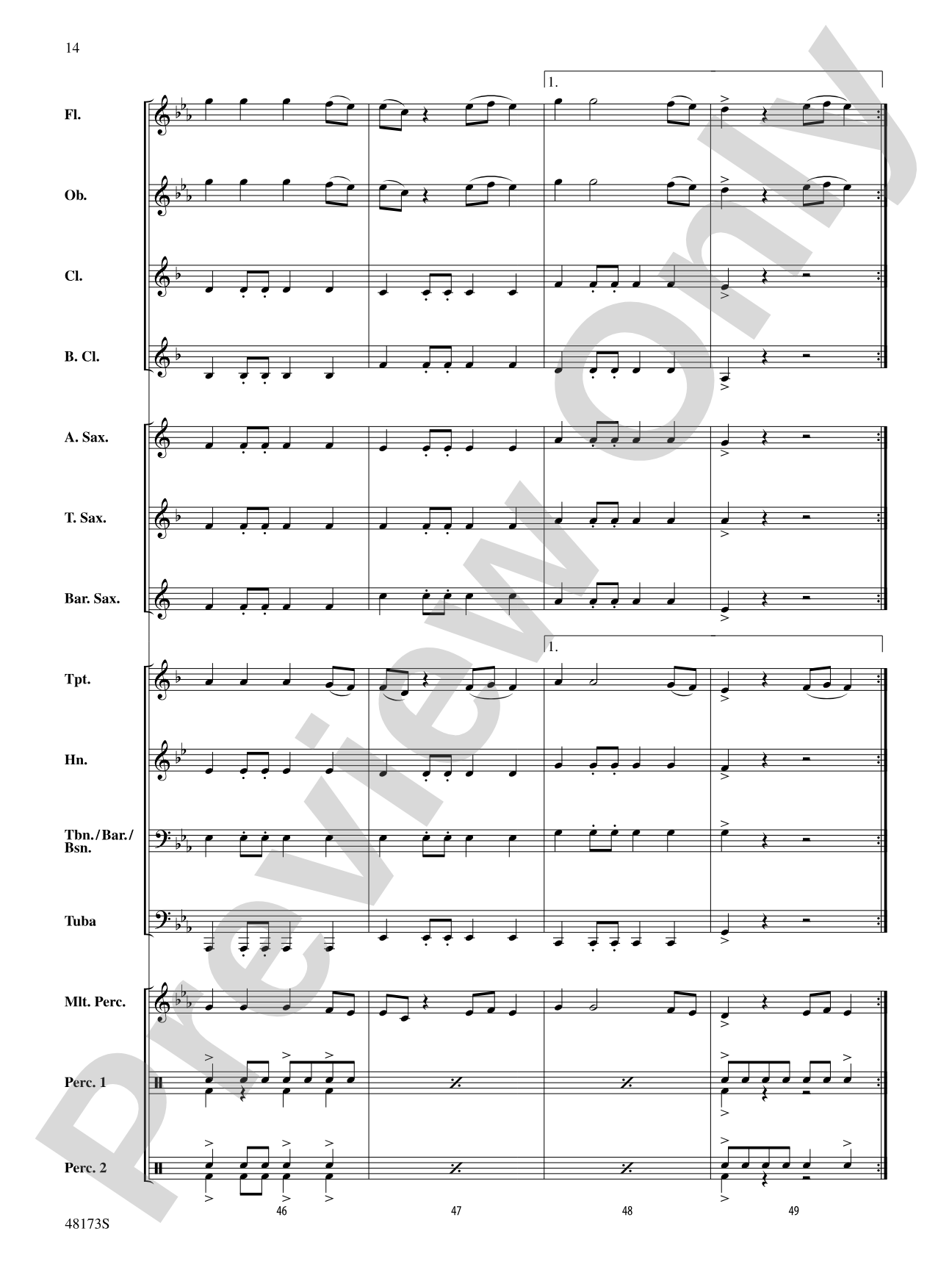
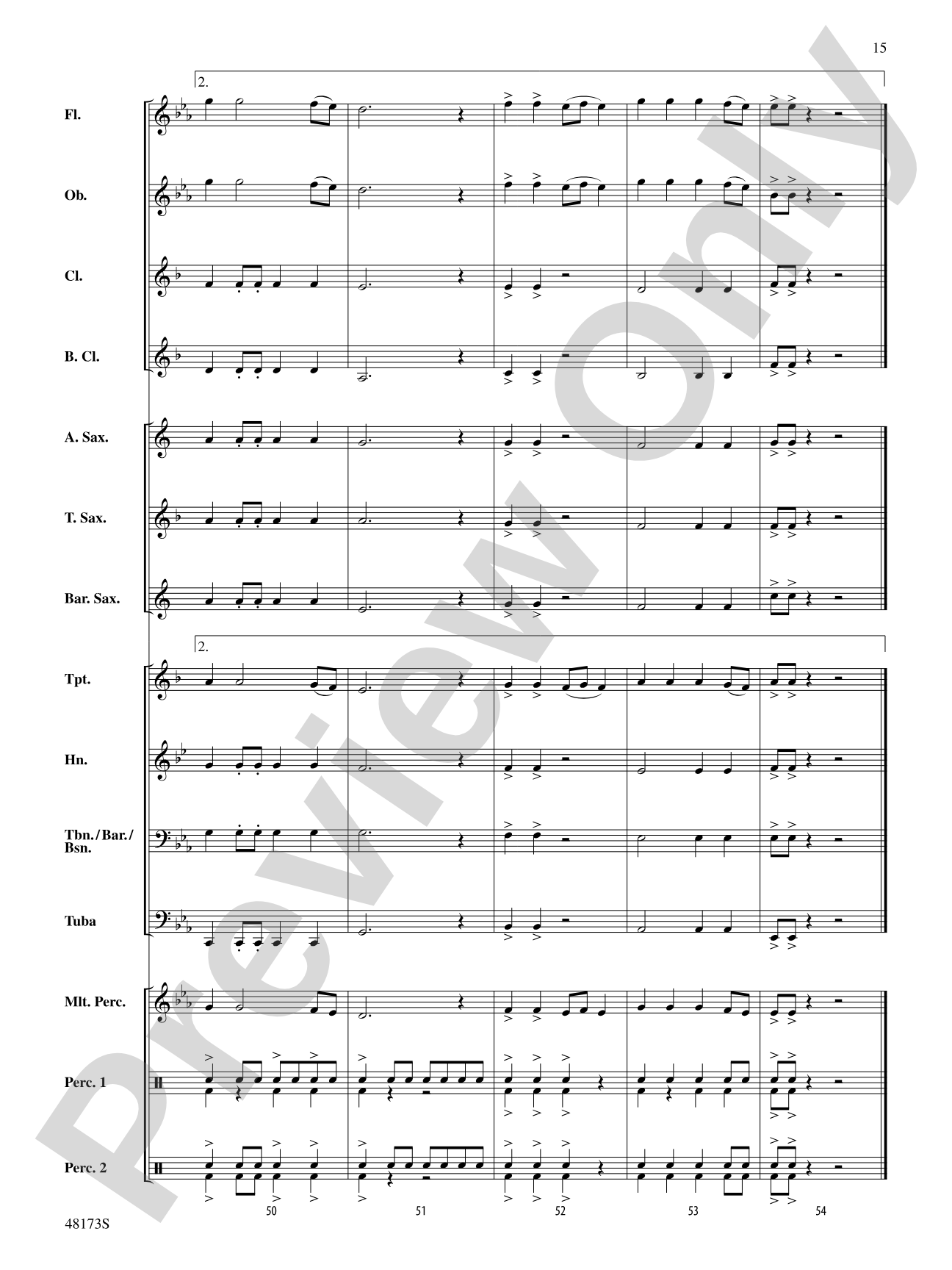

High Hopes: Concert Band Conductor Score & Parts
As Recorded by Panic! At the Disco
Words and music by Tayla Parx, Brendon Urie, Ilsey Juber, Jacob Sinclair, Jenny Owen Young, Jonas Jeberg, Lauren Pritchard, Sam Hollander, and William Lobban Bean / arr. Doug Adams
Grade: 1 (Easy)
Item: 00-PK-0008109

$60.00
One moment…
Related Items
High Hopes: Marching Band Conductor Score & Parts |
$60.00
|
View | |
High Hopes: String Orchestra Conductor Score & Parts |
$60.00
|
View | |
High Hopes: Marching Band Conductor Score & Parts |
$60.00
|
View | |
High Hopes: Marching Band Conductor Score |
$7.00
|
View | |
High Hopes: String Orchestra Conductor Score & Parts |
$60.00
|
View | |
High Hopes: String Orchestra Conductor Score |
$9.00
|
View | |
High Hopes: Concert Band Conductor Score & Parts |
$60.00
|
View | |
High Hopes: Concert Band Conductor Score |
$10.00
|
View |
Description
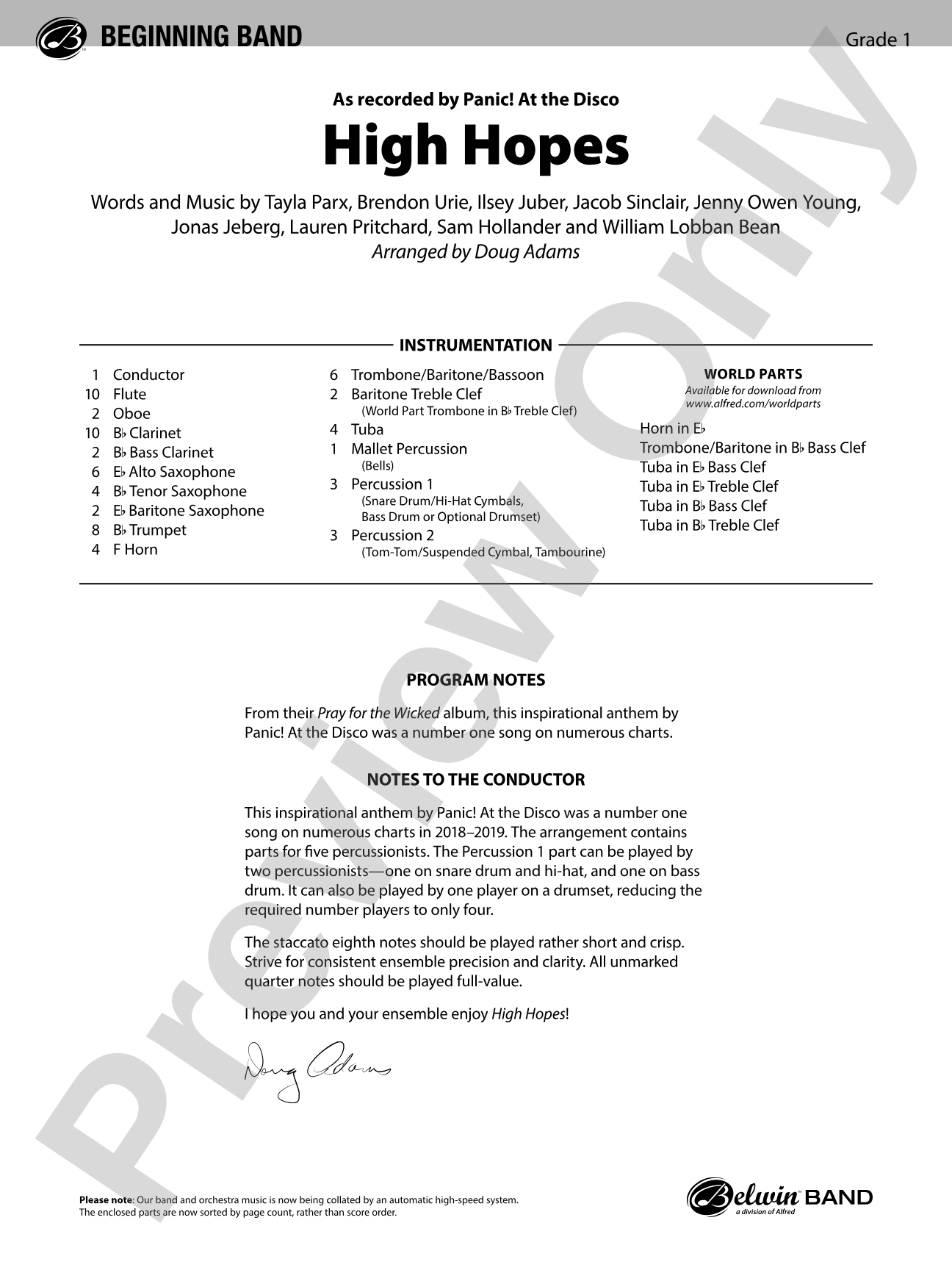
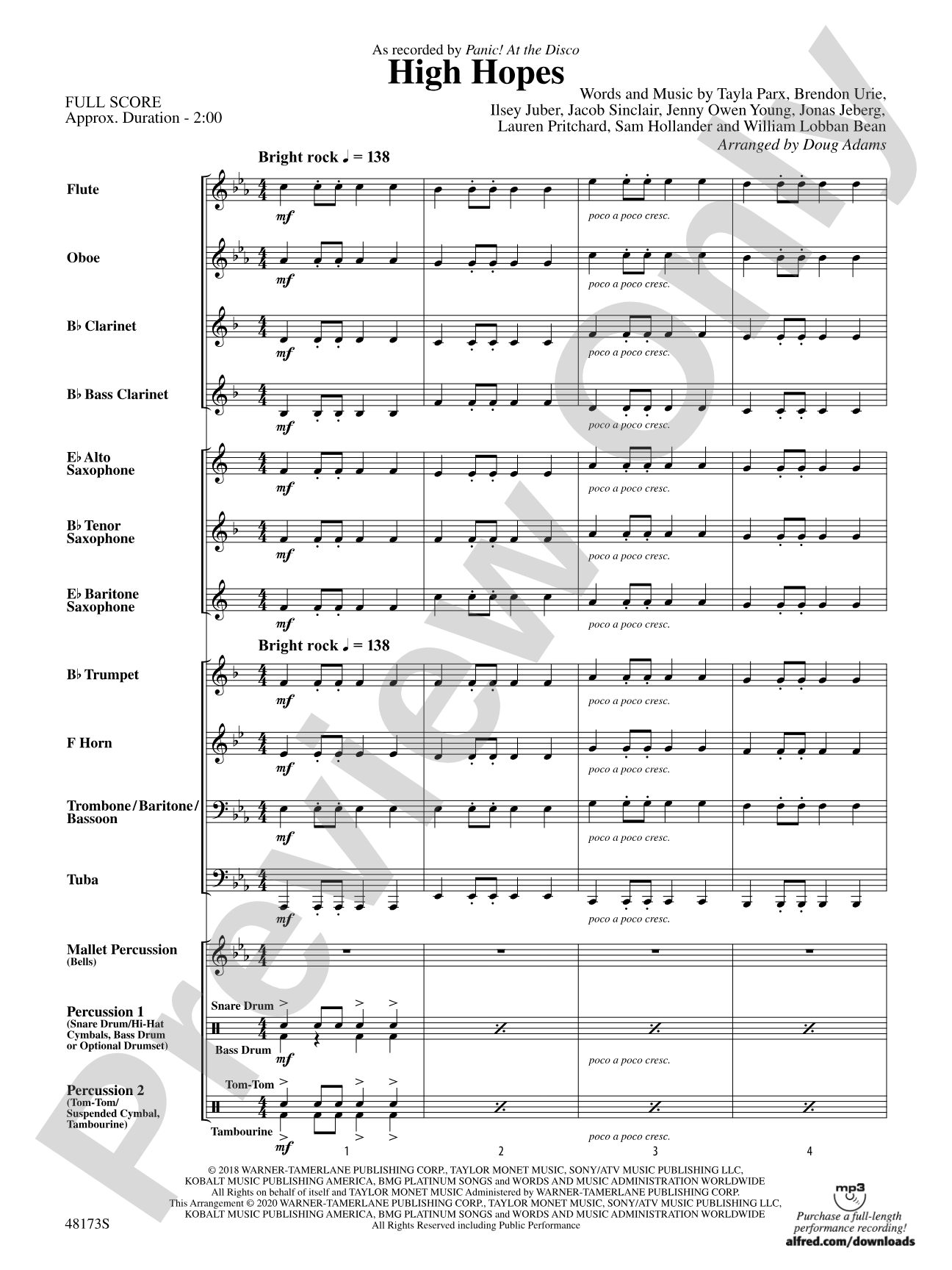
From their Pray for the Wicked album, this inspirational anthem by Panic! At the Disco was a number-one song on numerous charts. Familiar to students and audiences alike, this solidly scored arrangement for your beginners will be both their favorite and an impressive addition to your concert. The driving beat has energy to spare! (2:00)


Don't just read it, hear it, play along with it, and watch your students grow with it. In MakeMusic Cloud, High Hopes: Concert Band Conductor Score & Parts comes alive with professional accompaniment, adjustable tempo, and built-in practice tools that turn solo practice into real progress.
Open in the Player
Jump straight in and assign it today.
Start Your Free Trial
Open this title and explore the full library in minutes.
Sample Audio
1
Audio File
--:--
0:00
0:00
Sample Video
Additional Details
Series:
Pop Beginning Band
Publisher:
Alfred Music
Page Count:
134
SKU:
00-PK-0008109
More about this title
About the Composer: Tayla Parx
Tayla Parx is a songwriter and producer who has contributed to some of pop music's biggest hits across multiple genres. Her work spans R&B, pop, and hip-hop, collaborating with major artists and writing songs that resonate with broad audiences. In the education space, her compositions introduce students to contemporary songwriting and production sensibilities.
Why we love this
High Hopes arrives with genuine cultural momentum. Your students already know this song, which means they're invested from rehearsal one. The Grade 1 scoring respects young musicians' technical limits while preserving the track's infectious drive and the anthem quality that made it a chart-topper. It's a rare opportunity to build ensemble cohesion and tone control without sacrificing the energy students expect to feel.
What to expect
High Hopes radiates optimism and forward momentum. The driving beat creates an almost propulsive quality, while the harmonic language sits comfortably in accessible territory for young players. There's a celebratory character here, bright without being frivolous, energetic without requiring technical fireworks.
Who it's for
Grade 1 concert bands and beginning ensemble students who are ready for a piece that challenges them musically while connecting to repertoire they recognize and genuinely enjoy. This works equally well in community bands or school settings where familiarity with the original song enhances player investment.
How to get the most out of it
- Lock in the rhythmic groove early by isolating the driving beat in sectional rehearsals. This song lives in its pulse, so consistent subdivision across the full band is essential before layering melodic material.
- Balance the layered parts carefully during full rehearsals. The arrangement builds energy through textural density, but melodic lines need clarity even when lower voices are active underneath.
- Shape the phrasing to build toward structural peaks rather than playing at a single dynamic level. The song's momentum comes from intelligent crescendos and releases, not uniform forte playing.
- Engage the audience with your own energy. This piece thrives on conviction. Conductor and ensemble enthusiasm directly translates to how the audience receives the performance.
How to use it
Program this as a spring or end-of-year concert opener to immediately energize your audience and set a positive tone. It pairs well alongside other contemporary pop arrangements in a lighter concert set, or use it to bookend a program that includes more classical selections. The two-minute duration also makes it ideal for pops concerts, community performances, or situations where you want a recognizable crowd-pleaser that demonstrates your ensemble's musicality.
Skills your students will build
- Rhythmic precision in syncopated pop grooves
- Dynamic control and phrase shaping across multiple sections
- Listening across ensemble parts to maintain textural balance
- Connection between familiar popular music and concert band scoring conventions