
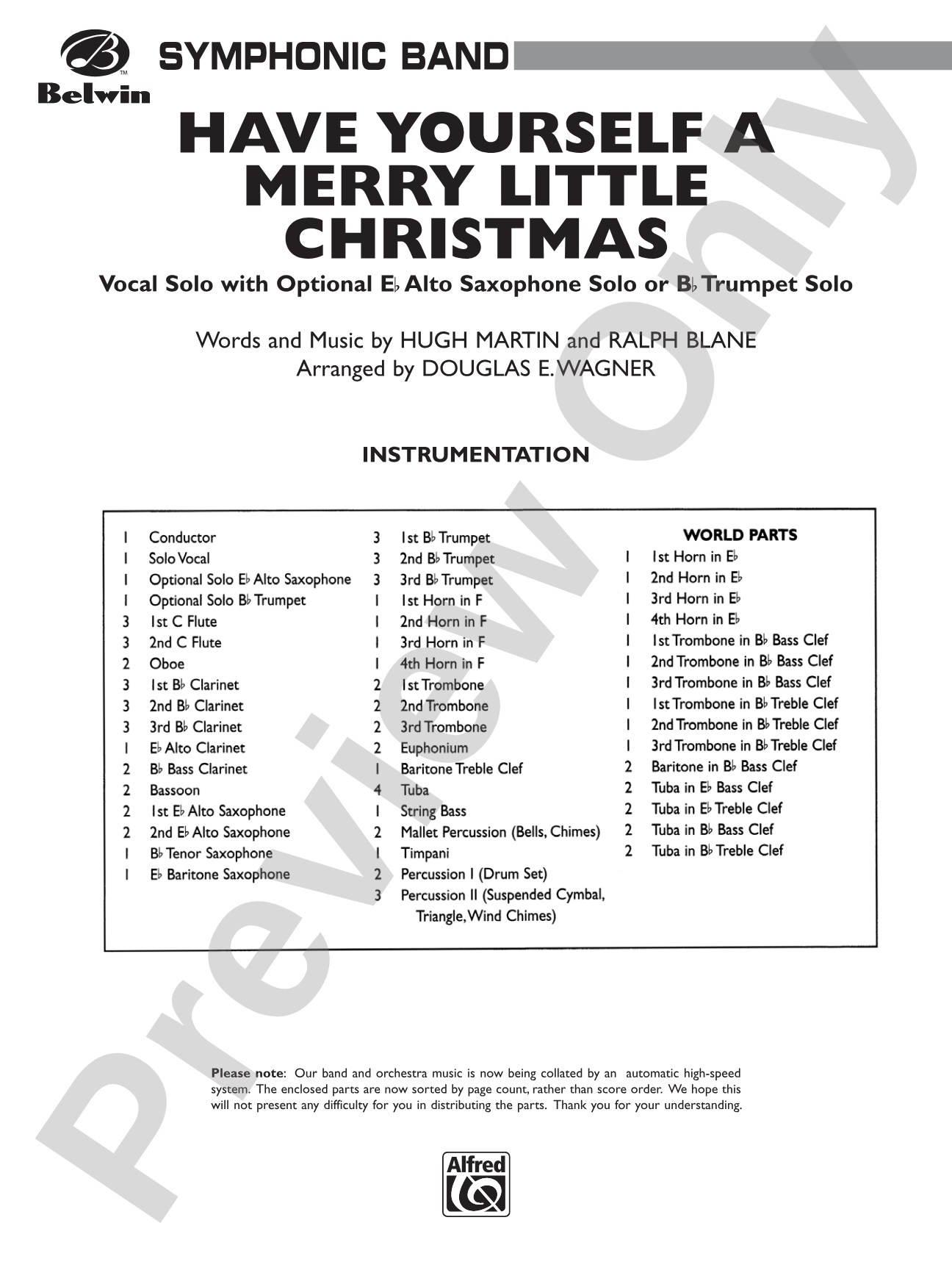
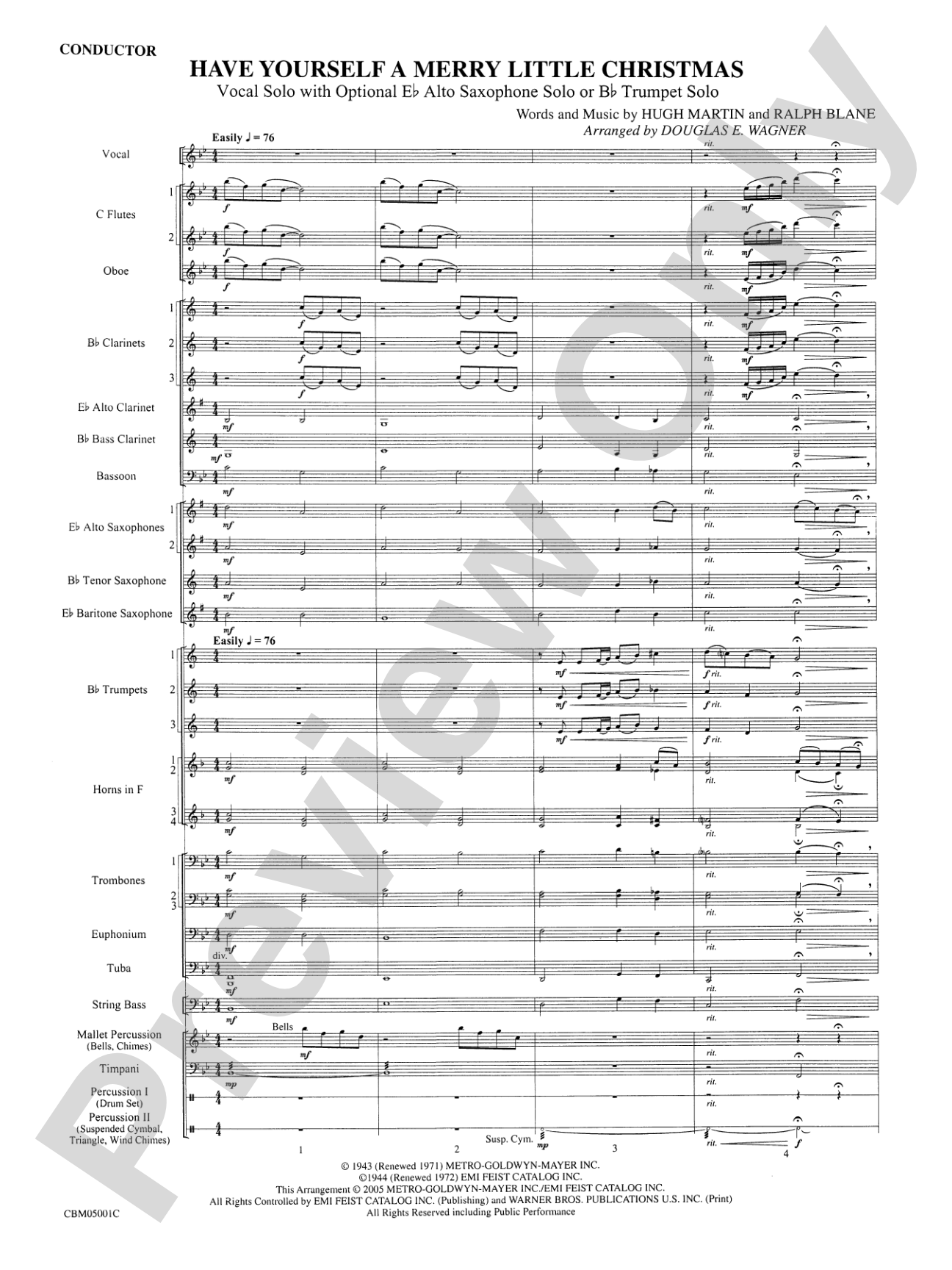
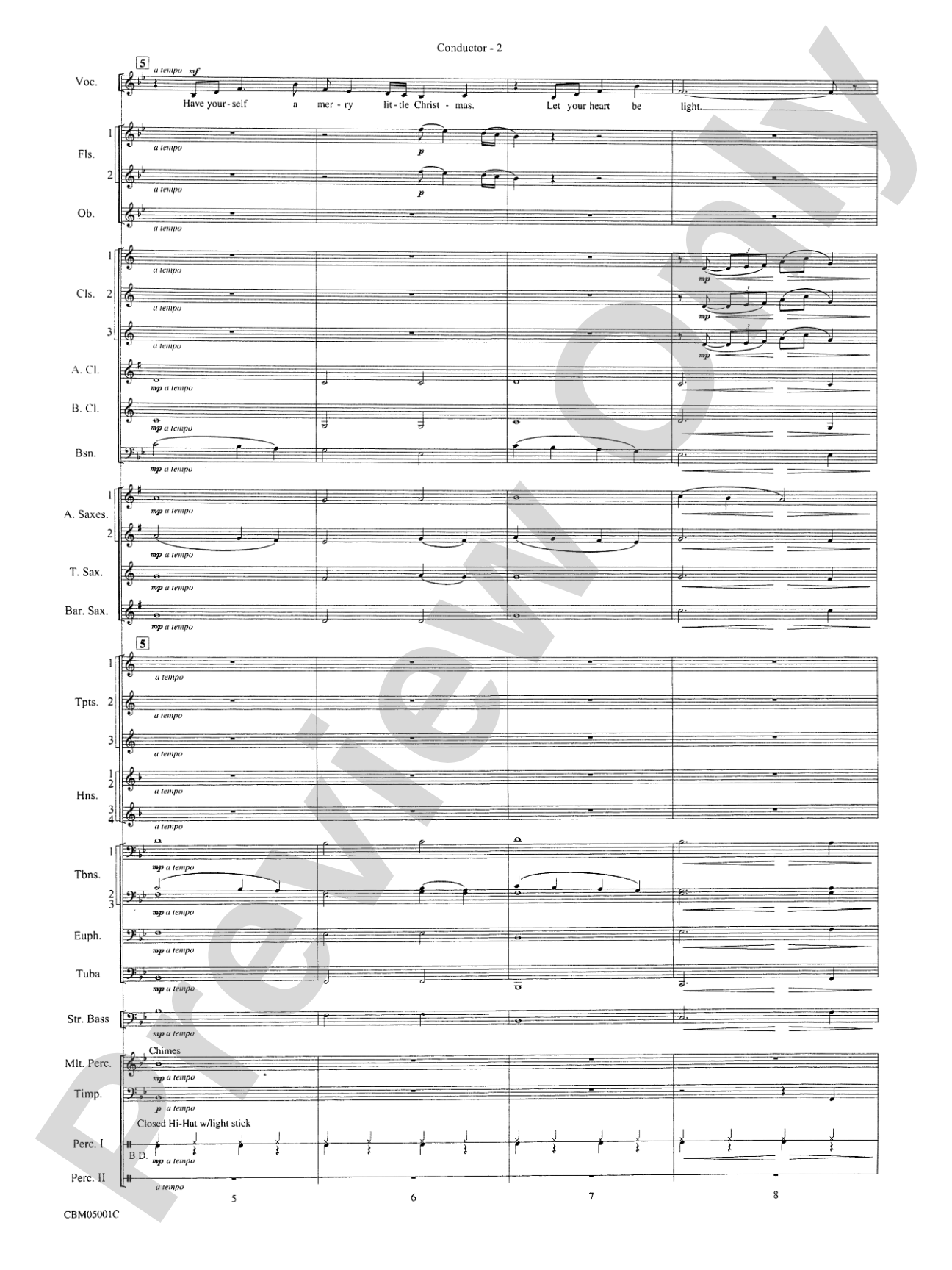
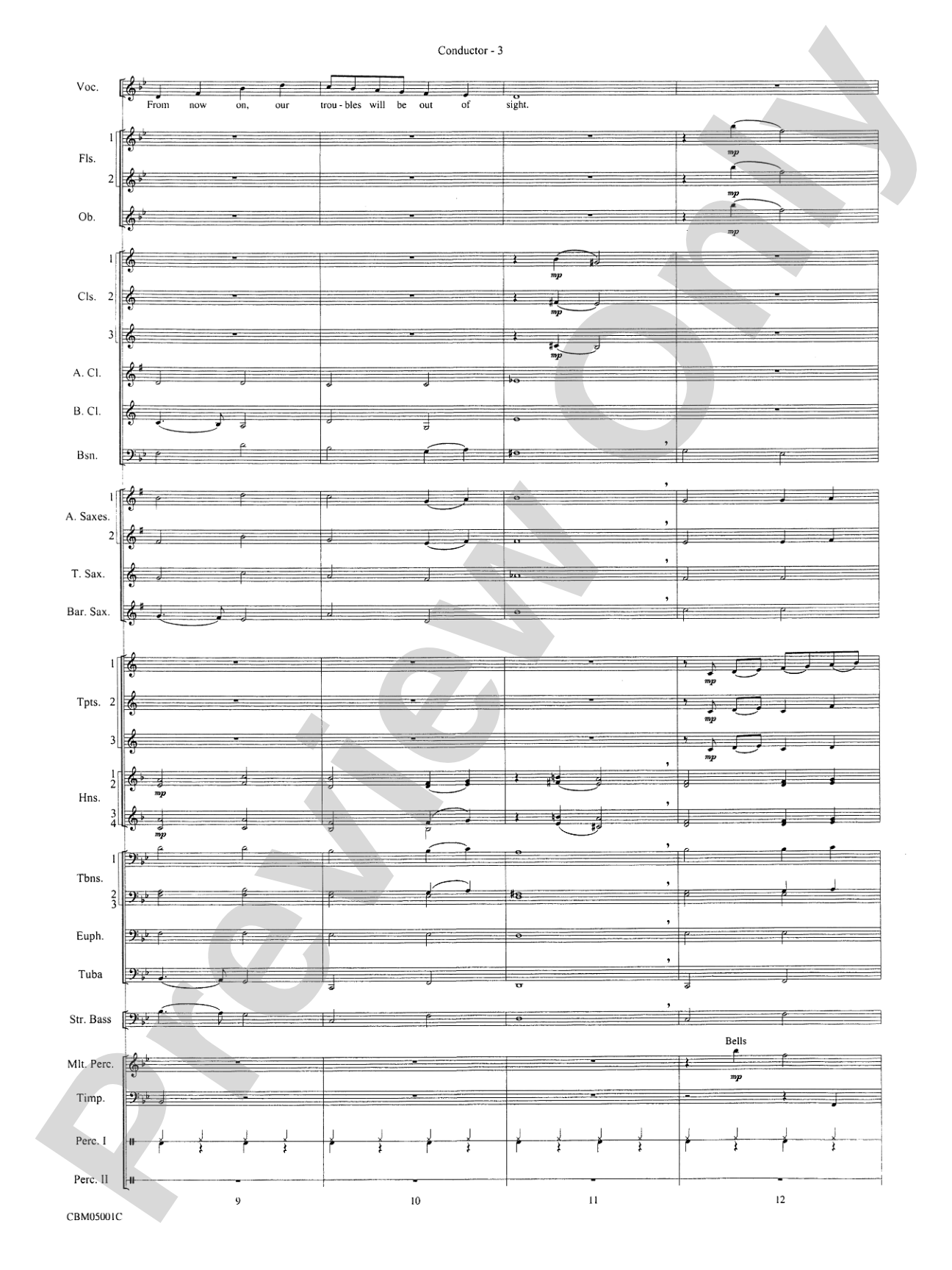
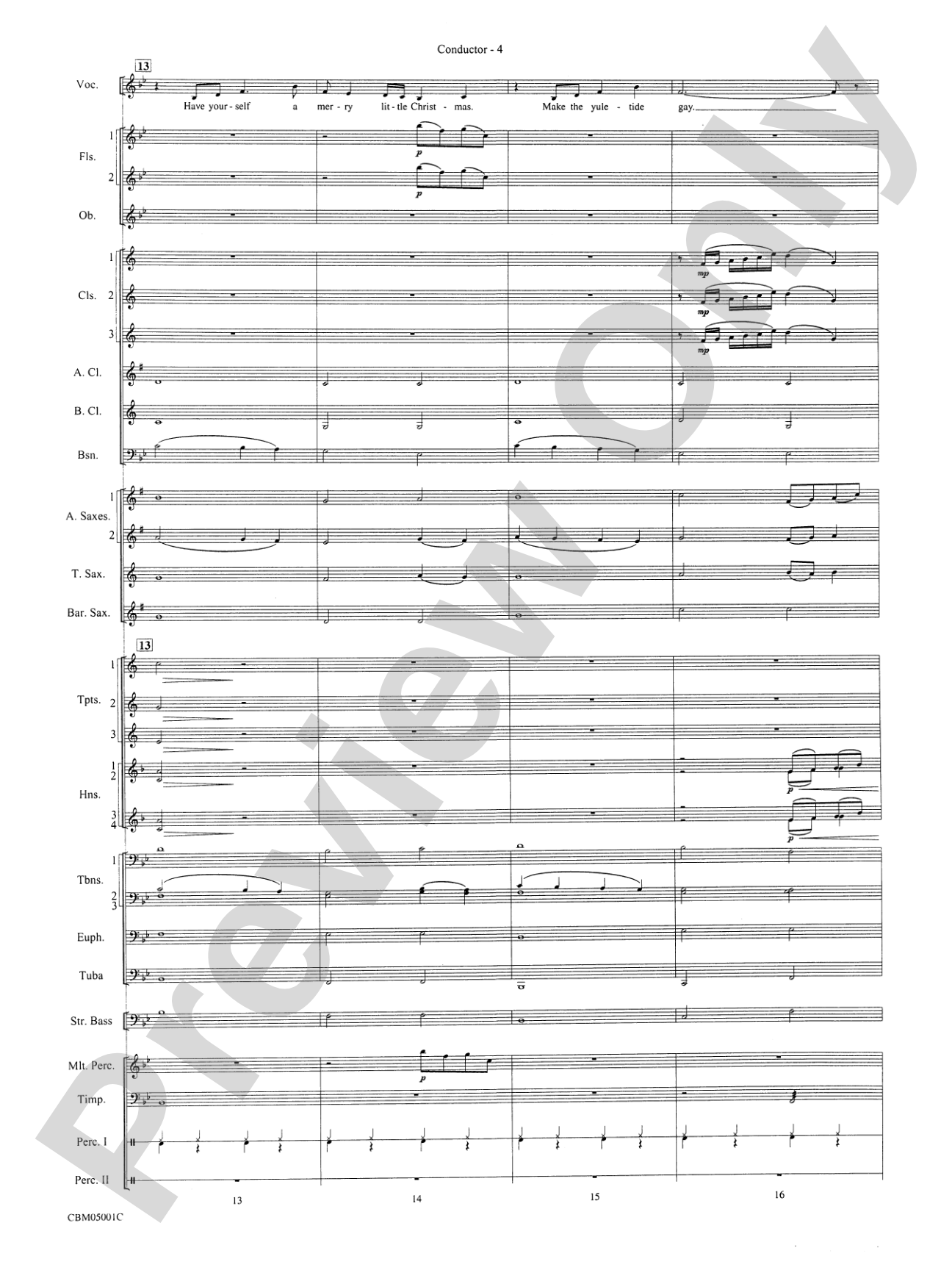
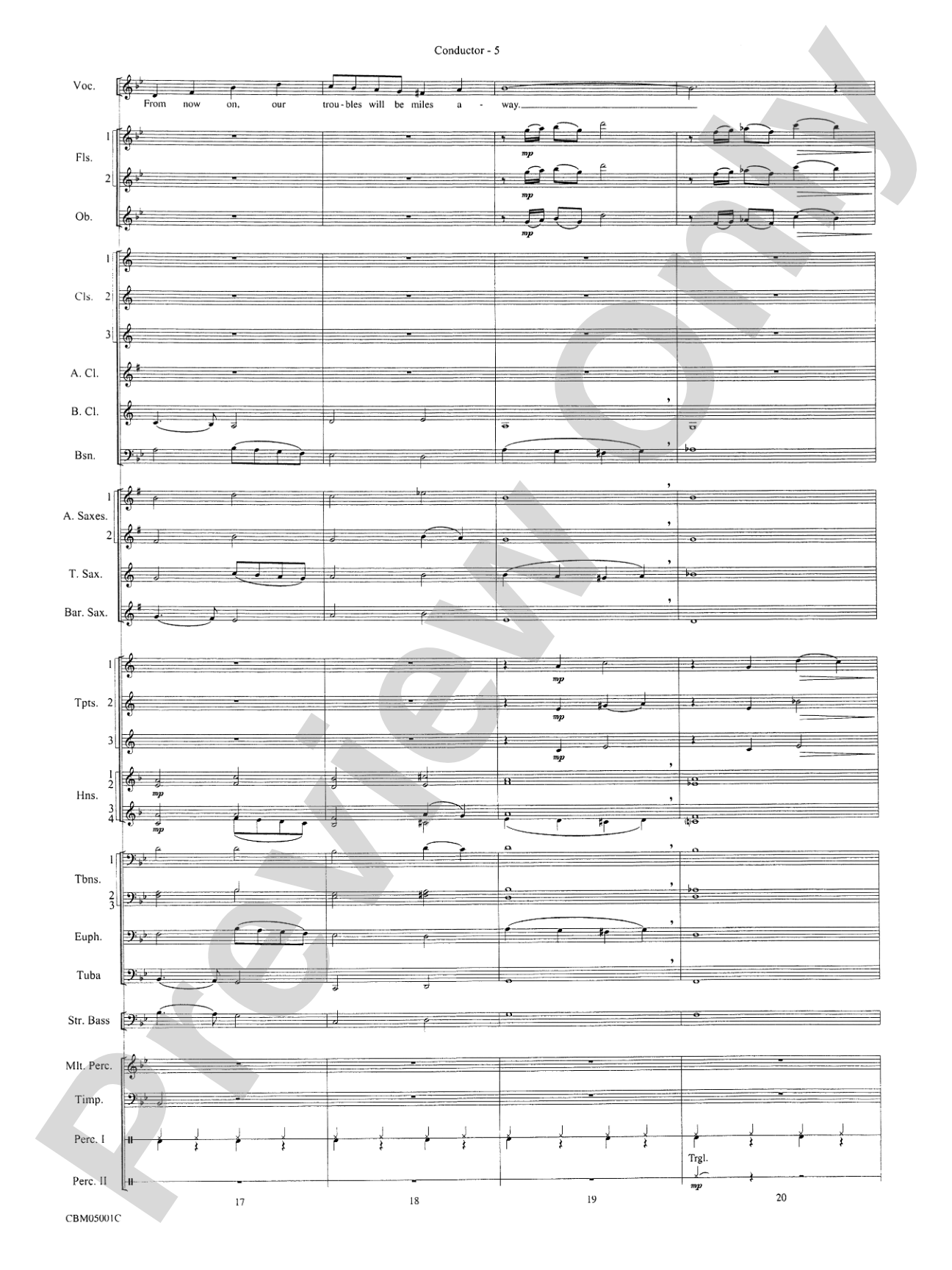
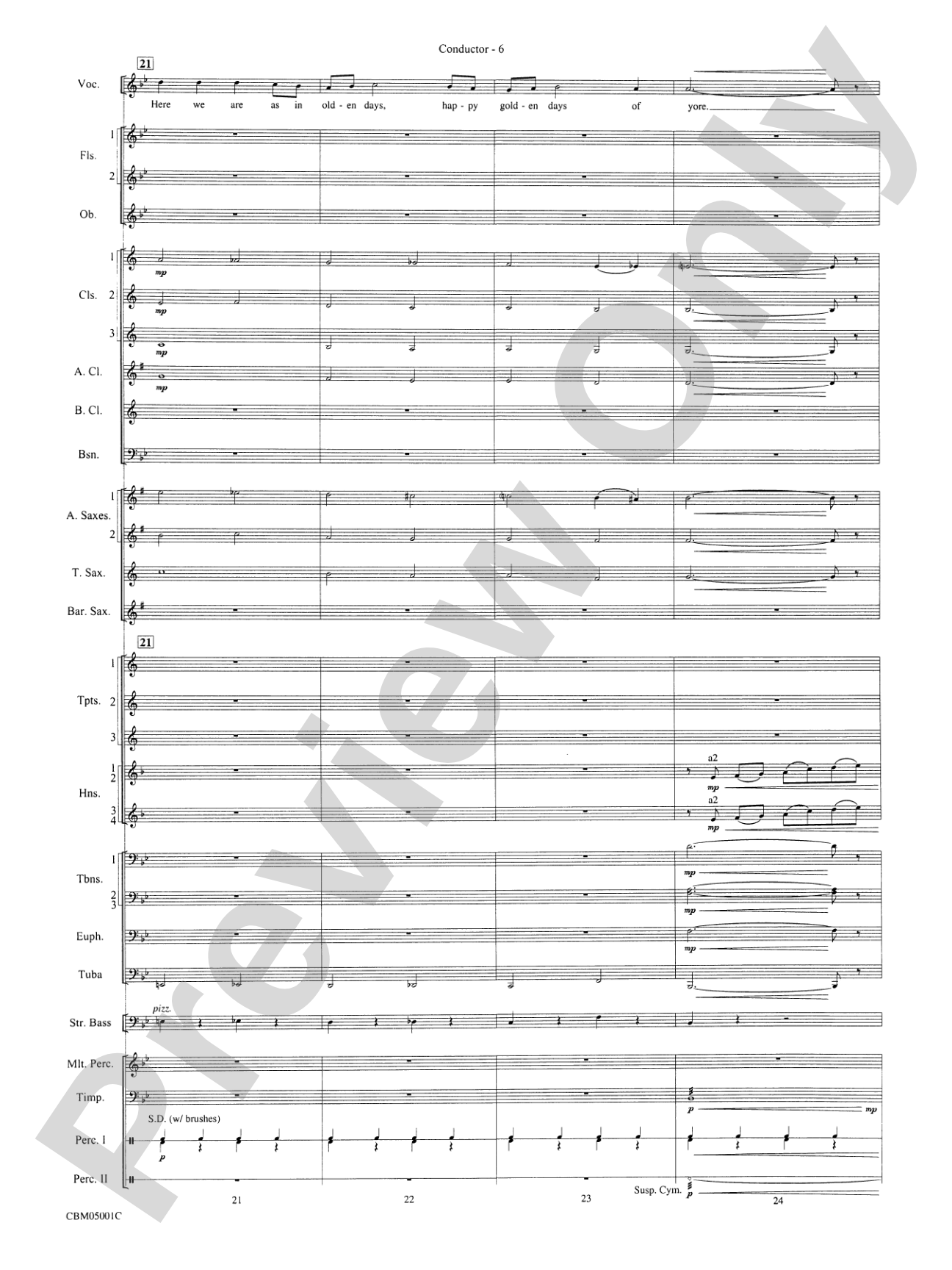
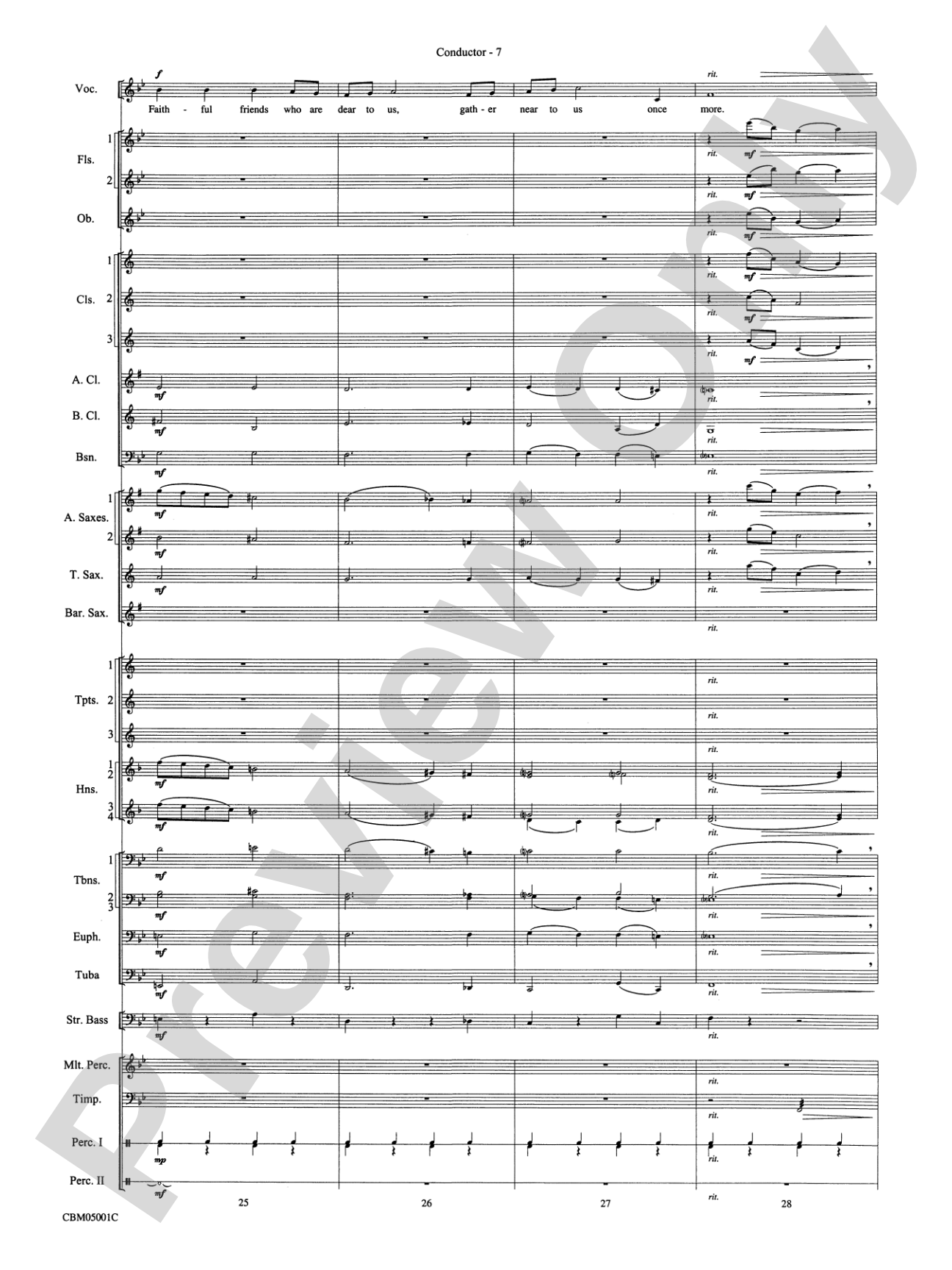
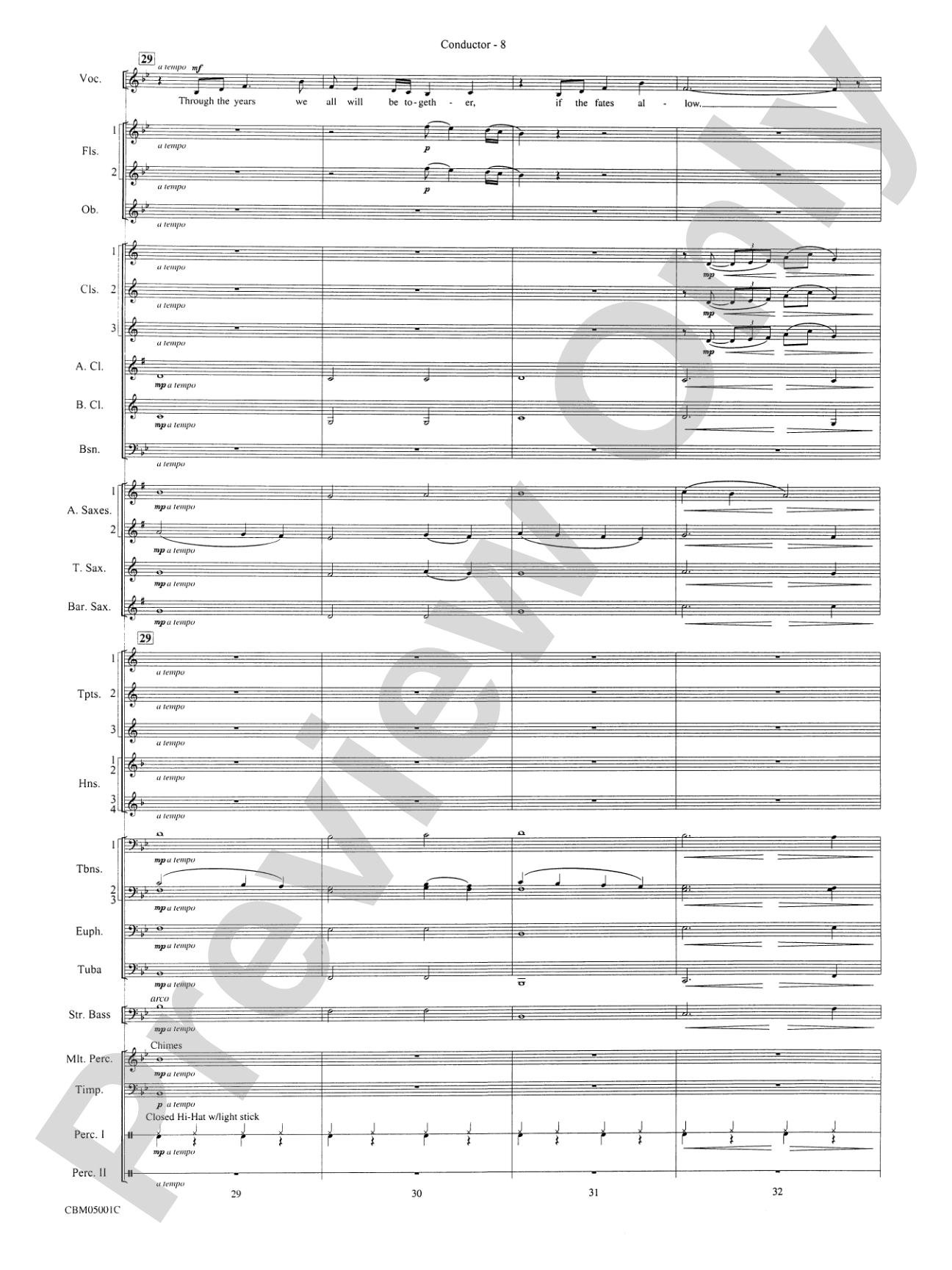
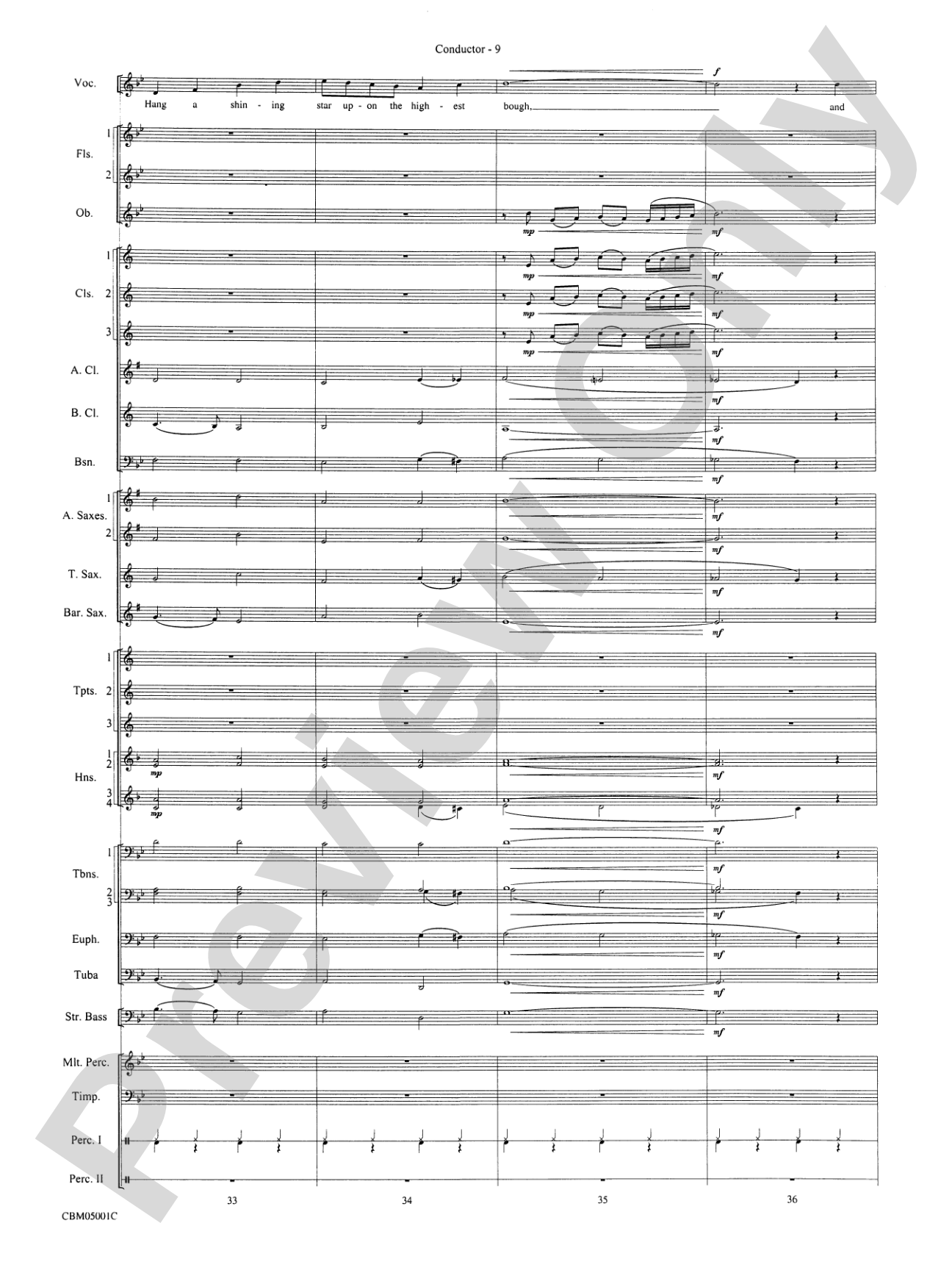
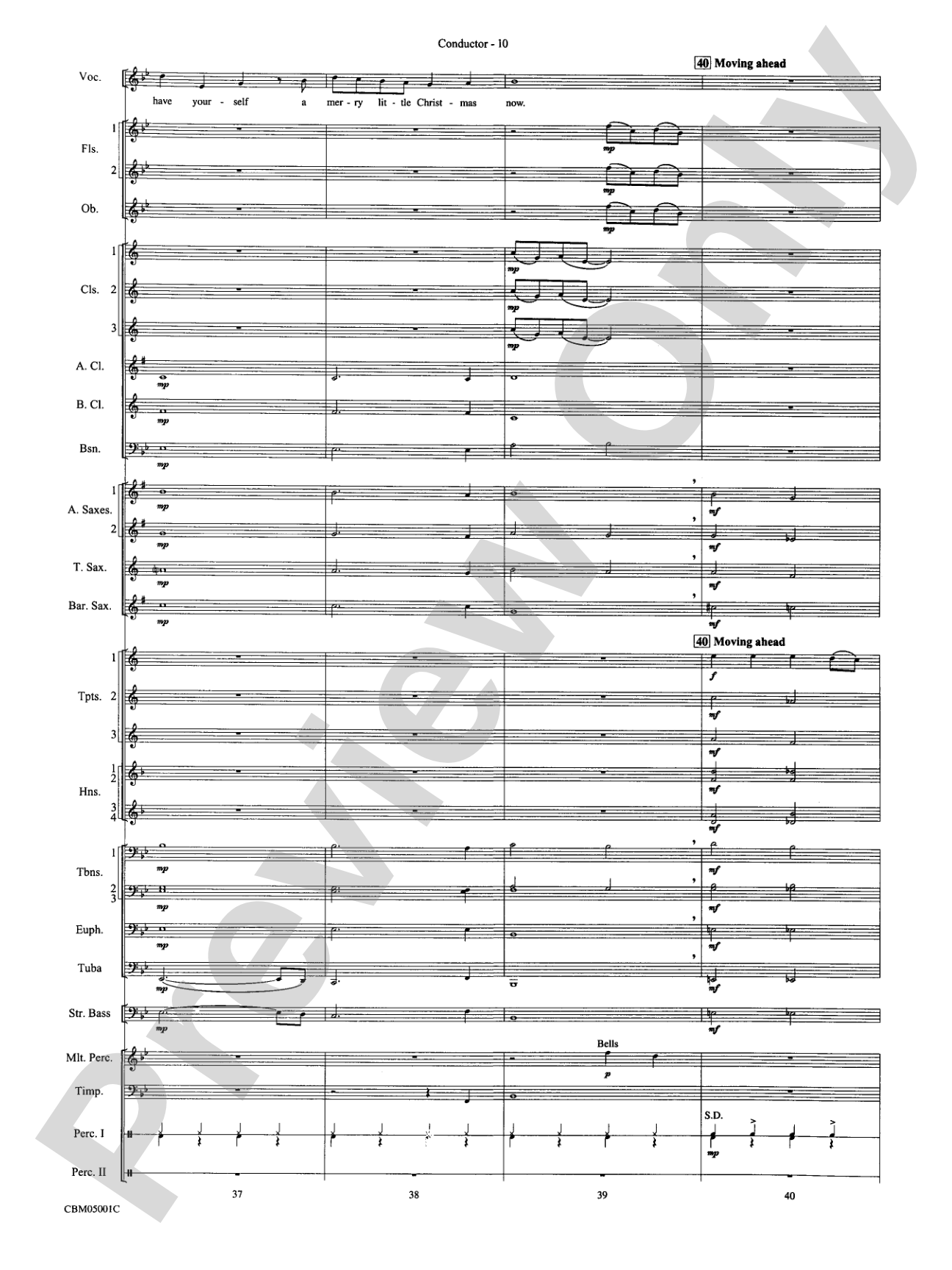
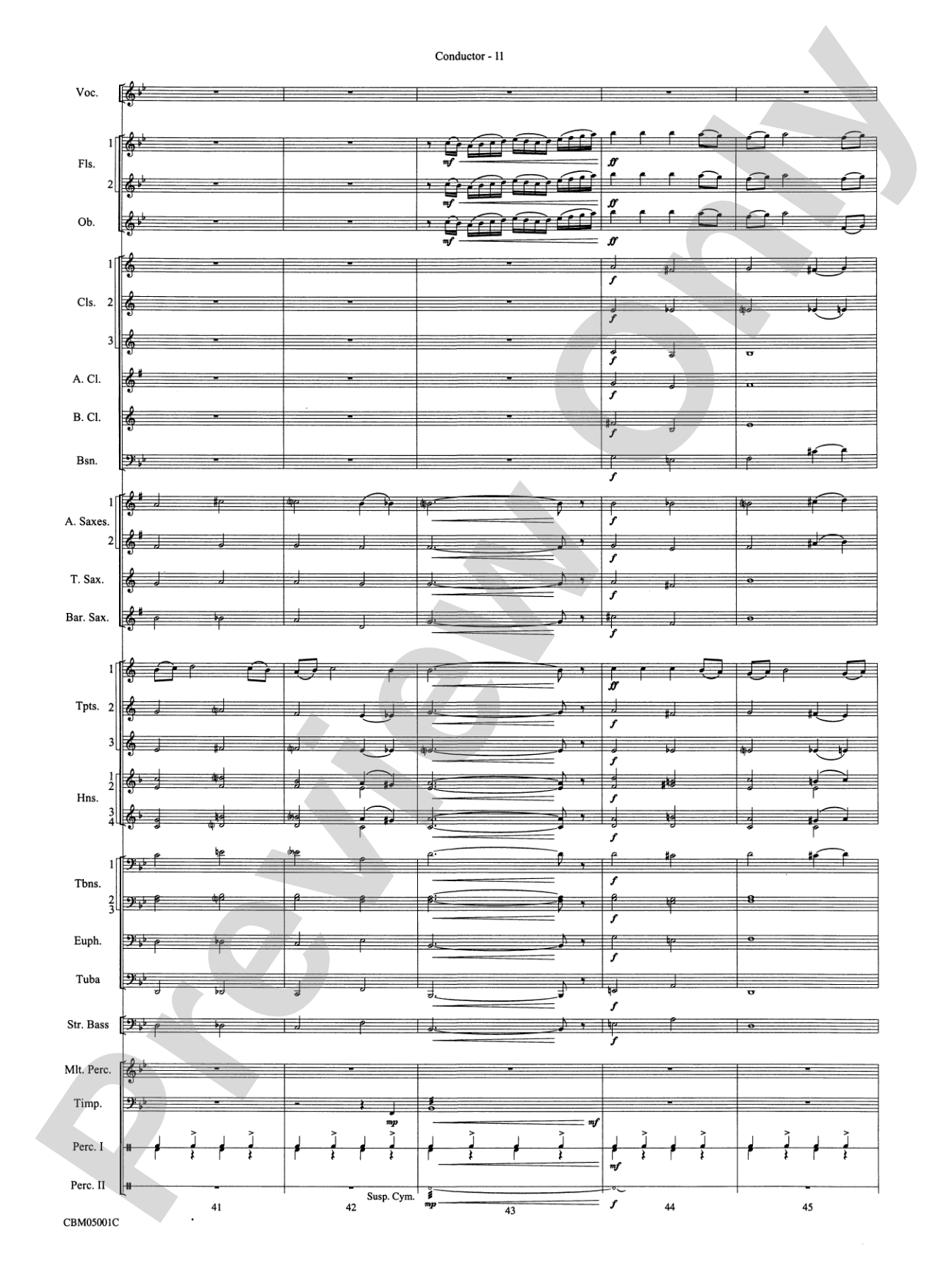
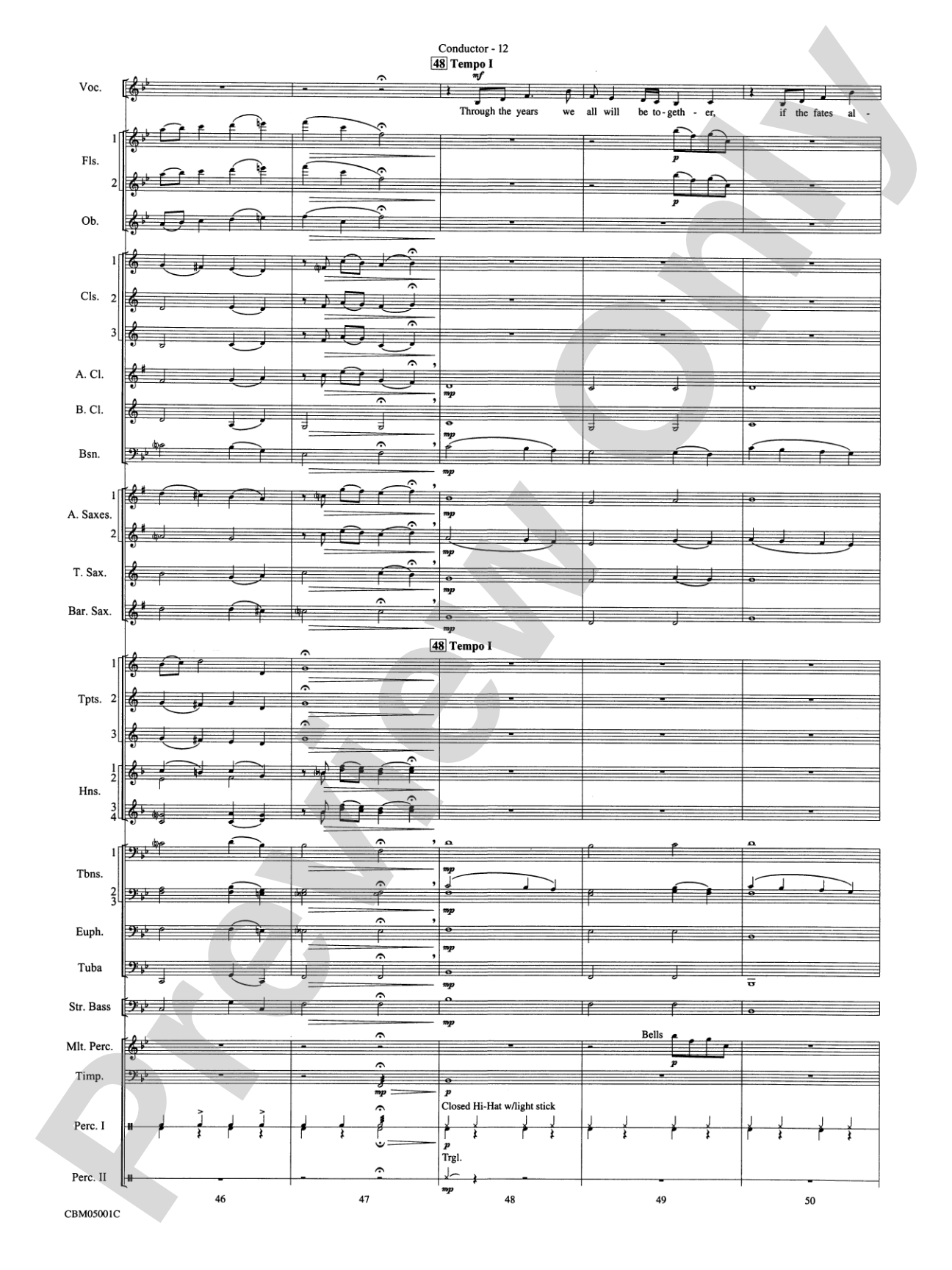
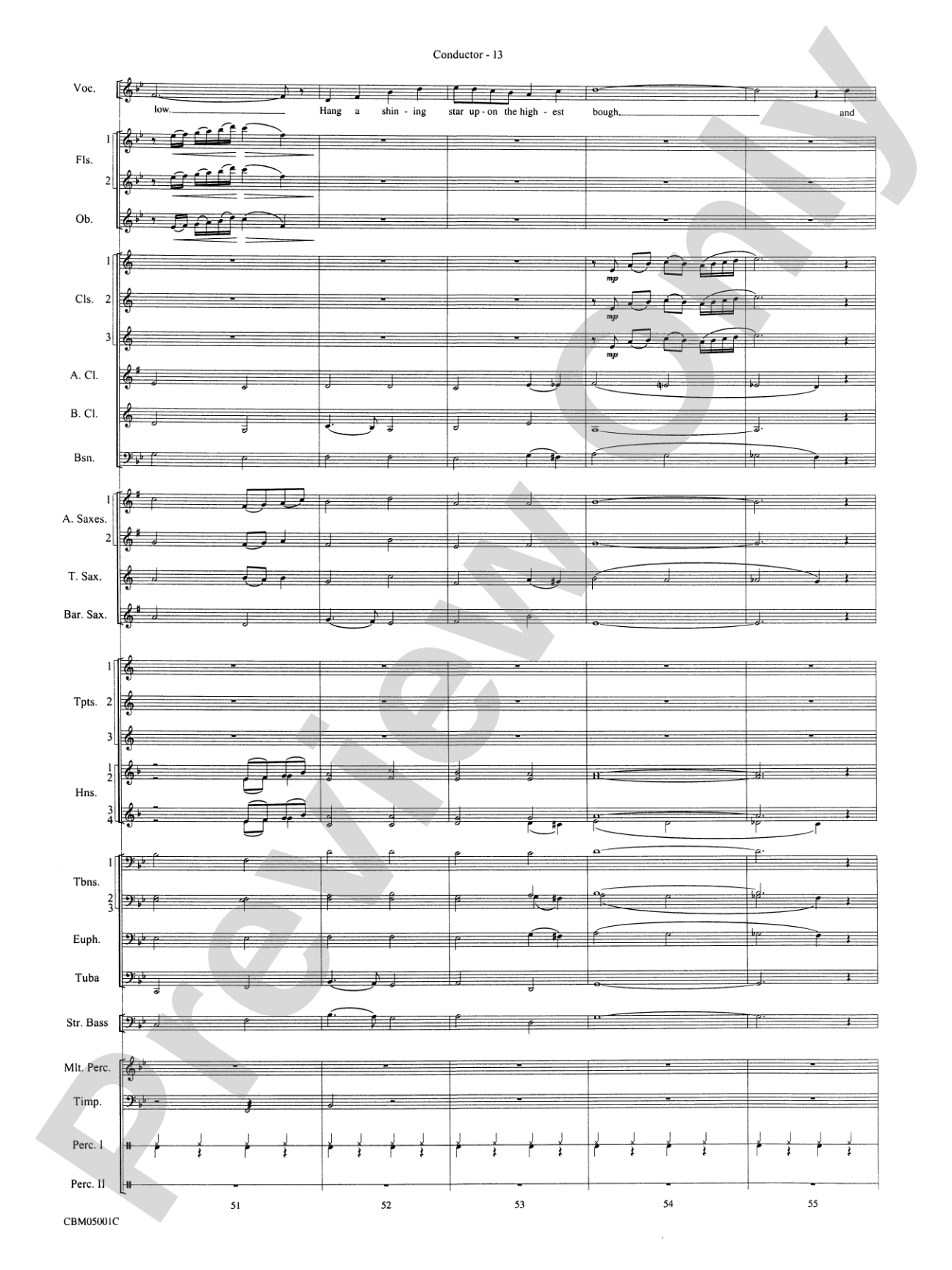
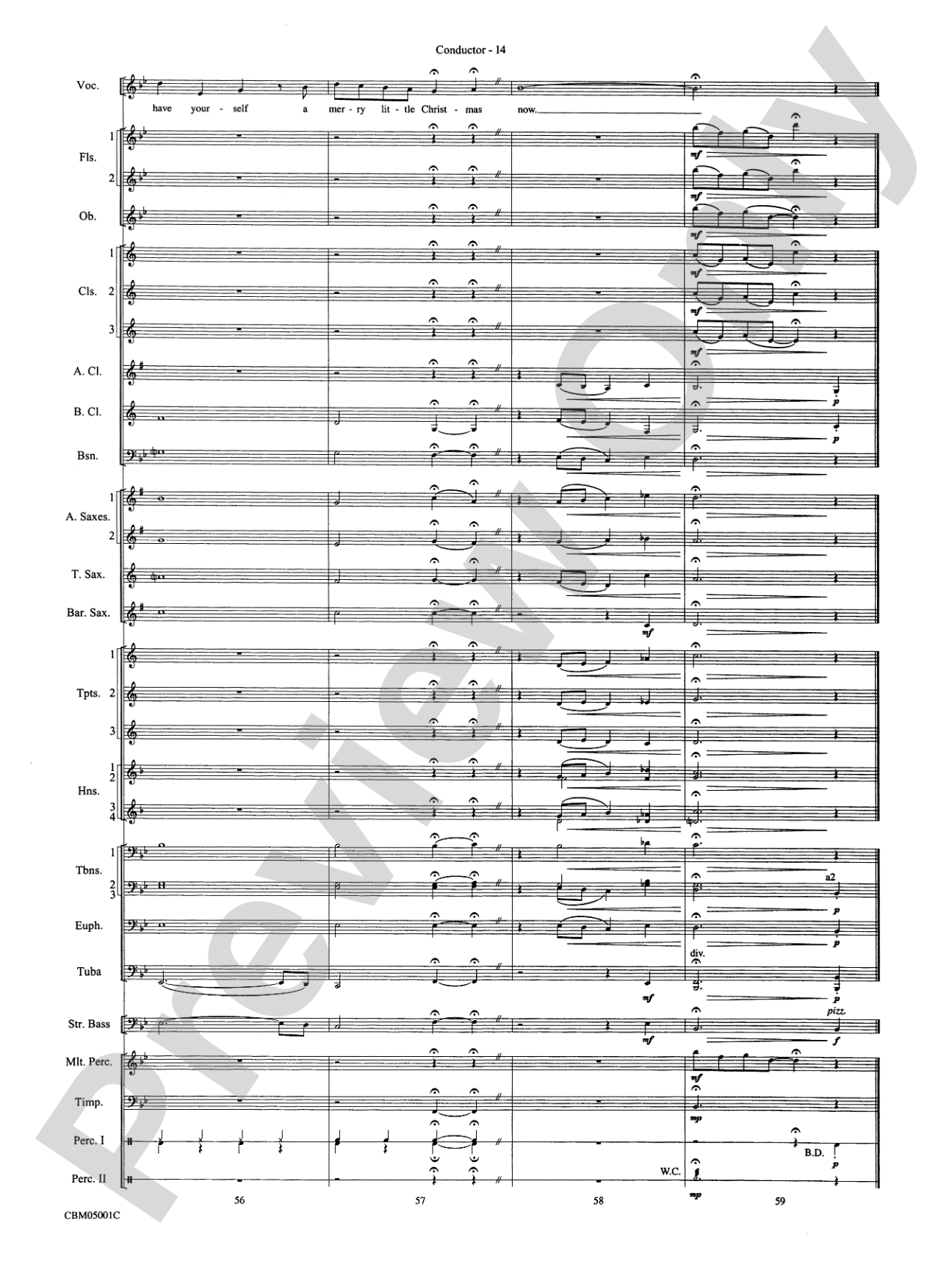


Have Yourself a Merry Little Christmas (Vocal Solo with Opt. E-Flat Alto Saxophone Solo or B-Flat Trumpet Solo): Concert Band Conductor Score & Parts
Vocal Solo with Opt. E-flat Alto Saxophone Solo or B-flat Trumpet Solo
Words and music by Hugh Martin and Ralph Blane / arr. Douglas E. Wagner
Grade: 4 (Medium)
Item: 00-PK-0002366

$87.00
One moment…
Description
This cherished holiday classic has been scored to permit a vocal soloist, either male or female, or your alto sax or trumpet soloist to present the melody. In the key of B-flat, the vocal range is from B-flat to E-flat. A new holiday treat for your winter program. (3:20)


Don't just read it, hear it, play along with it, and watch your students grow with it. In MakeMusic Cloud, Have Yourself a Merry Little Christmas (Vocal Solo with Opt. E-Flat Alto Saxophone Solo or B-Flat Trumpet Solo): Concert Band Conductor Score & Parts comes alive with professional accompaniment, adjustable tempo, and built-in practice tools that turn solo practice into real progress.
Open in the Player
Jump straight in and assign it today.
Start Your Free Trial
Open this title and explore the full library in minutes.
Sample Audio
1
Audio File
--:--
0:00
0:00
Sample Video
Additional Details
Series:
Pop Symphonic Band
Publisher:
Alfred Music
Page Count:
188
SKU:
00-PK-0002366
More about this title
About the Composer: Hugh Martin
Hugh Martin composed some of the most enduring American standards of the twentieth century, with a gift for melody that has kept his songs in performance for decades. His work with lyricist Ralph Blane for the 1944 film "Meet Me in St. Louis" produced "Have Yourself a Merry Little Christmas," a composition that transcends its holiday origins to become a staple of American popular music, recorded by countless artists across multiple genres.
Why we love this
Douglas E. Wagner's arrangement respects the warmth and intimacy of this classic while giving your band genuine work to do. The flexibility to feature a vocalist, alto saxophone, or trumpet soloist means you can build this into your winter concert regardless of who steps forward, and the Grade 4 scoring sits at that sweet spot where the ensemble supports without overwhelming.
What to expect
Nostalgic yet contemporary, with the warmth of a familiar melody nested in elegant band writing. The arrangement honors the song's reflective quality, letting the solo voice or instrument carry the emotional weight while the band provides sophisticated harmonic support that never crowds the story being told.
Who it's for
Concert band programs seeking a flexible, tasteful holiday offering that can accommodate your strongest soloist, whether that's a vocalist or an instrumentalist. Directors who want substantive repertoire for a winter concert rather than a novelty, and ensembles at the Grade 4 level with the musical maturity to serve a classic.
How to get the most out of it
- Balance the solo line with ensemble accompaniment during the verse; this arrangement thrives on transparency, so resist the urge to oversaturate the harmonic voices.
- Work the vocal soloist separately on breath placement and phrase shape before combining with the full band, as the melody's conversational phrasing needs space to breathe.
- If featuring saxophone or trumpet, confirm the soloist has spent time with the original vocal melody so the interpretation honors the song's natural rubato and emotional arc.
- The 3:20 duration gives room for the arrangement to breathe; avoid the temptation to rush through sentiment in pursuit of forward motion.
How to use it
Place this in the second half of your winter concert to provide contrast with more energetic or complex fare, or use it as your program's emotional anchor if you're building a narrative arc through the concert. The single vocal or instrumental soloist in a full band context creates a striking visual and sonic moment that audiences remember.
Skills your students will build
- Balancing solo melody against ensemble accompaniment
- Reading and executing nuanced dynamic shaping in support roles
- Sustaining ensemble cohesion while accompanying a flexible soloist
- Interpreting standard popular music with musicality appropriate to concert band context