
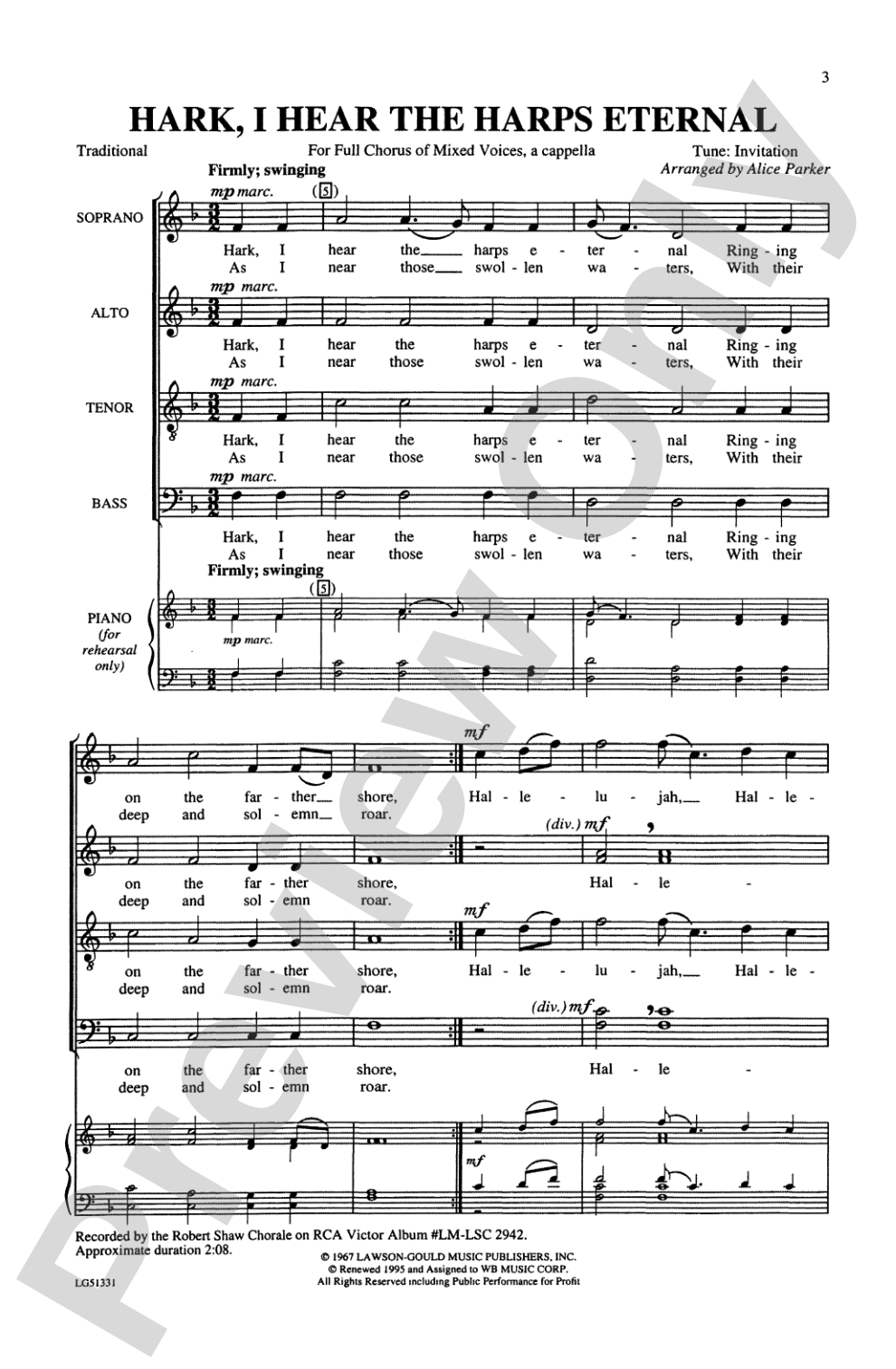
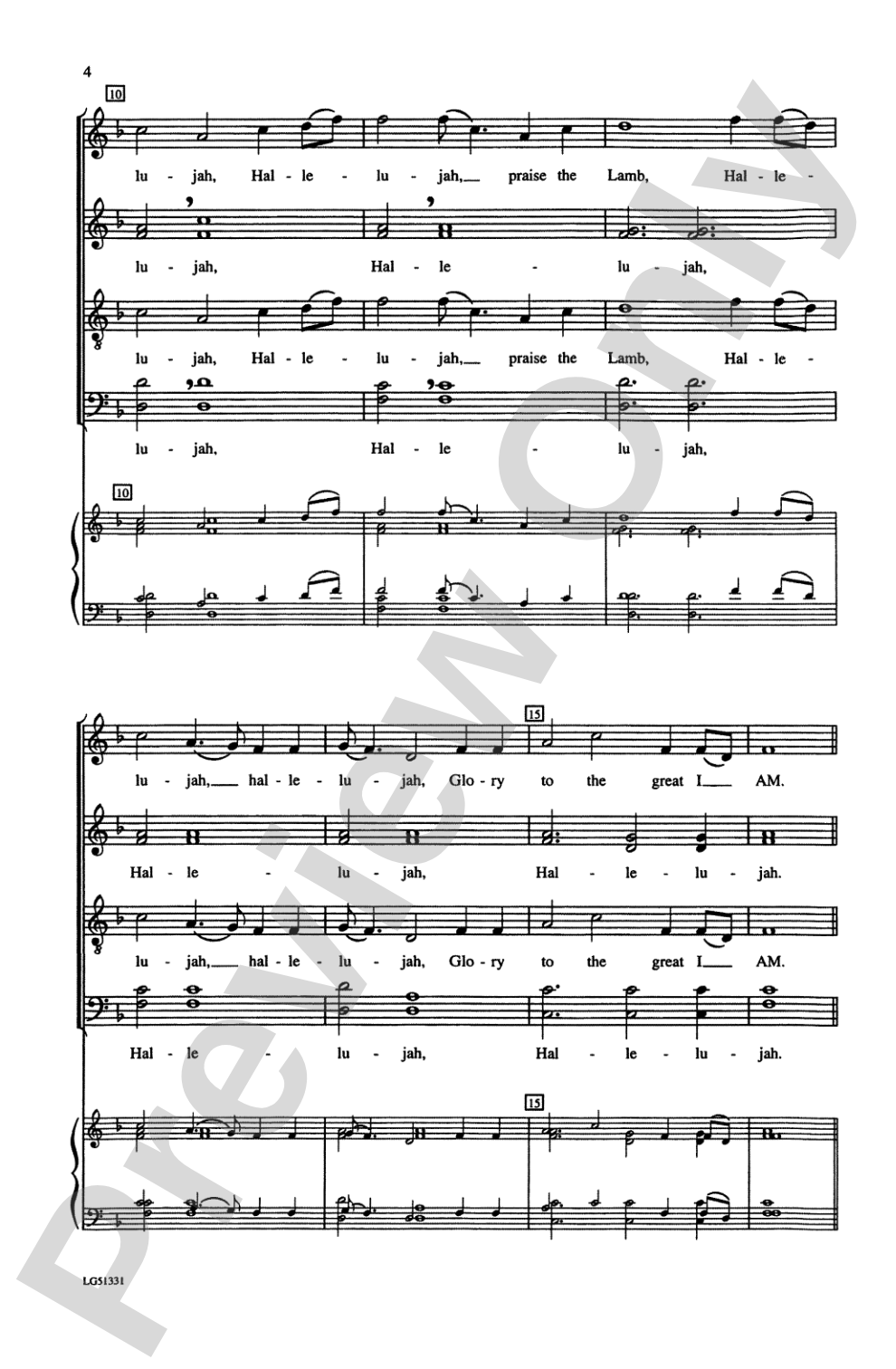

Hark, I Hear the Harps Eternal: SATB, a cappella Choral Octavo
Traditional Hymn / arr. Alice Parker
Item: 00-PO-0002657

$2.05
Minimum order quantity: 20 copies
Pickup currently not available
Related Items
Hark, I Hear the Harps Eternal: SSAA, a cappella Choral Octavo |
$2.05
|
View | |
Hark, I Hear the Harps Eternal: TTBB, a cappella Choral Octavo |
$2.05
|
View | |
Hark, I Hear the Harps Eternal: SATB, a cappella Choral Octavo |
$2.50
|
View | |
Hark, I Hear the Harps Eternal: SSAA, a cappella Choral Octavo |
$2.05
|
View | |
Hark, I Hear the Harps Eternal: TTBB, a cappella Choral Octavo |
$2.05
|
View |
Description
Mixed choirs can enjoy this famous arrangement by Alice Parker, originally written for the Robert Shaw Chorale. The strong walking pulse and juxtaposed motives have made it exceptionally popular for over 40 years. This title is available in MakeMusic Cloud and Music Prodigy. This title is available in MakeMusic Cloud.


Don't just read it, hear it, play along with it, and watch your students grow with it. In MakeMusic Cloud, Hark, I Hear the Harps Eternal: SATB, a cappella Choral Octavo comes alive with professional accompaniment, adjustable tempo, and built-in practice tools that turn solo practice into real progress.
Open in the Player
Jump straight in and assign it today.
Start Your Free Trial
Open this title and explore the full library in minutes.
Sample Audio
1
Audio File
--:--
0:00
0:00
Sample Video
Additional Details
Series:
Lawson-Gould
Publisher:
Alfred Music
Page Count:
12
SKU:
00-PO-0002657
More about this title
About the Arranger: Alice Parker

Alice Parker studied composition and conducting at Smith College and Juilliard, where she forged a lifelong creative partnership with Robert Shaw. Together they created hundreds of settings of American folksongs, hymns, and spirituals that remain core repertoire for choirs everywhere. Her own catalogue spans over five hundred published works across operas, cantatas, song cycles, and individual anthems.
In 1985, Parker founded MELODIOUS ACCORD, INC., centering her work on melody itself. She authored influential texts on choral improvisation, melodic styles, and church music, including the widely respected Melodious Accord: Good Singing in Church. Parker's honors include the Robert Shaw Award from the American Choral Directors Association, the Harvard Glee Club Foundation Medal, and recognition as Distinguished Composer of the Year by the American Guild of Organists. She received six honorary doctorates and fellowships from institutions including the Hymn Society of the United States and Canada.
Why we love this
Parker's arrangement breathes with authenticity and singability. The walking pulse and clear motivic architecture give singers immediate purchase on the piece while the four-part writing remains elegant and well-balanced, making it a genuine crowd pleaser for both performers and audiences at competitions and regional festivals.
What to expect
Contemplative yet buoyant, this arrangement wraps the familiar hymn in warm harmonies that feel both reverent and alive. The walking bass and interlocking vocal lines create a sense of quiet conviction, inviting the listener into a moment of peaceful reflection without sacrificing musical energy.
Who it's for
Mixed SATB choirs seeking a sacred a cappella piece that balances accessibility with musical substance. This arrangement works equally well for high school and college ensembles, community choirs preparing for festival performance, and groups that appreciate American choral literature grounded in traditional hymnody.
How to get the most out of it
- Establish a steady, confident walking pulse in rehearsal; the piece thrives on forward momentum rather than rubato or dramatic tempo shifts.
- Attend to the independence of motivic lines across all four voices, particularly where soprano and alto exchange material with tenor and bass.
- Shape phrases through subtle dynamic swells rather than abrupt changes; Parker's writing responds well to organic vocal phrasing that honors the hymn's lyrical roots.
How to use it
Program this as a concert centerpiece or festival submission where you want to showcase choral blend and a cappella balance. It pairs naturally with other sacred choral works or American folk-based repertoire and fits comfortably into either a spiritual-focused program or a broader choral concert that honors hymn tradition.
Skills your students will build
- Singing in close harmonic intervals with precise intonation
- Balancing individual lines within four-part texture
- Sustaining tone quality and evenness across dynamic ranges without instrumental support
- Shaping long phrases with breath control and musical intent
- Interpreting text expression within a hymnic style