Happy Song Cover Image

Happy Song: Horn, Solo with Piano, Book

$5.99 USD
Sale price  $5.99 USD Regular price 
Skip to product information
Happy Song Cover Image

Happy Song: Horn, Solo with Piano, Book

By Edmund J. Siennicki

Grade: 1

Item: 36-10520466

$5.99
Shipped

One moment…

Description
Offering both clear dynamic, articulation contrasts, and a great melody, all within the playable range of a new student, this work is perfect for a young musician's first recital or contest. The piano accompaniment can also be performed by a one or two year private study middle-school level piano player. And the variety of solo instrument parts makes it possible for one student to accompany many different students. A prepatory "warm-up" exercise for young acccompanists is printed on the last page of the piano part. Instruments available from the publisher: flute, clarinet, bassoon, saxophone (alto and tenor), cornet/trumpet/baritone T.C., horn, trombone, baritone B.C., tuba, and electronic keyboard.

Happy Song: Horn, Solo with Piano, Book isn't in MakeMusic Cloud just yet...but it could be. Let us know you'd like to see it, and you'll help shape what comes next. In the meantime, start a free trial and dive into thousands of interactive titles your students can play along with today.

Sample Pages

No sample pages found.

Sample Audio
No sample audio found.
Sample Video
Additional Details
Series: LudwigMasters Brass Series
Publisher: Keiser Productions, Inc.
ISBN10: 1-62-156496-7
ISBN13: 978-1-62-156496-6
UPC: 659859279398
SKU: 36-10520466
Instrumentation: F Horn Solo and Piano

More about this title

About the Composer: Edmund J. Siennicki
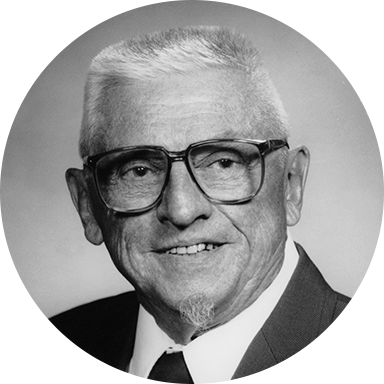
Edmund J. Siennicki

Edmund J. Siennicki (1920) grew up in Cleveland, Ohio, where a formative conversation with pianist Ignacy Jan Paderewski at age twelve shaped his musical direction. He earned his Bachelor's degree from Kent State University, where he composed the university's fight song, still performed at football games today. His graduate studies took him to Teachers College at Columbia University, where he pursued composition under Herbert Elwell while also exploring electronic music and consulting with Vincent Persichetti.

Siennicki built a distinguished career as both performer and composer, playing bassoon and piano professionally while teaching primarily in Cleveland's junior high schools. He later held faculty positions at Michigan and Kent State University. His compositional output includes approximately 200 published works, many award winners in National School Orchestra competitions. He was twice selected as composer in residence at the MacDowell Colony and has received consecutive ASCAP awards for two decades. He continues composing and conducting educational clinics.

Why we love this

Siennicki wrote this piece with genuine understanding of what young horn players can actually accomplish. The melody sings within a comfortable range, articulation and dynamics create musical interest without technical burden, and the accompaniment is equally scaled for developing pianists. You get a complete, performance-ready pairing that works equally well for a first recital or a solo contest entry.

What to expect

Bright, straightforward, and genuinely musical. The piece feels uncluttered: strong melodic lines, clear harmonic support, and space for the young player to hear themselves sing. There is nothing apologetic or overly simplified in its character.

Who it's for

Horn students at the early stages of their study, ready for their first solo performance experience. It works equally well for young musicians preparing for a recital, contest, or classroom performance situation where confidence and musical satisfaction matter as much as technical challenge.

How to get the most out of it

  • Balance tone production with phrase shape: resist blaring through the forte sections. The contrast works because both dynamics serve the melody, not the other way around.
  • Work the piano warm-up exercise on the final page with your student pianist. A secure, confident accompanist transforms the entire performance.
  • Listen through the entire piece before rehearsing details. The straightforward melody and clear structure mean students absorb the musical arc quickly and can focus on execution.
  • Anchor the dotted rhythms and articulation changes in slow practice. These provide the piece's character; rushing through them flattens the effect.

How to use it

Anchor a student recital with this piece as an opening or closing number. Its accessibility and solid musicality make it an excellent program bridge between teaching demonstrations and more advanced repertoire. The fact that multiple instruments can perform the same accompaniment also means you can program several students in quick succession with one pianist.

Skills your students will build

  • Dynamic control and contrast in a supported melodic context
  • Articulation precision (staccato and legato phrase work)
  • Ensemble listening and balance with piano accompaniment
  • Memorization and performance confidence
  • Intonation awareness across register changes

You May Also Like