Happy Song Cover Image

Happy Song: Bassoon and Piano Book

$5.99 USD
Sale price  $5.99 USD Regular price 
Skip to product information
Happy Song Cover Image

Happy Song: Bassoon and Piano Book

By Edmund J. Siennicki

Grade: 1

Item: 36-10430466

$5.99
Shipped

One moment…

Description
Offering both clear dynamic, artiluation contrasts, and a great melody, all within the playable range of a new student, this work is perfect for a young musician's first recital or contest. The piano accompaniment can also be performed by a one or two year private study middle-school level piano player. And the variety of solo instrument parts makes it possible for one student to accompany many different students. A prepatory "warm-up" exercise for young acccompanists is printed on the last page of the piano part. Instruments available from the publisher: flute, clarinet, bassoon, saxophone (alto and tenor), cornet/trumpet/baritone T.C., horn, trombone, baritone B.C., tuba, and electronic keyboard.

Happy Song: Bassoon and Piano Book isn't in MakeMusic Cloud just yet...but it could be. Let us know you'd like to see it, and you'll help shape what comes next. In the meantime, start a free trial and dive into thousands of interactive titles your students can play along with today.

Sample Pages

No sample pages found.

Sample Audio
No sample audio found.
Sample Video
Additional Details
Series: LudwigMasters Woodwind Series
Publisher: Keiser Productions, Inc.
ISBN10: 1-62-156491-6
ISBN13: 978-1-62-156491-1
UPC: 660355187025
SKU: 36-10430466
Instrumentation: Bassoon and Piano

More about this title

About the Composer: Edmund J. Siennicki
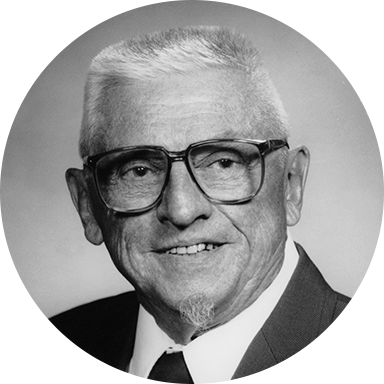
Edmund J. Siennicki

Edmund J. Siennicki (born 1920) grew up in Cleveland, Ohio, where a chance meeting with pianist Ignacy Jan Paderewski at age 12 shaped his artistic direction. He earned his Bachelor's degree from Kent State University, where he composed Fight on for KSU, a piece that continues to be performed at university football games. His graduate training included study at Teachers College, Columbia University, with composition mentors Herbert Elwell and Vincent Persichetti, alongside electronic music study with Sergio Barroso.

Siennicki's career spanned performance (bassoon and piano), composition, and teaching. His works have won prizes in the National School Orchestra composition contests, and he served twice as composer in residence at the MacDowell Colony. With roughly 200 published compositions and two decades of ASCAP recognition, his teaching experience centered in Cleveland junior high schools while also holding faculty positions at Michigan and Kent State University. He continues composing, conducting school clinics, and engaging with music education.

Why we love this

This piece respects what early-level students can actually accomplish while giving them a genuine musical experience. The melody is memorable and playable, the dynamic range provides expressive opportunity without technical overwhelm, and the lightweight piano accompaniment means your intermediate pianists can support the performance without needing advanced skills.

What to expect

The title says it all: this piece has an inherent brightness and forward motion that appeals to young musicians and their audiences alike. The clear articulation and varied dynamics create shape and interest in every phrase, making even a modest range feel expressive and musical.

Who it's for

This is ideal for first-time recital or contest performers on bassoon who need a piece that showcases musicianship without demanding advanced technique. Both the solo part and the piano accompaniment are specifically written for young students, making it accessible for a beginning bassist paired with a pianist in their first or second year of study.

How to get the most out of it

  • Highlight the dynamic contrasts by exaggerating them slightly during rehearsal; young students often default to a single volume level, so calling specific attention to the marked dynamics teaches them to listen to their own sound.
  • Work the articulation markings as a separate task before combining them with the melody; isolating these elements builds clarity and confidence.
  • Coordinate with the pianist early about pacing and breathing points; even a brief rehearsal together prevents the accompaniment from rushing ahead of the soloist.

How to use it

Slot this into a student recital or school solo competition where you want a piece that builds confidence without risk. Its accessibility also makes it an excellent choice for demonstrating ensemble flexibility; since editions exist for multiple wind instruments with the same accompaniment, you can feature several different students in a concert using the same pianist.

Skills your students will build

  • Dynamic contrast and expressive control
  • Clear articulation differentiation
  • Melodic shape and phrasing within a limited range
  • Ensemble coordination with a pianist
  • Confidence performing for an audience

You May Also Like