

Hallelujah, I Believe: SSA Choral Octavo
Words and music by Jim Brickman and Victoria Shaw / arr. Alan Billingsley
Item: 00-PO-0005477
$2.10
Minimum order quantity: 20 copies
Pickup currently not available
Related Items
Hallelujah, I Believe: SoundTrax Digital Audio Download |
$29.99
|
View | |
Hallelujah, I Believe: SATB Choral Octavo |
$2.10
|
View | |
Hallelujah, I Believe: SAB Choral Octavo |
$2.10
|
View | |
Hallelujah, I Believe: SATB Choral Octavo |
$2.10
|
View | |
Hallelujah, I Believe: SAB Choral Octavo |
$2.10
|
View | |
Hallelujah, I Believe: Choral Octavo SoundTrax CD |
$29.99
|
View |
Description
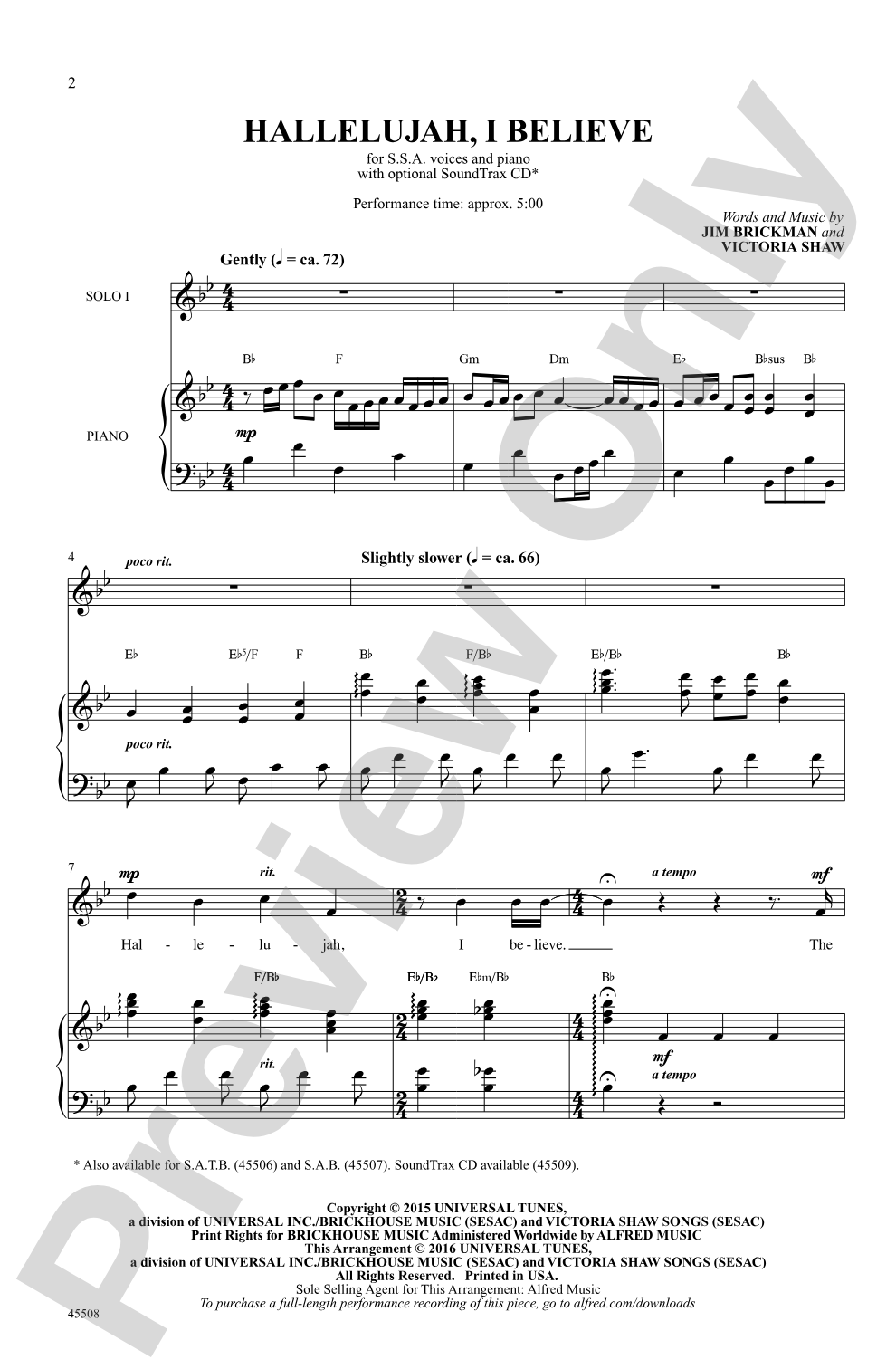
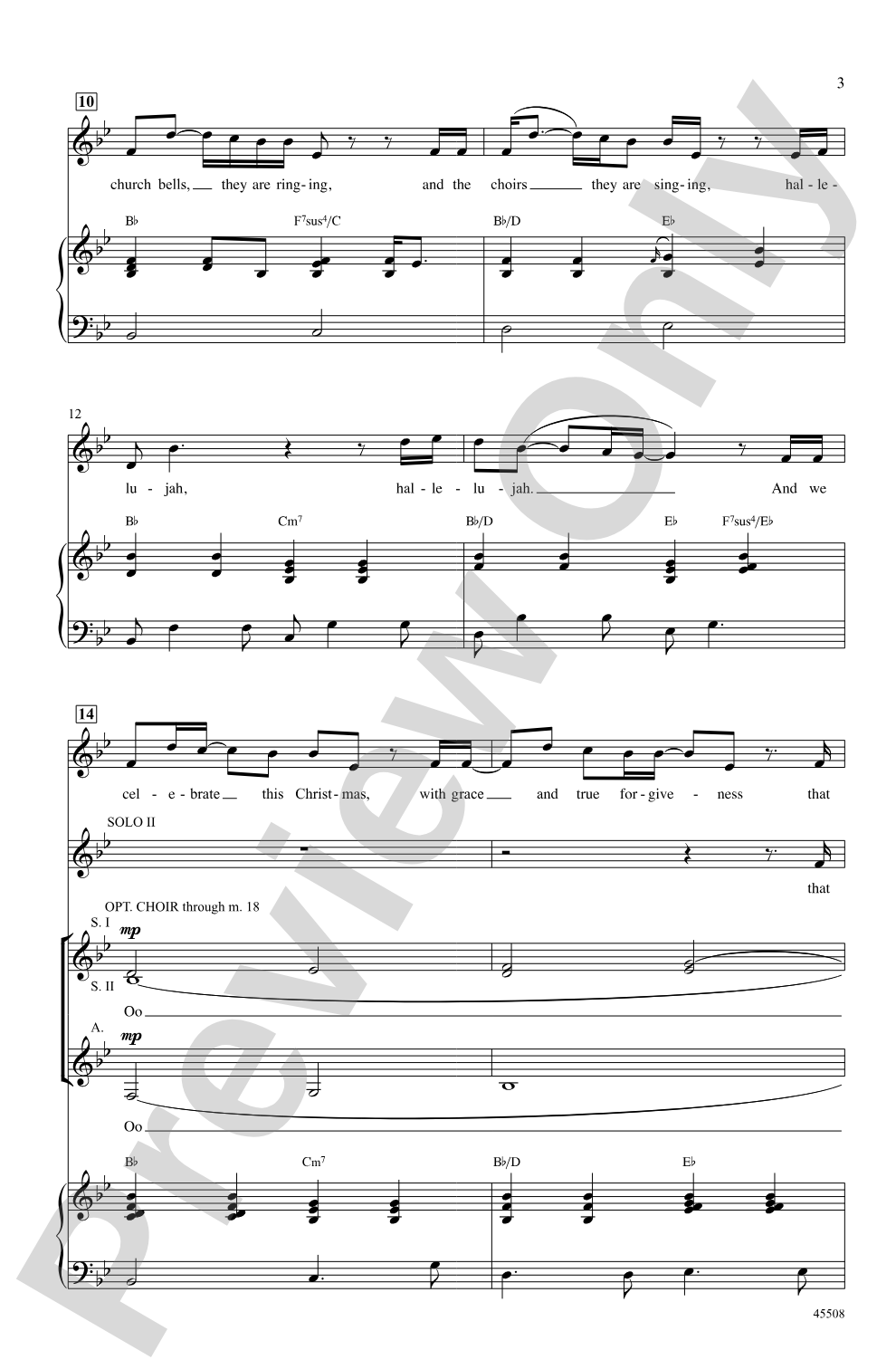
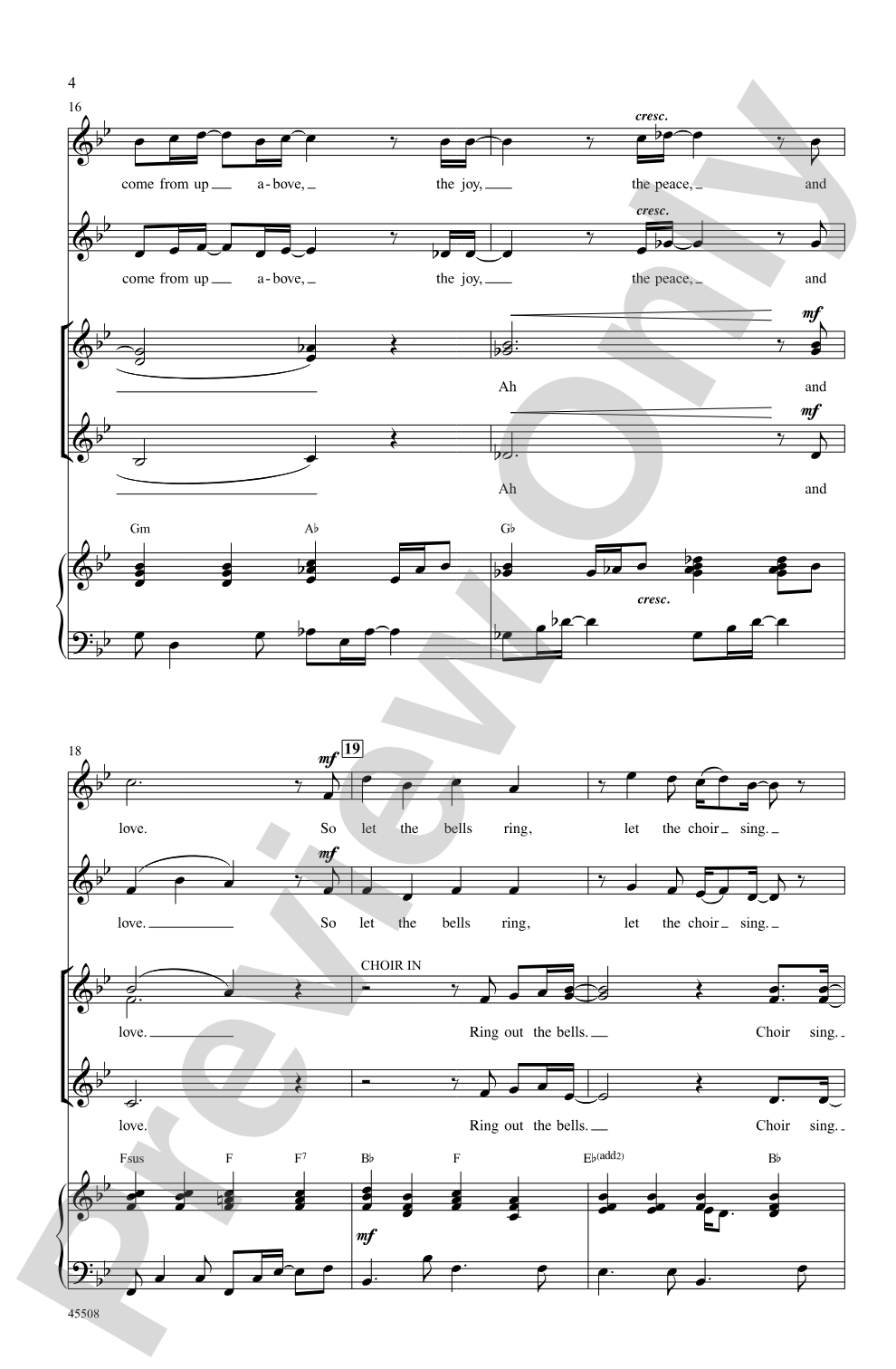
From Brickman's new holiday album, Comfort and Joy, this fantastic arrangement offers optional solos and builds to a powerful choral ending. Highly effective as a concert opener or closer. "Let the bells ring, let the choirs sing, hallelujah, I believe!"


Hallelujah, I Believe: SSA Choral Octavo isn't in MakeMusic Cloud just yet...but it could be. Let us know you'd like to see it, and you'll help shape what comes next. In the meantime, start a free trial and dive into thousands of interactive titles your students can play along with today.
Request This Title
Tell us you want it.
Start Your Free Trial
Explore everything that's ready to play right now.
Sample Audio
1
Audio File
--:--
0:00
0:00
Sample Video
No sample videos found.
Additional Details
Series:
Alfred Pop Choral Series
Publisher:
Alfred Music
Page Count:
16
SKU:
00-PO-0005477
More about this title
About the Composer: Jim Brickman
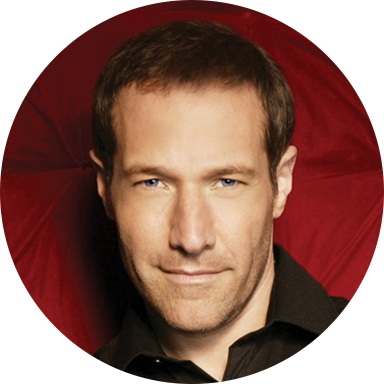
Jim Brickman has built a career on instrumental storytelling that reaches millions. His piano compositions and live performances have fundamentally reshaped how audiences experience contemporary instrumental music, establishing him as one of the defining voices in modern American songwriting. His creative philosophy centers on music's power to underscore life's pivotal moments—whether celebrating joy or offering solace.
Brickman's gift lies in crafting melodies that feel both accessible and emotionally resonant. Working alongside lyricist Victoria Shaw on this piece, he brings the same melodic sensibility that has made him one of the best-selling solo pianists of his generation, translating his instrumental storytelling into a choral context that invites ensemble voices to carry his vision.
Why we love this
Alan Billingsley's arrangement honors Brickman's melodic gift while building genuine momentum through the SSA texture. The optional solos give singers moments to step forward before the full choir arrives with that powerful declarative ending—a structure that works beautifully whether you open or close your concert, and the recorded accompaniment option removes one logistical hurdle from your rehearsal calendar.
What to expect
This piece carries the warmth of holiday celebration without saccharine sentimentality. The opening invites quiet reflection before building toward a declaration of faith that feels earned rather than imposed, creating space for both intimacy and triumph within a single arc.
Who it's for
SSA choirs seeking a contemporary sacred work with genuine emotional breadth and flexible performance options. This arrangement welcomes both experienced ensembles and developing choirs; the optional solos allow you to feature capable singers while the final choral statement remains accessible to all voices.
How to get the most out of it
- Shape the solo passages with warmth and introspection, letting the optional soloists draw the audience in before the choir enters with conviction.
- Protect the bell imagery in the text by having early entrances ring out clearly; crisp articulation on "let the bells ring" pays off the poetic opening.
- Balance accompaniment volume during the optional solo sections so the featured voice can be heard without straining; the recorded track should support, not overpower.
- Build the final choral section with steady dynamic growth rather than sudden shifts; the power comes from collective commitment, not volume alone.
How to use it
Its dual strength as opener or closer gives you real programming flexibility in a holiday concert. If you open with it, the energy and affirmation set an immediate tone; if you close with it, the powerful ending sends the audience out with the piece's central message lingering. The 16-page octavo pairs naturally with a mix of traditional carols and other contemporary sacred work.
Skills your students will build
- Balancing solo and ensemble textures within a single piece
- Sustaining legato phrasing across longer melodic lines
- Building dynamic momentum toward a climactic final section
- Interpreting text with emotional specificity (the difference between singing about and singing from belief)