
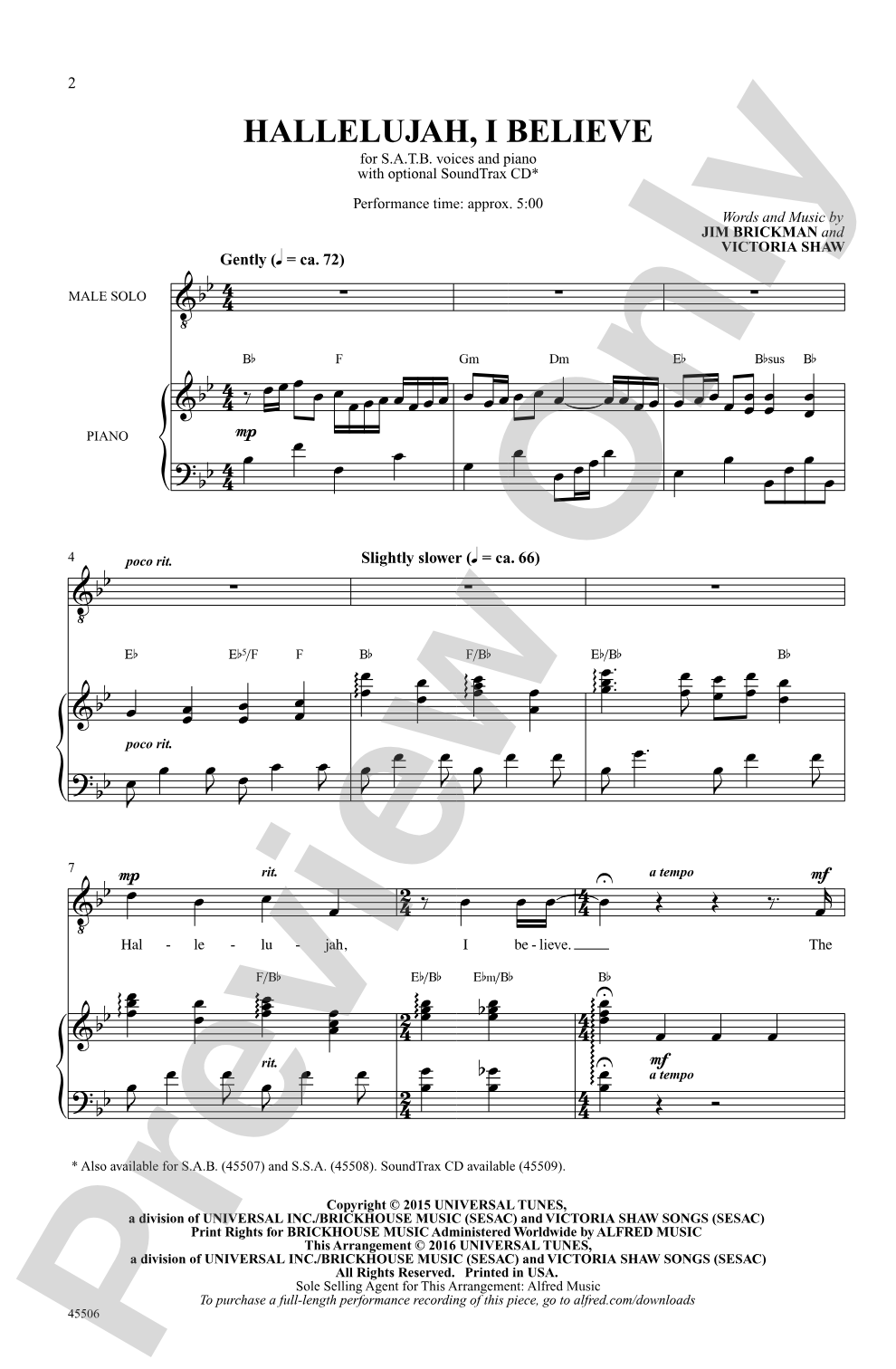
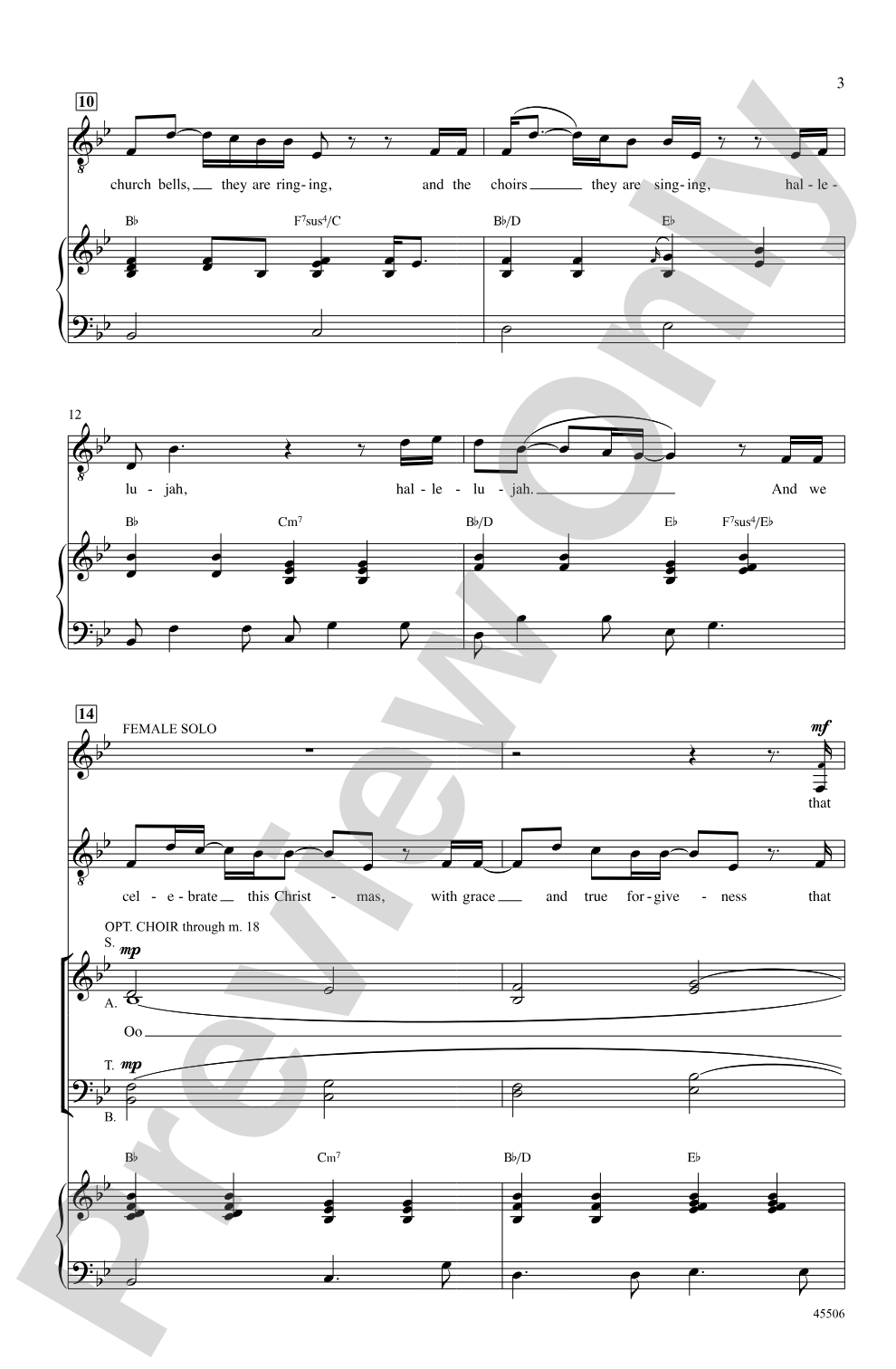
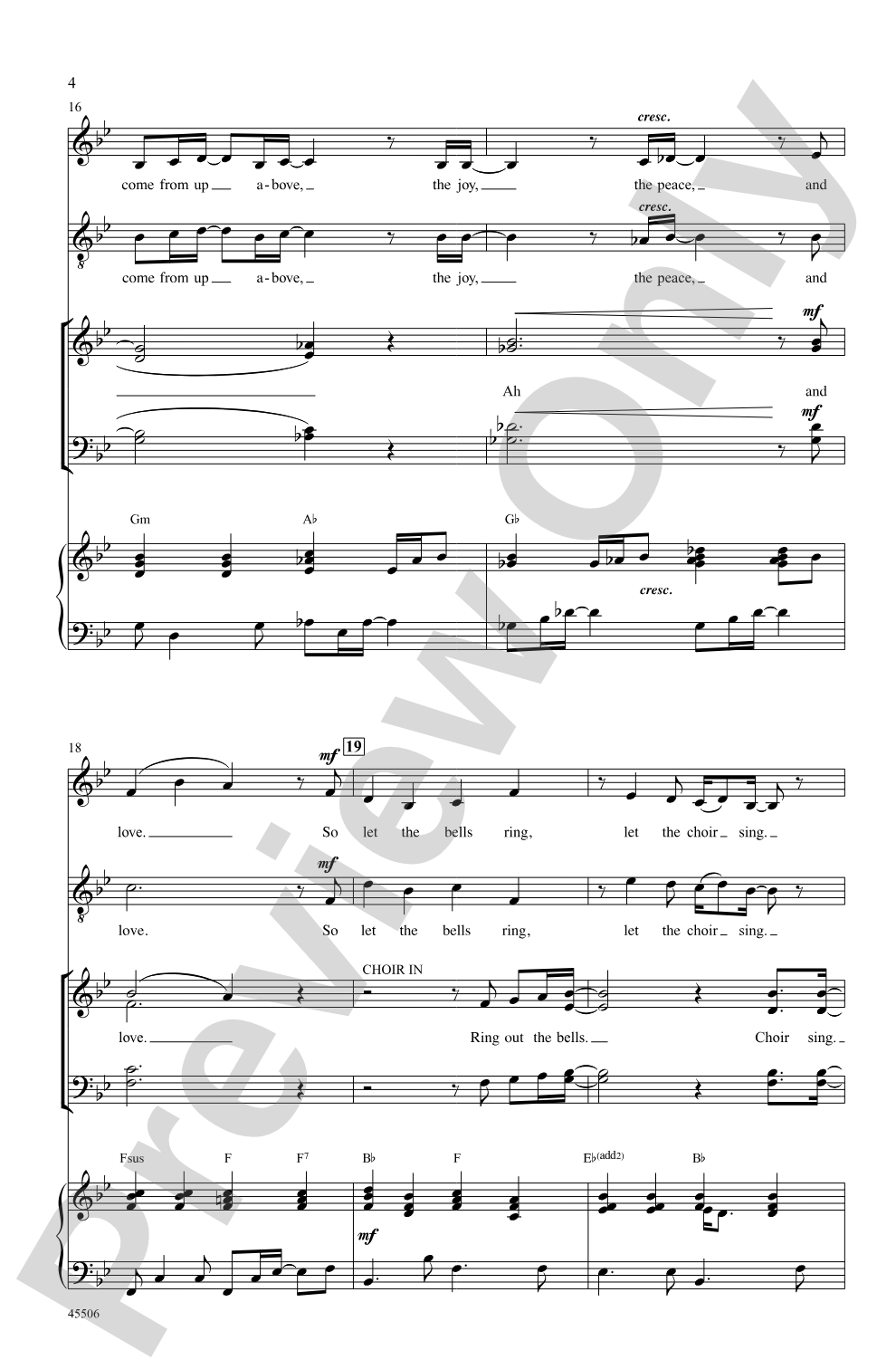

Hallelujah, I Believe: SATB Choral Octavo
Words and music by Jim Brickman and Victoria Shaw / arr. Alan Billingsley
Item: 00-PO-0005475
$2.10
Minimum order quantity: 20 copies
Pickup currently not available
Related Items
Hallelujah, I Believe: SoundTrax Digital Audio Download |
$29.99
|
View | |
Hallelujah, I Believe: SAB Choral Octavo |
$2.10
|
View | |
Hallelujah, I Believe: SSA Choral Octavo |
$2.10
|
View | |
Hallelujah, I Believe: SATB Choral Octavo |
$2.10
|
View | |
Hallelujah, I Believe: SAB Choral Octavo |
$2.10
|
View | |
Hallelujah, I Believe: Choral Octavo SoundTrax CD |
$29.99
|
View |
Description
From Brickman's new holiday album, Comfort and Joy, this fantastic arrangement offers optional solos and builds to a powerful choral ending. Highly effective as a concert opener or closer. "Let the bells ring, let the choirs sing, hallelujah, I believe!"


Hallelujah, I Believe: SATB Choral Octavo isn't in MakeMusic Cloud just yet...but it could be. Let us know you'd like to see it, and you'll help shape what comes next. In the meantime, start a free trial and dive into thousands of interactive titles your students can play along with today.
Request This Title
Tell us you want it.
Start Your Free Trial
Explore everything that's ready to play right now.
Sample Audio
1
Audio File
--:--
0:00
0:00
Sample Video
Additional Details
Series:
Alfred Pop Choral Series
Publisher:
Alfred Music
Page Count:
16
SKU:
00-PO-0005475
More about this title
About the Composer: Jim Brickman

Jim Brickman stands among the most successful solo pianists in American music, having built a career on accessible yet sophisticated instrumental compositions that connect emotionally with listeners. His approach to songwriting centers on creating music for life's significant moments—pieces designed to comfort, inspire, and celebrate. Through both studio albums and extensive touring, Brickman has demonstrated that instrumental music can command mainstream attention and commercial success while maintaining artistic integrity.
Brickman's collaborative work with lyricists and arrangers has expanded his compositional reach into choral and vocal settings. His music consistently emphasizes melodic clarity and emotional directness, qualities that make his songs particularly effective for ensemble arrangements where clarity of intent matters greatly to performers and audiences alike.
Why we love this
This arrangement by Alan Billingsley captures the infectious optimism of Brickman's original while building genuine momentum through its structure. The option to feature solo voices before the final choral statement gives singers a moment to shine individually, while the powerful closing ensures the piece lands with impact whether you program it at the start or end of your concert.
What to expect
Joyful and affirmative, the piece radiates the kind of optimism that feels earned rather than forced. The arrangement supports both intimacy in verse sections and expansive celebration in the final chorus, creating natural peaks that engage both singers and listeners throughout.
Who it's for
This piece suits holiday concerts at intermediate to advanced choir levels where you need a song that feels fresh within the Christmas repertoire. Directors working with choirs that include strong soloists will find particular value in the optional solo sections, while those programming shorter concerts can rely on the octavo's effectiveness as either a concert bookend.
How to get the most out of it
- Balance the solo moments carefully against the accompanying voices so that featured singers project without the choir fading into background texture.
- Shape the phrase "let the bells ring, let the choirs sing" as a turning point where energy visibly increases toward the final statement of hallelujah.
- Articulate the text crisply throughout, especially in the opening sections where rhythmic clarity drives the piece's infectious character.
- If using the recorded accompaniment, rehearse without it first to ensure your choir owns the independence of their parts before blending with the track.
How to use it
Program this as a concert opener to set an energetic, celebratory tone immediately, or save it for the closing position where its powerful final choral gesture can send audiences out with uplifted spirits. It pairs well in a holiday concert that mixes contemporary and traditional sacred music, offering a bridge between those worlds.
Skills your students will build
- Managing dynamic contrast between solo passages and full choral sections
- Text clarity and articulation in contemporary sacred writing
- Sustaining rhythmic energy and ensemble cohesion in uplifting material
- Blending with recorded accompaniment while maintaining choir independence