

Grow Your Garden: SAB Choral Octavo
Words and music by Jay Althouse
Item: 00-PO-0006294
$2.05
Minimum order quantity: 20 copies
Pickup currently not available
Related Items
Grow Your Garden: PianoTrax Digital Audio Download |
$9.99
|
View | |
Grow Your Garden: SATB Choral Octavo |
$2.05
|
View | |
Grow Your Garden: 2-Part/SSA Choral Octavo |
$2.05
|
View | |
Grow Your Garden: SATB Choral Octavo |
$2.05
|
View | |
Grow Your Garden: SAB Choral Octavo |
$2.05
|
View | |
Grow Your Garden: 2-Part/SSA Choral Octavo |
$2.05
|
View |
Description
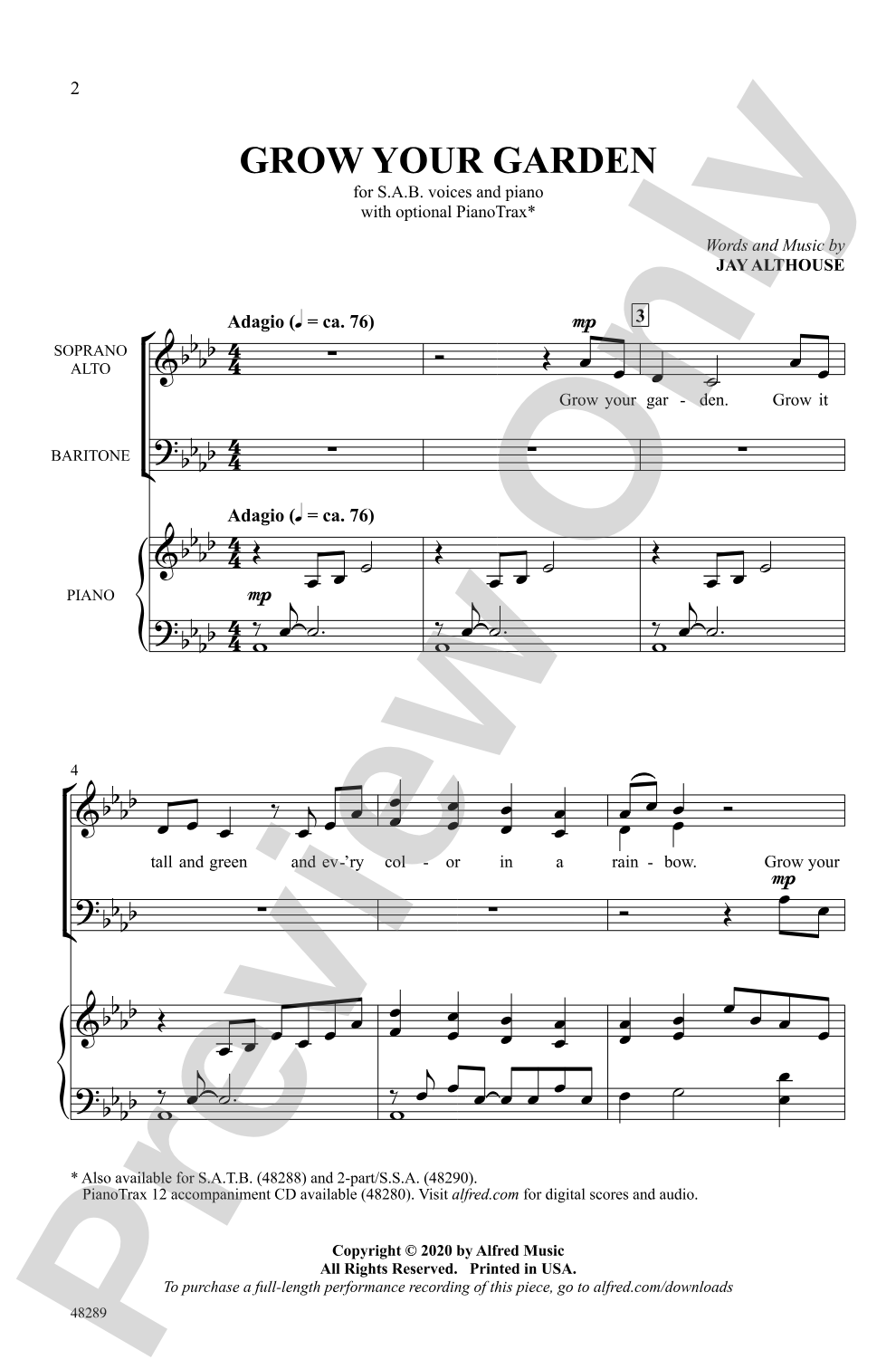
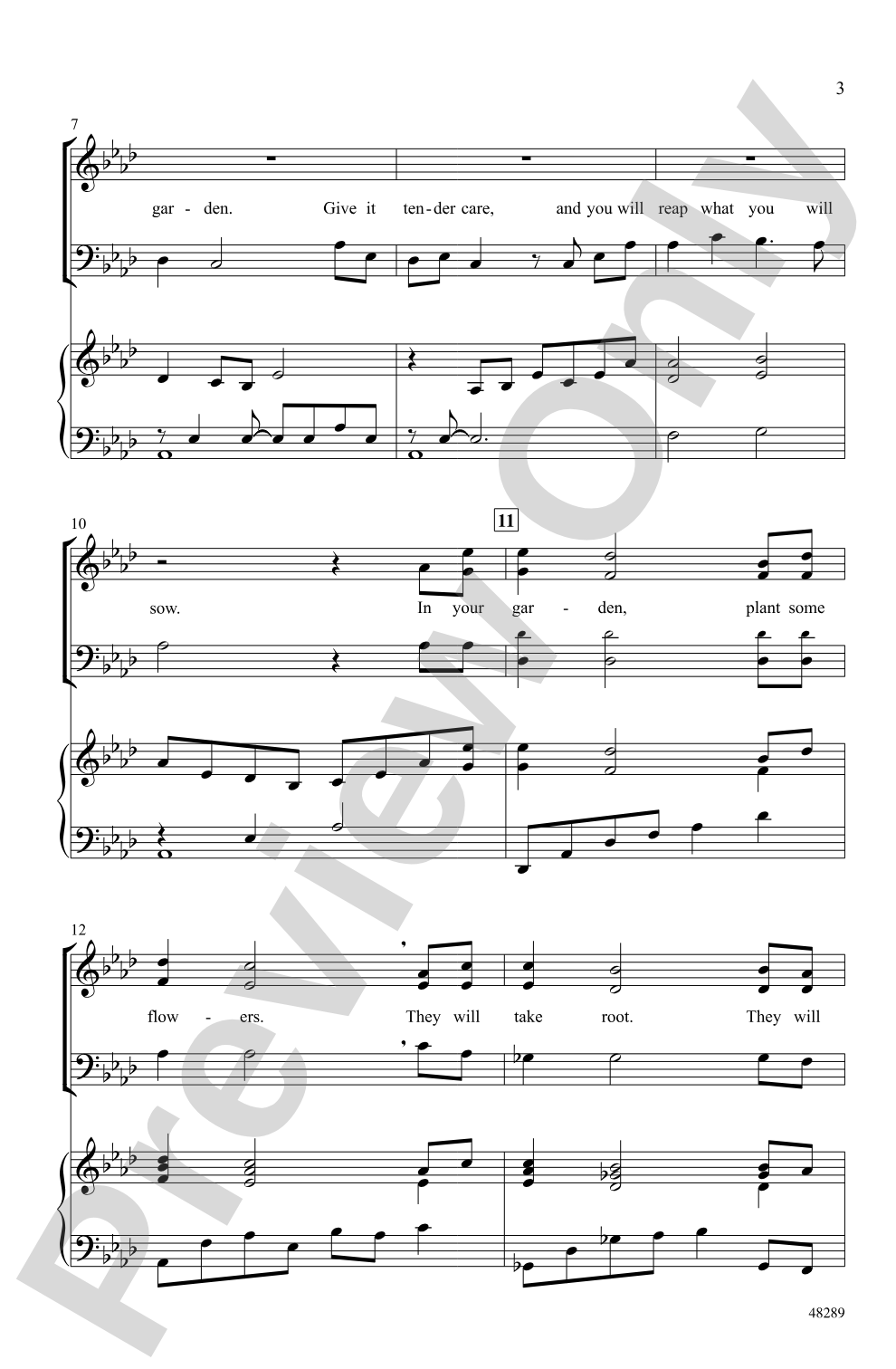
A garden serves as a symbolic metaphor about nurturing a meaningful life in this tender choral by Jay Althouse. Lyrical lines, warm harmonies, and sensitive phrasing garner a beautiful bouquet of musical moments and significant emotion. "Grow your garden. Give it tender care, and you will reap what you will sow."


Grow Your Garden: SAB Choral Octavo isn't in MakeMusic Cloud just yet...but it could be. Let us know you'd like to see it, and you'll help shape what comes next. In the meantime, start a free trial and dive into thousands of interactive titles your students can play along with today.
Request This Title
Tell us you want it.
Start Your Free Trial
Explore everything that's ready to play right now.
Sample Audio
1
Audio File
--:--
0:00
0:00
Sample Video
No sample videos found.
Additional Details
Series:
Alfred Choral Designs
Publisher:
Alfred Music
Page Count:
8
SKU:
00-PO-0006294
More about this title
About the Composer: Jay Althouse

Jay Althouse holds degrees in Music Education and Music from Indiana University of Pennsylvania, where he later received the Distinguished Alumni award. His eight-year tenure as a rights and licenses administrator at a major educational music publisher gave him deep insight into what choirs need, and he served on the Executive Board of the Music Publishers Association of America during that period.
With over 800 choral works in print, Althouse has established himself as a prolific voice in American choral music, performed widely across English-speaking countries. Beyond composition, he has co-written musicals with his wife Sally K. Albrecht, edited respected vocal solo collections, and authored several classroom resources including The Complete Choral Warm-up Book and Accent on Composers. A member of ASCAP and a regular recipient of the ASCAP Special Award, Althouse has also contributed to the Folk Art Society of America through articles and board service.
Why we love this
Althouse's gift for lyrical melody paired with accessible three-part writing makes this piece sing without demanding virtuosity. The garden metaphor carries real weight here—it never feels heavy-handed, and the harmonies support rather than complicate the emotional arc, giving your singers room to bring genuine expression to words about growth and care.
What to expect
This piece unfolds with genuine tenderness. The harmonies feel organic rather than constructed, supporting a melodic line that feels almost familiar even on first hearing. There's quiet strength in this music—not a moment of false sentiment, but rather the calm conviction of someone who has learned something true about growth.
Who it's for
High school and community choirs at all ability levels will find this piece accessible yet musically substantial. The SAB voicing removes the complexity of four-part writing while keeping the harmonies warm and resonant, making it ideal for groups building confidence or preparing for mixed-voice work.
How to get the most out of it
- Pay attention to the phrasing indicated in the score; Althouse's lyrical lines ask for a long line, and your singers will need to sustain focus across phrases that might feel longer than they're accustomed to managing.
- Balance the three parts so that no single voice dominates. In SAB writing, the alto line often carries supporting harmony, but here those parts deserve clarity so the full chord comes through.
- Use the text painting thoughtfully. 'Tender care' and 'sow' are moments where singers' awareness of word meaning shapes the quality of their sound, not their volume.
How to use it
This works beautifully as a centerpiece in a concert themed around nature, growth, or reflection. It also pairs well with more energetic repertoire, providing contrast and a moment for the audience to settle into listening. The eight-page length makes it manageable for festivals or smaller concert slots without requiring extended rehearsal time.
Skills your students will build
- Sustaining lyrical phrase lines across longer melodic spans
- Blending three-part harmonies with balance and clarity
- Connecting text to musical expression without over-interpretation
- Reading and executing the harmonic movement in SAB voicing