
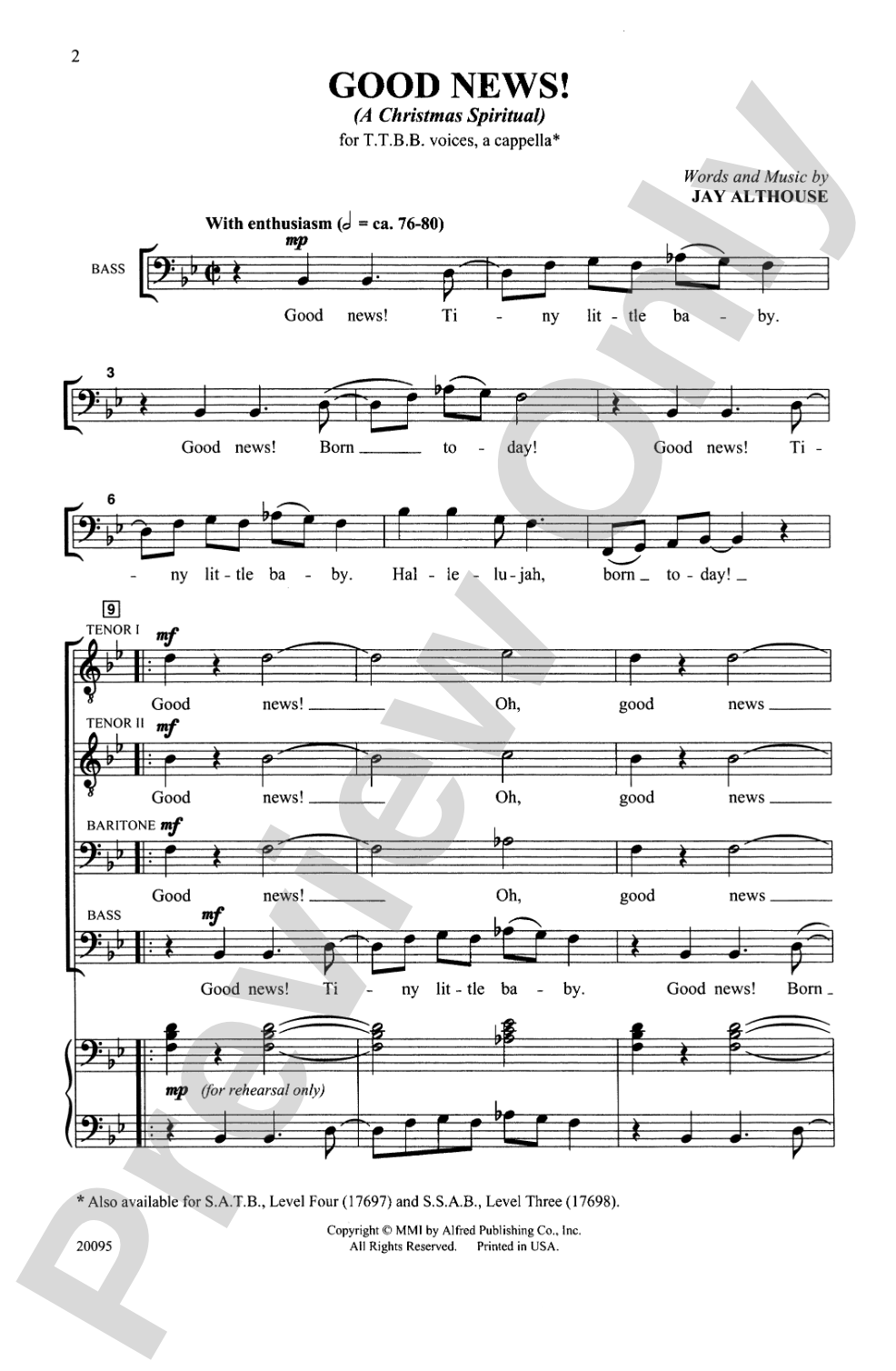

Good News! (A Christmas Spiritual): TTBB, a cappella Choral Octavo
Music by Jay Althouse
Item: 00-PO-0002174
$2.25
Minimum order quantity: 20 copies
Pickup currently not available
Description
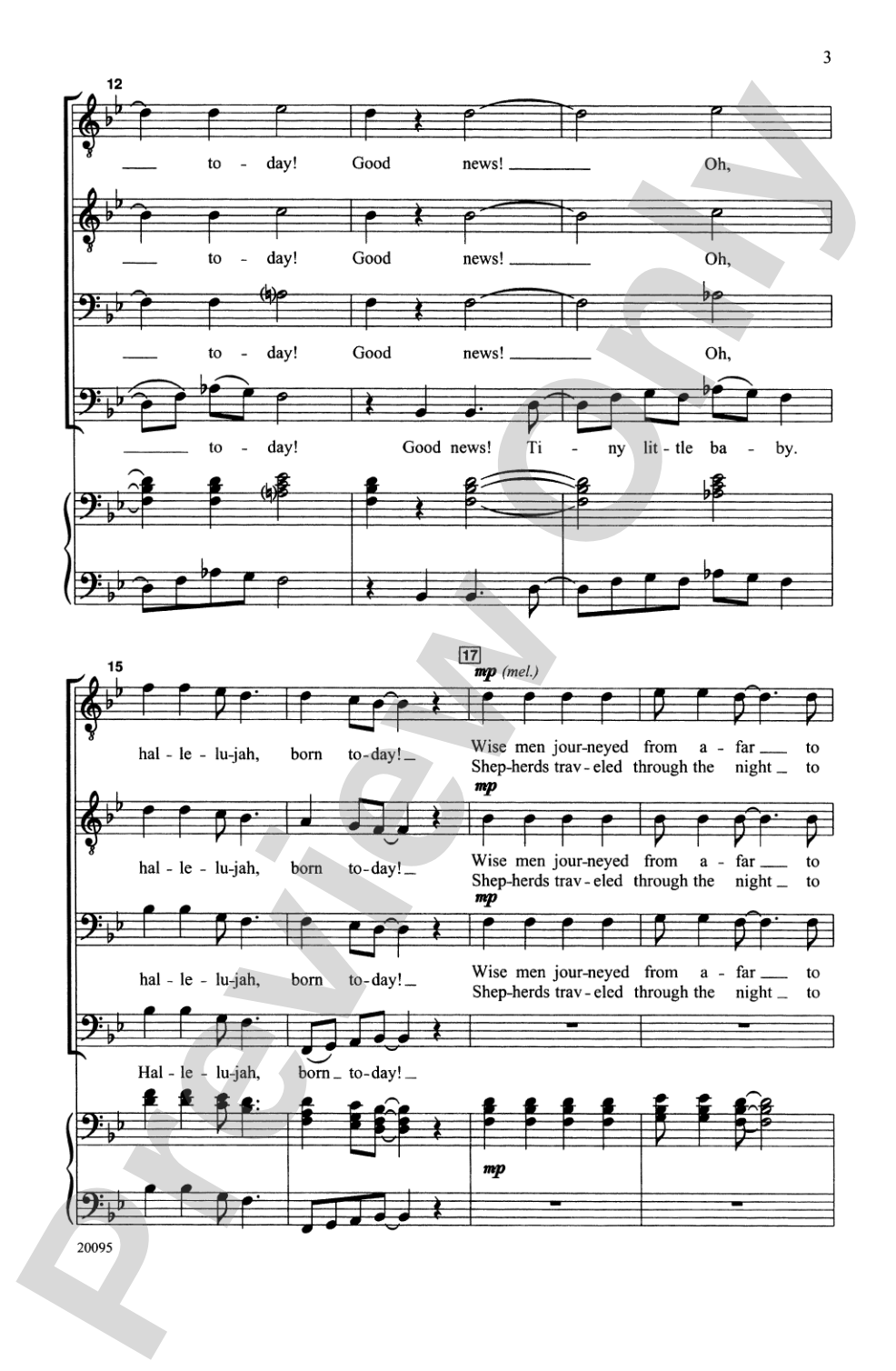
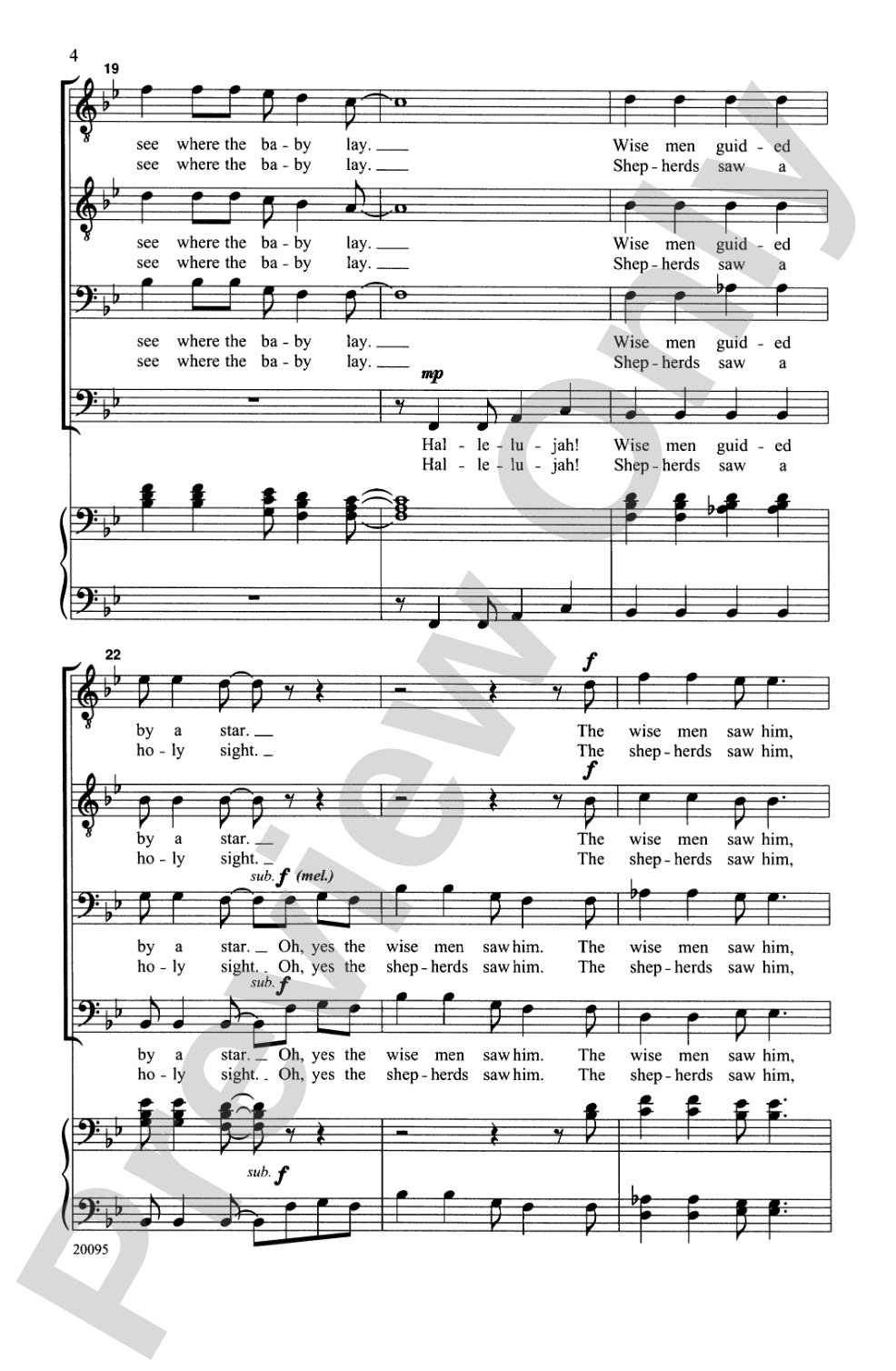
New for TTBB! One of the best in a long line of exuberant, original, a cappella Christmas spirituals by Jay Althouse. It opens with an energetic melody sung by the low voice with the upper three voices singing in counterpoint above. Rhythmic energy develops the piece and it ends with an electrifyimg eight measure coda that's the pinnacle of excitement. No solos, no tempo changes make for quick learning. In the classic spiritual tradition, yet fresh and contemporary.


Good News! (A Christmas Spiritual): TTBB, a cappella Choral Octavo isn't in MakeMusic Cloud just yet...but it could be. Let us know you'd like to see it, and you'll help shape what comes next. In the meantime, start a free trial and dive into thousands of interactive titles your students can play along with today.
Request This Title
Tell us you want it.
Start Your Free Trial
Explore everything that's ready to play right now.
Sample Audio
1
Audio File
--:--
0:00
0:00
Sample Video
No sample videos found.
Additional Details
Series:
Alfred Archive Edition: Alfred Choral Designs
Publisher:
Alfred Music
Page Count:
12
SKU:
00-PO-0002174
More about this title
About the Composer: Jay Althouse

Jay Althouse holds degrees in Music Education and Music from Indiana University of Pennsylvania, where he was later recognized with the Distinguished Alumni award. His career spans both publishing and composition; he spent eight years managing rights and licenses for a major educational music publisher and served on the Executive Board of the Music Publishers Association of America. As a composer, he has over 800 choral works in print and is widely performed throughout English-speaking choral programs.
Althouse is an ASCAP writer member and a regular recipient of the ASCAP Special Award for his compositions. Beyond his choral output, he has co-written children's musicals with his wife Sally K. Albrecht, compiled respected vocal solo collections, co-authored influential choral resources including The Complete Choral Warm-up Book and Accent on Composers, and written classroom materials for music literacy. He served on the board of the North Carolina Master Chorale and currently serves on the National Advisory Board of the Folk Art Society of America.
Why we love this
Althouse writes spirituals that sound both rooted in tradition and immediately alive for modern singers. This one avoids the trap of many Christmas pieces by building genuine excitement through rhythmic momentum rather than tempo tricks, so your ensemble stays engaged and the audience hears a piece that builds naturally to its climax.
What to expect
Bright, propulsive, and celebratory. The piece moves with the infectious swagger of a spiritual, built on a foundation of steady rhythmic drive rather than complicated harmony. It feels contemporary because Althouse lets rhythm do the heavy lifting instead of relying on complex voicings or unexpected harmonic turns.
Who it's for
TTBB choirs with solid basic blend and rhythmic precision. This works well for groups that have sung together for at least a season and can handle independent lines without conducting every note.
How to get the most out of it
- Anchor the piece on the baritone line in the opening section; the other voices will sit naturally above it if the low voice sings with confidence and clear articulation.
- Treat the counterpoint not as separate layers but as interlocking rhythmic phrases that bounce off each other; rehearse the voices together early to establish how they interact rather than drilling each part in isolation.
- Shape the final eight measures so the energy peaks in measure 35-36, then let the last phrase breathe slightly before the final unison punch; avoid the temptation to rush or add tempo.
How to use it
Program this as a closer to a holiday concert or winter assembly where it can land with maximum impact and energy. The piece works equally well in a set of Christmas music or as a standalone spiritual number on a secular winter program.
Skills your students will build
- Independent voice leading in counterpoint
- Maintaining rhythmic precision while singing moving parts
- Blending tight harmonic intervals in close voicing
- Musical phrasing across short rhythmic cells
- Building ensemble energy through coordination rather than tempo changes