

Gonna Sing: 2-Part, a cappella Choral Octavo
(When the Spirit Says Sing)
Traditional Spiritual / arr. Andy Beck
Item: 00-PO-0006367

$2.05
Minimum order quantity: 20 copies
Pickup currently not available
Related Items
Gonna Sing: 3-Part Mixed, a cappella Choral Octavo |
$2.05
|
View | |
Gonna Sing: SSA, a cappella Choral Octavo |
$2.05
|
View | |
Gonna Sing: TTB, a cappella Choral Octavo |
$2.05
|
View | |
Gonna Sing: 3-Part Mixed, a cappella Choral Octavo |
$2.05
|
View | |
Gonna Sing: 2-Part, a cappella Choral Octavo |
$2.05
|
View | |
Gonna Sing: SSA, a cappella Choral Octavo |
$2.05
|
View | |
Gonna Sing: TTB, a cappella Choral Octavo |
$2.05
|
View |
Description
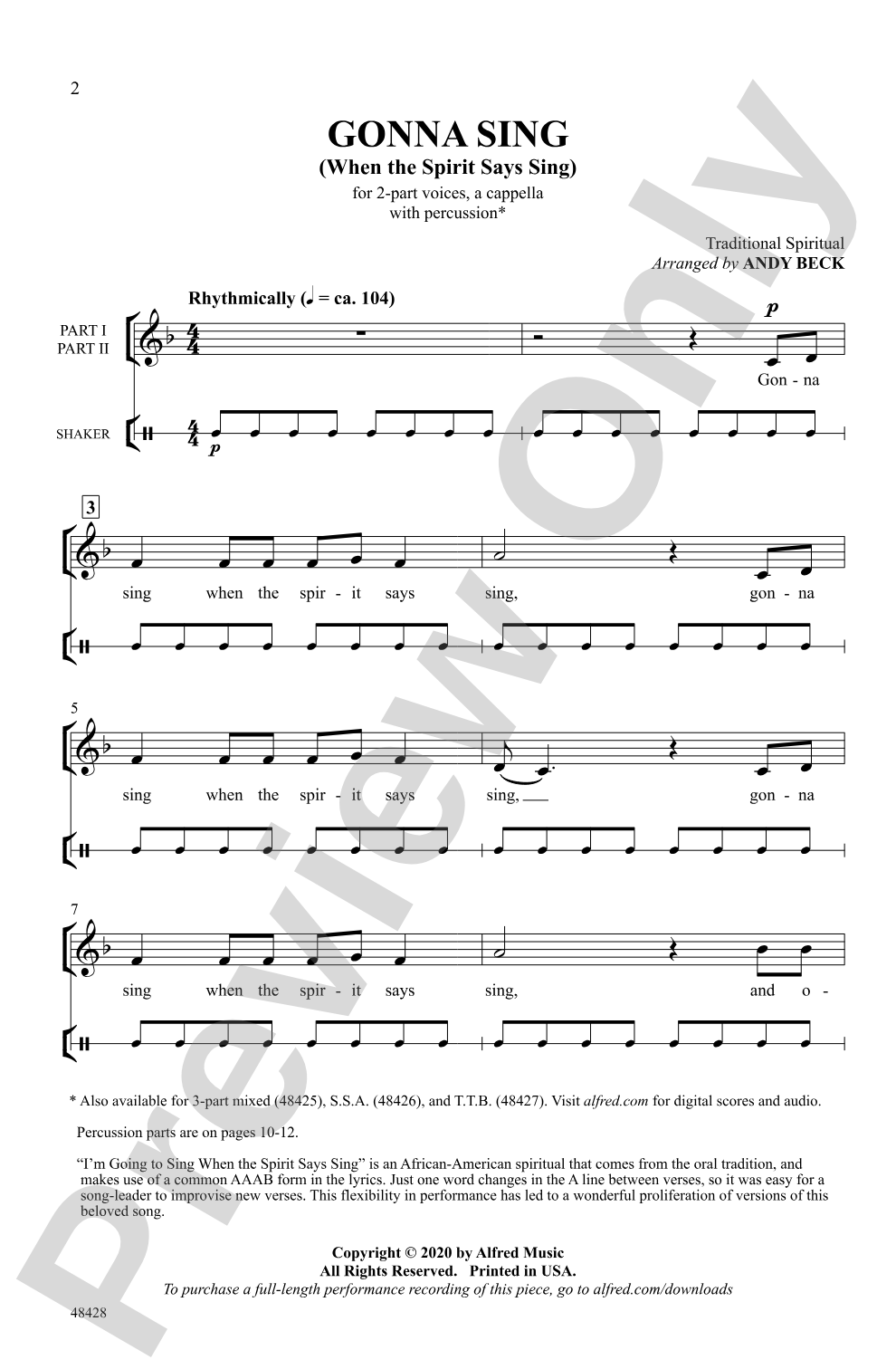
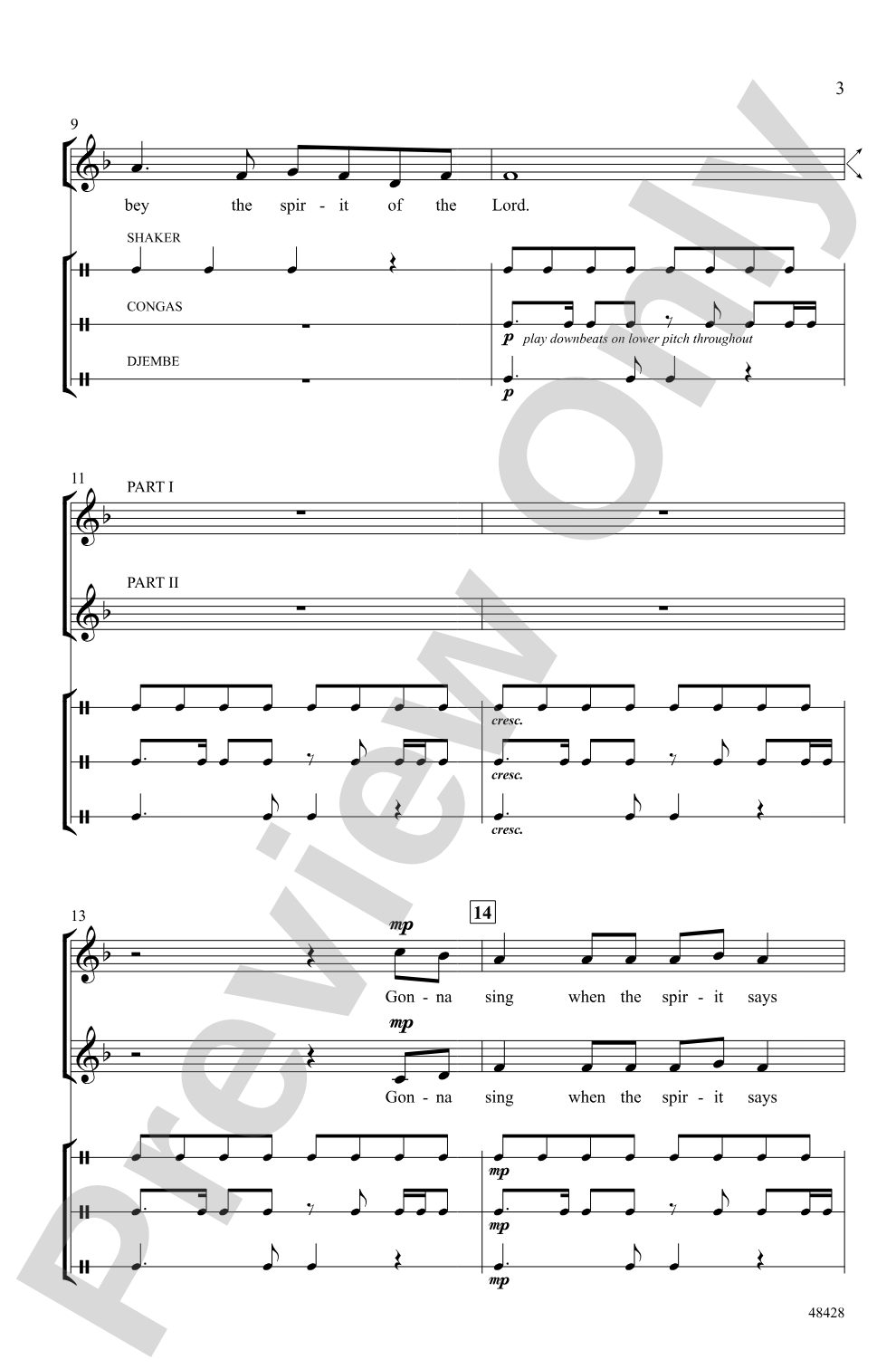
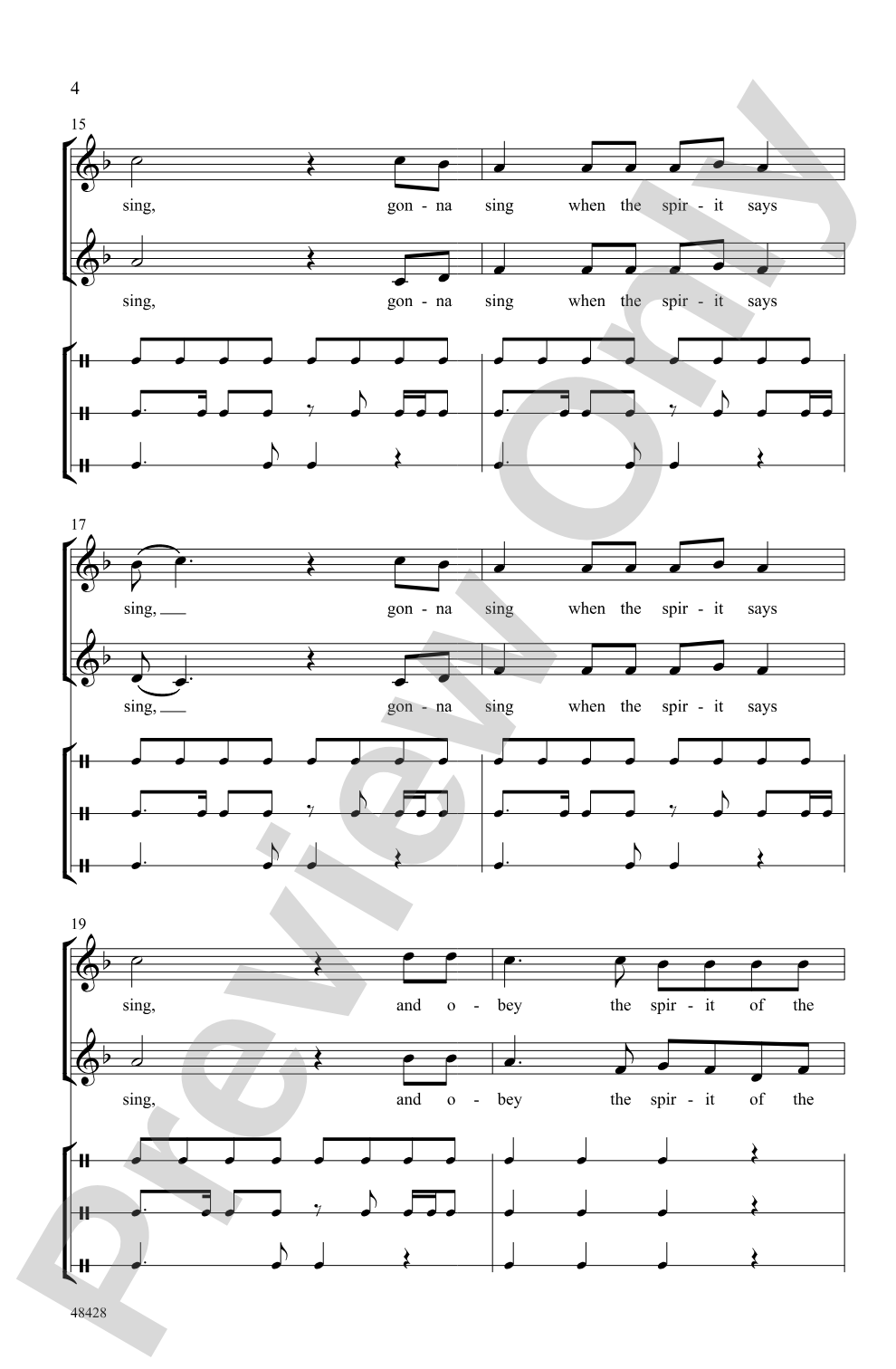
The familiar African-American spiritual in a fresh rhythmic setting! Opening with just a shaker and unison voices, a tapestry of percussion ostinatos and traditional choral harmony gradually unfolds before returning back to the clean lines of the beginning. Well-planned key changes ensure successful a cappella modulations for less-experienced groups. Three notated percussion parts are included in the publication.


Don't just read it, hear it, play along with it, and watch your students grow with it. In MakeMusic Cloud, Gonna Sing: 2-Part, a cappella Choral Octavo comes alive with professional accompaniment, adjustable tempo, and built-in practice tools that turn solo practice into real progress.
Open in the Player
Jump straight in and assign it today.
Start Your Free Trial
Open this title and explore the full library in minutes.
Sample Audio
1
Audio File
--:--
0:00
0:00
Sample Video
Additional Details
Series:
Alfred Choral Designs
Publisher:
Alfred Music
Page Count:
12
SKU:
00-PO-0006367
More about this title
About the Arranger: Andy Beck

Andy Beck directs choral publications at Alfred Music and has composed and arranged over 450 choral works now in active circulation. His output spans sacred and secular genres, vocal pedagogy resources, and children's musical theater, with performances documented worldwide on video platforms. Beck maintains an active schedule as a guest conductor, adjudicator, and clinician across the United States and internationally, frequently leading honor choirs and all-state ensembles.
Beyond the page, Beck performs as a tenor and directs musical theater productions; he has sung with the North Carolina Master Chorale Chamber Choir and served as a studio vocalist for Alfred Music since 1992. He earned a Bachelor's degree in Music Education from Ithaca College and a Master's degree in Music Education from Northwest Missouri State University. This dual commitment to composition and music education shapes every publication he develops.
Why we love this
Beck builds this spiritual's drama through smart orchestration choices that never overwhelm a 2-part choir. The key changes are calculated to feel natural rather than risky, making modulations accessible to groups still building confidence in a cappella singing. Starting minimal and layering in percussion and harmony creates genuine musical architecture that feels earned, not added.
What to expect
The opening simplicity draws listeners in immediately, with minimal voices and a single percussion element creating intimacy. As layers accumulate, the piece builds warmth and rhythmic vitality while remaining rooted in the spiritual's soulful character, then pulls back to mirror its transparent beginning.
Who it's for
This arrangement suits treble choirs, mixed ensembles with limited bass singers, and intermediate-level groups seeking meaningful repertoire without extreme technical demands. Young singers and community choirs benefit from the accessible voicing and the structural support of planned key changes that build confidence in modulation.
How to get the most out of it
- Start the shaker part with precision and let it establish the tempo naturally. Young singers often lock into groove better when they can hear and feel a steady pulse from the opening.
- Balance the notated percussion ostinatos so they support rather than compete with the voices. A rehearsal room should sound like singers with rhythmic accompaniment, not the reverse.
- Mark the key change moments in your score and plan when voices will shift from unison into 2-part harmony. This prevents the modulations from feeling abrupt and gives singers a secure landing spot.
- Encourage singers to feel the spiritual's inherent swing and call-and-response DNA even as they read the contemporary rhythmic setting. The arrangement honors the genre's movement and energy.
How to use it
Pair this with spirituals from different eras or arrangements to create a thematic concert segment celebrating African-American sacred music and its modern interpretations. The approachable difficulty and engaging percussion parts also make it effective for a spring concert where you want to showcase both vocal development and rhythmic maturity without exhausting rehearsal time on technically complex scores.
Skills your students will build
- Singing a cappella modulations between related keys
- Sustaining unison and 2-part blend across phrase changes
- Responding to percussion ostinatos and maintaining vocal independence from rhythmic accompaniment
- Interpreting rhythmic syncopation and swing in a contemporary spiritual arrangement
- Building confidence in genre-specific stylistic choices (call-and-response phrasing, spiritual traditions)