

Gonna Sing: 3-Part Mixed, a cappella Choral Octavo
(When the Spirit Says Sing)
Traditional Spiritual / arr. Andy Beck
Item: 00-PO-0006364

$2.05
Minimum order quantity: 20 copies
Pickup currently not available
Related Items
Gonna Sing: 2-Part, a cappella Choral Octavo |
$2.05
|
View | |
Gonna Sing: SSA, a cappella Choral Octavo |
$2.05
|
View | |
Gonna Sing: TTB, a cappella Choral Octavo |
$2.05
|
View | |
Gonna Sing: 3-Part Mixed, a cappella Choral Octavo |
$2.05
|
View | |
Gonna Sing: 2-Part, a cappella Choral Octavo |
$2.05
|
View | |
Gonna Sing: SSA, a cappella Choral Octavo |
$2.05
|
View | |
Gonna Sing: TTB, a cappella Choral Octavo |
$2.05
|
View |
Description
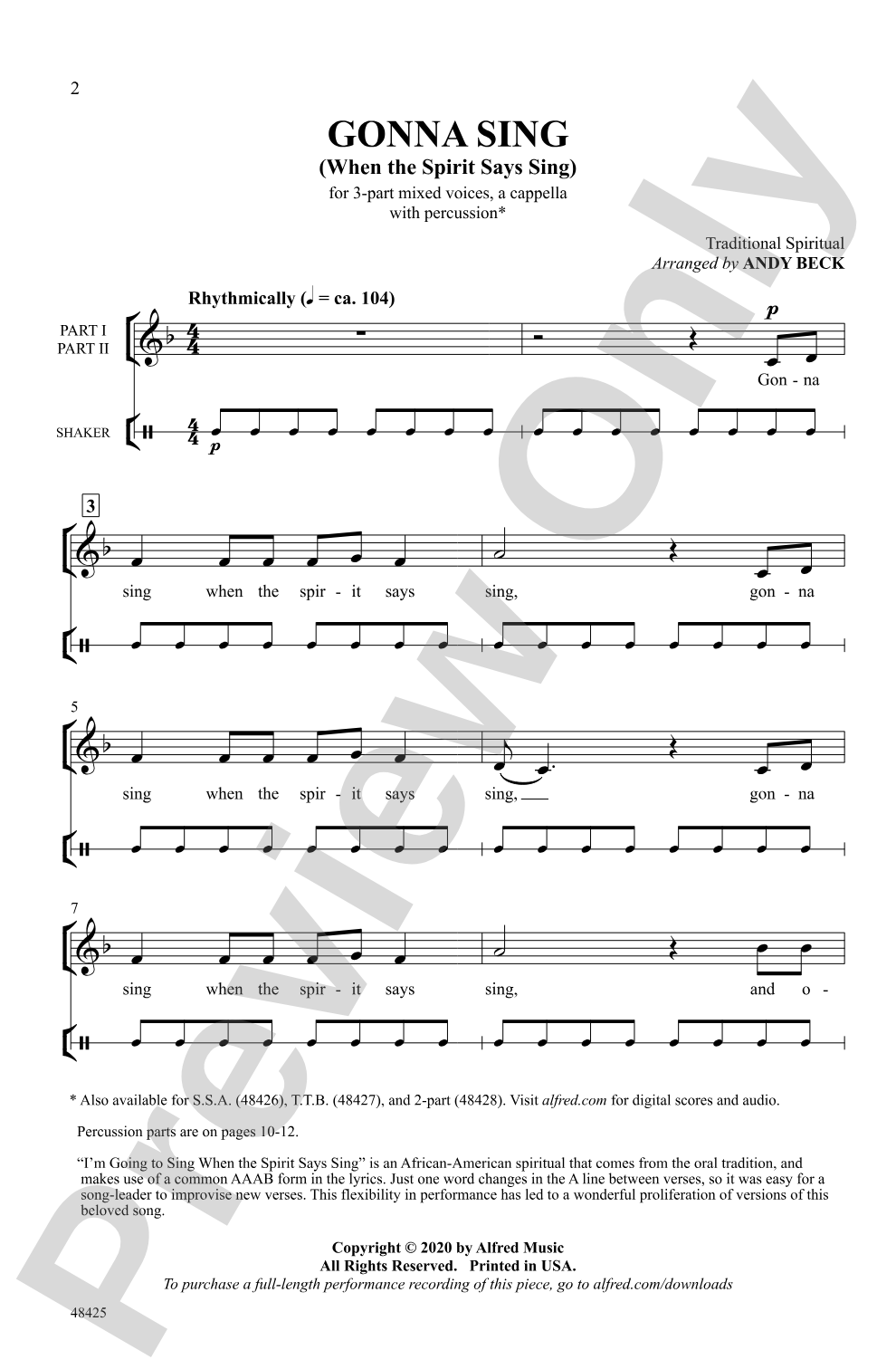
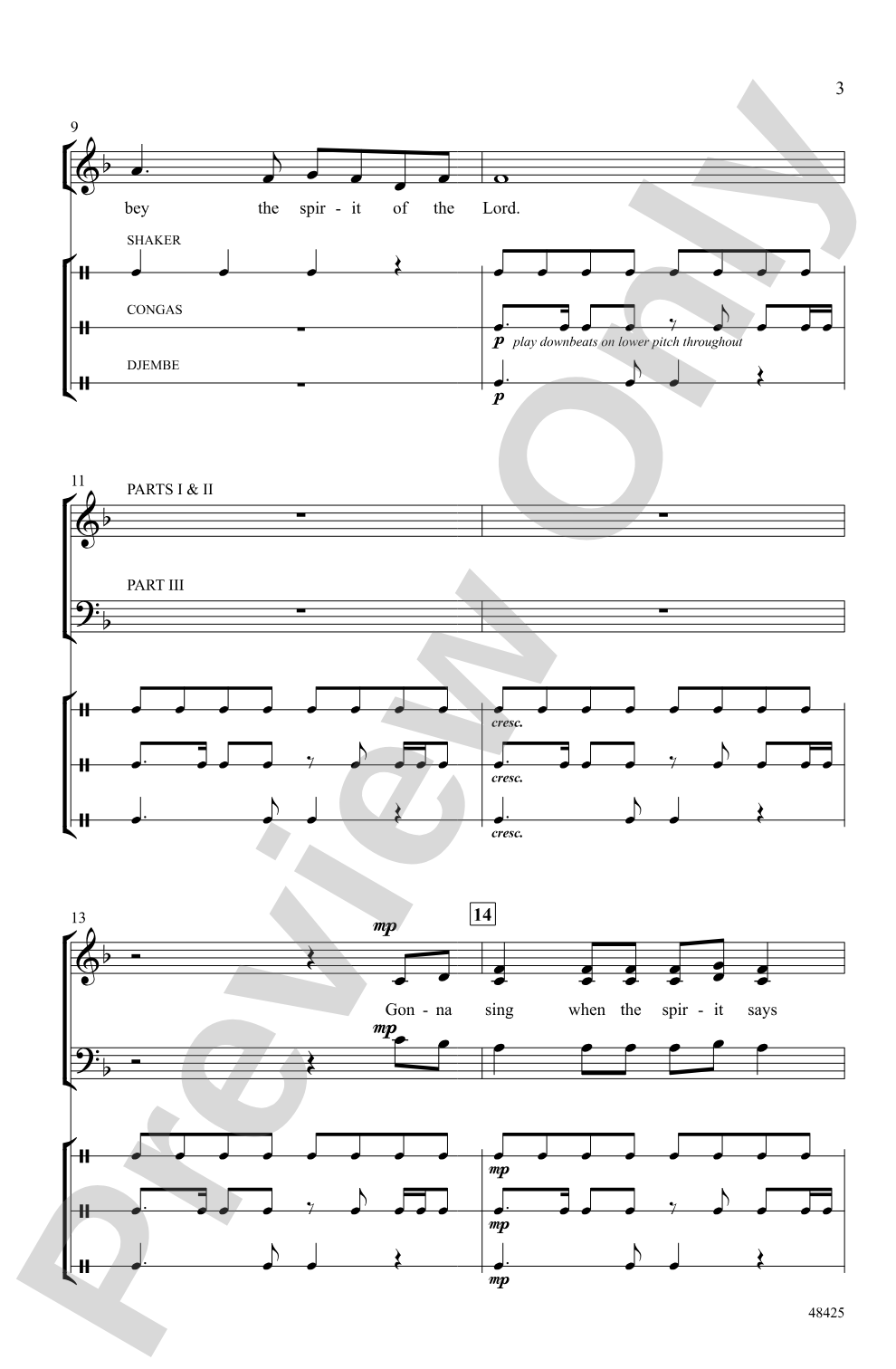
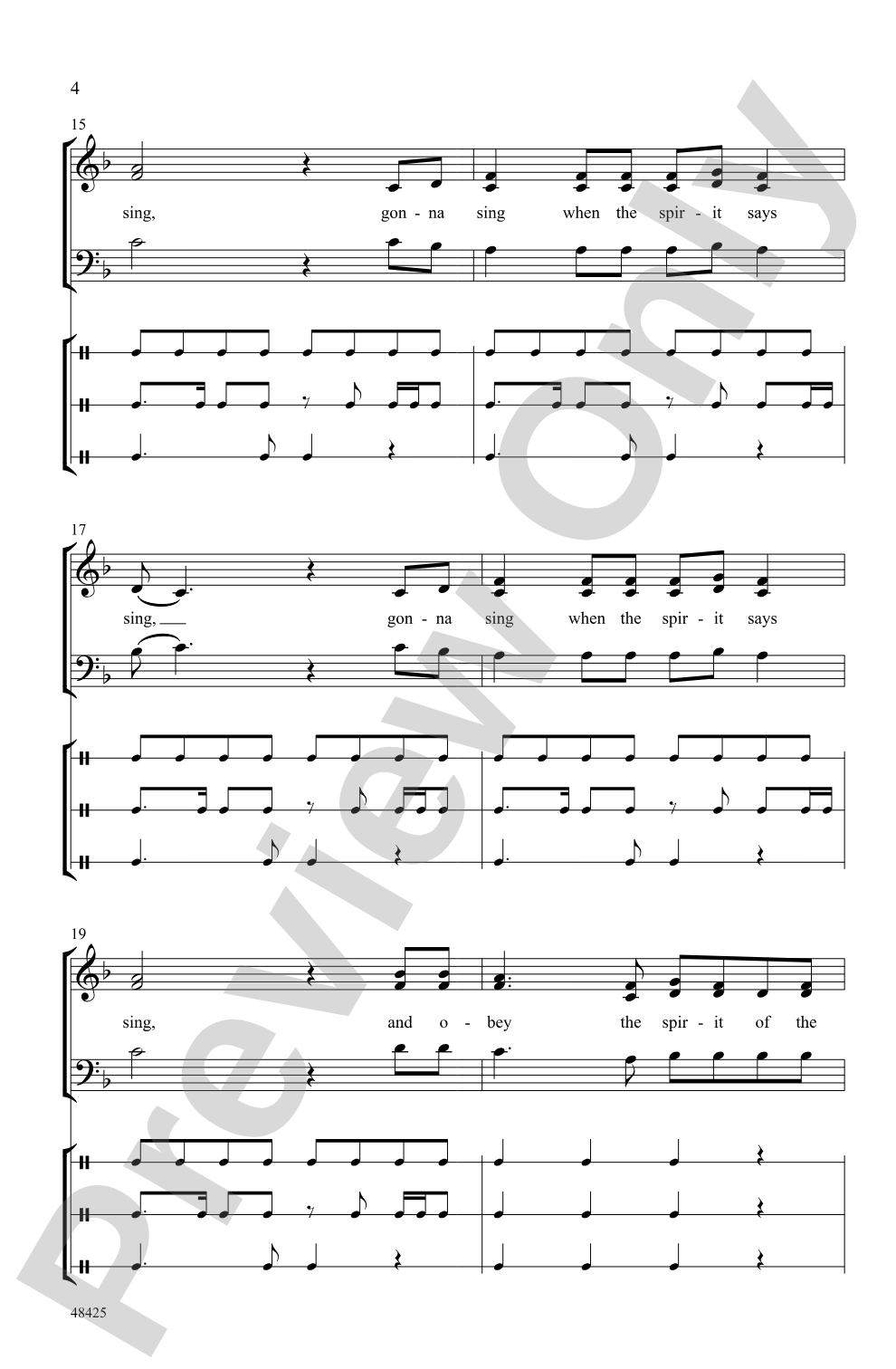
The familiar African-American spiritual in a fresh rhythmic setting! Opening with just a shaker and unison voices, a tapestry of percussion ostinatos and traditional choral harmony gradually unfolds before returning back to the clean lines of the beginning. Well-planned key changes ensure successful a cappella modulations for less-experienced groups. Three notated percussion parts are included in the publication.


Don't just read it, hear it, play along with it, and watch your students grow with it. In MakeMusic Cloud, Gonna Sing: 3-Part Mixed, a cappella Choral Octavo comes alive with professional accompaniment, adjustable tempo, and built-in practice tools that turn solo practice into real progress.
Open in the Player
Jump straight in and assign it today.
Start Your Free Trial
Open this title and explore the full library in minutes.
Sample Audio
1
Audio File
--:--
0:00
0:00
Sample Video
Additional Details
Series:
Alfred Choral Designs
Publisher:
Alfred Music
Page Count:
12
SKU:
00-PO-0006364
More about this title
About the Arranger: Andy Beck

Andy Beck leads the choral publications division at Alfred Music and has established himself as one of the most recorded and performed arrangers in contemporary music education. His catalog includes more than 450 published works across choral music, vocal curricula, and children's theatre; his arrangements are heard regularly in school concerts and all-state festivals throughout North America and beyond. Beck brings deep pedagogical insight to every score he creates, informed by his work developing sight-singing methods and vocal technique resources that are used in thousands of classrooms.
Beyond the page, Beck is an active guest conductor, clinician, and adjudicator who works with honor choirs, all-state groups, and music educators across multiple states. A trained tenor who has sung professionally since 1992 and remains active in chamber choral performance, he combines firsthand knowledge of vocal demands with sharp editorial instincts. His degrees in music education from Ithaca College and Northwest Missouri State University ground his commitment to both musical artistry and literacy in every piece he publishes.
Why we love this
Beck's reworking respects the spiritual's iconic melody while reimagining the accompaniment through a modern rhythmic lens that keeps singers engaged without overwhelming less-experienced groups. The strategic key changes are written with a cappella success in mind, avoiding the common pitfall of awkward modulations that can derail younger ensembles. The three notated percussion parts invite flexible scoring (whether sung, tapped, or played on available instruments) and give your arrangement genuine textural variety without requiring outside musicians.
What to expect
The piece opens with stark simplicity, just a shaker and unison singing creating a call-and-response energy rooted in the spiritual tradition. As harmonic and percussive layers build, the sound blooms into something layered and alive, then gently pulls back to that clean opening statement, leaving an impression of both tradition honored and freshly reimagined.
Who it's for
Developing choirs with basic harmonic awareness and singers who benefit from straightforward part writing; the three-part SAB texture and well-planned modulations make this accessible to middle school through early high school groups. Arrangers seeking a contemporary take on a traditional spiritual without excessive complexity will find this a strong programming choice.
How to get the most out of it
- Establish the opening shaker pattern separately before adding voices; this percussion line anchors the entire piece and prevents drifting when harmony enters.
- Schedule rehearsal time to drill the key change transitions as isolated moments. Mark exactly where singers should shift pitch and have them sing just the chord change without melody until it sits securely.
- Consider assigning the notated percussion parts to singers who feel confident holding their vocal line independently; doubling percussion responsibility builds rhythmic precision across the ensemble.
- Keep the opening unison section crisp and unified by thinking of it as a single voice, not three parts singing the same line. This clarity makes the harmonic entrance more dramatic.
How to use it
Pair this with other contemporary spiritual arrangements or traditional songs to create a thematic set exploring African-American musical heritage. The moderate length and textural variety make it effective as a concert opener that engages an audience while establishing your ensemble's precision; the a cappella setting also means it works equally well in smaller venue or chapel contexts where instrumental accompaniment is unavailable.
Skills your students will build
- Singing a cappella modulations with secure harmonic anchors
- Maintaining unison pitch integrity while shaping long phrases
- Coordinating rhythmic patterns across parts (layered ostinatos)
- Managing part independence when harmonic texture increases
- Building tone and blend in three-part SAB voicing