
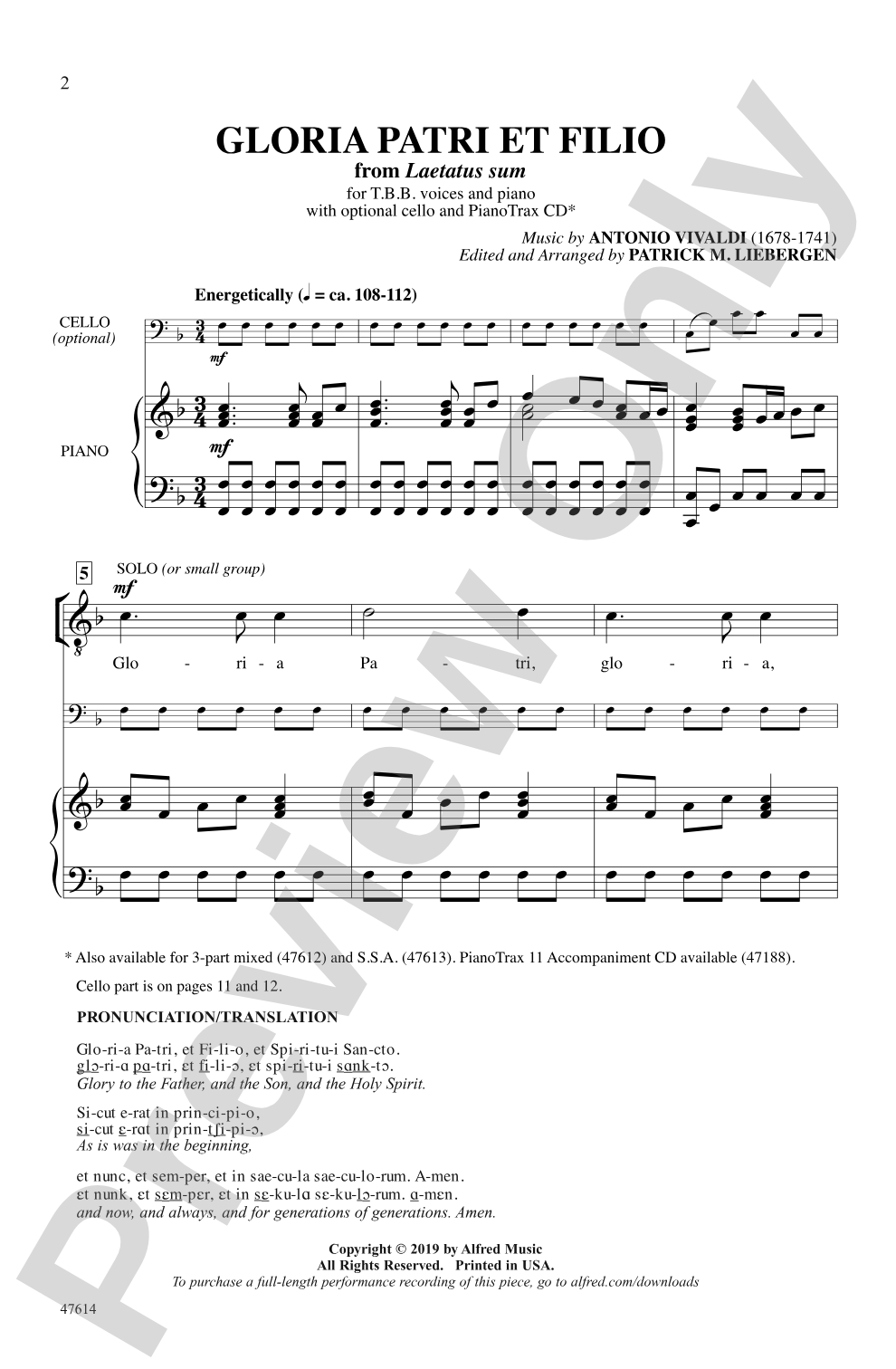
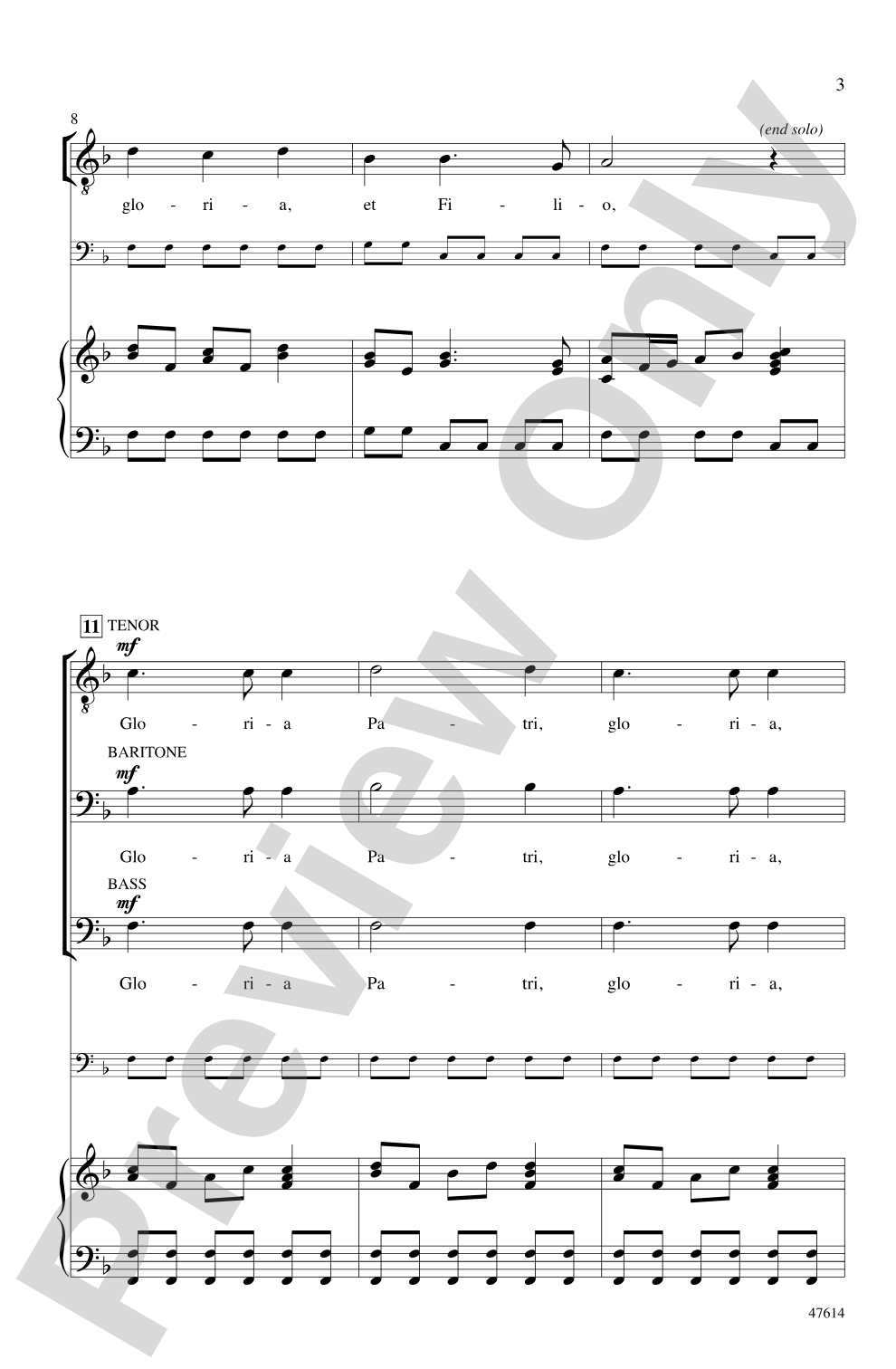
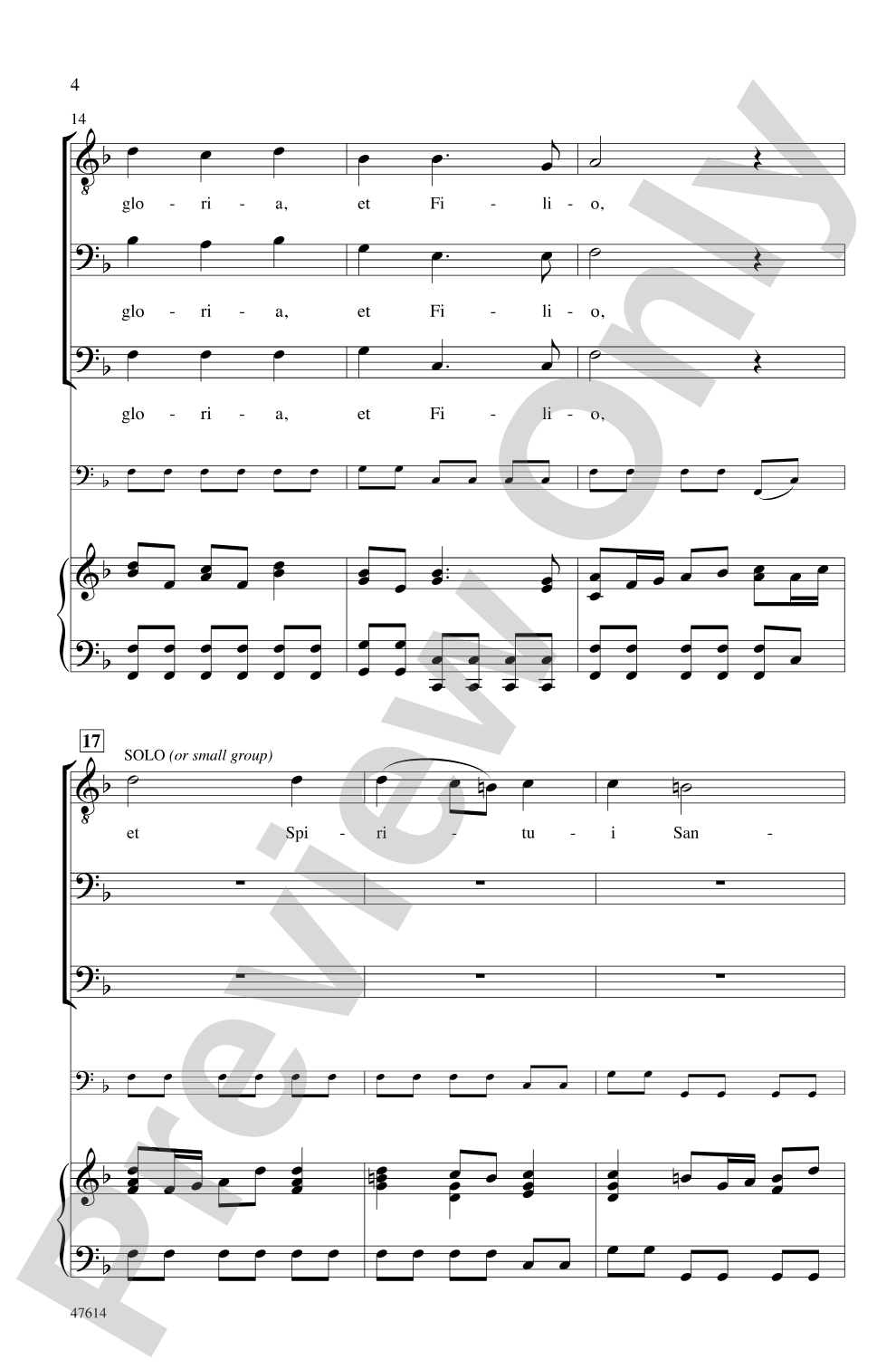

Gloria Patri et Filio: TBB Choral Octavo
Music by Antonio Vivaldi / ed. and arr. Patrick M. Liebergen
Item: 00-PO-0006042

$2.05
Minimum order quantity: 20 copies
Pickup currently not available
Description
From master composer Antonio Vivaldi's Laetatus Sum (a setting of Psalm 121), this edition brings the brief work to today's choirs. Featuring an accessible Latin text and a lively optional cello part, this well-crafted arrangement is an ideal introduction to many of the conventions of Baroque style, including terraced dynamics and the alternation between a small group (or soloist) and the full ensemble.


Don't just read it, hear it, play along with it, and watch your students grow with it. In MakeMusic Cloud, Gloria Patri et Filio: TBB Choral Octavo comes alive with professional accompaniment, adjustable tempo, and built-in practice tools that turn solo practice into real progress.
Open in the Player
Jump straight in and assign it today.
Start Your Free Trial
Open this title and explore the full library in minutes.
Sample Audio
1
Audio File
--:--
0:00
0:00
Sample Video
No sample videos found.
Additional Details
Series:
Alfred Choral Designs
Publisher:
Alfred Music
Page Count:
12
SKU:
00-PO-0006042
More about this title
About the Composer: Antonio Vivaldi
Antonio Vivaldi (1678-1741) was a Venetian priest, virtuoso violinist, and prolific composer whose works shaped the Baroque concerto and influenced generations of musicians across Europe. His output spanned sacred vocal music, instrumental concertos, operas, and chamber works, many of which remain cornerstones of the classical repertoire. Vivaldi's mastery of melody, harmonic clarity, and structural innovation made his sacred music particularly effective for both liturgical use and concert performance.
Why we love this
This arrangement captures what makes Vivaldi's sacred writing so teachable: clear phrase architecture, singable lines, and straightforward harmonic language that lets singers hear exactly how Baroque voices work. The terraced dynamics and solo-to-tutti alternations give your ensemble a chance to learn period conventions through direct experience rather than explanation. For a TBB voicing, it offers the rare gift of a genuine masterwork at an accessible level.
What to expect
The energy is bright and declarative, with the kind of buoyant rhythmic vitality Vivaldi brought to so much of his sacred music. Moments of fuller harmony alternate with leaner textures, creating a sense of dialogue and response that keeps the piece moving forward. The result feels both intimate and celebratory at once.
Who it's for
This octavo suits any TBB or flexible upper-voice choir wanting to program a genuine Renaissance masterwork without excessive arrangement complexity. It works equally well for high school men's choruses, community choirs, and collegiate ensembles seeking repertoire that teaches Baroque conventions while remaining musically rewarding.
How to get the most out of it
- Treat the terraced dynamics as structural tools rather than merely dynamic changes. Each shift between the small group and full ensemble signals a new idea, so shape the transitions cleanly without rallentando.
- Balance the optional cello part carefully against the voices. If you include it, let it anchor the bass line without overshadowing the lower voices' own presence.
- Keep the text articulation clean and consistent across all singers. Latin text benefits from crisp consonants and unified vowel shapes, especially in a piece this rhythmically active.
- Allow the lively character to emerge through rhythmic precision rather than tempo inflation. Baroque style thrives on forward motion within a steady pulse.
How to use it
Program this as a concert opener or as part of a sacred music set where it can anchor a Baroque themed program or stand alongside motets from other periods. Its brevity and accessibility make it an excellent choice for festival competitions or community concert programs where you want to showcase your ensemble's stylistic range without demanding excessive rehearsal time from your singers.
Skills your students will build
- Terraced dynamics and how they function as structural markers in Baroque music
- Solo-to-tutti antiphonal singing and ensemble balance
- Latin text pronunciation and articulation for sacred music
- Reading and performing early Baroque harmonic language and voice leading
- Coordinating optional instrumental parts with vocal lines