

Gloria Patri et Filio: SAB Choral Octavo
Music by Antonio Vivaldi / ed. and arr. Patrick M. Liebergen
Item: 00-PO-0006040
$2.05
Minimum order quantity: 20 copies
Pickup currently not available
Description
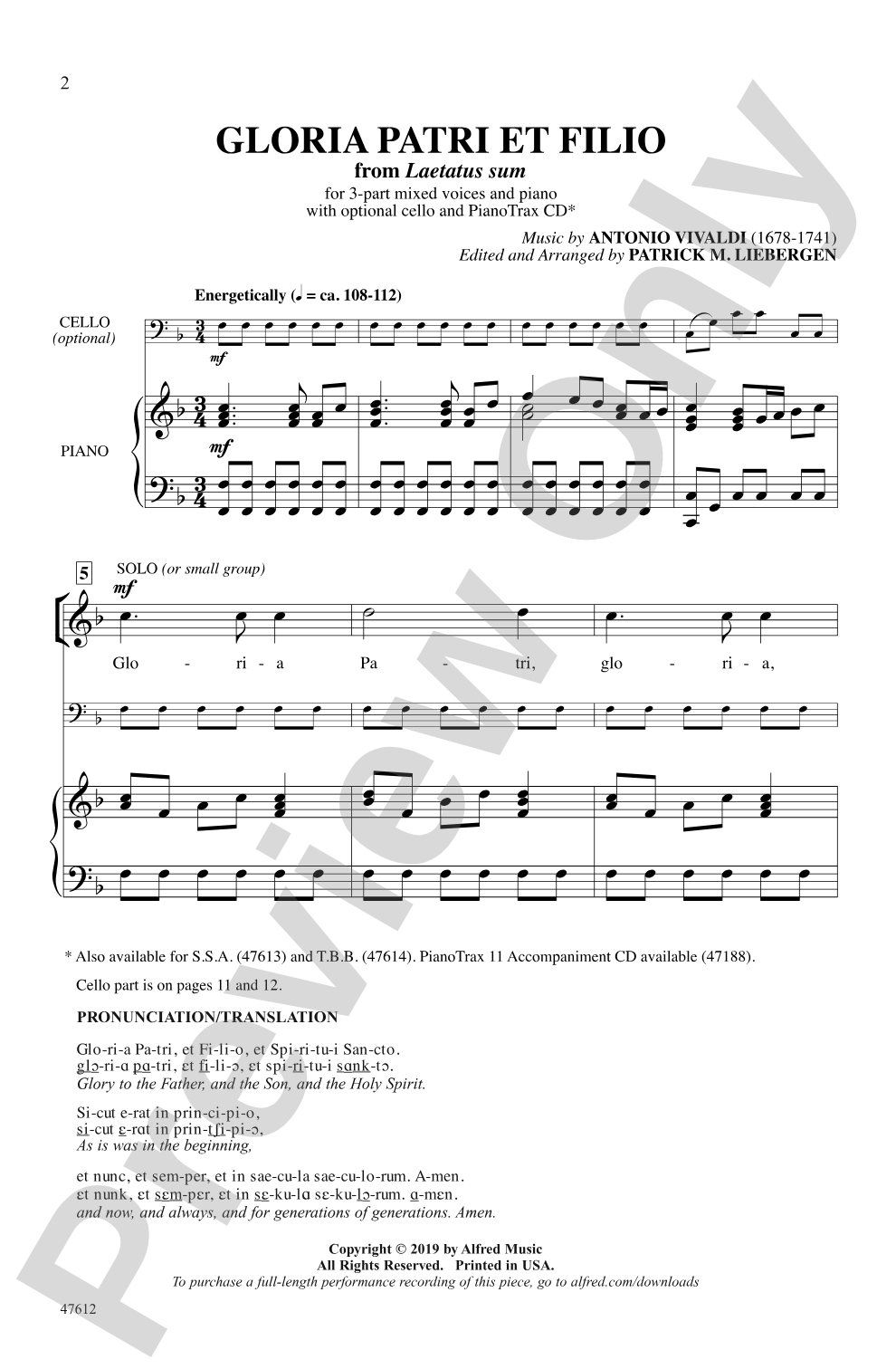
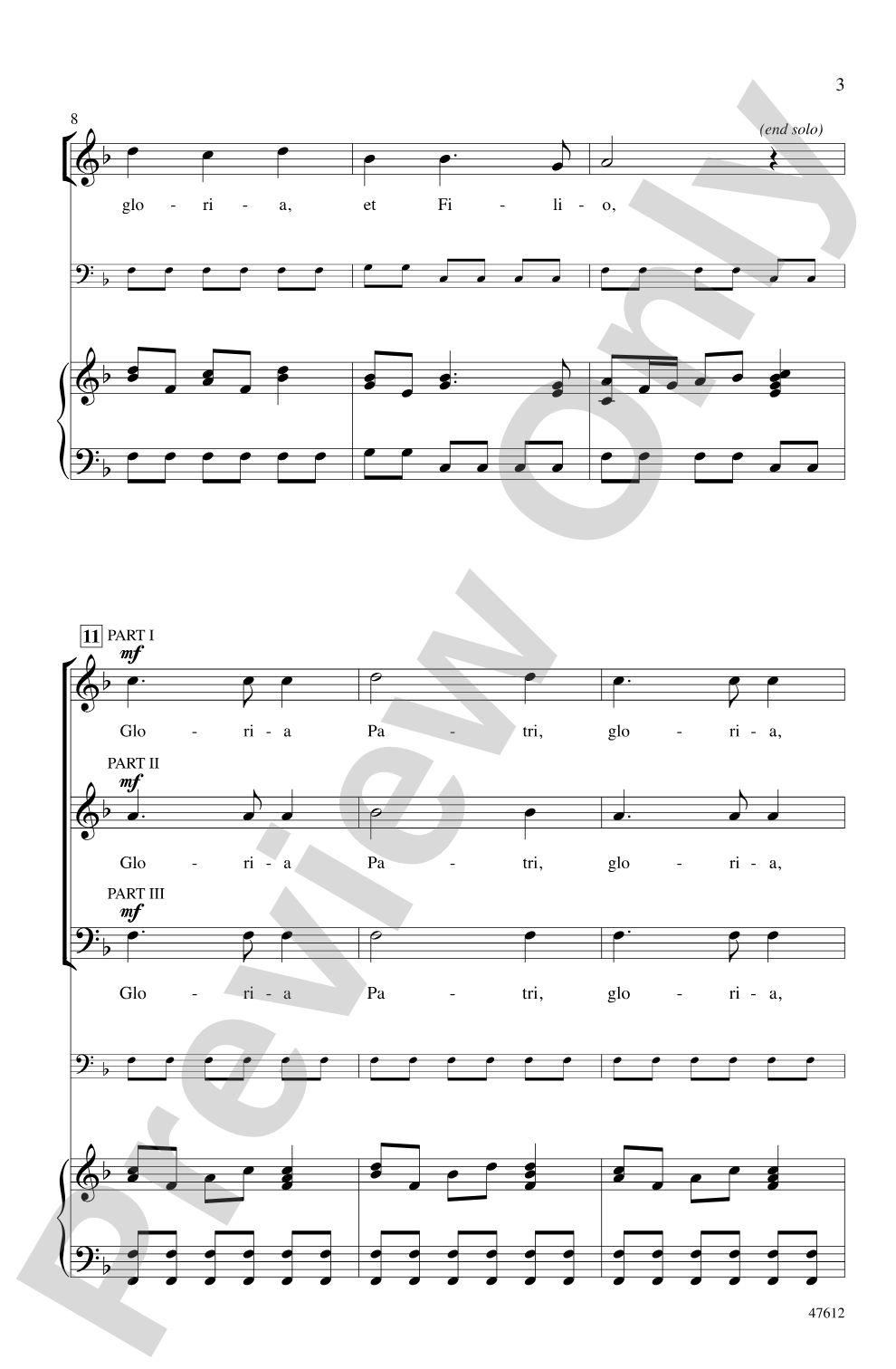
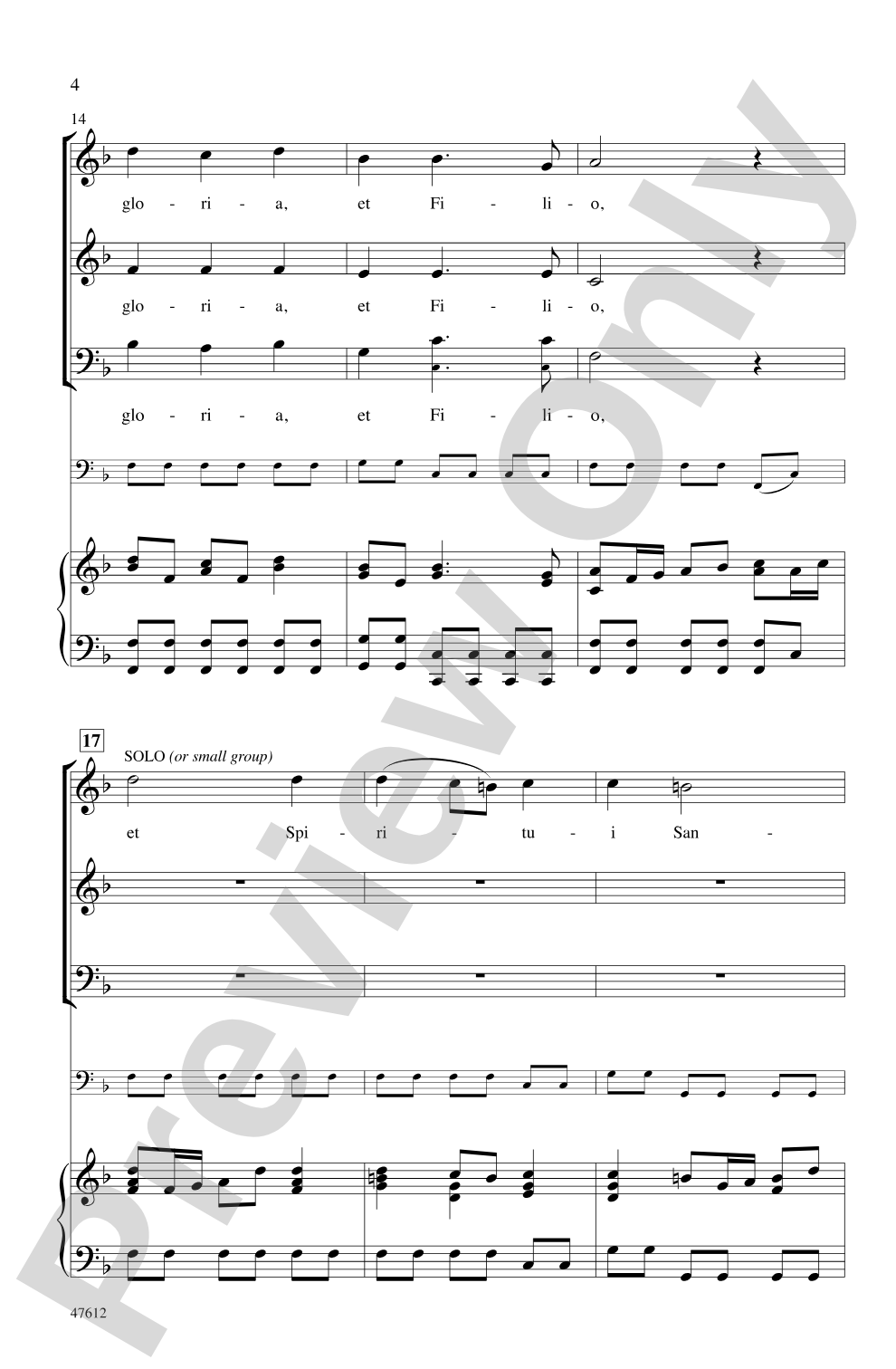
From master composer Antonio Vivaldi's Laetatus Sum (a setting of Psalm 121), this edition brings the brief work to today's choirs. Featuring an accessible Latin text and a lively optional cello part, this well-crafted arrangement is an ideal introduction to many of the conventions of Baroque style, including terraced dynamics and the alternation between a small group (or soloist) and the full ensemble.


Gloria Patri et Filio: SAB Choral Octavo isn't in MakeMusic Cloud just yet...but it could be. Let us know you'd like to see it, and you'll help shape what comes next. In the meantime, start a free trial and dive into thousands of interactive titles your students can play along with today.
Request This Title
Tell us you want it.
Start Your Free Trial
Explore everything that's ready to play right now.
Sample Audio
1
Audio File
--:--
0:00
0:00
Sample Video
Additional Details
Series:
Alfred Choral Designs
Publisher:
Alfred Music
Page Count:
12
SKU:
00-PO-0006040
More about this title
About the Composer: Antonio Vivaldi
Antonio Vivaldi (1678-1741) was a Venetian priest and virtuoso violinist whose prolific output shaped the Baroque concerto and sacred music traditions. His works span over 500 compositions, including operas, concertos, and sacred vocal music that reveal both technical brilliance and direct emotional appeal. Vivaldi's influence on instrumental and choral writing remains foundational to music education; his clear harmonic language and rhythmic vitality make his works accessible points of entry to Baroque style.
Why we love this
Vivaldi's Gloria Patri et Filio excerpt cuts straight to what makes Baroque choral writing exciting: terraced dynamics, crisp sectional contrasts, and moments for soloists to shine against ensemble backdrop. Patrick Liebergen's arrangement respects the original's energy while fitting the text and voicing to modern SAB ensembles, and the optional cello part adds authentic color without complicating the rehearsal process.
What to expect
Gloria Patri et Filio radiates clarity and joy; the text comes alive through bright harmonic movement and the interplay between soloists and full choir creates moments of genuine theatrical energy. The piece feels intimate one moment (when a small group sings) and celebratory the next (when the full ensemble enters), capturing the prayer's reverence and thanksgiving.
Who it's for
This octavo suits choirs with developing sight-readers who are ready to engage with early music conventions without the density of larger-scale works. It works equally well for high school ensembles seeking repertoire for contests or concert programs and community choirs wanting an approachable entry into the Baroque sacred tradition.
How to get the most out of it
- Treat terraced dynamics as structural markers, not gradual transitions; the shift from solo section to full ensemble should feel like a change of scenery, not a crescendo.
- Keep the tempo steady and forward-moving to preserve the lilt of the Latin text; Baroque phrasing benefits from breath awareness rather than ritardandi at phrase endings.
- Balance the optional cello part so it supports harmonic clarity without overwhelming the voices; this is particularly useful for choirs working on pitch stability in SAB voicing.
How to use it
Program this as part of a Baroque sacred music set or pair it with other short Vivaldi motets for a focused thematic concert. Its brevity and accessibility also make it an effective opener for a mixed-repertoire concert, setting an energetic tone before moving to longer works.
Skills your students will build
- Terraced dynamics and sectional contrast in Baroque style
- SAB voice balance and independence
- Latin text articulation and pronunciation
- Soloist-to-ensemble transitions and cue awareness
- Reading and performing with optional instrumental parts