
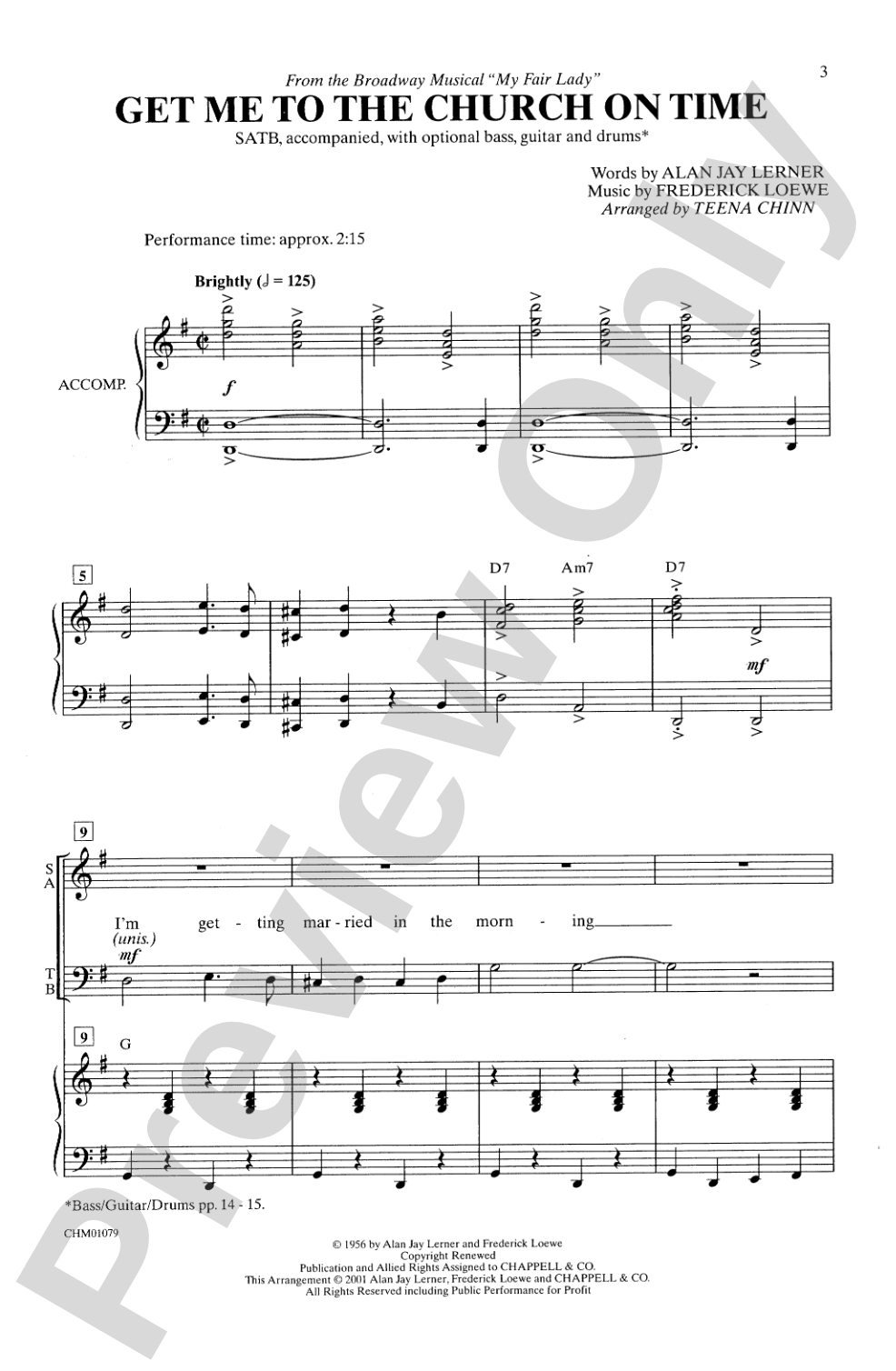
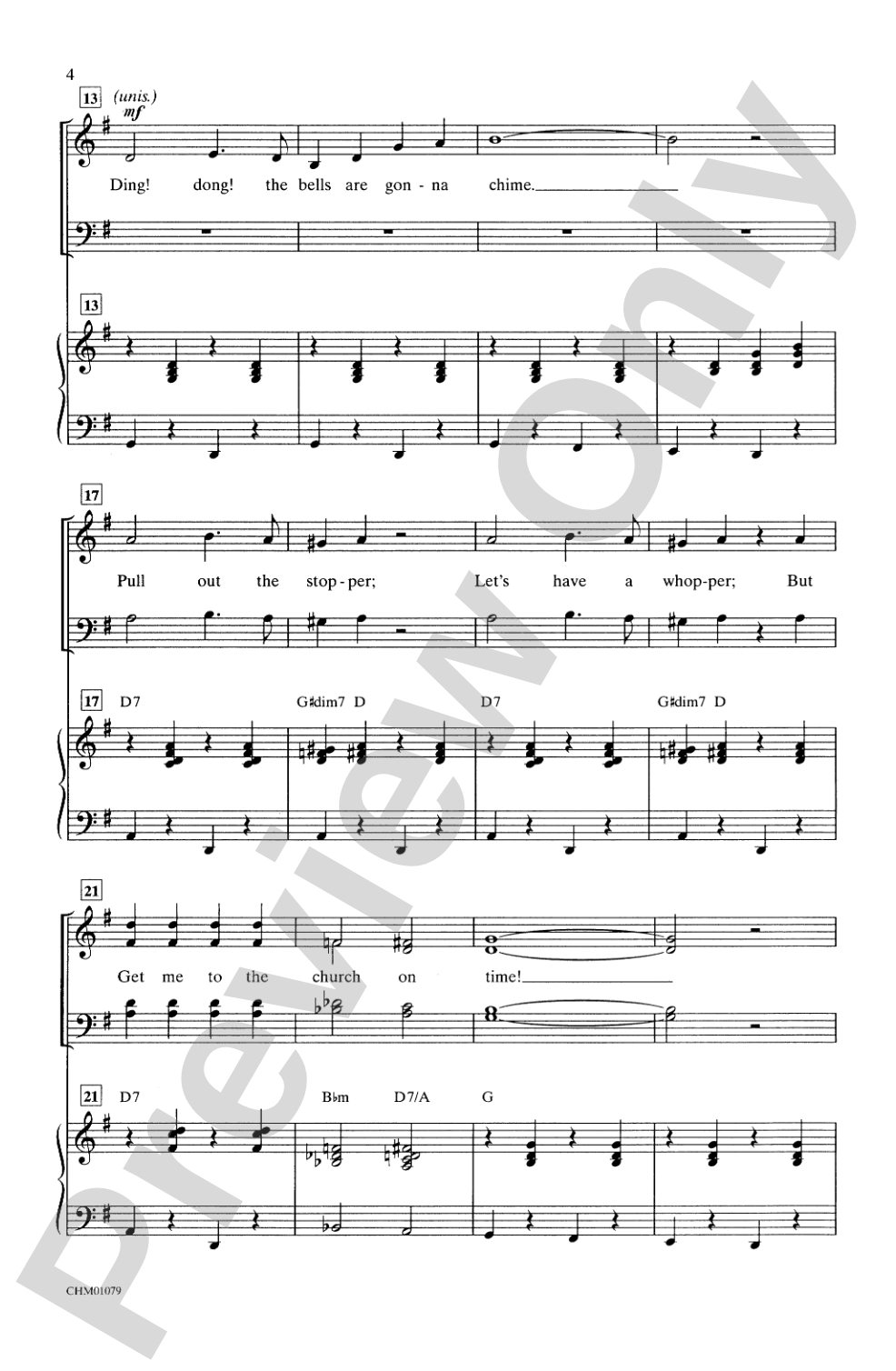
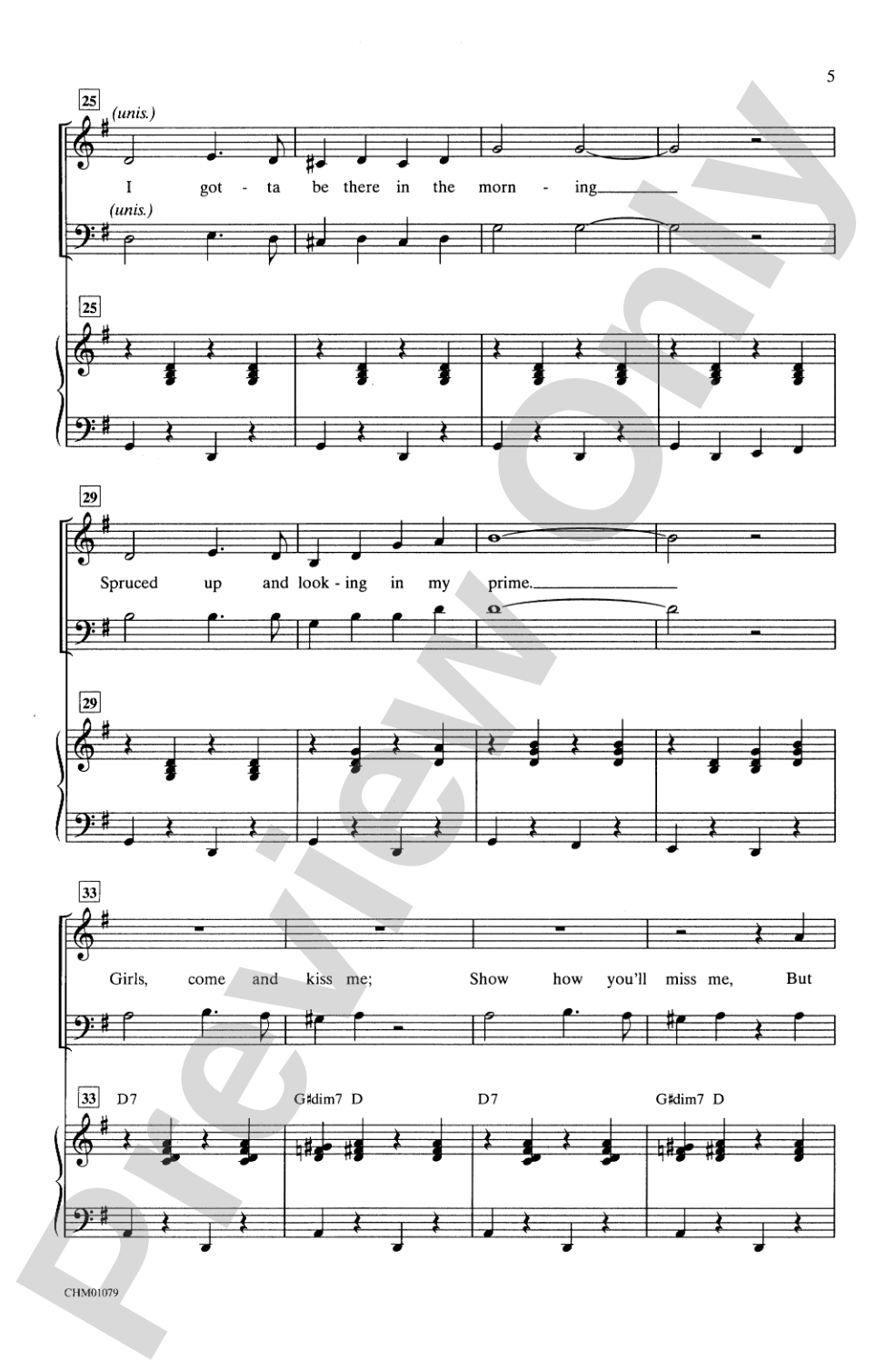

Get Me to the Church on Time: SATB Choral Octavo
Words by Alan Jay Lerner, music by Frederick Loewe / arr. Teena Chinn
Level: Moderate
Item: 00-PO-0004782
$2.95
Minimum order quantity: 20 copies
One moment…
Description
From the classic Lerner and Loewe musical "My Fair Lady" comes this extraordinarily fun new choral. Teena Chinn's arrangement will make any choir shine!


Get Me to the Church on Time: SATB Choral Octavo isn't in MakeMusic Cloud just yet...but it could be. Let us know you'd like to see it, and you'll help shape what comes next. In the meantime, start a free trial and dive into thousands of interactive titles your students can play along with today.
Request This Title
Tell us you want it.
Start Your Free Trial
Explore everything that's ready to play right now.
Sample Audio
No sample audio found.
Sample Video
No sample videos found.
Additional Details
Series:
Alfred Archive Edition: Alfred Pop Choral Series
Publisher:
Alfred Music
Page Count:
16
SKU:
00-PO-0004782
More about this title
About the Composer: Frederick Loewe
Frederick Loewe (1901-1988) composed the music for some of the most beloved musicals in American theater. His partnership with lyricist Alan Jay Lerner produced masterworks including Brigadoon, My Fair Lady, and Camelot, each showcasing his gift for melody that lingers long after the curtain falls. Loewe's training in European classical music gave his theatrical scores uncommon sophistication; his orchestrations and vocal lines reward both amateur and professional performers with musical depth beneath their accessibility.
In the classroom and rehearsal hall, Loewe's melodies have proven remarkably durable. Teachers return to his work because it engages singers immediately while teaching them something about phrasing, harmonic movement, and the architecture of song. Get Me to the Church on Time exemplifies why: a melody so infectious it seems simple, yet constructed with genuine craft.
Why we love this
Teena Chinn's arrangement captures all the comedic energy and rhythmic drive of the original while sitting comfortably in the moderate range. Your choir will feel the joy of this piece from the first read through, and audiences will recognize it instantly, which means your singers get the satisfaction of performing something genuinely celebratory without wrestling with difficult voicing or exposed high passages.
What to expect
Irrepressible energy and good humor. The music tumbles forward with the urgency of someone racing to make their own wedding, yet the voicing stays warm and accessible. Singing this feels celebratory rather than stressful, even as your choir locks into tighter ensemble work.
Who it's for
This arrangement works for community choirs, high school mixed choirs, and collegiate singers looking for a concert piece that entertains without requiring extensive rehearsal time. It's also ideal for directors who want their ensemble to experience the satisfaction of nailing a well-known song that audiences love.
How to get the most out of it
- Establish the rhythmic groove early in rehearsal by tapping the signature rhythm together before singing; this piece lives in its momentum, so precision in the ensemble's rhythmic attack makes everything else fall into place.
- Shape the melody with gentle dynamic peaks rather than singing it straight through at one level; listen for the natural phrase arcs and let them breathe.
- Balance the parts so the soprano line stays clear without forcing; the harmony is sturdy enough to support your singers when they focus on blend rather than volume.
- Experiment with the recorded accompaniment during rehearsal to hear how the arrangement sits in context, then gradually move toward independence so your choir owns the interpretation.
How to use it
This is a natural fit for pops concerts, spring festivals, or any program where you want to open with infectious joy and familiar melody. It pairs well with both standard Broadway selections and lighter contemporary music, and it works equally well as a concert closer because audiences leave smiling.
Skills your students will build
- Rhythmic precision and maintaining groove in an ensemble context
- Sustaining a clear, lyrical melody line while blending four-part harmony
- Dynamic shaping within phrases to avoid a static, one-note approach
- Balancing lyrical storytelling with rhythmic energy in a secular choral arrangement