
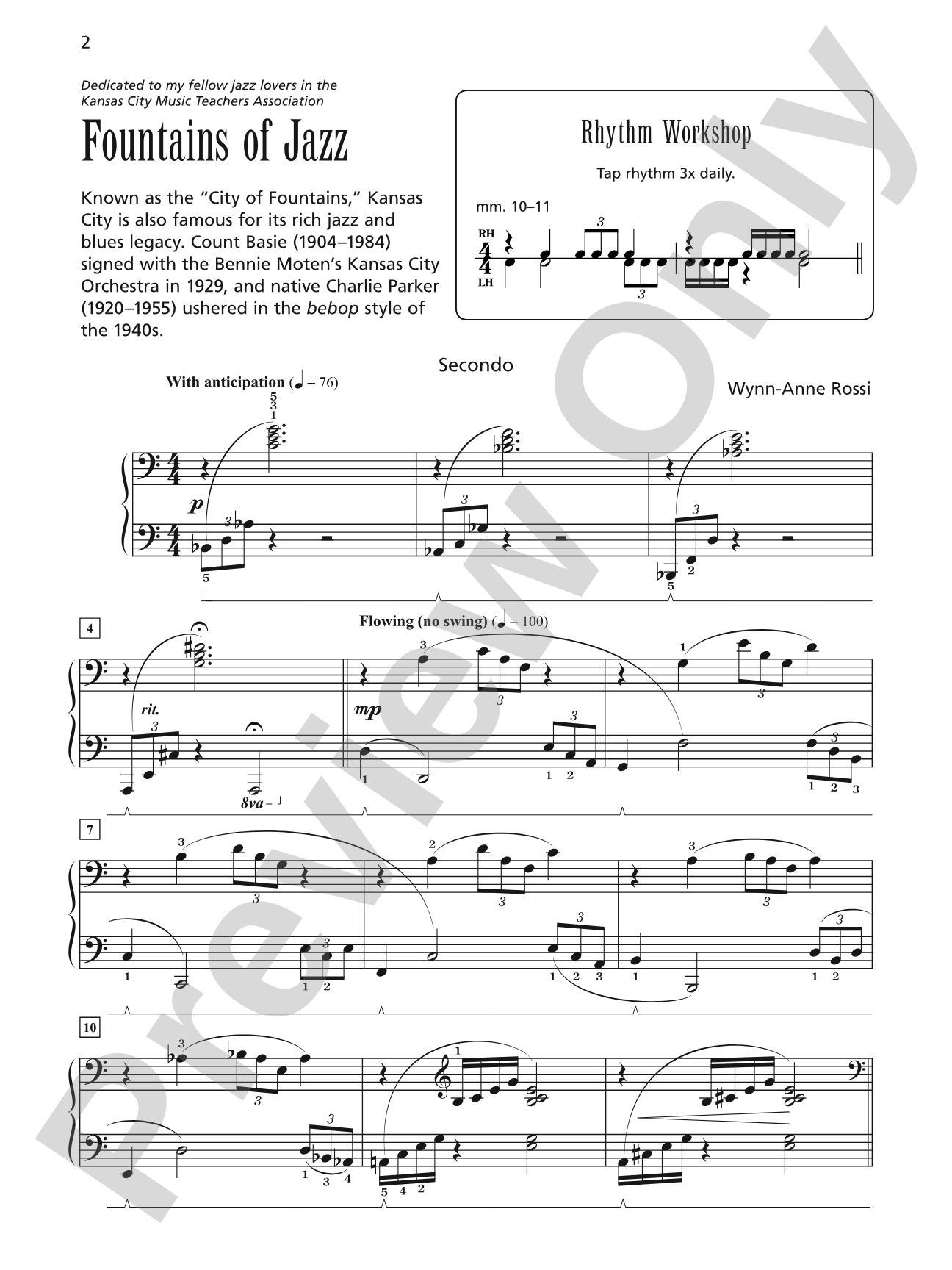
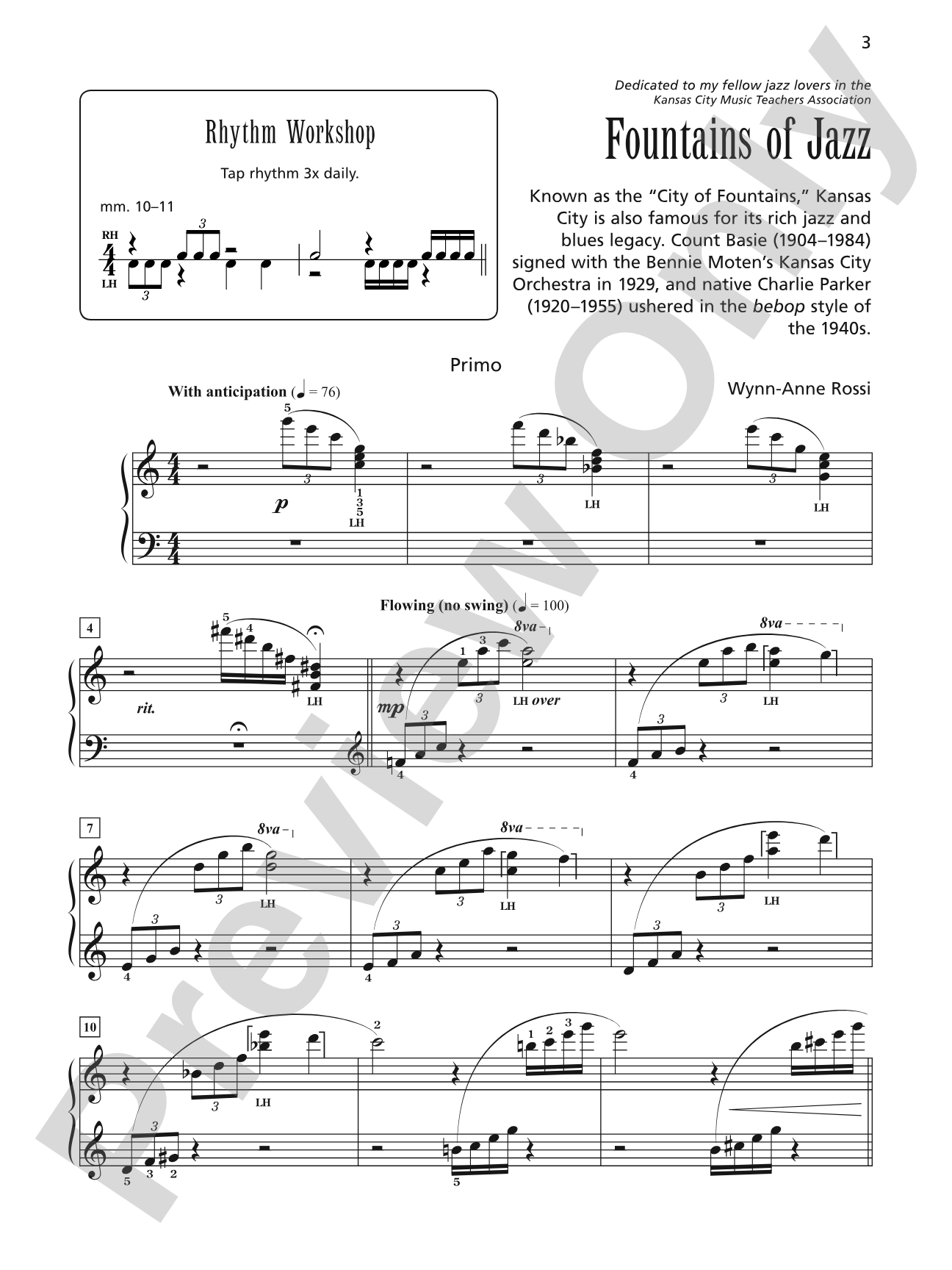

Fountains of Jazz - Piano Duet (1 Piano, 4 Hands): Piano Duet (1 Piano, 4 Hands)
5 Late Intermediate to Early Advanced Piano Duets That Celebrate American Jazz
By Wynn-Anne Rossi
Level: Late Intermediate / Early Advanced
Item: 00-PS-0017605
$5.99
Pickup currently not available
Related Items
Fusion Reaction - Piano Duet (1 Piano, 4 Hands): Piano Duet (1 Piano, 4 Hands) |
$4.99
|
View | |
Hot Jazz at the Green Mill - Piano Duet (1 Piano, 4 Hands): Piano Duet (1 Piano, 4 Hands) |
$7.99
|
View | |
Hymn to Friendship - Piano Duet (1 Piano, 4 Hands): Piano Duet (1 Piano, 4 Hands) |
$5.99
|
View | |
La Belle Seine - Piano Duet (1 Piano, 4 Hands): Piano Duet (1 Piano, 4 Hands) |
$5.99
|
View | |
Jazzin' Americana for Two, Book 4: Piano Duet (1 Piano, 4 Hands) Book |
$7.99
|
View |
Description
Wynn-Anne Rossi's Jazzin' Americana for Two series is a journey through the jazz genre, honoring the history, the diverse styles, and the fabulous musicians who made this music great. Students will become familiar with the names of famous musicians such as George Gershwin, Oscar Peterson, and John Coltrane while learning different jazz styles, from blues and bebop to boogie and rock. Each duet (for one piano, four hands) is enhanced with interesting facts that will awaken curiosity and enhance the musical experience. Titles: Fountains of Jazz * Fusion Reaction * Hot Jazz at the Green Mill * Hymn to Friendship * La Belle Seine. A Federation Festivals 2024-2028 selection.


Discover MakeMusic Cloud: thousands of interactive titles your students can play along with today.
Sample Audio
No sample audio found.
Sample Video
Additional Details
Series:
Jazzin' Americana
Publisher:
Alfred Music
Page Count:
28
SKU:
00-PS-0017605
More about this title
About the Composer: Wynn-Anne Rossi
Wynn-Anne Rossi has built her reputation on creating accessible yet musically substantive repertoire for young musicians. Her work balances technical challenge with genuine engagement, meeting students where they are while refusing to compromise on artistry or historical accuracy.
Why we love this
This collection honors jazz history without lecturing. The pairing of substantial musical content with contextual information about real artists and styles gives students ownership over what they're learning, not just playing. Each duet is genuinely fun to perform while building authentic jazz vocabulary.
What to expect
These pieces swing. Whether you're diving into blues grooves, navigating the syncopation of bebop, or embracing the swagger of rock-influenced sections, the writing captures the energy and sophistication of jazz idioms without pastiche. The four-hand format creates a genuine ensemble sound that feels alive and responsive.
Who it's for
Late intermediate to early advanced pianists ready for the technical and stylistic demands of jazz duet writing. This works equally well for serious students building jazz literacy or collaborative pianists looking for engaging contemporary material that doesn't sacrifice musical substance.
How to get the most out of it
- Study the historical notes before rehearsal begins. Knowing the story behind each piece (whether it's blues tradition, bebop's rhythmic complexity, or fusion's blend) shapes how you voice chords and interpret phrasing.
- Balance the primo and secondo parts dynamically. The primo often carries the melody, but the secondo's comping pattern and rhythmic pocket deserve equal attention; neither player should disappear.
- Experiment with swing feel and articulation within each style. Fountains of Jazz and Hot Jazz at the Green Mill will demand different approaches to eighth notes and syncopation.
- Use the duo format as a conversation. Especially in pieces like Hymn to Friendship, listen actively to your partner and let the music breathe between musical ideas rather than rushing through phrases.
How to use it
Consider programming one or two selections as a bridge between classical and contemporary repertoire in a spring recital or festival showcase. The collection's pedagogical depth and cultural relevance also make it valuable as a cornerstone for a unit on American music history and jazz traditions within your studio or school.
Skills your students will build
- Swing articulation and phrasing across blues, bebop, and fusion styles
- Comping patterns and rhythmic independence in jazz contexts
- Reading and interpreting jazz chord symbols and reharmonization
- Collaborative listening and ensemble balance in duet performance
- Cultural and historical literacy around jazz musicians and movements