
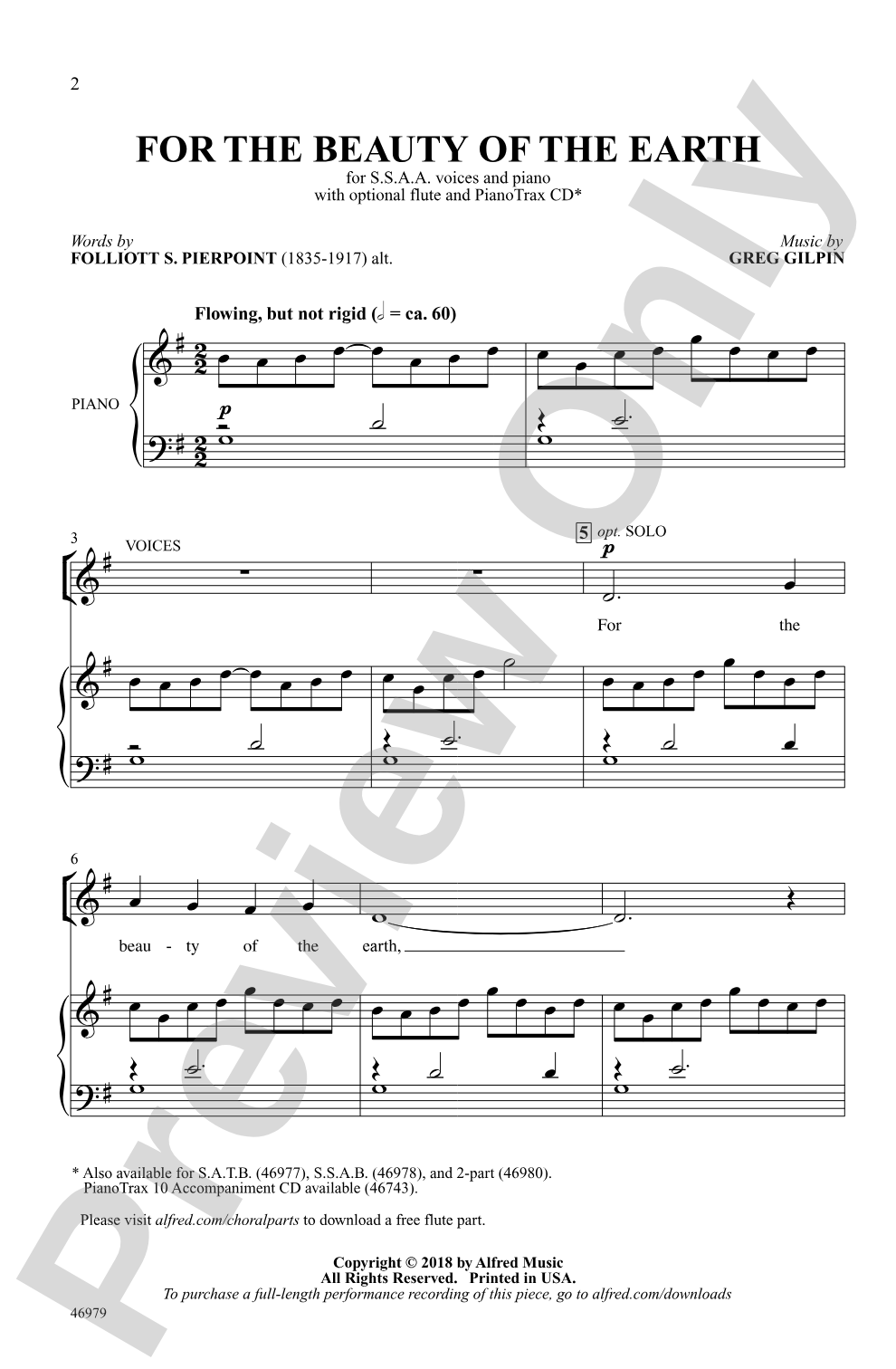
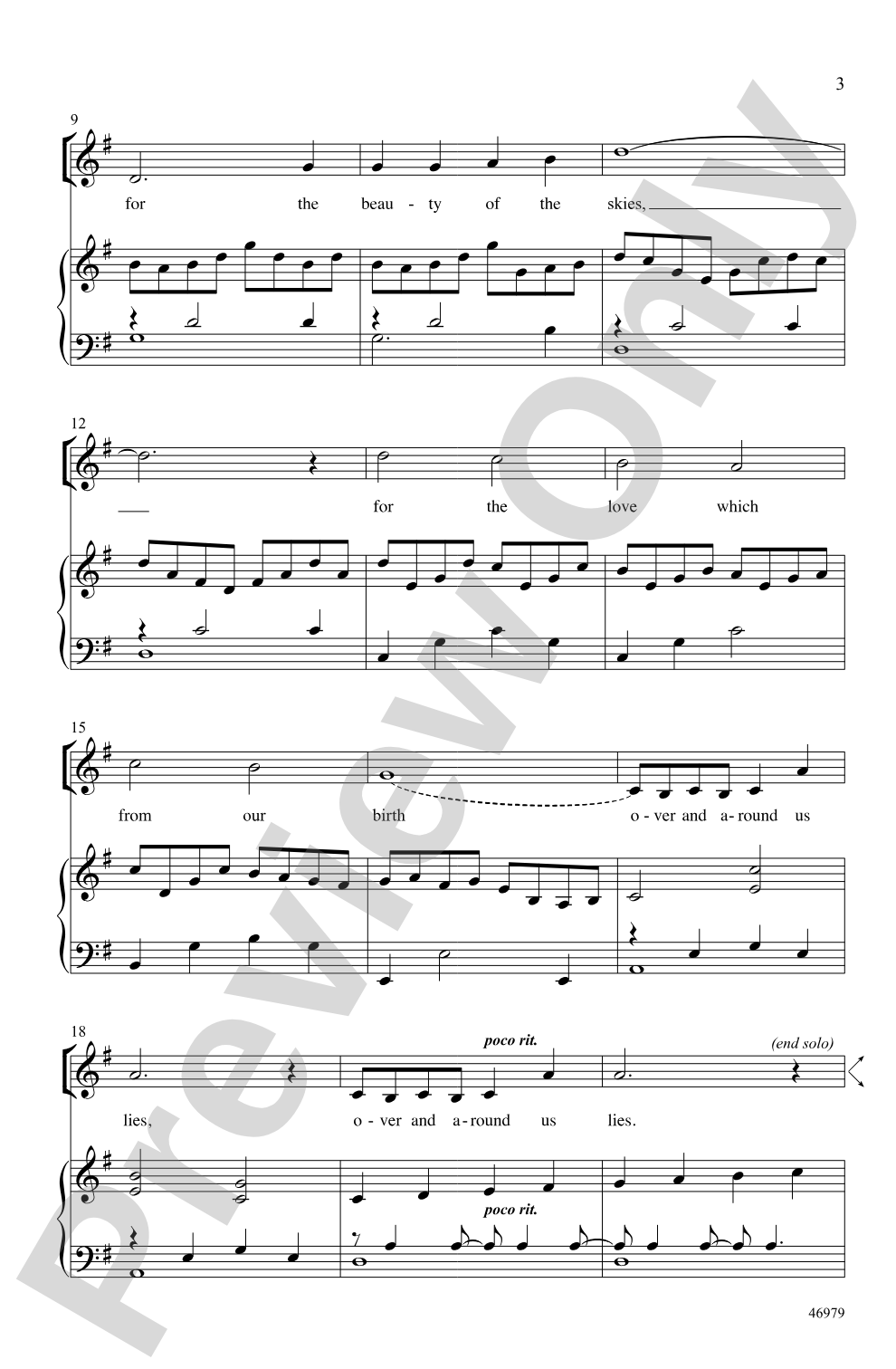

For the Beauty of the Earth: SSAA Choral Octavo
Words by Folliott S. Pierpoint, music by Greg Gilpin
Item: 00-PO-0005837
$2.05
Minimum order quantity: 20 copies
Pickup currently not available
Related Items
For the Beauty of the Earth: PianoTrax Digital Download |
$9.99
|
View | |
For the Beauty of the Earth: SATB Choral Octavo |
$2.05
|
View | |
For the Beauty of the Earth: SSAB Choral Octavo |
$2.05
|
View | |
For the Beauty of the Earth: 2-Part Choral Octavo |
$2.05
|
View | |
For the Beauty of the Earth: SATB Choral Octavo |
$2.05
|
View | |
For the Beauty of the Earth: SSAB Choral Octavo |
$2.05
|
View | |
For the Beauty of the Earth: SSAA Choral Octavo |
$2.05
|
View | |
For the Beauty of the Earth: 2-Part Choral Octavo |
$2.05
|
View |
Description
Over 100 years after his death, this beloved text from Folliott S. Pierpoint lives on in a gorgeous new choral setting. Greg Gilpin's artistry and skill shine through as each voice part takes a turn with the long legato melody and warm harmonies envelop the ear. An optional flute obbligato is available free online.


For the Beauty of the Earth: SSAA Choral Octavo isn't in MakeMusic Cloud just yet...but it could be. Let us know you'd like to see it, and you'll help shape what comes next. In the meantime, start a free trial and dive into thousands of interactive titles your students can play along with today.
Request This Title
Tell us you want it.
Start Your Free Trial
Explore everything that's ready to play right now.
Sample Audio
1
Audio File
--:--
0:00
0:00
Sample Video
No sample videos found.
Additional Details
Series:
Alfred Choral Designs
Publisher:
Alfred Music
Page Count:
12
SKU:
00-PO-0005837
More about this title
About the Composer: Greg Gilpin

Greg Gilpin stands among today's most performed choral composers, with his works heard regularly at major concert halls across North America and internationally. His compositions and arrangements have graced stages at Carnegie Hall, Lincoln Center, the Sydney Opera House, and Royal Festival Hall, while his work as Director of Educational Choral Publications at Shawnee Press has shaped the choral repertoire available to singers at every level. An ASCAP award winner and respected conductor, Gilpin brings both compositional sophistication and deep understanding of what choirs need to thrive.
Beyond music, Gilpin has built a distinctive second career as a certified financial coach and professional organizer, work that has connected him with audiences on national television and the popular series "Hoarders." In 2021, he composed the award-winning score for the short film "Rosie's Rescue" and collaborated with opera singer Angela Brown on a world premiere arrangement of "What Child is This?" with the Indianapolis Symphonic Choir. A Life Loyal Member of Phi Mu Alpha Sinfonia and active member of ACDA and NAfME, Gilpin continues to teach, compose, and conduct with infectious enthusiasm.
Why we love this
Gilpin's gift for melodic writing becomes immediately clear here; he doesn't hoard the long, singing line but passes it gracefully among the voice parts, ensuring every section gets their moment of musical ownership. The harmonies are rich enough to feel substantial without demanding advanced reading skills, and the optional flute obbligato adds flexibility for programs where you have instrumental support or prefer to keep it purely vocal. It's the kind of piece that works equally well as a concert closer or festival selection because it lands with both emotional authenticity and musical polish.
What to expect
Warm, expansive, and deeply felt without a trace of sentimentality. The piece unfolds like a hymn transformed into something more intimate and contemporary, where each voice part feels heard and valued. Singing this draws you into genuine musical conversation rather than supporting a single melody line.
Who it's for
SSAA choirs with solid musicianship and secure intonation will find this piece immediately rewarding; the vocal writing sits well for treble voices and builds confidence through its forward-moving harmonic language. Youth choirs, college treble ensembles, and adult women's choirs benefit equally from both the straightforward technical demands and the deeper musical satisfaction it offers.
How to get the most out of it
- Shape the legato melody with genuine breath support; Gilpin's long phrases reward singers who commit to sustained, resonant tone throughout each phrase rather than shortening notes at the end.
- Balance the harmonic voices carefully during the warm passages where multiple parts weave together; bring out the soprano or alto line only when Gilpin clearly intends it to dominate.
- If you're using the flute obbligato, let it sit slightly above the choir's dynamic peak rather than blending into it, so the optional instrumental color genuinely adds dimension rather than doubling.
How to use it
This belongs on any concert that includes sacred or concert works for treble voices; it pairs beautifully with both traditional hymn-based pieces and more contemporary sacred settings. Consider programming it where you want to showcase lyrical singing and harmonic sophistication in the second half of a concert, or select it for a festival where your choir's blend and intonation will shine.
Skills your students will build
- Sustaining long legato phrases with consistent support and tone
- Balancing multiple independent voice lines within a cohesive harmonic texture
- Maintaining secure intonation in close-voiced, chromatic harmony
- Understanding textual expression and connecting it to musical phrasing