

For the Beauty of the Earth: SATB Choral Octavo
Words by Folliott S. Pierpoint, music by Greg Gilpin
Item: 00-PO-0005835
$2.05
Minimum order quantity: 20 copies
Pickup currently not available
Related Items
For the Beauty of the Earth: PianoTrax Digital Download |
$9.99
|
View | |
For the Beauty of the Earth: SSAB Choral Octavo |
$2.05
|
View | |
For the Beauty of the Earth: SSAA Choral Octavo |
$2.05
|
View | |
For the Beauty of the Earth: 2-Part Choral Octavo |
$2.05
|
View | |
For the Beauty of the Earth: SATB Choral Octavo |
$2.05
|
View | |
For the Beauty of the Earth: SSAB Choral Octavo |
$2.05
|
View | |
For the Beauty of the Earth: SSAA Choral Octavo |
$2.05
|
View | |
For the Beauty of the Earth: 2-Part Choral Octavo |
$2.05
|
View |
Description
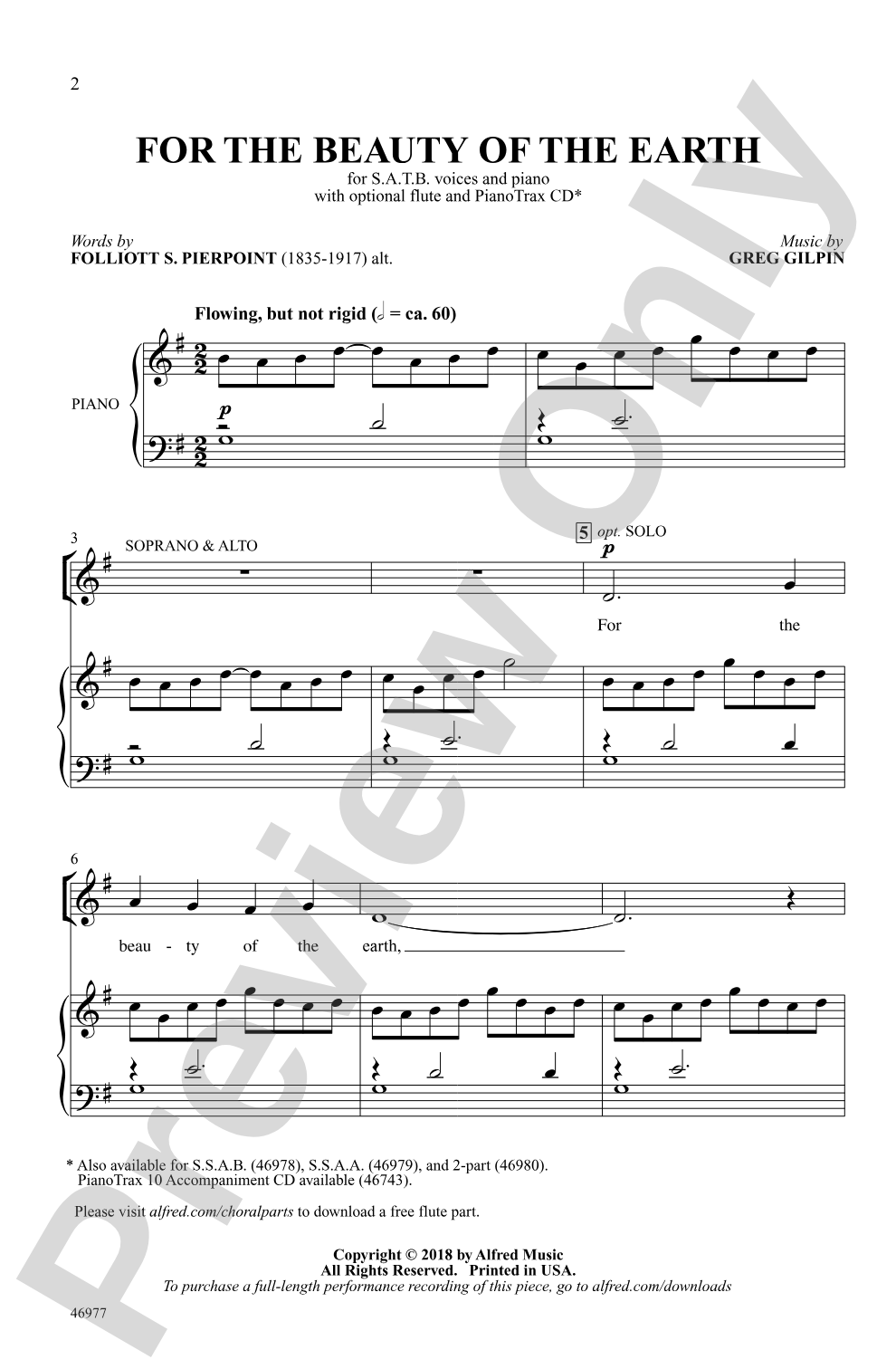
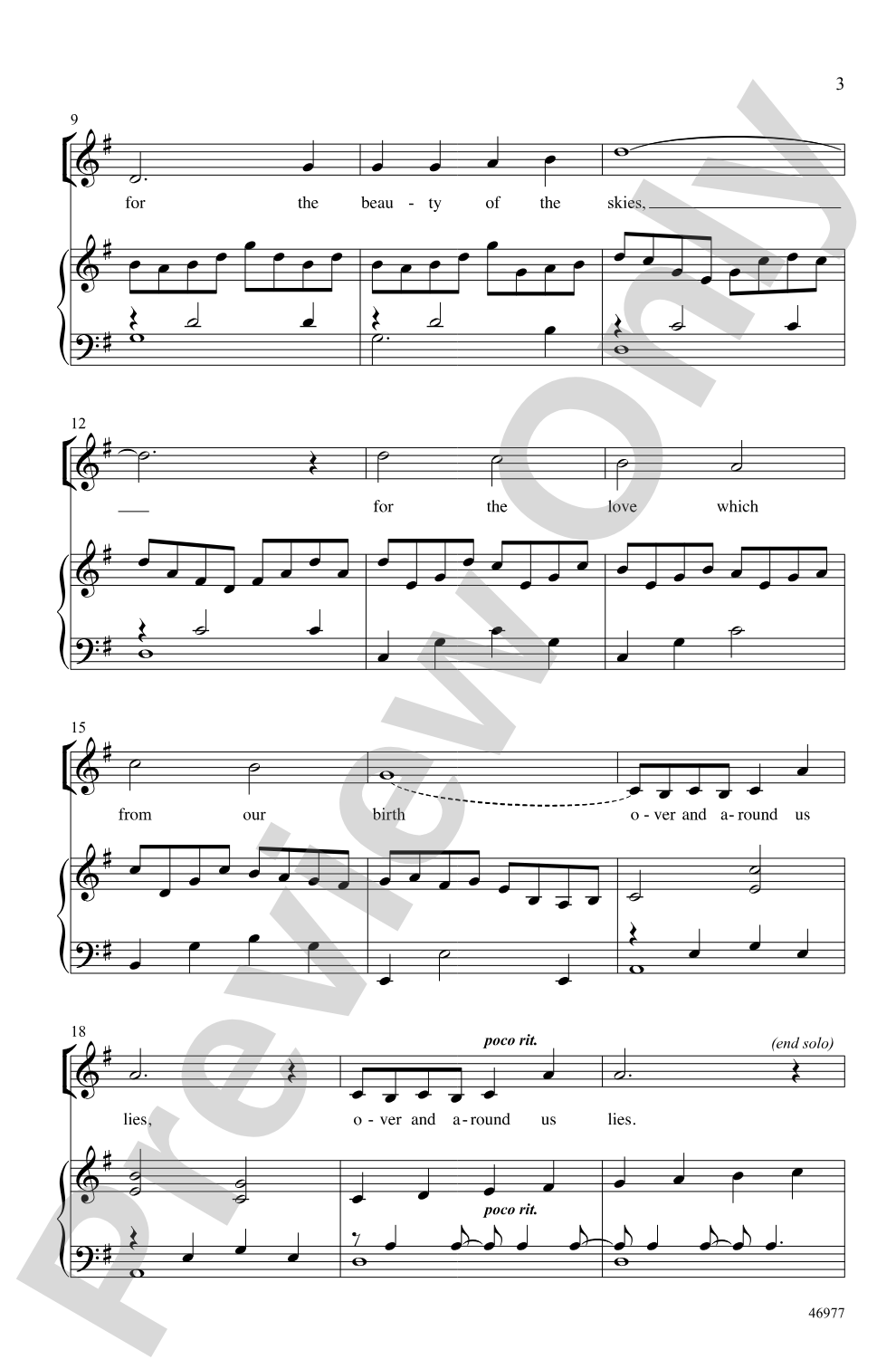
Over 100 years after his death, this beloved text from Folliott S. Pierpoint lives on in a gorgeous new choral setting. Greg Gilpin's artistry and skill shine through as each voice part takes a turn with the long legato melody and warm harmonies envelop the ear. An optional flute obbligato is available free online.


For the Beauty of the Earth: SATB Choral Octavo isn't in MakeMusic Cloud just yet...but it could be. Let us know you'd like to see it, and you'll help shape what comes next. In the meantime, start a free trial and dive into thousands of interactive titles your students can play along with today.
Request This Title
Tell us you want it.
Start Your Free Trial
Explore everything that's ready to play right now.
Sample Audio
1
Audio File
--:--
0:00
0:00
Sample Video
Additional Details
Series:
Alfred Choral Designs
Publisher:
Alfred Music
Page Count:
12
SKU:
00-PO-0005835
More about this title
About the Composer: Greg Gilpin
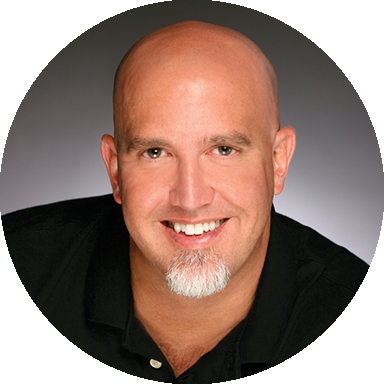
Greg Gilpin has established himself as one of America's most prolific and respected choral composers, with performances of his work spanning Carnegie Hall, Lincoln Center, Ryman Auditorium, Sydney Opera House, Royal Festival Hall, and concert halls across the globe. His contributions to choral music have earned him ASCAP recognition, and he serves as Director of Educational Choral Publications for Shawnee Press, where he shapes the landscape of accessible, artistically sophisticated choral literature.
Beyond the concert hall, Gilpin's creative energy extends into multiple disciplines. He has scored award-winning films, premiered innovative arrangements with renowned soloists and orchestras, and built a professional organizing business that has brought his entrepreneurial spirit to national television. A devoted member of ACDA, NAfME, and Phi Mu Alpha Sinfonia, Gilpin remains deeply committed to music education and the choral art form.
Why we love this
Gilpin understands what makes a choral piece both musically rewarding and singable in a single rehearsal period. The melody passes through each voice part, ensuring every section gets a moment in the spotlight, while the warm harmonic language and long legato phrases invite genuine expression without excessive technical demand. This is the kind of setting that sounds like a much larger work than its modest page count suggests.
What to expect
Warm, spacious, and unhurried. The piece unfolds like a gentle hymn reimagined for the concert stage, with each voice taking up the melody in turn and creating layers of harmony that feel both comforting and luminous. There is nothing aggressive or precious about it; instead, it invites singers and listeners into a moment of collective reflection.
Who it's for
This octavo suits mixed-voice choirs ranging from good volunteer church ensembles to competitive festival choirs seeking elegant, substantial repertoire that doesn't require specialized technique. It works equally well for directors who want a piece strong enough to stand alone in concert and those building a thoughtful program around texts of gratitude and devotion.
How to get the most out of it
- Shape the long legato lines with consistent breath support and a gentle forward motion, resisting the urge to sit too heavily on any single note.
- Balance the inner voices carefully when the melody transfers from part to part; often the alto or tenor line should sing through without being overshadowed by the sopranos or basses.
- If you include the optional flute obbligato, ensure the flutist plays with warm vibrato and blends seamlessly with the choir's tone rather than standing apart.
How to use it
This pairs beautifully with other texts of praise or thanksgiving in an all-sacred program, or it can serve as an elegant anchor piece in a mixed repertoire concert. Its moderate difficulty and inclusive character make it especially effective as a concert closer, leaving audiences with a sense of peace and completion.
Skills your students will build
- Sustaining long legato phrases across full phrases without breath within the musical line
- Following melody as it moves between voice parts while maintaining harmonic awareness
- Balancing inner voices in four-part writing to highlight the active melodic line
- Interpreting poetic text with emotional authenticity in a congregational rather than operatic style