
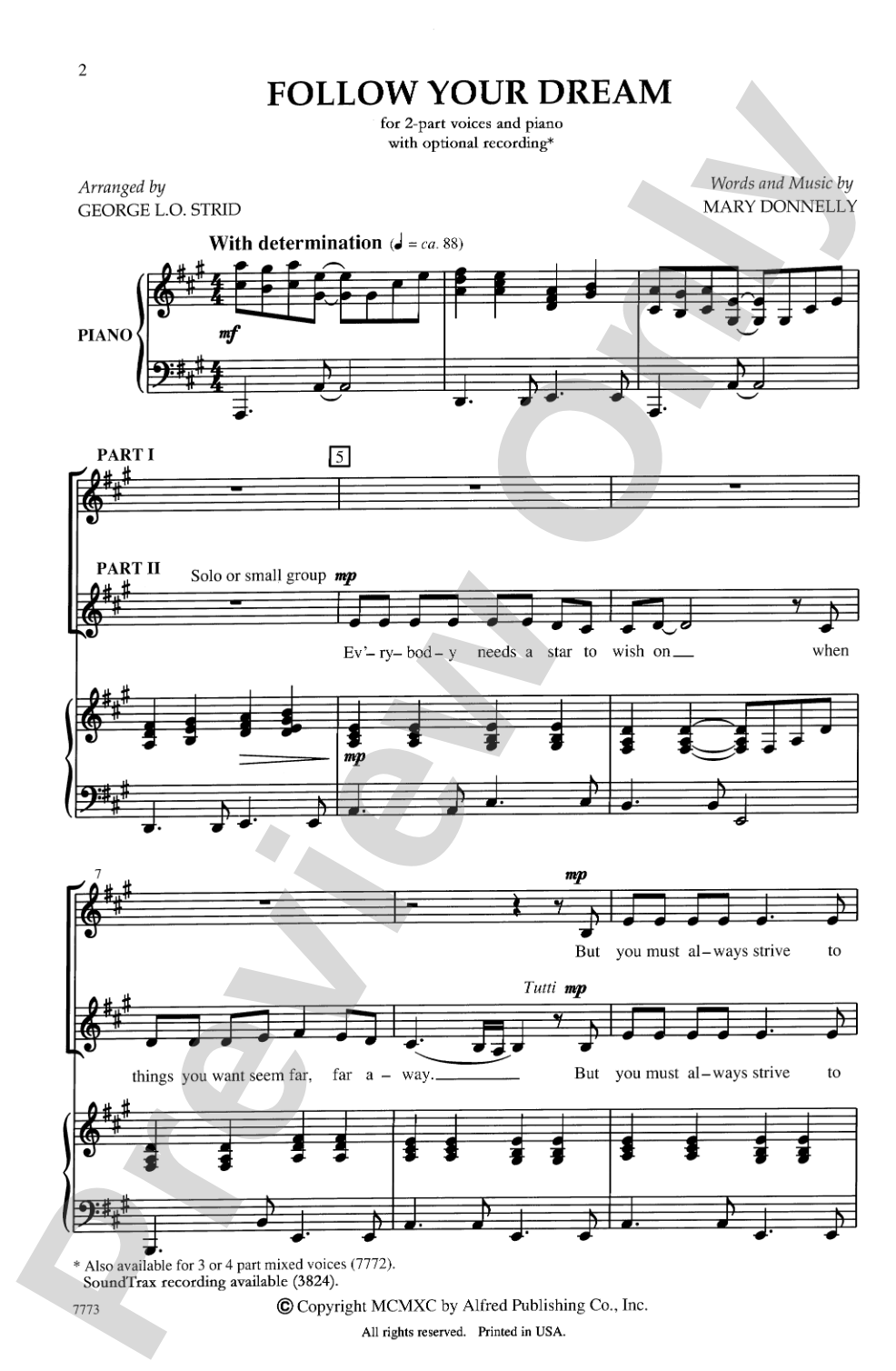
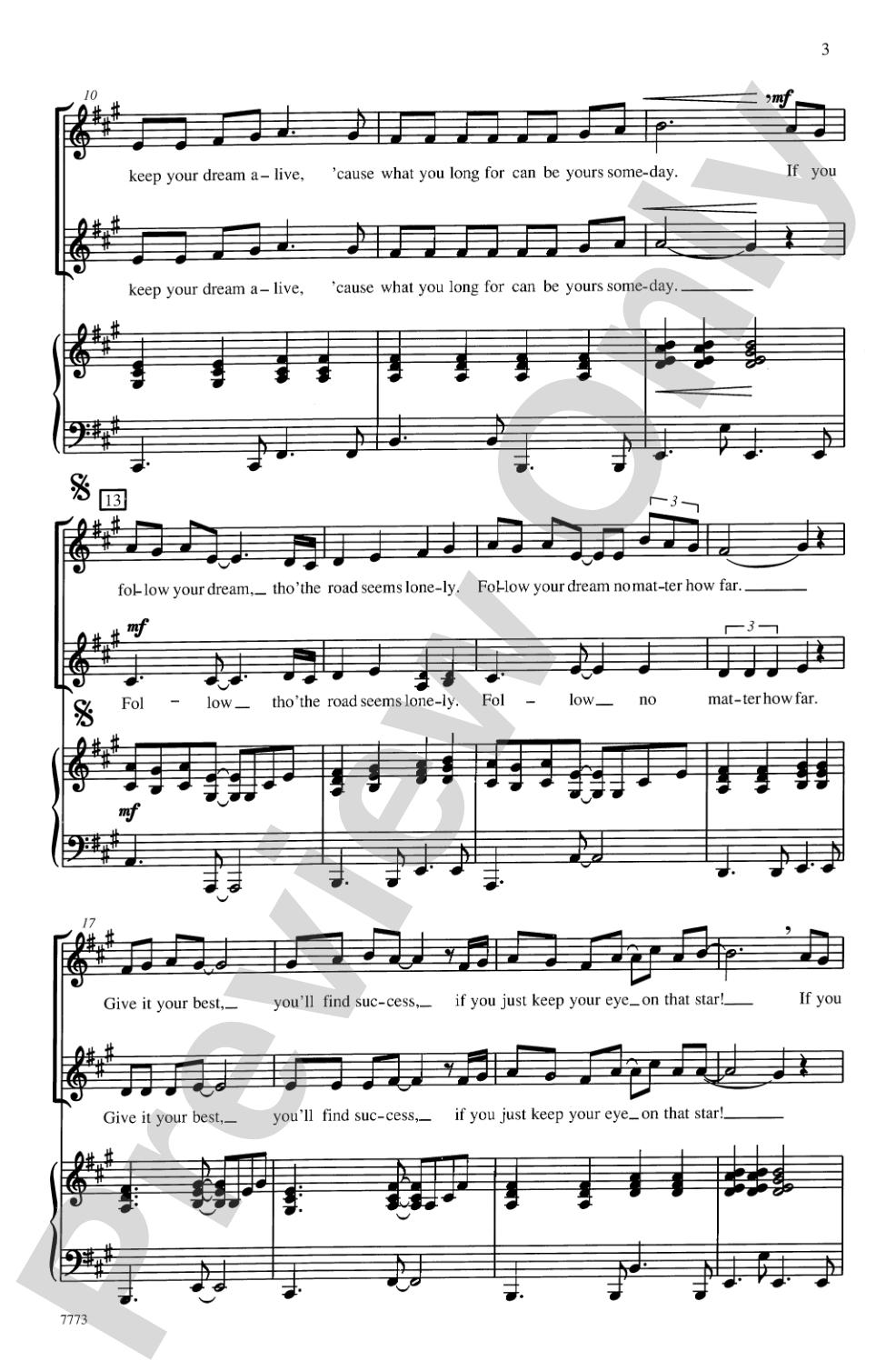

Follow Your Dream: 2-Part Choral Octavo
Music by Mary Donnelly and George L. O. Strid
Item: 00-PO-0004584
$2.25
Minimum order quantity: 20 copies
Pickup currently not available
Description
You must always strive to keep your dream alive.' That's the theme of this expressive selection from Mary Donnelly and George Strid, featuring an optional solo and closing soprano descant. The SoundTrax cassette adds a full sound making this an excellent choice for graduation.


Follow Your Dream: 2-Part Choral Octavo isn't in MakeMusic Cloud just yet...but it could be. Let us know you'd like to see it, and you'll help shape what comes next. In the meantime, start a free trial and dive into thousands of interactive titles your students can play along with today.
Request This Title
Tell us you want it.
Start Your Free Trial
Explore everything that's ready to play right now.
Sample Audio
1
Audio File
--:--
0:00
0:00
Sample Video
No sample videos found.
Additional Details
Series:
Alfred Archive Edition: Alfred Choral Designs
Publisher:
Alfred Music
Page Count:
8
SKU:
00-PO-0004584
More about this title
About the Composer: Mary Donnelly

Mary Donnelly grew up in Reno, Nevada, and studied English and French at the University of Nevada before discovering her passion for music education. While completing her undergraduate degree, she helped launch two children's choruses, an experience that led her back to school for music certification and eventually a Master's Degree in Education from Lesley College, where she focused on integrating arts across the curriculum. She spent thirty years teaching general music and choir in Washoe County schools and remains active in ACDA, NEA, and ASCAP.
In 1985, Donnelly began a prolific creative partnership with George Strid when their principal asked them to compose a musical for Reading Week. That first collaboration sparked a thirty-year writing relationship that has produced over two hundred songs and twenty-five musicals. Her work reflects deep classroom experience and a gift for creating accessible, meaningful music for young singers.
Why we love this
Donnelly and Strid understand exactly what makes a graduation piece land emotionally. This selection balances accessibility for 2-part singers with genuine musical substance, and the optional soprano descant and featured solo give you flexibility in how you present it. The theme resonates with students at a pivotal moment, and recorded accompaniment means even smaller programs can deliver a polished, full sound.
What to expect
The piece carries an encouraging, forward-looking warmth that speaks directly to the moment without becoming saccharine. Expressive phrasing and the interplay between ensemble, solo, and descant create layers of meaning that invite students to connect personally with the message about pursuing their dreams.
Who it's for
This works beautifully for middle school and high school choirs preparing for graduation ceremonies or end-of-year concerts. It suits both established choir programs and schools that bring together singers of mixed experience for a single massed performance.
How to get the most out of it
- Let the accompaniment support rather than overshadow the singers; the recorded track should enhance the voices, not compete with them.
- Shape the optional solo expressively but keep it within the technical comfort zone of your singers; this is about heart, not showmanship.
- Begin rehearsals with attention to phrase breathing and line continuity across the 2-part writing; many students will benefit from conducting the shape yourself before asking them to feel it.
- Use the closing soprano descant as a moment to build dynamic intensity gradually, building toward a strong final cadence rather than rushing into it.
How to use it
Program this as an anchor for a graduation concert or as part of a spring concert focused on aspirational themes. Its eight-page length makes it substantial enough to stand as a centerpiece without dominating the program, and the recorded accompaniment option means you can use it whether or not you have instrumental support available.
Skills your students will build
- Singing sustained melodic lines with consistent tone across phrase boundaries
- Responding to expressive conducting in a 2-part texture
- Balancing blend and balance when layering optional vocal parts (solo, descant, ensemble)
- Interpreting thematic text to shape musical interpretation